2025-05-05 01:38
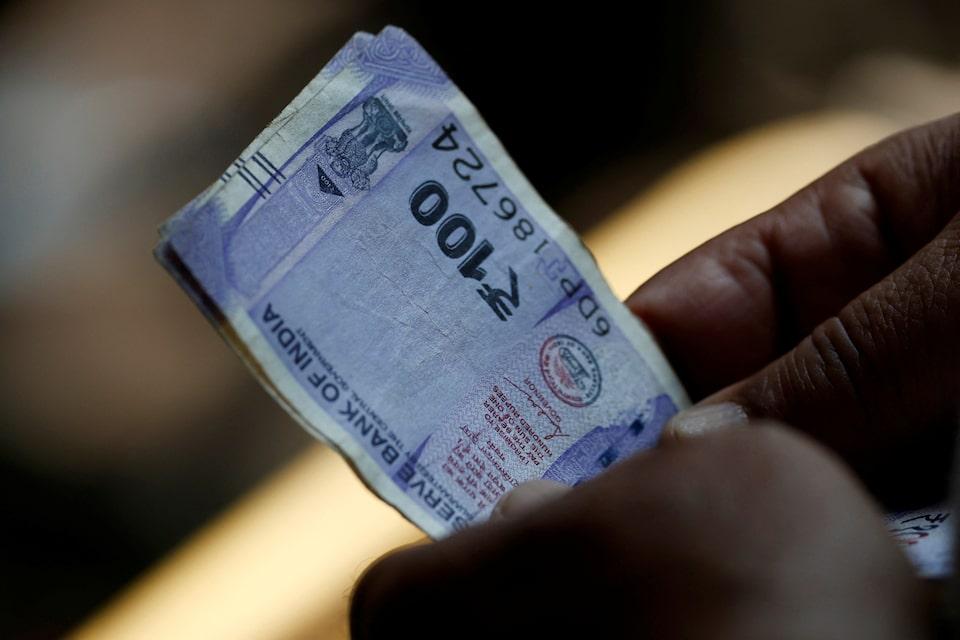
MUMBAI, May 5 (Reuters) - The Indian rupee is likely to hold a slightly positive bias this week, and alongside government bonds, will take cues from the Federal Reserve's policy decision as well as developments on a U.S.-India trade deal and cross-border tensions. The rupee closed at 84.58 on Friday, up 1% week-on-week on the back of portfolio inflows and gains in its regional peers. Sign up here. The rupee rallied past 84 on Friday but was reined in by importer hedging demand and likely dollar-buying intervention by the central bank, traders said. The dollar-rupee pair has likely bottomed out for the near term and could trade between 83.80 and 85, a trader at a foreign bank said. The Reserve Bank of India "may continue to step in on dips below 84 (on USD/INR)," to shore up its foreign exchange reserves, the trader added. India's forex reserves rose for the eighth consecutive week to a more than six-month high of $688 billion, as of April 25. Meanwhile, the dollar rose against major peers on Friday after data showed that the U.S. economy added more jobs than expected last month, reflecting a resilient labor market amid uncertainty on the back of U.S. tariff policies. The Fed is widely expected to keep rates unchanged this week but investors will pay close attention to Chair Jerome Powell's comments for clues on how the economy may fare going forward. Meanwhile, India's benchmark 10-year bond yield ended at 6.3538% on Friday, having shed one basis point (bps) for the week. The yield has now eased for seven consecutive weeks posting an aggregate decline of 35 bps. Traders expect the yield to hover between 6.30% and 6.40% this week, with the focus on debt purchases as well as any developments on the geopolitical front between India and Pakistan. The yield's recent downtrend has been due to expectations of further interest rate cuts as well as the central bank maintaining a banking system liquidity surplus with continuous open market bond purchases, called OMOs. The RBI will buy bonds worth 750 billion rupees ($8.88 billion) this week, followed by two more purchases of 250 billion rupees later in the month. So far this year, it has bought bonds worth 3.65 trillion rupees through OMOs and 388 billion rupees through secondary market debt purchases. This unexpected liquidity injection is likely to aid policy transmission and support growth amid global uncertainties, said Radhika Rao, executive director and senior economist at DBS Bank. It could also be a pre-emptive move to offset the liquidity drain from maturities in the RBI's dollar-forward book in the next three months, Rao added. RATES India's overnight index swap rates are expected to consolidate in early part of the week, and could react more after the Fed policy statement. The one-year , two-year and most liquid five-year swap rates have dropped sharply in the last five weeks. KEY EVENTS: ** India April HSBC services and composite PMI - May 6, Tuesday (10:30 a.m.) ** Bank of England rate decision - May 8, Thursday (Reuters poll: No change expected) U.S. ** April S&P global composite PMI final - May 5, Monday (7:30 p.m. IST) ** April S&P global services PMI final - May 5, Monday (7:30 p.m. IST) ** April ISM non-manufacturing PMI - May 5, Monday (7:30 p.m. IST) ** March international trade - May 6, Tuesday (6:00 p.m. IST) ** Federal Reserve monetary policy decision - May 7, Wednesday (11:30 p.m. IST)(Reuters poll: no change) ** Initial weekly jobless claims week to April 28 - May 8, Thursday (6:00 p.m. IST) ($1 = 84.4990 Indian rupees) https://www.reuters.com/world/india/indian-rupee-eye-fed-meet-bond-yields-may-decline-mega-rbi-bond-buy-2025-05-05/
2025-05-05 00:51
ABOARD AIR FORCE ONE, May 4 (Reuters) - U.S. President Donald Trump on Sunday said the U.S. was meeting with many countries, including China, on trade deals, and his main priority with China was to secure a fair trade deal. Trump told reporters aboard Air Force One that he had no plans to speak with Chinese President Xi Jinping this week, but U.S. officials were speaking with Chinese officials about a variety of different things. Sign up here. Asked if any trade agreements would be announced this week, Trump said that could "very well be" but gave no details. Trump's top officials have engaged in a flurry of meetings with trading partners since the president on April 2 imposed a 10% tariff on most countries, along with higher tariff rates for many trading partners that were then suspended for 90 days. He has also imposed 25% tariffs on autos, steel and aluminum, 25% tariffs on Canada and Mexico, and 145% tariffs on China. He suggested that he did not expect to reach an agreement with some countries, but could instead be "setting a certain tariff" for those trading partners in the next two to three weeks. It was not immediately clear if he was referring to the reciprocal tariffs announced on April 2, which are due to kick in on July 8 after a 90-day pause. Trump repeated his claim that China had been "ripping us for many years" on global trade, adding that former President Richard Nixon's move to reach out and establish relations with China was "the worst thing" he ever did. Trump sounded more upbeat about China and the prospects for reaching an agreement in an interview with NBC News that was taped on Friday and broadcast on Sunday. In the interview, he acknowledged that he had been "very tough with China," essentially cutting off trade between the world's top two economies, but said Beijing now wanted to reach an agreement. "We've gone cold turkey," he said. "That means we're not losing a trillion dollars ... because we're not doing business with them right now. And they want to make a deal. They want to make a deal very badly. We'll see how that all turns out, but it's got to be a fair deal." https://www.reuters.com/business/trump-says-he-wants-fair-trade-deal-with-china-2025-05-05/
2025-05-05 00:24
ABOARD AIR FORCE ONE, May 4 (Reuters) - U.S. President Donald Trump on Sunday confirmed that he had offered to send U.S. troops to Mexico to help Mexican President Claudia Sheinbaum combat drug trafficking, an offer Sheinbaum disclosed on Saturday and said she had refused. Trump told reporters aboard Air Force One that he had made the offer because the drug cartels were "horrible people" who had caused thousands of deaths. Sign up here. "If Mexico wanted help with the cartels, we would be honored to go in and do it," he said. https://www.reuters.com/world/americas/trump-confirms-he-offered-send-us-troops-mexico-help-with-cartels-2025-05-05/

2025-05-05 00:20
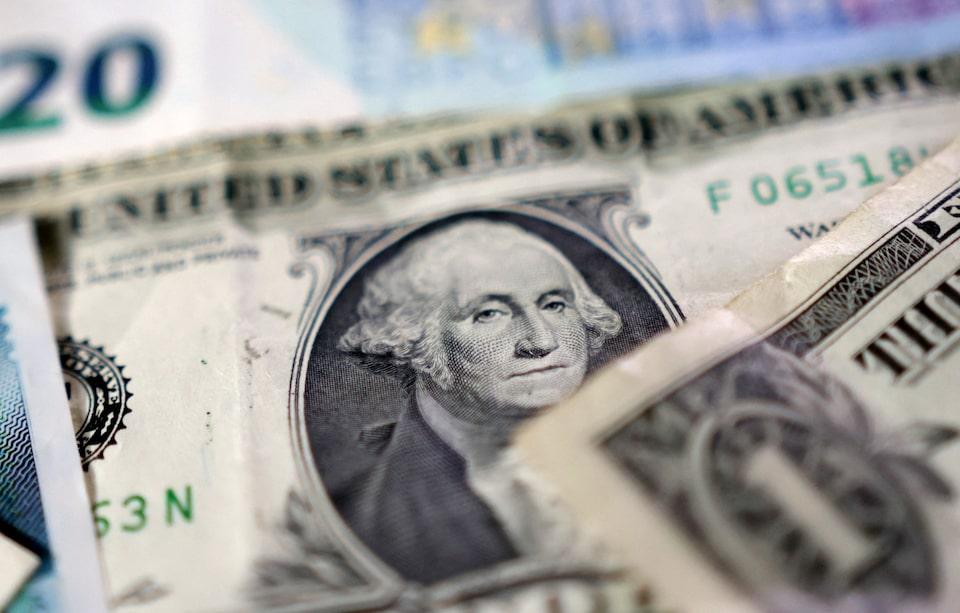
Dollar hits fresh record low against Taiwan dollar Dollar trims losses slightly against yen after ISM data Fed seen on hold this week, less chance of June cut Euro, sterling gain ahead of central bank meetings NEW YORK, May 5 (Reuters) - The U.S. dollar weakened against major currencies, including the yen and the euro, on Monday as markets weighed continued uncertainty from President Donald Trump's tariff policies and their impact on the economy. The greenback slid to a three-year low against the Taiwan dollar to 28.8150 amid speculation that Taiwan was letting its currency appreciate as part of a trade deal with the U.S., or at least was unwilling to intervene to stop it rising alongside sharp inflows in capital. Sign up here. Other Asian-Pacific currencies, including the Australian dollar , gained against the U.S. dollar. The Aussie reached as high as $0.64935, its highest since December last year. The selloff of the dollar against Asian currencies is partly driven by the unwinding of large, un-hedged positions taken by some investors such as life insurance companies in Taiwan amid talk of more U.S. tariffs, said Marc Chandler, chief market strategist at Bannockburn Global Forex. "The dollar sold off in Asia partly because some people are worried there'd be semiconductor tariffs by the U.S. to be announced as early as Wednesday and talk that in these bilateral trade talks the U.S. could transfer currency appreciation in East Asia," Chandler said. Trump doubled down on tariff-driven policies during an interview on Sunday, reiterating that the duties on U.S. imports would eventually make Americans rich. He announced on Sunday a new 100% tariff on films made outside the U.S. Treasury Secretary Scott Bessent on Monday defended Trump's tariffs, emphasizing that his broader agenda including tax cuts would eventually lead to long-term economic growth. Markets have been affected by the fact that Trump is not leaving his stance that tariffs are important, said Juan Perez, director of trading at Monex USA in Washington. The dollar was down 0.73% against the Japanese yen at 143.885 . Against the Swiss franc , the dollar weakened 0.50% to 0.82255. Trump said he would not attempt to remove Federal Reserve Chair Jerome Powell, but repeated calls for lower interest rates and called Powell a "stiff". The Fed meets on Wednesday and is widely expected to leave rates steady following a solid March payrolls report. Perez said the U.S. dollar was being hurt the most by chaos in the markets. "I think we're returning today to...this very sour mood and descent and this idea that overall you may not necessarily rely on American markets the way you used to. And that's been seen across Treasuries." Markets now imply only a 37% chance of a Fed rate cut in June, down from 64% a month ago. Goldman Sachs and Barclays both shifted their cut calls to July from June. The dollar trimmed its losses briefly against the yen after the Institute for Supply Management report for April showed a larger-than-expected pickup in growth in the U.S. services sector, which accounts for two-thirds of the American economy. Chinese onshore markets were closed but the yuan traded offshore hit its highest in almost six months at 7.1831 per dollar as investors wagered Beijing might let its currency strengthen as part of trade talks with Washington. The yuan was last up 0.12% to 7.2014 per dollar. In Europe, the euro was up 0.15% at $1.131600 and the pound was up 0.21% at $1.32950. The Bank of England will meet on Thursday and is widely expected to cut rates by a further 25 basis points to 4.25%. Central banks in Norway and Sweden also meet this week and are expected to keep rates steady. (This story has been corrected to say that the US dollar slid to a three-year low, not record low, against the Taiwan dollar, in paragraph 2) https://www.reuters.com/world/asia-pacific/dollar-gets-limited-lift-jobs-trade-questions-linger-2025-05-05/
2025-05-04 23:02
Benchmarks end at their lowest since February 2021 OPEC+ says to hike output by 411,000 bpd in June OPEC+ eyes full unwinding of voluntary output cuts by Oct. -sources Barclays, ING cut 2025 Brent forecasts NEW YORK/LONDON, May 5 (Reuters) - Oil fell by more than $1 a barrel on Monday to settle at over four-year lows as an OPEC+ decision to expedite its output hikes stoked fears about rising global supply at a time when the demand outlook is uncertain. Brent crude futures settled at $60.23 a barrel, down $1.06, or 1.7%. U.S. West Texas Intermediate crude fell$1.16, or 2%, to end at $57.13 a barrel. Both benchmarks settled at their lowest since February 2021. Sign up here. Last week, Brent shed 8.3% and WTI lost 7.5% after Saudi Arabia signaled it could cope with a prolonged lower price environment. That offset optimism on the demand side that U.S.-China tariff talks could occur, Saxo Bank analyst Ole Hansen said. On Saturday, OPEC+ agreed to further speed up oil production hikes for a second consecutive month, raising output in June by 411,000 barrels per day (bpd). The June increase by eight participants in the OPEC+ group, which includes allies like Russia, will take the total combined hikes for April, May and June to 960,000 bpd. That represents a 44% unwinding of the 2.2 million bpd of various cuts agreed on since 2022, according to Reuters calculations. "For the producers outside of the OPEC+ group, which is now nearly 60% of global oil supply, the market share gains may have reached a peak if these new barrels are fed into the market and prices move lower," said Peter McNally, a Third Bridge analyst. The group could fully unwind its voluntary cuts by the end of October if members do not improve compliance with their production quotas, OPEC+ sources told Reuters. OPEC+ sources have said Saudi Arabia is pushing OPEC+ to speed up the unwinding of earlier output cuts to punish fellow members Iraq and Kazakhstan for poor compliance with their production quotas. "The production increase, instigated by Saudi Arabia, is as much about challenging U.S. shale supply as it is to penalize members that have benefited from higher prices while flouting their production limits," Saxo Bank's Hansen said. ING and Barclays have also lowered their Brent crude forecasts following the OPEC+ decision. Barclays reduced its Brent forecast by $4 to $66 a barrel for 2025 and by $2 to $60 for 2026, while ING expects Brent to average $65 this year, down from $70 previously. "Expectations of mounting global oil inventories in the coming months given the demand deterioration expected off of the Trump tariffs is tending to accentuate bearish supply-side news," Jim Ritterbusch, of U.S. energy consultancy Ritterbusch and Associates, said in a note. Widespread recession fears and weak refined fuel import demand are also weighing on oil prices, said David Wech, chief economist at Vortexa, adding that since mid-February the data analytics firm had noted an approximate 150 million-barrel build in global crude stocks in onshore tanks and on tankers at sea. Oil below $50 a barrel could hurt final investment decisions for offshore projects, Girish Saligram, CEO of oilfield services company Weatherford International, said at the Offshore Technology Conference in Houston. "If we see prices sustain below $50 a barrel, I think it could create a little bit of a lull for some of the new final investment decisions," Saligram said. https://www.reuters.com/markets/commodities/oil-falls-more-than-2bbl-opec-set-accelerate-output-hikes-2025-05-04/

2025-05-04 22:36
NAPERVILLE, ILLINOIS, May 4 (Reuters) - Chicago wheat futures hit contract lows last week, reflective of speculators’ long-standing bearish position on the grain. Investors’ pessimistic wheat stance earlier this year clashed strongly with their enormously bullish bets in Chicago corn, the latter of which have been significantly reduced in the wake of global trade uncertainties. Sign up here. The clash has again resurfaced, but in a slightly different manner. In the week ended April 29, money managers boosted their net short position in CBOT wheat futures and options to a two-year high of 121,415 contracts versus about 90,000 in the previous week. That represented funds’ largest weekly selloff in CBOT wheat since 2017, predominantly the result of new short bets. Money managers also staged a relatively large selloff in CBOT corn futures and options through April 29, slashing their net long to 71,329 contracts versus 112,805 a week earlier. Funds have been bullish in CBOT corn for six months, though their latest stance is significantly below the year’s maximum of 364,217 contracts in early February. Since records began in 2006, such a bearish wheat stance has always corresponded with a bearish corn stance of some degree. Equally, when funds hold a moderately bullish corn view, their wheat bearishness is never as severe as it is now. The latest deviation does not stick out as harshly as the one from earlier in the year, but it may suggest that funds are either overly pessimistic on wheat or overly optimistic on corn. Last week, most-active CBOT July wheat traded at an average premium of $0.58 per bushel to July corn , well below the decade-average of about $1.30. However, the two contracts had briefly reached parity as recently as 2023 and 2021. WHEAT SLUMP Funds’ lack of enthusiasm for wheat extends beyond the Chicago contract. In the week ended April 29, money managers established a record net short position in Kansas City wheat futures and options of 67,269 contracts. Investors have been bearish toward K.C. wheat since August 2023. Chicago wheat last week established a small premium to K.C. wheat, the first in five months. Traditionally, K.C. wheat prices tend to run higher than those for Chicago. Recent timely rains for the U.S. hard red winter wheat crop have placed significant pressure on the K.C. contract. The wheat complex as a whole has been weighed down by the fact that exportable world wheat supplies are no longer expected to fall to multi-year lows. As of April 29, money managers’ bearish views on CBOT soybean meal futures and options were near-record large and up sharply on the week. On the other hand, funds extended their moderately bullish stance in CBOT soybean oil, their fifth consecutive week as net buyers. They also lifted their modest net long position in CBOT soybean futures and options, which reached 38,202 contracts. In addition to monitoring any political and trade-related developments, traders in the upcoming week will begin to anticipate the U.S. Department of Agriculture’s monthly outlook due on May 12. The report will feature USDA’s first look at the 2025-26 marketing year as well as pertinent updates to 2024-25, where analysts might be watching for a possible uptick in U.S. corn exports. Karen Braun is a market analyst for Reuters. Views expressed above are her own. https://www.reuters.com/markets/commodities/funds-cbot-corn-wheat-views-moving-out-of-bounds-again-braun-2025-05-04/