2025-05-02 20:33
ORLANDO, Florida, May 2 (Reuters) - TRADING DAY Choppier waters ahead? Sign up here. One of the biggest surprises in a week overflowing with them - from top-tier economic indicators, to company earnings and policy decisions from around the world - was how steadfast financial markets were. Global and U.S. stocks closed the week with gains of up to 3%, the dollar advanced, Treasury yields rose, and the VIX index of U.S. equity market volatility eased. On the surface, a strong week for investor sentiment and risk sentiment. But that would be only half the story. Figures showed that the U.S. economy shrank in the first quarter - a statistical anomaly due to a record hit from trade, perhaps, but the first contraction in three years, nevertheless, and putting the economy halfway towards a technical recession. Some of that gloom was countered by unequivocally positive GDP figures from the euro zone. And yields and stocks leaped higher on Friday after April's non-farm payrolls report showed the Trump administration's global trade war has yet to be materially felt in the U.S. labor market. On the corporate front, dozens of leading global firms cut or declined to give forecasts in their first-quarter earnings, such is the uncertainty surrounding tariffs. Yet the overall tone from these calls this week was positive, and investors have consistently bought the post-Liberation Day dip. One of the most significant developments this week for world markets came from Tokyo, where the Bank of Japan kept interest rates on hold as expected but slashed its growth outlook and lowered its inflation forecasts. The yen tumbled, but still ended the week essentially flat. So, some huge price swings in individual shares and assets. In the U.S. and beyond, there's little evidence that trade uncertainty is prompting companies to lay off workers or jack up prices. Not yet anyway. There's a growing belief that U.S. President Donald Trump is backing away from his more belligerent tariff threats, and that a more receptive Washington is closing in on several bilateral trade deals. Tensions with China may even be cooling too. However, the risks to growth and markets lie ahead, and a "cliff-edge type of adjustment" in the coming months is possible, warns RBC BlueBay Asset Management's Mark Dowding. "There appear to be similarities to the Roadrunner cartoon, in which Wile E. Coyote keeps on running, long after the ground has disappeared beneath his feet, ahead of the inevitable moment of realisation when gravity kicks in," he wrote on Friday. With consumer sentiment sliding and inflation expectations rising, stagflation looms. For markets, that suggests choppy waters ahead rather than plain sailing. I'd love to hear from you, so please reach out to me with comments at [email protected] , opens new tab. You can also follow me at @ReutersJamie and @reutersjamie.bsky.social. This Week's Key Market Moves Chart of the Week In his first term in office, U.S. President Donald Trump regularly took credit on social media for the boom on Wall Street. He has been less vocal this time around, and with stocks down since his inauguration, this week he posted: "This is Biden's Stock Market, not Trump's," adding that the recent slide had "NOTHING TO DO WITH TARIFFS". April 30 marked the first 100 days of Trump's second term, and the following chart shows where they rank in history. Stocks have clawed back some of these losses in the last two days, and if the rebound continues, maybe it will be Trump's stock market after all. Here are some of the best things I read this week: What could move markets on Monday? Opinions expressed are those of the author. They do not reflect the views of Reuters News, which, under the Trust Principles , opens new tab, is committed to integrity, independence, and freedom from bias. Trading Day is also sent by email every weekday morning. Think your friend or colleague should know about us? Forward this newsletter to them. They can also sign up here. https://www.reuters.com/markets/global-markets-trading-day-2025-05-02/

2025-05-02 20:31
Central bank expected to hold rates steady on Wednesday Fed faces White House pressure to cut rates Tariff developments in focus as trade hopes boost stocks NEW YORK, May 2 (Reuters) - The Federal Reserve meeting in the coming week is set to test the U.S. stock market's sharp rebound, with investors hoping the central bank is poised to resume lowering interest rates in the months ahead. During the rally, stocks have erased the slump set off by President Donald Trump's sweeping tariffs. After gaining on Friday, the S&P 500 (.SPX) , opens new tab was up 0.3% since April 2, when Trump's "Liberation Day" tariff announcement sent stocks plunging and led to some of the market's most volatile swings in 50 years. Sign up here. While the Fed is widely projected to hold borrowing costs steady in its monetary policy statement on Wednesday, market pricing indicates expectations that the central bank could cut as soon as June, although odds of such a move dimmed following Friday's solid U.S. jobs report. "The Fed is one of the few levers that can be pulled in a timely fashion that can support market activity," said Dominic Pappalardo, chief multi-asset strategist at Morningstar Wealth. "If they start to signal that their inflation concerns are waning, that suggests they are closer to a cut, and I think that will be well received by markets." Trump's tariffs loom over policy decisions for central bank officials weighing concerns about a potential economic downturn against worries that tariffs will drive inflation higher. Data this week showed the U.S. economy contracted in the first quarter for the first time since 2022, but many analysts discounted the report, saying the weakness was driven by a surge in imports as businesses sought to avoid higher costs from tariffs. After cutting by one percentage point last year, the Fed has held its benchmark rate at 4.25% to 4.5% so far in 2025. Fed funds futures are factoring in at least three more 25-basis point cuts by December, according to LSEG data. The amount of expected easing this year fell after data on Friday showed U.S. employment increased by a higher-than-expected 177,000 jobs in April. The White House has raised pressure on the central bank to cut rates, with Trump harshly criticizing Fed Chair Jerome Powell, who has said the Fed would await more data on the economy's direction before changing rates. Last month, Trump raised the possibility he would seek to fire Powell, setting off market worries about damage to the Fed's independence. Trump later appeared to back off. At next week's meeting, Powell "might continue to sound hawkish to push back on the narrative that the Fed is going to be influenced by the White House," said Angelo Kourkafas, senior investment strategist at Edward Jones. Even after nine straight sessions of gains, the index's longest streak of daily increases since 2004, the S&P 500 remains down 7.5% from its February record high. Last month, the benchmark index dropped nearly 20% below that peak. Corporate results reports over the past few weeks have generally exceeded expectations. With about two-thirds of the S&P 500 having reported, companies in aggregate are posting earnings 7% above expectations versus a long-term average of 4.3% above estimates, according to LSEG IBES. Shares of megacaps Microsoft (MSFT.O) , opens new tab and Facebook parent Meta Platforms (META.O) , opens new tab gained on Thursday after their results, boosting equity indexes. Results in the coming week include Uber Technologies (UBER.N) , opens new tab, Walt Disney (DIS.N) , opens new tab and ConocoPhillips (COP.N) , opens new tab. Trade developments will remain in focus, with investors saying the market's rebound came on optimism that tensions were easing and that deals with other countries were progressing. Trump on April 9 paused hefty import levies on many countries for 90 days, as the U.S. negotiates with other countries. That move sent stocks soaring. "The market wants to see, and expects to see, some solid signed deals with some of our trading partners," said Scott Wren, senior global market strategist at the Wells Fargo Investment Institute. "The market is anticipating something, and it's time for the rubber to hit the road." https://www.reuters.com/business/wall-st-week-ahead-fed-outlook-focus-us-stocks-rally-picks-up-steam-2025-05-02/
2025-05-02 20:30
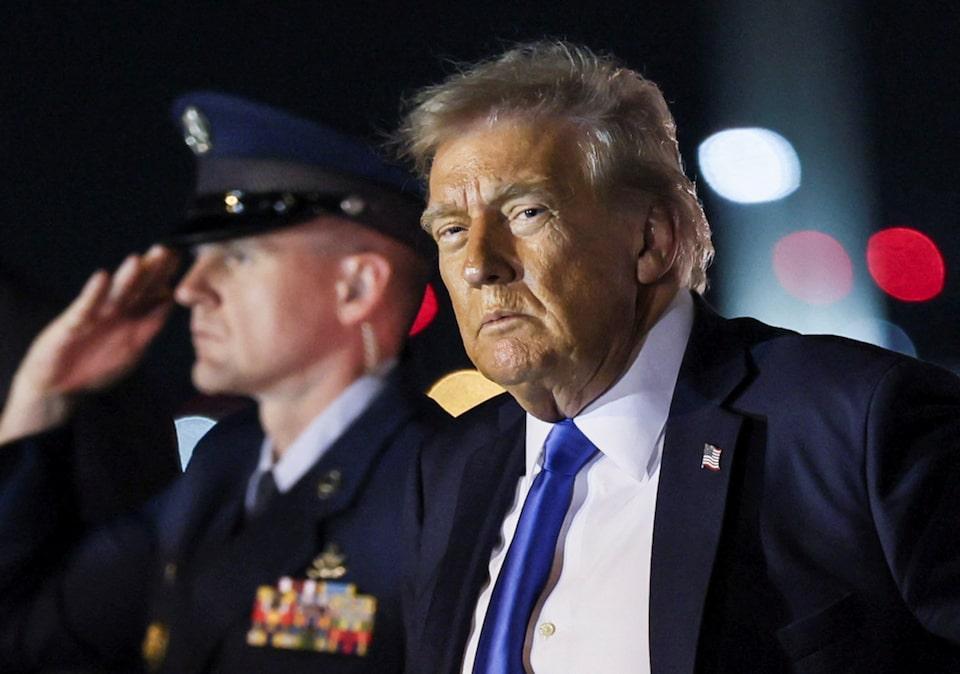
Trump seeks big boost in homeland security spending Budget plan aims to cut non-defense discretionary spending 23% Critics say budget cuts services needed by working Americans WASHINGTON, May 2 (Reuters) - U.S. President Donald Trump's administration on Friday proposed a $163 billion cut to the federal budget that would sharply reduce spending on education, housing and medical research next year, while increasing outlays for defense and border security. The administration said the proposed budget would raise homeland security spending by nearly 65% from 2025 enacted levels, as Trump cracks down on illegal immigration. Sign up here. Non-defense discretionary spending, which excludes the massive Social Security and Medicare programs and rising interest payments on the nation's debt, would be cut by 23% to the lowest level since 2017, the White House Office of Management and Budget said in a statement. The proposal would cleave more than $2 billion from the tax-collecting Internal Revenue Service and would slice the budgets of the National Institutes of Health and the Centers for Disease Control and Prevention by more than 40%. Trump's first budget since reclaiming office seeks to make good on his promises to boost spending on border security while slashing the federal bureaucracy. Congressional Democrats blasted the domestic spending cuts as too severe, and some Republicans called for boosting spending on defense and other areas. "At this critical moment, we need a historic budget -- one that ends the funding of our decline, puts Americans first, and delivers unprecedented support to our military and homeland security," OMB Director Russ Vought said in the statement. Vought, while at the Heritage Foundation, was an architect of Project 2025, a roadmap for scaling back the reach of the federal government. Trump disavowed that effort during the campaign but once in office, he made Vought his budget czar. The federal government has a growing $36 trillion debt pile, and some fiscal conservatives and budget experts worry Trump's proposal to extend his 2017 tax cuts will add to it. The so-called skinny budget is an outline of administration priorities that will give Republican appropriators in Congress a blueprint to begin crafting spending bills. Republican U.S. Senator Susan Collins, the chamber's top appropriator, reacted coolly. "This request has come to Congress late, and key details still remain outstanding. Based on my initial review, however, I have serious objections," Collins, of Maine, said. She cited concerns that defense spending was too low and worried about cuts to programs to help low-income Americans heat their homes. "Ultimately, it is Congress that holds the power of the purse," Collins said. STATE, EDUCATION HIT The budget proposal calls for a $50 billion cut at the State Department as it absorbs the U.S. Agency for International Development. The proposal calls for a $2.49 billion cut to the IRS, which one White House budget official said would end former President Joe Biden's "weaponization of IRS enforcement." Nonpartisan analysts say cuts to IRS can hurt tax collection and thus add to the deficit. OMB also called for sharp cuts at NASA's moon program and to federal law enforcement agencies including the FBI and Bureau of Alcohol, Tobacco, Firearms and Explosives, as Reuters reported was expected. The proposal furthers Trump's promise to shutter or greatly diminish the Department of Education, slashing about 15% of the department's budget. Funding for the Department of Housing and Urban Development, which oversees housing assistance programs, would be cut almost in half. "Donald Trump’s days of pretending to be a populist are over," said top U.S. Senate Democrat Chuck Schumer of New York in a statement. "His policies are nothing short of an all-out assault on hardworking Americans." The administration says the budget would boost discretionary defense spending by 13%, but Republican Senator Roger Wicker of Mississippi, chairman of the Senate Armed Services Committee, said defense spending would remain at levels set under Trump's Democratic predecessor Biden, which amounts to a cut due to inflation. Officials said the White House believes Republicans in Congress will add more defense spending as part of the process of passing Trump's tax-cut bill on a party-line vote, bypassing the Senate filibuster. "We think the Hill will be with us on this as we get to talk to more of them along the way," Vought said in an interview with Fox Business. Outlays in fiscal 2024, which ended October 1, amounted to $6.8 trillion, according to the Congressional Budget Office. Lawmakers often make substantial changes in the White House budget request, but Trump commands unusual sway over Republican lawmakers and may get much of what he seeks. Republicans in Congress hope to enact the tax cut bill by July 4 and are working to bridge internal divisions over proposed cuts in federal spending to pay for it. They may have to factor in growing stress in the U.S. economy from Trump's tariff hikes that are upending global trade. The White House budget calls for an additional $500 million in discretionary spending to bolster border security and aid Trump's push for mass deportations, as well as $766 million to procure border security technology funding, and funding to maintain 22,000 border patrol agents and hire additional Customs and Border Protection officers. The administration is still working to put together a separate rescission package to codify cuts already made by the Department of Government Efficiency, a budget official said. Republican senators have been demanding this process - stipulated by law, because the administration is withholding funds previously approved by Congress. https://www.reuters.com/world/us/trump-unveils-federal-budget-blueprint-2025-05-02/
2025-05-02 20:29
S&P 500 and Dow hit 9-straight day of gains U.S. economy adds 177,00 jobs Apple slips as tariff costs weigh Indexes up: Dow 1.39%, S&P 500 1.47%, Nasdaq 1.51% NEW YORK, May 2 (Reuters) - Wall Street stocks advanced on Friday, notching the second straight week of gains, helped by strong economic data and potential easing of trade tensions between the U.S. and China. The U.S. economy added 177,000 jobs in April, exceeding expectations, while the unemployment rate held steady at 4.2%. The data helped to assuage concerns of a economic slowdown following a Commerce Department report, showing a contraction in U.S. gross domestic product for the first time in three years, weighed down by a tariff-induced flood of imports. Sign up here. "The stock market is cheering this morning's payroll report but I have to point out that job growth did slow on the month and I haven't seen too many comments about that," said Talley Leger, chief market strategist at The Wealth Consulting Group. "I was a bit surprised because I was expecting a sharper slowdown given that non-farm payroll survey happened the week after the tariffs were announced. So I think the market is taking this in a positive light." Beijing said on Friday it was evaluating an offer from Washington to hold talks over President Donald Trump's 145% tariffs, which he had imposed on Chinese imports. The tit-for-tat tariffs between the world's two largest economies have kept investors on edge, with both sides unwilling to be seen backing down in a trade war that has roiled global markets. Still, Trump's reversal of some tariffs has helped U.S. stock indexes recover from recent losses. The S&P 500 has erased the slump set off by Trump's "Liberation Day" tariff announcement on April 2, with the index now up 0.3% since the close of April 2. The tech-heavy Nasdaq was trading at levels last seen before April 2. The S&P 500 also reached its ninth consecutive session of gains, matching a winning streak from 2004, while the Dow hit a nine-day winning streak for the first since December 2023. For the week, the S&P 500 gained 2.9%, the Dow climbed 3%, and the Nasdaq added 3.43%. The Dow Jones Industrial Average (.DJI) , opens new tab rose 564.47 points, or 1.39%, to 41,317.43, the S&P 500 (.SPX) , opens new tab gained 82.54 points, or 1.47%, to 5,686.68 and the Nasdaq Composite (.IXIC) , opens new tab gained 266.99 points, or 1.51%, to 17,977.73. "I do think what today is saying is that the economy is a lot stronger than people thought and a lot more resilient in the face of all of these tariffs and fears about tariffs," said Thomas Hayes, chairman at Great Hill Capital in New York. Apple (AAPL.O) , opens new tab fell nearly 4% after the iPhone maker trimmed its share buyback program by $10 billion and CEO Tim Cook told analysts that tariffs could add about $900 million in costs this quarter. Other so-called Magnificent Seven stocks such as Meta Platform (META.O) , opens new tab rose 4.3% and Nvidia (NVDA.O) , opens new tab gained 2.6%. Amazon (AMZN.O) , opens new tab dipped 0.1%. Chevron rose 1.6% (CVX.N) , opens new tab and ExxonMobil (XOM.N) , opens new tab gained 0.4% after both energy giants reported quarterly results. Block (XYZ.N) , opens new tab slumped 20% after cutting its profit forecast for 2025 and missing estimates for quarterly earnings. Video game maker Take-Two Interactive (TTWO.O) , opens new tab fell nearly 7% after it delayed the release of "Grand Theft Auto VI" to May 2026. Advancing issues outnumbered decliners by a 3.81-to-1 ratio on the NYSE. There were 144 new highs and 47 new lows on the NYSE. The S&P 500 posted 12 new 52-week highs and 3 new lows while the Nasdaq Composite recorded 51 new highs and 38 new lows. Volume on U.S. exchanges was 15.99 billion shares, compared with the 19.3 billion average for the full session over the last 20 trading days. https://www.reuters.com/world/us/futures-rise-signs-easing-trade-tensions-jobs-data-focus-2025-05-02/
2025-05-02 20:21
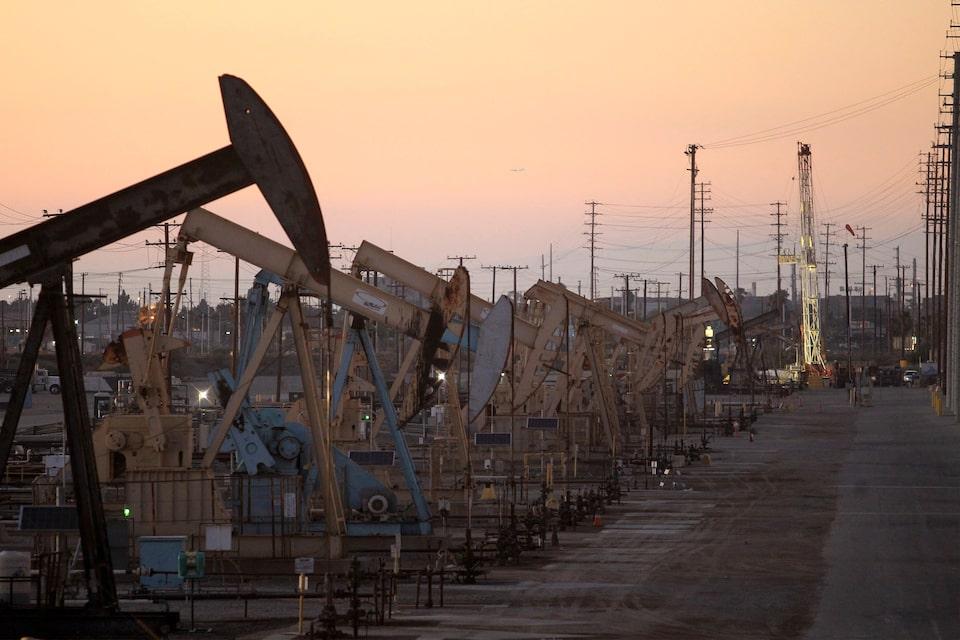
May 2 (Reuters) - Goldman Sachs on Friday said it expects OPEC+ to announce a second consecutive increase in supply for June on Saturday, due to modest compliance from Kazakhstan, lower-than-expected OECD inventories, and Saudi Arabia's ability to handle lower oil prices. The Wall Street bank expects the Organization of the Petroleum Exporting Countries and its allies (OPEC+) to announce a 410,000-barrel-per-day (bpd) increase in supply for June in its meeting on Saturday, from its prior estimate of 140,000 bpd, according to a note. Sign up here. The OPEC+ meeting was moved up to Saturday from the original plan of Monday, three sources told Reuters on Friday. The expected increase would be three times the level agreed in December to start unwinding cuts. Goldman Sachs' (GS.N) , opens new tab prior OPEC forecast relied on a substantial rise in compliance with production cuts, but Kazakhstan's compliance has risen only modestly, it said. Moreover, inventories in the Organisation for Economic Co-operation and Development (OECD) countries for April undershot the bank's expectations by 28 million barrels due to supply misses in Venezuela and U.S. shale. Saudi Arabia has also signaled that it can weather lower oil prices, consistent with research from Goldman Sachs' economists, the bank said in the note. "This week's drop in oil prices, and the rises in implied volatility and put skew suggest that the market's central expectation has also converged to a 410,000-bpd increase," Goldman Sachs said. Oil fell 8% this week in their biggest weekly losses since the end of March ahead of the OPEC+ meeting, with Brent crude settling at $61.29 a barrel on Friday and West Texas Intermediate crude futures (WTI) at $58.29 a barrel. Goldman maintained its oil price forecast, expecting Brent to average $63 and WTI $59 for the remainder of 2025, and Brent at $58 and WTI at $55 in 2026. The bank estimated that a global slowdown or a complete reversal of the 2.2 million bpd of voluntary OPEC+ cuts could push Brent prices into the $40s in 2026, and below $40 in an unlikely extreme scenario. https://www.reuters.com/markets/commodities/goldman-sachs-sees-410000-bpd-hike-opec-june-supply-2025-05-02/
2025-05-02 20:18
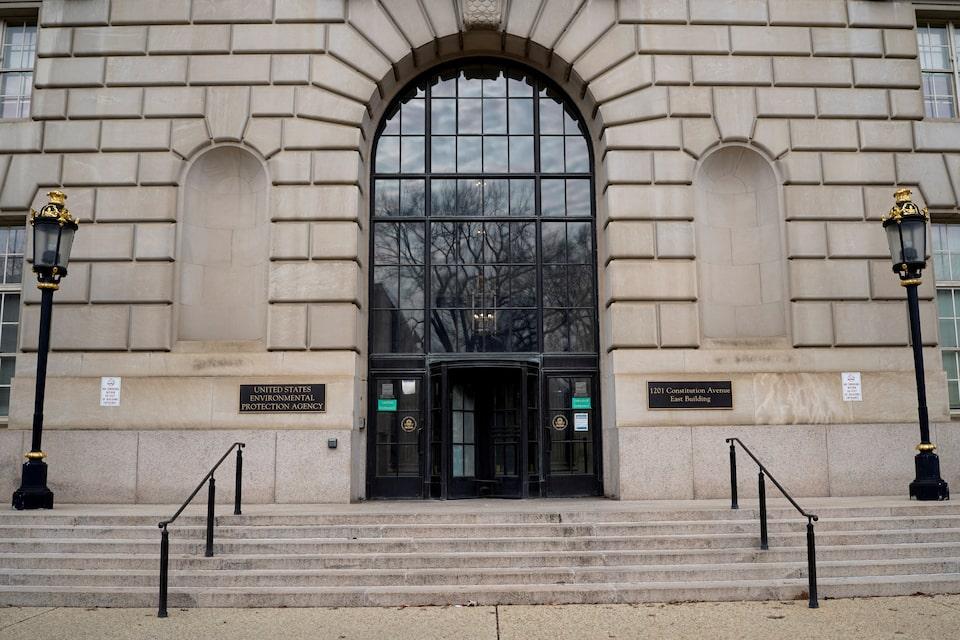
EPA plans to cut staff to Reagan administration levels Research will shift to office run by political appointees Advocacy groups concerned about scientific independence WASHINGTON, May 2 (Reuters) - The U.S. Environmental Protection Agency announced plans on Friday to slash its budget by $300 million in fiscal year 2026, reduce staffing to 1980s levels and dissolve its research and development office as part of a sweeping overhaul of the agency. The reorganization will consolidate several key offices, reflecting plans to cut regulatory red tape and promote more energy development, as laid out in President Donald Trump's executive orders, EPA Administrator Lee Zeldin said in a video message. Sign up here. "With these organizational improvements, we can assure the American people that we are dedicated to EPA's core mission of protecting human health and the environment," Zeldin said, adding the agency will be better positioned to match Trump's goals to "unleash American energy, revitalize domestic manufacturing, cut costs for families and pursue permitting reform." Critics including the Union of Concerned Scientists said the staff cuts and changes in organization of the EPA would force staff members to follow the political program of the president rather than scientific evidence. Zeldin said EPA staffing will fall to a level last seen when President Ronald Reagan occupied the White House in the 1980s, when the agency was led by an administrator who was critical of it. In 1984, the EPA had just over 11,400 staff members compared to more than 15,100 in 2024. The reorganization follows weeks of speculation about staff cuts and Zeldin announcing the cancellation of billions of dollars of EPA grants. Major changes to the agency's structure include shifting scientific research from the Office of Research and Development to different program offices, such as a new office of applied science that would align research with the politically-appointed administrator's policy priorities. Researchers had warned that dissolving the research unit would undermine scientific independence. The EPA also announced it was dissolving the Office of Science and Technology, which helped develop scientific research and guidelines for water policy. Other changes will include creation of an Office of State Air Partnerships within EPA's Office of Air and Radiation that will work with state permitting agencies to resolve permitting concerns and process state plans to meet federal rules. It will also add 130 positions to the Office of Chemical Safety and Pollution Prevention to work on reviewing a backlog of over 504 new chemicals and over 12,000 pesticides. The 1,500 research and development staff would need to apply for around 400 of the newly created positions in other offices, employees were told in an all-hands meeting at EPA on Friday. It was not clear what would happen to those employees that do not get new positions. The agency extended the deadline by a week, to May 5, for accepting a deferred resignation for employees. The EPA will also elevate issues of cybersecurity, emergency response, and water reuse and conservation, it said. Advocacy group the Union of Concerned Scientists on Friday said that shuttering the EPA's scientific arm that conducts independent research and folding it into policy offices will turn the EPA into a purely political agency. “Dismantling this office, along with the administration’s plans to reclassify scientists as political appointees...could very well turn a premier science agency into a political arm of the president,” said Chitra Kumar, managing director of UCS' Climate and Clean Energy Program. https://www.reuters.com/business/world-at-work/us-epa-plans-reduce-staff-1980s-levels-cut-budget-by-300-million-2025-05-02/