2025-05-02 11:13
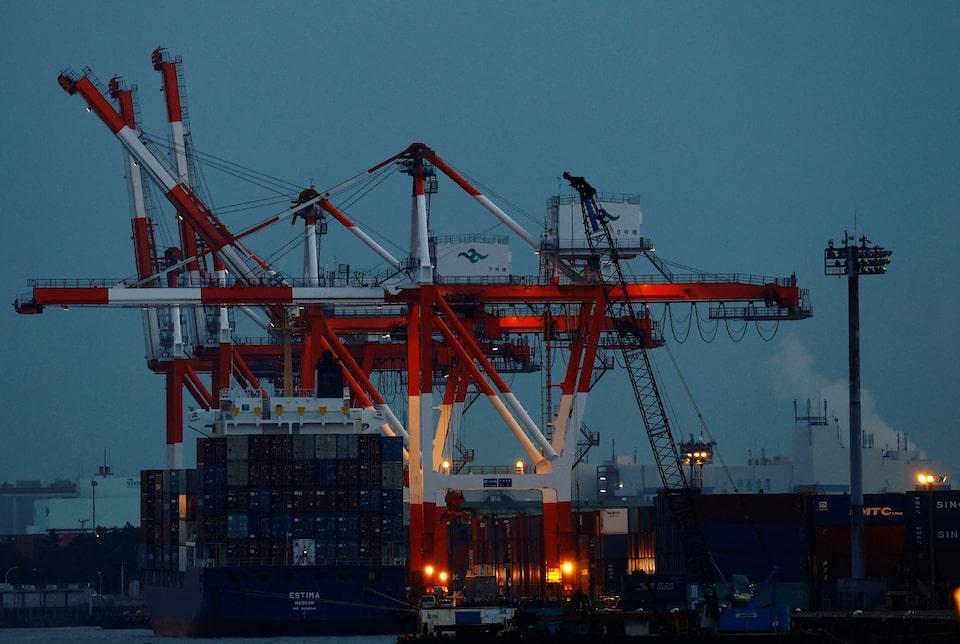
US, Japan had 'frank and constructive' talks, Treasury says US negotiators were reluctant to lower levies, Nikkei reports Next meeting expected in mid-May WASHINGTON/TOKYO May 2 (Reuters) - Top U.S. and Japanese officials agreed to start immediate working-level consultations after "frank and constructive" trade talks in Washington on Thursday, the U.S. Treasury Department said on Friday, but Japanese accounts were more downbeat. U.S. Treasury Secretary Scott Bessent, Commerce Secretary Howard Lutnick and Trade Representative Jamieson Greer met with Japan's Economic Revitalization Minister Ryosei Akazawa, another set of discussions sought by U.S. trading partners to avert high tariffs imposed by U.S. President Donald Trump last month. Sign up here. "During their frank and constructive discussions on fair and reciprocal trade, Secretary Bessent highlighted to Minister Akazawa both tariffs and non-tariff measures, the importance of economic security as national security, and other issues of concern," Treasury said in a statement. Bessent, in a posting on X, said he was "highly encouraged by Japan’s fast and positive engagement with the United States" and expressed hope that the two allies could soon reach consensus on a range of bilateral issues. Greer also welcomed Japan's engagement in discussions with the United States and reaffirmed the strong bilateral relationship between the United States and Japan. However, Japanese accounts of the meeting struck a more cautious tone. The Nikkei newspaper reported earlier Friday that U.S. tariff negotiators appeared reluctant to lower levies on cars, steel and aluminum in Thursday's meeting, a stance that made the Japanese side feel that cooperation could be difficult. Richard Katz, a former senior fellow at Carnegie Council for Ethics In International Affairs, said the U.S. refusal to even discuss Trump's 25% tariffs on autos and auto parts, steel, and aluminum was "quite an aggressive stance." The two countries had talked of reaching an agreement by July, when the 90-day pause on Trump's reciprocal tariffs on Japan and other countries are supposed to end, but those prospects now appeared dimmer, he said. Nikkei, citing unnamed sources, said Japanese officials explained the measures they would take to reduce Japan's huge trade surplus with the U.S. such as reviewing non-tariff barriers on auto imports and expanding purchases of U.S. agricultural goods. But Japanese Prime Minister Shigeru Ishiba later said "the tariffs, represented by the ones on cars, are absolutely unacceptable." "Reduction of (the U.S.) trade deficit should be possible ... and we'll make efforts to reduce it, but that should never sacrifice Japan's jobs," Ishiba said in an interview with Fuji News Network. Akazawa told Reuters that the two sides hoped to meet again in mid-May. On April 2, Trump imposed a 10% tariff on all countries except Canada, Mexico and China, along with higher tariff rates for many big trading partners, including Japan, which faces a 24% tariff rate starting in July unless it can negotiate a deal with the U.S. Washington is pushing Japan to lower its own tariffs and Trump has accused the country of intentionally weakening the yen to give its exports a trade advantage - an accusation Tokyo denies. Trump's tariffs, including a 25% tariff on imported cars, are already weighing heavily on the Japanese economy. https://www.reuters.com/business/us-cedes-little-ground-key-tariffs-talks-with-japan-nikkei-says-2025-05-02/
2025-05-02 10:43
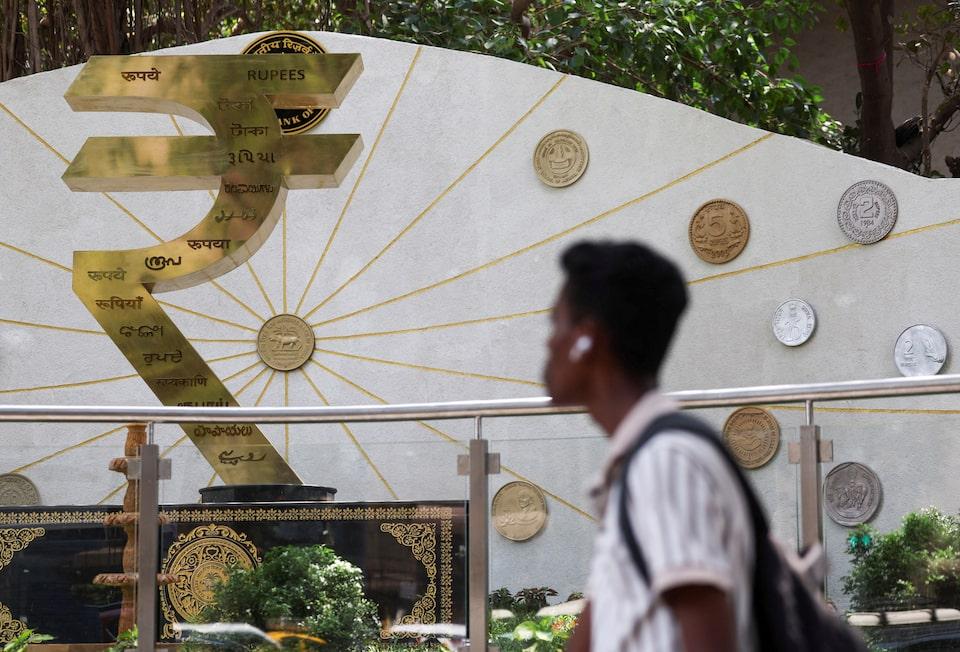
MUMBAI, May 2 (Reuters) - The Indian rupee soared past 84 per U.S. dollar to touch a near six-month peak on Friday before reversing course on the back of likely dollar buying intervention by the central bank, via state-run lenders, traders said. Strong portfolio inflows and culling of bearish positions on the local currency had hoisted it to a peak of 83.78 earlier in the day, its highest since October 2024, but dollar bids from state-run banks and importers ate into the gains. Sign up here. The rupee closed at 84.58, down 0.1% on the day. It rose 1% for the week, though, bolstered by inflows into Indian equities and optimism about a U.S.-India trade deal. U.S. President Donald Trump said earlier this week that he has "potential" trade deals with India, South Korea and Japan. The rupee's sharp rally over the last two months has pulled it up by over 3%, helping it wipe out most of its losses since Donald Trump's victory in the U.S. elections - and ensuing policy changes - hurt risk assets across the board. But the currency's sharp moves have also pushed up the rupee's 1-month realised volatility, which has risen to an over two-year peak of 5.1%. "Volatility may continue to persist with 83.44 acting as a strong base, while 85.60 is a broader resistance," said Kunal Sodhani, vice president at Shinhan Bank India. The dollar index, meanwhile, was down 0.3% on Friday at 99.8, heading into closely watched U.S. labour market data, due later on Friday. Asian currencies rose by 0.6% to 1.4% as signs of easing U.S.-China trade tensions sparked optimism following weeks of tumult. The offshore Chinese yuan touched an over one-peak above 7.23 per dollar. "The dollar’s recovery trend could be put on pause today, but may resume soon as US assets can keep benefiting from the more subdued tone on US trade policy," ING Bank said in a note. https://www.reuters.com/world/india/rupee-hits-six-month-peak-before-retreating-likely-central-bank-intervention-2025-05-02/
2025-05-02 10:25
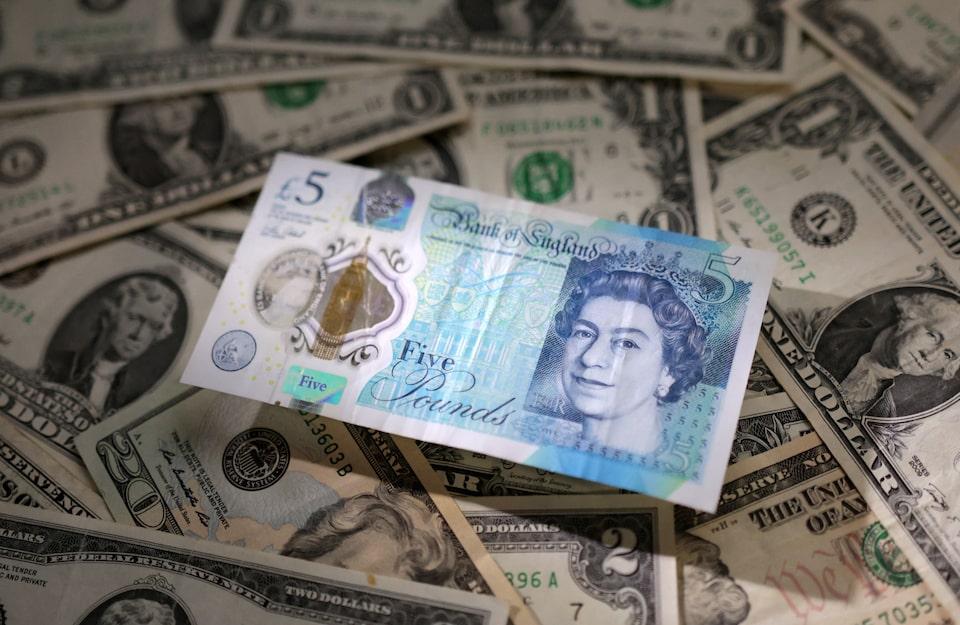
May 2 (Reuters) - Sterling edged up against a weaker dollar on Friday, staying near a three-year high scaled earlier in the week as the U.S. currency lost ground over U.S. President Donald Trump's announced sweeping tariffs. At 1018 GMT, the pound was up 0.1% versus the dollar to 1.3292, though it lost a little ground on the euro, to trade at 85.26 pence to the common currency. . Sign up here. The dollar receded on Friday ahead of key nonfarm payrolls data due later in the session, falling even as China-U.S. trade tensions showed signs of easing. Traders are now looking ahead to the Bank of England's next policy decision due next Thursday, with consensus betting on a 25 bps cut. But some economists think the BoE will soon need to speed up its gradual approach to rate cuts as the global growth outlook darkens due to Trump's tariffs. The impact of tariffs has already become apparent with a survey on Thursday confirming British manufacturing activity shrank for the seventh month in a row in April, also showing the impact of Britain's tax hike for employers. "An investment environment characterised by elevated uncertainty, widening credit spreads and a positive correlation to a (U.S. dollar)-negative environment, in our view, favours a weaker (pound)," Danske Bank analysts wrote in a note. Britain is hoping to soften the impact of U.S. tariffs by forging an economic agreement with the Trump administration and working to remove post-Brexit trade barriers with the European Union. Elsewhere, UK politics is in the spotlight after Nigel Farage's right-wing Reform UK won a fifth parliamentary seat, its first post as mayor and many positions on local councils in early election results on Friday. "The result underscores growing concerns within Labour about the rise of the populist right, with Reform making gains across England," said George Vessey, lead FX and macro strategist at Convera in a note. https://www.reuters.com/markets/europe/sterling-edges-up-against-weaker-dollar-ahead-key-us-data-2025-05-02/
2025-05-02 10:22
FRANKFURT, May 2 (Reuters) - Euro zone prices rose more than expected last month and underlying price pressures accelerated, an unwelcome trend that is still not expected to prevent another interest rate cut to insulate the economy from the fallout of a global trade war. Inflation in the 20 nations sharing the euro currency held at 2.2%, coming above expectations for 2.1% in a Reuters poll of economists as the price growth in services and unprocessed foods offset the dip in energy costs. Sign up here. A surge in services prices pushed up underlying or core inflation, which excludes volatile food and energy prices, to 2.7% from 2.4%, above expectations for 2.5% suggesting that domestic price pressures are higher than thought. While ECB policymakers normally place great emphasis on inflation prints - especially the uptick in core prices - the U.S. administration's trade war with the rest of the world may be far important in the run up to the bank's June 5 policy meeting. "The high level of uncertainty around the global and euro area growth outlook implies that the ECB may not pay much attention to the higher than expected April inflation numbers at its June meeting," Nordea economists said in a note. Indeed, financial investors continue to see about an 85% chance of a rate cut on June 5 and then at least one more move before the end of the year, which would take the ECB's deposit rate to 1.75% or lower. Still, the big rise in services prices is likely to bolster calls by policy hawks to slow the pace of policy easing before there is decisive evidence that the target is reached. Policymakers speaking on and off the record have also started to pave the way for the ECB's eighth rate cut in 13 months as the trade war's will weigh on prices and could even drag inflation below target. Indeed, the bank's communication has already shifted. While the ECB earlier saw inflation back at target only in 2026, policymakers now say that the target has essentially been achieved. This is because trade strife slows economic growth and curbs investment, and it has already pushed down energy prices and strengthened the euro, making imports cheaper. Moreover, many fear that China could start dumping its surplus products on Europe given its limited access to the U.S. "Today's increase in the core component does not change the outlook, which has become more disinflationary," Riccardo Marcelli Fabiani at Oxford Economics said. "Turmoil in financial markets amidst growth concerns has led to a significant drop in international oil prices, which will not only drag down energy inflation but also mean cheaper inputs for goods production," he said. While a more fragmented world economy could ultimately increase production costs, this upside risk is seen as rather limited and investors' longer-term inflation expectations are holding firm around the ECB's 2% target. More spending on defence could also boost prices since that is bound to increase budget deficits, but any such spending is still well into the future and may only have a limited impact on prices, economists says. https://www.reuters.com/business/finance/euro-zone-inflation-holds-steady-april-service-prices-surge-2025-05-02/

2025-05-02 08:14
LONDON, May 2 (Reuters) - Investors sold U.S. stocks in the week ending Wednesday and bought Japanese and European shares, BofA Global Research said on Friday. U.S. equities saw an $8.9 billion outflow in the week, BofA said in its regular round up of flows in and out of world markets that uses data from EPFR, but this follows large inflows. Sign up here. BofA said for every $100 inflow to U.S. stocks since the 2024 election, there had been a $5 outflow in the past three weeks. In contrast, Japanese shares saw their biggest weekly inflow since April last year, worth some $4.4 billion, while European shares saw inflows of just over $3 billion in a sign that investors continue to diversify exposure away from U.S. assets. But BofA said there was no sign of dumping of U.S. assets by foreign owners. U.S. stocks saw a nearly $4 billion inflow from foreign buyers, and while there was "tiny foreign selling" of U.S. Treasuries, that followed six weeks of inflows. Turmoil unleashed by U.S. President Donald Trump's April 2 tariff announcement has put the spotlight on whether foreign investors would continue to sell U.S. assets. Still, U.S. Treasuries saw their biggest outflow since late 2023, of some $4.5 billion, the BofA report showed. Gold meanwhile had its first weekly outflow since January. https://www.reuters.com/markets/global-markets-flows-bofa-urgent-2025-05-02/
2025-05-02 07:48
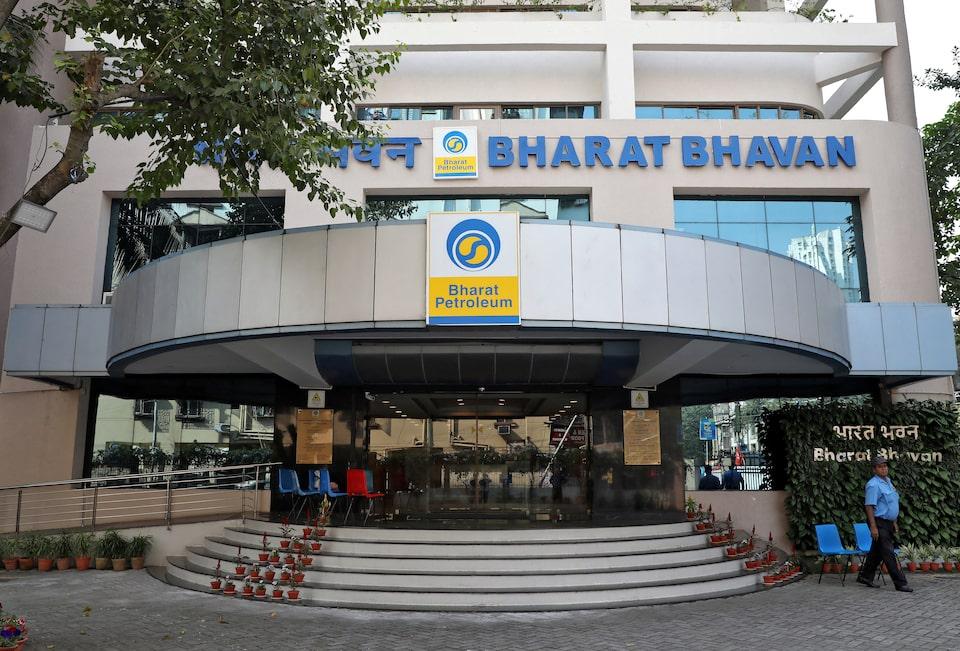
NEW DELHI, May 2 (Reuters) - Indian fuel retailer Bharat Petroleum Corp Ltd (BPCL.NS) , opens new tab expects a net gain of $20 to $30 a metric ton on delivery of U.S. liquefied petroleum gas through swap deal with Middle Eastern suppliers, its head of finance said on Friday. BPCL, India's second-biggest state refiner, is in talks with suppliers to swap contracted Middle Eastern cargo with U.S. supplies, Vetsa Ramakrishna Gupta told analysts. Sign up here. A U.S.-China tariff war has widened the price gap between Middle Eastern and U.S. LPG and upended trade routes. China has imposed duties on goods from the U.S. in response to tariffs imposed by the U.S. on imports from China. "We are approaching suppliers. We see little bit of opportunity in terms of U.S. LPG. We are expecting a net benefit of $20 to $30 per ton," Gupta said. Abu Dhabi National Oil Co is also replacing some of the LPG it supplies India with cheaper U.S. cargo from June, Reuters reported , opens new tab. Cheaper U.S. LPG will help BPCL offset some of the 6.5 billion to 7 billion rupees ($77 million to $83 million) monthly revenue loss it suffers on the local sale of the cooking fuel at below market rates. Gupta said he hopes the federal government will introduce a quarterly compensate scheme for refiners that incur a revenue loss on LPG sales. India sources more than 80% of its LPG from the Middle East, including Saudi Arabia, the United Arab Emirates, Qatar and Kuwait, under annual contracts. Gupta also said BPCL sees the share of Russian oil in crude processing at its three refineries rising to about 30% to 32% from 24% in January-March when U.S. sanctions disrupted supplies. He said BPCL is buying Russian crude at a discount of about $3 a barrel to Dubai benchmark. BPCL is looking to build a refinery of either 180,000 barrels per day or 240,000 bpd in southern Andhra Pradesh state within four years of a final investment decision, which Gupta said he expects by the end of 2025. ($1 = 83.9850 Indian rupees) https://www.reuters.com/business/energy/indias-bpcl-eyes-2030ton-gain-swap-middle-east-lpg-with-cheaper-us-supplies-2025-05-02/