2025-05-02 06:43
Oil down 8% this week in steepest weekly decline since March OPEC+ moves up meeting to discuss June output plan to May 3 Group to decide whether to accelerate or slow supply hikes Signs of trade-war de-escalation help check oil's decline NEW YORK, May 2 (Reuters) - Oil prices fell over 1% lower on Friday and recorded for their biggest weekly losses since the end of March, as traders turned cautious ahead of an OPEC+ meeting to decide the group's output policy for June. U.S. West Texas Intermediate crude futures settled 95 cents, or 1.6%, to settle at $58.29 a barrel. Brent crude futures closed down 84 cents, or 1.4%, at $61.29 a barrel. Sign up here. For the week, Brent fell over 8% and WTI lost about 7.7%. The OPEC+ meeting was moved up to Saturday from the original plan of Monday, three sources told Reuters on Friday, although it was not clear why the meeting was rescheduled. Members of the group, which includes the Organization of the Petroleum Exporting Countries and its allies, are deliberating whether to make another accelerated oil output increase in June or stick with a smaller hike, two of the sources said. Either way, oil traders braced for more supply from the group, at a time when fears of an economic slowdown caused by a trade war between the U.S. and China have prompted market experts to lower demand growth expectations for this year. "This market is all about OPEC now with even the tariff war taking a back seat," United ICAP energy specialist Scott Shelton said. Reuters reported this week that officials from Saudi Arabia, the de facto leader of OPEC+, have briefed allies and industry experts that they are unwilling to prop up oil markets with further supply cuts. OPEC+ is currently cutting output by over 5 million barrels per day. Traders were also cautious given the possibility of a de-escalation of the trade dispute between China and the U.S. States, after Beijing on Friday said it was evaluating a proposal from Washington to hold talks to address U.S. President Donald Trump's tariffs. "There is some optimism when it comes to U.S.-China relations but the signs are only very tentative," Harry Tchilinguirian, group head of research at Onyx Capital Group, said. Friday's oil price decline was kept in check by rising equity markets, UBS analyst Giovanni Staunovo said, as Wall Street climbed after U.S. jobs data showed payrolls increased more than expected last month. A threat by Trump on Thursday to impose secondary sanctions on buyers of Iranian oil also helped ease some of the pressure on oil prices, as it could tighten global supply. The threat, which came after U.S. talks with Iran over its nuclear programme were postponed, could also complicate trade talks with China, which is the world's largest importer of Iran's crude. Signs of slowing U.S. oil output growth could also be somewhat supportive for oil prices from a longer-term point of view, StoneX oil analyst Alex Hodes said. U.S. drillers cut the number of oil rigs operating for the first time in three weeks, data from oilfield services provider Baker Hughes showed. The oil rig count, an early indicator of future output, fell by four to 479 this week. https://www.reuters.com/business/energy/oil-prices-rise-china-says-its-open-trade-talks-with-us-2025-05-02/
2025-05-02 06:35
US nonfarm payrolls rise by 177,000 in March Report does not reflect fallout from tariffs -analyst China seeks to address US concerns on role in fentanyl trade US rate futures reduce bets on June cut NEW YORK, May 2 (Reuters) - The U.S. dollar fell on Friday, but trimmed losses against the euro and yen, after data showed the world's largest economy added more new jobs than expected last month, reflecting a labor market that remained on stable footing. Gains in the greenback came after rising for most of the week against both the euro and yen, as optimism grew about the prospect of tariff deals with many U.S. trading partners including China. Sign up here. The jobs report, meanwhile, reinforced expectations that the Federal Reserve will hold interest rates steady for the next few meetings and not cut them until probably the summer. U.S. data showed nonfarm payrolls increased by 177,000 jobs last month after rising by a downwardly revised 185,000 in March. Economists polled by Reuters had forecast 130,000 jobs added last month after a previously reported 228,000 gains in March. The report, however, does not reflect the full impact of the tariffs imposed on the so-called Liberation Day on April 2. Economists expect jobs growth to slow in the coming months once the fallout from the punitive tariffs is taken into account. "Today's jobs report likely allows the Fed to take a more patient approach to rate cuts this year," said Jason Pride, chief of investment research & strategy, at Glenmede in Philadelphia. "Facing tariff-driven stagflation risks, the Fed is trying to gauge in real time whether the 'stag' or the 'flation' is the bigger risk to the outlook. The ongoing health of the labor market may reassure the Fed that the bottom is not falling out of the economy for the time being, which affords it some more time to assess the impact of tariffs on inflation." Aside from the jobs report, tariffs remained front and center on investors' minds. U.S. Secretary of State Marco Rubio told Fox News late on Thursday that talks with China will come up soon. His comments followed a Chinese state media report seen as a signal of Beijing's openness to trade negotiations. Beijing was "evaluating" an offer from Washington to hold talks over Trump's tariffs, China's Commerce Ministry said on Friday. It is also considering ways to address the Trump administration's concerns about China's role in the fentanyl trade, potentially providing an off-ramp from hostilities to allow trade talks to start, the Wall Street Journal reported on Friday. "Market optimism is building in anticipation of upcoming trade deals and as hard data have not yet weakened in line with much softer survey data," wrote Citi analysts in their latest research note. "Activity data could look strong for a few more months due to front-loading, with a drop in spending and increasing layoffs later in the summer." Separately, Japan's top trade negotiator, Ryosei Akazawa, said he deepened talks on trade, non-tariff measures and economic security cooperation with U.S. Treasury Secretary Scott Bessent in Washington on Thursday. And Finance Minister Katsunobu Kato said Japan could use its $1 trillion-plus holdings of U.S. Treasuries as leverage in trade talks with Washington. Following the jobs report, the dollar cut some of its losses against the yen, still trading lower on the day. It was last down 0.3% at 145.05 yen , but on track to rise for a second straight week. The euro, meanwhile, pared gains versus the greenback, still trading higher at $1.1326 , up 0.3%. On the week, however, it was down 0.5%, the largest weekly loss since mid-March. Sterling was flat against the dollar at $1.3280 , but fell 0.3% on the week, its biggest weekly decline since late February. The China-exposed Australian dollar surged 1% to US$0.6449 . Post-jobs data, the U.S. rate futures market slashed bets that the Fed will cut rates as soon as June, giving it a 35.6% probability. That was down from about 58% late on Thursday. Overall, the market has reduced the size of rate cuts being priced in to 80 basis points (bps), or about three rate reductions of 25 bps each. Over the last few days, rate futures had factored in about 100 bps of easing. https://www.reuters.com/world/africa/dollar-poised-third-weekly-gain-tariff-concerns-ease-2025-05-02/
2025-05-02 06:33
Q1 adjusted earnings $5.58 billion above forecast $4.96 billion Will buy back shares worth $3.5 billion in next three months Contrasts with BP that cut buybacks this year CEO says would rather buy back more shares than bid for BP LONDON, May 2 (Reuters) - Shell (SHEL.L) , opens new tab exceeded analyst expectations on Friday, reporting a 28% drop in first-quarter net profit to $5.58 billion, while holding steady the pace of its share buyback programme despite falling oil prices and lower refining margins. That contrasts with rival BP (BP.L) , opens new tab that cut its buybacks this year to try to strengthen its balance sheet and win back investor confidence. Sign up here. "The main (opportunity) for me is, at the moment, the ability to buy back my shares," finance chief Sinead Gorman said in a call. Shell said it would buy back shares worth $3.5 billion over the next three months, the 14th consecutive quarter of a buyback programme of at least $3 billion. Its gearing, a debt-to-equity ratio, of 18.7% is lower than the level of 25.7% at BP, whose shares have lost a third over the last 12 months, versus a 13% drop for Shell. When asked about a possible takeover bid for BP, whose market capitalisation is less than half of Shell's, Chief Executive Wael Sawan told the Financial Times he would rather buy back more Shell stock. A Shell spokesperson confirmed the comments. Shell's adjusted earnings, its definition of net profit, reached $5.58 billion in the first quarter, above an average forecast of $4.96 billion in a company-provided analyst poll, but below $7.73 billion a year ago. Shell's shares were up 2.2% by 1218 GMT, outperforming a broader index of energy companies that rose 0.9%. Its indicative refining margin stood at $6.2 per barrel, up from $5.5 per barrel at the end of last year, but down from $12 per barrel a year ago, reflecting a downturn across the industry. Global benchmark Brent crude prices averaged around $75 a barrel during the January-March quarter, compared with around $87 a year earlier. Brent traded around $62 on Friday. Shell has a dividend breakeven point of $40 a barrel and has promised to continue buying back shares even if the oil price falls to $50 a barrel. At a strategy update in March, Shell said it would return more cash to shareholders on expectations of higher liquefied natural gas sales, trimmed its investments through 2028 and raised the prospect of reviewing its chemicals business. When asked about closing or selling some of those assets, Gorman said the group had given itself until the end of the decade to decide. Shell on Friday reiterated its reduced annual investment budget of $20-$22 billion for this year. Shell said its gas trading business was in line with the previous quarter despite a hit from expiring hedging contracts. That contrasts with BP, which said that a weak result in its gas trading business weighed on its first-quarter results that missed expectations. "We were able to sort of route several cargos to more profitable destinations. And I think we were just on the right side of it. Our traders in LNG are doing a superb job," Gorman said. https://www.reuters.com/business/energy/shell-reports-q1-profit-558-billion-above-expectations-2025-05-02/

2025-05-02 06:30
China evaluating US offer to negotiate tariffs Focus on US non-farm payrolls data due at 1230 GMT Gold down 1.5% so far this week May 2 (Reuters) - Gold rose on Friday on bargain-hunting ahead of U.S. non-farm payrolls report, after prices touched a two-week low in the previous session, but signs of easing U.S.-China trade tensions kept the safe-haven metal on track for its second weekly fall. Spot gold was up 0.8% at $3,267.56 an ounce, as of 1148 GMT. Bullion has lost 1.5% so far this week. Sign up here. U.S. gold futures rose 1.4% to $3,266.90. "The general level of risk appetite has improved this week due to hope that we will see an improvement in U.S.-China trade relation," said Ole Hansen, head of commodity strategy at Saxo Bank. "We are few $100 from the highs and that potentially could indicate that has attracted some fresh what you call bottom fishing demand from investors who still believe that this underlying demand for gold is not done yet." China's commerce ministry said the United States has repeatedly expressed its willingness to negotiate on tariffs and that Beijing's door is open for talks. Signs of possible U.S.-China trade talks lifted risk sentiment and dented allure for safe-haven assets such as gold. "We maintain a constructive outlook on gold as a tool to navigate political risks, as we anticipate ongoing volatility but strong long-term support from central bank buying, investment demand, and dedollarization trends," UBS said in a note. "Underallocated investors can use recent price weakness as an opportunity to build gold positions or rebalance existing structures for long-term resilience." The market now awaits the U.S. non-farm payrolls report due at 1230 GMT for more cues on the Federal Reserve's policy path. Non-farm payrolls likely increased by 130,000 jobs in April after rising by 228,000 in March, a Reuters survey showed. Elsewhere, spot silver fell 0.4% to $32.28 an ounce, platinum rose 0.8% to $965.85, and palladium added 0.3% to $943.44. https://www.reuters.com/markets/commodities/gold-set-worst-week-more-than-2-months-us-jobs-data-eyed-2025-05-02/
2025-05-02 06:24
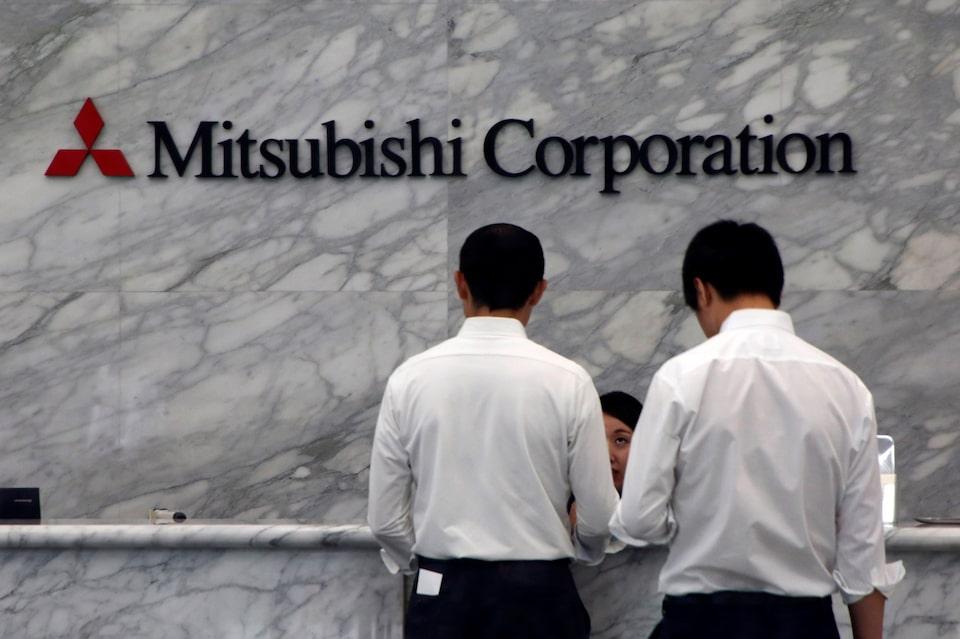
TOKYO, May 2 (Reuters) - Japanese trading house Mitsubishi Corp (8058.T) , opens new tab forecast on Friday its net profit for the year ending March would fall 26% to 700 billion yen ($4.82 billion), citing the absence of major capital gains. Mitsubishi posted 950.7 billion yen in net profit for the year ended in March, down 1.4% from a year ago and slightly missing an LSEG poll of analysts that had estimated an average profit of 957.1 billion yen. This year's profit forecast is also below analysts' expectations of 747 billion yen. Sign up here. Warren Buffett's Berkshire Hathaway (BRKa.N) , opens new tab, a large minority shareholder in Mitsubishi, has been expanding its stake in the company as well as in other Japanese trading houses including Marubeni (8002.T) , opens new tab and Sumitomo Corp (8053.T) , opens new tab. ($1 = 145.3000 yen) https://www.reuters.com/markets/asia/japans-mitsubishi-annual-profit-down-1-misses-forecasts-2025-05-02/
2025-05-02 05:48
May 2 (Reuters) - Japanese investors raised their foreign stock holdings for a sixth straight week as their sustained appetite for overseas equities was further bolstered by signs that the U.S. and China were willing to ease trade tensions. The local investors also viewed last week’s stronger yen as an opportunity to enhance their overseas asset positions. The yen reached a seven-month high of 139.86 per dollar before partially reversing its gains. Sign up here. Japanese investors allocated a net 133.8 billion yen ($920.85 million) to foreign equities last week, marking their sixth consecutive week of net purchases, according to data from Japan's Ministry of Finance. They also acquired a net 435.2 billion yen in long-term foreign bonds. The MSCI World Index (.MIWD00000PUS) , opens new tab climbed to a five-week high of 840.47 on Thursday, supported by progress in U.S.-China tariff negotiations and strong earnings reports from major tech firms. Meanwhile, Japanese equities attracted a net 278.3 billion yen in foreign inflows, the smallest weekly cross-border investment in the past four weeks. Foreign interest in Japanese bonds also cooled, with inflows into long-term Japanese bonds falling to 60 billion yen last week, down sharply from approximately 1 trillion yen in net purchases the previous week. ($1 = 145.3000 yen) https://www.reuters.com/business/japanese-investors-raise-foreign-stock-holdings-sixth-week-easing-trade-tensions-2025-05-02/