2025-05-02 05:40
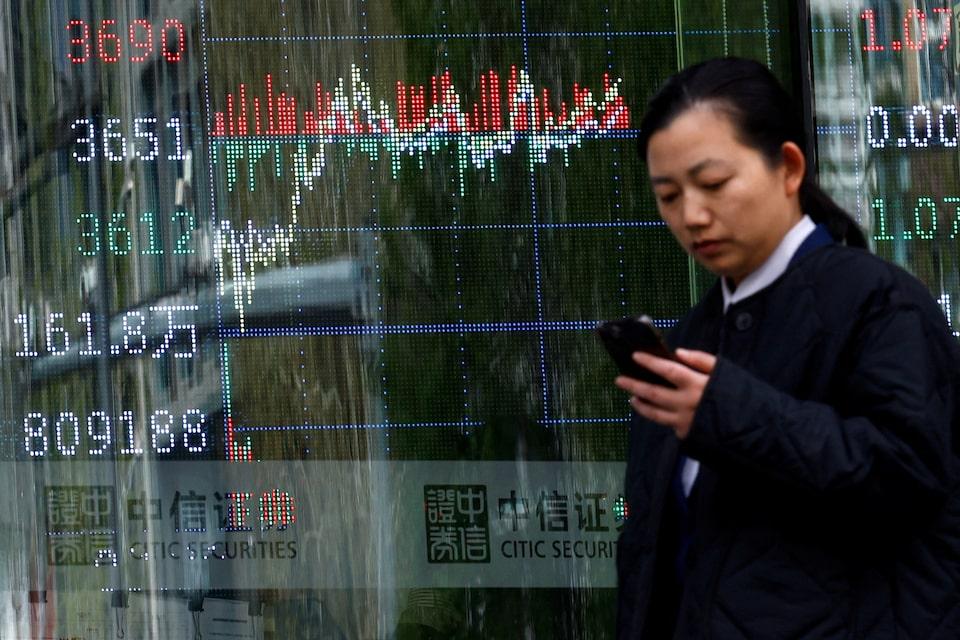
U.S. labor market stronger than expected China says door is open for trade talks Japan eyes US Treasury holdings as negotiation tool NEW YORK, May 2 (Reuters) - Wall Street and European stocks rallied and U.S. Treasury yields surged on Friday as investor risk appetite was strengthened by a strong employment report and signs China is open to tariff negotiations. All three major U.S. stock indexes advanced more than 1% on the session, with economically sensitive financials (.SPSY) , opens new tab, transports (.DJT) , opens new tab and microchips (.SOX) , opens new tab outperforming the broader market. Sign up here. All three indexes advanced on the week. The S&P 500 posted its ninth consecutive session of gains, its longest winning streak in over two decades. The U.S. economy added more jobs than expected last month and wage inflation came in below consensus, according to the Labor Department, prompting a jump in benchmark U.S. Treasury yields. "There was really not anything not to like about the jobs data; it indicates that the economy is doing just fine," said Paul Nolte, senior wealth adviser and market strategist at Murphy & Sylvest in Elmhurst, Illinois. "There are still discussions about the impacts of tariffs, but so far at least, that data has not shown up in a lot of the numbers." Beijing is evaluating Washington's offer to hold talks over U.S. President Donald Trump's crushing tariffs, China's Commerce Ministry said, signaling a potential de-escalation of the market-rattling trade war. "China and the U.S. are both taking slow but repeated steps toward negotiation and reconciliation," Jed Ellerbroek, portfolio manager at Argent Capital Management in St. Louis. "It seems the spiraling-out-of-control phase ended." "The market does not believe that the current tariff rates are going to persist for very long," Ellerbroek added. Lack of clarity regarding U.S.-China trade duties has contributed to a marked deterioration in U.S. businesses' long-term outlooks, the latest round of quarterly earnings results has shown. Apple (AAPL.O) , opens new tab and Amazon.com (AMZN.O) , opens new tab reported quarterly earnings late on Thursday with disappointing forecasts, including Apple's estimated $900 million in tariff costs. The reports took some wind from the sails of the so-called Magnificent Seven group of artificial intelligence-related megacap stocks, which had enjoyed a rebound this week. General Motors (GM.N) , opens new tab warned of a $4 billion-$5 billion hit to earnings and American Airlines (AAL.O) , opens new tab withdrew profit forecasts. The Dow Jones Industrial Average (.DJI) , opens new tab rose 564.47 points, or 1.39%, to 41,317.43, the S&P 500 (.SPX) , opens new tab rose 82.49 points, or 1.47%, to 5,686.63 and the Nasdaq Composite (.IXIC) , opens new tab rose 266.99 points, or 1.51%, to 17,977.73. European shares surged, closing the book on a busy earnings week as revived hopes of Sino-U.S. trade negotiations and solid employment data stoked investor optimism. MSCI's gauge of stocks across the globe (.MIWD00000PUS) , opens new tab rose 13.23 points, or 1.58%, to 848.38. The pan-European STOXX 600 (.STOXX) , opens new tab index rose 1.67%, while Europe's broad FTSEurofirst 300 index (.FTEU3) , opens new tab rose 36.55 points, or 1.75%. Emerging market stocks (.MSCIEF) , opens new tab rose 23.83 points, or 2.14%, to 1,135.80. MSCI's broadest index of Asia-Pacific shares outside Japan (.MIAPJ0000PUS) , opens new tab closed higher by 2.44%, to 595.08, while Japan's Nikkei (.N225) , opens new tab rose 378.39 points, or 1.04%, to 36,830.69. Treasury yields rose as the strong employment data led investors to pare bets on a Federal Reserve rate cut in June. The yield on benchmark U.S. 10-year notes rose 7.7 basis points to 4.308%, from 4.231% late on Thursday. The 30-year bond yield rose 5.2 basis points to 4.7889% from 4.737% late on Thursday. The 2-year note yield, which typically moves in step with interest rate expectations for the Federal Reserve, rose 12.5 basis points to 3.826%, from 3.701% late on Thursday. The dollar dipped in the wake of the upbeat U.S. jobs report. The dollar index , which measures the greenback against a basket of currencies including the yen and the euro, fell 0.14% to 100.00, with the euro up 0.12% at $1.1304. Against the Japanese yen , the dollar weakened 0.3% to 144.99. Crude extended its slide as investors positioned themselves ahead of an expected decision by OPEC+ to boost output. U.S. crude fell 1.60% to settle at $58.29 per barrel, while Brent settled at $61.29 per barrel, down 1.35% on the day. Gold prices reversed earlier gains and were headed for a weekly loss amid easing trade tensions. Spot gold fell 0.24% to $3,232.60 an ounce. U.S. gold futures rose 0.47% to $3,225.00 an ounce. https://www.reuters.com/markets/global-markets-wrapup-1-2025-05-02/
2025-05-02 05:32
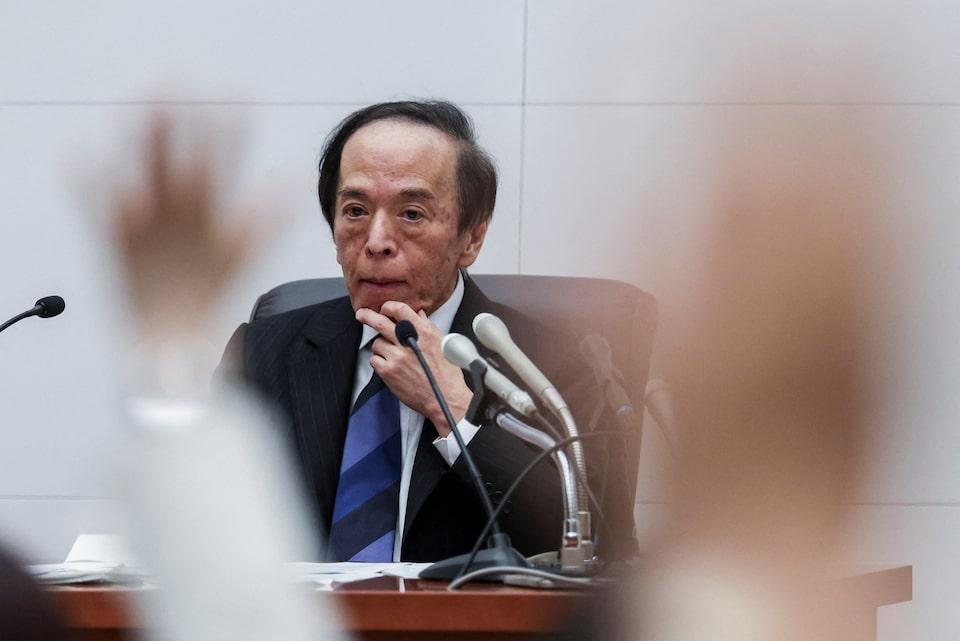
BOJ signals pause in rate hikes for clarity on US tariff impact Cuts to growth forecasts, warning on uncertainty push down yen With price, wage growth on rise, standing pat not without cost Sticky inflation, wages, yen worries keep BOJ on rate-hike path TOKYO, May 2 (Reuters) - The Bank of Japan's rate-hike cycle is facing its biggest test since Governor Kazuo Ueda took the helm two years ago, with U.S. President Donald Trump's tariffs rapidly narrowing the window for further increases in still-low borrowing costs. After the BOJ's decision on Thursday to keep interest rates steady at 0.5%, Ueda said the timing for underlying inflation to converge toward the central bank's 2% target has been "pushed back somewhat" - essentially signaling a pause in rate hikes for more clarity on the fallout from the higher tariffs. Sign up here. But persistent food inflation, prospects of sustained wage hikes and fears of renewed falls in the yen may mean the BOJ has plenty of reason not to abandon its rate-hike plans altogether. The delicate balancing act will likely mean the BOJ will keep signaling that its next move would be a hike, but leave markets guessing on the pace and timing of future action. "The worst scenario for the BOJ is to end up further delaying achievement of 2% inflation by proceeding with rate hikes amid high uncertainty," said Akira Otani, a former top BOJ economist who is currently managing director at Goldman Sachs Japan. "As such, the most desirable approach is to put off rate hikes as a precaution," said Otani, who pushed back the estimated timing of the next rate hike by six months to January. Goldman still expects the BOJ to eventually raise its policy rate to 1.5% in the current rate-hike cycle. On the surface, the threat to Japan's export-reliant economy from the global trade war may be enough to ditch its rate-hike bias in favour of a more neutral monetary policy stance. Under fresh forecasts released on Thursday, the BOJ expects the economy to barely expand above its potential this year. It also cut its inflation forecasts and saw risks skewed to the downside, a sign of its waning conviction on price momentum. Ueda warned of "extremely high uncertainty" on the outlook, even as he stressed the BOJ's resolve to keep raising rates on the view that underlying inflation will re-accelerate towards its target, after a brief period of stagnation. History has proved the difficulty of normalising Japan's ultra-loose monetary policy. The country has not seen short-term rate exceed 0.5% in three decades, with attempts to lift them repeatedly hampered by stagnant wage growth and external shocks. IS THIS TIME DIFFERENT? This time, however, pausing too long is not without cost. Unlike in the past when Japan was mired in deflation, core inflation has exceeded the BOJ's 2% target for three years as stubbornly high raw material costs prod firms to hike prices. A shrinking labour force has also kept firms under pressure to hike wages and charge more for services, a trend Ueda said will continue and keep inflation on an moderate uptrend. Steady rises in food prices, including a spike in the cost of staple rice, drove headline inflation to 3.6% in March, drawing complaints from households and politicians. "Attention is warranted to the possibility the recent rise in food prices may induce second-round effects on underlying inflation," the BOJ said in a quarterly report on Thursday, warning for the first time the risk of food inflation turning into broader-based, longer-lasting price rises. Ueda described the sticky food inflation since mid-last year as something that caught him off guard. Sounding too dovish on the rate outlook would trigger renewed yen falls that add inflationary pressure and could draw the ire of Trump, who has accused Japan of intentionally weakening the yen to give its exports a trade advantage. The yen dropped by as much as 1.1% to 144.74 per dollar on Thursday, its weakest since April 10, after the BOJ's gloomy forecasts heightened expectations it will take longer than expected to hike rates again. Analysts at Morgan Stanley, who initially projected the next rate hike to come in September, now expects rates to be on hold at 0.5% until the end of next year. But it sees a September hike as a risk scenario that could materialise if domestic inflation pressure heightens, or the yen weakens sharply. "If the yen falls significantly while Japan's trade talks are underway, the U.S. may see such moves as a problem. A weak yen could not only push up inflation, but heighten government pressure on the BOJ," they wrote in a research note. "If so, and if uncertainty over U.S. tariffs diminish, there's a chance the BOJ could raise rates fairly soon." https://www.reuters.com/business/boj-sees-window-rate-hikes-narrowing-not-closed-yet-2025-05-02/
2025-05-02 05:29
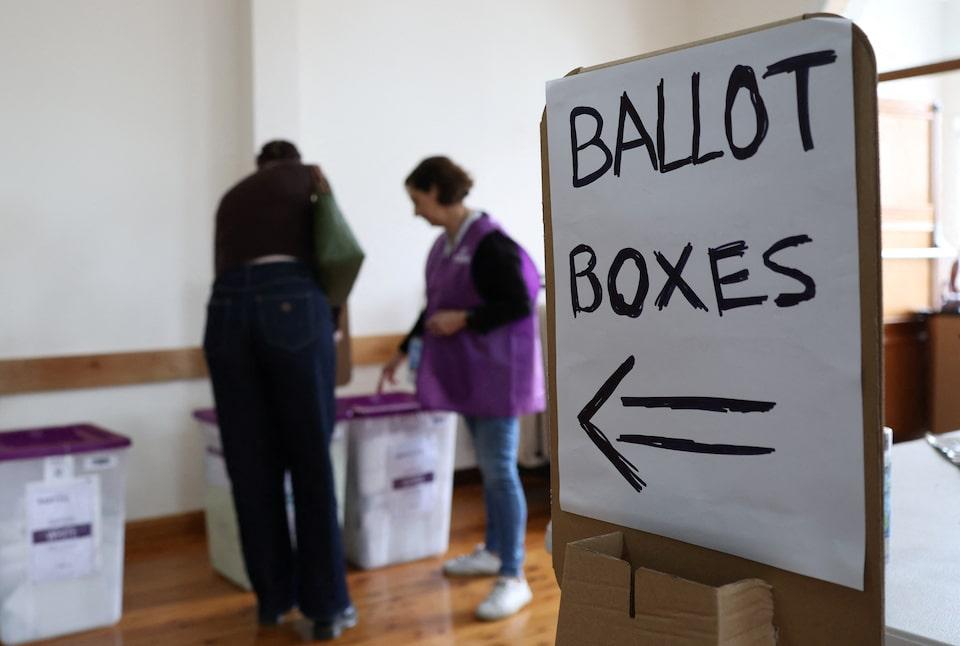
May 2 (Reuters) - Australians will vote on Saturday in a close-run national election marked by concerns over the cost of living and housing affordability, as well as trade tensions triggered by U.S. President Donald Trump's tariffs. Here's how Prime Minister Anthony Albanese's centre-left Labor party and the conservative Liberal-National coalition, led by Peter Dutton, compare on key policies: Sign up here. HOUSING Labor: Would let all first-time home buyers enter the property market with a 5% down payment and has pledged to spend A$10 billion ($6.40 billion) to build up to 100,000 new homes. Liberal-Nationals: Would allow first-time home buyers to access up to A$50,000 from their government-mandated retirement savings for down payments. Mortgage interest payments would be made tax deductible. It has also pledged A$5 billion to fund housing infrastructure. HEALTH Labor: Has pledged A$8.5 billion for an extra 18 million subsidised general practitioner visits each year as part of strengthening Medicare, the universal healthcare system, along with A$1 billion for more free-of-charge public mental health services. Would open an additional 50 free urgent care clinics to ease pressure on hospitals. Liberal-Nationals: Has matched Labor's A$8.5 billion funding boost to Medicare, pledged A$400 million for youth mental health services, and plans to double Medicare-subsidised psychology sessions to 20 from 10. ECONOMY Labor: Would give taxpayers a one-off, instant A$1,000 deduction for individual work-related expenses and cut student debt by 20%. It also passed legislation to cut the lowest marginal tax rate before calling the election. Liberal-Nationals: Has vowed to undo Labor's tax cuts and instead introduce an offset that would let taxpayers earning up to A$144,000 receive up to A$1,200 in tax relief. Would lower fuel costs by A$0.25 per litre (0.26 gallon) for 12 months by reducing government duties. Wants to shrink the public service by 41,000 jobs through a hiring freeze and natural attrition, which it estimates would save A$7 billion each year. ENERGY Labor: Committed A$2.3 billion to subsidise household batteries to store solar power and pledged to extend rebates on energy bills for households and small businesses. Announced an A$2 billion increase in clean energy technology funding through its green bank to achieve a majority-renewables grid, which would be backed up by power from gas, batteries and hydropower. Liberal-Nationals: Aims to bring down gas and electricity costs through a reservation scheme forcing liquefied natural gas (LNG) exporters on Australia's east coast to sell a portion of their uncontracted gas into the domestic market. Pledges to cut "red and green tape" for new gas projects and fast-track a decision on extending the life of Woodside's (WDS.AX) , opens new tab North West Shelf LNG plant. Long term, wants to build a nuclear industry with seven plants across the country. Nuclear power is currently banned in Australia. DEFENCE Labor: Has not pledged any new defence funding, pointing to an existing commitment to an A$50 billion increase over the next decade that would boost spending to 2.3% of gross domestic product from 2%. Liberal-Nationals: Would spend A$21 billion more than Labor over five years to reach 2.5% of GDP within five years and 3% within a decade. Has pledged A$3 billion to acquire extra joint strike fighter jets. MIGRATION Labor: Has not announced any election pledges specific to migration. Liberal-Nationals: Promises to cut the permanent migration programme, now at 185,000 per year, to 140,000 for two years, then 150,000 in year three and 160,000 in year four. Also would cut net migration by 100,000 below Labor's yearly levels and reduce the number of international students commencing at public universities by 30,000 per year. ($1 = 1.5635 Australian dollars) https://www.reuters.com/world/asia-pacific/policies-australias-political-parties-glance-2025-05-02/
2025-05-02 05:28
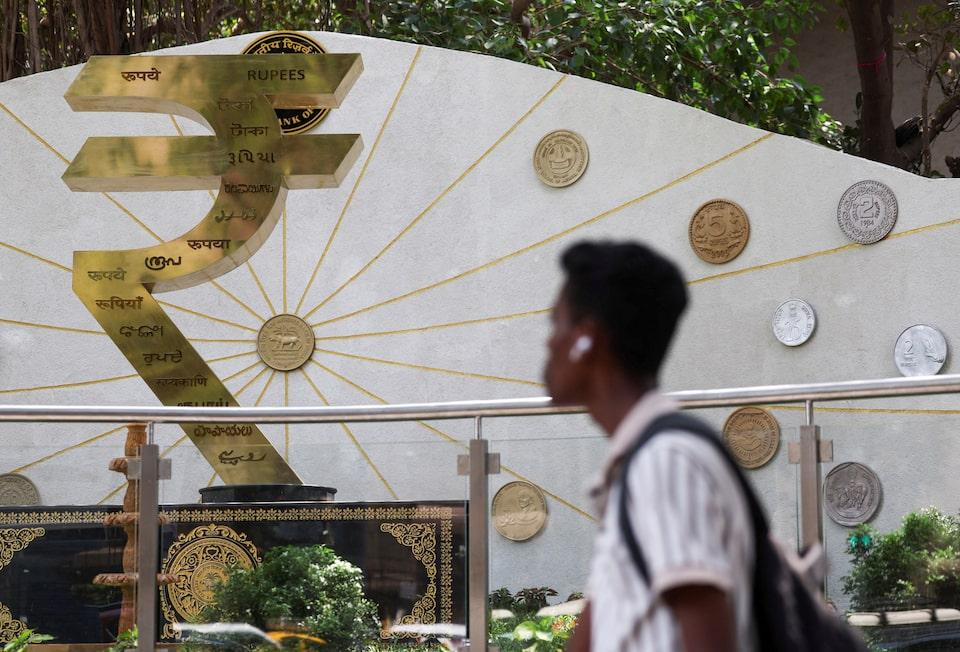
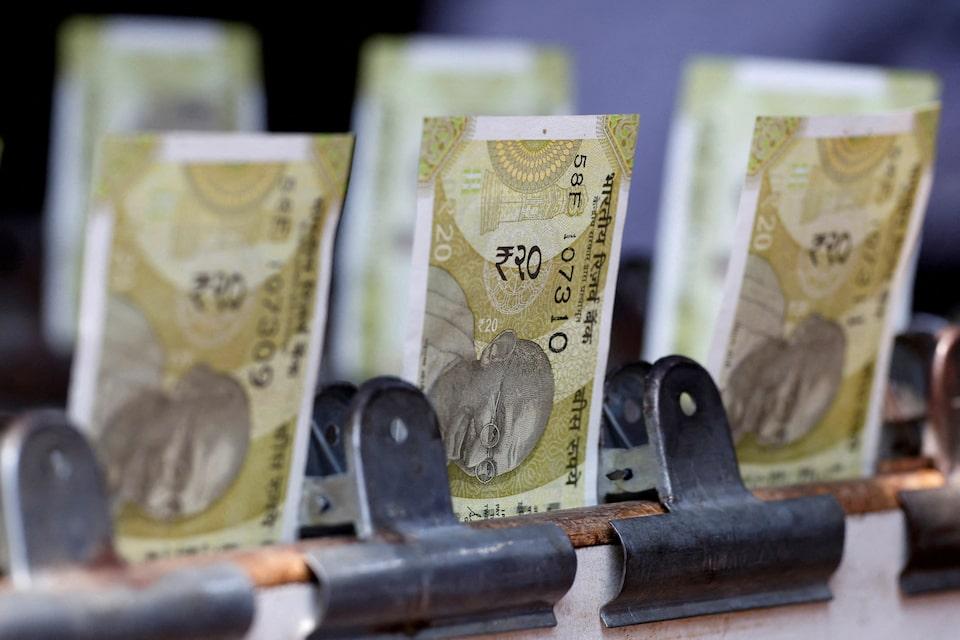
MUMBAI, May 2 (Reuters) - The Indian rupee extended its rally on Friday, wiping out all losses since Donald Trump won the U.S. presidential elections in November 2024, with traders citing strong dollar inflows and short-covering amid rising hopes of a U.S.-India trade deal. The rupee rose to a peak of 83.78 in early trading, up 0.8% on the day. The currency was at 83.93 per U.S. dollar at 10:35 a.m. IST. Sign up here. The Indian currency, which has risen nearly 2% so far this week, is trading above levels seen on November 6, when Trump's victory sparked a wave of dollar strength. The rupee fell to an all-time low of 87.95 in February amid uncertainty over Trump's tariff policies, but recovered sharply over March and April on the back of portfolio inflows and hopes that India will be one of the first to sign a trade deal with the U.S. There has been "short covering on reports of how a trade deal will route manufacturing to India mostly," a Singapore-based trader at a hedge fund said. Exporters' dollar sales and a scaling back of bearish wagers on the rupee have also helped. In fact, investors have ramped up bullish wagers on the rupee, alongside most of its regional peers, per a Reuters poll. "We remain positive that India will emerge as one of the key winners under Trump 2.0, as a beneficiary of the next round of supply-chain shifts," analysts at Nomura said in a note. Overseas investors snapped a three-month selling streak of Indian equities in April, helping hoist the rupee. Foreign institutional investors have bought Indian shares for 11 straight sessions, the longest run of inflows in two years. The lack of aggressive dollar buying by India's central bank has also aided, traders said. But the Reserve Bank of India had defended these levels sternly last year and there is a "strong chance" they start to buy dollars now, the trader at the hedge fund said. On the day, the dollar index was down 0.1% at 100 while Asian currencies were mostly stronger with the offshore Chinese yuan up 0.3% amid fresh hopes of U.S-China trade talks. https://www.reuters.com/world/india/rupee-wipes-out-all-losses-since-trump-election-win-shorts-bail-2025-05-02/
2025-05-02 04:47
MUMBAI, May 2 (Reuters) - The Indian rupee rose sharply in early trading on Friday to climb past 84 per U.S. dollar for the first time since October 2024, driven by heavy dollar sales from foreign banks and strength in regional currencies. The rupee climbed to a peak of 83.83, up 0.7% from its close at 84.4875 in the previous session. The currency is now up nearly 2% on the week. Sign up here. A pick up in dollar inflows into Indian equities, optimism about a U.S. trade deal and a liquidation of short bets against the currency have all been tail winds for the rupee over recent sessions, traders said. Foreign institutional investors have bought Indian shares for 11 straight sessions, the longest streak of inflows in two years The rupee's sharp gains over recent sessions has also prompted analysts to adjust their outlooks on the local unit with MUFG expecting the currency to end the year at 84, up from 87 per its earlier forecast. "We now forecast INR to outperform Asian FX with our global team’s call for more US Dollar weakness together with better than anticipated tariff outcomes for India in Trump 2.0," MUFG said in a Friday note. On the day, foreign banks were spotted offering dollars, likely on behalf of custodial clients, while bids were relatively scant, helping the rupee climb over the 84 figure, a trader at a state-run bank said. https://www.reuters.com/world/india/rupee-rally-unabated-analysts-abandon-bearish-outlook-2025-05-02/
2025-05-02 04:46
TOKYO, May 2 (Reuters) - Japanese trading house Itochu (8001.T) , opens new tab reported a record high net profit of 880.3 billion yen ($6 billion) for the year ended March, marking a 10% increase from the previous year, bolstered by its textile, food, and FamilyMart convenience store units. A LSEG poll of analysts had expected Itochu to post 887 billion yen in net profit. The company has forecast profit for the year ending next March at 900 billion yen, maintaining a total shareholder payout ratio of 50%, it said. Sign up here. Warren Buffett's Berkshire Hathaway (BRKa.N) , opens new tab, a large minority shareholder in Itochu, has been expanding its stake in the company as well as in other Japanese trading houses including Marubeni (8002.T) , opens new tab and Sumitomo Corp (8053.T) , opens new tab. ($1 = 145.2400 yen) https://www.reuters.com/markets/asia/japans-itochu-annual-profit-rises-10-slightly-misses-forecasts-2025-05-02/