2025-05-02 04:38
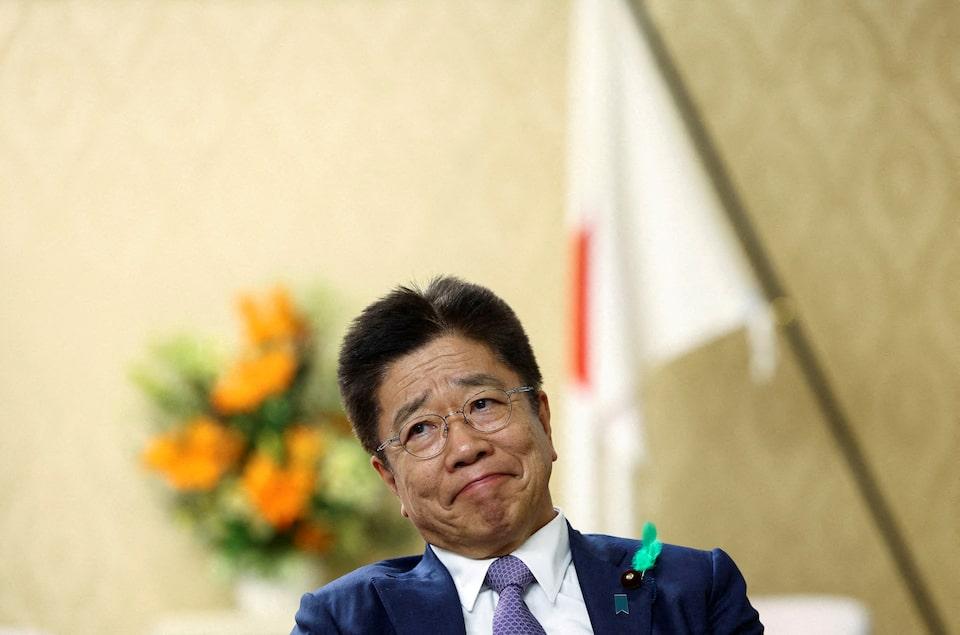
Japan puts 'all cards on table' in trade talks with US Japan's huge US Treasury holdings among such cards, Kato says Whether to actually use that card is different question, he says Remarks highlight Japan, China leverage as big U.S. creditors TOKYO, May 2 (Reuters) - Japan could use its $1 trillion-plus holdings of U.S. Treasuries as a card in trade talks with Washington, its finance minister said on Friday, raising explicitly for the first time its leverage as a massive creditor to the United States. While Finance Minister Katsunobu Kato did not threaten to sell holdings, his remarks touch on a critical concern global investors have about what Japan and China, the two largest owners of U.S. government debt, might do in seeking tariff concessions from the Trump administration. Sign up here. The Treasury market saw a huge global sell-off last month after U.S. President Donald Trump's decision on April 2 to slap sweeping tariffs on trading partners, including key strategic allies such as Japan. Kato said in a television interview the primary purpose of Japan's U.S. Treasury holdings - the largest in the world - is to ensure it has sufficient liquidity to conduct yen intervention when necessary. "But we obviously need to put all cards on the table in negotiations. It could be among such cards," he said when asked whether Japan, in trade talks with the U.S., could reassure Washington it will not sell its Treasury holdings in the market. "Whether we actually use that card, however, is a different question," Kato added. The U.S. Treasury Department did not immediately respond to Reuters' request for comment outside of office hours. Kato's remarks contrast with those he made last month, when he ruled out using Japan's U.S. Treasury holdings in trade negotiations. On Friday, Kato declined to comment on whether Tokyo's U.S. bond holdings came up in his bilateral meeting with Treasury Secretary Scott Bessent last week. However, he said the huge market sell-off in Treasuries in April likely affected Washington's approach in talks with Japan. Japan's and China's presence in the Treasury market makes them a huge point of attention whenever U.S. yields spike, although little is known about their trading activity. While Japan, as a close U.S. ally, is seen as less likely to use its Treasury holdings as a bargaining tool, some analysts speculate that China may liquidate its holdings as a "nuclear" option as trade tensions with the U.S. escalate. So far, there are few signs of such a sell-off. Foreign holdings of U.S. Treasuries rose 3.4% in February, data from the Treasury Department showed last month, with the two largest owners, Japan and China, building up their U.S. debt positions. But even hints of their huge market presence could be a key weapon for Japan, which otherwise has little leverage due to its economy's huge reliance on the U.S. car market. "Playing the card early, while the U.S. bond market is in the minds of the administration after recent weeks, is a smart move," said Martin Whetton, head of financial markets strategy at Westpac in Sydney. "They don't have to do anything. But they can put themselves in a solid position to negotiate. It is, after all, the art of the deal." Japan's top trade negotiator, Ryosei Akazawa, said he deepened talks on trade, non-tariff measures and economic security cooperation in his second round of talks with Bessent in Washington on Thursday. He also said the two sides hoped to hold their next meeting in mid-May. USE ALL TOOLS The U.S. Treasury sell-off in April was among factors that led Trump to announce a 90-day pause on his "reciprocal" tariff plan, with Bessent likely playing a key role, according to sources close to the White House. Aside from the tariffs, Japan has also faced criticism from Trump that it was intentionally weakening the yen to give its exports a trade advantage - an accusation Tokyo denies. Kato said his meeting with Bessent last week did not discuss any desirable exchange rate or a possible framework to control currency moves. Analysts say Japan's huge Treasury holdings can also be used as a bargaining tool in any differences Washington has with Tokyo over currencies. "(It) should be a card if not an ace card for the negotiation," said Naka Matsuzawa, chief macro strategist at Nomura Securities in Tokyo. "It would work not only to flatten the (bond yield) curve in the two countries but also avoid other outrageous requests such as artificial yen appreciation." But there are at the same time limits to such threats as unloading Treasuries would hurt Japan and China by disrupting markets and causing huge losses on their remaining holdings. Given the hit Japan and China themselves would suffer from selling their U.S. Treasury holdings, the idea was an "absolute non-issue in the past," said Nathan Sheets, former U.S. undersecretary for international affairs who is currently global chief economist at Citi Research. "But countries have to use all the tools they have," he said. "The fact that we need to think about something like that shows the world we're in." https://www.reuters.com/markets/asia/japans-us-treasury-holdings-among-tools-trade-talks-finance-minister-kato-says-2025-05-01/
2025-05-02 04:32
A look at the day ahead in European and global markets from Ankur Banerjee A possible de-escalation of trade tensions between Beijing and Washington provided a fillip for markets on Friday, boosting risk sentiment and lifting stocks globally just as earnings from Apple delivered a reminder of the trade war's true cost. Sign up here. China's Commerce Ministry said that Beijing was "evaluating" an offer from Washington to hold talks over U.S. President Donald Trump's 145% tariffs and that Beijing's door was open for discussions. At the same time, however, China said Washington needed to show "sincerity" in negotiations and should be prepared to cancel its unilateral tariffs. The prospect of trade talks helped to allay investor worries over the tariffs, which have roiled global markets and sparked fears of an economic downturn. Data for the world's two biggest economies has started to show signs of weakness. S&P 500 and Nasdaq futures surged, while European bourses were set for a strong open ahead of a flurry of corporate earnings, headlined by oil major Shell (SHEL.L) , opens new tab and German chemicals group BASF (BASFn.DE) , opens new tab. The earnings season so far has highlighted the cost of erratic U.S. trade policy and its back-and-forth tariffs, which prompted many companies across the globe to lower their profit forecasts or withdraw them altogether. Apple (AAPL.O) , opens new tab on Thursday cut its share buyback programme by $10 billion and warned that tariffs could add about $900 million in costs this quarter, dimming some of the optimism that followed strong results from Microsoft and Meta Platform. Apple CEO Tim Cook also outlined how the iPhone maker has started to stockpile products so that the majority of its devices sold in the U.S. this quarter will not come from China. And while markets seem to be taking comfort from Friday's comments out of Beijing, the reality is that there still has not been a resolution in any of the trade talks that the U.S. has held so far with its allies. That was particularly evident when Japan's finance minister said on Friday the country could use its $1 trillion-plus holdings of U.S. Treasuries as a card in trade talks with Washington, raising explicitly for the first time its leverage as a massive creditor of the United States. Key developments that could influence markets on Friday: Economic events: April flash inflation data for euro zone, April manufacturing PMI data for France and Germany Earnings: ING, BASF, NatWest, Shell Trying to keep up with the latest tariff news? Our new daily news digest offers a rundown of the top market-moving headlines impacting global trade. Sign up for Tariff Watch here. https://www.reuters.com/markets/europe/global-markets-view-europe-2025-05-02/
2025-05-02 03:01
TOKYO, May 2 (Reuters) - Japanese trading house Marubeni (8002.T) , opens new tab on Friday posted a 7% increase in net profit for the year ended in March at 503 billion yen ($3.5 billion), its second biggest ever and beating forecasts. A LSEG poll of analysts had forecast Marubeni's fiscal year net profit at 498 billion yen. The company forecasts net profit for the year ending next March at 510 billion yen, which includes a 30 billion yen loss buffer for unexpected events. Sign up here. Marubeni's loss buffer follows a similar move by its peer Sumitomo Corp (8053.T) , opens new tab on Thursday which set aside 40 billion yen for 'a certain degree of indirect impact' from U.S. tariffs on Japan, which Tokyo is now trying to avert. While setting aside the loss buffer, Marubeni does not expect significant and immediate negative impact from U.S. tariffs, Chief Executive Masayuki Omoto told a briefing. Warren Buffett's Berkshire Hathaway (BRKa.N) , opens new tab is a large minority shareholder in Marubeni, Sumitomo and a number of other Japanese trading houses and has recently been increasing its ownership. Marubeni targets growth investments of 570 billion yen for the year ending next March, including in power trading and food business, and plans shareholder distributions at 210 billion yen as it aims for shareholder return ratio of around 40%. The company plans to buy back up to 4.2% of its shares worth 70 billion yen and consider 230 billion yen in divestments, mainly in its infrastructure and finance business, it said. ($1 = 145.4300 yen) https://www.reuters.com/business/japans-marubeni-annual-net-profit-up-7-beats-forecasts-2025-05-02/

2025-05-02 00:45
Insurers accused of violating False Claims Act, DOJ seeks damages Brokers allegedly steered patients to plans offering highest kickbacks Kickbacks disguised as marketing or sponsorship payments, DOJ claims BOSTON, May 1 (Reuters) - The U.S. Department of Justice accused three of the nation's largest health insurers of paying hundreds of millions of dollars in kickbacks to brokers in exchange for steering patients into the insurers' Medicare Advantage plans. In a complaint , opens new tab filed in Boston federal court on Thursday, the Justice Department alleged that CVS Health's (CVS.N) , opens new tab Aetna, Elevance Health (ELV.N) , opens new tab and Humana (HUM.N) , opens new tab engaged in a vast kickback scheme with insurance brokers eHealth (EHTH.O) , opens new tab, GoHealth (GOCO.O) , opens new tab and SelectQuote (SLQT.N) , opens new tab from 2016 to 2021. Sign up here. The lawsuit alleges the companies violated the False Claims Act, which prohibits submitting a false claim to the government for payment. The Justice Department is seeking unspecified damages and penalties. Aetna parent company CVS Health and Humana in separate statements said they would defend themselves vigorously. Elevance Health said it was confident its health plans complied with federal regulations and guidelines. GoHealth said the Justice Department's case was "full of misrepresentations and inaccuracies," and eHealth called the claims "meritless." Medicare Advantage plans are offered by private insurers that are paid a set rate by the U.S. government to manage healthcare for older people looking for extra benefits not included in regular Medicare coverage. Many Medicare beneficiaries rely on insurance brokers to help them choose insurance plans that meet their needs and navigate the complexities of the Medicare Advantage program, the Justice Department said. The Justice Department said that rather than acting in an unbiased manner and in the best interests of patients, the brokers directed Medicare beneficiaries to plans offered by insurers that paid them the most in kickbacks. Those kickbacks were often disguised and referred to as “marketing,” “co-op,” or “sponsorship” payments, according to the complaint. The lawsuit alleges the brokers incentivized their employees and agents to sell plans based on the kickbacks and at times refused to sell the Medicare Advantage plans of insurers that did not pay them enough. The Justice Department said Aetna and Humana also threatened to withhold kickbacks to pressure the brokers to enroll fewer patients with disabilities, whom the insurers viewed as less profitable. In a statement, U.S. Attorney Leah Foley of Massachusetts called efforts to drive Medicare beneficiaries away because of their disabilities "unconscionable." Thursday's case began as a whistleblower lawsuit filed in 2021 under the False Claims Act, which allows whistleblowers to sue companies to recover taxpayer funds paid out based on false claims. Such cases are filed under seal initially while the Justice Department investigates the claims and decides whether to join the case, which it did this week. https://www.reuters.com/sustainability/us-files-false-claims-complaint-against-three-health-insurers-2025-05-01/
2025-05-01 23:29
WELLINGTON, May 2 (Reuters) - The majority of severe weather warnings across New Zealand have now been lifted, according to New Zealand government weather forecaster Metservice on Friday. New Zealand’s capital city of Wellington was hit by the strongest winds in more than a decade on Thursday, closing schools and offices and cancelling flights. Farther south, in the Canterbury region, in the middle of the South Island, heavy rains caused flooding and landslides, forcing a few people to evacuate. Sign up here. Both Christchurch City and Selwyn District remain in states of emergency as there was still surface flooding and road closures. However, Selwyn District Council said in a Facebook post that the worst of the weather was over. Wellington International Airport had reopened, although local news organization Stuff reported that not all planes had managed to land. Images on local news sites showed rocks and debris littering the road along the city’s south coast and waves continuing to break over the sea walls. Wellington Region Emergency Management Office said on a post on Facebook that it continued to advise people not to travel unless necessary. https://www.reuters.com/business/environment/worst-new-zealands-wild-weather-passes-cleanup-begins-2025-05-01/

2025-05-01 23:19
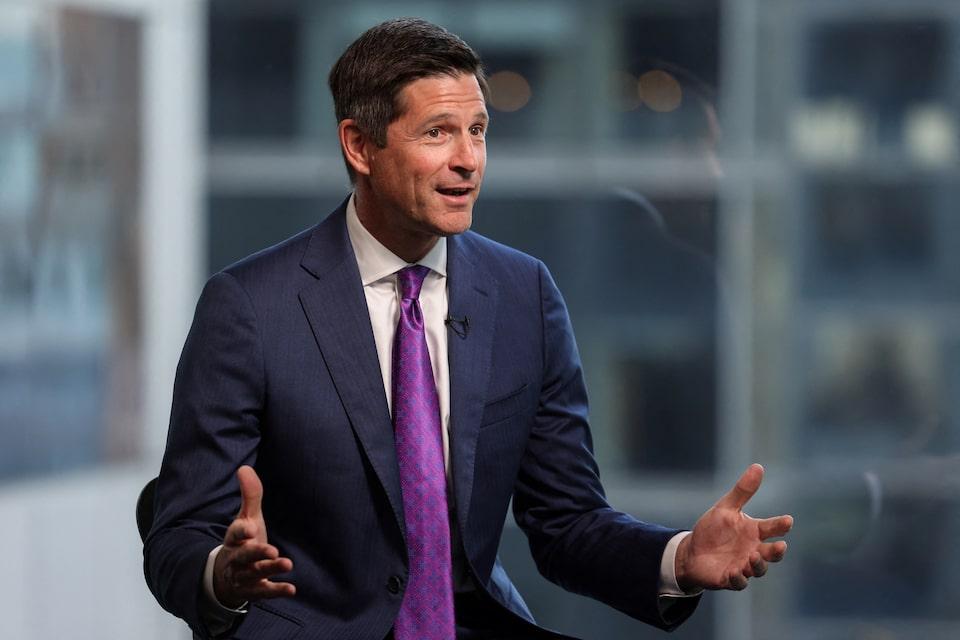
Stock investors sell US equities, buy bonds, non-US stocks-Wurster Clients reposition in response to economic uncertainty -Wurster In April 61% of clients polled by Schwab said they felt bearish Schwab to offer spot crypto trading in Bitcoin, Ethereum Proposed Texas Stock Exchange could open this year if approved NEW YORK, May 1 (Reuters) - Stock investors have cut risks by selling U.S. equities and buying bonds and non-U.S. shares in response to April's turbulent markets, Charles Schwab CEO Rick Wurster told Reuters. "We saw clients repositioning themselves, trimming their risk a little bit, making sure they were well-diversified" in response to economic uncertainty, Wurster said in a Reuters NEXT Newsmaker interview on Thursday. Sign up here. Trading volumes, which hit record levels early in April following U.S. President Donald Trump's announcement of tariffs, tapered off as the month progressed, but client engagement has remained high, Wurster said in a wide-ranging interview. In April, 61% of clients polled by Schwab said they were feeling bearish, compared with only 32% in the first quarter. "We set an all-time record" for calls and client logins during the heightened volatility, Wurster said. Nervous investors are asking what they should do, while active traders are seeking an edge. Investors also have shown renewed interest in fixed income. In the past, "it was like trying to tell someone to eat their broccoli, and now broccoli and bonds are back," he said. Few clients made dramatic adjustments to their asset allocations in April but those whose portfolios included non-U.S. stocks, bonds and some commodities noted they benefited from that diversification. Schwab's poll showed investors' top concern was the political landscape in Washington, followed by uncertainty over market volatility or a potential correction. The Cboe Volatility Index (.VIX) , opens new tab - an options-based barometer of investor expectations for stock market swings - closed at a five-year high in early April, before paring gains. Wurster took the helm at Schwab on January 1 after serving as its president for three years. The brokerage, based in Westlake, Texas, serves 36.9 million brokerage accounts and holds almost $10 trillion in client assets. Schwab also helps clients manage their wealth through a network of 15,000 investment advisors. Its clients logged in a record 500 million times in the first quarter, when it saw a record 7.4 million trades a day, company data showed. That figure hit a record of 10.7 million average daily trades during the week of April 7. Customer service lines also received hundreds of thousands of calls a day, and readership of Schwab's research spiked 40% in the first quarter. The amount of margin debt that U.S. broker-dealers extended to their customers dropped to $880.3 billion in March from $918.1 billion in February, data from industry group the Financial Industry Regulatory Authority showed. That is still well above year-earlier levels of $784.1 billion. During the market tumult, Schwab proactively reached out to clients ahead of possible future margin calls, allowing them to add money to accounts so that they were not forced to sell holdings. "Clients appreciate the opportunity" to adjust their positions, Wurster said. "They say: 'I don't want to get taken out of that position, I'm going to bring in money to meet that margin call.'" As stock trading has become more volatile, it also is taking place over more hours every day. Once, investors large and small were confined to executing their buy or sell orders during the opening hours of the New York Stock Exchange, Nasdaq and other official exchanges from 9:30 a.m ET to 4:30 p.m ET. Then, those exchanges began offering extended early morning and late afternoon trading sessions. Now, brokerages are charging forward by offering the ability to trade overnight. The biggest users have been retail investors, mostly outside the United States, Wurster said. "The big thing we want to make sure happens with 24-by-five (24 hours, five days a week) trading is that the liquidity and the pricing and the efficiency of execution is there," Wurster said. CRYPTO SPOT TRADING Schwab plans to offer spot crypto trading of Bitcoin and Ethereum within the next 12 months, Wurster said. Bitcoin was one of the best-performing assets of 2024, soaring 114%, although its price has retreated 0.78% this year, even after Trump vowed to be a "crypto president." The Trump administration is calling for a complete overhaul of crypto investment and trading rules. Wurster hailed the administration's loosening of crypto rules for large financial firms as a green light to expand in the market. Still, crypto investing comes with "meaningful risks," including huge price volatility, Wurster said. "That makes it hard for investors to understand how to allocate to it," he added. Schwab's edge in the crypto business is serving investors who already own stocks and bonds and who are "intrigued" by crypto and interested in owning a little bit, rather than "crypto afficionados" eager to own dozens of coins that Schwab does not envisage supporting. Wurster joined Schwab in 2016 after holding leadership roles at Wellington Management and McKinsey. He holds an MBA from The Tuck School of Business at Dartmouth College and a bachelor's degree in economics from Villanova University. His two predecessors - Walt Bettinger and founder Charles Schwab - still serve as co-chairmen of the company's board. The company has invested in a proposed Texas Stock Exchange alongside Wall Street giants BlackRock and Citadel Securities. If approved by the U.S. Securities and Exchange Commission, the TXSE could open its doors by the end of this year, aiming to compete with incumbents Nasdaq and the New York Stock Exchange that have long dominated the industry, including in IPOs. "We think it's good to have a range of options and for there to be competition amongst the exchanges," Wurster said. https://www.reuters.com/business/finance/charles-schwab-ceo-says-investors-are-de-risking-diversifying-2025-05-01/