2025-05-01 06:52
COPENHAGEN, May 1 (Reuters) - Orsted (ORSTED.CO) , opens new tab has sold a 24.5% stake in a UK offshore wind farm for around 456 million pounds ($606 million) to funds managed by Schroders Greencoat, it said on Thursday. The world's biggest offshore wind power developer will retain a 25.5% stake and remain the operator of the West of Duddon Sands project located off the UK west coast, which has a capacity of 389 megawatts, it said. Sign up here. Orsted's Chief Financial Officer Trond Westlie said in a statement the deal met the company's strategic objectives "in terms of value creation, risk diversification, and capital recycling". Battling to restore investor confidence, Orsted in February trimmed its investment and capacity targets and paused dividend payouts as part of a major review. ($1 = 0.7525 pounds) https://www.reuters.com/sustainability/climate-energy/orsted-sells-stake-uk-offshore-wind-farm-606-million-2025-05-01/
2025-05-01 06:50
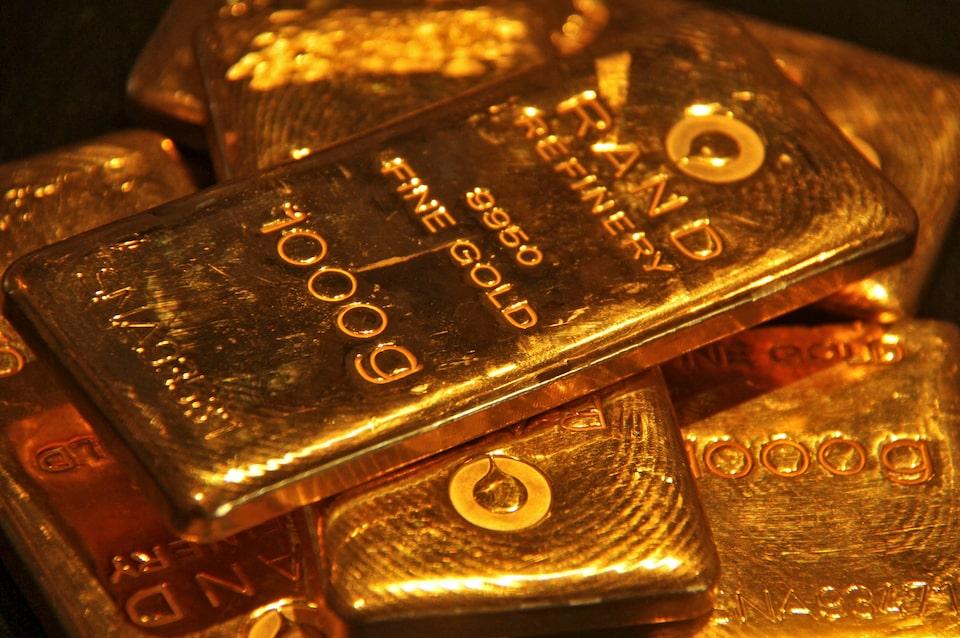
Trump says he has 'potential deals' with India, South Korea and Japan US economy shrinks in first quarter of fiscal 2025 US nonfarm payroll report due on Friday Weaker payroll report may push gold to $3,500 over the coming months, analyst says May 1 (Reuters) - Gold fell nearly 2% to a two-week low on Thursday as signs of easing trade tensions boosted risk appetite and reduced bullion's safe-haven appeal, while a stronger U.S. dollar also weighed on prices. Spot gold was down almost 2% to $3,222.66 an ounce at 1129 GMT, after hitting its lowest since April 15. Sign up here. U.S. gold futures were down 2.7% to $3,230.80. The dollar index (.DXY) , opens new tab rose 0.3%, making dollar-denominated gold more expensive for buyers holding other currencies. "There is ongoing hope that some trade deals are signed soon, allowing lower tariffs to stay," said UBS analyst Giovanni Staunovo, adding that this optimism, combined with a stronger dollar, was exerting pressure on gold. U.S. President Donald Trump said on Wednesday that trade deals were possible with India, Japan and South Korea. He also said there was a "very good chance" of a deal with China. The U.S. has approached China to seek talks over Trump's 145% tariffs, a social media account affiliated with Chinese state media said. The U.S. economy contracted for the first time in three years in the first quarter, weakened by a surge of imports as businesses sought to pre-empt the imposition of higher tariffs. However, Federal Reserve policymakers indicated that short-term interest rates would remain unchanged until there were clear signs of inflation nearing the central bank's 2% goal or potential job market deterioration. Investors await Friday's nonfarm payrolls report for further insight into the Fed's policy direction. "A weaker payroll report should support calls for more rate cuts by the Fed this year and allow gold to move back to $3,500/oz over the coming months," said UBS' Staunovo. Analysts in a quarterly Reuters poll forecast an average annual gold price above $3,000 for the first time. Gold, a non-yielding metal considered a hedge against political and financial turmoil, briefly hit $3,500 last week. Spot silver fell 1.8% to $31.99 an ounce, platinum dropped about 1% to $956.63 and palladium was up 0.3% to $941.10. https://www.reuters.com/markets/commodities/gold-retreats-trade-tensions-ease-us-payrolls-data-tap-2025-05-01/
2025-05-01 06:49
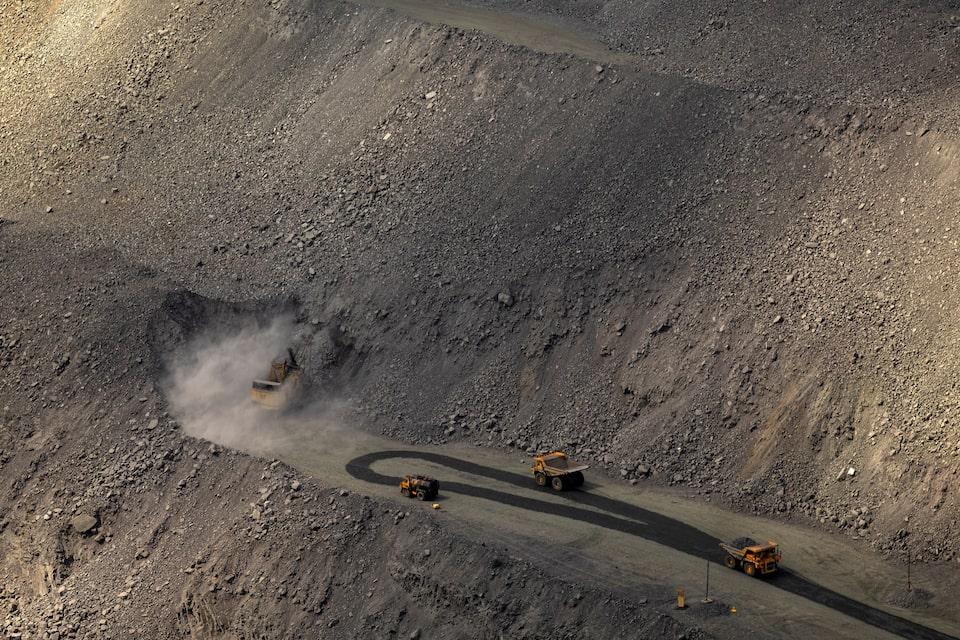
May 1 (Reuters) - Ukraine and the United States on Wednesday signed a deal heavily promoted by U.S. President Donald Trump , opens new tab that will give the United States preferential access to new Ukrainian minerals deals and fund investment in Ukraine's reconstruction. The following is an overview of the critical minerals, including rare earths, and other natural resources in Ukraine: Sign up here. WHAT ARE RARE EARTHS AND WHAT ARE THEY USED FOR? Rare earths are a group of 17 metals used to make magnets that turn power into motion for electric vehicles, cell phones, missile systems, and other electronics. There are no viable substitutes. The U.S. Geological Survey considers 50 minerals to be critical, including rare earths such as nickel and lithium. Critical minerals are essential for industries such as defence, high-tech appliances, aerospace and green energy. WHAT MINERAL RESOURCES DOES UKRAINE HAVE? Ukraine has deposits of 22 of the 34 minerals identified by the European Union as critical, according to Ukrainian data. They include industrial and construction materials, ferro alloy, precious and non-ferrous metals, and some rare earth elements. According to Ukraine's Institute of Geology, the country possesses rare earths such as lanthanum and cerium, used in TVs and lighting; neodymium, used in wind turbines and EV batteries; and erbium and yttrium, whose applications range from nuclear power to lasers. EU-funded research also indicates that Ukraine has scandium reserves. Detailed data is classified. The World Economic Forum has said Ukraine is also a key potential supplier of lithium, beryllium, manganese, gallium, zirconium, graphite, apatite, fluorite and nickel. The State Geological Service said Ukraine has one of Europe's largest confirmed reserves, estimated at 500,000 metric tons, of lithium - vital for batteries, ceramics, and glass. The country has titanium reserves, mostly located in its northwestern and central regions, while lithium is found in the centre, east and southeast. Ukraine's reserves of graphite, a key component in electric vehicle batteries and nuclear reactors, represent 20% of global resources. The deposits are in the centre and west. Ukraine also has significant coal reserves, though most are now under the control of Russia in occupied territory. Mining analysts and economists say Ukraine currently has no commercially operational rare earth mines. China is the world's largest producer of rare earths and many other critical minerals. WHAT DO WE KNOW ABOUT THE DEAL? The two countries signed the accord in Washington after months of sometimes fraught negotiations, with uncertainty persisting until the last moment with word of an eleventh-hour snag. The accord establishes a joint investment fund for Ukraine's reconstruction as Trump tries to secure a peace settlement in Russia's three-year-old war in Ukraine. U.S. Treasury Secretary Scott Bessent and Ukrainian First Deputy Prime Minister Yulia Svyrydenko were shown signing the agreement in a photo posted on X by the Treasury, which said the deal "clearly signals the Trump Administration's commitment to a free, sovereign, prosperous Ukraine." Svyrydenko wrote on X that the accord provides for Washington to contribute to the fund. She also said the accord provides for new assistance, for example air defense systems for Ukraine. The U.S. did not directly address that suggestion. Svyrydenko said the accord allowed Ukraine to "determine what and where to extract" and that its subsoil remains owned by Ukraine. Svyrydenko said Ukraine has no debt obligations to the United States under the agreement, a key point in the lengthy negotiations between the two countries. It also complied with Ukraine's constitution and Ukraine's campaign to join the European Union, she said. The draft did not provide any concrete U.S. security guarantees for Ukraine, one of its initial goals. WHICH UKRAINIAN RESOURCES ARE UNDER KYIV'S CONTROL? The war has caused widespread damage across Ukraine, and Russia now controls around a fifth of its territory. The bulk of Ukraine’s coal deposits, which powered its steel industry before the war, are concentrated in the east and have been lost. About 40% of Ukraine's metal resources are now under Russian occupation, according to estimates by Ukrainian think-tanks We Build Ukraine and the National Institute of Strategic Studies, citing data up to the first half of 2024. They provided no detailed breakdown. Since then, Russian troops have continued to advance steadily in the eastern Donetsk region. In January, Ukraine closed its only coking coal mine outside the city of Pokrovsk, which Moscow's forces are trying to capture. Russia has occupied at least two Ukrainian lithium deposits during the war - one in Donetsk and another in the Zaporizhzhia region in the southeast. Kyiv still controls lithium deposits in the central Kyrovohrad region. WHAT OPPORTUNITIES DOES UKRAINE OFFER? Oleksiy Sobolev, first deputy economy minister, said in January that the government was working on deals with Western allies including the United States, Britain, France and Italy on projects related to exploiting critical materials. The government estimates the sector's total investment potential at about $12-15 billion by 2033. The State Geological Service said the government was preparing about 100 sites to be jointly licensed and developed but provided no further details. Although Ukraine has a highly qualified and relatively inexpensive labour force and developed infrastructure, investors highlight a number of barriers to investment. These include inefficient and complex regulatory processes as well as difficulty accessing geological data and obtaining land plots. Such projects would take years to develop and require considerable up-front investment, they said. https://www.reuters.com/markets/commodities/what-are-ukraines-critical-minerals-what-do-we-know-about-deal-with-us-2025-05-01/
2025-05-01 06:48
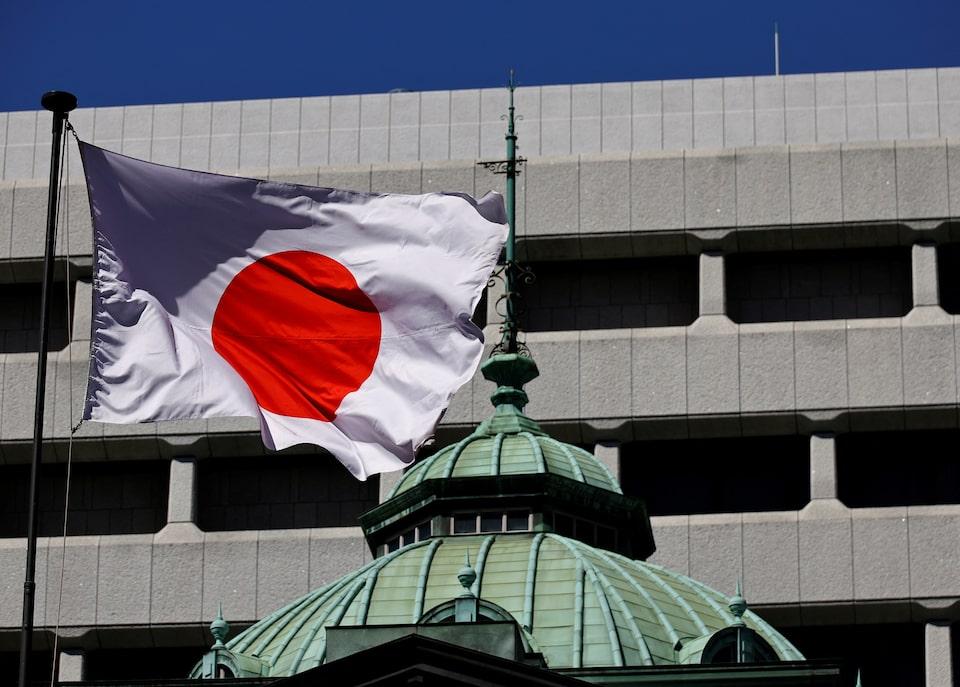
BOJ keeps interest rate steady at 0.5% as widely expected Board cuts growth forecasts in quarterly report BOJ delays projected timing of hitting target by a year Ueda says BOJ still on course for further rate hikes Warns of shaky baseline scenario, huge uncertainty TOKYO, May 1 (Reuters) - The Bank of Japan kept interest rates steady and sharply cut its growth forecasts on Thursday, suggesting uncertainty surrounding U.S. tariffs and the hit to exports could keep policy in a holding pattern for some time. But the central bank projected inflation would stay roughly on course to hit its 2% target in coming years, a sign that risks from U.S. tariffs could delay, but not derail, its rate hike plans. Sign up here. BOJ Governor Kazuo Ueda said the timing for underlying inflation to converge toward the central bank's 2% target has been "pushed back somewhat" as trade tensions cloud the outlook. But he said the BOJ still expects conditions for further rate hikes to eventually fall into place. "We'll enter a period in which both inflation and wage growth will likely slow somewhat. But we expect a positive cycle of rising wages and inflation to continue due to a severe labour shortage," Ueda told a press conference. "It's hard to judge now when we can see the likelihood of our scenario being achieved," he said. "As such, we would like to take a flexible approach in our policy response." As widely expected, the BOJ kept short-term interest rates steady at 0.5% by a unanimous vote. In a quarterly outlook report released after the meeting, the BOJ cut its economic growth forecast for the fiscal year ending March 2026 to 0.5% from 1.1% projected three months ago. It also slashed its growth forecast to a 0.7% expansion for the following fiscal year from 1.0% in January. The BOJ now expects underlying consumer inflation to reach levels consistent with its 2% target around the latter half of fiscal 2026 and onward, the report said, pushing back the timing by around a year from the previous report in January. "Recent developments surrounding tariffs will weigh on Japan's economy by slowing global growth, hurting corporate profits, and prodding households and companies to hold off on spending due to heightening uncertainties," Ueda said. "But we expect such downward pressure to recede thereafter, as overseas economies resume a moderate recovery," he added. Japanese government bond yields and the yen fell, while the Nikkei share average rose, on growing market views that it would take longer than expected for the BOJ to raise rates. "Everything's been reduced in terms of their forecasts and the market seems to be selling the yen at the moment," said Bart Wakabayashi, Tokyo branch manager at State Street. "The BOJ is taking a step back. They want to see how the data will change or which way it's pointing once the policies are put in place." Analysts polled by Reuters in April had said they expect the BOJ to hold rates steady through June, with a 25-basis-point hike expected next quarter by a slight majority of respondents. SHAKY BASELINE SCENARIO Rising trade tensions from U.S. President Donald Trump's sweeping tariffs have sent shockwaves through markets and led to a sharp downgrade in the International Monetary Fund's global growth forecasts. The huge uncertainty surrounding U.S. tariffs has complicated the BOJ's decision on when and how far it can hike interest rates and normalise still-loose monetary policy. Under its baseline scenario laid out in the report, the BOJ expects Japan's economic growth to re-accelerate, after a period of slowdown blamed on global trade uncertainty. Ueda said the BOJ will continue to raise rates if its economic and price forecasts materialise, but said uncertainty over the outlook was "extremely" high. "Depending on developments surrounding tariffs, our baseline scenario itself could change. That could affect our monetary policy decisions," he said, adding the risk of Japan experiencing stagflation - where low growth and too-high inflation co-exist - cannot be ruled out. In the fresh forecasts, the BOJ expects core consumer inflation to hit 2.2% in fiscal 2025, ease to 1.7% in fiscal 2026 and then accelerate to 1.9% in fiscal 2027. The BOJ said its forecasts were based on the assumption that some progress will be made in trade negotiations, and that there will be no big disruption in global supply chains. "The BOJ appears to be maintaining a rate-hike stance. Given high uncertainty, however, it probably wants to leave itself a free hand on the timing," said Izuru Kato, chief economist at Totan Research. https://www.reuters.com/business/boj-keep-rates-steady-cut-growth-forecasts-2025-04-30/
2025-05-01 06:33
ISTANBUL, May 1 (Reuters) - Turkey allocated a 1 million ton zero tariff import quota for corn, Turkey's trade ministry said on Thursday. The tariff-free import window will be available until the end of July, long enough to keep prices stable until the harvest, the ministry said. Sign up here. Turkey announced another 1 million ton tariff free import quota for animal feed corn in March. https://www.reuters.com/world/middle-east/turkey-allocates-1-mln-ton-zero-tariff-import-quota-corn-2025-05-01/

2025-05-01 06:07
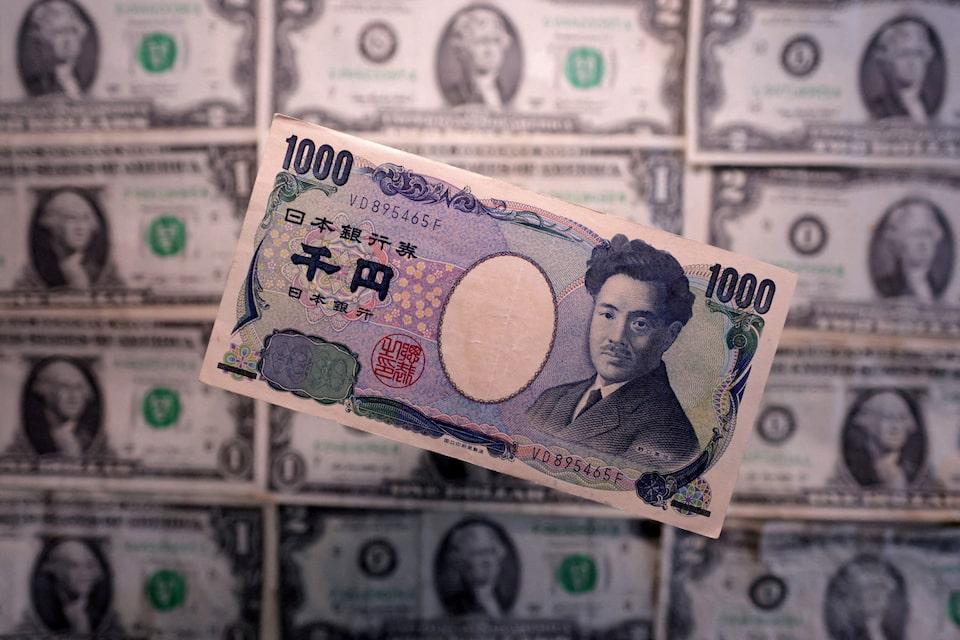
Yen sold as BOJ holds rates but cuts economic forecasts US manufacturing contracts; jobless claims rise Much of Europe closed for May Day holiday Focus on Friday's nonfarm payrolls NEW YORK, May 1 (Reuters) - The U.S. dollar continued to bounce back on Thursday on some technical buying after being oversold last month, with investors more optimistic about tariff deals between the United States and its trading partners. Volume was thinner than usual, as many international markets were closed on Thursday for the May Day holiday. Sign up here. The yen, meanwhile, sank as the Bank of Japan lowered growth forecasts due to U.S. tariffs and left interest rates on hold. It dropped to a four-week low against the dollar, which rose 1.7% to 145.52 yen , on track for the greenback's largest daily gain since November 2024. Against the euro, the yen fell to a four-month low, with the single currency last up 1.4% at 164.29 yen. The euro was on pace for its largest daily rise versus the yen in two months. The BOJ's decision to hold rates was unanimous and expected, but the downgraded outlook reduced the chances of future hikes. It now expects underlying inflation to reach its 2% target in the latter half of fiscal 2026 and onward, pushing back the timing by a year from its previous projection in January. The dollar, on the other hand, rose across a broad swathe of currencies, as investors weighed the prospects of trade deals with U.S. partners. Treasury Secretary Scott Bessent and White House economic adviser Kevin Hassett expressed hope on Thursday for progress in easing trade tensions. Hassett told CNBC that there have been "loose discussions all over both governments" about the tariffs and China's easing of duties on some U.S. goods last week was a sign of progress. President Donald Trump had said on Wednesday that "potential" trade deals with India, South Korea, and Japan are coming, with a very good chance of reaching an agreement with China as well. "The Trump administration has come to the realization that they might have overplayed their hand when it comes to tariffs and they're trying to paint a picture of the potential for negotiations," said Jayati Bharadwaj, global FX strategist at TD Securities in New York. A social media account affiliated with Chinese state media said on Thursday the United States has approached China seeking talks over Trump's 145% tariffs, which potentially signals Beijing's openness to negotiations. In afternoon trading, the euro fell to a three-week trough versus the greenback and was last down 0.4% at $1.1286 . Sterling also fell 0.4% to $1.3284 . Against the Swiss franc, the dollar climbed 0.6% to 0.8311 franc . "It looks like the de-dollarization of the last month has calmed down," said Erik Bregar, director, FX & precious metals risk management, at Silver Gold Bull in Toronto. "Overall, the dollar is following moves in Treasuries. When the bonds sell-off paused, the dollar started gaining as well." NONFARM PAYROLLS, OTHER US DATA Market participants are now looking to Friday's U.S. nonfarm payrolls (NFP) report for an indication on when the Federal Reserve will resume cutting rates. Wall Street economists are forecasting 130,000 new jobs created last month, compared with a print of 228,000 seen in February. "Since the NFP survey was conducted several weeks ago, it's likely to show only a slowdown in hiring and relatively few outright layoffs as businesses broadly froze current employment levels until there was more certainty around the levels and duration of the 'Liberation Day' tariffs," wrote Matthew Weller, global head of research, at FOREX.com and City Index, in emailed comments. Thursday's data, however, showed continuing weakness. U.S. initial jobless claims in the latest week surged to a two-month high. Initial claims for unemployment benefits jumped 18,000 to 241,000 for the week ended April 26, the highest since February. A separate report showed U.S. manufacturing contracted further in April, while tariffs on imported goods strained supply chains, lifting prices paid for inputs and keeping the narrative on stagflation alive and well. The Institute for Supply Management's (ISM) manufacturing PMI dropped to a five-month low of 48.7, which was slightly higher than expected, compared with a reading of 49.0 in March. A PMI reading below 50 indicates contraction. Economists polled by Reuters had forecast the PMI declining to 48. In other currencies, the Australian dollar dipped against the U.S. dollar after a bumper April that saw it notch multi-month peaks. The Aussie was last down 0.3% at US$0.6385, having recently found support from a slightly hotter-than-expected inflation reading. https://www.reuters.com/world/africa/dollar-takes-breather-yen-waits-boj-2025-05-01/