2025-04-30 21:46
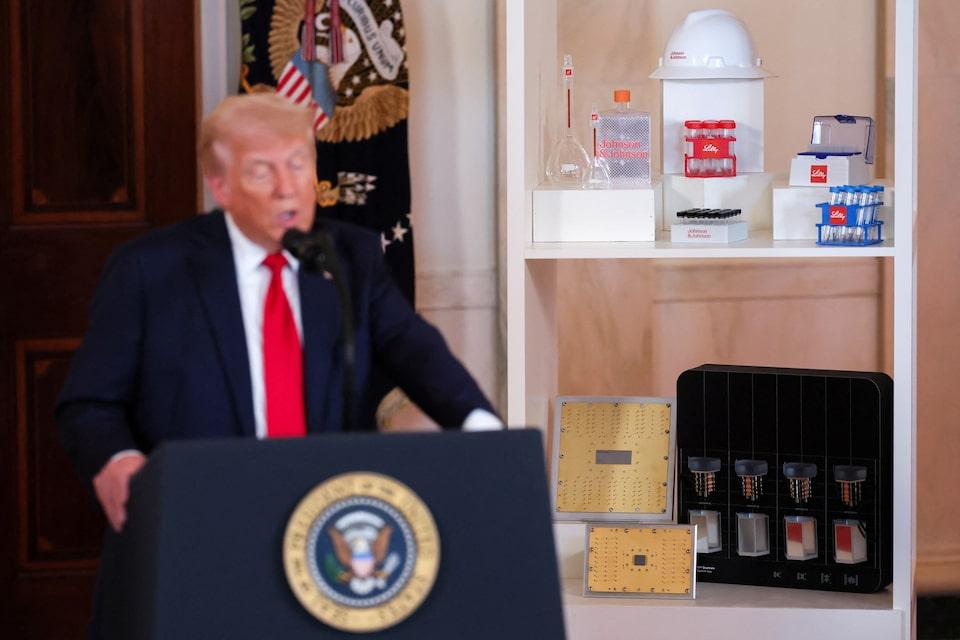
WASHINGTON, April 30 (Reuters) - President Donald Trump said on Wednesday that there will be a tariff "wall" for pharmaceutical companies operating in the United States after a certain amount of time. Sign up here. https://www.reuters.com/business/healthcare-pharmaceuticals/trump-warns-tariff-wall-pharmaceutical-companies-2025-04-30/
2025-04-30 21:46
April 30 (Reuters) - The United States and Ukraine have signed an agreement over access to Ukraine’s natural resources, Bloomberg News reported on Wednesday. The deal will provide the U.S. privileged access to new investment projects to develop Ukraine's natural resources, including aluminum, graphite, oil and natural gas, Bloomberg reported. Sign up here. https://www.reuters.com/world/europe/us-ukraine-sign-minerals-deal-bloomberg-news-reports-2025-04-30/

2025-04-30 21:44
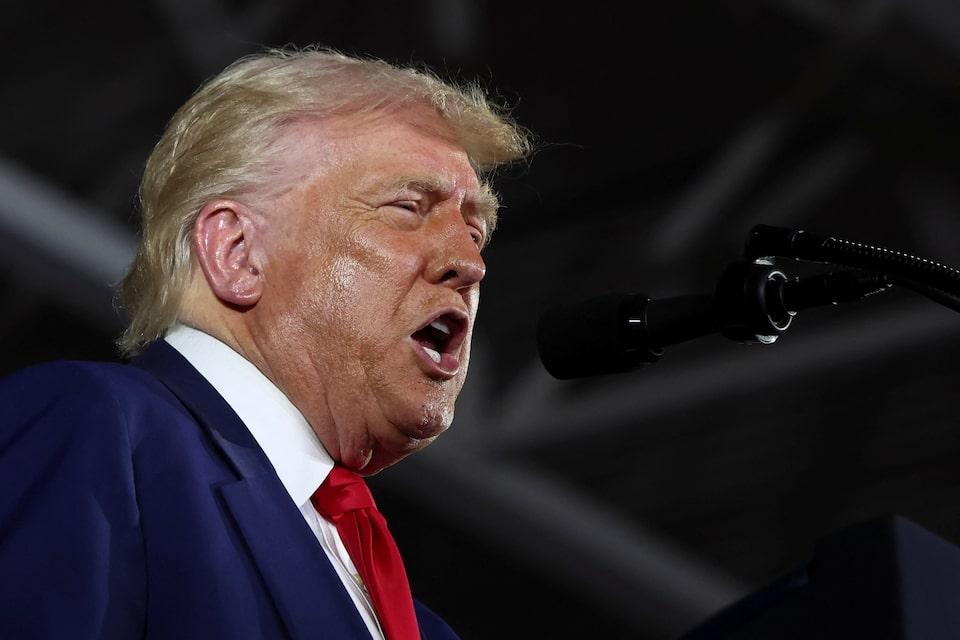
WASHINGTON, April 30 (Reuters) - President Donald Trump on Wednesday counseled patience, cast blame and claimed victory in the face of a first-quarter U.S. economic contraction and tariffs that have taken a bite out of his popularity, saying a resurgence was around the corner. The U.S. Commerce Department's advance gross domestic product data on Wednesday pointed to the first quarterly decline in three years as businesses imported a flood of goods to avoid higher costs from Trump's pending tariffs. Some economists pointed to robust consumer spending and private investment as a sign that growth could soon rebound. Sign up here. Trump and his aides struggled to coalesce around a message about the GDP number, simultaneously saying it was bad because of Biden administration policies but also good because of Trump's efforts. "You probably saw some numbers today, and I have to start off by saying that's Biden," Trump said to reporters, without elaborating as he referred to his Democratic predecessor. He then said the figure was due to "distortions" from imports, inventories and government spending, components that figure into the GDP calculation. He also celebrated a surge in business investment that some economists attribute to tariff-related spending. "We had numbers that, despite what we were handed, we turned them around and we were getting them really turned around," Trump said during a two-hour-long Cabinet meeting broadcast live. Earlier, Trump trade adviser Peter Navarro said, "This was the best negative print, as they say in the trade, the GDP - that I've ever seen in my life. It really should be very positive news for America." Navarro also discounted the GDP number, saying it declined because businesses were buying goods from abroad to get ahead of tariffs, an idea that clashed with Trump's claim on social media that tariffs played no role in declining stock markets. The varying explanations came as Trump crossed the symbolic milestone of 100 days in office and polls showed rising public discontent over the Republican's handling of the economy. A Reuters/Ipsos poll completed on Sunday showed 42% of respondents approve of Trump's performance in office, and 53% disapprove. The approval rate stood at 47% in the hours after his January 20 inauguration. The share of respondents who approve of Trump's economic stewardship declined a percentage point to 36% from the prior week, the lowest level in his current term or in his 2017-2021 presidency, while disapproval rose 5 points to 56%. RECESSION FEARS Fears of a recession have surged in recent weeks as Trump has launched a global trade war, hiking tariffs so high that economists warn trade with some countries - notably China - could grind nearly to a halt. The moves have shaken investors and companies. Some private sector economists laid the first-quarter downturn on Trump's plate, not former President Joe Biden's, as gross domestic product expanded at an annualized rate of about 2.9% per quarter on average over the second half of Biden's presidency. And some see the stage now set for a recession. "This isn't going to reverse because of the internal properties of the economy," said Joseph Brusuelas, chief economist with consulting firm RSM US LLP. "This is all policy induced, so unless the tariffs are walked back rapidly, it's just simply going to be too late to avoid an economic downturn." He added: "We'll be talking about a recession starting around midyear." Democrats were quick to seize on the economic uncertainty and lay blame squarely on Trump. "This is not Joe Biden's economy, Donald, it is your economy," U.S. House Minority Leader Hakeem Jeffries said on Wednesday, standing alongside fellow Democratic lawmakers. "It is the Trump economy, it is a failed economy and the American people know it." On Wednesday, Trump on social media blamed sliding stock markets on Biden but later said he was taking neither credit nor "discredit" for market performance. During the lengthy Cabinet meeting, several of Trump's aides took turns praising Trump's economic policies. "American families are finding their financial footing again," said U.S. Treasury Secretary Scott Bessent, adding that Trump was going to make the country an artificial intelligence and manufacturing superpower. Bessent also said the country was experiencing lower mortgage rates, food costs and energy prices. Benchmark 30-year mortgage rates are roughly the same as when Trump won the election in November, while food prices are rising at a 3% annualized rate and energy prices are falling by the same rate, according to the U.S. Bureau of Labor Statistics. https://www.reuters.com/world/us/trump-deflects-blame-economy-contraction-says-be-patient-2025-04-30/
2025-04-30 21:41
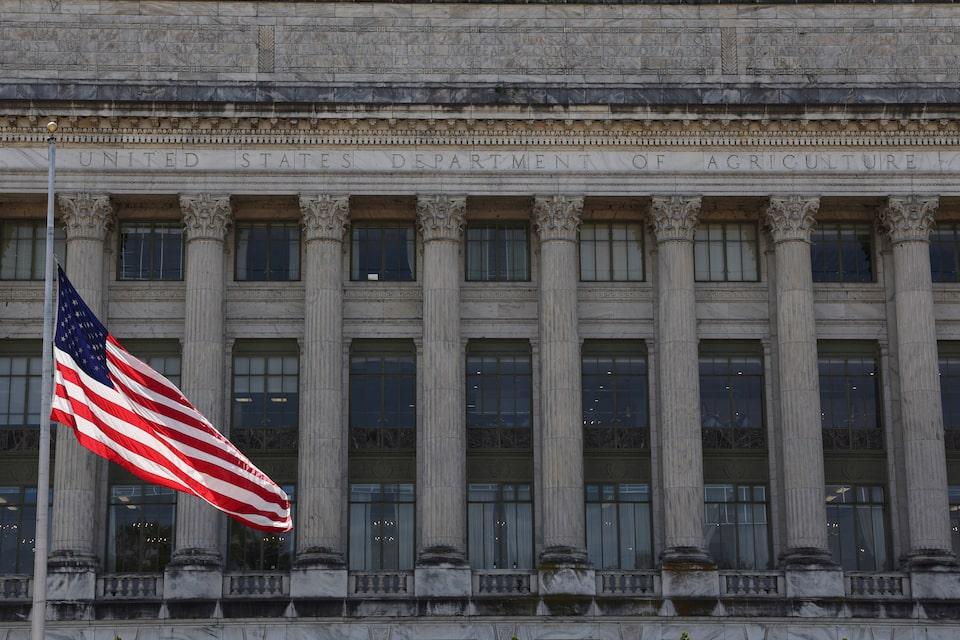
Farm loans over $500,000 will need DOGE approval under new policy Farmers rely on loans for operational and land costs Trump staff cuts at farm agency have raised concerns about services to farmers WASHINGTON, April 30 (Reuters) - Farm loan employees at the U.S. Department of Agriculture's Farm Service Agency will now need approval from billionaire Elon Musk's Department of Government Efficiency to issue loans over $500,000, according to a memo seen by Reuters on Wednesday. DOGE has led President Donald Trump's effort to slash the federal workforce and cut spending. Several programs for farmers, such as for local food purchasing and climate-smart farming, have been frozen or cut in the administration's first 100 days. Sign up here. Farmers rely heavily on loans to pay for operational expenses including seeds, fertilizers and pesticides, or to buy land. The USDA typically offers loans to farmers who have trouble accessing credit through traditional lending institutions. The April 29 memo sent by Houston Bruck, deputy administrator for farm loan programs, said that the new policy requiring clearance from the Office of the Secretary and DOGE for some lending is in compliance with an executive order on government cost efficiency. Under the policy, which went into effect on Wednesday, all loans and guarantees of $500,000 or more and to "formal entities" like corporations will need to be approved by the two offices, the memo said. Direct farm loans made to farmers by the FSA have a borrowing cap of $600,000. Guaranteed farm loans, which are financed by commercial banks with FSA backing, are capped at $2.2 million. "We recognize the potential impact that this effort may have on our customers, lending partners, and FSA staff, and are committed to ensuring minimal disruption to service delivery," said USDA's Farm Service Agency administrator Bill Beam in a note sent along with the memo. The USDA, the trade group American Bankers Association, and officials with the Farm Credit System did not immediately respond to requests for comment. 'THE MENTAL STRESS OF IT ALL' "What this says to me is we're adding another layer of bureaucracy and clearance to one of the most efficient programs in the federal government," said Zach Ducheneaux, the FSA administrator under the Biden administration. Ducheneaux said the approval requirement will delay lending decisions, which can have significant impact for farmers. "It can trigger a domino effect to getting the crop planted in the ground or send those cattle to market," Ducheneaux said. "It's not just the financial hardship, where delays can lead to farmers defaulting on payments and result in penalties and fees, but also the mental stress of it all," he said. The FSA services about 8% to 10% of farms with loans, according to USDA data. In fiscal year 2023, the agency issued 22,600 farm loans worth about $4.7 billion, according to agency data. Staff departures at the USDA have raised concerns about whether the FSA will be able to maintain services to farmers at their local offices around the country. During travel on Monday to Versailles, Ohio, Agriculture Secretary Brooke Rollins said FSA staff and other frontline USDA employees would not be affected by the agency's forthcoming reduction in force plan. "We are working overtime to ensure that we've got the right people in the right place to ensure that we're able to serve our farmers and our ranchers every single day," she said. Some FSA staff were denied their requests to opt into the second Deferred Resignation Program, an incentive to leave the agency, because of concerns about local staffing, according to an April 17 email sent from Beam to agency staff. "Where DRP 2.0 participation by one or more employees would potentially leave an office critically understaffed, hinder continuity of operations, adversely impact delivery of our programs, and disrupt customer service, we have denied DRP 2.0 elections," the email said. https://www.reuters.com/world/us/us-farm-agency-require-doge-approval-some-loans-2025-04-30/
2025-04-30 21:07
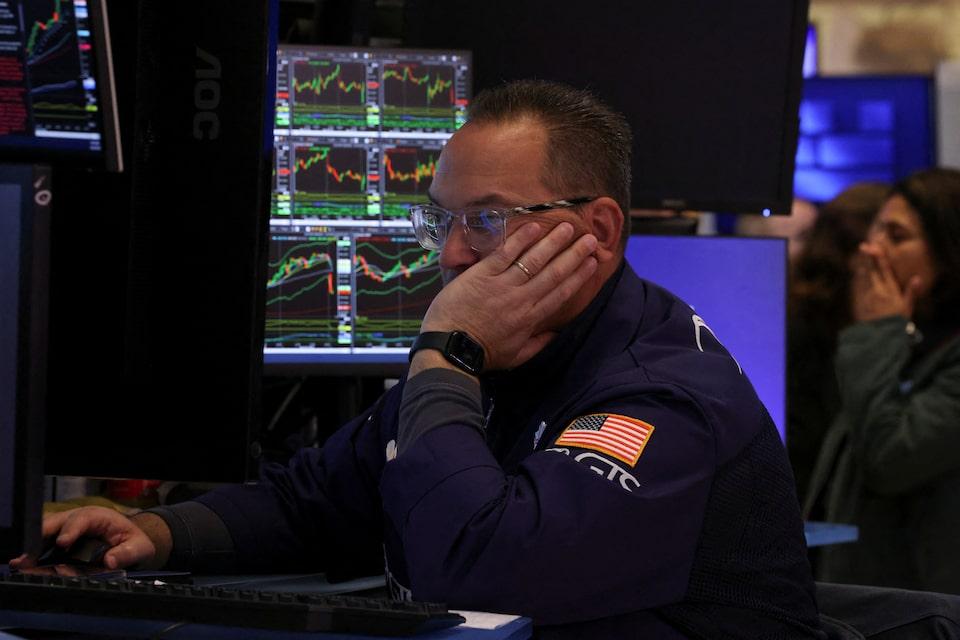
ORLANDO, Florida, April 30 (Reuters) - TRADING DAY Making sense of the forces driving global markets Sign up here. By Jamie McGeever, Markets Columnist Halfway to recession If investors wanted a reminder of the impact tariffs and trade wars have on markets, they got it on Wednesday as figures showed that U.S. GDP shrank in the first quarter, pushing Wall Street sharply lower before a powerful late rally ended an incredibly turbulent month on a positive note. Wednesday marked U.S. President Donald Trump's first 100 days in office, also a tumultuous period, by any measure. But what do the next 100 days hold for markets? More on that below, but first, a round-up of the main market moves. I'd love to hear from you, so please reach out to me with comments at [email protected] , opens new tab. You can also follow me at @ReutersJamie and @reutersjamie.bsky.social. If you have more time to read, here are a few articles I recommend to help you make sense of what happened in markets today. Today's Key Market Moves Trade? It's a drag The U.S. economy shrank in the first quarter for the first time in three years, as trade dealt its heaviest blow to GDP on record. Another contraction in the April-June quarter will meet the definition of a technical recession. The late rebound on Wall Street was remarkable and came out of the blue, but perhaps even more interesting was the bond market's reaction to Wednesday's U.S. economic data. Since peaking just below 4.60% on April 11, the yield on the 10-year U.S. Treasury note has fallen around 45 basis points. But it crept up on Wednesday and the curve steepened again, suggesting inflation concerns rather than contracting economic activity drove longer-dated bond prices. Meanwhile, the 0.3% contraction of GDP in the first quarter pushed the two-year yield lower for a fifth day in a row, the longest declining streak since February. Traders moved to price in a Fed rate cut in June and another three by the end of the year. But prices are sticky, and tariffs are likely to keep them that way. The GDP deflator, a proxy for inflation, was 3.7% in the first quarter, higher than the expected 3.0%. Meanwhile, the headline reading of PCE inflation in March also released on Wednesday was slightly higher than expected at 2.3%. With stagflation pressures rising and barbs from the White House flying, Fed Chair Jerome Powell is in a difficult position. Powell has steered a straight path down the middle, insisting that more hard data is needed before the Fed acts. But right now, it looks like the 'stag' risks are weighing more heavily on policymakers' minds than the 'flation'. If there's one central bank traders are convinced will sit on their hands for the remainder of this year, however, it is the Bank of Japan, which announces its latest rate decision on Thursday. Global trade, economic and market turbulence looks to have put the BOJ's tightening cycle into long, cold storage - rates markets are pricing in only 15 basis points of hikes this year, down from around 75 bps in late January. Japan's economic surprises index is heading south and is close to turning negative, while Japanese bond yields look to have reached a plateau. That's a yen-negative backdrop. But Treasury yields are falling faster, U.S. growth is shrinking, and Fed rate cut expectations are intensifying. Throw in the yen's 'safe haven' status as Japanese investors bring money home, and the yen's outlook is suddenly a lot brighter. Strategists at TS Lombard on Wednesday said dollar could fall close to 130.00 yen later this year. Dazed and confused, markets brace for Trump's second 100 days The first 100 days of Trump 2.0 were incredibly turbulent for world markets, as tariff-fueled chaos wiped trillions of dollars off U.S. asset prices. What will the second 100 days of President Donald Trump's administration look like? They will probably be less volatile, but markets may be underpricing the downside risk. Wall Street and the dollar ended Trump's first 100 days sharply lower as investors around the world reassessed their willingness to hold U.S. assets. Even though many markets, including the S&P 500, hit record highs in the month after Trump's inauguration in January, U.S. stocks ended up having their worst first 100 days under any president since Richard Nixon's second term in 1973, and the dollar index ended the period down nearly 10%. But several global markets have rebounded from their lows, as Trump has backed away from some of his more extreme policies and dialed down his rhetoric. The MSCI World index is now off only 3% since inauguration day. Chinese, British and European stocks are essentially flat, while the MSCI Asia ex-Japan index, Germany's DAX and India's Sensex are all up between 2% and 7%. Some of this relief is justified, but markets may be a bit too optimistic about what the next 100 days have in store. ROCKY ROAD Peak tariff chaos is probably in the rear-view mirror, but even if global levies are reduced, they will still be the highest in decades. And trade tensions between China and the U.S. – the world’s two largest economies – likely won't ratchet down quickly. Markets don't appear to be priced for the trade disruption and economic slowdown this is apt to cause. Global equity valuations have cheapened since January, but not by much, and European multiples are beginning to tick back up again. Meanwhile, 12-month forward earnings forecasts for the S&P 500 continue to rise to new highs, nudging $280 per share. Does this point to confidence in the resilience of the U.S. and the global economy or complacency? Keith Lerner, chief investment officer at Truist, reckons it's the latter, especially given how narrow the scope is for sizeable U.S. fiscal and monetary policy support. Lerner estimates the near-term potential for the S&P 500 is no more than 5% on the upside, and greater than 10% on the downside. "Markets have gone from pricing in a decent amount of bad news at the recent lows, to providing less of a buffer should we have a rockier road ahead," he wrote on Tuesday. "The risk-reward appears less attractive at current levels." The sudden collapse in U.S.-China trade, record uncertainty, and months of limbo for households and businesses while the U.S. negotiates dozens of trade deals suggest downward global growth revisions like the International Monetary Fund's last week may be too benign. Even if recession is avoided, stagflation may not be. PEAK TRUM The bullish case, of course, is that the first 100 days marked "peak Trump", meaning the shock, chaos, and selling across markets won't be repeated in the coming months. Tensions with U.S. rivals and allies will thaw, and the world will return to something resembling normalcy. Perhaps some of this is playing out. Elon Musk's influence on White House policy is waning, as the Tesla chief has scaled back his DOGE time commitment. Trump has tempered his attacks on Federal Reserve Chair Jerome Powell, and the U.S. administration is sounding more conciliatory on tariffs. In that light, one could argue that U.S. "Big Tech" is now cheap and doubts over the dollar's safe-haven status are overblown. The U.S. economy remains the world's most innovative and dynamic, and there are huge fiscal boosts coming down the pike in Europe and China. Time to buy then? Not so fast. As a recent JP Morgan survey notes, even though investors may be hopeful for de-escalation in the trade war, they also fear "lasting damage" is being done by the administration's efforts to create a new world order. They also have "very little conviction on the (administration's) endgame" or which asset classes to own. Low conviction, high uncertainty and fears of long-term damage don't make for a particularly bullish backdrop, even if the next 100 days are a lot less tumultuous than the first What could move markets tomorrow? Opinions expressed are those of the author. They do not reflect the views of Reuters News, which, under the Trust Principles , opens new tab, is committed to integrity, independence, and freedom from bias. Trading Day is also sent by email every weekday morning. Think your friend or colleague should know about us? Forward this newsletter to them. They can also sign up here. https://www.reuters.com/markets/global-markets-trading-day-corrected-graphic-pix-2025-04-30/
2025-04-30 20:55
Decline of mature wells, delays in new well completions cited in production decline Pemex says it's working to reach 1.8 million bpd production goal by year-end Revenues dip 2.5% on lower crude sales Cash-strapped company's financial debt rises past $101 million Production remains under government's goal of 1.8 million bpd MEXICO CITY, April 30 (Reuters) - Pemex, Mexico's heavily indebted state energy company, reported an 11.3% drop in first-quarter production of crude and condensate on Wednesday as falling sales and foreign-exchange losses contributed to a 43.3 billion peso ($2.12 billion) net loss. In a filing with Mexico's stock exchange, Pemex, one of Mexico's largest companies, attributed the production slump to the decline of mature wells and delays in new well completions. Sign up here. During the first quarter, Pemex and its partners pumped 1.62 million barrels per day (bpd) of crude oil and condensate. The company processed 936,000 bpd in its local refineries, down 5% compared to the year-ago period. Mexican President Claudia Sheinbaum has pledged to raise production to 1.8 million bpd, although older fields, particularly in the Gulf of Mexico, are being depleted and more recent discoveries have failed to compensate. On a call with analysts, Pemex's corporate planning chief, Jorge Alberto Aguilar, said the company was working to reach the 1.8-million-bpd goal by the end of the year and maintain it at that level. Sheinbaum, who will govern until 2030, has said domestic crude production will ensure Mexico can produce the gasoline it needs and end its dependence on motor-fuel imports. Production has been falling for several months. Pemex has not been within the government's production target since March 2024, when it pumped 1.81 million bpd. A series of contracts for joint ventures with private companies is being prepared to increase pumping, they added, noting that Pemex will have at least a 40% stake. Revenue during the January-to-March period fell 2.5% to 395.59 billion pesos, mainly due to lower crude oil sales volumes, Pemex said. Pemex said foreign-exchange losses and rising costs played roles in its swing to a net loss. In the quarter, its refining unit yielded 305,000 bpd of gasoline and 171,000 bpd of diesel. PEMEX AIMS TO REDUCE DEBT BALANCE Pemex said its financial debt for the three-month period totaled $101.1 billion, up from the $97.6 billion reported in the fourth quarter of 2024. Already the world's most indebted energy company, Pemex has received billions of pesos in government support. The company said it received 80 billion pesos in government support in the first quarter. The funds were mainly used to pay down debt. Pemex said its goal "is to reduce the financial debt balance over the course of the year, resulting in a lower balance at the end of 2025 versus the end of 2024." The company said that 136 billion pesos in transfers from the government were approved for amortizations. Pemex also reported a decline in drilling activity, completing during the first quarter 12 development wells and five exploratory wells, down from 16 and eight wells, respectively, in the same period in 2024. Executives of the state-owned giant did not mention on Wednesday whether the drop in well drilling levels had any relation to the debts to suppliers, which reached $19.9 billion at the quarter's close. In late 2023, local industry groups said Pemex's ballooning debt to its oil service providers and private oil and gas producers was threatening hydrocarbon production and the survival of companies. Executives said that Pemex will continue to make payments to suppliers and that it is working with the Finance Ministry to seek ways to manage financial and commercial liabilities. ($1 = 20.4604 pesos at end-March) https://www.reuters.com/business/energy/mexicos-pemex-swings-2-billion-loss-production-sales-slump-2025-04-30/