2025-04-30 20:29
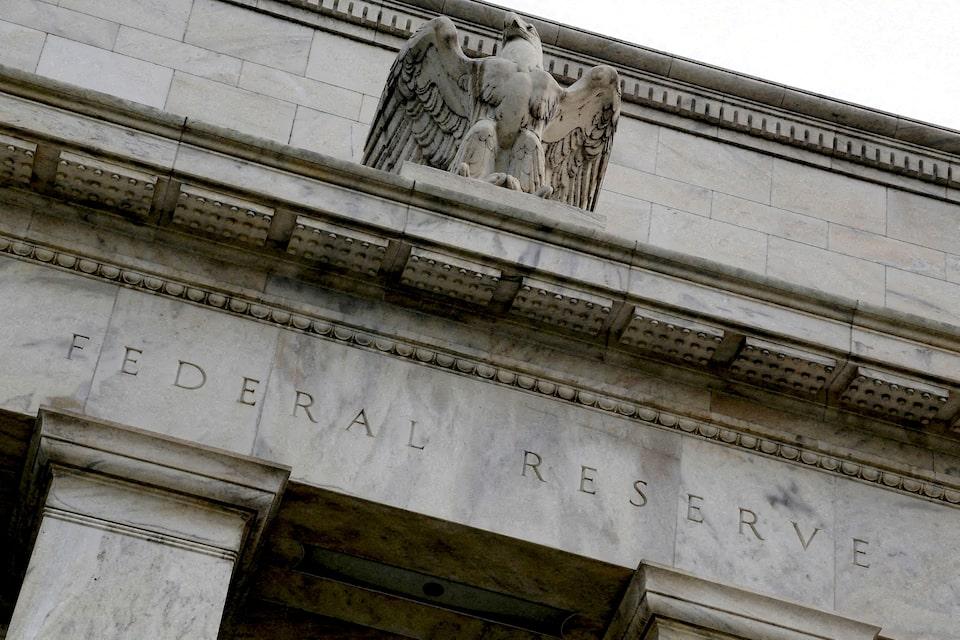
April 30 (Reuters) - Albemarle (ALB.N) , opens new tab, the world's largest producer of lithium for electric vehicle batteries, said on Wednesday it has not yet been affected by the flurry of tariffs bouncing around the global economy and would thus maintain its 2025 outlook. The Charlotte, North Carolina-based company, which operates across the Americas, Asia and Australia, kept its sales and earnings forecast for the year, noting that the lithium and some other critical minerals are for now exempt from tariffs that Washington aims to impose on trading partners. Sign up here. "While the full economic impact of the recently announced tariffs and other global trade actions is unclear, we benefit from our global footprint and the current exemptions for critical minerals," CEO Kent Masters said in a press release. Still, Albemarle, like many of its peers, has struggled the past two years to weather a lithium supply glut caused by overproduction in China that has forced it to cut staff and curtail expansion projects. The company gave no indication that market dynamics are improving, with Masters noting the company continues "to focus on what we can control." Albemarle reported a first-quarter net loss for common shareholders of $340,000, or zero cents per share, compared to a loss of $9.1 million, or 8 cents per share, in the year-ago period. Excluding costs to curtail expansion projects, losses on investments and other one-time items, the Charlotte, North Carolina-based company lost 18 cents per share. By that measure, analysts expected earnings of 59 cents per share, according to IBES data from LSEG. The company's Energy Storage division, which sells lithium, reported a $276.3 million drop in revenue caused by a 34% slide in prices the company receives for its lithium. The company's stock fell slightly to $58.35 in after-hours trading. Albemarle plans to discuss the quarterly results on a Thursday morning conference call with investors. https://www.reuters.com/business/energy/albemarle-posts-loss-sliding-lithium-prices-keeps-2025-outlook-2025-04-30/
2025-04-30 20:24
April 30 (Reuters) - Visa (V.N) , opens new tab and stablecoin infrastructure provider startup Bridge are partnering to offer stablecoin-linked Visa cards to customers across multiple countries in Latin America, which the companies say will allow users to make everyday purchases in cryptocurrency tokens. The move comes as the U.S. Congress appears likely to pass a bill creating stablecoin rules for the first time, which experts say could pave the way for more financial firms to use or issue their own stablecoins. Sign up here. WHY IT’S IMPORTANT Stablecoins, a type of cryptocurrency designed to maintain a constant value, usually a 1:1 dollar peg, are commonly used by crypto traders to move funds between tokens. Proponents say that they could be used to send payments instantly, but it remains challenging to use stablecoins for everyday purchases because merchants typically don't accept payments in crypto. Bridge - which was acquired by Stripe earlier this year - will work on the back-end of transactions that customers make with their linked Visa cards to deduct funds from a user's stablecoin balance and then will convert the payment into the local currency for merchants. CONTEXT Through the partnership with Visa, developers building products on Bridge will be able to add stablecoin-linked Visa cards to their slate of offerings. Users will be able to use the stablecoin-linked cards at any merchants that accept Visa. New card programs can be issued in Argentina, Colombia, Ecuador, Mexico, Peru and Chile. Visa and Bridge said that the product will become available in Europe, Africa and Asia in the coming months. KEY QUOTES "We feel like the moment is now to take some of the things that we've already been doing in a more experimental, pilot basis and start to expose them to the world as capabilities that we anticipate will really start to become big and meaningful and globally scalable," said Jack Forestell, chief product and strategy officer at Visa. For consumers to use stablecoins at a large-scale, they will have to be interoperable with existing tools and services that customers and businesses are accustomed to, said Zach Abrams, CEO of Bridge. "This enables folks to use and take advantage of the benefits of stablecoins wherever they are in the world, but remain wholly connected with the financial tools that folks use," he said. (This story has been corrected to say that the cards can be used at any merchant that accepts Visa, not specifically merchants in Argentina, Colombia, Ecuador, Mexico, Peru and Chile, and to say that new card programs can be issued in those countries, in paragraph 6) https://www.reuters.com/business/visa-bridge-partner-launch-stablecoin-linked-cards-2025-04-30/

2025-04-30 20:14
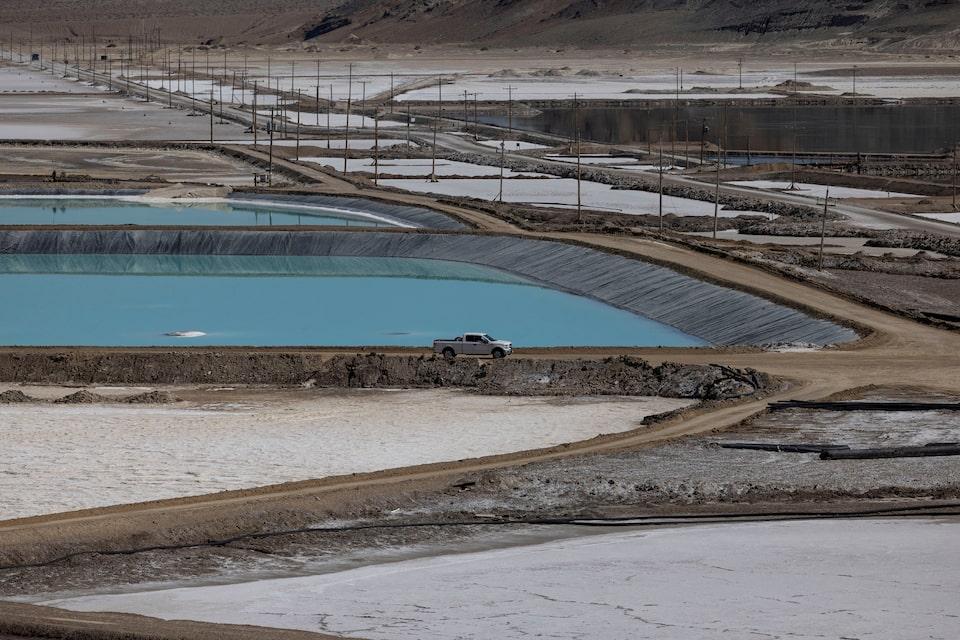
Russia cuts 2025 oil and gas revenues forecast by 24% Defence spending will not be touched Economy Ministry says global trade war a key risk Russian economy seen slowing down to 1.8% MOSCOW, April 30 (Reuters) - Russia's finance ministry raised the 2025 budget deficit estimate to 1.7% of gross domestic product (GDP) on Wednesday from 0.5% after reducing the energy revenues forecast by 24% due to expectations of a prolonged period of low oil prices. The ministry lowered the 2025 oil and gas revenues forecast to 8.32 trillion roubles ($101.47 billion) or 3.7% of GDP from 10.94 trillion roubles or 5.1% of GDP. It also increased the 2025 spending plan by 830 billion roubles. Sign up here. Russia already hiked state spending on national defence by a quarter in 2025 to 6.3% of gross domestic product (GDP), the highest level since the Cold War, as the country continues its war in Ukraine, now in its fourth year. Finance Minister Anton Siluanov said defence spending will not be touched. "The budget priorities remain unchanged. These are social support for citizens, funding for the defence and security of the state, support for families of participants in the special military operation," he said in comments on the increase. The increased forecast, which took place just before the long May Day and Victory Day holidays when many Russians head to the countryside and were unlikely to take a notice of the news, exceeded analysts' expectations of a 1.5% of GDP deficit. Many analysts believe that going forward the government will have no other choice but to hike taxes, reduce some sensitive social spending and go on a borrowing spree if it wants to balance the future budgets without cutting the spending on defence. Russia raised some key taxes this year, including the socially sensitive personal income tax and the corporate profit tax. Russian President Vladimir Putin sees balanced budgets, low debt and taxes as his key achievements in 25 years in power. ESCALATION OF TRADE WARS Solid state finances had helped Russia to weather the global crises before but risks of the global turbulence this year are exacerbated by the rising costs of the war in Ukraine and Western sanctions. The slowdown of the global economy as the result of trade wars is hitting demand for oil and pushing down its price, which fell by more than 11% in April. The announcement by the finance ministry followed a revision of the average price of oil used in 2025 budget calculations to $56 per barrel from $69.70 previously, but Siluanov insisted the spending plans will not be affected. "Everything planned in the budget, including the implementation of national development goals, will be carried out regardless of external conditions and factors," he added. The economy ministry published its high-risk forecasts for the first time also on Wednesday, where it said that international trade wars, triggered by the United States' protectionist policies, pose a key risk to the Russian economy. In this scenario economic growth in Russia is expected to be 1.8% in 2025, compared with 2.5% in the base scenario, which most economists consider too optimistic. The Russian economy grew by 4.3% last year. "The scenario assumes an escalation of trade wars and a more significant slowdown in the global economy, which will reduce global demand and prices for oil and other traditional Russian export commodities," the economy ministry said. Siluanov also wants to save more oil revenues in a reserve fund and create a safety cushion during a period of global turbulence by lowering the so-called "cut-off" price of oil, above which all energy revenues are set aside for a rainy day. ($1 = 81.9955 roubles) https://www.reuters.com/markets/europe/russia-raises-2025-deficit-forecast-threefold-due-low-oil-price-risks-2025-04-30/
2025-04-30 20:04
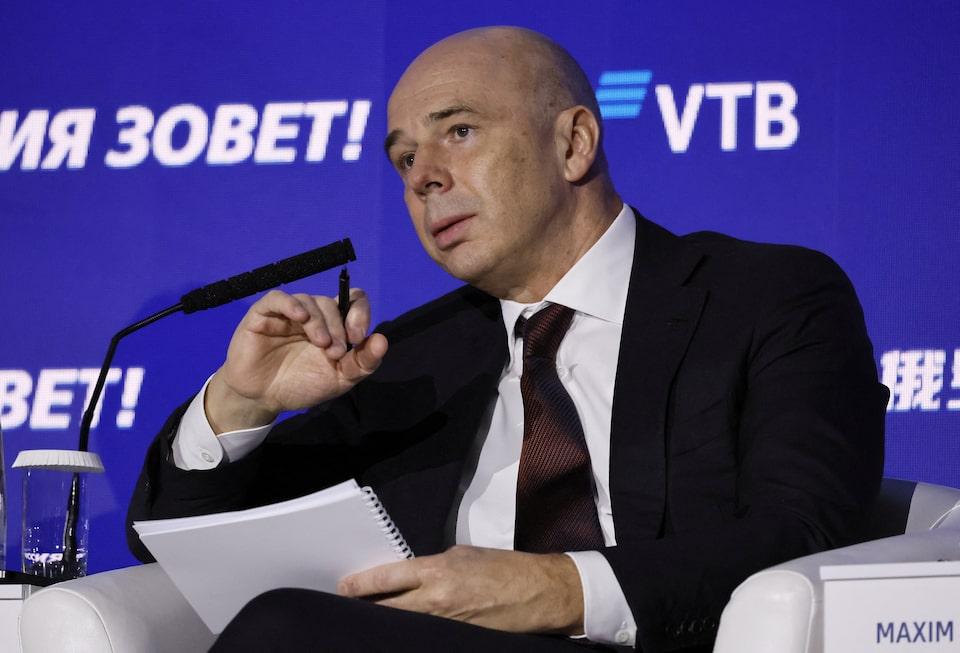
SINGAPORE, May 1 (Reuters) - South Korea's worst ever wildfires in March were made twice as likely as a result of climate change and such disasters could become even more frequent if temperatures continue to rise, scientists said on Thursday. Fires in the country's southeast blazed for nearly a week, killing 32 people and destroying around 5,000 buildings before they were brought under control in late March. Sign up here. The fires burned through 104,000 hectares (257,000 acres) of land, making them nearly four times more extensive than South Korea's previous worst fire season 25 years ago. The hot, dry and windy conditions were made twice as likely and 15% more intense as a result of climate change, a team of 15 researchers with the World Weather Attribution group said after combining observational data with climate modelling. South Korea normally experiences cold dry winters and rapid increases in temperature in March and April, making it vulnerable to fires at that time of year, said June-Yi Lee of the Research Center for Climate Sciences at Pusan National University. This year, average temperatures from March 22-26 were 10 degrees Celsius higher than usual in the southeast, and patterns of low and high pressure to the north and south generated the powerful winds that helped the fire spread, she told a briefing. "This year, the size of the impact was very extreme … because of the dry weather, the heat and the high temperatures - a perfect storm of conditions," she said. The weather that drove the fires could become even more common if global warming continues on its current trajectory and rises another 1.3 degrees by 2100. "The models project on average a further increase of about 5% in intensity and a further doubling of the likelihood of similarly extreme events," said Clair Barnes of the Centre for Environmental Policy at Imperial College London (ICL). The blazes also raised concerns that South Korea's extensive tree planting programme since the 1970s had made the country more fire-prone, and forest management needs to adjust to meet the challenges of extreme heat, said Theo Keeping at ICL's Leverhulme Centre for Wildfires. "Once a wildfire event is extreme enough, it can't be put out with drops from planes and helicopters or from spraying water from the ground … so we need to manage risk before these events happen," he said. https://www.reuters.com/sustainability/cop/south-koreas-deadly-fires-made-twice-likely-by-climate-change-researchers-say-2025-04-30/
2025-04-30 19:12
WEG's Q1 profit rises 16.4% but misses expectations JPMorgan notes slowdown in foreign revenue growth WEG confident in long-term prospects despite global uncertainties Shares fall 10.5% SAO PAULO, April 30 (Reuters) - Brazilian motor maker WEG (WEGE3.SA) , opens new tab reported a 16.4% year-on-year rise in its first-quarter net profit on Wednesday, but fell short of market expectations as it warned about global uncertainties, leading its shares to tumble by more than 10%. WEG's net profit in the January-March period reached 1.54 billion reais ($274 million), it said in a securities filing, while analysts polled by LSEG expected a bottom line of 1.78 billion reais. Sign up here. The figure was also down 8.8% on a sequential basis. WEG, which has operations in over 40 countries and plants in 17, acknowledged there is uncertainty in the geopolitical landscape, saying that although demand remains positive, the "global macroeconomic scenario requires attention." Sao Paulo-traded shares of WEG dropped 10.5% in the afternoon at 45.22 reais each, leading losses among stocks from Bovespa (.BVSP) , opens new tab, which was down 0.2%. JPMorgan analysts said in a note to clients that results were weaker than expected, noting a slowdown in foreign revenues growth and miss on core profit as measured by EBITDA. They added WEG shares have rallied over the past month. Companies around the world have been bracing for the impacts of U.S. President Donald Trump's sweeping tariffs, which have sparked a trade war and led businesses to warn of growing uncertainty and concerns about the global economy. WEG said, nonetheless, that it remains confident in its business model, citing its global presence and diversification of products and solutions. "This combination, coupled with exposure to businesses with good long-term prospects, helps mitigate risks during periods of oscillation," said the motor maker, which reports sales in regions rather than individual countries. WEG said the first-quarter results reflected positive dynamics in its long-cycle business, which makes equipment used in large projects such as transmission lines and wind power, as well as the contribution of recent acquisitions. WEG's net revenue for the quarter reached 10.08 billion reais, a 25.5% year-on-year increase, although below the 10.49 billion reais forecast by analysts and down 6.9% on a quarterly basis. The firm's closely watched EBITDA margin fell by 40 basis points year-on-year to 21.6%, also slowing from the 22.1% reported in the previous three-month period. ($1 = 5.6200 reais) https://www.reuters.com/world/americas/brazils-weg-warns-global-uncertainty-q1-earnings-miss-estimates-2025-04-30/
2025-04-30 18:52
Fed's concern is above-target inflation that may worsen due to tariffs U.S. economy shrank last quarter, consumer spending slowed Traders expect an interest rate cut in June April 30 (Reuters) - Federal Reserve policymakers have signaled that short-term interest rates will remain unchanged as they wait for clearer signs that inflation is nearing the U.S. central bank's 2% goal or until there is a whiff of a deteriorating job market. The data so far has presented neither of those scenarios to the Fed, and though economists say the real drag from President Donald Trump's aggressive import tariffs lies ahead, there is a great amount of uncertainty over where the policies will end up and the degree and timing of their impact on prices and jobs. Sign up here. "The cone of possibilities," as Cleveland Fed President Beth Hammack put it recently, is quite large, and includes the possibility of persistently higher inflation coupled with a slowdown in economic activity that would require the central bank to pick which battle to fight. That dilemma has not stopped traders from betting that by June a faltering economy will likely move the Fed to resume its rate cuts, ultimately lowering borrowing costs by a full percentage point by the end of this year. They added to those bets on Wednesday after data showed the U.S. economy shrank last quarter and the Fed's preferred measure of price inflation did not rise at all on a monthly basis in March. But while economists say such a rate-cutting scenario is not out of the question, they are quick to note that inflation remains elevated, and is likely to worsen at least temporarily as retailers raise prices to cover higher costs from the sharp increase in import levies. The Personal Consumption Expenditures Price Index excluding volatile food and energy prices, which Fed officials feel maps best to where inflation is headed, eased to 2.6% in March from 3% in February, the data showed. Longer-term inflation expectations remain largely grounded, but a few Fed policymakers have taken note of a sharp rise in short-term inflation expectations that they worry could set the stage for a resurgence in price pressures. "The Fed's in a very tricky spot; you have inflation that is already above target, you have inflation expectations that are, sort of showing that, perhaps they're becoming a little unhinged," said Tom Porcelli, chief U.S. economist at PGIM Fixed Income. "And we're now waiting for the inflation to show up on the back of tariffs. I mean, the Fed is on hold." At the same time, Fed policymakers are keenly focused on the potential for tariffs to slow the economy and potentially trigger layoffs, a situation that in the absence of persistent inflation would move them to cut rates, perhaps sharply. That's not evident so far. 'PERIOD OF STAGNATION' The U.S. economy contracted by an annualized 0.3% last quarter in large part because U.S. businesses rushed to buy imported goods ahead of Trump's tariffs. The report also showed consumer spending down-shifted from a 4% growth pace last quarter to a still-decent 1.8%, and business investment soared. The GDP report overall would allow the Fed to continue to characterize economic activity as "solid," though only in the rear-view mirror, said Gregory Daco, chief economist at EY Parthenon. "This shock is unlike anything we've seen before," Daco said. "It's a massive self-imposed supply shock resulting from policy uncertainty, market volatility, surging tariffs and monetary policy inertia." The front-loading of demand in the first quarter, he said, sets the stage for a drop-off in demand this quarter, "a far more troubling phase of the ongoing economic slowdown." Or as Pantheon Macro economists wrote, "A period of stagnation now likely lies ahead if the current set of tariffs is maintained, with recession the most likely outcome" if the sweeping import duties Trump announced on April 2 and then partially paused come into force in July. The Trump administration, which this week eased some tariffs on automakers, says trade talks are ongoing. On Friday policymakers will get some of the first data on the current quarter, with the Labor Department's closely watched monthly jobs report expected to show a slowdown in hiring but no change in the 4.2% unemployment rate. The Fed is nearly universally expected to hold its benchmark overnight interest rate in the current 4.25%-4.50% range at the end of a two-day policy meeting next week. Futures contracts that settle to the Fed's policy rate continue to suggest that the rate cuts would resume in June, with a total of four quarter-percentage-point reductions likely. The U.S. central bank cut rates three times last year, for a total of 100 basis points of easing. https://www.reuters.com/business/traders-pare-bets-fed-rate-cuts-2025-still-see-june-start-2025-04-30/