2025-04-30 14:34
Budget deficit seen at three times government target Median inflation forecast is 7.0% in 2025 2025 GDP growth seen at 1.6% MOSCOW, April 30 (Reuters) - Russia's budget deficit is projected to be 1.5% of gross domestic product (GDP) in 2025, three times the government's target, as the country prepares for a prolonged period of low global oil prices, a Reuters poll of economists showed on Wednesday. Oil and gas revenue is a crucial source of cash for the Kremlin, accounting for about a third to a half of total federal budget proceeds over the past decade. Sign up here. The slowdown of the global economy as the result of trade wars is hitting demand for oil and pushing down the price, which fell by more than 11% in April. Russia has cut its forecast for the average price of Brent crude in 2025 by nearly 17% from an estimate last September. The country has also reduced its forecast for 2025-2027 oil and gas export revenues due to weaker oil prices, expecting proceeds to fall by 15% this year. The planned 2025 deficit of 0.5% of GDP was calculated based on an oil price of around $70 per barrel. Finance Ministry officials have publicly admitted that with oil at around $60 the deficit will widen by about 1% of GDP. The poll found that GDP growth is expected to slow sharply to 1.6% this year, according to the median forecast of 13 economists, compared with 4.3% in 2024. In last month's Reuters poll, economists predicted 1.7% growth for 2025. Full-year inflation is expected to be slightly higher at 7.0% in 2025, compared to 6.8% in last month's poll. High inflation forced the central bank to keep the key interest rate on hold at 21% this month. Economists see the central bank cutting the key rate in the third quarter as inflation comes down and growth slows. The rouble, which has rallied by about 38% against the U.S. dollar so far this year, mainly on expectations for a peace settlement in Ukraine, is projected to weaken to 95 to the dollar in 12 months from its current level of 82.70. This new estimate is stronger than the previous poll's prediction of 100 roubles to the dollar in a year's time. The current strong rouble is adding to the pressure on the budget as it implies less revenues from energy exports when converted into the domestic currency. https://www.reuters.com/markets/europe/russias-2025-budget-deficit-seen-rising-15-gdp-because-cheaper-oil-2025-04-30/

2025-04-30 13:26
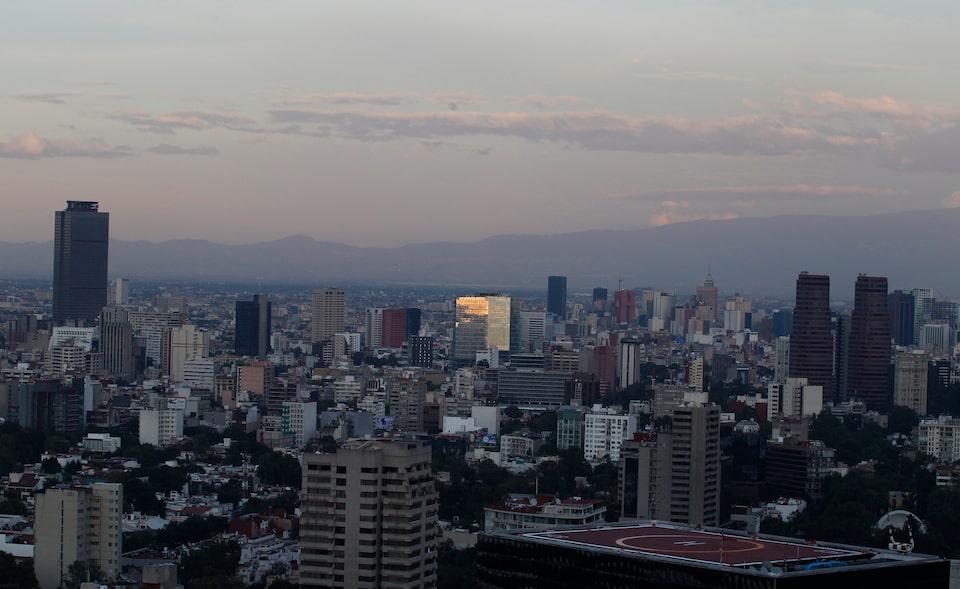
April 30 (Reuters) - Mexico's economy performed better than expected in the first quarter of the year, preliminary data released by national statistics agency INEGI showed on Wednesday, although analysts continue to warn of a difficult path ahead. Latin America's second-largest economy grew 0.2% in the first quarter from the final three months of 2024, INEGI said. Sign up here. That outpaced market expectations in a Reuters poll for zero growth and also marked a rebound from a 0.6% fourth-quarter contraction, but economists continued to sound a cautious note in light of the trade shock generated by U.S. President Donald Trump's tariff threats. "The quarter-to-quarter gain helped the Mexican economy avoid a technical recession, but it does little to alter the weak trajectory," Pantheon Macroeconomics chief Latin America economist Andres Abadia said in a note to clients. He mentioned heightened domestic uncertainty, tight financial conditions and ongoing risks from the U.S. trade war, noting that leading indicators already point to a challenging outlook. Quarterly growth was driven mainly by an 8.1% expansion in the primary sector, which includes farming, fishing and mining. Secondary or manufacturing activities contracted 0.3% while services were unchanged. Compared with the same quarter a year earlier, the Mexican economy expanded 0.8% in the January-March period, the statistics agency said, also boosted by primary activities. Economists expected 0.6% year-on-year growth. Capital Economics emerging markets economist Kimberley Sperrfechter said the data, which suggests that Mexico headed into the second quarter with weak momentum, should reinforce the central bank's concerns about the health of the economy. "This should pave the way for another 50 basis point rate cut at Banxico's meeting next month," she said, which would represent the third such consecutive reduction, even as annual inflation ticked up in early April. https://www.reuters.com/world/americas/mexico-avoids-technical-recession-economists-see-tough-path-ahead-2025-04-30/
2025-04-30 13:12
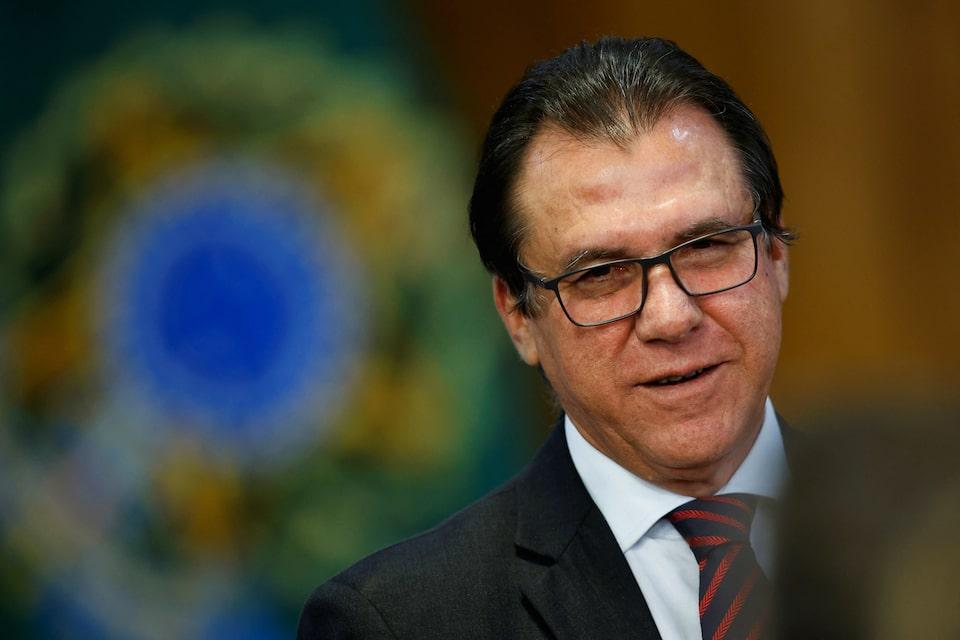
BRASILIA, April 30 (Reuters) - Brazil's Labor Minister Luiz Marinho said on Wednesday that formal job creation in March was weaker than in the same month of previous years, providing a glimpse of official data set to be released later in the day by the government. Marinho told state media that hiring was affected by a lower number of business days in the month, particularly because this year's Carnival holiday fell in March, while last year it occurred in February. Sign up here. Economists polled by Reuters forecast the net creation of 200,000 formal jobs in March. The minister also said that 8.9 billion reais ($1.58 billion) in new payroll-deductible loans for private-sector workers have already been granted to nearly 1.6 million Brazilians. The initiative, launched in late March, is expected to gain momentum in May with the introduction of a portability feature, he added. That would allow workers to replace more expensive debt with cheaper loans by taking advantage of competition among banks. ($1 = 5.6200 reais) https://www.reuters.com/world/americas/brazils-labor-minister-says-march-job-creation-slowed-previous-years-2025-04-30/
2025-04-30 12:52
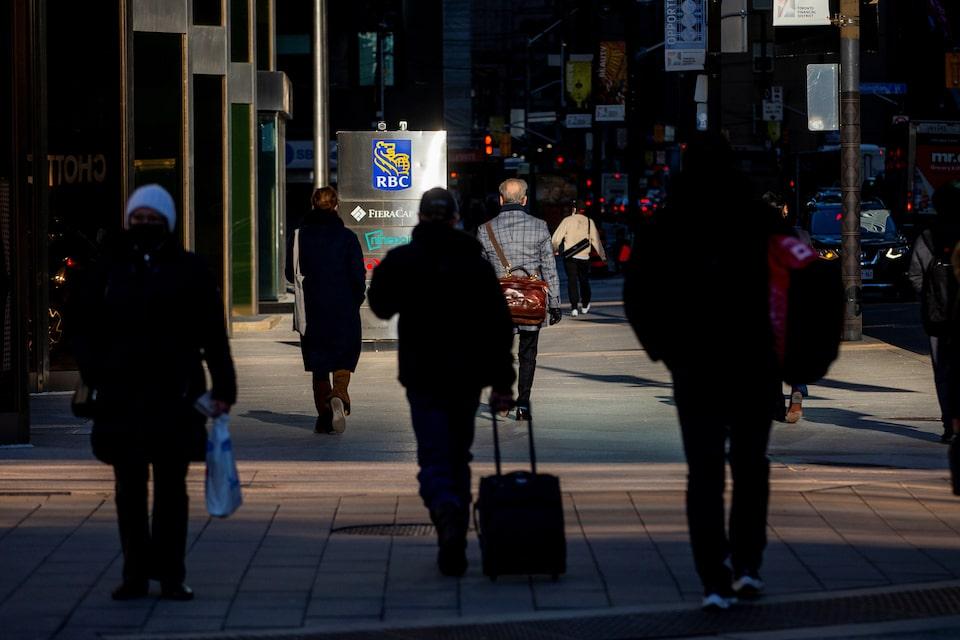
Both goods and services industries contracted in February Mining, oil and gas, construction sectors shrunk the most Growth likely 0.1% in March, 1.5% in Q1 on annualized basis OTTAWA, April 30 (Reuters) - Canada's gross domestic product contracted by 0.2% in February on a monthly basis for the first time since November as activities across mining, oil and gas and construction sectors shrunk, data showed on Wednesday. While a part of the decline was due to bad weather conditions and snowstorms across provinces in February, the Bank of Canada and economists have predicted that growth will continue to totter in the coming months due to the impact of U.S. tariffs. Sign up here. U.S. President Donald Trump's constant threat of tariffs forced many to bring forward purchases, which can be seen in an uptick in manufacturing numbers in February. But as inventories build up, tariff fears have started to impact demand and investments, and this has started to show across economic indicators. The deceleration in growth in February forced markets to change bets for a rate cut chance in June to a little higher than 50% from 45% earlier. The Canadian dollar was trading slightly weaker on Wednesday after the data, with the loonie down 0.04% to 1.3838 to the U.S. dollar, or 72.26 U.S. cents. Yields on two-year government bonds were down 4 basis points to 2.553%. Analysts polled by Reuters had expected the economy to stay flat in February, in line with Statistics Canada's advance estimate last month. January GDP had registered a growth of 0.4%. The economy is likely to expand by 0.1% in March and on an annualized basis the GDP is expected to grow by 1.5% in the first quarter, Statscan said. GDP numbers for the quarter are reported on the basis of expenditure and income while on a monthly basis Statscan uses growth by industry, hence final numbers could be slightly different. Canada's economic growth had been anemic in the first half of last year but strengthened as the year was ending on the back of rapidly falling interest rates and consumer prices. This stoked demand and propelled businesses to invest and hire more. But as the country now grapples with steel, aluminum and automotive tariffs and various other import duties from the United States, Canada's biggest trading partner, output will be hit. "It's clear that momentum is waning after a hot start to the year. We continue to see central bankers resuming their rate cutting cycle in June," Royce Mendes, Managing Director and Head of Macro Strategy, said in a note. The biggest dent to GDP came from the goods-producing industries which together contracted by 0.6%, the statistics agency said. Following two consecutive monthly increases, the mining, quarrying, and oil and gas extraction sector became the largest detractor from growth, down 2.5% in February, as most subsectors contracted, Statscan said. Construction fell by 0.5%, its first decline in four months, led by residential building construction, which fell by 0.9%. Services-producing industries such as real estate rental and leasing, finance and insurance, and educational services also contracted by 0.1%. https://www.reuters.com/world/americas/canadas-gdp-contracts-by-02-february-slight-growth-likely-march-2025-04-30/
2025-04-30 12:38
Sanchez under pressure to provide explanation for blackout Opposition calls for independent investigation Grid operator accused of failure to invest in system upgrade MADRID, April 30 (Reuters) - Spain's grid operator denied on Wednesday that dependence on solar power was to blame for the country's worst ever blackout, as Prime Minister Pedro Sanchez faced increasing pressure to explain what went wrong. With life returning to normal after a blackout that halted trains, shut airports and trapped Spaniards in lifts, Sanchez's opponents pointed the finger at low investment in a system that relies heavily on intermittent solar and wind. Sign up here. Sanchez has announced a government investigation and said he was seeking answers from private energy companies that feed power into the grid. He also said he has not ruled out a cyber attack, although this has been dismissed by part-state-owned grid operator REE and private companies. REE, which is headed by former Socialist minister Beatriz Corredor, has narrowed down the source of the outage to two separate incidents in substations in southwestern Spain, but says it is still too early to explain what caused them. In an interview with Cadena SER radio, Corredor said on Wednesday it was wrong to blame the outage on Spain's high share of renewable energy. "These technologies are already stable and they have systems that allow them to operate as a conventional generation system without any safety issues," she said. She was not considering resigning, she added. In a separate interview she said the government had given power companies a deadline to provide data by Wednesday afternoon that would help explain what had gone wrong. 'MALFUNCTIONING OF REE' Political opponents said Sanchez was taking too long to explain the blackout, and suggested he was covering up for failings at REE. "Since REE has ruled out the possibility of a cyberattack, we can only point to the malfunctioning of REE, which has state investment and therefore its leaders are appointed by the government," Miguel Tellado, a parliamentary spokesperson for the opposition conservative People's Party, said in an interview on RTVE. He called for an independent investigation to be conducted by Spain's parliament rather than the government probe Sanchez has announced. Spain's government said it had asked private energy companies for "maximum collaboration and transparency" to help identify the cause of the outage. Ignacio Sanchez Galan, executive chairman of Spain's largest energy company Iberdrola, said on Wednesday that the fault was not with their operations and it was REE that should clarify the reasons for the blackout. Antonio Turiel, an energy expert at the state-owned Spanish National Research Council (CSIC), told Onda Vasca radio station on Tuesday that the fundamental problem was the grid's instability. "A lot of renewable energy has been integrated without the responsive stabilisation systems that should have been in place," he said, adding that vulnerabilities stemmed from "the unplanned and haphazard integration of a host of renewable systems". The government expects private and public investment of some 52 billion euros through 2030 to upgrade the power grid so it can handle the surge in demand from data centres and electric vehicles. Aelec, the utility lobby, has said that isn't enough. https://www.reuters.com/world/europe/sanchez-pressed-explain-spains-blackout-grid-says-solar-not-blame-2025-04-30/

2025-04-30 12:38
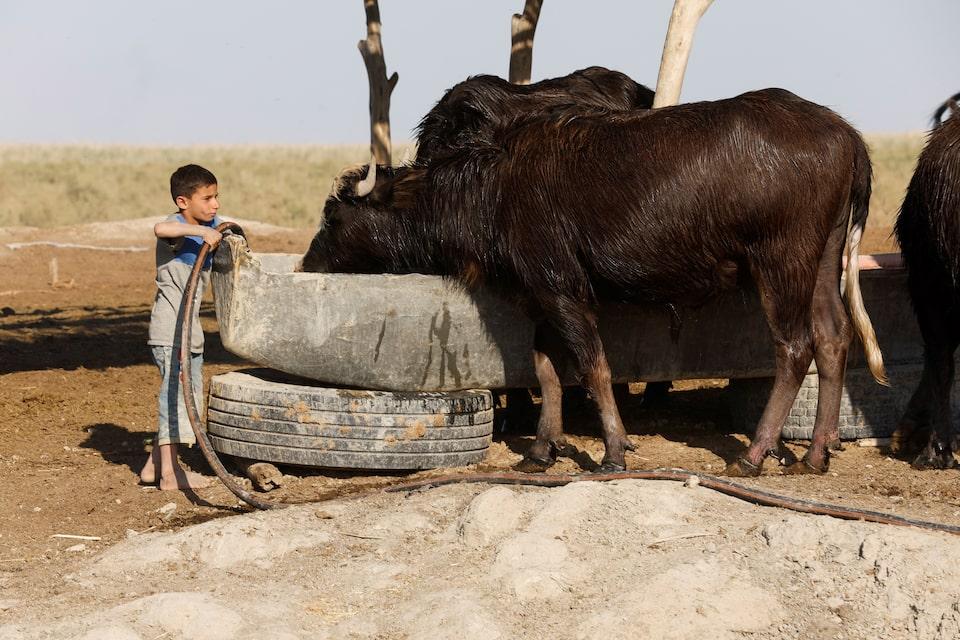
DHI QAR, Iraq, April 30 (Reuters) - Iraq’s buffalo population has more than halved in a decade as the country's two main rivers, the Tigris and Euphrates, suffer severe droughts that endanger the livelihood of many farmers and breeders. "People have left ... We are a small number of houses remaining," said farmer Sabah Ismail, 38, who rears buffalo in the southern province of Dhi Qar. Sign up here. "The situation is difficult ... I had 120 to 130 buffalo; now I only have 50 to 60. Some died, and we sold some because of the drought," said Ismail while tending his herd. Buffalo have been farmed for centuries in Iraq for their milk, and are mentioned in ancient Sumerian inscriptions from the region. According to Iraqi marshland experts, the root causes of the water crisis driving farmers out of the countryside are climate change, upstream damming in Turkey and Iran, outdated domestic irrigation techniques and a lack of long-term management plans. The country has also endured decades of warfare, from conflict with Iran in the 1980s, through two Gulf Wars to the recent rise and fall of the Islamic State group. Located within the cultivable lands known as the Fertile Crescent that have been farmed for millennia, the Iraqi landscape has suffered from upstream damming of the Tigris and Euphrates and lower rainfall, threatening the lifestyle of farmers like Ismail and leading many to move to the cities. Iraqi marshland expert Jassim al-Assadi told Reuters that the number of buffalo in Iraq had fallen since 2015 from 150,000 to fewer than 65,000. The decline is "mostly due to natural reasons: the lack of needed green pastures, pollution, illness ... and also farmers refraining from farming buffalos due to scarcity of income," al-Assadi said. A drastic decline in crop production and a rise in fodder prices have also left farmers struggling to feed their animals. The difficulty of maintaining a livelihood in Iraq's drought-stricken rural areas has contributed to growing migration towards the country's already-choked urban centres. "This coming summer, God only knows, the mortality rate may reach half," said Abdul Hussain Sbaih, 39, an Iraqi buffalo breeder. https://www.reuters.com/business/environment/droughts-iraq-endanger-buffalo-farmers-livelihoods-2025-04-30/