2026-01-16 10:47
ATHENS, Jan 16 (Reuters) - Greece is requiring Italian-owned railway operator Hellenic Train to invest 420 million euros ($487.41 million) in new trains and maintenance to improve safety nearly three years after the country's worst rail disaster. The requirements are contained in amendments to a 2017 state contract with Hellenic Train approved by parliament late on Thursday, the transport ministry said in a statement. Sign up here. "For the first time, the contract includes a break clause. If trains are not delivered and put into service by 2027, the state can terminate the contract," the statement said. On February 28, 2023, a passenger train coming from Athens and a freight train coming from Thessaloniki collided head-on near the town of Larissa, killing 57 people, mostly students. Experts hired by the families of the victims and Greek investigators have highlighted safety deficiencies. Hellenic Train had already announced part of the new agreement - a 308 million euro investment in new electric trains from Alstom (ALSO.PA) , opens new tab - in December, calling it "a decisive step toward a safer, more modern and more passenger-focused railway". The trains will be fitted with a system for remote communication between drivers and traffic controllers and to control a train's brakes from a distance, Hellenic Train said. A project co-funded by the European Union to install the system was launched in 2014 but was repeatedly pushed back. EU prosecutors have charged numerous Greek officials with malpractice over that contract. The transport ministry statement said 100 million euros of investment by Hellenic Train was earmarked for maintenance infrastructure, depots and digital systems. Following a judicial investigation, a trial over the train crash is expected to start in March. Hellenic Train said last year it had provided all required data and was committed to continuing full cooperation with the inquiry. "We fully trust the legal proceedings due to start later this year," Alexandra Kassimi, a spokesperson for Hellenic Train, told Reuters on Friday in response to a request for comment. ($1 = 0.8617 euros) https://www.reuters.com/world/greece-orders-safety-investments-by-italian-owned-railway-after-train-crash-2026-01-16/

2026-01-16 10:35
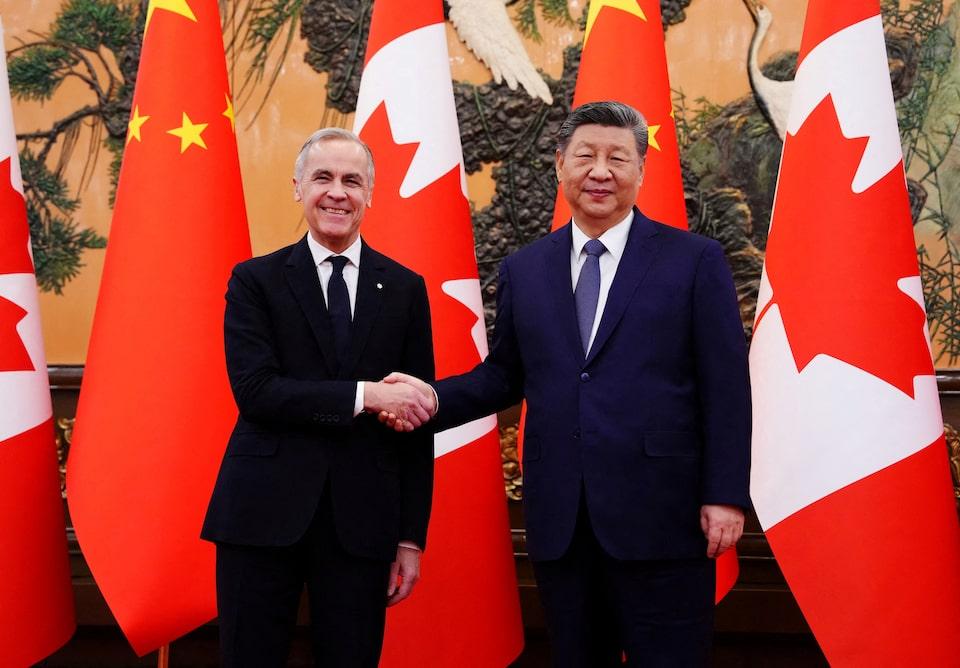
Canada to allow Chinese EV imports at 6.1% tariff, Carney says Says Canada expects China to lower canola tariff Canada welcomes further Chinese investment Trump expresses support for deal BEIJING, Jan 16 (Reuters) - Canada and China struck an initial trade deal on Friday that will slash tariffs on electric vehicles and canola, as both nations promised to tear down trade barriers while forging new strategic ties during Prime Minister Mark Carney's visit. The first Canadian prime minister to visit China since 2017, Carney is seeking to rebuild ties with his country's second-largest trading partner after the United States following months of diplomatic efforts. Sign up here. Canada will initially allow in up to 49,000 Chinese electric vehicles at a tariff of 6.1% on most-favoured-nation terms, Carney said after talks with Chinese leaders including President Xi Jinping. That compares with the 100% tariff on Chinese electric vehicles imposed under former Prime Minister Justin Trudeau in 2024, following similar U.S. penalties. In 2023, China exported 41,678 EVs to Canada. "This is a return to levels prior to recent trade frictions, but under an agreement that promises much more for Canadians," Carney told reporters. He later said the quota would gradually increase, reaching about 70,000 vehicles in five years. "For Canada to build its own competitive EV sector, we will need to learn from innovative partners, access their supply chains, and increase local demand," Carney said, turning away from Trudeau's rationale that tariffs were needed to protect domestic producers against subsidised Chinese manufacturers. Relaxing EV tariffs diverged from U.S. policy, and some members of U.S. President Donald Trump's cabinet criticised the decision ahead of an expected review of the U.S.-Canada-Mexico trade deal. But Trump himself expressed support for Carney. "That's what he should be doing. It's a good thing for him to sign a trade deal. If you can get a deal with China, you should do that," Trump told reporters at the White House. AGRI-FOOD PARTNERSHIP Premier Doug Ford of Ontario, Canada's main auto manufacturing province, denounced the deal. "The federal government is inviting a flood of cheap made-in-China electric vehicles without any real guarantee of equal or immediate investments in Canada's economy, auto sector or supply chain," he said in a post on X. In retaliation for Trudeau's tariffs, China in March levied tariffs on more than $2.6 billion of Canadian farm and food products such as canola oil and meal, followed by tariffs on canola seed in August. That led to a 10.4% slump in China's imports of Canadian goods in 2025. Under the new deal, Carney said, Canada expects China will lower tariffs on its canola seed by March 1, to a combined rate of about 15% from the current 84%. Canada also expects its canola meal, lobsters, crabs and peas to have anti-discrimination tariffs removed from March 1 until at least year-end, he added. Canadian canola futures rose. The deals will unlock nearly $3 billion in export orders for Canadian farmers, fish harvesters and processors, Carney said. China's Commerce Ministry said in a statement China was adjusting anti-dumping measures on canola as well as anti-discrimination measures on some Canadian agricultural and aquatic products in response to Canada lowering EV tariffs. Carney added that Xi committed to visa-free access for Canadians travelling to China, but did not give details. In a statement announced by China's state-run Xinhua news agency, the two nations pledged to restart high-level economic and financial dialogue, boost trade and investment, and strengthen cooperation in agriculture, oil, gas and green energy. Carney said Canada will double its energy grid over the next 15 years, adding there were opportunities for Chinese partnership in investments including offshore wind. He also said Canada was scaling up its LNG exports to Asia and will produce 50 million tonnes of LNG each year - all destined for Asian markets by 2030. CARNEY SAYS CHINA 'MORE PREDICTABLE' "Given current complexities in Canada's trade relationship with the U.S., it's no surprise that Carney's government is keen to improve the bilateral trade and investment relationship with Beijing, which represents a massive market for Canadian farmers," said Beijing-based Trivium China's Even Rogers Pay. Trump has imposed tariffs on some Canadian goods and suggested the longtime U.S. ally could become his country's 51st state. China, similarly hit by Trump's tariffs, is keen to cooperate with a Group of Seven nation in a traditional sphere of U.S. influence. "In terms of the way our relationship has progressed in recent months with China, it is more predictable, and you see results coming from that," Carney said when asked if China was a more predictable and reliable partner than the U.S. Carney also said he had discussions with Xi about Greenland. "I found much alignment of views in that regard," he said. Trump has in recent days revived his claim to the semi-autonomous Danish territory as NATO members scrambled to counter U.S. criticism that Greenland is under-protected. Analysts said the rapprochement between Canada and China could reshape the political and economic context in which Sino-U.S. rivalry unfolds, although Ottawa is not expected to dramatically pivot away from Washington. "Canada is a core U.S. ally and deeply embedded in American security and intelligence frameworks," said Sun Chenghao, a fellow at Tsinghua University's Centre for International Security and Strategy. "It is therefore very unlikely to realign strategically away from Washington." https://www.reuters.com/world/china/canada-china-set-make-historic-gains-new-partnership-says-carney-2026-01-16/
2026-01-16 09:15
Jan 16 (Reuters) - Markets will have a lot to ponder in the coming week as January's hectic start continues apace, with U.S. President Donald Trump's appearance at the World Economic Forum in Davos taking centre stage. The ongoing battle for control at the Federal Reserve will also head to the Supreme Court and the Bank of Japan meets, with a possible snap election on the horizon. Sign up here. Here's all you need to know about the coming week in financial markets by Amanda Cooper and Naomi Rovnick in London, Rae Wee in Singapore, Kevin Buckland in Tokyo and Lewis Krauskopf in New York. SNOW BOOTS ON THE GROUND It's that time of year when political leaders, central bankers, billionaires and tech bros swap their spreadsheets for snow boots and head to the Swiss mountain resort of Davos, for the 56th World Economic Forum. In addition to navigating the gathering's infamous colour-coded badge system that separates the movers and shakers from everyone else, delegates will explore this year's theme, "A Spirit of Dialogue", from January 19-23. But the main focus is going to be Trump, who plans to attend in person, having addressed the forum last year via video link, right after the start of his second term. He's said his speech will cover housing and affordability proposals. But everyone will be watching for news on anything from geopolitics to trade from the president. The one thing beyond the "Trump effect" that could dominate the conversation is AI. COOKING UP A STORM Trump’s battle with the Federal Reserve heads to the Supreme Court on Wednesday in a case that may have ramifications for the central bank’s ability to operate independently. The justices will hear a case filed by policymaker Lisa Cook in response to Trump’s attempt to remove her from the Fed’s board. This battle looms in the wake of outgoing Fed chair Jay Powell having been served with a subpoena by the Department of Justice over previous testimonies concerning Fed office renovations. This, Powell said, was part of the broader context of the administration's threats and ongoing pressure. The Fed sits in a category of independent agencies that are traditionally insulated from presidential control. Cook has said Trump's claims against her did not give him the legal authority to remove her and were a pretext to fire her for her monetary policy stance. ELECTION GAMBLE Japanese Prime Minister Sanae Takaichi is betting her personal popularity with the voting public will translate into a stronger mandate with her decision to call a snap election, ostensibly for February 8. That's actually something of a gamble. Takaichi's cabinet rating is above even that of her mentor Shinzo Abe, while her party - the scandal-tainted LDP - continues to sag near historic lows. For now, investors seem to believe her coalition can at least expand their currently puny lower house majority, giving her more scope for big fiscal stimulus. And that has stocks soaring to record highs, while the yen and long-dated government bonds sink. Her dissolution of parliament next Friday to pave the way for polls may overshadow the other big event of the week in the country: the Bank of Japan's policy decision. After raising rates only last month, little is expected at next week's central bank gathering, with most economists postulating July as the timing for a follow-up hike. TARGET MET, WHAT NEXT China kicks off the week with the release of its highly anticipated fourth-quarter and full-year GDP figures, where expectations are for Beijing to have met its growth target even as its economy continues to trudge along. Growth, which President Xi Jinping said last month is set to reach around 5% in 2025, is likely to have been supported by the country's goods exports, which proved resilient even in the face of Trump's tariffs. China reported a record trade surplus of nearly $1.2 trillion in 2025. But one of the key questions facing policymakers is how long the $19 trillion economy can withstand a property slump and sluggish domestic demand by exporting ever-cheaper goods. Alongside Monday's GDP data, investors will also get December house prices and retail sales figures, which are likely to reinforce the case for further policy support. EARNINGS STREAM The fourth-quarter U.S. earnings season heats up, with reports due from high-profile companies including Netflix (NFLX.O) , opens new tab, Johnson & Johnson (JNJ.N) , opens new tab and Intel (INTC.O) , opens new tab. Streaming giant Netflix reports results in the middle of its high-stakes battle with Paramount Skydance (PSKY.O) , opens new tab for Warner Bros Discovery (WBD.O) , opens new tab - deal set to shake up the media landscape. Mixed results from banks have kicked off the reporting season, as top JPMorgan (JPM.N) , opens new tab executives also warned Trump's proposed 10% cap on credit card interest rates would hurt consumers. Corporate outlooks will be crucial over the coming weeks. Broad expected earnings growth in 2026 is a key underpinning for optimism among stock investors. (This story has been refiled to remove a faulty story link in the Davos section) https://www.reuters.com/business/take-five/global-markets-themes-graphic-2026-01-16/

2026-01-16 07:53
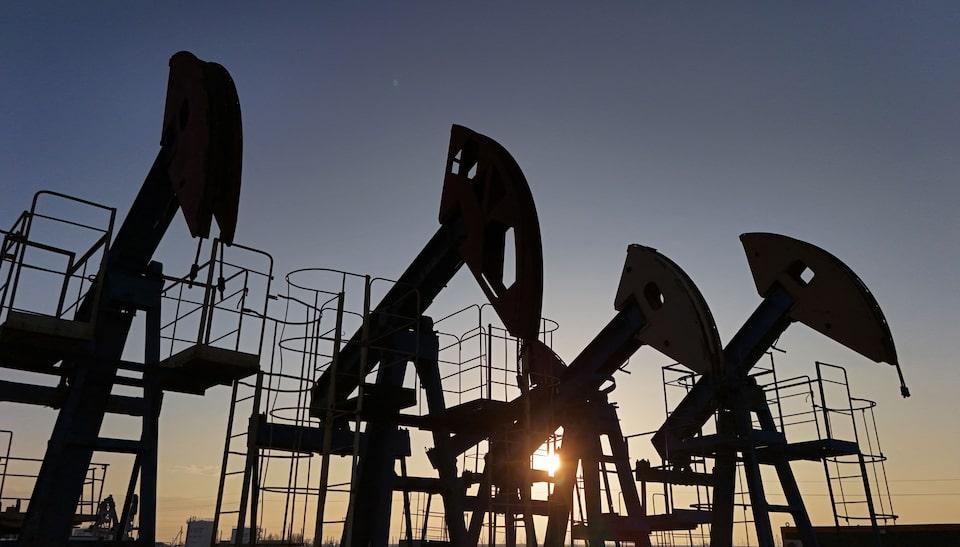
Benchmark prices hit multi-month highs this week Underlying balance still points to ample supply, says analyst Potential new supply from Venezuela limits price gains HOUSTON, Jan 16 (Reuters) - Oil prices settled higher on Friday as some investors covered short positions ahead of the three-day Martin Luther King holiday weekend in the U.S. and lingering worries about a possible U.S. military strike against Iran. Brent crude settled at $64.13 a barrel up 37 cents or 0.58%. U.S. West Texas Intermediate finished at $59.44 a barrel up 25 cents, or 0.42%. Sign up here. Most of Friday's gains seemed to be due to buying supply ahead of the long weekend, said John Kilduff, partner with Again Capital LLC. "With that carrier strike group making the move to the (Persian) Gulf, it doesn't seem likely anything will happen soon," Flynn said. The U.S. Navy's aircraft carrier U.S.S. Abraham Lincoln was expected to arrive in the Persian Gulf next week after operating in the South China Sea. Weighing against those fears are potential supply increases from Venezuela, said Phil Flynn, senior analyst with Price Futures Group. "The supply from Venezuela has not become the tidal wave that was expected," Flynn said. "Buying today seems to be people not wanting to be caught short over the long weekend." Both benchmarks hit multi-month highs this week after protests flared up in Iran and U.S. President Donald Trump signalled the potential for military strikes, but lost over 4% on Thursday as Trump said Tehran's crackdown on the protesters was easing, allaying concerns of possible military action that could disrupt oil supplies. "Above all, there are worries about a possible blockade of the Strait of Hormuz by Iran in the event of an escalation, through which around a quarter of seaborne oil supplies flow," Commerzbank analysts said in a note. "Should there be signs of a sustained easing on this front, developments in Venezuela are likely to return to the spotlight, with oil that was recently sanctioned or blocked gradually flowing onto the world market." Analysts expect higher supply this year, potentially creating a ceiling for the geopolitical risk premium on prices. "Despite the steady drumbeat of geopolitical risks and macro speculation, the underlying balance still points to ample supply," said Phillip Nova analyst Priyanka Sachdeva. "Unless we see a genuine revival in Chinese demand or a meaningful bottleneck in physical barrel flows, oil looks range-bound, with Brent broadly hovering between $57 and $67." https://www.reuters.com/business/energy/oil-flat-chances-us-strike-iran-recedes-2026-01-16/
2026-01-16 07:52
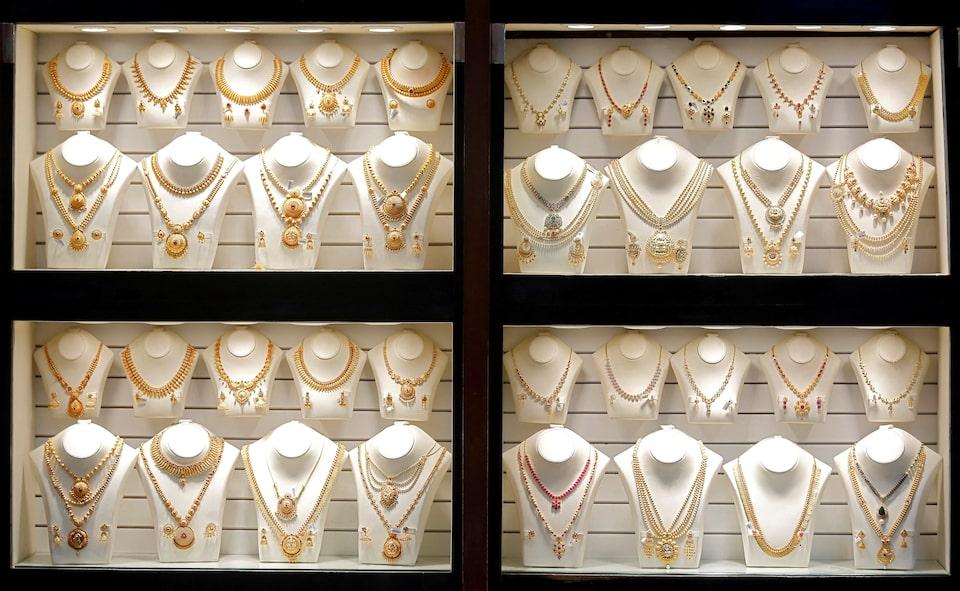
Jewellery demand is pretty much dead, says Indian dealer China demand steady ahead of Lunar New Year despite record rally Gold at discounts of $12 to modest premiums of up to $3 in China Jan 16 (Reuters) - Gold demand in India stayed muted this week as prices hit record highs again, taking the shine off retail buying, while bullion traded at a premium in China as demand remained steady ahead of the Lunar New Year. Indian dealers offered a discount of up to $12 per ounce to official domestic prices this week, inclusive of 6% import and 3% sales levies, down from the last week's premium of up to $6. Sign up here. Domestic gold prices were trading around 142,800 rupees ($1,575.10) per 10 grams on Friday, not far from the record high of 143,590 rupees hit earlier this week. "Demand just isn't there right now since prices keep hitting new highs," said Chirag Thakkar, CEO of bullion importer Amrapali Group Gujarat. "Most of the buying is only in gold exchange-traded funds (ETFs), with just a little interest in coins and bars. Jewellery demand is pretty much dead," said a Mumbai-based bullion dealer with a private bank. In top consumer China, bullion traded anywhere from discounts of $12 to premiums of $3 an ounce to the global benchmark spot price this week. That compares with premiums as high as $21 last week. "China's heading into the Chinese New Year, and despite the record prices, gold remains at a modest premium, (which is surprising) bearing in mind that Asian demand is normally very price-sensitive and record highs would normally curtail any kind of physical uptake," said independent analyst Ross Norman. In Singapore , gold was sold at prices ranging from a $0.20 discount to premiums of up to $2 an ounce. In Hong Kong, gold traded at par to premiums of $4, while in Japan, bullion was sold at discounts of $6 to a $1 premium, same as last week. International benchmark spot gold prices were headed for a weekly gain after hitting a record high of $4,642.72/ounce on Wednesday. "The market remains hot from a physical and retail perspective, whether you're talking China or Europe or (even)Australasia," Norman said. ($1 = 90.6610 Indian rupees) https://www.reuters.com/world/china/asia-gold-record-rally-stalls-retail-buying-india-china-demand-steady-2026-01-16/
2026-01-16 07:39
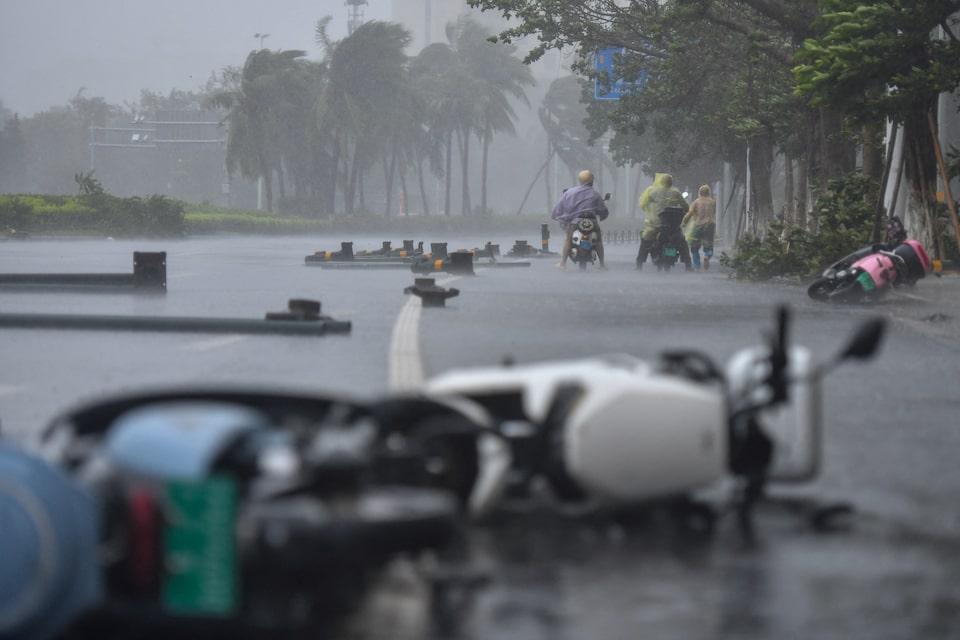
HONG KONG, Jan 16 (Reuters) - China's direct economic losses from natural disasters totalled 241.6 billion yuan ($34.7 billion) in 2025, with more than 700 people dead or missing, more than 3 million relocated and millions of crops affected, the country's ministry of emergency management said on Friday. ($1 = 6.9670 Chinese yuan) Sign up here. https://www.reuters.com/world/asia-pacific/chinas-natural-disasters-led-35-billion-losses-2025-2026-01-16/