2025-04-30 11:05
SAO PAULO, April 30 (Reuters) - Lender Santander Brasil on Wednesday reported a 27.8% year-on-year rise in its first-quarter net profit, landing slightly ahead of market expectations despite what it called a more challenging global macroeconomic scenario. Santander Brasil's bottom line for the period came in at 3.86 billion reais ($686.83 million), it said in a securities filing, while analysts polled by LSEG expected net income of 3.77 billion reais. Sign up here. The result was roughly stable on a sequential basis, the company added. The lender, a unit of Spain's Banco Santander (SAN.MC) , opens new tab, is usually the first major private bank in Brazil to publish quarterly results, setting the stage for peers such as Itau Unibanco (ITUB4.SA) , opens new tab and Bradesco . The firm said the latest earnings reflect a strategy it has built over the past few years, being more selective in lending as credit conditions deteriorated. "In credit, we are still focused on strategic businesses, keeping our strict discipline in capital allocation, while concentrating on higher profitability lines and good asset quality," Chief Executive Mario Leao said in a statement. "In funding, we continue to make progress in our funding mix with a greater share of individual clients," he added. Santander Brasil's net interest income - earnings on loans minus deposit costs - rose 7.7% in the first quarter to 15.92 billion reais, while its return on average equity (ROAE), a gauge of profitability, was up 3.3 percentage points to 17.4%. Both, however, slowed slightly from the previous three-month period. Allowance for loan losses rose 5.7% on a yearly basis to 6.39 billion reais, while the expanded loan portfolio was up 4.3% to 682.3 billion reais. Leao said that 90-day non-performing loans remain under control and in line with the bank's target portfolio and the macroeconomic environment, adding that the lender continues "on the path of sustainable ROAE evolution". Latin America's largest economy is a key market for Santander Brasil's Spanish parent, which reported its own results earlier in the day. ($1 = 5.6200 reais) https://www.reuters.com/business/finance/santander-brasils-net-profit-rises-278-q1-2025-04-30/
2025-04-30 11:04
What matters in U.S. and global markets today By Mike Dolan , opens new tab, Editor-At-Large, Financial Industry and Financial Markets Sign up here. There is growing evidence the U.S. economy was struggling even before this month's tariff sweep, ramping up the chances of a 2025 recession and bets that the Federal Reserve will eventually cut interest rates as much as four times this year. In today's column, I discuss some long-unloved markets that have recently made a surprising comeback. Now onto the market news. Today's Market Minute * The U.S. economy likely stalled or even contracted in the first quarter, underscoring the disruptive nature of President Donald Trump's often chaotic tariff policy. * President Donald Trump signed a pair of orders to soften the blow of his auto tariffs on Tuesday, and his trade team touted its first deal with a foreign trading partner. * The Trump administration is working on changes to a Biden-era rule that would limit global access to AI chips, Reuters reported citing three sources familiar with the matter. * Delivery giant UPS said on Tuesday that it would cut 20,000 jobs to lower costs, while General Motors pulled its outlook and pushed its investor call to Thursday pending possible changes to trade policy. * China's factory activity contracted at the fastest pace in 16 months in April, a factory survey showed on Wednesday. U.S. economy creaking even before tariffs The flood of U.S. economic data and corporate earnings due this week has started coming in, and things don't look good. Tuesday's jarring stream of poor trade, jobs and household confidence readouts is weighing on expectations for today's first official take on U.S. first quarter GDP. U.S. economic surprise indexes, which had briefly flipped positive for the first time in two months this week, have since relapsed and turned negative once again. Perhaps the biggest red flag was the ballooning U.S. goods trade deficit in March, driven by a surge of imports seeking to beat the April tariff hikes. Net exports are an input for gross domestic product calculations, so this deficit bodes ill for today's Q1 GDP print. GDP trackers, like the closely watched Atlanta Fed 'GDPNow , opens new tab' model, are now firmly in the red. Even though that GDP projection contrasts with consensus forecasts for a modest 0.3% expansion in the first quarter, Wall Street banks have scrambled to downgrade their calls this week. Goldman Sachs now sees GDP contracting at a 0.8% annualized rate, Deutsche Bank expects a 0.9% drop and JPMorgan forecasts shrinkage at a 1.75% pace. News that job openings last month dropped to their lowest in six month added to the gloomy picture in a big week for labor market updates. Meanwhile, consumer confidence readings for April plunged to their lowest in five years. The darkening global demand outlook, was hit further by renewed signs of a downturn in China's factories this month. This saw crude oil prices fall back below $60 per barrel for the first time in almost three weeks. Cracks in the jobs market may start to shift the Fed dial, and March inflation readings later today are likely to be relatively benign. But few if any forecasters expect the Fed to ease at next week's policy meeting. Markets are pricing only a two-thirds chance of a move before mid-year. Yet futures are now betting on as many as four rate cuts over the remainder of the year. Meanwhile, President Donald Trump renewed his criticisms of Fed Chair Jerome Powell on Tuesday, saying the central bank head was not doing a good job. The deluge of corporate earnings and outlooks provided little solace. Despite some softening of tariff hits on the auto sector on Tuesday, General Motors (GM.N) , opens new tab pulled its outlook for the year and UPS (UPS.N) , opens new tab slashed jobs. Firms in America and around the world raised the alarm about the rest of 2025. And the picture in the bruised tech sector was little better. With investors awaiting megacap earnings from Microsoft (MSFT.O) , opens new tab and Meta (META.O) , opens new tab after today's close, shares in artificial intelligence server maker Super Micro Computer (SMCI.O) , opens new tab plunged 17% after it cut its third-quarter revenue and profit expectations due to delays in customer spending. Broader markets remain calmer, however, and S&P 500 futures are only marginally negative ahead of the bell. Ten-year Treasury yields edged lower to near three-week lows and the dollar (.DXY) , opens new tab nudged higher. Some slivers of optimism in the trade war emanated from Washington and Beijing, as both appear to be gradually backing away from their extreme trade embargo. While the U.S. has loosened auto tariffs, China has created a list of U.S.-made products that will be exempted from its 125% tariffs and is quietly notifying companies about the policy. In Europe, markets (.STOXXE) , opens new tab were more upbeat, with first quarter euro zone GDP coming in ahead of forecasts with a surprise 0.4% quarter-on-quarter expansion. European bank earnings dominated the micro picture. UBS (UBSG.S) , opens new tab, Barclays (BARC.L) , opens new tab and Societe Generale (SOGN.PA) , opens new tab all beat forecasts - but only SocGen saw its shares rise on the day. Finally, check out today's column, which looks at how once-unloved British markets are getting a fresh boost, with sterling near 9-year highs and the FTSE 100 on its longest winning streak since 2016/17. Chart of the day The U.S. trade deficit in goods widened to a record high in March as businesses ramped up efforts to bring in merchandise ahead of President Donald Trump's April tariff hikes, suggesting trade was a large drag on economic growth in the first quarter. While some of the imported goods ended up in warehouses at wholesalers, economists said this would not blunt the trade deficit's anticipated hit on U.S. gross domestic product. A significant downturn for the quarter would increase the chances of a technical recession this year. Today's events to watch * U.S. April private sector payrolls from ADP (8:15EDT), US Q1 gross domestic product (8:30EDT), Chicago business surveys (9:45EDT), March personal consumption expenditures inflation gauge (10:00EDT), March pending home sales (10:00EDT) * European Central Bank board member Patrick Montagner and Irish Central Bank Governor Gabriel Makhlouf speak; Bank of England Deputy Governor Clare Lombardelli speaks. Minutes from Bank of Canada's latest meeting * U.S. corporate earnings: Microsoft, Meta, Metlife, Qualcomm, MGM, Caterpillar, Prudential Financial, Ventas, PPL, Cognizant, eBay, Everest, Garmin, Globe Life, Equinix, Albemarle, ADP, ANSYS, AvalonBay, Humana, International Paper * U.S. Treasury quarterly refunding details Opinions expressed are those of the author. They do not reflect the views of Reuters News, which, under the Trust Principles , opens new tab, is committed to integrity, independence, and freedom from bias. https://www.reuters.com/markets/us/global-markets-view-usa-2025-04-30/
2025-04-30 11:02
PRAGUE/BUDAPEST, April 30 (Reuters) - Hungary's economy shrank at the start of 2025 for the fourth time in the past six quarters, while household consumption continued to buoy the Czech economy. Central Europe's economies are counting on rising household spending to drive recovery this year, compensating for firms that are facing rising risks and uncertainty as U.S. tariffs upend global trade and pinch growth forecasts in the region. Sign up here. While central Europe has little direct trade with the United States, countries like Hungary and the Czech Republic rely heavily on exports to bigger European Union partners like Germany that will be hit by tariffs. Preliminary data on Wednesday showed Hungarian gross domestic product fell 0.2% quarter-on-quarter after a 0.6% rise in the fourth quarter, according to the statistics office. On a year-on-year basis, the economy stagnated in the first quarter, the office said, without giving a detailed breakdown. "The data represent yet another nasty surprise," Erste Group Bank economist Orsolya Nyeste said. "Low business confidence has probably led to a further decline in investments, while the weakness of external markets implies unfavourable export data." The data do not include the possible negative effects of the trade war, which represent further downside risks to GDP in the coming quarters, Nyeste said. In the Czech Republic, policymakers expect slower growth ahead also due to trade war risks. In the first three months of 2025, the economy grew by 0.5% quarter-on-quarter, the Czech statistics office said, as household consumption was the main driver. Gross capital formation and external demand had a slightly positive influence, the office said. Growth was 2.0% year-on-year, although trade had a negative contribution. The Czech Finance Ministry cut its 2025 growth forecast to 2.0% from 2.3% this month due to the impact of U.S. trade policy raising uncertainty and hurting investment activity. Hungary's central bank has said U.S. tariffs could shave 0.5 to 0.6 percentage points off growth. In March, it forecast 2025 growth at 1.9%-2.9%. Moody's Analytics said this week that central Europe - whose countries' exports as a share of output are above the EU average - needed to find new export markets and new growth drivers amid the global economy shake-up. https://www.reuters.com/markets/europe/cee-economy-hungarys-economy-falls-back-first-quarter-czech-growth-maintained-2025-04-30/

2025-04-30 10:52
MUMBAI, April 30 (Reuters) - The Indian rupee braved multiple headwinds in April including U.S. trade policy flip-flops and India-Pakistan tensions to come out stronger on the back of inflows into equities and as exporters ramped up dollar sales. On the last trading day of the month, the local unit touched its year-to-date high and closed at 84.4875 against the U.S. dollar, up 0.91% on the day, and the highest since November 29. Sign up here. The currency rose 1.2% on the month, its second consecutive monthly rise, which helped extend a sharp reversal in the rupee's fortunes after it plumbed to an all-time low of 87.95 in February. Broad weakness in the dollar - on the back of concerns about a spate of trade and other policy changes under U.S. President Donald Trump - helped the rupee after it rallied more than 2% in March. The dollar index, meanwhile, was nursing losses of nearly 4.5% on the month, its third consecutive monthly fall. A "renewed risk-off in (U.S.) equities combined with falling front-end yields as Fed rate cuts become more likely will only reinforce the downside momentum for the dollar," MUFG Bank said in a note, pointing to the impact of policy uncertainty. Indian exporters ramped up hedging activity in April, traders said, which further helped the rupee alongside positive cues from strength in its Asian peers. On the day, traders pointed to likely inflows into Indian stocks, hedging-related dollar sales from exporters and a lowering of short bets on the currency as it raced past a key technical resistance level. There were heavy inflows from U.S.-based banks, while the central bank was absent and did not absorb the flows, leading to a large one-way move in the second half of the session, a treasury head at a foreign bank said. Positive sentiment surrounding a potential trade deal between India and the U.S. was also a tailwind for the rupee towards the end of the month even as some traders cautioned that an escalation in India-Pakistan tensions could renew pressure. On the month, India's benchmark Nifty 50 equity index was up 3.5% while the benchmark 10-year bond yield fell 22 basis points. https://www.reuters.com/world/india/softer-dollar-inflows-exporter-hedging-help-rupee-brave-turbulent-month-2025-04-30/
2025-04-30 10:18
London, April 30 (Reuters) - Sterling fell against a firmer dollar on Wednesday but stayed close to a three-year high and is on track for its strongest monthly performance since November 2023, as markets stay focused on looming key U.S. economic data. At 1046 GMT, the pound was down 0.28% versus the dollar to 1.3368, and fell 0.2% versus the euro to 85.08 . Sign up here. The dollar held firm on Wednesday amid more signs of an easing in trade tensions as U.S. President Donald Trump relaxed tariffs on the auto sector. Uncertainty continues to reign over markets, however, as companies worry about how to deal with the hefty tariffs, leading to ongoing vulnerability in the U.S. dollar which is on track for its weakest monthly performance since November 2022. Safe-haven currencies like the euro, Swiss franc and yen have fared better. The pound is also up 3.8% versus the dollar this month, and has even outperformed the euro, rising 1.7% against the common currency in April . Francesco Pesole, FX strategist at ING, highlighted potential diversification in the European FX space as a potential reason for sterling's strong performance against the euro. "We saw the euro being the biggest beneficiary of dollar outflows, but I think the past few days have seen a realisation that the euro zone macro and rates situation is not that appealing," he said. Meanwhile, Britain is aiming to soften the blow of U.S. tariffs by reaching an economic agreement with the Trump administration that could foster more tech investment, while working to remove post-Brexit trade barriers with the EU. "The tariffs are the worst case scenario for the pound," said Michael Pfister, FX analyst at Commerzbank, pointing to the country's trade deficit with the U.S. Elsewhere, data on Wednesday from mortgage lender Nationwide showed British house prices fell by 0.6% in April, a sharper fall than forecast and their biggest monthly decline in more than 18 months. https://www.reuters.com/world/uk/sterling-set-strongest-monthly-performance-against-dollar-since-november-2023-2025-04-30/
2025-04-30 10:04
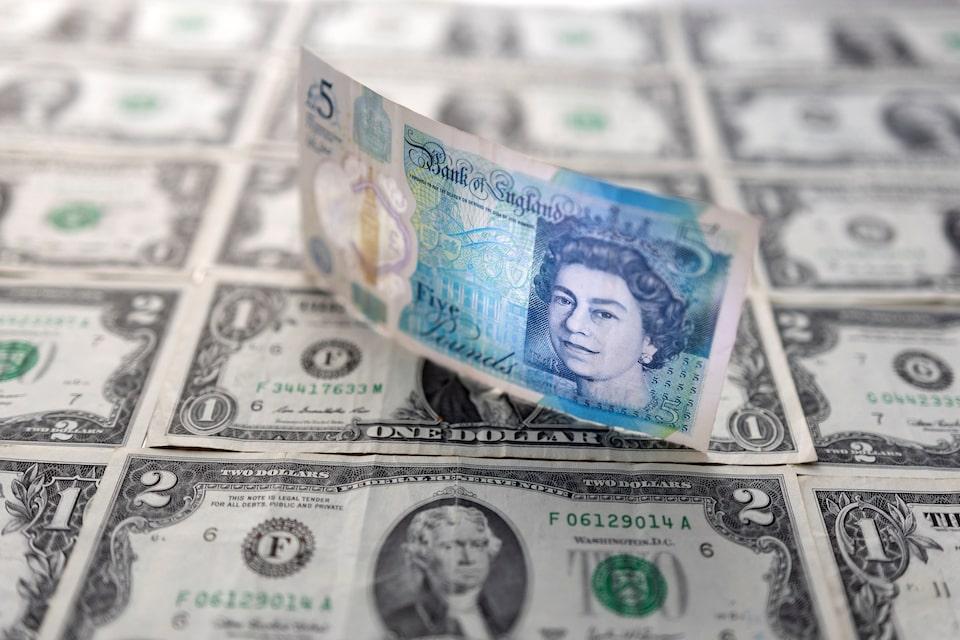
Goldman Sachs warns of waning foreign investor interest in U.S. dollar assets U.S. current account deficit over a trillion dollars, reliant on foreign demand Fed may cut rates if inflation from tariffs is temporary, says Hatzius NEW YORK, April 30 (Reuters) - Foreign investor appetite for U.S. dollar assets may wane unless the currency depreciates further, said Goldman Sachs' chief economist, cautioning that a downward trajectory is expected even in the absence of a meaningful economic slowdown. "The dollar is still very highly valued ... I expect foreign investors to be less willing to keep adding to the U.S. share on their portfolios," said Jan Hatzius in an interview. Sign up here. Hatzius said that while the U.S. retains key advantages, such as higher productivity trends compared to Europe, the country's relative performance is beginning to erode, and that will likely show up most clearly in the currency markets. The U.S. runs a current account deficit of more than a trillion dollars, which means the country relies on foreign demand to fund its trade deficit, Hatzius said. But with the U.S. asset share of foreign investor portfolios already at high levels, it will be difficult to sustain funding needs without a dollar depreciation, he said. The dollar index (.DXY) , opens new tab is down about 9% since the inauguration of U.S. President Donald Trump as the administration's plans to impose tariffs on U.S. trading partners have rattled investors and hurt financial markets. The possibility of the U.S economy contracting has gained traction in the market in recent months on the back of Trump's protectionist policies, but Hatzius said the dollar is expected to slide even without a U.S. recession. "If the economy slows by more, and the (Federal Reserve) cuts interest rates by more, that would add to the case ... but I'm not building the case for dollar depreciation on a recession forecast or very aggressive rate cuts, I think you'll get dollar depreciation even if the rate cuts are relatively moderate." Hatzius said the Fed could have been in a position to cut interest rates as soon as next week, when its rate-setting meeting takes place, had the U.S. central bank not been constrained by the inflationary impact of tariffs. "If it wasn't for the fact that this negative growth shock is occurring alongside a positive inflation shock, they'd (Fed) already be thinking about cutting," said Hatzius. Fed officials last week raised the possibility the U.S. central bank may be open to lowering interest rates in coming months if the inflationary impact from tariffs is temporary. Those remarks came after a speech by Fed Chair Jerome Powell earlier this month that had left investors worried that the central bank would be reluctant to cut rates. That speech also led to an escalation of Trump's criticism towards Powell for not lowering rates, even though Trump subsequently said he had no intention of removing Powell from his position. Goldman Sachs is expecting a contraction in U.S. first quarter economic growth but is not projecting a recession this year, even though Hatzius said economic forecasts were hard given continued high uncertainty on tariffs. The advance estimate of gross domestic product for the first quarter is due on Wednesday and is expected to show a sharp slowdown to 0.3%, from 2.4% in the fourth quarter, according to a Reuters poll. Goldman expects U.S. economic growth to slow to 0.5% by the fourth quarter from a year earlier. The Wall Street bank expects three rate cuts of 25 basis points each in June, July, and September. Goldman Sachs had to revert to its previous non-recession baseline forecast after Trump announced an immediate 90-day pause on targeted tariffs for most countries on April 9, while raising the rate for China. "What is particularly difficult at the moment is that a lot of what we're seeing in the economy is really driven by these decisions on trade policy," Hatzius said. "Figuring out what the next step is can be very challenging," he said. https://www.reuters.com/business/finance/foreign-demand-us-assets-seen-waning-unless-usd-slides-more-says-goldman-sachs-2025-04-30/