2025-04-30 06:07
April 30 (Reuters) - ArcelorMittal , the world's second-largest steelmaker, reported first-quarter core profit above market expectations on Wednesday, helped by a strong performance in Liberia, despite geopolitical challenges. The Luxembourg-based company reported quarterly earnings before interest, taxes, depreciation and amortisation (EBITDA) of $1.58 billion, beating analysts' consensus estimate of $1.55 billion provided by the company. Sign up here. ArcelorMittal shipped about 13.6 million tons of steel in the first quarter, slightly up from the year-ago period. In Liberia, the group achieved record iron ore production at 8.4 million tons and shipped some 8 million tons of iron ore in the quarter, up 29.2% and 27% year-on-year respectively, driven by operational improvements. "Looking ahead, a measure of caution about the short-term outlook is appropriate. Heightened uncertainty around the terms of global trade is hurting business confidence and risks causing further economic disruption if not quickly resolved," CEO Aditya Mittal said in a statement. Delays in resolving trade disruptions could weigh on the group's initial 2025 steel consumption forecasts particularly for the U.S. and China, the group said. The group previously said it expected 2025 global steel demand growth of 2.5% to 3.5%, excluding China, the world's top consumer and producer of the metal. ArcelorMital's steel outlook comments echoed Swedish peer SSAB (SSABa.ST) , opens new tab, which said it expects a more uncertain outlook for its steel divisions due to tariffs. Still, the group said steel spreads in Europe have rebounded from unsustainably low levels, with the outlook bolstered by the European Commission's Steel and Metals Action Plan. ArcelorMittal reaffirmed its 2025 capital expenditure outlook, maintaining its investment forecast in the range of $4.5 billion to $5.0 billion for the year. https://www.reuters.com/markets/commodities/arcelormittal-tops-views-first-quarter-core-profit-2025-04-30/

2025-04-30 05:51
First-quarter U.S. GDP contracts S&P 500 registers seventh straight daily advance Crude notches biggest monthly decline in 3 1/2 years NEW YORK, April 30 (Reuters) - U.S. stocks pulled a late-session rebound on Wednesday and oil prices logged their biggest monthly drop in 3-1/2 years as investors parsed news of the first U.S. economic contraction since 2022. All three major U.S. stock indexes recovered from a sharp selloff earlier in the day, with the S&P 500 and the Dow flipping positive just minutes ahead of the closing bell. Sign up here. The tech-laden Nasdaq ended modestly lower. The S&P 500 and the Dow lost ground in April, while the Nasdaq posted a small monthly gain. "The market's action ... is reflective of an economy that's probably going to be struggling as the year progresses," said Chuck Carlson, CEO of Horizon Investment Services in Hammond, Indiana. U.S. gross domestic product contracted in the first quarter, largely due to a surge in imports to avoid expected tariffs. U.S. President Donald Trump blamed his Democratic predecessor Joe Biden, and said his tariffs would eventually bring a booming economy. The reversal "may be a result of people digesting some of these numbers and trying to put them into context," Carlson added. "Was it that bad? Are we on the precipice of a recession? Markets are trying to evaluate that and put into some context," Carlson said. The ongoing, multi-front trade war continues to cloud U.S. corporate earnings season, with companies increasingly pulling or reducing guidance due to tariff uncertainties. Wall Street pared losses after the release of more upbeat economic indicators. The Personal Consumption Expenditures (PCE) price index was unchanged on a monthly basis and consumer spending was stronger than expected. Of the "Magnificent Seven" group of artificial intelligence-related megacap companies, Meta Platforms (META.O) , opens new tab and Microsoft (MSFT.O) , opens new tab are expected to post results after the bell. The Dow Jones Industrial Average (.DJI) , opens new tab rose 141.74 points, or 0.35%, to 40,669.36, the S&P 500 (.SPX) , opens new tab rose 8.23 points, or 0.15%, to 5,569.06 and the Nasdaq Composite (.IXIC) , opens new tab fell 14.98 points, or 0.09%, to 17,446.34. European stocks ended a choppy session higher as investors mulled key data and corporate earnings. But the STOXX 600 registered a second consecutive monthly loss due to tariff-related uncertainties. MSCI's gauge of stocks across the globe (.MIWD00000PUS) , opens new tab rose 1.56 points, or 0.19%, to 832.90. The pan-European STOXX 600 (.STOXX) , opens new tab index rose 0.46%, while Europe's broad FTSEurofirst 300 index (.FTEU3) , opens new tab rose 9.45 points, or 0.45%. Emerging market stocks (.MSCIEF) , opens new tab rose 5.67 points, or 0.51%, to 1,111.67. MSCI's broadest index of Asia-Pacific shares outside Japan (.MIAPJ0000PUS) , opens new tab closed higher by 0.88%, to 580.65, while Japan's Nikkei (.N225) , opens new tab rose 205.39 points, or 0.57%, to 36,045.38. The dollar held its gains after a swath of mixed U.S. economic data and as trade tensions eased. The dollar index , which measures the greenback against a basket of currencies including the yen and the euro, rose 0.51% to 99.68, with the euro down 0.58% at $1.132. Against the Japanese yen , the dollar strengthened 0.52% to 143.08. Sterling weakened 0.63% to $1.3322. The Mexican peso weakened 0.32% versus the dollar at 19.616. The Canadian dollar strengthened 0.33% versus the greenback to C$1.38 per dollar. Benchmark U.S. Treasury yields seesawed to a lower close amid choppy trading. They inched 2 basis points lower to 4.156%, from 4.174% late on Tuesday. The 30-year bond yield rose 2.5 basis points to 4.6734% from 4.648% late on Tuesday. The 2-year note yield, which typically moves in step with interest rate expectations for the Federal Reserve, fell 5.3 basis points to 3.605%, from 3.658% late on Tuesday. Oil prices plunged further, logging their largest monthly drop in nearly 3-1/2 years as Trump's trade war eroded the demand outlook. U.S. crude fell 3.66% to settle at $58.21 per barrel, while Brent settled at $63.12 per barrel, down 1.76% on the day. Gold prices dipped in opposition to the dollar. Spot gold fell 0.65% to $3,294.59 an ounce. U.S. gold futures fell 0.72% to $3,295.00 an ounce. https://www.reuters.com/markets/global-markets-wrapup-1-2025-04-30/

2025-04-30 05:24
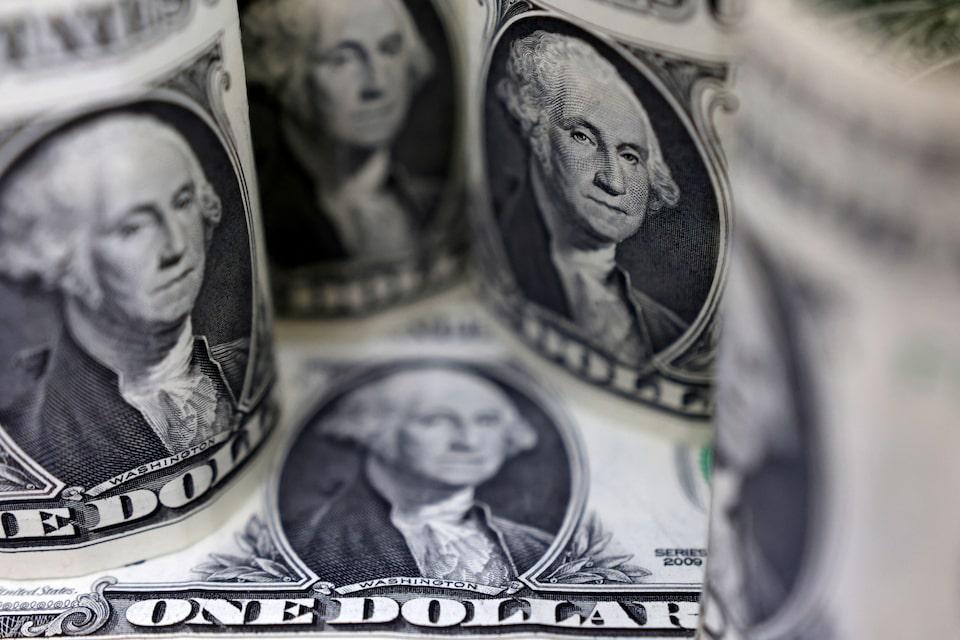
US GDP dragged down by imports; consumption still resilient US annual headline, core PCE slow in March US rate futures price in four cuts in 2025 NEW YORK, April 30 (Reuters) - The U.S. dollar firmed against major currencies on a data-packed Wednesday after a report showed the world's largest economy shrank in the first quarter, worse than market expectations, but better than the dire predictions touted by some of the biggest U.S. banks. Gross domestic product (GDP) fell 0.3% in the quarter, a Commerce Department report showed in its first estimate, undermined by a surge in imports trying to front-load purchases ahead of the Trump administration's implementation of tariffs on most goods. Data showed that pre-tariff imports surged 41.3% in the first three months of the year. Sign up here. The consensus forecast was for a 0.3% rise, according to economists polled by Reuters. Goldman Sachs, however, had forecasted a 0.8% contraction, while J.P. Morgan predicted a 1.75% fall. The first-quarter GDP drop followed a 2.4% rise in the fourth quarter. Consumer spending, however, continued to grow, though at a moderate pace. Consumer spending on services - especially health care – grew 2.4% in the first quarter as households remained resilient. "It's important to realize that a large chunk of the fall in GDP is due to the sharp increase in imports, which take away from GDP growth," said Oliver Pursche, senior vice president, advisor, at Wealthspire Advisors in Westport, Connecticut. "And that's probably due to the expectation of tariffs. So, if you were to normalize that, you end up with positive GDP growth for the quarter, but it certainly doesn't bode well for Q2." Following the data, the dollar climbed versus the yen to trade 0.3% higher at 142.77 yen , while the euro slid 0.4% to $1.1343 . The greenback was on pace for its biggest monthly decline against the yen since July 2024. Europe's shared currency, on the other hand, was on track to post its largest monthly gain since November 2022. Sterling fell 0.5% to $1.3340 . For the month of April, the British pound rose 3.3%, its heftiest rise against the dollar since November 2023. 'WELCOME NEWS' A separate report showing a rise in U.S. consumer spending and income as well as slowdown in annual inflation also boosted the dollar. Data showed U.S. personal income increased 0.5% in March and spending climbed 0.7%, which were both above economists' forecasts in a Reuters poll. In the 12 months through March, the Personal Consumption Expenditures (PCE) Price Index, the Fed's preferred inflation gauge, increased 2.3%, down from 2.7% in February. Annual core inflation also eased from the prior month, rising 2.6% after advancing 3.0% in February. On a monthly level, both the headline and core PCE numbers were unchanged from the previous month. "The almost unchanged level of core PCE prices in March is welcome news but, given the data precede the implementation of broad-based tariffs, core inflation will inevitably rebound sharply in the coming months," said Harry Chambers, assistant economist at Capital Economics. Following the PCE data, U.S. rate futures continued to point to a resumption of Federal Reserve interest rate cuts in June, with a total of 100 basis points in cuts, or four quarter-percentage-point reductions likely in 2025. That brings the U.S. central bank's policy rate to the 3.25%-3.50% range by the end of this year. In other reports, the National Association of Realtors' (NAR) Pending Home Sales Index, based on signed contracts, jumped 6.1% to 76.5 last month. The increase was the largest since December 2023. Earlier in the session, the ADP National Employment Report showed that U.S. private payrolls growth slowed more than expected in April. Private payrolls increased by only 62,000 jobs this month after a downwardly revised 147,000 gain in March. Economists polled by Reuters had forecast private employment would advance by 115,000. The dollar pared gains versus the yen after the ADP data. "The GDP data and the ADP number earlier are stagflationary, with consumption still higher. Stagflation is one of the worst things for the economy," said Eugene Epstein, head of trading and structured products, North America, at Moneycorp in New Jersey, referring to a scenario where growth is weak, while inflation is higher. "The dollar was slightly firmer after the data, but overall no big moves there. https://www.reuters.com/world/middle-east/dollar-steady-vulnerable-tariff-worries-take-hold-2025-04-30/
2025-04-30 05:04
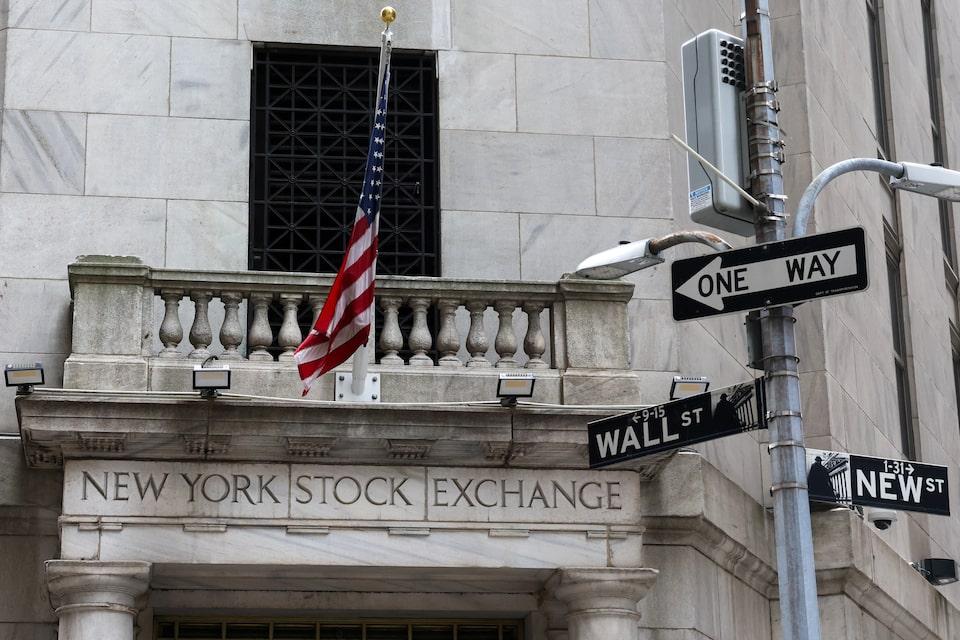
Capital flight from Wall Street hits Europe via surging euro Investors view emerging markets, mining shares, esoteric credit as 'relatively' safe China, India, Latin America in favour Market narrative could shift in weeks, investors say LONDON, April 30 (Reuters) - Investors who rushed out of Wall Street during a month of U.S. policy shocks that raised European growth risks are turning their attention to niche markets such as Latin American currencies and gold mining stocks in a new bid to out-run trade angst. After President Donald Trump's April 2 Liberation Day bombshell pummelled domestic stocks (.SPX) , opens new tab and the dollar , European equities that initially attracted capital fleeing the U.S. have been hit by a surging euro that threatens exports. Sign up here. As Trump's budget plans rock confidence further and European industry braces for a deluge of cheap Chinese imports, investors running large global portfolios said traditionally volatile emerging markets and esoteric credit felt relatively safe, for now. "We expect the riskiness or volatility of emerging market assets and developed market assets to converge," said Pictet Asset Management multi-asset co-head Shaniel Ramjee. He had bought Brazilian local currency debt and Australian and Canadian gold mining shares this month, he said, and believed emerging market stocks would win over Europe as funds continued flowing out of the U.S. Principal Asset Management's fixed income CIO Mike Goosay said that with traditional havens like U.S. Treasuries under stress, securitised debt, private credit and emerging market bonds offered "attractive risk-adjusted opportunities." SLIM PICKINGS Investors long used to herding into U.S. assets now lack consensus about what to favour instead, a JPMorgan survey of 1,000 attendees at last week's IMF/World Bank meetings showed, with a quarter picking cash as their preferred asset. Emerging markets were the next most popular choice, despite the strong blows U.S. recessions can deal to developing nations. As Wall Street shares (.SPX) , opens new tab slump to their third straight monthly loss, the dollar hits three-year lows and the euro's 10% rise in two months halts a European equity rally (.STOXX) , opens new tab, smaller markets usually considered higher risk are booming. Mexican stocks (.dMIMX00000PUS) , opens new tab rose almost 14% in April after initially dropping on Trump's reciprocal tariff announcement and as traders wagered on the nation escaping White House's ire, which is currently focused on China. An almost 3% April gain has pulled a Latin American currency index (.MILA00000CUS) , opens new tab 12% higher year-to-date. Fidelity International portfolio manager Ian Samson said he expected U.S. assets to stay "very, very volatile," while Europe's growth prospects were fading and stock market valuations were no longer cheap. Bank of America estimates European shares, down 2% in April, may drop another 10% in coming months. Samson named India, where improving U.S. trade relations are attracting overseas investors despite growing tensions with Pakistan, as his favoured global market. Aberdeen investment director Gabriel Sacks said he liked Saudi Arabian shares (.TASI) , opens new tab, up 6% in the past three weeks after Trump imposed a minimum 10% tariff on the oil producing kingdom. STRESSED HAVENS Japan's yen gained more than 4% against the dollar this month, gold hit a record $3,500 an ounce on April 22 and Germany's 10-year government bond yield fell to about 195 basis points below comparable Treasuries days ago. "The scale of the money coming out (of the U.S.) is too large for the safe havens the money is going into, Goshawk Asset Management portfolio manager Simon Edelsten said. The supply of high-rated non-U.S. government bonds is near record lows, meaning the euro would keep rising, Morgan Stanley strategists said. "(Euro) appreciation will exacerbate the negative impact of higher tariffs on demand for exports, worsening the growth outlook," Invesco senior fixed income manager Michael Siviter said. BNP Paribas Asset Management senior cross-asset strategist Sophie Huynh said bets on the Swiss National Bank moving to weaken the franc and the yen's bounce had turned into "widow-making trades." She was also unenthusiastic about major equity markets excepting China, where stocks have jumped about 5% in three weeks as investors pinned their hopes on government stimulus (.CSI000300) , opens new tab. But after a month of global markets spinning in new directions with every shift in White House rhetoric, the fervour about European defence spending that gripped investors until late March could return, some investors said. "My base case is that the U.S. policy mix that is in place today is different in a few months' time," Ninety One multi-asset credit manager Justin Jewell said. "And simultaneously, a global desire to invest less in the U.S. is for Europe surely a good outcome." https://www.reuters.com/business/finance/global-markets-investors-analysis-2025-04-30/
2025-04-30 04:48
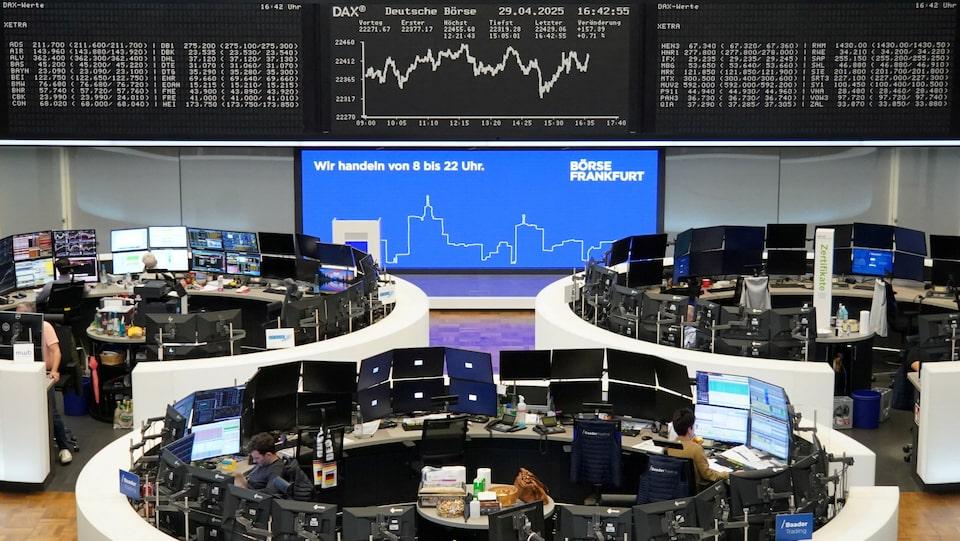
A look at the day ahead in European and global markets from Rae Wee Note: There will be no Morning Bid Europe on Thursday, May 1, due to holidays in various markets. The newsletter will resume on Friday, May 2. Sign up here. There will be a raft of data for investors to pore over on Wednesday as they wind down a rollercoaster month headlined by a tumultuous trade policy in the United States that bruised markets and dealt a blow on businesses and consumers globally. First up in Europe, preliminary readings on French and German inflation are due, alongside growth data for the two economies and the wider euro zone bloc. The UK also releases figures for home prices. It remains to be seen if the releases will support the case for further rate cuts by the European Central Bank (ECB), but for now markets are leaning toward another round of easing in June. Two ECB policymakers warned earlier this week that a trade war with the United States could extinguish the euro zone's fledgling recovery and the bloc could struggle under tariffs. U.S. GDP data and the core PCE price index then take the stage, where expectations are for the world's largest economy to have grown a meagre 0.3% in the first quarter. As it is, data on Tuesday showed the U.S. trade deficit in goods widened to a record high in March as businesses ramped up efforts to bring in merchandise ahead of the sweeping tariffs, suggesting trade was a large drag on growth. It's a lot for investors to digest at the end of the month, having already been taken on a wild ride following U.S. President Donald Trump's first 100 days in office. But chaos seems to be the new normal these days. There was little to cheer about in markets on Wednesday, as relief over a potential easing of global trade tensions was offset by a worsening economic outlook and dour signals from corporates swept up by Trump's tariffs. Despite Trump's move to soften the blow of his auto tariffs and signs of progress in broader trade negotiations, details remain scant, with Commerce Secretary Howard Lutnick saying he had reached one deal with a foreign power. Delivery giant UPS (UPS.N) , opens new tab said on Tuesday it would cut 20,000 jobs to lower costs, while General Motors (GM.N) , opens new tab pulled its outlook and delayed its investor call, joining a list of companies that have ditched forecasts for 2025 or slashed outlooks. Shares struggled for direction and U.S. futures slid, while the dollar was on track for its worst monthly performance in more than two years. While a fire sale of U.S. assets that gathered steam earlier this month seems to have abated for now, confidence remains fragile and the recent slew of economic data has given investors little reason for them to return. U.S. consumer confidence slumped to a nearly five-year low in April and job openings dropped sharply in March, in signs that cracks in the economy are starting to show. Amid persistent Sino-U.S. trade tensions, the world's second-largest economy is starting to feel the heat too. China's factory activity contracted at the fastest pace in 16 months in April, a survey showed on Wednesday, as Trump's hefty tariffs snapped two months of recovery. Still, Beijing is betting on Washington blinking first in a protracted trade war, as officials advance this year's stimulus plans but hold off on fresh measures. Key developments that could influence markets on Wednesday: - French, German preliminary inflation (April) - Euro zone, France, Germany preliminary GDP (Q1) - UK nationwide house prices (April) - U.S. advance GDP (Q1) - U.S. core PCE price index (March) Trying to keep up with the latest tariff news? Our new daily news digest offers a rundown of the top market-moving headlines impacting global trade. Sign up for Tariff Watch here. https://www.reuters.com/markets/europe/global-markets-view-europe-2025-04-30/
2025-04-30 04:09
Headline CPI a tad higher than expected as some electricity rebates expire Core inflation back in the 2-3% target band for 1st time since late 2021 Services inflation slows markedly, May rate cut still fully priced in SYDNEY, April 30 (Reuters) - Core inflation in Australia slowed to a three-year low in the first quarter as costs in the services sector cooled markedly, data showed on Wednesday, supporting the case for another cut in interest rates in coming weeks. Investors are fully expecting a quarter-point rate cut from the Reserve Bank of Australia on May 20 given the darkening outlook for global growth caused largely by U.S. tariffs, even as a stronger-than-expected reading in headline inflation saw some scale back aggressive bets for five rate cuts this year. Sign up here. Data from the Australian Bureau of Statistics showed the consumer price index (CPI) rose 0.9% in the March quarter, just above forecasts of a 0.8% increase. That was thanks to a 16.3% jump in electricity prices as some government rebates on power bills expired. Annual CPI inflation held steady at 2.4%. The key trimmed mean measure of core inflation increased by 0.7% in the quarter, again above forecasts of a 0.6% gain. The annual pace, however, slowed to a three-year-low of 2.9%, down from 3.3%, taking it back into the Reserve Bank of Australia's 2% to 3% target band for the first time since late 2021. Also encouragingly, inflation in the services sector slowed to 3.7% in the first quarter, the lowest since the June quarter of 2022. The benign core inflation readings would be a positive for Prime Minister Anthony Albanese, whose Labor Party is running on the credentials of bringing down sky-high inflation ahead of a tight federal election on Saturday. Indeed, Treasurer Jim Chalmers said he did not see anything in the figures that would substantially alter market expectations for more easing in moneatry policy. Tony Sycamore, an analyst at IG, said downside risks to global growth and a softer near-term inflation profile meant the RBA was likely to focus on the downside risks to growth and cut interest rates by 25 basis points in May. Pradeep Philip, head of Deloitte Access Economics, agreed. "A May rate cut should not be viewed as the RBA declaring ‘mission accomplished’ in the fight against inflation. Instead, it should be viewed as insurance against any collateral damage a trade war and geopolitical turbulence may cause the Australian economy." The RBA skipped a chance to move in April but opened the door to a rate cut next month by noting the May meeting would be an opportunity to revisit monetary policy settings. It has noted that impact from U.S. tariffs on local inflation is less clear, with supply factors likely boosting prices but possible trade diversion also putting downward pressures on inflation. The RBA has also worried about the strength of the labour market that may risk stoking inflationary pressures, but the main measure of wage growth has been slowing even as employment galloped ahead and the jobless rate held at a historical low of 4.1%. Wednesday's data showed educational costs jumped 5.7% in the first quarter, but price gains for insurance costs eased substantially to 7.6% from double digit growths in the past quarters. New dwelling construction costs rose 1.4% in the March quarter, the lowest since the June quarter 2021. https://www.reuters.com/world/asia-pacific/australias-q1-inflation-comes-above-forecasts-core-slows-3-year-low-2025-04-30/