2025-04-29 20:05
MEXICO CITY, April 29 (Reuters) - Mexico's new Olmeca refinery is ready to restart production, Mexican President Claudia Sheinbaum said on Tuesday, denying that a temporary outage had been caused by sabotage of its catalytic cracking unit. Located at the port of Dos Bocas, the Olmeca refinery is still far from meeting the gasoline and diesel production goals set by Sheinbaum's predecessor. Sign up here. "It's not like that," the president replied to a question during a press conference regarding alleged sabotage at state energy company Pemex, but gave no further details. The catalytic cracking unit is an important gasoline-producing part of the refinery that uses fluidized catalyst to crack heavy hydrocarbon molecules into gasoline molecules. Sheinbaum said she would ask a Pemex official to report on what happened. "It's not about the refinery suddenly not working. It's a smaller issue," she said. "It was producing 100,000 barrels a day and is about to start up again. There's nothing serious." Pemex did not respond to a request for information about the events at the refinery, the date of any incidents, or the current levels of production. The refinery only processed 6,797 bpd in February and none in January when the company reported problems with higher-than-usual contents of salt and water in the crude oil Pemex pumps. It has a capacity to process 340,000 bpd. Since June 2024, processing has been marginal. Reuters reported last week that Pemex exported two shipments of ultra low sulfur diesel (ULSD) processed in Olmeca because the infrastructure needed to distribute the much-needed motor fuel that Mexico imports is not yet ready. https://www.reuters.com/business/energy/mexicos-olmeca-refinery-will-restart-halt-was-nothing-serious-president-says-2025-04-29/
2025-04-29 19:51
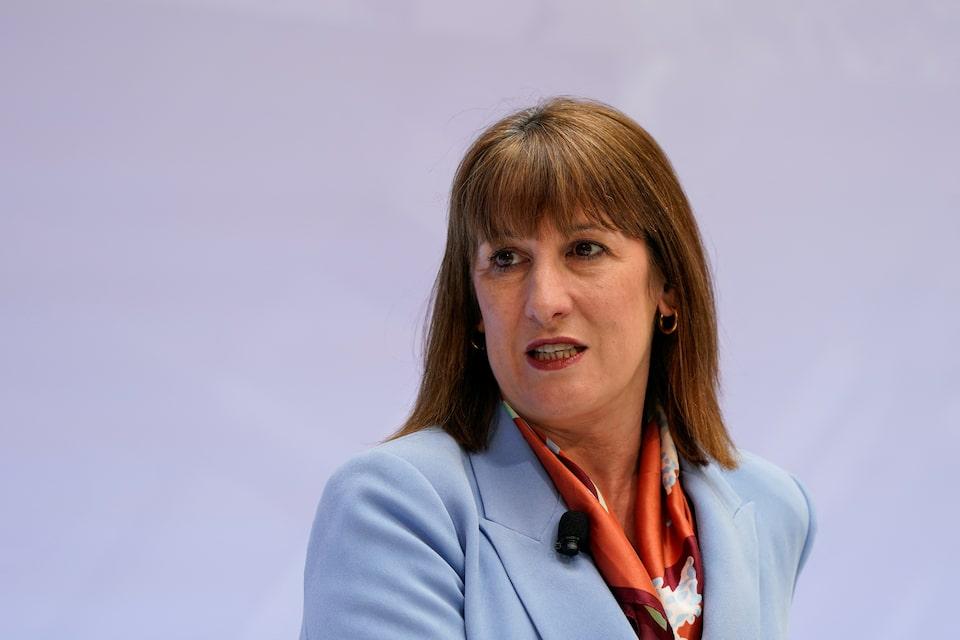
Crypto exchanges and dealers to come under UK finance regulation Crypto expected to meet similar rules to mainstream finance Reeves vows close cooperation with United States Around 12% of UK adults own or have owned crypto assets LONDON, April 29 (Reuters) - Britain will bring cryptocurrencies under compulsory regulation, finance minister Rachel Reeves said on Tuesday as the government signalled it would cooperate closely with the United States on the best approach towards digital assets. The new draft laws will extend existing financial regulation to companies involved in crypto, aligning Britain with the U.S., rather than the European Union which has built rules tailored to the industry, experts said. Sign up here. Britain's first set of draft rules for the sector comes as U.S. President Donald Trump has embraced crypto and vowed to roll back regulatory curbs on the industry, worrying critics. Euro zone finance ministers said last month they were concerned the U.S. embrace could affect euro zone monetary sovereignty and financial stability. Reeves said she had discussed crypto regulation with U.S. Treasury Secretary Scott Bessent during a visit to Washington last week, and that the two countries planned to discuss this further in June. "Under the new rules, crypto exchanges, dealers and agents will be brought into the regulatory perimeter - cracking down on bad actors while supporting legitimate innovation," the finance ministry said in a statement following Reeves' announcement. "Crypto firms with UK customers will also have to meet clear standards on transparency, consumer protection, and operational resilience," it added. Around 12% of British adults own or have owned cryptocurrencies such as bitcoin or ethereum, up from 4% in 2021, the government said. Bank of England Governor Andrew Bailey has long warned of the risks to investors from bitcoin, which he does not view as a secure store of value like mainstream currencies. However, he has seen more of a case to regulate so-called stablecoins, a type of digital currency that seeks to keep a fixed value relative to U.S. dollars or other assets. The government's draft rules said stablecoin issuers would be subject to regulation, but only if the issuers are based in the UK. The finance ministry said it aimed to finalise the new legislation by the end of the year. The rules build on initial proposals made in 2023. Some critics have said regulating the sector could give a false sense of security to the public about the risks posed by digital securities that can have little or no underlying value. However, Nick Price, financial services and crypto specialist at law firm Osborne Clarke, called it a "simple and straightforward piece of legislation" that would bring a great deal of certainty and stability and consumer protection. "The move explicitly aligns the UK with the U.S. approach of 'crypto as securities' – and represents a divergence with the EU's more tailored approach to crypto under the MiCAR regime," Price added, referring to EU rules that came into force in December. Linklaters financial services lawyer Simon Treacy said the new rules defined the scope of the assets and activities that would be regulated, but a lot more detail was to come as regulators developed rules for regulated firms. Reeves also said she would set out broader plans for boosting the growth and competitiveness of Britain's financial services industry on July 15 in her annual Mansion House speech, the culmination of a consultation process that began in November 2024. In last year's Mansion House speech, Reeves said British financial regulators had gone too far in squeezing out risk in the 15 years after the global financial crisis. https://www.reuters.com/sustainability/boards-policy-regulation/uk-sets-out-new-crypto-rules-date-wider-financial-services-strategy-2025-04-29/
2025-04-29 19:43
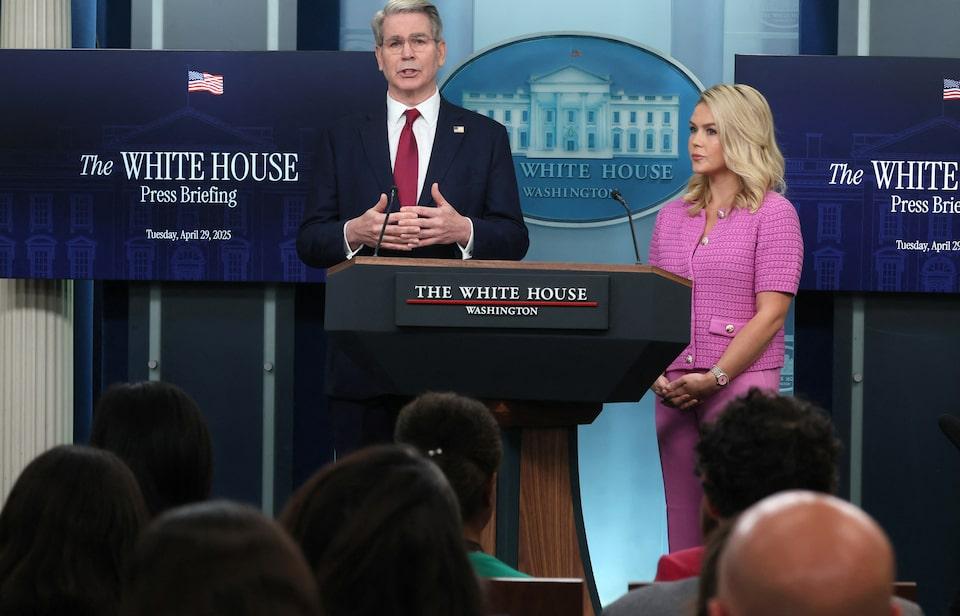
Amazon says it considered tariff list on Haul, rejected the idea Company denies any plan for tariff notes on main Amazon site Share prices initially drop 2% but recover WASHINGTON, April 29 (Reuters) - Amazon said on Tuesday its low-cost Haul unit had considered listing import charges for goods in light of new U.S. tariffs but denied looking at such a plan for its main website, after the White House accused it of a hostile political act. The Seattle retailer spent a chaotic morning denying a report from Punchbowl News that it planned to display prices showing tariffs' impact on Amazon.com. It acknowledged it had considered it for certain inexpensive China-made products on Haul but then rejected the idea. Sign up here. The confusion initially prompted a 2% drop in Amazon shares after White House press secretary Karoline Leavitt called the reported pricing plan "a hostile and political act by Amazon." Amazon (AMZN.O) , opens new tab denied the initial story. The company said its smaller Haul division, which competes for low-cost buyers with Temu and Shein, had mulled displaying import levies. "The team that runs our ultra low cost Amazon Haul store considered the idea of listing import charges on certain products. This was never approved and (is) not going to happen," a company spokesperson said, adding that "teams discuss ideas all the time." Amazon shares recovered losses and were up slightly in afternoon trading. President Donald Trump has imposed a tsunami of tariffs on U.S. trading partners, including China which has seen tariff costs rise by 145% since Trump took office, sending many corporations scrambling. Trump called Amazon founder and executive chairman Jeff Bezos to complain about the Punchbowl News report, a White House official said. "Jeff Bezos is very nice," Trump told reporters. "He solved the problem very quickly. He did the right thing." Automakers and others have said new tariffs could drastically hike the cost of consumer goods. Amazon's Haul site, which debuted in November, is particularly susceptible to tariffs because it is dependent on goods shipped directly from China, similar to popular low-cost site Temu. In exchange for lower prices, customers face longer shipping times. Trump this month signed an executive order that closes a trade loophole known as "de minimis" that has allowed low-value packages from China and Hong Kong to enter the United States free of duties. The order takes effect on May 2. Senate Democratic Leader Chuck Schumer urged national retailers to show the true cost of Trump’s tariffs. "To the large businesses that sell to consumers, I say: show your customers how much tariffs are hurting in their pocketbooks," Schumer said. U.S. Representative Marjorie Taylor Greene, a Trump ally, jumped into the fray. "Ahhh come on Amazon!!," she posted on X. "I was getting so excited about the Amazon tariff tracker so I could avoid buying anything from China!!" Reuters reported on Monday that some third-party merchants who previously sold China-made goods during Amazon's premier July Prime Day shopping event are sitting it out this year or reducing the amount of discounted merchandise they offer. The company on Tuesday announced the return of Prime Day this year, but did not provide specific dates, a departure from prior announcements. Trump was a frequent critic of Bezos during the Republican's first term, particularly over what he said was unfair coverage by The Washington Post, which Bezos owns. Bezos and Amazon have appeared to try to reconcile with Trump including by buying a documentary about first lady Melania Trump for $40 million, contributing to the president's inaugural fund and showing episodes of Trump's reality show The Apprentice on Prime Video. The strategy to remain in the White House's good graces seemed to have been working. In a March interview with The Atlantic that was published Friday, Trump said of Bezos, "He's 100 percent. He's been great." But Leavitt on Tuesday cited a 2021 report by Reuters that the tech company had partnered with a "Chinese propaganda arm." "So, this is another reason why Americans should buy American," Leavitt said, underscoring the Trump administration's efforts to shore up critical supply chains and boost domestic manufacturing. Amazon in 2021 said it "complies with all applicable laws and regulations, wherever we operate, and China is no exception." The White House tweeted a link to the Reuters report earlier Tuesday. The White House did not immediately comment after Amazon denied the tariffs report. https://www.reuters.com/business/retail-consumer/white-house-amazon-tariff-price-announcement-is-hostile-2025-04-29/
2025-04-29 19:25
BRASILIA, April 29 (Reuters) - Brazil's central government posted a smaller-than-expected March primary budget surplus, Treasury data showed on Tuesday, but still delivered a strong first-quarter result, helped by the postponement of court-ordered payments. Treasury Secretary Rogerio Ceron said at a press conference that the postponement of court-ordered payments was aimed at avoiding fiscal expansion in the first quarter and adding pressure on economic activity at this time to support the central bank's drive to cool inflation by slowing the economy. Sign up here. The country's primary budget surplus reached 1.1 billion reais ($195 million) in March, below the 1.3 billion reais forecast by economists polled by Reuters. Despite the miss, the result reversed the 1 billion reais deficit recorded in the same month last year. In the first quarter, the primary surplus reached 54.5 billion reais, more than double the 20.2 billion reais surplus posted in the same period of 2024. The stronger year-on-year performance was largely driven by a calendar effect, as court-ordered payments fell by 31 billion reais due to a later payment schedule this year. According to Ceron, about 70 billion reais in court-ordered decisions that the government lost will be paid in July. Last year, the bulk of these payments were in February. Over the 12-month period through March, the primary deficit stood at 10.9 billion reais, or 0.07% of gross domestic product (GDP), broadly in line with President Luiz Inacio Lula da Silva's target of a balanced primary result this year, with a tolerance margin of 0.25% of GDP. Following the discovery of a corruption scheme involving billions of reais in illegal deductions from social security pensions, Ceron said the Treasury is not currently being asked to reimburse the affected amounts. Ceron also acknowledged that measures approved by Congress last year failed to offset costly payroll tax exemptions as intended, and said the government is now awaiting legal clarity on how to proceed with the compensation. ($1 = 5.6284 reais) https://www.reuters.com/world/americas/brazils-central-government-posts-smaller-than-expected-march-surplus-q1-improves-2025-04-29/

2025-04-29 18:37
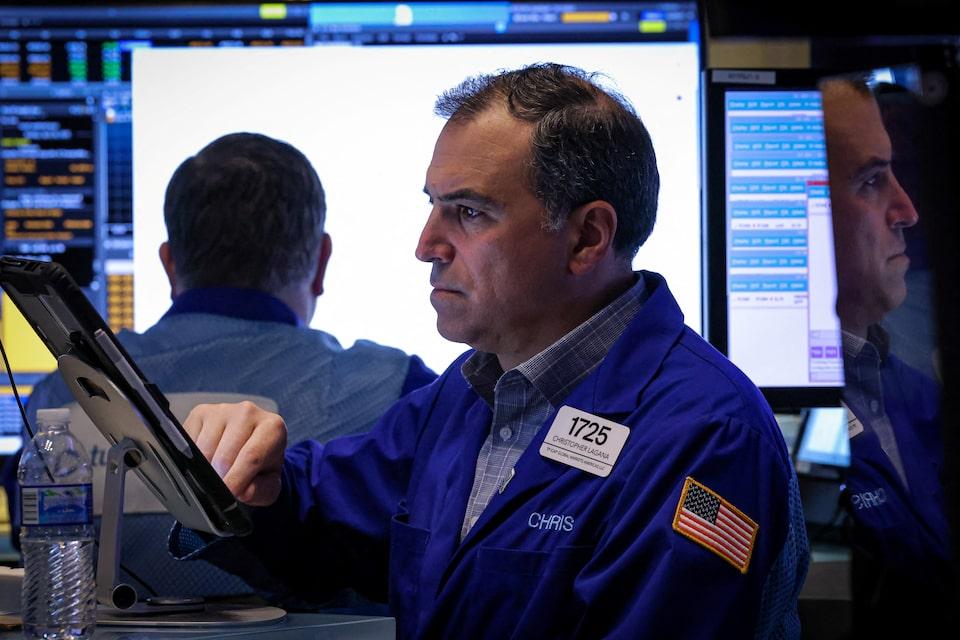
Trump's policies shook global financial markets in the first 100 days Stock market decline one of the worst in the first 100 days Investors expect volatility to linger NEW YORK, April 29 (Reuters) - President Donald Trump's first 100 days in office delivered the worst start for stocks since former President Richard Nixon's second term in 1973, stoked volatility across markets and created expectations of a semi-permanent state of uncertainty. Expectations for near-term volatility in stocks, bonds and currencies have all leaped higher as investors game out the fallout from a rapidly changing landscape for trade. Sign up here. In early April, the Cboe Volatility Index (.VIX) , opens new tab - an options-based barometer of investor anxiety - closed at a five-year high while FX and bond market volatility gauges also rallied. Measures of volatility have since come back but are still above pre-inauguration levels. Stock volatility futures several months out show investor expectations for heightened volatility to persist. "I think they've injected a sort of a semi-permanent uncertainty here," Matt Thompson, co-portfolio manager at Little Harbor Advisors, said. Worries over how tariffs will affect economic growth, consumer spending and inflation drove the S&P 500 (.SPX) , opens new tab sharply lower from the record high touched within a month of Trump taking office, sending the index to the brink of confirming a bear market. While stocks have recovered ground, counting 100 days starting with the inauguration on January 20, the S&P 500 lost 7.3% through April 29, Trump's 100th day in office. That marks one of the index's worst performances for a post-inauguration period. Counting 100 days while excluding the inauguration day to account for Trump only taking office mid-day, the benchmark index's closing level on Wednesday shows a drop of 7.1%, also the worst performance for comparable periods since Nixon. The dollar also appears shaky, with the dollar index (.DXY) , opens new tab down about 9% in Trump's first 100 days, the index's worst showing ever for a President's initial months in office, suggesting investors are viewing U.S. assets with skepticism. For the 100 days, U.S. Treasury market returns as measured by the ICE Bank Of America United States Treasury Index, however, were the second highest in recent presidential history, after former President Bill Clinton's first term. "We're facing a secular shift in global trade that began in the early 1980s," Jack Ablin, chief investment officer at Cresset Capital in Chicago, said. While a temporary pause on some tariffs has calmed nerves somewhat, investors are increasingly unsure if the world has changed for the foreseeable future. Wednesday marks the second Trump administration's first full 100 days. The White House did not comment on the market declines in the second Trump administration's first 100 days, but highlighted progress made on curbing inflation as well as investment pledges by major companies. "Within 100 days of President Trump’s second term in office, Americans saw the first monthly price drop in years in the March inflation report, while industry leaders ranging from Apple to Hyundai to Nvidia have made trillions in historic investment commitments to reshore manufacturing back to the United States," White House spokesperson Kush Desai said. HISTORICALLY LARGE DECLINES? Past instances where there was a poor start for markets include former President Richard Nixon's second term and former President George W. Bush's first term. "While that does not necessarily doom the market for his entire term, it is not unreasonable to suggest that it could set the tone for his term, based on history," Matt Gertken, chief strategist for geopolitics and U.S. politics at Montreal-based investment research firm BCA Research, said. During first 100 days of Nixon's second term stocks tumbled amid rising inflation and growing political uncertainty surrounding the Watergate scandal, with the S&P 500 dropping 9.7%, according to a CFRA Research analysis that counts 100 days including inauguration day. The index had lost nearly a third of its value from inauguration date by the time Nixon resigned on August 9, 1974. The S&P 500 fell 6.9% under Bush, hurt by the bursting of the dot-com bubble, going on to drop about 12% for the whole of the first term. TRUMP II VS TRUMP I When compared with Trump's start to his first term, this 100 days have also seen more extreme declines. The dollar slumped about 12% against a basket of currencies in about a year of Trump taking office in 2017. This time around the buck has tumbled nearly as much within 100 days. But while the slump during the early days of the first term was attributed by analysts to a later-than-expected arrival of Trump's confrontational trade policies and an unexpected rise in global growth expectations, this time around the buck has been hit by Trump's protectionist agenda on trade. That has led investors to question the dollar's role as a haven in times of economic uncertainty. Thierry Wizman, Global FX & Rates strategist at Macquarie said the "biggest lesson of the first hundred days" was that the U.S.' policy agenda was "a negative for the dollar." The White House's Desai previously told Reuters that the Trump administration is committed to protecting the strength and power of the U.S. dollar. For stocks, Trump's first term's initial 100 days saw a gain of 5%, not counting inauguration day, CFRA data showed. Stocks logged a gain of 5.3% in the first 100 days, including the day he was sworn in. For the whole of Trump's first term, stocks rose nearly 70% while the dollar fell about 10%. Still, some investors expect the pace of action to ease. "The first 100 days were not an anomaly, but the pace and the velocity of the activity is likely to slow down a bit because the administration is moving into things that happen more slowly," Shannon Saccocia, chief investment officer at Neuberger Berman Private Wealth, said, referring to the Trump administration's plans for extension and expansion of tax cuts. https://www.reuters.com/business/finance/stocks-set-worst-100-day-start-since-nixon-trump-injects-semi-permanent-2025-04-29/
2025-04-29 14:15
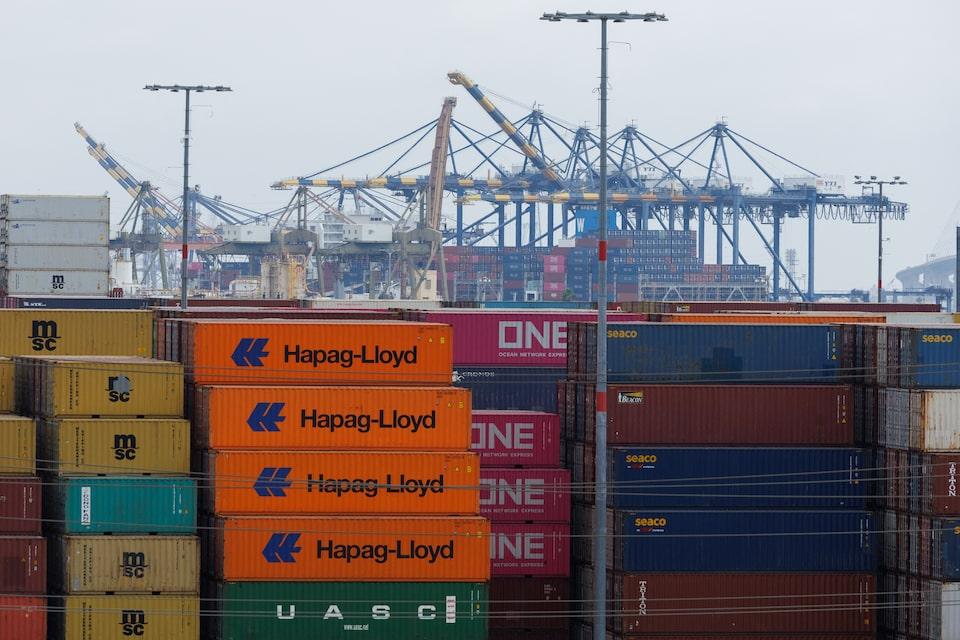
April 29 (Reuters) - The Los Angeles port is expecting a 35% drop in cargo from Asia next week, Gene Seroka, the port's executive director, said in a CNBC interview on Tuesday. "It's a precipitous drop in volume with a number of major American retailers stopping all shipments from China based on the tariffs," Seroka said. Sign up here. Major American retailers have now stopped all shipments from China and that contributes to around 45% of traffic in Los Angeles, he said. Seroka said that until some accord or framework is reached with China, the volume coming out of the country, except for some commodities, would be very light at best. Seroka also reiterated his forecast for imports at the Port of Los Angeles to fall at least 10% in the second half of this year. The adjacent ports of Los Angeles and Long Beach are the most exposed to the boiling trade war between the United States and China. Those Southern California ports are the preferred entry gates for goods from China, which is the No. 1 source of imports. https://www.reuters.com/markets/us/shipping-volume-will-plummet-35-next-week-la-port-official-says-cnbc-interview-2025-04-29/