2025-04-29 13:17
April 29 (Reuters) - HSBC on Tuesday became the latest global brokerage to slash its year-end target for the S&P 500 index (.SPX) , opens new tab below the 6000 mark, weighed down by slower U.S. economic growth and tariff-related pressure on corporate earnings. The London-based brokerage cut its target to 5600 from 6700, which is in line with BofA Global Research's forecast. Sign up here. "Nearer term, the market should trade between recession and stagflation fears until the Fed cuts and tariff turmoil subsides," said HSBC strategists in a note. Global brokerages have been aggressively revising their targets for the benchmark index following Trump's evolving tariff policy as they are expected to dent corporate America's earnings and push the U.S. economy into a likely recession. The widely tracked U.S. benchmark index has fallen 6% so far this year. "Uncertainty should cap valuations given the lack of visibility to long-term earnings growth," HSBC said, as it trimmed its earnings-per-share estimate for the index by 5% to $255, which is below the consensus expectations of $264. The brokerage's base case for this year is that the world's largest economy will avoid both a recession and stagflation. On a quarterly basis, it forecasts GDP growth of 1% for the year and expects the Federal Reserve to deliver its next rate cut in June. Given the uncertain macro backdrop, HSBC prefers defensive stocks that include large caps and value stocks. https://www.reuters.com/markets/us/hsbc-becomes-latest-brokerage-cut-sp-500-annual-target-below-6000-mark-2025-04-29/
2025-04-29 13:15
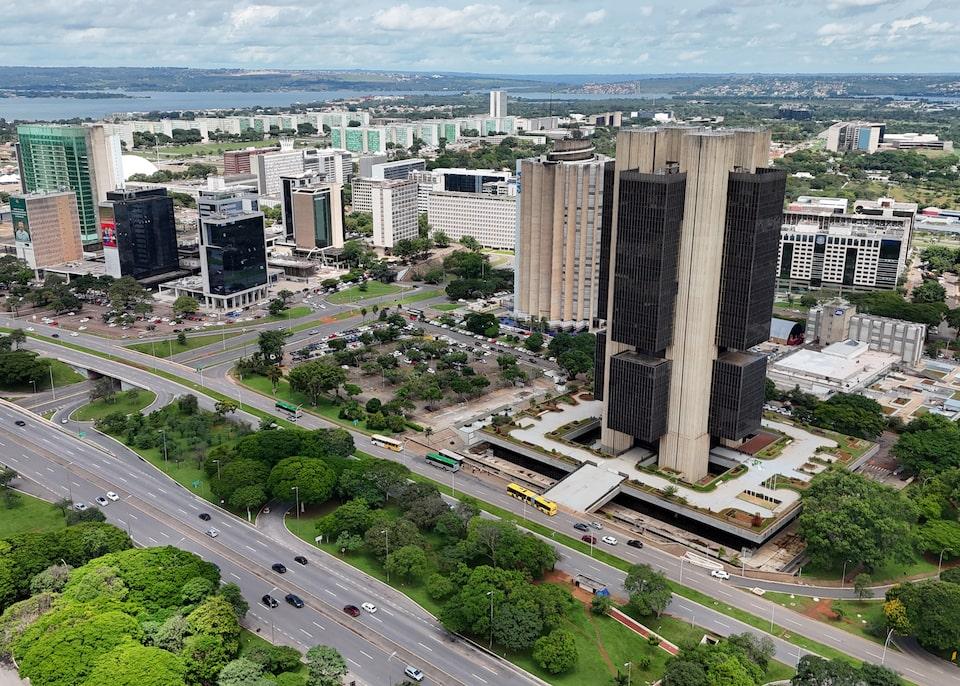
BRASILIA, April 29 (Reuters) - Brazil's central bank on Tuesday estimated a sharp decline in profitability among non-financial companies as a result of its aggressive monetary tightening cycle, with median returns falling below levels seen during the COVID-19 pandemic. The bank so far has raised its benchmark Selic rate by 375 basis points to 14.25% and signaled another hike at its next policy meeting in May, in an effort to tame annual inflation - running at 5.49% in mid-April, well above its 3% target. Sign up here. In its Financial Stability Report, the central bank projected that the median Return on Equity for publicly listed companies will drop to 3.92% by September 2025, down from 8.92% in September last year, when it began to raise borrowing costs. If confirmed, that would mark the lowest level since September 2017, when the country was still recovering from its worst-ever recession triggered by a severe fiscal imbalance, collapsing commodity prices and deep political turmoil. The level is also significantly below the 5.54% recorded in June 2020, the lowest posted during the COVID-19 crisis. "The central bank estimates that the current interest rate hiking cycle will have a significant impact on non-financial companies, though less severe than during the 2015-2016 recession," policymakers wrote. "Corporate payment capacity is expected to decline significantly," they added in the report. CREDIT WARNING The central bank also stressed that credit to households continued to accelerate in the second half of 2024, particularly in higher-risk segments and among lower-income borrowers, even after it began raising rates. "Financing to the real economy continued to accelerate in the second half of 2024, but financial institutions indicate greater caution regarding risk appetite in 2025," it said. The bank noted that household credit growth was especially pronounced in auto loans, with increased financing for older vehicles and smaller down payments, as well as in personal loans with no collateral, where lending standards have deteriorated. Policymakers said their quarterly survey of financial institutions showed lower risk tolerance for 2025, warning that risks tied to the financial health of households and companies still require vigilance to ensure sound credit issuance. "This outlook calls for additional caution and diligence in maintaining lending quality, given the risks associated with economic activity, household income constraints, and the indebtedness of both families and smaller firms," the report said. https://www.reuters.com/world/americas/brazils-central-bank-flags-rise-risky-household-credit-after-tightening-2025-04-29/
2025-04-29 12:56
LONDON, April 29 (Reuters) - The hunt has begun for the cause of a massive blackout across Spain, Portugal and parts of France that halted trains, bank machines and traffic lights, in one of Europe's biggest ever power system collapses. CYBER ATTACK? Spanish grid operator Red Electrica (REDE.MC) , opens new tab ruled out a cyber attack as the cause but Spain's High Court said it would open an investigation to determine the cause. Sign up here. EXPLANATIONS SO FAR Red Electrica in a statement on Monday night pointed to a "strong oscillation in the power flow which triggered "a very significant loss of generation". Aurora Energy analysts said the frequency of the grid dropped from the nominal 50Hz to 49.85Hz, triggering automatic emergency protocols. "The frequency decline likely began due to severe oscillations in high-voltage lines in southern France or inland Spain. Hypotheses include a physical fault (line disconnection), a sudden loss of generation within Spain or an atmospheric phenomenon," they said. This loss of generation went beyond what the electrical systems are designed to handle and the Spanish grid was disconnected from the European system. The electrical system then collapsed, affecting both the Spanish and Portuguese systems, Red Electrica said. Spain was also exporting power to France and Portugal at the time of the outage. Exports to France were close to the available net export capacity until 1000 local time. According to Red Electrica data, exports to France stopped at 1235 local time from 868 MW beforehand. WHAT CAUSES POWER OUTAGES? The most common cause of an unplanned power cut which disables electricity on a large scale is extreme weather such as storms, lightning strikes or high winds. The weather at the time of Monday's collapse was fair. Power outages can also happen when there are faults at power stations, power distribution lines, substations or other parts of the system. Electricity flow between systems in Europe is maintained at 50 Hertz (Hz) to ensure stability. If that level varies, backup systems disconnect assets such as power generation sources from the gird to protect them from damage. SPAIN'S ENERGY MIX Spain is one of Europe's biggest producers of renewable energy, relying on wind and solar for 43% of the total, well above the global average, data from think tank Ember shows. Solar photovoltaic (PV) accounted for 59% of Spain's electricity at the time of the blackout, wind nearly 12%, nuclear almost 11% and combined cycle gas plants 5%, Red Electrica data showed. In a span of just five minutes, between 1230 and 1235 local time (1030-1035 GMT) on Monday, solar PV generation plunged by more than 50% to 8 gigawatts (GW) from more than 18 GW, the data showed. "One of the problems was that there wasn’t enough firm power, like gas and nuclear and hydro storage, to handle the sudden fall of power generation," an industry source said, referring to the drop in solar generation. WHAT FACTORS COULD BE INVOLVED? Another source with direct knowledge of the sector said that leading up to the outage the Spanish grid was running with very little "inertia", which is energy stored in a large rotating mass like a generator or in some industrial motors that acts as a buffer as it can quickly be used to compensate for sudden changes in demand or supply. "In those conditions (when there is little inertia) if there’s a drop in production for whatever reason, the grid loses (more) inertia and everything fails. And in a blackout, you need to rebuild inertia before bringing things back online, which takes a few hours," the source said, requesting anonymity. HOW IS POWER RESTORED? A "black start" is the process of restoring power after a major cut. It involves gradually restarting power plants individually and reconnecting them to the grid. As Spain tried to get more power back on Monday it turned more gas and hydropower plants online and increased power imports from France and Morocco. EXCESS RENEWABLES? Monday's collapse has sparked debate about whether the volatility of solar and wind supply made its power systems more vulnerable to such an outage. Spain's Prime Minister Pedro Sanchez said on Tuesday there was not a problem of excess renewable energy. Still, the rapid development of renewables in Europe has flooded grids during periods of heavy sunlight and weak demand, sometimes driving wholesale electricity prices down to zero or negative and forcing solar farms to curtail their input. Analysts expect an increase in negative price hours in Spain and Portugal in 2025 due to further expansion of solar farms. The situation shows the complexity of managing modern energy systems as they integrate increasing levels of intermittent renewable energy, said Victor Becerra, professor of power systems engineering at the UK's University of Portsmouth. https://www.reuters.com/world/europe/what-could-be-behind-iberian-power-outage-2025-04-29/

2025-04-29 12:54
Smithfield pivots business after China raises tariffs on US goods Executives eye alternative markets for pork products Company's Q1 sales rise 9.5% as hog production unit recovers April 29 (Reuters) - China, the world's biggest pork consumer, is no longer a viable market for top U.S. pork processor Smithfield Foods (SFD.O) , opens new tab due to retaliatory tariffs by Beijing, company executives said on Tuesday. The disruption shows how the tariff war escalated by U.S. President Donald Trump is upending global trade and forcing changes at a prominent food company that pays U.S. farmers to raise hogs that are slaughtered for meat. Sign up here. China increased its levies on imports of U.S. goods this month, hitting back at Trump's decision to single out the world's No. 2 economy for higher duties. Beijing's additional tariffs pushed China's effective duty rate on U.S. pork to 172%, according to industry data. "With China no longer essentially being available, we really had to pivot our business," Smithfield CEO Shane Smith said on a quarterly earnings call. Smithfield, which went public in January, posted a 9.5% rise in total sales to $3.77 billion in the first quarter that ended on March 30. Analysts expected $3.62 billion, according to LSEG data. Shares climbed nearly 9%, as the hog production business rebounded from an operating loss last year. China represents about 3% of Smithfield's sales, Smith said. The company has said it ships variety meat to China, such as pig stomachs, hearts and heads that U.S. consumers generally do not eat. Before trade tensions escalated, Smith said in March that Smithfield believed China would still be the best market for variety meat with increased tariffs. "While it's important, we do believe we have other options," he said on Tuesday. Smithfield exports to more than 30 countries, according to the company, an indirect, majority-owned subsidiary of Hong Kong-based WH Group (0288.HK) , opens new tab. It said exports accounted for 13% of sales last year. The U.S. exported about $1.1 billion worth of pork products to China in 2024, U.S. government data show. Trump has repeatedly urged Chinese President Xi Jinping to call him about a potential deal after slapping 145% tariffs on most Chinese goods. "China, at 145%, is not a viable sales market for us at the moment," said Donovan Owens, president of Smithfield's fresh pork business. The company's strategy is to sell to the next best market, he added. Smithfield also faces challenges from raw materials costs and as some consumers opt for cheaper products, executives said. The company said it eliminated corporate and plant jobs in the first quarter to reduce expenses. https://www.reuters.com/business/retail-consumer/smithfield-foods-posts-higher-sales-profit-strong-packaged-meats-pork-demand-2025-04-29/

2025-04-29 12:51
SAO PAULO, April 29 (Reuters) - The Bunge Foundation has signed a cooperation agreement in Brazil to train indigenous fire brigades in five states through 2029, according to a statement on Tuesday. The foundation, backed by U.S. grain trader and food processor Bunge, said the partnership with Brazilian environmental agency Ibama will support up to 40 indigenous brigades, providing training and assistance to fight forest fires in the states of Mato Grosso, Mato Grosso do Sul, Para, Maranhao and Tocantins. Sign up here. According to data from MapBiomas, a nonprofit land-use research group, 30.80 million hectares (76.1 million acres) burned in Brazil in 2024, an area larger than Italy, Bunge Foundation said in the statement. That figure represents an increase of 13.6 million hectares compared to 2023 and is the largest burned area since 2019, the MapBiomas data showed. Some three-fourths of the burned vegetation was native, the foundation's statement said, citing MapBiomas. In Brazil, fire has been used in agriculture for clearing land to rear cattle or grow crops like soy. Scholars say that historically, farmers have used fire to control pests or dispose of waste. Brazil is one of the world's biggest food producers and exporters, and an important country for Bunge's operations. Flavia Leite, general coordinator of Brazil's national forest fire agency PrevFogo, said the partnership between Ibama and the Bunge Foundation marks a key step in strengthening actions against forest fires, combining efforts to protect communities, conserve biodiversity and stand up to climate change. “The ancestral knowledge of indigenous peoples is essential for the conservation and monitoring of forests," said Claudia Calais, executive director of the Bunge Foundation, in the statement. https://www.reuters.com/business/environment/bunge-foundation-brazil-environment-agency-fight-forest-fires-2025-04-29/

2025-04-29 12:37
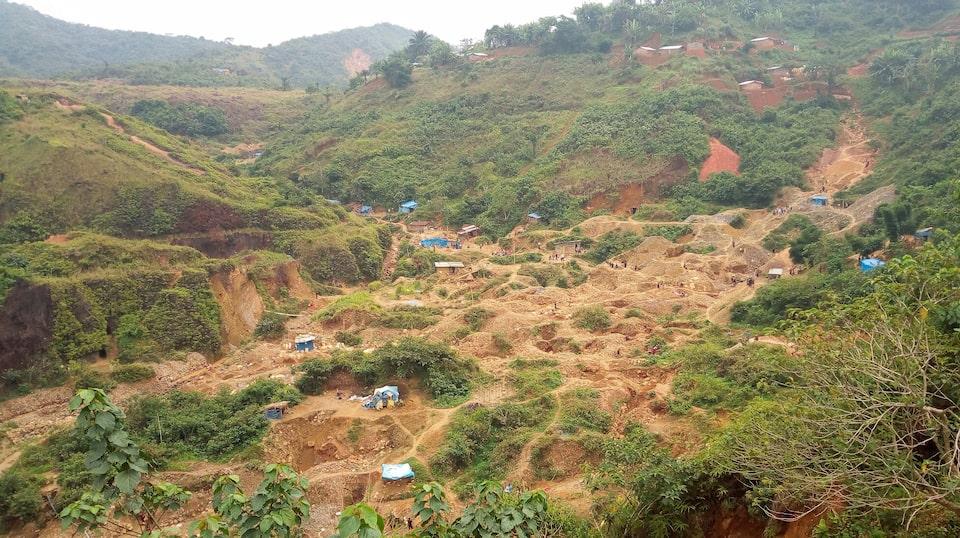
KINSHASA, April 29 (Reuters) - Belgium is open to deeper involvement in Democratic Republic of Congo's minerals sector, its foreign minister said on a visit to the former Belgian colony, which is seeking to diversify its investment partners. The vast Central African nation is home to large reserves of copper, cobalt, lithium and uranium among other minerals, but chronic instability has long been an obstacle to the foreign investment needed to fully develop them. Sign up here. Kinshasa is currently on a push to attract new players to the sector and talks are already under way with Washington after a Congolese senator pitching a minerals-for-security deal contacted U.S. officials. Asked by Reuters on Monday about possible interest in Congolese minerals, Foreign Affairs Minister Maxime Prevot said Belgium had firms with the know-how to ramp up its role in the sector. "We have globally recognised expertise with players like Umicore and John Cockerill, who have the capacity to process all these rare critical materials," he said. "If one day the opportunity arises to also be an investment partner, we will not pull back," he added. Despite China's dominance, Belgian firms have been involved in mining, processing and trading Congolese cobalt, copper and diamonds for decades. Belgium-based global materials technology group Umicore (UMI.BR) , opens new tab signed a deal with state miner Gecamines last year to ship germanium concentrates to Europe. Prevot said Belgium's approach to working with Congo was good for both countries, contrasting it with how some other partners operated. "We observe the motivations of other international actors that can sometimes have a more transactional approach," he said. Prevot was due to visit the city of Beni on Tuesday as part of a trip intended to draw attention to serious human rights issues, particularly in Congo's eastern provinces where the army is facing an offensive by Rwandan-backed M23 rebels. https://www.reuters.com/markets/commodities/belgium-open-bigger-role-congo-minerals-sector-foreign-minister-says-2025-04-29/