2025-04-29 11:13
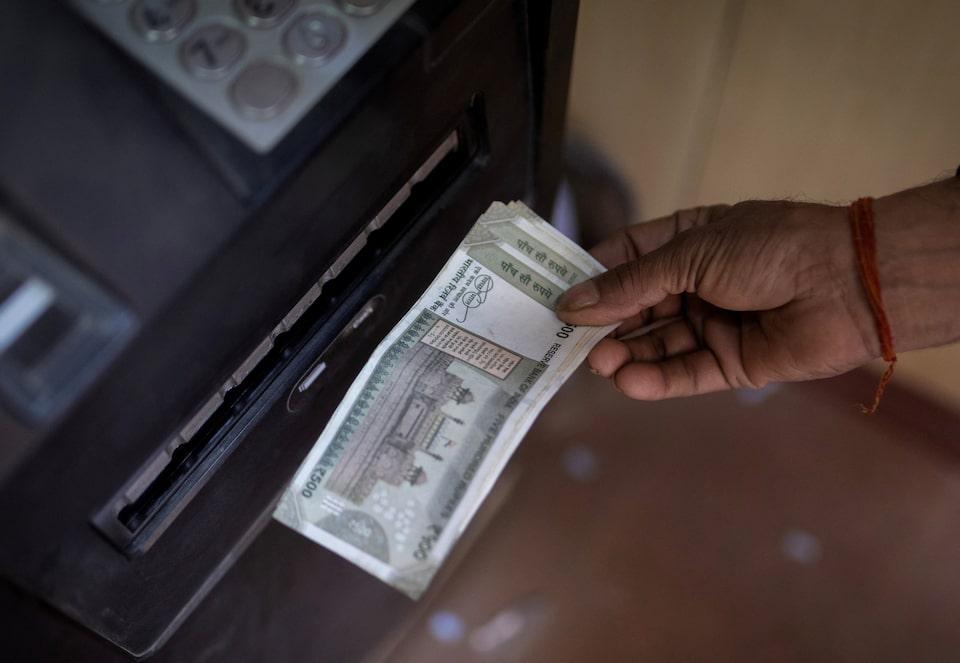
April 29 (Reuters) - Burkina Faso plans to take control of more foreign-owned industrial mines, its prime minister said, as the West African nation seeks a bigger share of revenue from its resources. Like neighbours Mali and Niger, Burkina Faso is pushing for greater control over its resources and revised its mining code last year, creating a new state mining company, Société de Participation Minière du Burkina (SOPAMIB). Sign up here. It used SOPAMIB to gain control of two industrial gold mines previously owned by a London-listed Endeavour Mining (EDV.L) , opens new tab in a deal finalised late last year. Prime Minister Jean Emmanuel Ouédraogo said in a speech broadcast on national television late on Monday that the government planned to further expand control over its resources. "SOPAMIB has already recovered two industrial mines, notably Boungou and Wahgnion, and this will continue," he said. The mining sector reforms have worried investors. But Burkina Faso's military-led government says change is needed to maximize revenue from the country's vast gold reserves and reboot an economy hit by insecurity. Gold prices have risen by over 25% this year, fuelled by geopolitical instability and U.S. President Donald Trump'serratic trade policies. Burkina Faso, which has been fighting Islamist militants since 2015, produced over 57 tons in 2023. Mining companies operating there include Canada's IAMGOLD (IMG.TO) , opens new tab and Australia's West African Resources Ltd (WAF.AX) , opens new tab. The new mining code prioritises national expertise and local suppliers, part of what the government calls a revolution in how its mineral wealth is managed. Burkina Faso's relations with traditional Western allies have deteriorated since the military seized power in two coups in 2022, and it has pivoted toward Russia for security and economic cooperation. Last week, it granted an industrial mining licence to Russian miner Nordgold for a gold project in the Kourweogo province of Burkina's Plateau-Central region. Ouédraogo said existing state-controlled mining initiatives have been successful, with the National Precious Substances Company collecting over eight tons of gold in 2024 and more than 11 tons in the first quarter of this year, primarily from artisanal sources. The government is also establishing a national gold reserve for the first time in its history, he added. "We should see more of the benefits of mining in Burkina Faso not just the consequences that the population suffers," he said. https://www.reuters.com/world/africa/burkina-faso-nationalise-more-industrial-mines-prime-minister-says-2025-04-29/
2025-04-29 11:10
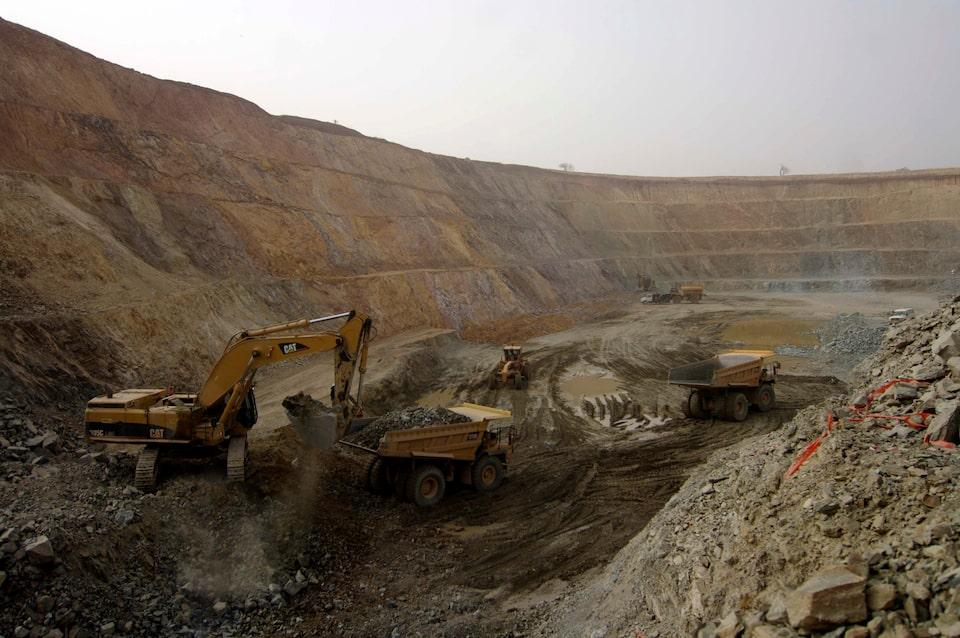
Aim to reduce Africa's $30 bln annual fuel import bill Programme supports regional processing capacity, refineries April 29 (Reuters) - African Export-Import Bank has rolled out a $3 billion revolving credit line that will enable African and Caribbean buyers to source petrol, diesel, jet fuel and other products from refineries on the continent more easily. The bank expects the facility to provide $10–14 billion of trade finance over its first three years and help chip away at the region's roughly $30 billion annual fuel import bill, it said. Sign up here. Both oil export- and import-dependent economies have been whipsawed this year by a sharp fall in crude prices and a jump in freight costs. Brent crude is down more than 20% since mid-January on supply dynamics and on fears that a global trade war will sap demand. Meanwhile, insurance costs for ships using the Red Sea have climbed again after renewed Houthi attacks prompted U.S. airstrikes on Yemen in March, adding hundreds of thousands of dollars to a typical fuel cargo. By shifting purchases to nearby refineries and locking in bank credit up-front, governments can limit the budget shock from such external swings. The Revolving Intra-African Oil Import Financing Programme is rooted in Afreximbank’s recent push to boost regional processing capacity. The Cairo-based lender is the largest financier of Nigeria’s 650,000-barrel-per-day Dangote refinery. It has also helped overhaul Nigeria's Port Harcourt oil complex and is arranging funding for plants in Angola and Ivory Coast too. These ventures could add around 1.3 million bpd of refining capacity. "The programme will galvanize efforts towards making the Gulf of Guinea a key refining hub," Afreximbank President Benedict Oramah said in a statement on Monday. Afreximbank will issue or confirm letters of credit, discount trade instruments and provide advances to energy ministries, state fuel importers and private traders that buy from African refineries. The credit line also serves as a practical test bed for the African Continental Free Trade Area, which seeks to deepen regional commerce and industrialisation. Afreximbank will also be a controlling shareholder of Atmin, a new trading house set up by former Shell oil traders to focus on African oil trading, two trading sources said. https://www.reuters.com/business/energy/afreximbank-rolls-out-3-bln-credit-line-cut-africas-fuel-imports-2025-04-29/

2025-04-29 11:09
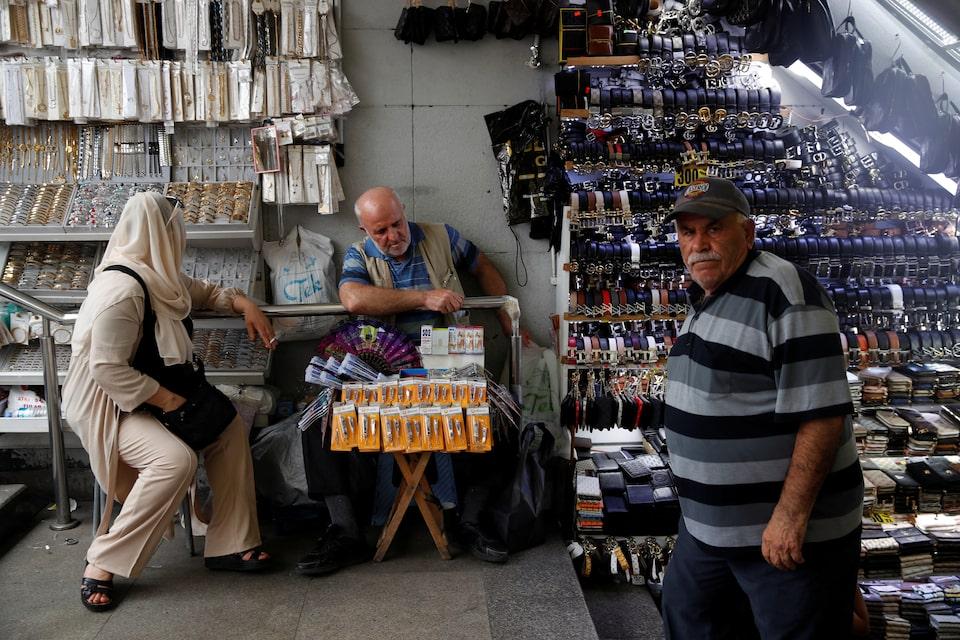
Open for monthly poll Open for annual poll Inflation data to be announced on May 5 ISTANBUL, April 29 (Reuters) - Turkey's monthly inflation rate is expected to climb to 3.1% in April, driven by energy prices and lira depreciation following the imprisonment of President Tayyip Erdogan's main political rival, a Reuters poll showed on Tuesday. The median estimate of 11 economists saw monthly inflation climbing to 3.1% in April from 2.46% in March. Forecasts ranged from 2.80% to 3.60%. Year-on-year, inflation is seen sliding to 38%, with forecasts ranging between 37.6% and 38.7%. Sign up here. In April, Turkey raised electricity prices by 25% for residential use and 10% for industrial use while natural gas prices were increased by 20% for industrial use and 24.2% for electricity producers. Economists calculate that due to the high weighting of energy prices in the inflation basket the recent hike would amount to a direct impact of some 0.5 points on inflation. Economists said unprocessed food prices like fruits and red meat prices, as well as automotive prices which are directly impacted by currency volatility, are likely to impact the April inflation rise. In March, Turkish assets suffered, with the lira dropping as much as 12% to touch 42 against the U.S. dollar after Istanbul Mayor Ekrem Imamoglu - Erdogan's chief political rival - jailed over graft charges pending a trial. The currency later recovered most of those losses thanks to market stabilising steps by the central bank. It has since remained near 38, some 4.6% weaker than before the imprisonment. The central bank tightened its policy rate by 350 basis points, set the lending rate at 49% and sold some $50 billion in foreign reserves in the wake of the mayor's arrest, data shows. The moves amount to 700 basis point of policy tightening since the arrest to counter market volatility. Before that, the central bank had begun an easing cycle and gradually cut its policy rate to 42.5% as inflation fell from the level of more than 75% that it reached in May 2024. In March, month-on-month inflation rose 2.46%, standing below expectations and slowed to 38.1% annually. According to the median of the poll, economists expect inflation to fall to 30.5% at the end of this year. In the March poll, the end-year forecast stood at 30%. In the minutes of its monetary policy committee meeting, the central bank said leading indicators show an increase in the underlying trend of inflation for April adding that price increases were observed in durable consumption goods with high exchange rate pass-through. Finance Minister Mehmet Simsek said that although inflation expectations have been deteriorated the government does not expect permanent damage adding that inflation is seen to remain within the central bank's target path. The central bank's year-end inflation forecast range midpoint is 24% and the upper band is 29%. The Turkish Statistical Institute will release April inflation data at 0700 GMT on May 5. https://www.reuters.com/world/middle-east/turkish-april-inflation-seen-31-energy-prices-fx-pass-through-2025-04-29/
2025-04-29 11:06
SINGAPORE, April 29 (Reuters) - Chinese offshore oil and gas major CNOOC Ltd's (600938.SS) , opens new tab first-quarter net profit fell 7.9%, weighed down by weaker oil prices, though higher output helped stem the decline. Net income for January-March was 36.56 billion yuan ($5.03 billion), versus 39.7 billion yuan in the same period last year, according to a company filing with the Hong Kong Stock Exchange on Tuesday. Sign up here. CNOOC, the listed arm of the state oil giant China National Offshore Oil Company, reported a 4.1% fall in revenue to 106.85 billion yuan in the first quarter due to lower oil prices. Its total net production was 188.8 million barrels of oil equivalent (boe), up 4.8% on the year. Domestic net output grew 6.2% benefiting from major oilfields such as Bozhong 19-6 in the Bohai Bay, while output from international operations rose 1.9%, lifted by growing output at Brazil's Mero-2 and others. CNOOC in January set its 2025 net production target at a record between 760 million and 780 million BOE, or 5.6% to 8.3% above 2024's levels. As one of the world's most cost-efficient offshore producers, all-in production costs for the first quarter were $27.03 a barrel, versus $27.59 in the corresponding period last year. At an earnings briefing, company President Yan Hongtao said the Trump administration's trade policies are having a major impact on global oil market, causing a price decline as the market worries about a global economic recession. However, if oil prices keep sliding, it could create opportunities for lower-cost and cash-rich players like CNOOC to acquire companies that can't sustain low oil, Yan said. Separately, CNOOC said it's expecting a court hearing in May on the arbitration of Guyana oil assets and the company stands ready to defend its best interests. CNOOC, a minority partner in the Exxon Mobil-led consortium developing lucrative Guyana oilfields, has joined Exxon challenging Chevron's bid for Hess in court, saying that they have first right of refusal on Hess's equity in the project. CNOOC's first-quarter capital spending amounted to 27.7 billion yuan, down 4.5% on the year. Its Hong Kong listed shares closed down 1.53% on Tuesday at HK$16.74, having lost 11% so far this year. ($1 = 7.2673 Chinese yuan renminbi) https://www.reuters.com/sustainability/climate-energy/cnoocs-q1-profit-down-79-weaker-oil-prices-output-grows-2025-04-29/

2025-04-29 10:40
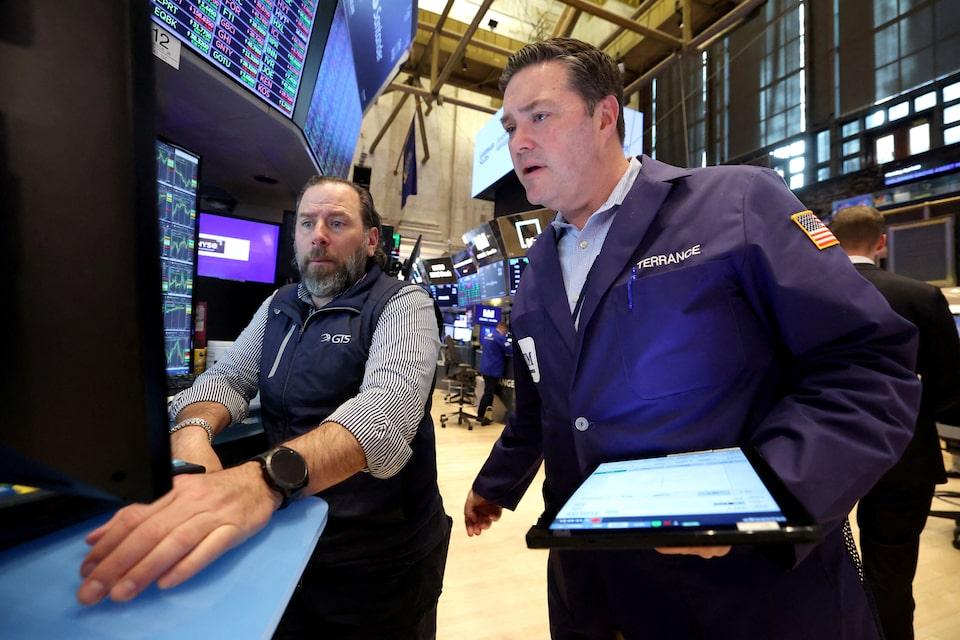
LONDON, April 29 (Reuters) - What matters in U.S. and global markets today By Mike Dolan , opens new tab, Editor-At-Large, Financial Industry and Financial Markets Sign up here. A calmer mood has pervaded world markets this week, as a torrent of upcoming U.S. economic health reports and corporate updates are corralling stocks and hopes are rising for trade war de-escalation. But anxieties remain about volatile policymaking in Washington. In today's column, I look at the action the Trump administration could take that could truly create a dollar shock. Now onto the market news. Today's Market Minute * Canadian Prime Minister Mark Carney's Liberals retained power in the country's election on Monday. "Our old relationship with the United States, a relationship based on steadily increasing integration, is over," Carney said in a victory speech in Ottawa. * President Donald Trump's administration will seek to reduce the impact of his automotive tariffs by alleviating some duties imposed on foreign parts in domestically manufactured cars, officials said. * BP on Tuesday reported a deeper-than-expected 48% drop in net profit to $1.4 billion on weaker refining and gas trading and announced the departure of its strategy chief as it tries to shore up investor confidence. * HSBC warned that loan demand and credit quality could suffer from the broader fallout of U.S. President Donald Trump's global trade war, signalling tougher times for trade-focused banks even as the lender's first quarter profit beat forecasts. * Some third-party Amazon merchants who previously sold China-made goods during the online retailer's premier July shopping event are sitting it out this year or reducing the amount of discounted merchandise they offer. Trade fears ebb, Canada's Carney returns As Wall Street awaits numbers on GDP, inflation, jobs and megacap earnings, the latest twists in the tariff standoff have been in a positive direction. Washington appears to be rowing back some of the tensions, and there is now the prospect of at least some bilateral deals emerging over the coming week. President Donald Trump's administration will move to reduce the impact of his automotive tariffs on Tuesday, according to officials, by ensuring car companies paying tariffs will not be charged other levies, such as those on steel and aluminum. Meanwhile, Treasury Secretary Scott Bessent said many top trading partners of the United States had made "very good" proposals to avert U.S. tariffs. He also noted that one of the first deals to be signed would likely be with India this week or next. These slightly more positive soundings were enough to turn around intraday losses for the main U.S. stock indexes on Monday, and the S&P 500 (.SPX) , opens new tab ended flat, with futures a touch higher before Tuesday's bell. North of the border, one clear political implication of Trump's trade and diplomatic policies also unfolded overnight. Canadian Prime Minister Mark Carney was set to return as the country's leader as his Liberal Party, miles behind in opinion polls as recently as January, looks set to be the biggest party after Monday's election, albeit just shy of an overall majority. The Canadian dollar , which has appreciated more than 3% against the greenback this month and almost 4% for the year so far, held firm as the results streamed in. Back on Wall Street, there was a heavy diary slated for Tuesday, including April consumer confidence readouts and March trade data. March job openings numbers also kick off the week's big labor market tallies. U.S. Treasuries rallied on Monday in advance, with a dour manufacturing survey from the Dallas Federal Reserve for April acting as a tailwind by nudging up bets for Fed rate cuts a tad. Staying with Treasuries, 2- and 10-year yields hit their lowest in more than three weeks on Monday, although they backed up a bit today. The dollar (.DXY) , opens new tab - seemingly hurt whether Treasury yields go up or down these days - ebbed again, most obviously against China's yuan . Sterling also hit a more than three-year high against the dollar on Monday, with positive momentum behind UK stocks (.FTMC) , opens new tab, (.FTSE) , opens new tab building and the Bank of England dragging its feet on interest rate cuts. It has ticked back only marginally today. The rally in Treasuries came despite what appeared to be worrying U.S. government borrowing projections. The Treasury said on Monday it expects to borrow $514 billion in the second quarter, $391 billion higher than its February estimate, mainly due to a lower cash balance at the beginning of the quarter and projected lower net cash flows. These figures likely do not include any revenues from tariffs, though these are still highly uncertain, and markets assume the Treasury will leave most of its auction sizes unchanged for the fifth straight quarter when it announces its refunding plans on Wednesday. In Europe, most of the market attention <>STOXX> was on the earnings season there. Shares of HSBC (HSBA.L) , opens new tab rose 2.5% after the London-based lender launched a $3 billion share buyback, while Deutsche Bank (DBKGn.DE) , opens new tab advanced almost 3% after Germany's largest lender posted a 39% rise in first-quarter profit. BP BP.L was a darker story, with its shares down 3.5% after the oil giant reported a deeper-than-expected 48% drop in net profit to $1.4 billion on weaker refining and gas trading. Finally, make sure to check out my column today, where I turn to the U.S. and consider what could happen if the Trump administration were to take the previously unthinkable step of leaving the IMF. Chart of the day Surprise, surprise! Economic "surprise" indexes that measure incoming economic data relative to consensus forecasts show that U.S. gauges are marginally back in positive territory for the first time since mid-February. The rebound in the index likely says as much about the extent to which forecasts have been slashed due to tariff-related uncertainties as it does about any upturn in activity per se. But financial markets price expectations, so the fact that expectations are no longer being undercut by the actual numbers has helped calm the horses, at least for now. Today's events to watch * US April consumer confidence, March international goods trade balance, March retail/wholesale inventories, March JOLTS hob openings data, February house prices, Dallas Federal Reserve April service sector survey * Canada election results stream in * European Central Bank conference on spillovers from monetary policy, with ECB board member Piero Cipollone and ECB supervisor Sharon Donnery; Bank of England Deputy Governor Dave Ramsden speaks * EU Trade Commissioner Maros Sefcovic meets UK Foreign Minister David Lammy and Trade Secretary Jonathan Reynolds in London * U.S. corporate earnings: Pfizer, Corning, Regeneron, Visa, Starbucks, UPS, Coca-Cola, Edison, Kraft Heinz, General Motors, Honeywell, PPG, Ecolab, S&PGlobal First Solar, Hilton Worldwide, Paccar, Seagate, Sysco, Co-Star, Sherwin Williams, American Tower, AO Smith, Altria, Booking, Caesars Entertainment, Regency Centers, Royal Caribbean, Incyte, XYlem, Zebra, Veralto, Essex Property, Entergy, Expand, Mondelez, ONEOK Opinions expressed are those of the author. They do not reflect the views of Reuters News, which, under the Trust Principles , opens new tab, is committed to integrity, independence, and freedom from bias. https://www.reuters.com/markets/us/us-trade-fears-ebb-canadas-carney-returns-2025-04-29/
2025-04-29 10:20
MUMBAI, April 29 (Reuters) - The Indian rupee swung sharply before ending lower on Tuesday as the possibility of rising tensions between India and Pakistan remained front and centre for traders, pushing the currency's near-dated implied volatility to an over two-year high. The rupee jumped out of the blocks to touch its year-to-date high of 84.95 per U.S. dollar before swinging to its day's low of 85.3875. It ended down 0.3% at 85.2625. Sign up here. In contrast, its regional peers were hoisted by hopes of softening global trade tensions. China's yuan strengthened to a one-month high, while the Malaysian ringgit was up nearly 1%. Nervousness over heightened tensions between New Delhi and Islamabad after a deadly militant attack on tourists in Kashmir last week kept the rupee under pressure though, with traders reacting to unverified news reports of military operations. More than half of the tourist destinations in the insurgency-torn Kashmir region have been closed to the public from Tuesday, per a government order. "No one knows how it (USD/INR) will behave. So, better to reduce risk," a Singapore-based currency trader at a bank said. The jitters have also pushed up the rupee's 1-month implied volatility to 5.5%, its highest since March 2023. While sentiment is slightly positive for the rupee given the pick up in portfolio inflows, geopolitical flare-ups remain a risk for the currency, said Dilip Parmar, a forex research analyst at HDFC Securities. If the tensions escalate, Parmar reckons the rupee will head towards 85.70. Meanwhile, the dollar index was up 0.2% at 99.2, with investors keeping a keen eye on the slew of U.S. economic data due this week. "A week full of data releases may offer multiple opportunities to re-enter dollar shorts after some positioning rebalancing last week," ING Bank said in a note. https://www.reuters.com/world/india/rupee-hit-by-geopolitical-jitters-volatility-jumps-two-year-peak-2025-04-29/