2025-04-29 10:01
China expands cross-border QR code network Swap lines swell to record 4.3 trln yuan Cross-border yuan payments hit record in March SHANGHAI/SINGAPORE, April 29 (Reuters) - As Chinese President Xi Jinping toured Southeast Asia this month to forge closer ties against higher U.S. tariffs, the People's Bank of China was seizing a moment of confusion and disruption in global trade to promote greater usage of the yuan. It won't de-throne the dollar, but as cross-border yuan payments surged to a record in March, analysts say there is renewed appetite for a global yuan as aggressive tariffs shake faith in the U.S. currency and other U.S. assets. Sign up here. In April, PBOC-controlled financial services firm China UnionPay strengthened its payment network in Vietnam and Cambodia, while the central bank announced steps to promote cross-border yuan settlement and other financial services. More specifically,the QR-code payments UnionPay was promoting in the Southeastern countries should facilitate transactions for tourists and small businesses, reducing reliance on the dollar. The UnionPay deals build out a network that now extends to more than 30 countries outside China, and represent one end of a push to expand the yuan's reach as an international trading, spending and investment currency. At the other end of the push are PBOC's offshore yuan standby currency swaps with other central banks that hit a record 4.3 trillion yuan ($591.2 billion) by value in February, cross-border commodity trades settling in digital yuan and efforts to price everything from oil to gold in the Chinese currency. The moves also highlight China's desire for a financial architecture independent of the West - and U.S. banks - at an inflection point for markets as U.S. President Donald Trump spurns his own trading partners and drives a scramble to reroute trade. "The United States weaponising tariffs has cast doubt over U.S. asset safety, undercut trust in the dollar, and shaken the greenback's global status," E. Yongjian, vice general manager of Bank of Communications' research department told a seminar on yuan internationalisation. "That, in turn, has made yuan assets more attractive, and will help broaden cross-border use of the Chinese currency." China's central bank announced steps this month to beef up cross-border financial services in Shanghai and encouraged companies to prioritise yuan usage in payment and settlement. The PBOC also pledged to strengthen its homegrown cross-border yuan payment system CIPS, and push forward with the application of blockchain - the technology on which digital yuan is based. Chinese companies which are stepping up overseas investment are demanding better financial systems as "unilateralism, protectionalism ... and higher tariffs impact the global supply chain," PBOC vice governor Lu Lei told a press conference this month. 'GOOD OPPORTUNITY' China has long harboured ambitions for the yuan to be a global currency, similar to the euro or dollar and reflective of the importance of the world's second-biggest economy. But progress has always been hampered by unwillingness to open the capital account, which limits the usefulness of owning the yuan if it can't be freely moved out of China and around the world. There's no sign of that changing. But progress on other fronts, where it has gained in places such as Russia and other trading partners, stands to accelerate. In his first 100 days in office Trump has put the highest tariff walls around the U.S. economy in more than a century and upended parts of the world order that Washington helped build, raising the prospect of recession. Meanwhile, China has sought to shore up trade with other countries. "If the U.S. enters recession, and China gains the upper hand in this round of Sino-U.S. rivalry - a scenario dubbed 'east rising and west declining' - that's indeed good for the yuan over the long term," Qu Fengjie, researcher at the National Development and Reform Commission (NDRC), the top planning agency, told a recent seminar. "China can break the old order of the international monetary system." To be sure, no currency can yet come close to challenging the dollar, which comprises nearly half of global payments, according to SWIFT, and more than 80% of trade financing. The yuan has risen to fourth in global payments, but it is a distant ranking, comprising 4%, and some say distrust in the dollar is likely to drive up usage of other currencies, in particular the euro, well before the yuan. "The yuan has been weak for many years, so there's no clear upside" to hold the Chinese currency for investors or central banks, said Alicia Garcia Herrero, chief Asia Pacific economist at Natixis. Still, she sees China's deepening ties with other emerging markets and "Global South" countries as likely to drive yuan use and there are signs of demand. In April, Argentina renewed a $5 billion portion of a yuan swap line and Pakistan is lobbying to expand its own yuan swap line. Bilateral currency swaps can facilitate trade and investment and are a useful addition to the global financial safety net, Governor Pan Gongsheng said last year. "The U.S.-dominated global monetary system is getting more and more fragile," said Tu Yonghong, finance professor of Renmin University of China. China should "grasp this good opportunity". "This will boost use of the yuan, given the size of China's trade with other countries." ($1 = 7.2735 Chinese yuan renminbi) https://www.reuters.com/world/china/china-ramps-up-global-yuan-push-seizing-retreating-dollar-2025-04-29/
2025-04-29 10:00
LONDON, April 29 (Reuters) - The U.S. dollar has suffered its worst start to any year since 1989 as the Trump administration has put forward once unthinkable economic policies, unnerving global investors. But one proposed shift would be of a different order altogether: an exit by the U.S. from the International Monetary Fund. Sign up here. Sweeping global trade barriers, broken alliances and blistering verbal attacks on the U.S. central bank and other federal institutions have taken a toll on what many consider an already over-valued U.S. currency and assets. In the process, the dollar index (.DXY) , opens new tab has shed 8.4% so far in 2025. That compounds heavy Wall Street losses for global funds that have driven U.S. markets higher for more than a decade. Consider that dollar weakness transformed a 6% drop in the S&P 500 index (.SPX) , opens new tab into a 15% hit for unhedged euro-based investors, who would have also seen modest Treasury losses in dollar terms turned into drops of almost 10%. If nothing else, the fog of uncertainty surrounding Washington has seriously dented the attraction of U.S. Treasuries and the dollar as predictable havens amid global trouble. But the impact of an IMF exit on the greenback would go far beyond frayed trust or investment rethinks. That's because this step - openly advocated by the controversial "Project 2025" , opens new tab conservative wish-list for President Donald Trump's second administration - would mechanically unravel overseas dollar reserve holdings. Many observers breathed sighs of relief at the IMF and World Bank spring meetings last week when Treasury Secretary Scott Bessent merely demanded reform of these multilateral institutions rather than broaching U.S. withdrawal. But Project 2025's "Mandate for Leadership" document, compiled ahead of last year's U.S. elections by the Heritage Foundation, held nothing back about what it thinks should happen with what it termed "expensive middle men". "The Treasury Department plays an important role in these international institutions and should force reforms and new policies," it stated. "The U.S., however, should withdraw from both the World Bank and the IMF and terminate its financial contribution to both institutions." Trump doubled down on that idea after his inauguration in January, issuing one executive order , opens new tab on membership of "all international intergovernmental organizations" that set in motion a 180-day review to "provide recommendations as to whether the United States should withdraw from any such organizations, conventions, or treaties." That review is due in July. Trump's withdrawal from the Paris climate accord, World Health Organization and effective exit from the World Trade Organization already speak clearly to the administration's wider intentions. 'OWN GOAL' Hesitation about departure from the IMF may be related to the scale of the financial disentanglement likely involved - one with potentially ominous implications for the dollar's global reserve status and its value on open exchanges. In a op-ed for the Financial Times last week, former Treasury Under Secretary for International Affairs Ted Truman detailed the gigantic financial implications of a U.S. exit from the IMF that he said would be a "significant own goal" and "dramatically diminish" the dollar's global role. Truman said the vast bulk of IMF operations is conducted in dollars, as that's what distressed sovereign borrowers typically need and seek, and countries as a result pool their dollar reserves. He argues that the dollar would be excluded from use by the fund if the U.S. were no longer a member, raising the question: "What nation would want to hold assets in a currency that cannot be used in IMF transactions issued by a country that has abdicated its international financial responsibilities?" The IMF's unit of account - Special Drawing Rights , opens new tab (SDR) - is a structure of five main currencies. The dollar currently holds the biggest weight at 43%, the euro 29%, the yuan 12%, the yen 8% and sterling 7% - and global reserves piles are often held roughly in those measures. A U.S. exit would see redistribution of shares and voting rights around the biggest remaining members, with the yuan and the euro set for much higher weightings in the SDR, which would expand those currencies' international roles as a result. Consequently, what to date has been a glacial drift away from dollar reserve holdings over the past decade could accelerate sharply. "Withdrawal from the IMF would spell the end of America's status as the principal reserve provider to the rest of the world," Truman wrote. The exchange rate implication of that could be huge. While a dollar devaluation on that scale may be welcomed by many administration advisers who see it as another way to regain global competitiveness for U.S. goods, the big question - much like higher import tariffs - is whether that is worth the price of massive U.S. financial disruption. It's possible the whole IMF membership question will get sidelined. But the prospect will remain another powerful weight on the dollar as long as it lingers. The opinions expressed here are those of the author, a columnist for Reuters https://www.reuters.com/markets/currencies/us-exit-imf-would-be-true-dollar-shock-mike-dolan-2025-04-29/
2025-04-29 09:41
April 29 (Reuters) - Sterling edged lower versus the dollar but was close to its highest level in over three years as markets await U.S. economic data for direction after the sharp selloff in the greenback. The latest U.S. jobs report will be a key driver for markets, along with preliminary first-quarter growth figures and core PCE data — the Fed's favoured inflation gauge. Sign up here. The greenback recouped some of its losses on Tuesday, supported by reports that the U.S. administration may ease planned tariffs, although investors remained worried about a possible full-blown trade war between the U.S. and China. The pound was still on track for its strongest monthly performance against the dollar since late 2023. It was down 0.20% at $1.3409 but still set for a gain of 3.8% in April, the most in a month since November 2023. It hit $1.3444 on Monday, its highest level since February 2022. Analysts flagged that last week’s economic data provided mixed signals about the British economy. March retail sales surprised strongly to the upside, suggesting resilient domestic demand, while worse-than-expected PMI surveys were affected by the market turmoil after U.S. President Donald Trump's tariff announcement on April 2. The euro was down 0.1% at 84.84 pence , its lowest level since April 7. It was at 82.50 pence in early March before Germany announced a sharp rise in public investments supporting the single currency. "We think that sterling's relative underperformance vs the euro is not justified by fundamentals, including high interest rates, relative economic insulation from Trump's tariffs, and prospects for closet integration with the European Union," said Enrique Diaz Alvarez, chief financial risk officer at Ebury. British finance minister Rachel Reeves recently said that improving business ties with the EU was "arguably even more important" than a trade deal with the United States. Britain aims to ease the impact of U.S. tariffs by striking an economic agreement with the Trump administration that could foster more tech investment, while working to remove some post-Brexit trade barriers with the EU. https://www.reuters.com/world/uk/sterling-close-38-month-high-versus-dollar-2025-04-29/
2025-04-29 09:19
LONDON, April 29 (Reuters) - The chief executive of AstraZeneca (AZN.L) , opens new tab said on Tuesday that the drugmaker will maintain its 2025 sales guidance even if the U.S. levies tariffs on pharma products made in the European Union, provided they are in line with rates for other sectors. Pascal Soriot was speaking to journalists on a call after the company reported first-quarter results in which revenues missed analyst expectations, pushing shares down by more than 4%. Sign up here. https://www.reuters.com/business/healthcare-pharmaceuticals/astrazeneca-keep-2025-forecast-if-us-pharmaceutical-tariffs-line-with-other-2025-04-29/

2025-04-29 08:27
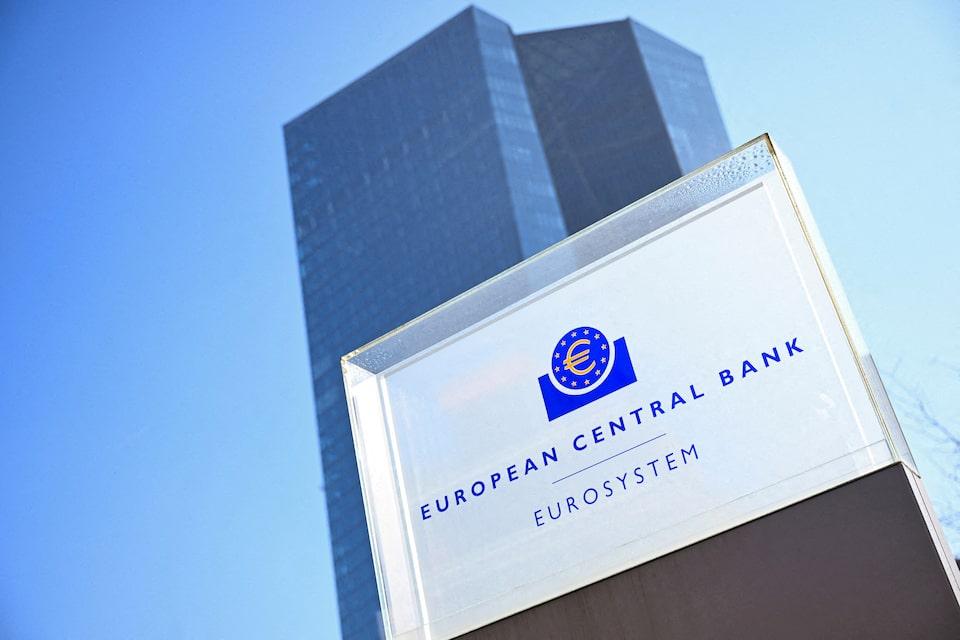
FRANKFURT, April 29 (Reuters) - European Central Bank supervisor Sharon Donnery said on Tuesday she saw scope for making banking regulation simpler, but warned against watering it down. The ECB has launched a task force, chaired by Vice President Luis de Guindos, that will look for ways of simplifying bank rules. Donnery is the third central bank representative this week to stress this should not amount to deregulation. Sign up here. "We must never sacrifice the resilience that was so hard-won in the aftermath of the global financial crisis – neither in the name of alleged competitiveness, nor under the banner of simplification," she said. "This is a red line. And it must remain one." De Guindos struck a similar tone in the European Parliament on Monday and Finnish ECB governor Olli Rehn, also a member of the task force, said banks should maintain "sturdy" capital buffers. Donnery stressed the regulatory framework was already less strict for "small and non-complex" banks although she saw scope for "more proportionality". "There may be scope for more proportionality in the European regulatory framework," she said. "But let me reiterate: rules should be as simple as they can be, but no simpler." Donnery also said the regulation should be clearer about which investors bear losses when a bank goes under. "Market participants’ ability to understand the consequences of the regulatory regime – for instance with regard to loss-sharing arrangements and supervisory restrictions when a bank’s solvency declines – can affect their willingness to invest," she said. "And even in normal times, monitoring compliance with multiple regulatory metrics and understanding all their potential interactions can pose operational costs and challenges for banks and supervisors alike," Donnery added. https://www.reuters.com/sustainability/boards-policy-regulation/ecbs-donnery-warns-against-watering-down-banking-rules-2025-04-29/
2025-04-29 07:45
Profit of $1.38 billion misses analysts' $1.53 billion Profit down from $2.7 billion a year earlier CEO signals option for further spending cuts Announces $750 million in share buybacks Shares down 4% after results LONDON, April 29 (Reuters) - BP (BP.L) , opens new tab on Tuesday reported a deeper-than-expected 48% drop in net profit to $1.4 billion on weaker refining and gas trading and announced the departure of its strategy chief as it tries to shore up investor confidence. CEO Murray Auchincloss is under pressure from activist investor Elliott to improve profitability and cut costs. He has announced plans to sell $20 billion of assets through to 2027. Sign up here. The British energy giant is abandoning a move to slash hydrocarbon production and boost its low-carbon business, plans pushed by strategy and sustainability chief Giulia Chierchia who announced on Tuesday that she would step down on June 1. U.S. fund manager Elliott Investment Management had wanted a change of strategy chief as it seeks higher free cash flow through deeper cuts to spending and costs, sources familiar with the matter told Reuters. BP's shares have lagged peers since its foray into renewables under previous CEO Bernard Looney who brought Chierchia into BP. They were down more than 4% after Tuesday's profit miss, compared with a 1% fall in a wider index of energy companies (.SXEP) , opens new tab. BP posted a first-quarter underlying replacement cost profit, or adjusted net income, of $1.38 billion, below the $1.53 billion expected by analysts in a company-provided poll. That was down from $2.7 billion a year earlier. Profit at its gas and low-carbon unit was down around 40%, hit by weaker trading and lower production after asset sales. Its customers and products business was down by around 47%. BP said it expects to conduct a heavy refinery maintenance programme in the second quarter, which likely means lower output. Amid an industry-wide fall in refining profitability, BP's refining margins averaged $15.20 a barrel in the first quarter, down from $20.60 a year earlier. BP is buying back $750 million in shares for the quarter, at the low end of its guided range. That marks a slowdown from buybacks that totalled $7.1 billion last year. It increased its outlook for asset sales this year to $3-$4 billion from $3 billion. It said it would spend $14.5 billion this year, around $500 million less than its previous guidance, and reiterated its $13-$15 billion target for next year and 2027. Global benchmark Brent crude prices averaged around $75 a barrel during the January-March quarter, compared with around $87 a year earlier. Earlier this month, oil prices went into free fall after U.S. President Donald Trump announced tariffs on trading partners and Brent is now hovering around $66 a barrel. "In the event of sustainably lower prices, we would expect deflation to become evident across our capital plans and we see around $2.5 billion of further capital flexibility, should we require it," Auchincloss said in a presentation. "This is equivalent to around $10 per barrel of oil price sensitivity." Elliott has increased its stake in BP to just over 5%, placing it between top shareholders BlackRock and Vanguard, LSEG data shows. https://www.reuters.com/business/energy/bp-reports-lower-than-expected-profit-138-billion-2025-04-29/