2025-04-28 23:19
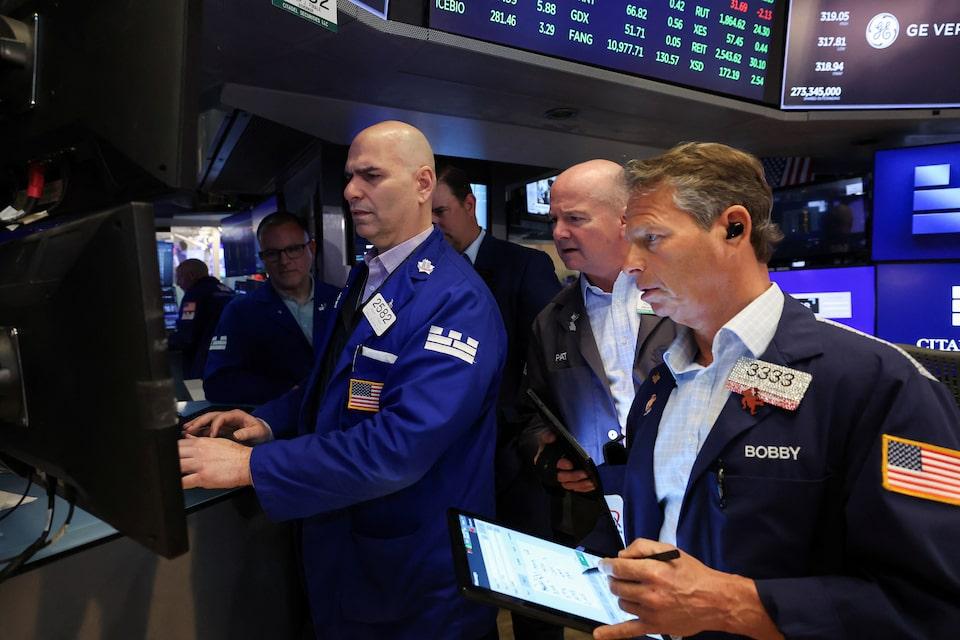
180 S&P 500 components set to report results this week Megacaps Nvidia and Amazon weigh on S&P, Nasdaq S&P still down more than 10% from February record Indexes: Dow up 0.28%, S&P up 0.06%, Nasdaq off 0.1% NEW YORK, April 28 (Reuters) - The S&P 500 closed a choppy session nearly unchanged on Monday, weighed down by megacaps as investors awaited several catalysts including key economic data and earnings from some of the largest U.S. companies. Megacaps Nvidia (NVDA.O) , opens new tab, off 2.1%, and Amazon (AMZN.O) , opens new tab, down 0.7%, were the primary drags on the benchmark S&P 500 index and also kept the Nasdaq in negative territory. Sign up here. The Wall Street Journal reported on Sunday that China's Huawei Technologies was preparing to test its artificial-intelligence processor, which it hopes can replace some of Nvidia's higher-end products. Of the so-called Magnificent Seven heavyweight companies, Amazon is scheduled to report quarterly results later this week, along with Apple (AAPL.O) , opens new tab, Meta Platforms (META.O) , opens new tab and Microsoft (MSFT.O) , opens new tab. Apple, up 0.4%, and Meta up 0.5%, both helped counter the declines in Nvidia and Amazon. In all, 180 S&P 500 components are set to report earnings this week, and investors are likely to closely monitor how U.S. President Donald Trump's new tariffs could affect future profits. "We're going to get four of the Mag 7 reporting this week and so this is a very important earnings week," said Jack Ablin, chief investment officer at Cresset Capital in Chicago. "I'd love to hear any kind of forward guidance and it will be really interesting to hear some of these CEOs talk about how they're planning to navigate the potential trade war." The Dow Jones Industrial Average (.DJI) , opens new tab rose 114.09 points, or 0.28%, to 40,227.59, the S&P 500 (.SPX) , opens new tab gained 3.54 points, or 0.06%, to 5,528.75 and the Nasdaq Composite (.IXIC) , opens new tab lost 16.81 points, or 0.10%, to 17,366.13. The slight gain for the S&P 500 marked its fifth straight daily advance, its longest streak of gains since early November. Though first-quarter earnings from S&P 500 companies are expected to climb 10.9% from a year ago, according to LSEG data, many firms have warned of the uncertainty caused by U.S. trade policy, with some cutting or completely pulling forecasts. Of the 179 S&P companies that have reported, 78 had negative earnings outlooks and 32 had positive forecasts, for a 2.4 ratio, slightly below the 2.6 in the year-ago period, LSEG data showed. Investors will also parse important economic data, including the personal consumption expenditures price index and a flurry of labor market data culminating in the monthly U.S. payrolls report on Friday. A 2.4% gain in Boeing (BA.N) , opens new tab shares helped keep the Dow in positive territory after Bernstein raised the aircraft maker's stock rating and price target. Trading was choppy after stocks opened firmer, with the S&P 500 and the Nasdaq briefly touching their highest levels since April 2, prior to Trump's tariff announcement. Markets have stabilized somewhat in recent weeks on optimism over potential deals between the U.S. and its trading partners, especially China. However, a lack of clarity on Sino-U.S. negotiations has kept the market sensitive to any developments. The S&P 500 (.SPX) , opens new tab remains about 10% below its February record high as investors look for clues on the extent of any tariff damage. A majority of economists polled by Reuters said the risks of the global economy slipping into recession this year were high. Spirit AeroSystems (SPR.N) , opens new tab shares advanced 2.6% after Airbus (AIR.PA) , opens new tab reached a deal to take over some of the company's plants. Advancing issues outnumbered decliners by a 2-to-1 ratio on the NYSE and by a 1.27-to-1 ratio on the Nasdaq. The S&P 500 posted three new 52-week highs and two new lows, while the Nasdaq Composite recorded 47 new highs and 53 new lows. Volume on U.S. exchanges was 17.05 billion shares, compared with the 19.26 billion average for the full session over the last 20 trading days. https://www.reuters.com/business/us-stock-futures-flat-data-earnings-test-looms-2025-04-28/
2025-04-28 23:06
LONDON, April 29 (Reuters) - INEOS owner and a British billionaire Jim Ratcliffe has called on the government to curb environmental costs on businesses, which he said, along with high energy costs, were driving investment away from the country. The call comes as the government is under pressure to grow the economy, and as energy-intensive firms in Britain such as steelmakers struggle with what industry says are the highest costs in Europe. Sign up here. INEOS faces a 15 million pound ($20 million) bill for its obligations under Britain’s Emissions Trading System, the company said. The ETS charges power plants and other industrial entities for each ton of carbon dioxide they emit as part of wider efforts to cut emissions and reach climate targets. "This is not just INEOS, this is a reality for British manufacturers up and down the country: carbon emissions taxes and excessive energy costs are squeezing the life out of the sector," Ratcliffe, chairman and founder of INEOS said in a statement. INEOS' joint venture with PetroChina International, Petroineos, last year announced its Grangemouth oil refinery, in Scotland would close in 2025 due to economic difficulties leading to the loss of 400 jobs. Under the UK ETS companies must surrender carbon allowances equivalent to their emissions by April 30. The Benchmark UK carbon contract is currently trading around 48 pounds ($64.01)per metric ton. The equivalent contract in Europe's ETS is trading around 65 euros ($73.76)/ton. ($1 = 0.7499 pounds) ($1 = 0.8813 euros) https://www.reuters.com/sustainability/climate-energy/ineos-founder-jim-ratcliffe-calls-britain-cut-environmental-costs-2025-04-28/

2025-04-28 22:39
MEXICO CITY, April 28 (Reuters) - LATAM Airlines on Monday hiked its estimated core earnings for the year, citing strong first-quarter results and stable demand. The Chilean carrier bumped up its annual outlook for earnings before interest, taxes, depreciation, amortization and rental costs (EBITDAR) to between $3.4 billion and $3.75 billion, from an earlier estimate of $3.25 billion to $3.6 billion. Sign up here. The company also raised its forecast for available seat kilometers (ASK), a measure of passenger-carrying capacity, to a year-on-year increase of 7.5% to 9.5%, up from a previous estimate of 7% to 9%. The improved guidance comes despite a lower top-line forecast. LATAM now sees its revenues down to between $13.8 billion and $14.2 billion, from $14 billion to $14.5 billion. Earlier on Monday, LATAM reported first-quarter earnings with net profits up 38% to $355 million, from revenues up 2.5% to $3.35 billion. Adjusted EBITDAR in the quarter leaped 21% to $962 million. https://www.reuters.com/business/aerospace-defense/carrier-latam-raises-core-earning-outlook-strong-q1-stable-demand-2025-04-28/
2025-04-28 21:35
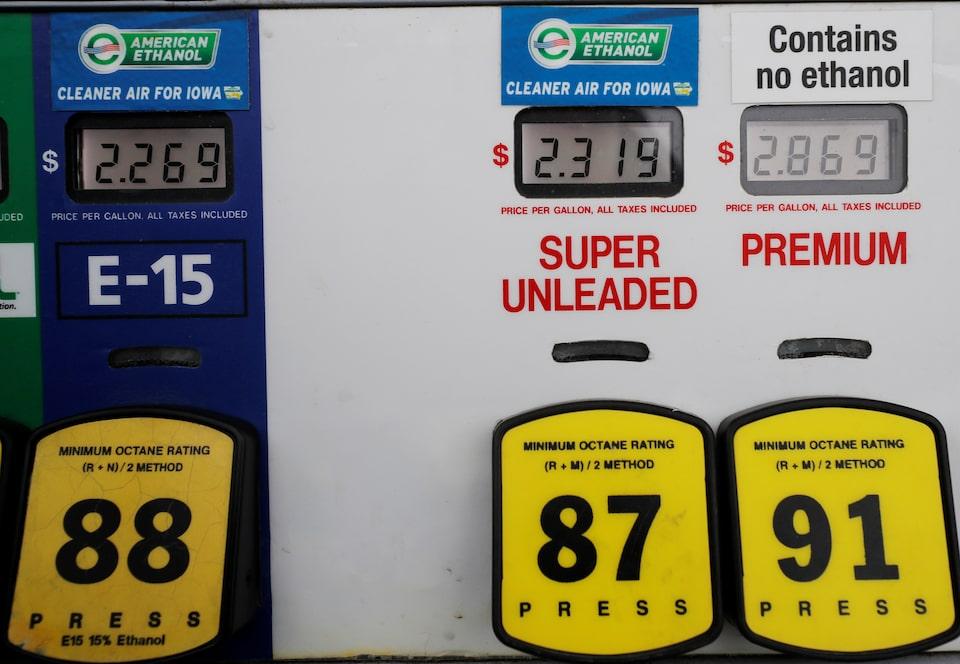
NEW YORK, April 28 (Reuters) - The Trump administration on Monday issued an emergency waiver to allow the sale of a higher-ethanol gasoline blend to be sold this summer nationwide, saying it will add to fuel supply during the peak U.S. driving season and bring down costs. The move likely will benefit biofuel producers and corn farmers, as it is expected to expand the market for their products. Both industries have pushed for nationwide year-round sales of the higher-ethanol blend, which is called E15, as it is made up of 15% ethanol. Sign up here. "This move to allow the summer sale of E15 will provide immediate relief to consumers, provide more choices at the pump, and drive demand for corn grown, processed, and used right here in America," U.S. Secretary of Agriculture Brooke Rollins said. The government currently restricts sales of E15 gasoline in summer months due to environmental concerns over smog, which the biofuel industry says are unfounded. The emergency waiver will go into effect on May 1. The Environmental Protection Agency, which issued the waiver, said it expects to extend the waiver until it no longer deems it necessary. The EPA has issued similar waivers for the summer in recent years. "With geopolitical conflict roiling energy markets worldwide, we applaud President Trump and Administrator (Lee) Zeldin for acting quickly to combat potential fuel shortages and help keep a lid on gas prices this summer," said Geoff Cooper, president of the Renewable Fuels Association, a biofuels trade group. Earlier this year, the EPA said it would uphold an April 28 implementation date for a request from governors in Midwestern states to allow year-round sales of E15. In Monday's action, the EPA said it waived provisions that would have otherwise made E10 gasoline sold in the states of Illinois, Iowa, Minnesota, Missouri, Nebraska, South Dakota and Wisconsin meet a more stringent standard than conventional gasoline in other areas of the country. https://www.reuters.com/sustainability/climate-energy/trump-administration-allows-temporary-sales-summertime-higher-ethanol-fuel-2025-04-28/
2025-04-28 21:22
April 28 (Reuters) - U.S. steelmaker Nucor Corp (NUE.N) , opens new tab beat analysts' estimates for first-quarter revenue and profit on Monday, helped by strength in its mills segment operations. The segment, which produces steel sheets, plates, bars and structural steel, reported a 10% rise in total shipments to 6.4 million tonnes. Sign up here. Steelmakers benefited from a rise in spot prices of hot-rolled coil (HRC), the most actively traded form of finished steel, following an uptick in domestic demand after President Donald Trump raised tariffs for steel and aluminum imports. This offset the impact from lower selling prices in Nucor's products segment and lower margins in its raw materials business. "We expect earnings in the second quarter of 2025 to increase compared to the first quarter of 2025," Nucor said. The company projected increases across all three of its operating segments, with the largest in the steel mills segment due to higher average selling prices at its sheet and plate mills. The Charlotte, North Carolina-based company reported quarterly adjusted profit of 77 cents per share, beating analysts' estimates of 64 cents, according to data compiled by LSEG. Total revenue was $7.83 billion, topping estimates of $7.23 billion. https://www.reuters.com/markets/commodities/us-steelmaker-nucor-tops-quarterly-estimates-higher-spot-prices-2025-04-28/

2025-04-28 21:08
ORLANDO, Florida, April 28 (Reuters) - TRADING DAY Making sense of the forces driving global markets Sign up here. By Jamie McGeever, Markets Columnist Glass half empty again The optimism that infused Asian and European markets on Monday evaporated as the global trading session progressed, with U.S. investors taking a 'glass half empty' view on the current global uncertainty surrounding tariffs and outlook for economic growth. Wall Street's underperformance ended up being pretty marginal, but there is little doubt that a re-rating of U.S. assets is underway. More on that below, but first, a roundup of today's moves on world markets. I'd love to hear from you, so please reach out to me with comments at [email protected] , opens new tab. You can also follow me at @ReutersJamie and @reutersjamie.bsky.social. If you have more time to read today, here are a few articles I recommend to help you make sense of what happened in markets today. Today's Key Market Moves Play it safe, Uncle Sam The selling frenzy that rocked world markets three weeks ago may have stopped, but the relief rally that followed now appears to be fading, leaving investors nervously awaiting the next signal. Absent an obvious catalyst like a surprise U.S.-China deal on trade, markets will likely lack direction this week but remain choppy. Several events, including month-end rebalancing, U.S. 'Big Tech' earnings, a Bank of Japan policy meeting and U.S. Q1 GDP and April payrolls, should see to that. Benchmark equity indexes in Brazil, India and Japan have fully recovered their post-'Liberation Day' losses, Germany's DAX on Monday briefly revisited its April 2 close, while the MSCI All Country World Index and Asia ex-Japan index are both within a whisker of regaining their April 2 closing levels too. U.S. President Donald Trump cooling his more belligerent rhetoric on tariffs and Federal Reserve Chair Jerome Powell have certainly helped calm the horses, and financial conditions around the world are beginning to loosen again. The dollar's continued decline has been a big part of that loosening, and the greenback retreated again on Monday. Many banks have slashed their long-term dollar forecasts, and there's a case to make that a weaker dollar would be a tailwind for markets and growth around the world in the years ahead. But does that still apply if the dollar is slumping for negative reasons, like a global loss of faith in U.S. policy? What's more, stronger domestic exchange rates will harm non-U.S. companies' earnings and eat into their profit margins. Throw that on top of the tariffs that have still to come into effect, and it's easy to see why the recent sense of relief across markets is fading. Companies in Europe, where the euro has surged around 10%, and Japan, where corporate sensitivity to the exchange rate is always high, may be particularly exposed. UBS strategists argue that a diversified global portfolio should still include "substantial exposure to the world's largest economy and most developed financial markets," and in the more immediate term, they see scope for a 'tactical' recovery in U.S. risk assets, as has often been the case following periods of high volatility and investor pessimism. But many will argue this can't last. Trade and economic uncertainty is too high, visibility is non-existent, and the damage done to markets and investor and business confidence runs much deeper than seems apparent right now. The great US re-rate has begun The panic selling of U.S. stocks and bonds following the Trump administration's 'Liberation Day' tariff bombshell may be over, but the re-rating of American assets is just getting started. The question is just how big this reallocation will be. Money managers are aware that even a modest reduction in exposure could have a potentially huge impact on asset prices. That's both because of the sheer size of U.S. markets relative to total global assets, and the outsized nature of overseas investors' U.S. holdings in nominal terms and as a share of their portfolios. In Treasuries, this overweight exposure is large; in equities it is massive. To illustrate the big impact that even small changes in allocations could have, it's worth recalling some of the numbers involved here. For instance, the global pension fund industry, which is significantly overweight U.S. assets, is worth around $58.5 trillion. Foreign private sector investors have flooded U.S. markets in recent years, pouring a net $3.25 trillion into U.S. assets over the last three full calendar years, according to U.S. Treasury data. Consequently, America's net international investment position is currently negative $26 trillion. U.S. stocks accounted for as much as 75% of the $80 trillion global market cap earlier this year. And at the end of last year, foreign investors owned 18% of U.S. stocks, a record-high share going back to 1945, according to strategists at Goldman Sachs. Additionally, Japanese and euro zone investors' U.S. fixed income allocations comprise around 60% of their foreign fixed income holdings and about 15% of their total fixed income portfolios, according to strategists at Exante Data. European investors' U.S. allocation has roughly doubled over the last decade, they note. PENDULUM SWUNG TOO FAR? Looking ahead, the concern is not that we will see blanket selling of U.S. assets by foreign investors or that the dollar will no longer be considered the world's reserve currency. Those scenarios will probably not happen in our lifetimes. But we are likely to see modest shifts that could have major price impacts. Anecdotal evidence suggests some Canadian and European pension funds that have baulked at the Trump administration's trade, economic and wider policy agendas, have already started reducing exposure to U.S. assets. They won't be the only ones. "I think the coming months will see global portfolios moderately reduce U.S. allocations, more so overseas investors than domestic U.S. investors," says Rebecca Patterson, former chief investment strategist at Bridgewater Associates. If global investors do trim their U.S. holdings, there will be both a one-off hit to asset prices and a long-term reduction in upside potential because the level of future demand will be weaker. This will be mitigated if U.S. investors fill the gap. But that could be difficult. At the end of last year, U.S. households' equity holdings as a share of their total assets and total financial assets were at record highs of 29.5% and 43.5%, respectively. Exante Data's team notes that around 95% of U.S. investors' fixed income holdings are already allocated domestically. The 'anti-U.S.' pendulum may have swung too far in recent weeks. Bank of America's April global fund manager survey found that a record share of investors intend to cut their U.S. stock holdings, the U.S. corporate profit outlook is the gloomiest since 2007, and the outlook for the U.S. dollar is the most bearish since 2006. The risk premium on U.S. markets has risen, with bond yields up and the 'term premium' on the U.S. 10-year Treasury note the highest in a decade. And for good reason, given the volatility seen since President Donald Trump's April 2 tariff announcement. Prices are adjusting, as they should. How long that adjustment will take and how deep it will be remains to be seen. The unmatched depth, liquidity and dynamism of U.S. financial markets are not in doubt. But in the new world order fast emerging from the Trump administration's 'America First' drive, U.S. assets' relative attractiveness certainly is. What could move markets tomorrow? Opinions expressed are those of the author. They do not reflect the views of Reuters News, which, under the Trust Principles , opens new tab, is committed to integrity, independence, and freedom from bias. Trading Day is also sent by email every weekday morning. Think your friend or colleague should know about us? Forward this newsletter to them. They can also sign up here. https://www.reuters.com/markets/global-markets-trading-day-graphic-pix-2025-04-28/