2025-04-28 20:55
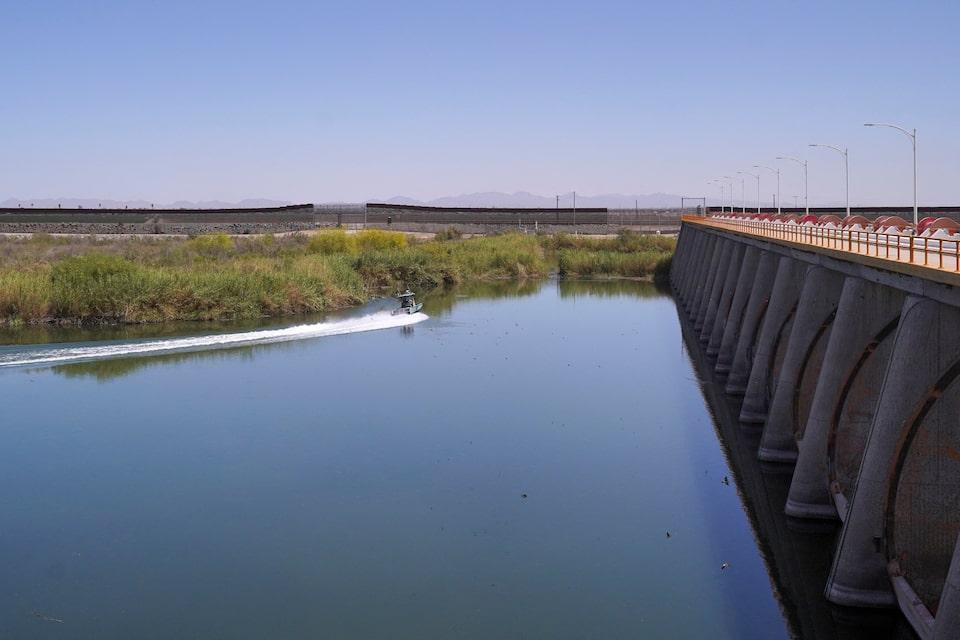
Mexico to increase water shipments to Texas under 1944 treaty Mexico cites drought conditions for strained water resources USDA praises Mexico's cooperation in water-sharing agreement WASHINGTON, April 28 (Reuters) - U.S. Agriculture Secretary Brooke Rollins said on Monday that Mexico would increase its water shipments to Texas to help make up a shortfall under a 1944 treaty that outlines water-sharing between the countries. U.S. officials and lawmakers have complained that Mexico's failure to meet its obligations under the treaty is harming Texas farmers. Sign up here. Mexico has argued that it is under drought conditions that have strained the country's water resources. "After weeks of negotiations with Mexican cabinet officials alongside the Deputy Secretary of State Christopher Landau, we secured an agreement to give Texas producers the water they need to thrive. While this is a significant step forward, we welcome Mexico's continued cooperation to support the future of American agriculture," Rollins said in a statement. Earlier this month, Reuters reported that the water issue had emerged as a possible new front in trade negotiations between the two countries. The water treaty requires Mexico to send 1.75 million acre-feet of water to the U.S. from the Rio Grande every five years. Mexico will now "transfer water from international reservoirs and increase the U.S. share of the flow in six of Mexico's Rio Grande tributaries through the end of the current five-year water cycle," which ends in October, said a USDA statement. State Department spokesperson Tammy Bruce in a statement thanked Mexican President Claudia Sheinbaum "for her personal involvement in facilitating cooperation across multiple levels of her government to establish a unified path to addressing this ongoing priority." Mexico's government released its own statement later on Monday saying it would implement "a series of measures aimed at mitigating potential shortfalls in water deliveries" including immediate water transfers as well as during the upcoming rainy season. "All of these actions have as their fundamental premise the assurance of water supplies for human consumption for the Mexican populations that depend on the waters of the Rio Grande," the statement said. https://www.reuters.com/world/americas/mexico-will-send-more-water-texas-make-up-treaty-shortfall-usda-says-2025-04-28/
2025-04-28 20:49
MADRID, April 28 (Reuters) - A massive blackout that hit most of the Iberian Peninsula on Monday was due to a sudden, large drop in power supply that caused the grid interconnection between Spain and France to trip, according to Spanish grid operator REE (REDE.MC) , opens new tab. The network lost 15 gigawatts of electricity generation in five seconds at around 1033 GMT, the Energy Ministry said on Monday evening, without explaining the reason for the loss. Sign up here. REE's system operations chief Eduardo Prieto told reporters the loss of power supply was beyond the extent that European systems are designed to handle and caused the Spanish and French grids to disconnect, which in turn led to the collapse of the Spanish electricity network. "As the result of this disconnection and the serious imbalance of band generation that is in our electrical system, the electrical system collapsed," he said in a news conference. The ultimate reasons behind the massive loss of power on Monday morning were not identified by REE staff and no hypothesis is ruled out, Prime Minister Pedro Sanchez said in national address. The blackout that lasted for several hours caused massive disruptions in Spain and Portugal. Power was gradually restored in most of both countries on Monday evening. https://www.reuters.com/world/europe/spain-portugals-blackout-originated-interconnection-with-france-la-vanguardia-2025-04-28/

2025-04-28 19:49
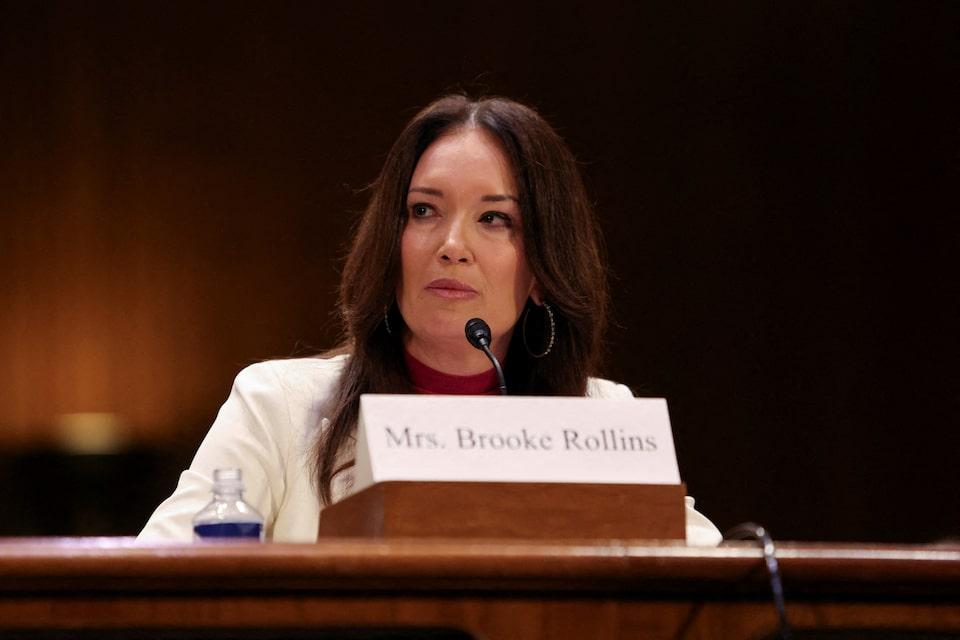
US and Mexico agree on screwworm pest control measures US threatened to limit cattle imports from Mexico over screwworm Blocking imports could further tighten US cattle supply VERSAILLES, Ohio, April 28 (Reuters) - The United States and Mexico reached an agreement on the handling of a damaging pest called New World screwworm, U.S. Agriculture Secretary Brooke Rollins said on Monday, after she threatened to limit cattle imports from south of the border. Screwworm can infest livestock, wildlife and in rare cases, people. Maggots from screwworm flies burrow into the skin of living animals, causing serious and often fatal damage. Sign up here. Rollins sent a letter to Mexican Agriculture Minister Julio Berdegue on Saturday, warning that the United States would restrict livestock imports from Mexico on April 30 if the Mexican government did not take further action against the pest. Rollins said during a tour of an Ohio egg facility that she had spoken with Berdegue and that they came to an agreement on the issue. "More will be released on that in the next few hours. It came to a good resolution," she said. Mexico has been working to respond to screwworm and is strengthening its efforts, President Claudia Sheinbaum said earlier on Monday. The U.S. typically imports more than a million cattle a year from Mexico. Blocking imports would further tighten U.S. supplies that have dwindled to their lowest levels in decades, pushing up beef prices. U.S. ranchers have increasingly sent cattle to slaughter, instead of keeping them to reproduce, as drought has dried up pasture lands used for grazing in recent years. Washington blocked Mexican cattle from late November to February after the discovery of screwworm in Mexico. The U.S. Department of Agriculture eradicated the pest from the United States in 1966 and wants to keep it out. The National Cattlemen's Beef Association said it recently met with officials at the Embassy of Mexico in Washington after receiving reports that Mexico had hampered U.S. efforts to fight screwworm south of the border. "Screwworm is very destructive and could cost American producers millions of dollars a year if it reaches us," said Buck Wehrbein, association president and a Nebraska cattleman. https://www.reuters.com/world/us/us-mexico-have-reached-agreement-new-world-screwworm-ag-secretary-rollins-says-2025-04-28/
2025-04-28 19:31
MADRID, April 28 (Reuters) - Spain's Interior Ministry on Monday declared a state of emergency after a nationwide power blackout hit most of the Iberian Peninsula. The ministry added the emergency status will be applied in the regions that request it. Sign up here. So far, Madrid, Andalusia and Extremadura have asked for the central government to take over public order and other functions. https://www.reuters.com/world/europe/spain-declares-state-emergency-after-nationwide-power-blackout-2025-04-28/

2025-04-28 18:41
MADRID, April 28 (Reuters) - The electric power supply was restored in various parts of central Madrid on Monday after a mass blackout hit most of the Iberian Peninsula and caused disruptions for around eight hours, according to Reuters witnesses. Sign up here. https://www.reuters.com/world/europe/power-restored-parts-central-madrid-2025-04-28/

2025-04-28 17:09
Mexico's GDP seen up 0.2% this year vs 1.2% in January poll 11 of 12 respondents say tariff impact "negative" or "very negative" Mexico on brink of recession last quarter, poll shows April 28 (Reuters) - Mexico's economy will barely grow at all this year thanks to the U.S. tariff shock after standing on the brink of technical recession last quarter, a Reuters poll showed. Extreme uncertainty over U.S. President Donald Trump's push to rearrange global trade is set to continue hurting private spending and investment in Latin America's No.2 economy, analysts said. Sign up here. Worries are now centered on the potential impact of extra U.S. levies on car parts. Mexican President Claudia Sheinbaum is seeking to minimize the damage through negotiation as well as with support for local projects. Mexico's gross domestic product is expected to increase just 0.2% this year, according to the median estimate of 32 economists polled April 21-25, a sharp 1 full percentage point downgrade from 1.2% seen in January's poll. This forecast is far worse than the government's rosy outlook of 1.5%-2.3% growth, but still above the International Monetary Fund's view of a 0.3% contraction which prompted an official retort last week. Rodolfo Mitchell, Scotiabank's head economist for Mexico, noted the slowdown had started last year as markets reacted negatively to some government reforms and a weak fiscal position. "Furthermore, the arrival of Trump to the White House and his tariff policy have exacerbated downside risks related to growth," Mitchell added. "This has resulted in the expectation of economic contraction for 2025 due to stagnant investment, a contraction in production and a sharp slowdown in consumption." All 12 respondents who answered additional questions in the poll viewed risks to their 2025 GDP forecasts tilted to the downside. None saw chances of higher growth than expected. In a separate question on how U.S. tariffs had hit business sentiment in Mexico, six respondents chose the "negative" option (50% of total replies), five leaned towards "very negative" (42%), and one for "neutral" (8%). None answered "positive" or "very positive". The elevated ratio of very negative responses contrasted with results in a Brazil poll earlier this month, where only one of 21 analysts (5%) took an acutely pessimistic view. This reflected fears of direct effects on Mexico from the tariffs on top of concerns of worsening international conditions affecting all economies. Mexico probably avoided a technical recession by the tightest possible margin, logging no growth - but not a contraction - last quarter, according to a different Reuters weekly poll for a preliminary reading due this week. However, this consensus estimate for the country's preliminary GDP data was more optimistic than a separate call of a 0.4% contraction for the final reading in the quarterly Reuters poll, which would confirm a recession. Analysts lifted their views for the preliminary figures following a good number for a leading indicator on Friday, but even if proved right, flash data could be reviewed to the downside in the final release. Mexico, along with Canada, was hit by a special 25% tariff related to uncontrolled migration and fentanyl traffic, plus 25% global duties on cars and metals. In addition, both face another global 25% levy on auto . As goods complying with the USMCA trade deal are excluded from Trump's duties, the general effective tariff for Mexican products is 12.7% currently - much higher than just 0.2% in 2024, according to Banamex. To reduce that surcharge, some firms will probably try to increase so-called regional content, which would raise industrial costs in Mexico. Others are already shifting production to the U.S. at the expense of Mexican jobs. "It is up to Mexican companies to make the necessary changes to maintain and renew their participation in the U.S. market," Banamex said in a report last week. "Mexican authorities will have to facilitate this transition and maintain prudence in negotiations with the U.S. in light of the imminent renegotiation (which will no longer be a revision) of the USMCA." (Other stories from the Reuters global economic poll) https://www.reuters.com/world/americas/mexico-economy-barely-grow-this-year-thanks-us-tariff-shock-2025-04-28/