2025-04-28 12:09
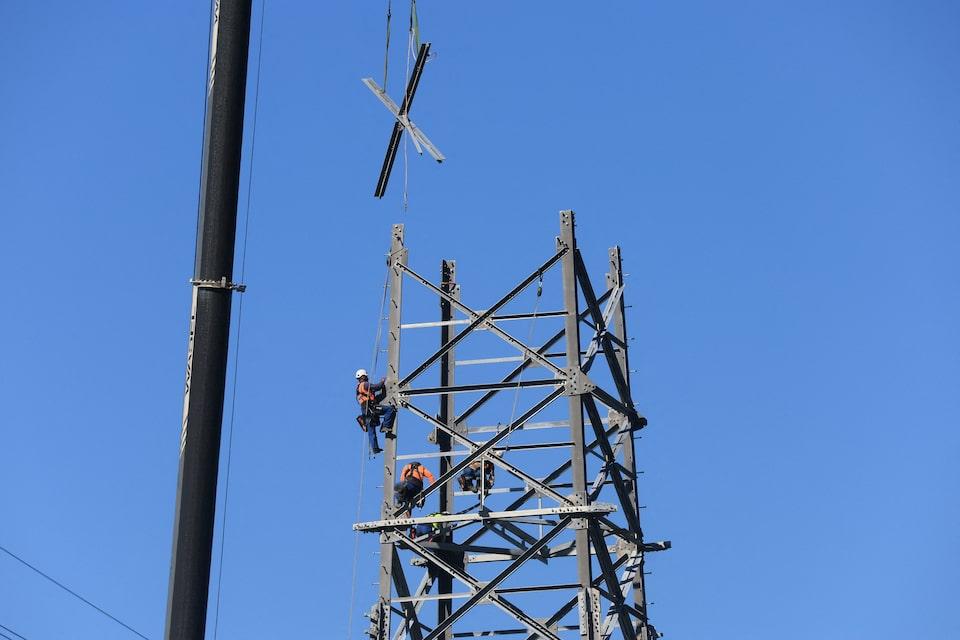
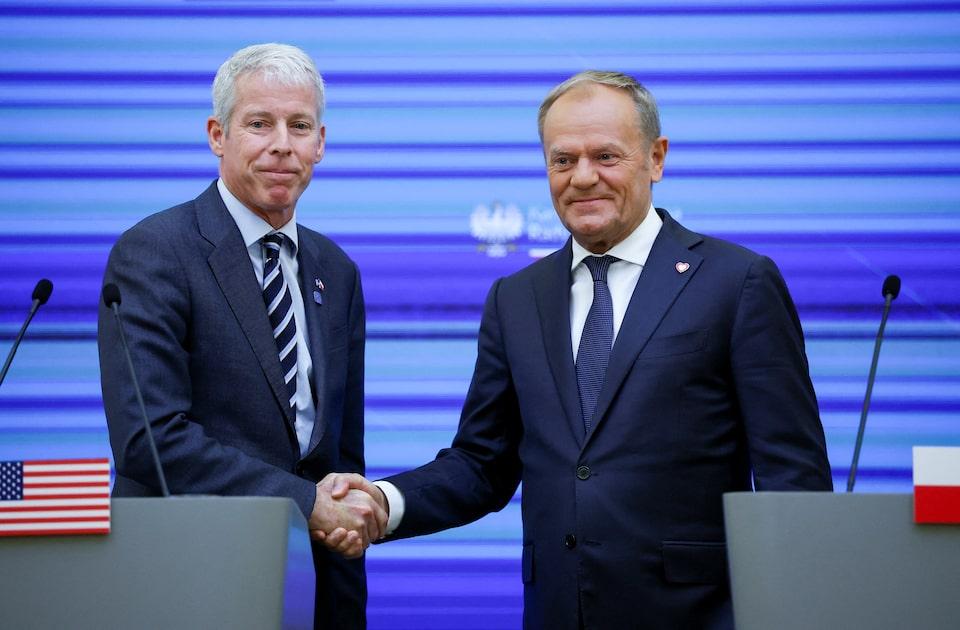
WARSAW, April 28 (Reuters) - U.S. liquefied natural gas supplies to Europe will continue to rise, U.S. Energy Secretary Chris Wright told Reuters on Monday during a visit to the Polish capital Warsaw. The United States is the world's largest exporter of LNG and has played a major role in supplying Europe since Russia's full-scale invasion of Ukraine in 2022 significantly reduced the amount of Russian gas piped to Europe. Sign up here. However, now that U.S. President Donald Trump has rocked relations with Europe and turned to energy as a bargaining chip in trade negotiations, businesses are wary that reliance on the U.S. has become another vulnerability. "The U.S. supply will continue to grow in a meaningful way. There's a lot of dialogue about contracts," Wright told Reuters on the sidelines of a conference. "I think we will absolutely see more off-take agreements for LNG from the U.S. in Europe." Amid the turmoil caused by Trump's tariff policies, some executives in Europe have begun to say that importing some Russian gas, including from Russian state giant Gazprom (GAZP.MM) , opens new tab, could be a good idea. Wright declined to comment on the possibility of Russian energy returning to Europe in greater volume. "I think the energy situation in Europe is probably largely going to be determined by Europeans," he said. Poland has so far turned to seaborne LNG delivered to its Swinoujscie LNG terminal to replace gas from Russia. It has also started to receive pipeline gas from Norway via Denmark and the Baltic Sea. Poland has started delivering LNG sourced from the U.S. to Ukraine. https://www.reuters.com/business/energy/us-lng-supplies-europe-will-continue-grow-says-us-energy-secretary-2025-04-28/
2025-04-28 12:04
April 28 (Reuters) - China's state-run Sinopec (600028.SS) , opens new tab said on Monday it had signed an agreement with a unit of Saudi Aramco (2222.SE) , opens new tab to establish a joint venture company with a registered capital of 28.80 billion yuan ($3.95 billion). The agreement was signed by Sinopec, its unit Fujian Petroleum Chemical Industry Co, and Saudi Aramco's Singaporean unit Aramco Asia Singapore Pte.(AAS). Sign up here. Sinopec and its unit shall contribute 7.20 billion yuan and 14.40 billion yuan in cash, respectively. The remaining amount, representing 25% of the registered capital of the joint venture, will come from AAS. The joint venture company, Fujian Sinopec Aramco Refining and Petrochemical Co, will engage in port operation, crude oil transportation, and other activities at the refinery and petrochemical complex in the Gulei Port Economic Development Zone, Zhangzhou, in China's Fujian province. Sinopec and Saudi Aramco started constructing the complex in November last year, as part of the Middle Eastern company's plans to grow its downstream business outside the kingdom and to supply a million barrels per day of crude oil to China for oil-to-chemicals investments. Sinopec, in a separate statement, reported a 27.6% drop in first-quarter net profit under the China Accounting Standard on Monday. ($1 = 7.2975 Chinese yuan renminbi) https://www.reuters.com/world/middle-east/chinas-sinopec-signs-4-billion-joint-venture-deal-with-saudi-aramcos-unit-2025-04-28/

2025-04-28 11:44
Power outage hits Spain, Portugal and briefly France Authorities try to establish what caused the outage Public transport brought to halt Supply restored to some places by Monday evening MADRID/LISBON, April 28 (Reuters) - Power started returning to parts of the Iberian peninsula late on Monday after a huge outage brought most of Spain and Portugal to a standstill, grounding planes, halting public transport, and forcing hospitals to suspend routine operations. Spain's Interior Ministry declared a national emergency, deploying 30,000 police across the country to keep order as governments from the two countries convened emergency cabinet meetings. Outages on such a scale are extremely rare in Europe. Sign up here. The cause was unclear, with Portugal suggesting the issue originated in Spain and Spain pointing the finger at a break-up in its connection to France. Portuguese Prime Minister Luis Montenegro said there was "no indication" a cyberattack had caused the blackout, which began around 1033 GMT. Nonetheless, rumours circulated of possible sabotage, and Spanish Prime Minister Pedro Sanchez said he had spoken to NATO Secretary General Mark Rutte. Sanchez said that the country had suffered a loss of 15GW of electricity generation in five seconds, equivalent to 60% of national demand. Technicians were working to figure out why that sudden drop occurred, he said. "This is something that has never happened before," he said. Joao Conceicao, a board member of Portuguese grid operator REN, told reporters the company had not ruled out the possibility of a "very large oscillation in electrical voltage, first in the Spanish system, which then spread to the Portuguese system". "There could be a thousand and one causes, it's premature to assess the cause," he said, adding that REN was in contact with Spain. Spain's grid operator REE blamed a connection failure with France for triggering a knock-on effect. "The extent of the loss of power was beyond what European systems are designed to handle and caused a disconnection of the Spanish and French grids, which in turn led to the collapse of the Spanish electric system," Eduardo Prieto said. Earlier, parts of France suffered a brief outage. RTE, the French grid operator, said it had moved to supplement power to some parts of northern Spain after the outage hit. POWER RESTORED In Spain, power started returning to the Basque country and Barcelona areas in the early afternoon, and to parts of capital Madrid on Monday night. About 61% of electricity had been restored by late Monday, according to the national grid operator. Enagas said it had activated emergency systems to meet demand during the blackout, while Prieto said returning systems to normal would take "several hours". In a video posted on X, Madrid Mayor Jose Luis Martinez-Almeida said city street lighting had not been fully restored so he recommended people stay at home, adding: "It is essential that the emergency services can circulate." Power was also gradually returning to various municipalities in Portugal late on Monday, including Lisbon city centre. Grid operator REN said 85 out of 89 power substations were back online. SHOPS AND METRO CLOSED The blackout had wide-ranging effects across the peninsula. Hospitals in Madrid and Catalonia in Spain suspended all routine medical work but were still attending to critical patients, using backup generators. Several Spanish oil refineries were shut down, and some retailers closed, including grocery chain Lidl and furniture giant IKEA. Portuguese police said traffic lights were affected across the country and the metro was closed in Lisbon and Porto, while trains were cancelled in both countries. "I just don't know who to turn to. My daughter in Barcelona is giving birth. We're going to miss the connection to get there," said Angeles Alvarez, stranded outside Madrid's Atocha railway station. Sanchez said on Monday evening that about 35,000 train passengers had been rescued from trains while 11 trains still remained stranded in remote areas. Images from a Madrid supermarket showed long queues at tills and empty shelves as people rushed to stock up on staples, while play at the Madrid Open tennis tournament was suspended. The Bank of Spain said electronic banking was functioning "adequately" on backup systems, though residents also reported ATM screens had gone blank. There were traffic jams in Madrid city centre as traffic lights stopped working, with people in reflective vests appointing themselves to direct vehicles at intersections. Local radio reported people trapped in stalled metro cars and elevators. Many Spaniards decided to take a half-day off, congregating in streets and plazas for impromptu get-togethers or cooking meals by candlelight at home. Internet traffic plummeted by 90% in Portugal and 80% in Spain compared to previous-week levels, according to Cloudflare Radar, which monitors global internet traffic. Power outages of such a magnitude are rarely seen in Europe. In 2003 a problem with a hydroelectric power line between Italy and Switzerland caused a major outage across the whole Italian peninsula for around 12 hours. In 2006, an overloaded power network in Germany caused electricity cuts across parts of Europe and as far as Morocco. About 43% of Spain's energy comes from wind and solar power, with nuclear accounting for a further 20% and fossil fuels 23%, according to energy think tank Ember. https://www.reuters.com/world/europe/large-parts-spain-portugal-hit-by-power-outage-2025-04-28/

2025-04-28 11:34
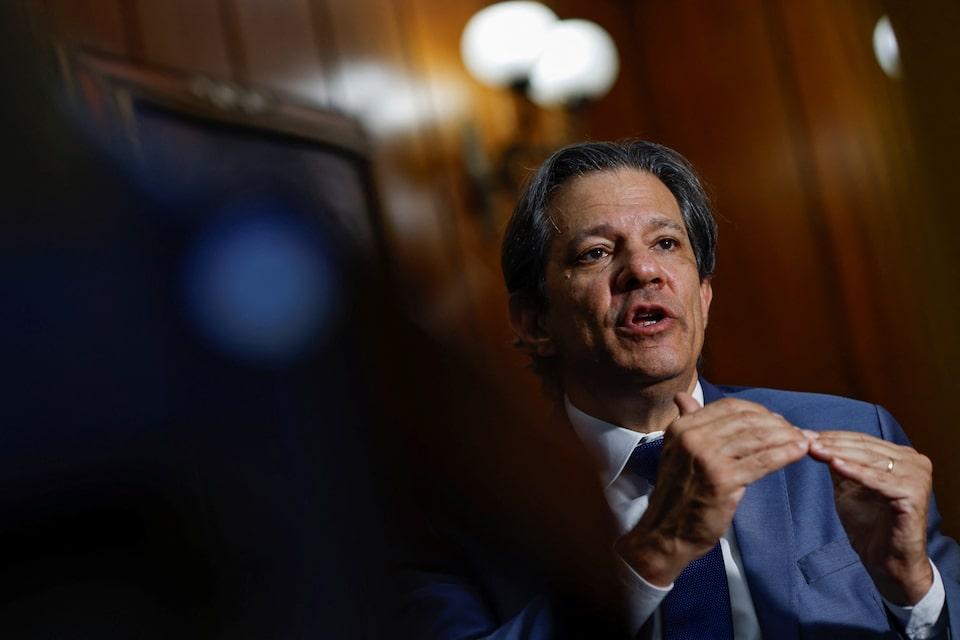
Haddad to pitch Brazil as sustainable hub in Silicon Valley visit Policy could unlock 2 trillion reais in investments over next decade, finance ministry estimates Exemptions target IT-related capital expenditures, not construction costs BRASILIA, April 28 (Reuters) - Brazilian Finance Minister Fernando Haddad will begin a trip to Silicon Valley this week with a plan to lure data centers to his country by exempting the related technology investments from federal taxes, four sources familiar with the matter told Reuters. Haddad's trip to California on Friday includes a May 6 breakfast with tech executives in Palo Alto, where he will pitch Brazil as a sustainable infrastructure hub, leveraging the country's abundant supply of renewable energy. Sign up here. Speaking at an event hosted by conglomerate J. Safra in Sao Paulo, Haddad confirmed the trip and said Brazil could leverage its clean energy potential to attract investment and build data centers, adding that the new policy would help boost capital inflows. The Finance Ministry estimates the new policy could unlock some 2 trillion reais ($352 billion) in investments over the next decade, including the spillover into construction, telecoms and AI-related services, according to two of the sources, who requested anonymity in order to discuss the private plans. The Finance Ministry did not respond to a request for comment. The same sources said the planned data center investment by ByteDance, the Chinese parent company of TikTok, would also be a beneficiary of the plan, an executive order that will require congressional approval to be made permanent. The policy will exempt key federal taxes - PIS, Cofins, IPI, and import duties - on IT-related capital expenditures for data centers, the two sources said. One of them stressed that the main cost for such ventures is not electricity - which in Brazil is largely sourced from renewable energy, with more than 80% coming from hydro, solar, and wind power - but rather hardware depreciation, a significant burden due to the country's complex and costly tax system. Non-IT investments, such as building construction, will not be exempt under the measure. As a result, the policy is expected to yield fiscal gains that will support, rather than strain, Brazil's federal budget from next year. Amid rising global trade tensions, including U.S. tariffs and tensions with China, the plan aims to capitalize on Brazil's diplomatic openness as a selling point for foreign investments. "We don't pick fights. We're friends with everyone. That means Brazil can serve the world without major hurdles," one of the sources said. A landmark tax reform approved under President Luiz Inacio Lula da Silva last year provides for exemptions on capital spending, but they are set to take effect only in 2033. The new measure, led by the ministries of development and finance, aims to fast-track these benefits to encourage green data center investments. To qualify, projects must meet sustainability criteria, including using 100% renewable energy. Additional conditions will require projects to reserve a significant portion of capacity for domestic use, even if intended for export, and contribute to a fund supporting Brazil's AI ecosystem. ($1 = 5.6892 reais) https://www.reuters.com/sustainability/climate-energy/brazil-offer-tax-breaks-lure-data-center-investments-sources-say-2025-04-28/
2025-04-28 11:16
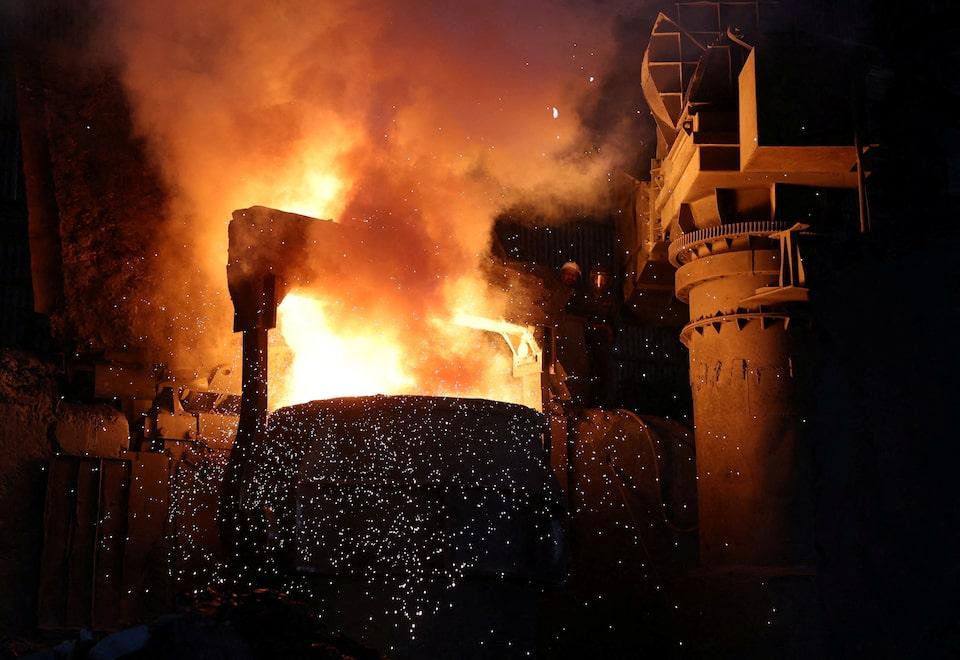
NEW DELHI, April 28 (Reuters) - India's industrial output (INIP=ECI) , opens new tab in March missed economists' expectations amid a quicker data release and slower mining activity, but rebounded from a six-month low in the previous month, government data showed on Monday. Industrial output grew 3% year-on-year in March, compared to the 3.3% growth expected by economists polled by Reuters and a revised 2.7% in February. Sign up here. Mining activity rose at a slower pace of 0.4% compared to 1.6% a month earlier, the data showed. Manufacturing output advanced 3% in March against a revised 2.8% in the previous month, while electricity generation grew 6.3% from 3.6% in February. Earlier this month, India decided to release its industrial output growth numbers on the 28th of every month, cutting down on the previous 42-day gap between data releases. The data's early release may have dampened estimated growth and could undergo a relatively larger revision later, Aditi Nayar, an economist at ICRA, said. Consumer durables output, which includes household appliances and vehicles, rose 6.6% in March against a revised 3.7% jump in February. Output of capital goods, which includes manufacturing plants and machinery, increased 2.4% in March compared to an 8.2% rise in the prior month. Industrial output increased 4% in the April-March period, slowing down from 5.9% in the year-ago period. Despite ongoing positive trade negotiations between the United States and India, uncertainty over potential U.S. import tariffs and sudden policy shifts continue to cast a shadow over industries globally. https://www.reuters.com/world/india/indias-industrial-output-rises-3-yy-march-2025-04-28/
2025-04-28 11:05
Five price zones would deliver biggest benefits, ENTSO-E says German transmission companies oppose splitting the market EU countries have 6 months to decide how to respond to report BRUSSELS, April 28 (Reuters) - Germany should consider splitting its electricity market into up to five price zones to better reflect the different costs across the country, Europe's association of power grid operators (ENTSO-E) said in a report on Monday. Germany is a single large power market zone, with a unified wholesale price. However, congestion on Germany's grid, which lacks connections to move power from the wind-rich north to consumption centres in the south, has increased calls for a split into at least two zones, to stop high prices in one region bleeding across the entire country. Sign up here. ENTSO-E said its analysis of various options for splitting Germany's market, which also includes Luxembourg, suggested all would yield economic benefits, adding that a split into five bidding zones would deliver the biggest benefits, of 339 million euros ($385 million) for 2025. Splitting the market could lower prices in the north, where cheap renewable energy is abundant, but it could also lead to higher prices in the south, where much of Germany’s heavy industry is located, ENTSO-E added. The issue has disrupted infrastructure projects as Sweden, whose electricity market is already split into four zones, said in June it would not approve a new power cable connecting the south of the country to Germany unless Berlin reorganises the German market. EU countries have six months to decide how to respond to ENTSO-E's findings and the European Commission can intervene with a proposal on whether to amend the bidding zones if member states cannot agree how to proceed. Germany's new coalition government has said it opposes splitting up the power market, which it fears could increase prices in the south and impact industrial activity. Germany's main transmission operators 50hertz, Amprion, TenneT and TransnetBW backed that stance on Monday, saying that the study's findings were insufficient to justify splitting the German-Luxembourg bidding zone and cautioning that a split would reduce market liquidity and drive up costs. They said that the predicted benefits were minimal compared to overall system costs and criticised the report for relying on outdated data that failed to account for key future developments, such as new power lines and the expansion of renewable energy. ($1 = 0.8804 euros) https://www.reuters.com/sustainability/climate-energy/germany-should-consider-splitting-power-market-eu-network-operators-say-2025-04-28/