2025-04-28 10:54
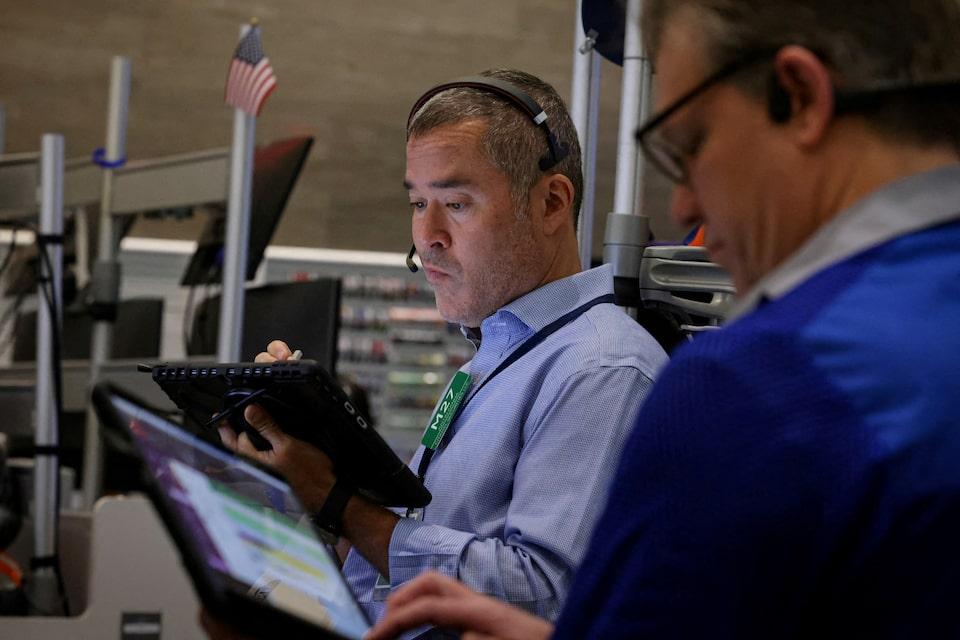
2025 global growth forecast cut from 3.0% to 2.7% Reuters poll graphic on U.S. tariff impact on business sentiment - Reuters poll graphic on major economy growth forecasts - BENGALURU, April 28 (Reuters) - Risks are high that the global economy will slip into recession this year, according to a majority of economists in a Reuters poll, in which scores said U.S. President Donald Trump's tariffs have damaged business sentiment. Just three months ago, the same group of economists covering nearly 50 economies had expected the global economy to grow at a strong, steady clip. Sign up here. But Trump's push to reshape world trade by imposing tariffs on all U.S. imports has sent shockwaves through financial markets, wiping out trillions of dollars in stock market value, and shaken investors' confidence in U.S. assets, including the dollar, as a safe haven. While Trump has suspended the heaviest tariffs imposed on almost all trading partners for a few months, a 10% blanket duty remains, as well as a 145% tariff on China, the United States' largest trading partner. "It's hard enough for firms to think about July right now where they don't know what the reciprocal tariffs are. Try and plan another year down the road. I mean, who knows what it looks like, let alone five years down the road," said James Rossiter, head of global macro strategy at TD Securities. Faced with heightened uncertainties and century-high duties on goods, many global businesses have either withdrawn or cut revenue forecasts. Showing unusual unanimity, none of the more than 300 economists polled April 1-28 said tariffs had a positive impact on business sentiment, with 92% saying 'negative'. Only 8% said 'neutral', mostly from India and other emerging economies. Three-quarters of economists cut their 2025 global growth forecast, bringing the median to 2.7% from 3.0% in a January poll. The International Monetary Fund was a tad higher at 2.8%. Individual economies surveyed showed a similar trend; median forecasts were cut for 28 of the 48 economies polled. Among the others, for 10 economies the consensus view was unchanged and for 10, including Argentina and Spain, the view was slightly upgraded, based mainly on domestic developments. China and Russia were forecast to grow 4.5% and 1.7% respectively, outperforming the U.S. Those median estimates were unchanged from last quarter's survey. However, growth forecasts for Mexico and Canada were downgraded from January by some of the largest margins, to 0.2% and 1.2%. Most of those revisions came in the last month. The split for 2026 was nearly the same, suggesting the downtrend in growth expectations that started with Trump imposing tariffs is deep, and not easy to fix. Asked about the risk of a global recession this year, 60% - 101 of 167 - said it was high or very high. Sixty-six said it was low, including four who said very low. "It's a very difficult environment to be optimistic about growth," said Timothy Graf, head of macro strategy for Europe, Middle East and Africa at State Street. "We could get rid of tariffs today and it will still have done quite a lot of damage, just strictly from the view of the U.S. as a reliable actor in bilateral and multilateral agreements ranging from trade to common defense." The progress that central banks have made over the past couple of years in taming the worst global inflation surge in decades by raising interest rates in quick succession is also expected to stall due to tariffs, which economists agree are inflationary. "Cutting off your largest trading partner ... is going to do all sorts of wild and not so wonderful things to prices, and that's going to have all sorts of negative impacts on real incomes and ultimately demand," State Street's Graf added. "It's a situation where the possibility that we enter a stagflationary environment has always been quite low - but I think is now higher." Stagflation is usually defined as an extended period of no or low growth, high inflation and rising unemployment. More than 65% - 19 of 29 major central banks polled - were not expected to meet their inflation targets this year. The number dropped slightly to 15 for next year. (Other stories from the Reuters global economic poll) https://www.reuters.com/markets/global-economy-recession-risks-surge-us-tariff-shockwaves-2025-04-28/
2025-04-28 10:52
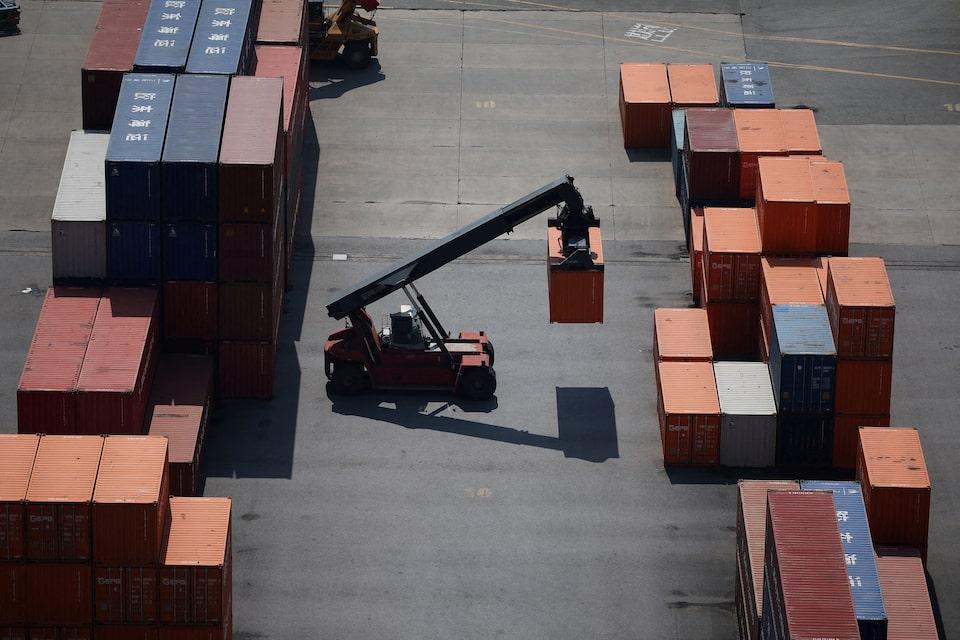
Morning Bid U.S. A look at the day ahead in U.S. and global markets from Mike Dolan Sign up here. The furious April for U.S. markets has calmed down a bit as the month draws to a close on Wednesday, and now its time to consider the costs to the real economy. Today's Market Minute * U.S. Treasury Secretary Scott Bessent says he does not back President Donald Trump's assertion that tariff talks with China are under way. * Trump urges Russia to stop its attacks in Ukraine and suggests Ukrainian President Volodymyr Zelenskiy is ready to give up Crimea as the price of a peace deal with Russia. * Canadian prosecutors charge a 30-year-old Vancouver resident with murder for killing at least 11 people and injuring dozens after he rammed an SUV through a crowd at a Filipino community festival in the western Canadian city. * Risks are high the global economy will slip into a recession this year, according to a majority of economists in a Reuters poll. * The euro's unexpected surge since Trump's big tariff announcement is likely to shave at least a couple of percentage points off European company earnings, adding to the impact of the levies themselves, according to economists. The toll from Trump's tariffs Some signs of de-escalation of the U.S.-China trade war encouraged a rally in Wall Street stocks last week, while U.S. Treasuries and the dollar were steadied by President Donald Trump's claim that he did not intend to fire Jerome Powell, despite his blistering attacks on the Federal Reserve Chair. Anxiety persists, however, as none of the major economic or corporate concerns of the past few month have been resolved and policy visibility remains low. U.S. stock index futures were slightly in the red again ahead of Monday's open. Despite last week's bounce, the S&P 500 (.SPX) , opens new tab remains down 2.6% since the April 2 Trump tariff announcements and down 6.5% for the year to date. The tech-heavy Nasdaq (.IXIC) , opens new tab is still down 11% for 2025. Some of the trade relief from last week was dialed back a bit over the weekend. Treasury Secretary Scott Bessent on Sunday did not confirm Trump's assertion that tariff talks with China were under way and said he did not know if the U.S. president had talked to Chinese President Xi Jinping. Attention now turns to the toll Trump's tumultuous first 100 days in office have taken on the real economy. This milestone will be marked on Wednesday. Even though the first quarter gross domestic product estimate coming on Wednesday does not capture the period since the April 2 tariff announcement, there is still a significant risk of a negative growth print. First quarter corporate earnings will continue to stream in too, with some 40% of S&P 500 firms reporting this week and four of the once 'Magnificent Seven' megacaps - Microsoft, Meta, Apple and Amazon - reporting on Wednesday and Thursday. The key focus will be on the companies' outlooks for the rest of the year. More up-to-date will be a sweep of labor market reports coming this week culminating in the April employment report on Friday. Weekly jobless numbers suggest the employment picture has held up well, leaving the Fed to focus squarely on potential price aggravations from tariffs. However, March inflation readings from the personal consumption expenditures series - the one most closely watched by the Fed - are expected to be benign when released on Wednesday too. However, that may just be the calm before the storm. U.S. bond markets will keep a close eye on the Treasury's quarterly funding estimates and plans this week. 10-year yields were subdued first thing Monday after last week's jitters sparked by concerns about Fed independence. The dollar (.DXY) , opens new tab index is marginally firmer, with Canada's dollar a tad weaker as the country heads to the polls on Monday. Prime Minister Mark Carney's Liberal Party looks set for a return to power, an outcome that seemed unlikely before Trump's inauguration, tariff plans and threats to Canadian sovereignty swung Canadian opinion polls. The dollar is down slightly against Japan's yen , with the Bank of Japan likely to resist raising interest rates again when it meets this week as tariff uncertainty cuts across rising inflation numbers. Japan's top currency diplomat Atsushi Mimura on Monday denied a media report that Scott Bessent had told his Japanese counterpart at a bilateral meeting in Washington that a weak dollar and a strong yen are desirable. Chart of the day With the first estimate of U.S. gross domestic product for the first quarter due on Wednesday, the Atlanta Federal Reserve's closely watched 'GDPNow' model , opens new tab is still showing a real GDP contraction for the three months through March, both on a headline basis and when adjusted for high gold bullion imports that weighed on net trade in the period. The consensus of economic forecasters is for a modest expansion of 0.4%, which is still sharply slower than the 2.4% growth in the final quarter of last year. While GDP statistics can be distorted and are continually revised, a first quarter contraction would be an ominous sign nonetheless, not least because it would have come before the April 2 global tariff announcement. It would also raise the risk that a technical recession could be recorded in the first half of the year. Today's events to watch * Election in Canada * Dallas Federal Reserve April manufacturing survey * European Central Bank Annual Report for 2024, with ECB Vice-President Luis de Guindos. Bank of Finland governor Olli Rehn speaks * U.S. corporate earnings: Domino's Pizza, Cadence Design, NXP Semiconductors, Teradyne, Universal Health, Cincinnati Financial, Nucor, Brown & Brown, F5, Revvity, Roper, Waste Management, Welltower, Alexandria Real Estate, * U.S. Treasury quarterly borrowing estimate https://www.reuters.com/markets/us/global-markets-view-usa-2025-04-28/
2025-04-28 10:29
Crypto company hosts Donald Trump Jr. in Bulgaria Nexo Capital Inc says plans to return to U.S. Nexo holding "constructive" conversations with regulators April 28 (Reuters) - While hosting the eldest son of U.S. President Donald Trump at a conference in Bulgaria on Sunday, crypto company Nexo Capital said it plans to return to the American market, two years after it paid a $45 million fine to settle U.S. regulatory charges. Donald Trump Jr. was the star speaker in Sofia on Sunday at an event headlined "Trump Business Vision 2025" hosted by Nexo. Trump Jr., who has no official position in the U.S. government, was in the Bulgarian capital city as part of a tour across Eastern Europe. Sign up here. Nexo's co-founder Antoni Trenchev told Reuters that the crypto firm plans to return to the U.S. in the coming months, and that it was having "constructive" conversations with regulators including the U.S. Securities and Exchange Commission (SEC), without giving further details. The SEC declined to comment. Contacted through an aide, Trump Jr. did not respond to questions about Nexo. In a statement released by Nexo on Monday, Trump Jr. said that crypto is "the future of finance." "We see the opportunity for the financial sector and want to ensure we bring that back to the U.S.," he said. Nexo co-founder Trenchev said that Trump Jr. was not helping the company to return to the U.S. but was “spreading the message that crypto is important to the United States and setting the stage.” The Cayman Islands company had previously left the U.S. after disputes with regulators over a crypto lending product, which had resulted in Nexo agreeing in 2023 to pay $45 million in penalties to settle charges from the SEC and state regulators. Nexo's planned re-entry comes as President Trump has heralded a major shift in government approach to the crypto industry. The U.S. president, who courted crypto companies on the campaign trail, has called for easing crypto regulations and even launched his own cryptocurrency. President Trump's embrace of cryptocurrencies represents a turnaround for the industry which came under scrutiny from regulators after a series of collapses at top crypto companies in 2022 exposed widespread misconduct and left millions of investors out of pocket. Since Trump took office, the SEC has paused or dropped various pending lawsuits against crypto firms, and U.S. banking regulators have scrapped guidance warning banks to be cautious about crypto-related risks. Trump handed over daily management of his multi-billion-dollar business portfolio to his children on entering the White House, but critics have raised concerns about potential conflicts of interest from the family's business ventures which include cryptocurrency and social media. The Trump family is building its own crypto business, World Liberty Financial, which lists Donald Trump Jr. as an ambassador. Trenchev, who previously served as a lawmaker in Bulgaria, said there had been a "tectonic shift" in U.S. attitudes towards crypto. "It is more than just mere talk, there is actual work being done so that the United States does emerge as the place to be for crypto, and we are experiencing this first hand," Trenchev said. In a statement, Nexo described Sunday's invite-only event in Sofia as "a high-level dialogue on finance, technology, and the deepening alignment between American enterprise and international capital." The conference featured speeches by Trump Jr. in his capacity as executive vice president of The Trump Organization, President Trump's family business, and Gila Gamliel, Israel's minister of innovation, science and technology. Nexo's products include crypto-backed loans, crypto trading tools and a crypto exchange. https://www.reuters.com/sustainability/boards-policy-regulation/event-with-donald-trump-jr-bulgaria-crypto-firm-nexo-announces-us-return-2025-04-28/

2025-04-28 10:27
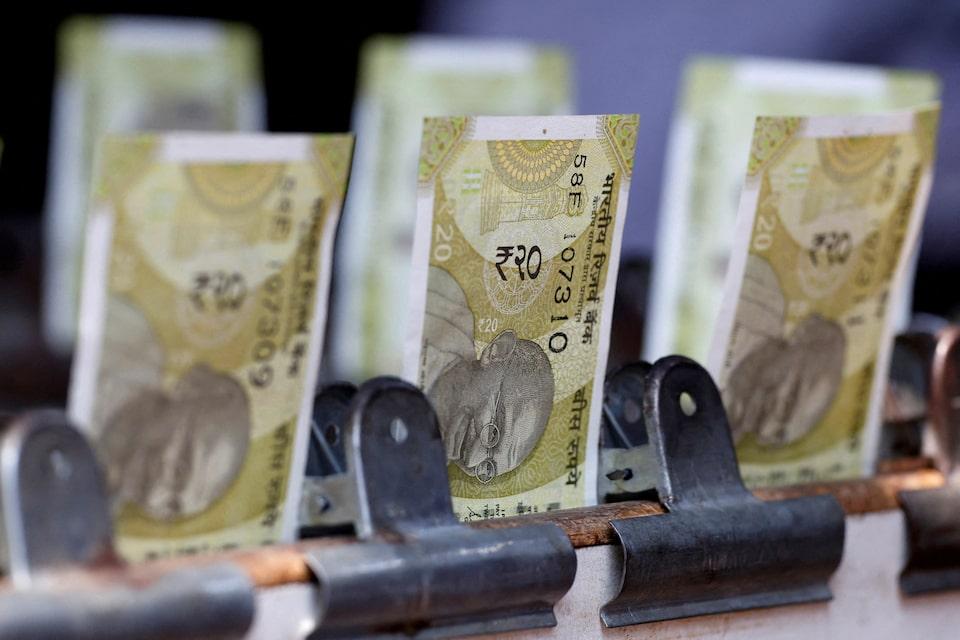
MUMBAI, April 28 (Reuters) - The Indian rupee logged its best day in more than two weeks on Monday, aided by likely portfolio inflows into local equities while a key technical resistance near its year-to-date peak limited the currency's rally. The rupee touched a peak of 84.98 against the U.S. dollar before ending the session at 85.03, up nearly 0.5% on the day. Sign up here. Benchmark Indian equity indexes, the BSE Sensex (.BSESN) , opens new tab and Nifty 50 (.NSEI) , opens new tab, rose about 1.2% each on the day, outperforming their regional peers alongside the rupee. A sizeable portion of the benchmarks' gains came from oil-to-telecom conglomerate Reliance Industries (RELI.NS) , opens new tab, which jumped more than 5% and hit a six-month high after beating analysts' estimates for quarterly earnings. Foreign investors have stepped up purchases of Indian stocks over the last week, a reversal from the selling pressure witnessed earlier in the month. This, in turn, has been a tailwind for the local currency, which is up 0.6% on the month so far. "Liquidation of longs (on USD/INR) and some retracement of the India-Pakistan tension spurred a rise", also helped the rupee on the day, a salesperson at a large foreign bank said. However, in the near-term, the rupee keeps running into resistance near the 200-day moving average around 84.97-84.98, a trader at a bank said, adding that state-run banks were also spotted bidding for dollars near those levels. The dollar index, meanwhile, was down 0.1% at 99.6. While U.S. tariff-related developments have weighed heavily on the dollar this month, analysts expect U.S. economic data to be among the key drivers for the greenback this week as markets watch out for signs of weakness in the U.S. economy. "Any big downside surprise can trigger another leg of dollar selling," ING Bank said in a note. U.S. personal consumption expenditure (PCE) inflation data is due on Wednesday, followed by the non-farm payrolls report on Friday. https://www.reuters.com/world/india/buoyant-equities-help-boost-rupee-technical-resistance-limits-gains-2025-04-28/
2025-04-28 10:15
Exchanges' revenue grew 16% in 2024 over 2023 It now has 950 active participants worldwide Expanded trading offerings with new power contracts To introduce EU ETS-2 contracts in July FRANKFURT, April 28 (Reuters) - The European Energy Exchange's (EEX) revenue rose 16% last year, mainly driven by higher electricity trading volumes in its European, North American and Japanese markets and with new international trade participants joining, it said on Monday. With 80 new participants joining last year, there are now 950 members active in power, gas, environmental products, freight and agriculture, as well as related clearing services on the EEX. Sign up here. Last year's revenue grew to 669.9 million euros ($760 million) from 575.6 million euros in 2023, said EEX, which grew out of a Germany-based electricity bourse founded 25 years ago and is a part of Deutsche Boerse (DB1Gn.DE) , opens new tab. Adjusted net income rose 15% to 241.9 million euros. "It's inspiring to see the continued significant volume growth across our markets," EEX CEO Peter Reitz said. "This year, we will expand our position as the leading global power trading platform." Revenue from European power derivatives in 2024 rose 58% to 194.0 million euros, while spot power market revenue was up 18% at 102.2 million euros, the EEX reported. Revenue from U.S. commodities was up 4% at 41.3 million, and from natural gas derivatives in Europe by 5% at 30.7 million euros. In the first quarter of this year, the EEX expanded European power futures trading volumes by 29%, those of European spot power by 10%, and spot gas by 19%, it said. The EEX introduced new products in 2024 including Nordic zonal power futures and Spanish Monday-through-Sunday solar peak futures. Separately on Monday, it announced it will launch new futures contracts for the EU Emissions Trading System 2 (EU ETS2) on July 7, subject to regulatory approval. Reitz also said he is observing a continued shift from over-the-counter trading to cleared exchange markets, especially in the European core power markets, where EEX holds market shares of 80-90%. ($1 = 0.8814 euros) https://www.reuters.com/business/energy/eex-bourse-saw-16-revenue-growth-2024-power-volumes-grew-2025-04-28/

2025-04-28 10:11
Investors fear lasting damage to US markets from trade policy Concerns over US dollar selloff amid global asset reallocation Pullback from US assets seen as temporary by some due to market size and economic strength NEW YORK, April 28 (Reuters) - A bruising rollercoaster ride for markets in the first 100 days of the Trump administration has seen some investors move away from American assets, but it remains to be seen whether policies have caused a sustained shift away from the United States. The market has seen significant rallies fueled in part by trade negotiation optimism, but investors remain concerned about the longevity and strength of any bounce-back in asset prices. Some are diversifying to international assets or making sure they are not overweight U.S. assets as they seek more certainty over policy. Sign up here. "The question of whether this has caused irreversible damage to the U.S. markets and economic system is the existential one, but we don’t yet have a long-term answer," said Liz Ann Sonders, chief investment strategist, Charles Schwab & Co. "We know that it’s done a tremendous amount of damage and that our partners are questioning whether we’re reliable when it comes to trade or other things." A recent moderation in rhetoric on trade has caused equities to rally back close to their April 2 level and a small rebound in the dollar. Still, in the near-100 days since Trump's Jan. 20 inauguration, the S&P 500 (.SPX) , opens new tab has fallen about 8% and the dollar index has slid about 9%. April 30 will mark the 100th day of Trump's presidency. The volatility has come as investors fear that Trump's overhaul of global trade may hurt the U.S. economy, causing a rebalancing. Criticism of the U.S. Federal Reserve chair Jerome Powell also caused a sharp sell-off as investors worried about Fed independence. Some also fear that there could be deeper damage. "When you have a brand, you need to behave in a way that respects that brand," Citadel's founder and CEO Kenneth Griffin said at a Semafor conference on Wednesday, saying that the administration needs to be careful about potential damage to U.S. Treasuries. White House spokesperson Kush Desai said the Trump administration is committed to protecting the strength and power of the U.S. dollar. “Trillions in historic investment commitments since President Trump was elected from industry leaders including TSMC, Apple, and Roche demonstrate resounding confidence in the U.S. economy and dollar under this administration,” Desai said. MIGHTY DOLLAR? Strategists have pointed to a mix of evidence for reallocations from U.S. assets, although they differ in whether there will be an actual shift away from U.S. hegemony. Jens Nordvig, founder of Exante Data, said in a note on Thursday that piecing together a mosaic of information led him to conclude that a "structural shift in asset allocations is in motion" where investors around the world are "searching for alternative reserve currencies." While Nordvig does not predict that the U.S. dollar will lose its reserve currency status, "it does mean that a long list of different types of investors will be looking to reduce USD exposure if they can find a way to do so." For evidence of a trend in de-dollarization, investors will be watching for any significant changes in the shares of global FX reserves held in dollars and the dollar's share in global payments, though analysts and investors say it could take years to see conclusive evidence. The share of US dollar holdings in global FX reserves - foreign assets held by various central banks - has fallen to 57.80% in the fourth quarter of 2024, down from 66%, 10 years ago, according to IMF data. "An acceleration of geopolitical fracturing will, at the margin, persuade some central banks to speed up their diversification from the dollar," said Gary Smith, client portfolio manager at Columbia Threadneedle Investments. A recent selloff in the Treasury market, the bedrock of the global financial system, has raised concerns about selling by foreign investors - who hold some 30% of the $29 trillion U.S. government bond market, although analysts say so far there is little evidence. Oxford Economics said in a research note on Thursday that market moves showed a broader shift out of the U.S. from "investors of all stripes." Among those changing their strategies is Spencer Hakimian, CEO of Tolou Capital Management, a New York-based macro hedge fund. His fund is increasing its allocation to gold and decreasing its allocation to long-term Treasuries because "we believe a crisis of confidence is now brewing for dollar-denominated safe haven assets.” Evan Russo, CEO of asset management at Lazard, said on Friday he expected that the rest of this year would see portfolio rebalancing away from the U.S. "Global investing will continue to be a very prominent discussion," Russo said on an earnings call. Ultra high-net-worth individuals are concerned, said Nuri Katz, president of APEX Capital Partners in Antigua, which advises clients on establishing citizenship overseas. He said a growing number of clients "want to diversify their financial assets beyond the US, and that number is growing almost daily." Goldman Sachs portfolio strategy research said in a research note on Thursday that it estimates foreign investors have sold roughly $60 billion of US stocks since the start of March with European investors driving the selling. A Barclays report had a similar message, saying international investors have been repatriating U.S. assets, but added "there is little evidence that U.S. hegemony has started to reverse for good." Some selling can be explained by re-balancing following a long period of U.S. outperformance. “The US dollar was very highly valued for several years until recently, and an argument could be made that it’s just coming back to a more reasonable valuation,” said Todd Rabold, a partner at Callan Family Office, a wealth management firm. Jitania Kandhari, Deputy CIO of the Solutions and Multi-Asset Group at Morgan Stanley Investment Management, said that valuations of U.S. equities and the dollar were stretched even before the Trump administration's tariffs. Some also believe any exit from the U.S. will be temporary, as the sheer size and liquidity of U.S. markets and the economy will continue to curb the appeal of alternative investment destinations such as Europe and China. Tara Hariharan, managing director at global macro hedge fund NWI Management, said that several pillars of so-called "U.S. exceptionalism" remained intact. "Over time, structural adjustments and business-friendly deregulation and fiscal policy should reinforce the comparative advantages the U.S. enjoys and ensure it remains a magnet for global capital in the coming decades,” she said. https://www.reuters.com/markets/wealth/after-100-days-under-trump-investors-reassess-allure-brand-usa-2025-04-28/