2025-04-28 09:43
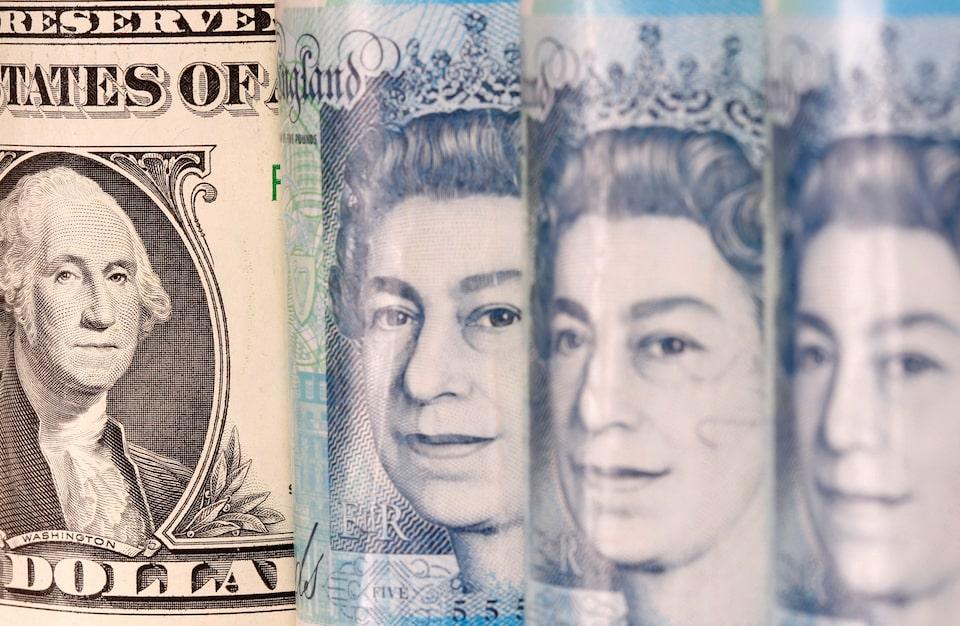
LONDON, April 28 (Reuters) - The pounded traded steadily on Monday, heading for its strongest monthly performance against the dollar since late 2023, reflecting how much investors have punished U.S. assets in April. Sterling was up 0.3% at $1.3345, set for a gain of 3.1% in April, the most in a month since November 2023. Against the euro , the pound has struggled. The euro has risen by nearly 2% in April, marking its largest monthly rise since December 2022, when it rose 2.4% against sterling. Sign up here. The euro has been a key beneficiary of the investor push out of the dollar and has gained against most major crosses. Part of the pound's resilience earlier this year had been built on the expectation that the Bank of England might be slower to cut interest rates than other central banks. The derivatives market shows traders are banking on around 85 basis points' worth of cuts by the BoE this year and roughly the same amount from the U.S. Federal Reserve. Sterling's strength in recent weeks has derived more from investors seeking alternatives to the dollar, given the threat to the U.S. economy from President Donald Trump's tariffs. The UK is generally perceived to be less exposed to Trump's tariffs, once his 90-day pause expires in early July. In 2024, the United States had a $12 billion goods surplus with the UK, compared with a near $300 billion deficit with China and a $236 billion deficit with the European Union, according to data from the U.S. Trade Representative (USTR). With that in mind, Barclays analysts say they retain their bullish view on sterling for the time being, particularly against the euro. "The UK's greater resilience to direct tariffs than the eurozone implies smaller demand damage, thereby offsetting the drag from a more-limited fiscal space," they said. https://www.reuters.com/world/uk/sterling-moves-towards-strongest-monthly-gain-since-late-2023-2025-04-28/
2025-04-28 07:39
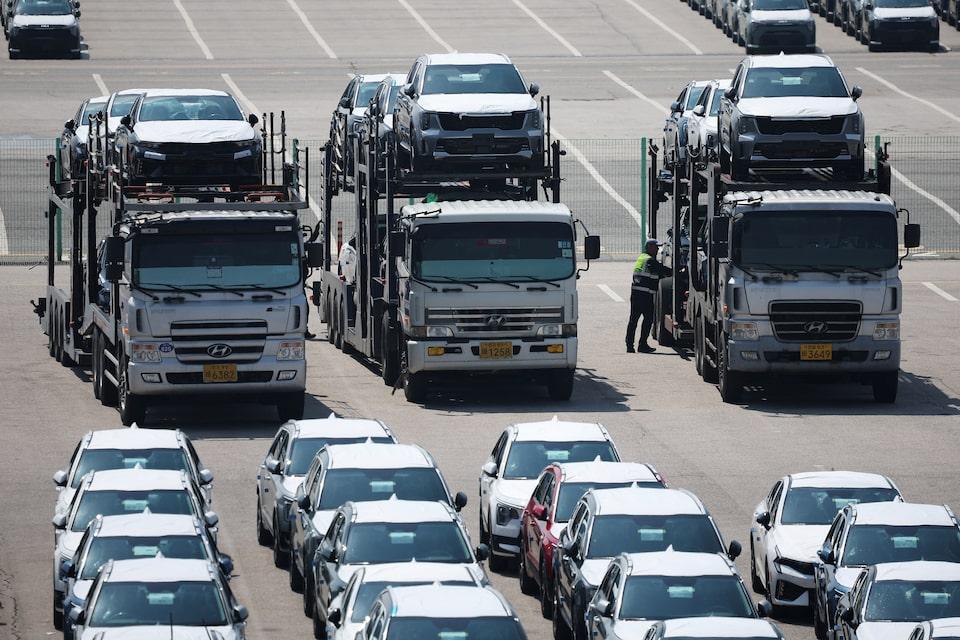
South Korea, U.S. agreed in talks last week to craft a trade package Challenges due to South Korea's political situation with acting president in power U.S. has prioritised trade talks with key partners before July 8 deadline SEJONG, South Korea, April 28 (Reuters) - A senior South Korean government official ruled out on Monday that Seoul would agree to a trade package with Washington by the time the country holds a presidential election on June 3, and flagged challenges to reaching a deal even before early July. The countries last week agreed to craft a trade package aimed at removing new U.S. tariffs before a pause in reciprocal tariffs is lifted on July 8, Seoul's delegation in Washington said after their first formal tariff talks on Thursday. Sign up here. Political analysts noted, however, it may be difficult for South Korea to make any firm commitment on big energy projects and defence costs as it currently has an acting president in power. South Korea will hold a snap election on June 3 after former President Yoon Suk Yeol was ousted for his role in imposing martial law briefly in December. It is "theoretically impossible” for the two countries to decide on a comprehensive trade package by late May or early June, Park Sung-taek, Vice Minister of Trade, Industry and Energy, told reporters. “We fully explained our political situation to the U.S. during our latest talks. The U.S. side also understands that Korea's special political situation could be a limiting factor in negotiations." The United States has prioritised talks with key trading partners and allies like Japan, Korea and India, as Washington is scrambling to seal a flurry of trade deals before its July 8 deadline. "We all are taking the uncharted territory," Park said. "To be honest, I think it would be very challenging for the talks to bear some fruit within the next 70 days despite President Trump's expectations," he said. South Korea said it has requested exemptions from reciprocal tariffs and tariffs on autos and steel and other items, and offered cooperation on shipbuilding and energy and in addressing trade imbalances. Park said the United States needs to remove red tape to facilitate bilateral cooperation in shipbuilding, pointing to the example of the Jones Act, a U.S. law that requires goods moved between U.S. ports to be carried by ships built domestically and staffed by U.S. crews. He said South Korea was in talks to send a working-level delegation to Alaska to review the business feasibility of a $44 billion liquefied natural gas project that Washington wants to fund with investments from countries like South Korea and Japan. South Korea is looking to create about six working groups with the United States under three areas on the agenda - exemptions to tariffs and non-tariff measures, economic security, as well as investment cooperation - with a plan to kick off meetings next week, Park said. The fourth issue on the agenda, currency policy, will be discussed separately by the financial authorities of the two countries, he said. https://www.reuters.com/world/asia-pacific/south-korea-rules-out-tariff-deal-with-us-before-june-3-snap-election-2025-04-28/
2025-04-28 06:54
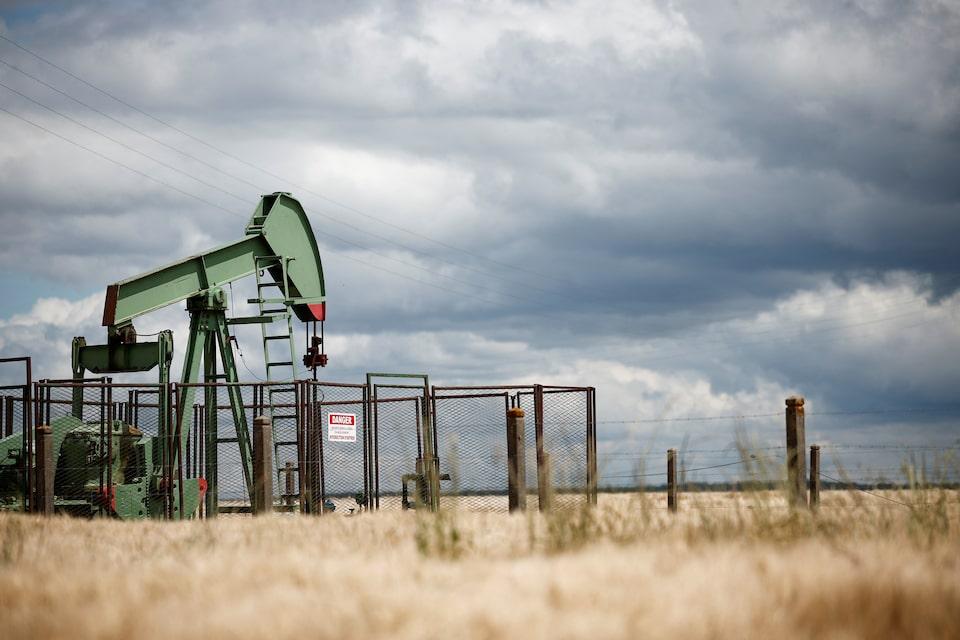
Brent and WTI crude both fall more than 1% Uncertainty over whether U.S. and China are in trade talks Iran 'extremely cautious' on success of nuclear talks with U.S. HOUSTON, April 28 (Reuters) - Brent crude oil prices fell more than $1 a barrel on Monday morning as economic worries from the U.S.-China trade war were pressuring demand. Brent crude futures settled at $65.86 a barrel, down $1.01, or 1.51%. U.S. West Texas Intermediate crude finished at $62.05 a barrel, down 97 cents or 1.545%. Sign up here. Brent futures rose marginally in the previous two sessions, but finished last Friday with a weekly loss of more than 1%. The U.S.-China trade war is dominating investor sentiment in moving oil prices, said analyst John Evans of brokerage PVM, superseding nuclear talks between the U.S. and Iran and discord within the OPEC+ coalition. "This wait-and-see attitude coming out of the U.S.-China talks is leaving a bad taste in peoples' mouths," said Gary Cunningham, director of market research for Tradition Energy. "If the talks go bad, you could see a drop in demand for oil from China." Markets have been rocked by conflicting signals from U.S. President Donald Trump and Beijing over what progress was being made to de-escalate a trade war that could sap global growth. In the latest comment from Washington, U.S. Treasury Secretary Scott Bessent on Sunday did not back Trump's assertion that negotiations with China were underway. Earlier, Beijing denied any talks were taking place. "A lot of the feeling in the market is how is it going to be playing out in the next 24 to 48 hours?" said Phil Flynn, senior analyst with Price Futures Group. "Are we going to be bombing Iran? Is China going to be buying more crude?" Some members of the Organization of the Petroleum Exporting Countries and their allies, known as OPEC+, are expected to suggest that the group accelerate oil output hikes for a second consecutive month when they meet on May 5. "Sentiment has turned more bearish since our forecast last month with OPEC+'s more aggressive unwind – and accompanying doubts about unity within the cartel – the key change," said BNP Paribas analyst Aldo Spanjer in a note. BNP Paribas expects Brent in the high $60s per barrel in the second quarter of this year, the note said. Meanwhile, Iranian Foreign Minister Abbas Araqchi said he remained "extremely cautious" about the success of the negotiations, as nuclear talks between Iran and the United States in Oman continue this week. In Iran, a powerful explosion at its biggest port of Bandar Abbas has killed at least 40, with more than 1,200 people injured, state media reported on Sunday. https://www.reuters.com/markets/commodities/oil-edges-up-despite-murky-economic-outlook-potential-opec-supply-hike-2025-04-28/
2025-04-28 06:50
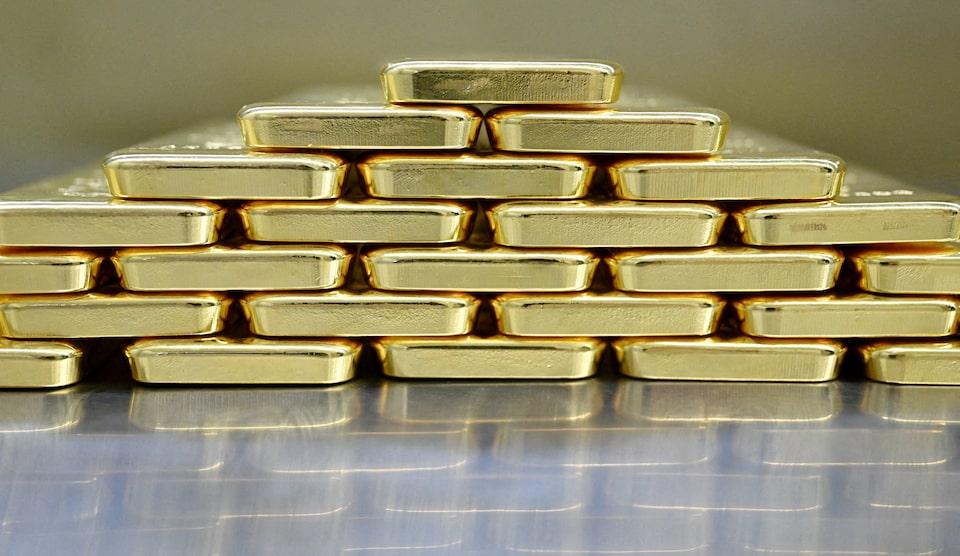
Gold hit record high of $3,500.05/oz last week US PCE due on Wednesday Platinum up over 1% April 28(Reuters) - Gold prices reversed course to edge higher on Monday as bargain-hunting kicked in, while market focus was on U.S.-China tradedevelopments and a slew of economic data. Spot gold was up 0.5% at $3,335.30 an ounce as of 2:06 p.m. ET (1806 GMT) after falling as much as 1.8% earlier in the session. U.S. gold futures settled 1.5% higher at $3,347.7. Sign up here. "We're starting to see the first signs of selling exhaustion," TD Securities commodity strategist Daniel Ghali said, adding that the downside risk in gold is extremely limited. "Western investors, particularly discretionary traders or macro funds, have been completely under-positioned in this last leg of gold's rally and as a result of that, there's limited amount of selling activity and gold prices are drifting higher to reflect that." Bullion, a traditional hedge against political and financial instability, rose to an all-time high of $3,500.05/oz last week due to elevated uncertainties. U.S. President Donald Trump says progress has been made with China. However, Beijing has denied that trade talks are occurring and Treasury Secretary Scott Bessent failed on Sunday to back Trump's assertion that tariff talks with China were under way. "Until we witness clear patterns of lower highs, lower lows, and firm trade agreements rather than more political bluster from the Trump administration, the prospect of fresh highs for gold cannot be dismissed," said Fawad Razaqzada, market analyst at City Index and FOREX.com The risk is high that the global economy will slip into recession this year, according to a majority of economists in a Reuters poll. Data due this week includes the U.S. job openings report on Tuesday, Personal Consumption Expenditures on Wednesday, and the nonfarm payrolls report on Friday. Market participants will scan these to gauge the impact of the latest tariffs on the U.S. economy. Spot silver eased 0.1% to $33.03 per ounce, platinum gained 1.5% to $986.05 and palladium fell 0.4% $947.27. https://www.reuters.com/markets/commodities/gold-sinks-over-1-easing-us-china-tensions-curb-safe-haven-demand-2025-04-28/
2025-04-28 06:48
SEOUL, April 28 (Reuters) - South Korea's S-Oil (010950.KS) , opens new tab, majority owned by Saudi Aramco (2223.SE) , opens new tab, posted losses in the first quarter from its refining and petrochemical units and expects second-quarter margins to be impacted by U.S. tariff negotiations and market volatility. S-Oil reported an operating loss of 21.5 billion won ($14.93 million) in the first three months of 2025, compared with a profit of 454.1 billion won a year earlier, it said in a statement on Monday. Sign up here. The company's revenue for the first quarter fell 3.4% on-year to 8.99 trillion won. Its refining division posted an operating loss of 56.8 billion won in the reported quarter, flipping from a profit of 250.4 billion won a year ago, due to sluggish demand amid economic uncertainty as well as delays in scheduled maintenance, S-Oil said. Losses in its petrochemical division more than doubled to 74.5 billion won from the previous quarter, the company added. S-Oil operated its 669,000 barrels-per-day (bpd) oil refinery in the southeastern city of Ulsan at 94% of capacity, compared with 93% during full-year 2024. Looking ahead, S-Oil expects second-quarter refining margins to be impacted by developments in U.S. tariff negotiations amid heightened global market volatility. "Ongoing U.S. tariff tensions may weigh on oil demand forecasts," S-Oil said in a presentation. "However global uncertainties are expected to ease gradually with the progress in trade negotiations." Meanwhile, S-Oil's residue fluid catalytic cracking (RFCC) unit is scheduled to undergo maintenance in the fourth quarter. Separately, the company is targeting mechanical completion for the Shaheen Project in the first half of 2026. The $7 billion project aims to produce up to 3.2 million metric tons of petrochemicals annually from crude oil. ($1 = 1,439.7000 won) https://www.reuters.com/business/energy/s-oil-sees-q2-refining-margins-impacted-by-developments-us-tariff-talks-2025-04-28/

2025-04-28 06:18
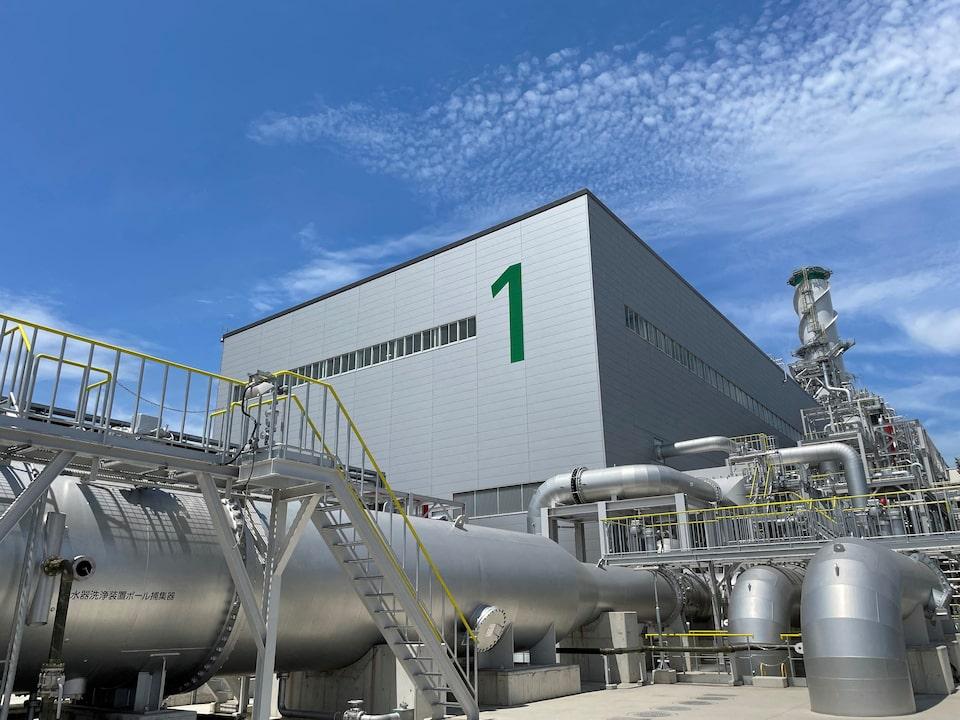
JERA, Mitsubishi say may consider Alaska as a potential LNG supplier along with other options Japanese delegation heads to the US this week for fresh round of tariff talks Japanese companies cautious of hard commitments amid high costs, sources say TOKYO, April 28 (Reuters) - JERA, Japan's top power generator, may consider Alaska as a potential source of liquefied natural gas (LNG) supply, an executive said on Monday, as Japanese officials are heading to the United States this week for another round of tariff talks. Alaska LNG, a proposed $44 billion project consisting of a pipeline and an LNG plant, has been a key part of President Donald Trump's agenda in dealing with Asian partners as he wants Japan, South Korea and Taiwan to back up the massive project. Sign up here. "From the perspective of energy security and supply stability... we would like to consider Alaska as one of the promising suppliers, among various other options," Naohiro Maekawa, a JERA executive, told a briefing on Monday. Trump has hit Japan with 24% tariffs on its exports to the U.S., but, like most of his levies, they have been paused until early July to allow room for negotiations. A 10% universal rate remains in place, as does a 25% duty on cars, a mainstay of Japan's export-heavy economy. Japan's trade negotiator Ryosei Akazawa is set to hold another round of tariff negotiations with U.S. officials later this week. JERA is the biggest LNG buyer in Japan with annual volumes, used both for domestic and trading needs, at around 35 million metric tons. Japan is the world's second biggest LNG buyer after China with Australia as its top supplier. Japanese trading house Mitsubishi Corp (8058.T) , opens new tab may consider investing in Alaska LNG, though any decision will require careful review, its chief executive said earlier this month. A source familiar with the matter told Reuters last week that Trump's energy security council plans to host a summit in Alaska in early June, when it hopes Japan and South Korea will announce commitments to the Alaska LNG project. While Alaska can be considered as an option for diversifying LNG supply sources thanks to its relative proximity to Japan, companies remain cautious of making hard commitments amid high construction costs and lack of specific project details, according to two Japanese industry sources. PROFIT HALVES On Monday, JERA said its annual net profit halved, hurt in part by a weaker performance from its overseas power generation and renewable energy business. Net income for the year ended March came in at 184 billion yen ($1.3 billion) but the company expects profit to rebound in the current year to 230 billion yen. JERA, a joint venture between Tokyo Electric Power (9501.T) , opens new tab and Chubu Electric Power (9502.T) , opens new tab, has around 30 projects in its overseas power generation portfolio in more than 10 countries. They total about 13 gigawatt (GW) in capacity, compared to some 59 GW for domestic power generation. Profits from its overseas power generation and renewable energy business tumbled 25.4 billion yen to 8.3 billion yen, it said. Aside from Japan, JERA has renewable energy projects elsewhere, including in the U.S., Belgium, Taiwan and the UK. ($1 = 143.7700 yen) https://www.reuters.com/sustainability/climate-energy/japans-jera-annual-profit-halves-weaker-overseas-business-2025-04-28/