2025-04-28 04:51
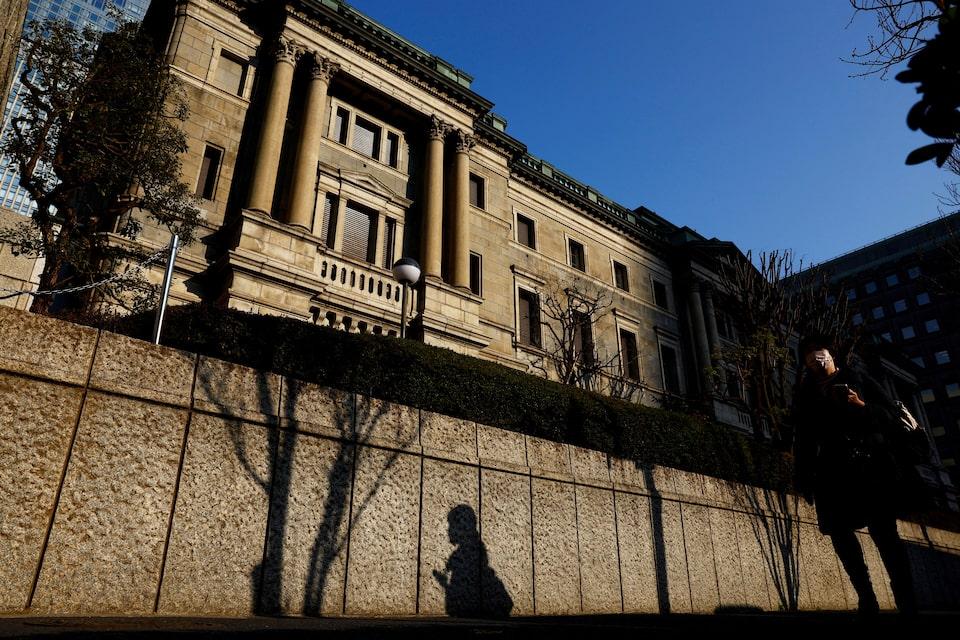
BOJ decision due 0330-0430 GMT Thursday Board likely to keep short-term rates steady at 0.5% BOJ to cut growth forecast, delay timing for hitting price goal BOJ seen sticking to rate-hike scenario despite US tariff risks Governor Ueda to brief media 0630GMT April 28 (Reuters) - The Bank of Japan is expected to keep interest rates steady on Thursday and warn of heightening risks to the fragile economy that could keep policy in a holding pattern, as U.S. tariffs continue to hit confidence. The debate may be swayed by what BOJ Governor Kazuo Ueda heard in Washington last week, where the International Monetary Fund slashed its global growth forecasts and policymakers fret of further damage to their economies from U.S. trade policy. Sign up here. Speaking after a meeting with counterparts from G20 major economies, Ueda said the BOJ will continue to raise interest rates - on condition the economy sustains a moderate recovery and keeps underlying inflation on track to hit its 2% target. While the BOJ is set to downgrade its growth forecasts, it is expected to signal that risks from higher U.S. tariffs won't derail wages and price hikes seen as crucial for further rate increases, sources have told Reuters. But the path towards policy normalisation may take longer than previously expected as trade tensions prod big exporters, which had spear-headed pay increases up till this year, to consider slowing or interrupting hikes next year. "The balance of risks is on the downside for growth and for inflation," as the tariff-induced uncertainty could discourage firms from sustaining bumper pay hikes in next year's wage talks, a senior IMF official said, projecting the BOJ to push back the timing of further rate hikes. At the two-day meeting ending on Thursday, the BOJ is widely expected to keep short-term interest rates steady at 0.5%. It is also seen pushing back the timing for durably hitting its 2% inflation target in a quarterly report, from around the latter half of fiscal 2025 in current projections made in January. WEAK-YEN COMPLICATION Trump's on-off tariffs have sent shockwaves through financial markets and sent policymakers, including those from Japan, scrambling to negotiate concessions from Washington. Particularly damaging for Japan is a 25% duty on cars, a mainstay of its export-heavy economy. "Pre-tariffs, maybe the sun was starting to shine a little more brightly in Tokyo," said Nathan Sheets, Global Chief Economist at Citi Research, referring to rising real wages that underpinned consumption. "But when the reciprocal tariffs were put on, and the auto tariffs, which obviously are big too, we said no rate hikes this year," he said on Citi's projection of the next BOJ rate rise. Analysts polled by Reuters in April said they expected the BOJ would hold rates steady through June, with a 25-basis-point hike expected next quarter by a slight majority of respondents. Despite heightening overseas risks, the BOJ has reason not to sound too dovish on the policy outlook. Domestic inflationary pressure is building with rising food prices pushing core inflation in Japan's capital - a leading indicator of nationwide trends - to a two-year high in April. The BOJ may also feel compelled to keep alive market expectations of further rate hikes to prevent renewed yen falls that could draw heat from the U.S., some analysts say. Trump has accused Tokyo of intentionally weakening the yen to give exports a trade advantage. Although broad-based dollar falls have recently propped up the yen, the slow pace of BOJ rate hikes has kept pressure on the Japanese currency. While Japan may have averted explicit U.S. pressure for a stronger yen in bilateral finance talks last week, U.S. Treasury Secretary Scott Bessent has made clear his interest in the yen. "I was pleased to follow up on previous reciprocal trade discussions between the United States and Japan, as well as to discuss matters pertaining to exchange rates," Bessent said in a post on X after his meeting with his Japanese counterpart in Washington on Thursday. https://www.reuters.com/markets/rates-bonds/boj-keep-rates-steady-warn-us-tariff-risks-2025-04-28/
2025-04-28 04:33
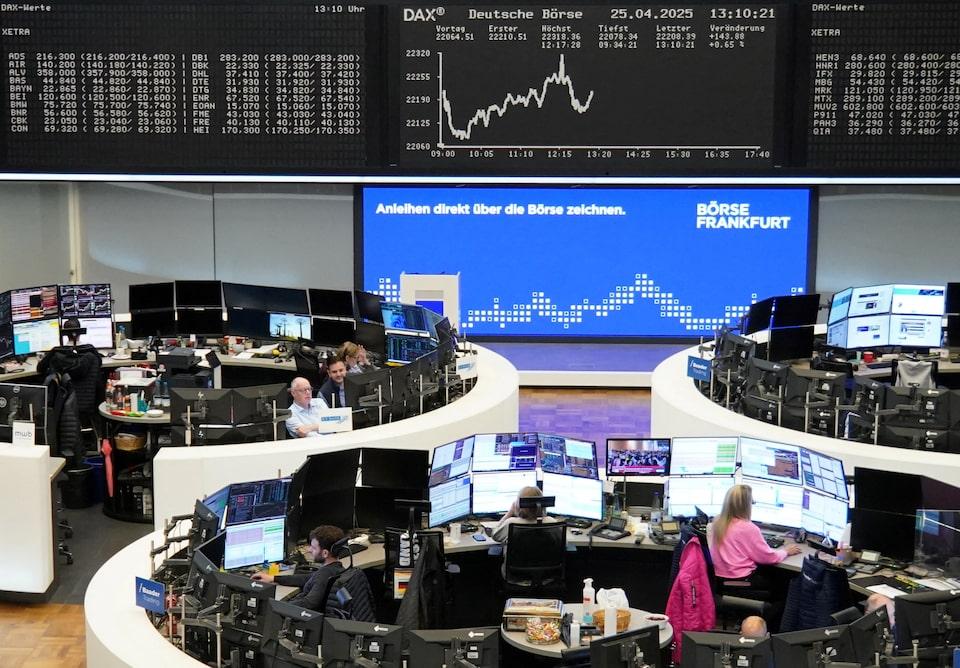
A look at the day ahead in European and global markets from Wayne Cole. It's been a blessedly quiet start to the week, with President Trump more engrossed on his disappointment with Russia, than his trade war. In this case, silence is golden, as the White House's communication on trade has been a lot more noise than signal. Sign up here. Thus, Agriculture Secretary Rollins tells TV they are speaking with China every day, likely news to Beijing. Then Treasury Secretary Scott Bessent says he has not discussed tariffs with Chinese officials and doesn't know if Trump talked to Xi, as he claimed. Apparently the White House plan is to have trade talks with six different nations every week until Trump's July 9 deadline on tariffs. Perhaps somewhat optimistic, given it takes on average 18 months just to set the terms of a deal, and longer to actually pass one. For now, markets are assuming they've seen peak tariff and Trump will be forced to lower levies on China, particularly after major U.S. retailers last week warned him their shelves would otherwise soon empty. Analysts at Barclays reckon a likely outcome will be 60% tariffs on China, 10% on everyone else and sectoral levies remaining at 25%, with exceptions. Even that, they note, would be worse than their worst-case scenario heading into 2025. Maybe one reason Asian shares are just marginally firmer so far today, while Wall St futures are down around 0.5% even as analysts are generally upbeat about looming earnings. About 180 S&P 500 companies representing more than 40% of the index's market value report this week, including mega-caps Apple (AAPL.O) , opens new tab, Microsoft (MSFT.O) , opens new tab, Amazon (AMZN.O) , opens new tab and Meta Platforms (META.O) , opens new tab. Clearly, there will be intense interest in Apple's outlook for iPhone sales and the impact of tariffs on its sprawling supply chains. As for data, euro zone and U.S. inflation reports this week are expected to be dovish for policy, as is the Q1 U.S. GDP report where a surge in imports, notably of gold, will bias down the headline number. Even excluding gold, the Atlanta Fed GDPNow measure tips GDP to drop 0.4% annualised. The payrolls numbers on Friday are more timely and should help refine wagers for a June rate cut from the Fed, currently put at around 63%. Key developments that could influence markets on Monday: - Appearances by ECB Vice-President Luis de Guindos and Bank of Finland Governor Olli Rehn - Dallas Fed manufacturing survey https://www.reuters.com/markets/europe/global-markets-view-europe-2025-04-28/
2025-04-28 03:01
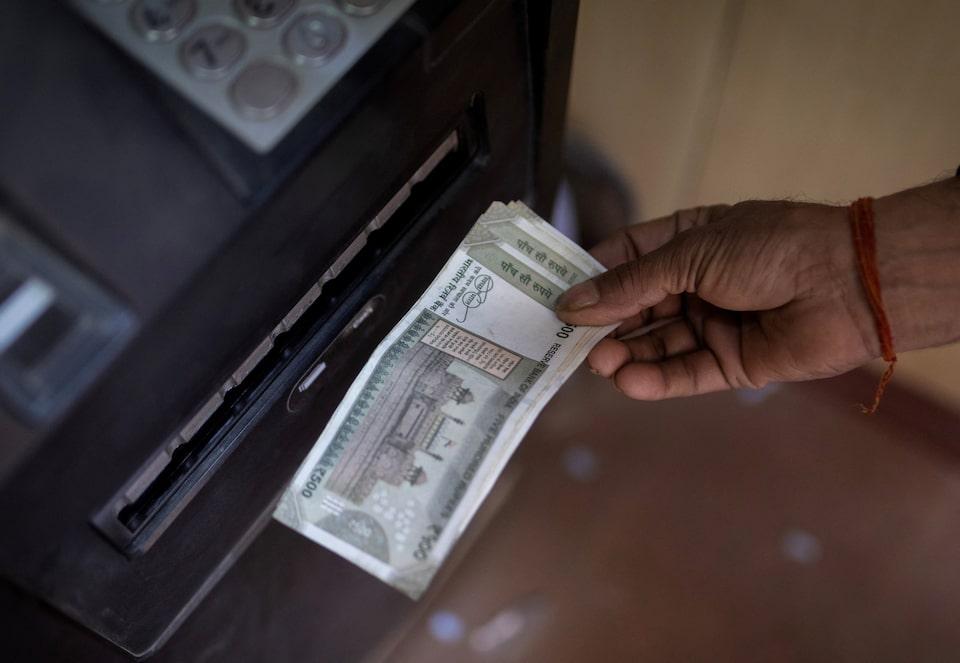
MUMBAI, April 28 (Reuters) - The Indian rupee looked set for a muted opening on Monday, with traders scanning headlines around the Kashmir attack and the movement in local equities for direction. The 1-month non-deliverable forward indicated that the rupee will open flat-to-slightly higher from its previous close of 85.45. Sign up here. The local unit saw sharp two-way moves on Friday, whipsawing between 85.08 and 85.66. After an initial rally toward the 85 level, the currency reversed course, pressured by a selloff in local equities and bonds on fears that tensions between New Delhi and Islamabad could spiral after the militant attack in Kashmir. The Nifty 50 (.NSEI) , opens new tab dropped nearly 1% on Friday and the 10-year bond yield rose 4 basis points. "Kashmir will be the focal point this week. The key question now is the extent of India's response," a currency trader at a bank said. The lack of major news over the weekend may offer the rupee slight relief at the open, he said. Kashmir is claimed in full by both India and Pakistan, who each rule over parts of it, and have previously fought wars over the Himalayan region. Meanwhile, most Asian currencies dipped on Monday, while the dollar index was little changed at 99.70. The near-term direction of the dollar will likely hinge on any headlines related to tariffs, according to analysts. Beyond tariffs, traders will focus on a slew of key U.S. data releases this week to assess the impact of uncertainty stemming from President Donald Trump's trade policies. The U.S. ISM manufacturing data is due Thursday, followed by the April jobs report on Friday. March core PCE data is scheduled for release on Wednesday Incoming U.S. economic data "clearly matters," said Chris Weston, head of research at Melbourne-based broker Pepperstone, citing the growing divergence among market participants over the near-term outlook for U.S. equities, dollar, and Treasuries. KEY INDICATORS: ** One-month non-deliverable rupee forward at 85.60; onshore one-month forward premium at 18 paisa ** Dollar index nearly flat at 99.70 ** Brent crude futures down 0.2% at $66.7 per barrel ** Ten-year U.S. note yield at 4.25% ** As per NSDL data, foreign investors bought a net $634.5 million worth of Indian shares on April 24 ** NSDL data shows foreign investors sold a net $14.5 million worth of Indian bonds on April 24 https://www.reuters.com/world/india/rupee-traders-track-kashmir-attack-developments-local-equities-2025-04-28/
2025-04-28 00:48
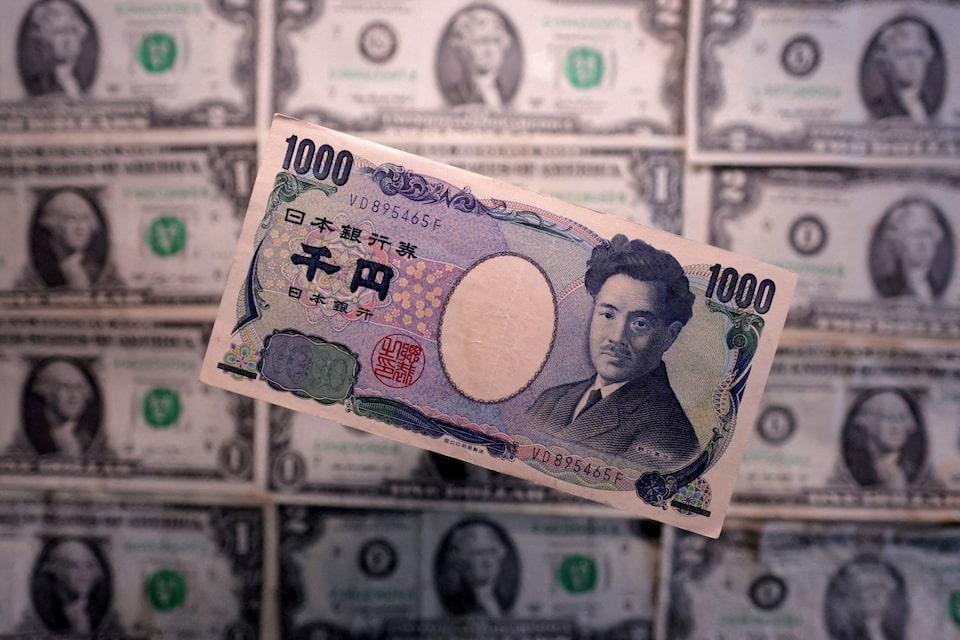
TOKYO, April 28 (Reuters) - Japan's top currency diplomat on Monday denied a media report that U.S. Treasury Secretary Scott Bessent had told his Japanese counterpart at a bilateral meeting in Washington that a weak dollar and a strong yen are desirable. "As we have said, the U.S. side did not touch upon exchange-rate targets in the finance minister talks," Atsushi Mimura, Japan's vice finance minister for international affairs, told reporters. Sign up here. Japanese Finance Minister Katsunobu Kato and Bessent had their first face-to-face talks on Thursday on the sidelines of the International Monetary Fund and World Bank meetings in Washington. The Yomiuri newspaper reported on Friday evening that Bessent told Kato his preference for a weak dollar and strong yen, without citing sources. On Saturday, Kato also denied the Yomiuri report on the X social media platform, repeating that they did not discuss exchange-rate targets or a framework to manage yen rates. In the press conference, Kato was tight-lipped on the details of the 50-minute meeting with Bessent, declining to comment on whether the U.S. made any specific requests to Japan. President Donald Trump's focus on addressing the U.S. trade deficit and his past remarks accusing Japan of intentionally maintaining a weak yen, have fueled market expectations that Tokyo will face pressure to strengthen the yen's value against the dollar and give U.S. manufacturers a competitive advantage. Bessent said in a X post on Saturday that he had "very constructive talks" with Kato. "I was pleased to follow up on previous reciprocal trade discussions between the United States and Japan, as well as to discuss matters pertaining to exchange rates," he said. https://www.reuters.com/business/japan-denies-report-citing-bessents-push-strong-yen-2025-04-28/
2025-04-27 23:40
April 28 (Reuters) - Australia's Alkane Resources (ALK.AX) , opens new tab will acquire Canada's Mandalay Resources (MND.TO) , opens new tab in an all-share deal valued at A$559.1 million ($357.8 million), the companies said on Monday, creating a combined diversified gold and antimony producer. The merged entity will have an implied market capitalisation of A$1.01 billion and expects to produce 160,000 gold-equivalent ounces in 2025, rising to over 180,000 ounces in 2026 from three established mines - Alkane's Tomingley, Mandalay's Costerfield mine in Australia and Björkdal mine in Sweden. Sign up here. Under the transaction, Mandalay shareholders will receive 7.875 Alkane shares for each Mandalay share, giving them 55% ownership of the combined entity. The tie-up joins a wave of consolidation in the global gold sector, with miners capitalising on soaring bullion prices. Gold scaled a record $3,500.05 per ounce last week, up more than 25% on geopolitical tensions and strong central bank demand. Last week Northern Star Resources (NST.AX) , opens new tab completed an A$5 billion acquisition of De Grey Mining (DEG.AX) , opens new tab . In March, Australia's Spartan Delta (SDE.TO) , opens new tab agreed to a A$2.4 billion takeover by Ramelius Resources (RMS.AX) , opens new tab, and South Africa's Gold Fields (GFIJ.J) , opens new tab made a A$3.3 billion bid for Gold Road Resources (GOR.AX) , opens new tab, however that was rejected. The Alkane-Mandalay transaction, unanimously approved by both boards, is expected to close in the third quarter of 2025, with Alkane applying for TSX listing of the combined entity. Current Alkane Managing Director Nic Earner will lead the Australian-headquartered company, which expects to benefit from potential ASX 300 index inclusion. ($1 = 1.5623 Australian dollars) https://www.reuters.com/en/alkane-resources-mandalay-resources-merge-deal-creating-6465-million-company-2025-04-27/

2025-04-27 21:02
NAPERVILLE, ILLINOIS, April 27 (Reuters) - Speculators held on to bullish bets in Chicago corn and soybeans last week in hopes that U.S. talks with trading partners might progress, potentially stimulating U.S. grain exports. U.S. farmers are off to an efficient start on spring planting and crops in South America have good prospects, neither of which are particularly price supportive. Sign up here. But market uncertainty remains sufficiently elevated as nothing concrete has emerged yet on the U.S. trade negotiation front. Money managers have held a net long position in CBOT corn futures and options since November. In the week ended April 22, they trimmed that position to 112,805 contracts from 124,573 in the previous week. The move was interesting because it included the largest weekly addition of gross short positions in six months. However, a sizable number of gross longs also entered the picture, suggesting mixed sentiment. Both longs and shorts were also added in soybeans, but bulls had the edge. Money managers increased their net long in CBOT soybeans by about 5,000 contracts to 31,067 futures and options contracts. CBOT July soybean futures were unchanged in the week ended April 22. They climbed 1.3% over the last three sessions, on Friday reaching the most-active contract’s highest price since early February. U.S. soybeans could be a top casualty of a U.S.-China trade war as they are the leading U.S. export to China of any kind. The two countries’ escalating tariff battle has been seen as potentially favorable to the soybean market as the extremely steep rates may force a deal sooner rather than later. However, Beijing on Friday denied talks were actively occurring, going against U.S. claims. Meanwhile, reports circulated on Thursday that Brazil will export more soybeans to China in 2025 amid the U.S.-China conflict. But Brazil recently harvested a record soy crop, meaning this was likely to happen anyway, trade war or not. Corn and soybean bulls got a nod last week from Japan, which may be considering upping its U.S. corn and soybean imports as part of trade negotiations. Japan is the second biggest U.S. corn and fifth biggest U.S. soybean importer. SOY PRODUCTS AND WHEAT Money managers in the week ended April 22 increased their net long in CBOT soybean oil by about 10,000 contracts to 50,899 futures and options contracts. Uncertainty about U.S. biofuel policy has caused investor sentiment to swing from bullish to bearish several times within the last few months, though healthy global soybean oil demand and robust U.S. exports have recently been supportive. July soybean oil futures last week topped 50 cents per pound, the most-active contract’s first time above that price level since December 2023. Funds remain heavily bearish in CBOT soybean meal futures and options, increasing their net short to 73,511 contracts through April 22, up about 4,000 on the week. Money managers have held a net short in CBOT wheat futures and options since June 2022, a record 147 consecutive weeks. That obliterates the previous record of 100 weeks set between 2015 and 2017. Funds were mild net buyers of CBOT wheat for a third consecutive week through April 22, though the resulting net short of 89,929 futures and options contracts is well above average for the date. CBOT July wheat futures had slipped 1% in the week ended April 22 and another 1% over the last three sessions with recently favorable weather in U.S. winter wheat areas and late-week contract lows in European wheat futures. In the upcoming week, traders will be watching to see how U.S. planting progressed following scattered rains across the Corn Belt last week. The relevant five-year planting averages for Monday’s progress report are 22% for corn and 12% for soybeans. Karen Braun is a market analyst for Reuters. Views expressed above are her own. https://www.reuters.com/markets/commodities/funds-hold-bullish-corn-soybean-bets-steady-trade-talks-await-clarity-braun-2025-04-27/