2025-04-27 01:32
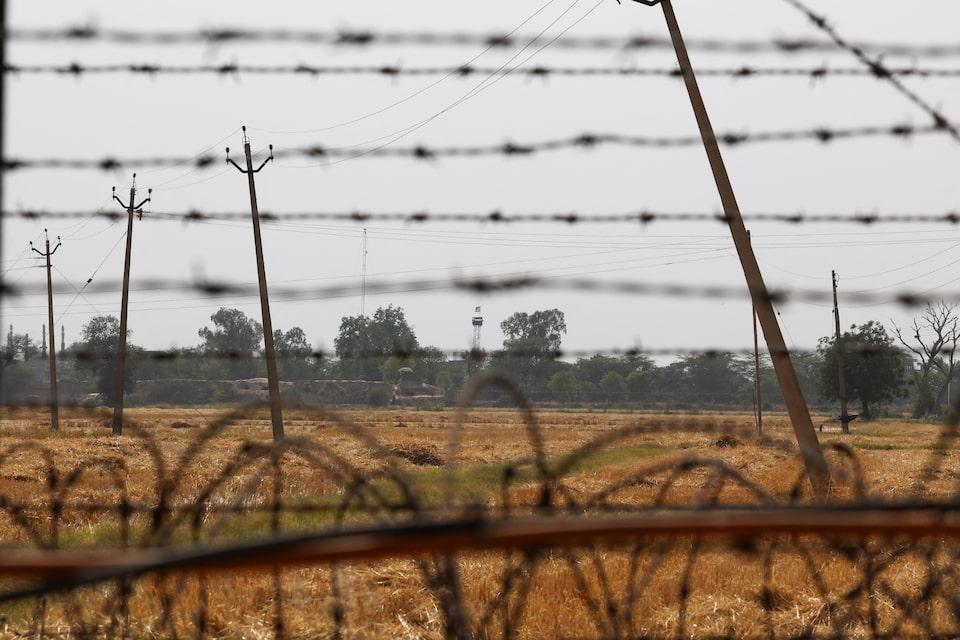
LATIFABAD, Pakistan/NEW DELHI, April 27 (Reuters) - Spraying pesticides on his parched vegetables one street away from the Indus River, Pakistani farmer Homla Thakhur is worried about his future. The sun is at its peak, the river is running very low, and India has vowed to cut supplies upstream after a deadly militant attack in Kashmir. "If they stop water, all of this will turn into the Thar desert, the whole country," said Thakhur, 40, before heading back to the river to refill the tank for the spray gun. Sign up here. "We'll die of hunger." His nearly 5-acre (2 hectare) farm is located in the Latifabad area of the southeastern province of Sindh, from where the Indus flows into the Arabian Sea after originating in Tibet and snaking through India. Thakhur's fears were echoed by more than 15 Pakistani farmers and several other experts, especially as rain has been scanty in recent years. For the first time, India on Wednesday suspended the World Bank-mediated Indus Waters Treaty , opens new tab of 1960 that ensures water for 80% of Pakistani farms, saying it would last until "Pakistan credibly and irrevocably abjures its support for cross-border terrorism". India says two of the three militants who attacked tourists and killed 26 men in Kashmir were from Pakistan. Islamabad has denied any role and said "any attempt to stop or divert the flow of water belonging to Pakistan ... will be considered as an Act of War". The treaty split the Indus and its tributaries between the nuclear-armed rivals. Government officials and experts on both sides say India cannot stop water flows immediately, because the treaty has allowed it to only build hydropower plants without significant storage or dams on the three rivers allocated to Pakistan. But things could start changing in a few months. "We will ensure no drop of the Indus River's water reaches Pakistan," India's water resources minister, Chandrakant Raghunath Paatil, said on X. He did not respond to questions about the fears in Pakistan. Two Indian government officials, who declined to be identified discussing a sensitive subject, said the country could within months start diverting the water for its own farms using canals while planning hydroelectric dams that could take four to seven years to finish. Immediately, India will stop sharing data like hydrological flows at various sites of the rivers flowing through India, withhold flood warnings and skip annual meetings under the Permanent Indus Commission headed by one official each from the two countries, said Kushvinder Vohra, a recently retired head of India's Central Water Commission. "They will not have much information with them when the water is coming, how much is coming," said Vohra, who was also India's Indus Commissioner and now advises the government occasionally. "Without the information, they cannot plan." And it is not just agriculture, a shortage of water will also hit electricity generation and potentially cripple the economy, economists say. Vaqar Ahmed, economist and team lead with UK consulting firm Oxford Policy Management, said that Pakistan had underestimated the threat of India walking away from the treaty. "India hasn’t got the kind of immediate infrastructure to halt the waterflows, especially during flood times, so this period creates a crucial window for Pakistan to address the inefficiencies in its water sector," he said. "There are a lot of inefficiencies, leakages." RUNNING DISPUTES In recent years, Indian Prime Minister Narendra Modi's government has been seeking to renegotiate the treaty and the two countries have been trying to settle some of their differences in the Permanent Court of Arbitration in the Hague over the size of the Kishenganga and Ratle hydroelectric plants' water storage area. "We can now pursue our projects in free will," said Vohra. In a letter on Thursday, India told Pakistan that circumstances had changed since the treaty was signed, including population increases and the need for more cleaner energy sources, referring to hydropower. A World Bank spokesperson said it was a "signatory to the treaty for a limited set of defined tasks" and that it does "not opine on treaty-related sovereign decisions taken by its member countries". Nadeem Shah, who has a 150-acre farm in Sindh where he grows cotton, sugar cane, wheat and vegetables, said he was also worried about drinking water. "We have trust in God, but there are concerns over India's actions," he said. The three rivers meant for Pakistan, a country of 240 million people, irrigate more than 16 million hectares of farmland, or up to 80% of the total. Ghasharib Shaokat of Pakistan Agriculture Research, a Karachi research firm, said India's actions inject uncertainty "into a system that was never designed for unpredictability". "At this moment, we don’t have a substitute," he said. "The rivers governed by the treaty support not just crops, but cities, power generation, and millions of livelihoods." The treaty remained largely unscathed even when India and Pakistan fought four wars since separating in 1947, but the suspension sets a dangerous precedent, Pakistani politicians said. "We're already locked into generations of conflict, and by exiting the Indus Water Treaty, I believe we're locking future generations into a brand new context of conflict," said Bilawal Bhutto Zardari, Pakistan's former foreign minister. "That must not happen." https://www.reuters.com/world/asia-pacific/panic-pakistan-india-vows-cut-off-water-supply-over-kashmir-2025-04-27/
2025-04-26 22:19
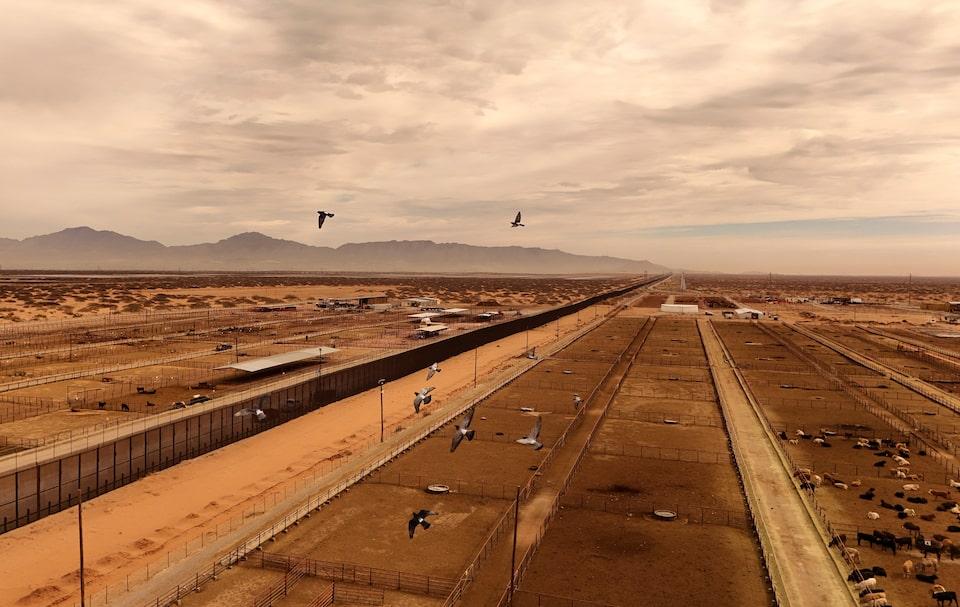
WASHINGTON April 26 (Reuters) - President Donald Trump's administration warned on Saturday that it will restrict livestock imports from Mexico if that country's government does not intensify its fight against a damaging pest called New World screwworm. U.S. Agriculture Secretary Brooke Rollins in a letter Saturday to her Mexican counterpart said that she "will restrict the importation of animal commodities" if those issues are not resolved by Wednesday. Sign up here. Rollins' letter, which she posted on the social media site X, said Mexico had limited one of the companies hired to conduct aerial spraying to eliminate the pest to flying only six days a week and had imposed "burdensome customs duties" on parts needed to keep its planes in the air. Her threat comes against the backdrop of a global trade war launched by U.S. President Donald Trump, who has ratcheted up tariffs on Mexico and other trading partners. Screwworm can infest livestock, wildlife and in rare cases, people. Maggots from screwworm flies burrow into the skin of living animals, causing serious and often fatal damage. Before screwworm's discovery, Mexico had been the U.S.'s largest supplier of cattle. Last month, the U.S. imported 24,000 head of cattle from Mexico, down from about 114,000 a year earlier, according to the U.S. Department of Agriculture. The U.S. blocked Mexican livestock shipments in late November after the pest was discovered. It lifted that restriction in February based on new protocols for assessing the health of animals before they enter the country. Rollins' letter was first reported by Fox News. https://www.reuters.com/world/americas/us-could-restrict-mexican-livestock-imports-over-screwworm-worry-official-says-2025-04-26/
2025-04-26 16:58
April 26 (Reuters) - Saudi Arabia's non-oil exports reached an all-time high of 515 billion riyals ($137.29 billion) in 2024, the state news agency said on Saturday, as the kingdom continues its push to diversify its economy away from oil dependence. The world's leading oil exporter is investing billions of dollars to achieve its Vision 2030 plan, which focuses on reducing its reliance on oil and spending more on infrastructure to boost industries like tourism, sports and manufacturing. Sign up here. Saudi Arabia is also working to attract more outside investment to ensure its ambitious plans stay on track. Non-oil exports rose 13% year-on-year, and over 113% since the launch of Saudi vision 2030, state news agency SPA added. Abdulrahman Althukair, CEO of the Saudi Export Development Authority, was quoted by SPA attributing the jump in non-oil exports to the "kingdom's sustained efforts in economic diversification". On Friday, Saudi Arabia announced its 2024 annual report for the kingdom's 2030 Vision plan, which saw the kingdom attract foreign direct investment worth 77.6 billion riyals ($20.69 billion). It has set itself a target to attract $100 billion in annual foreign direct investment by the turn of the decade. ($1 = 3.7512 riyals) https://www.reuters.com/world/middle-east/saudi-arabia-reports-record-non-oil-exports-137-billion-2024-2025-04-26/

2025-04-26 16:22
WASHINGTON, April 26 (Reuters) - Pakistan has put in a request to China to augment its existing swap line by 10 billion yuan ($1.4 billion), Finance Minister Muhammad Aurangzeb said, adding he expected the country would launch a Panda bond before year-end. Pakistan has an existing 30 billion yuan swap line already, Aurangzeb told Reuters in an interview on the sidelines of the International Monetary Fund and World Bank Group spring meetings in Washington. Sign up here. "From our perspective, getting to 40 billion renminbi would be a good place to move towards ... we just put in that request," Aurangzeb said. China's central bank has been promoting currency swap lines with a raft of emerging economies, including the likes of Argentina and Sri Lanka. Pakistan has also made progress on issuing its first panda bond - debt issued on China's domestic bond market, denominated in yuan. Talks with the presidents of the Asian Infrastructure Investment Bank (AIIB) and Asian Development Bank (ADB) - the two lenders who are in line to provide credit enhancements for the issue - had been constructive, he said. "We want to diversify our lending base and we have made some good progress around that - we are hoping that during this calendar year we can do an initial print," he said. Meanwhile, Aurangzeb expected the IMF executive board to sign off in early May on the Staff Level Agreement on its new $1.3 billion arrangement under a climate resilience loan program as well as the first review of the ongoing $7 billion bailout program. Getting the green light from the IMF board would trigger a $1 billion payout under the programme, which the country secured in 2024 and has played a key role in stabilizing Pakistan's economy. Asked about the economic fallout from the tensions with India following the killing of 26 men at a tourist site earlier this month, Aurangzeb said it was "not going to be helpful." The attack triggered outrage and grief in India, along with calls for action against neighbour Pakistan, whom New Delhi accuses of funding and encouraging terrorism in Kashmir, a region both nations claim and have fought two wars over. After the attack, India and Pakistan unleashed a raft of measures against each other, with Pakistan closing its airspace to Indian airlines and suspending trade ties, and India suspending the 1960 Indus Waters Treaty that regulates water-sharing from the Indus River and its tributaries. Trade flows between the two countries had already fallen off sharply following past frictions and totalled just $1.2 billion last year. Aurangzeb estimated growth around 3% in the current financial year which ends in June 2025, and in the 4-5% range next year, with a view to hitting 6% thereafter. ($1 = 7.2864 Chinese yuan renminbi) https://www.reuters.com/sustainability/climate-energy/pakistan-requests-extra-10-bln-yuan-china-swap-line-says-finance-minister-2025-04-26/

2025-04-26 16:17
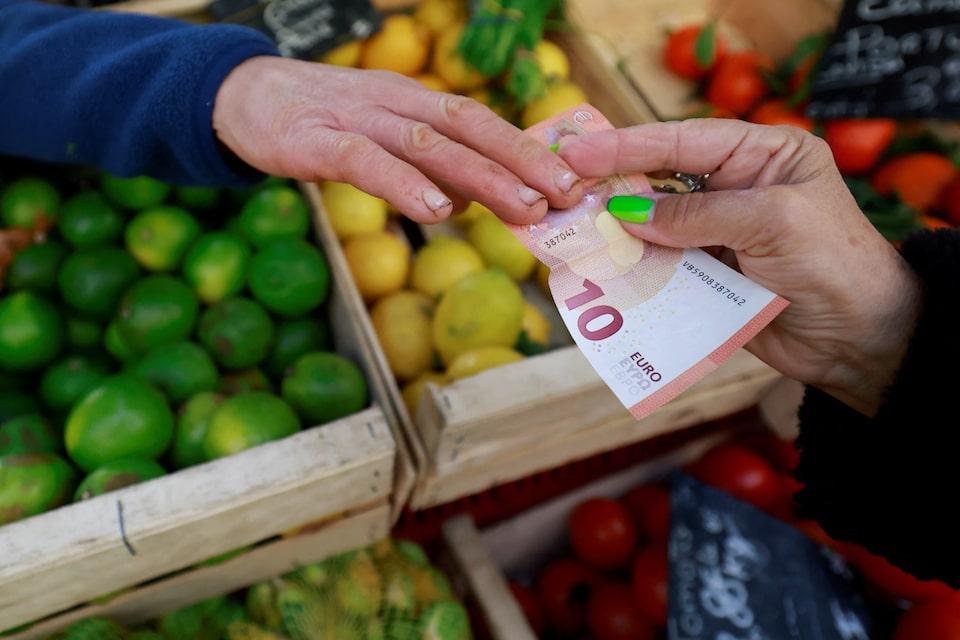
Tariffs created disinflationary pressures Data shows euro zone wage growth slowing Longer term outlook remains foggy WASHINGTON, April 26 (Reuters) - European Central Bank policymakers are becoming increasingly confident about cutting interest rates in June as inflation continues its march lower, but there is little to no appetite for a big move, six sources told Reuters. ECB governors gathering in Washington for the International Monetary Fund and World Bank's Spring Meetings took stock of a weakening economy in the euro zone and around the world as uncertainty from tariffs imposed by U.S. President Donald Trump puts a dampener on investment. Sign up here. Data out of the euro zone also showed business growth stalling this month and pay hikes expected to ease considerably. Most importantly for inflation, the 20% tariff rate provisionally imposed by Trump on European goods had been less severe than modelled by the ECB and the risk of retaliation by the European Union had so far been averted. That meant that many governors were now seeing growing chances of an eighth quarter-point cut at their June 4 meeting, when the ECB will update its own economic forecasts. The ECB trimmed its benchmark rate to 2.25% earlier this month. In line with the ECB's official line, they were keeping an open mind, however, given that the decision was still more than a month away and economic policy had become unpredictable since Donald Trump's April 2 announcement. An ECB spokesperson declined to comment. Trump's move shook investor confidence in the U.S. economy and even its status as the world's safe haven, causing fuel prices as well as the dollar to fall against the euro. This resulted in growing disinflationary pressure in the euro zone, assuaging concerns about high price growth becoming entrenched among even some of the more hawkish members of the ECB's Governing Council. The outlook further out remains foggy, however, with the prospect of a more fragmented world, cheaper imports from China and stronger domestic demand from Germany's fiscal spending plans creating contrasting forces. For this reason, too, policymakers who spoke to Reuters saw no reason at present to consider a bigger, 50-basis-point cut, which they also believed might raise unnecessary alarm among market participants. https://www.reuters.com/business/finance/ecb-consensus-builds-june-rate-cut-no-appetite-big-move-sources-say-2025-04-26/
2025-04-26 12:55
April 26 (Reuters) - Kuwait's Petrochemical Industries Company, a subsidiary of state-owned Kuwait Petroleum Corporation, said on Saturday it has signed an agreement to acquire a 25% stake in China's Wanhua Chemical Group. It did not disclose the value of the transaction, which it said was the largest Kuwaiti investment in China's petrochemicals industry. Sign up here. Under the deal, Petrochemical Industries Company will acquire several of the Chinese group's industrial units that specialize in manufacturing several petrochemicals, including propylene oxide and acrylic acid in the Chinese city of Yantai. This would help diversify the Kuwaiti company's portfolio of high-value products, it said. https://www.reuters.com/business/energy/kuwait-petroleum-subsidiary-acquires-25-stake-chinas-wanhua-chemical-group-2025-04-26/