2025-04-26 11:18
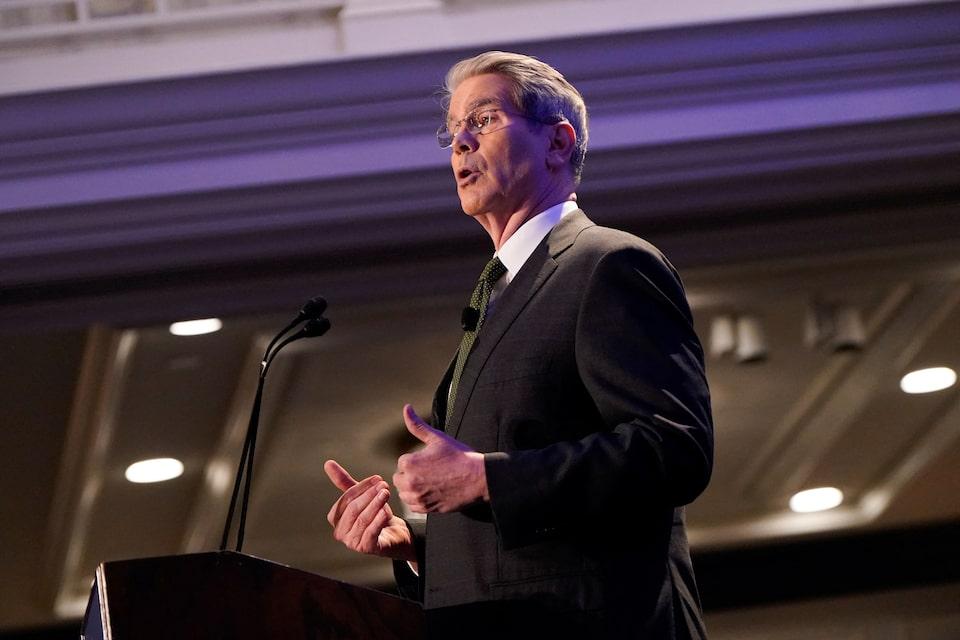
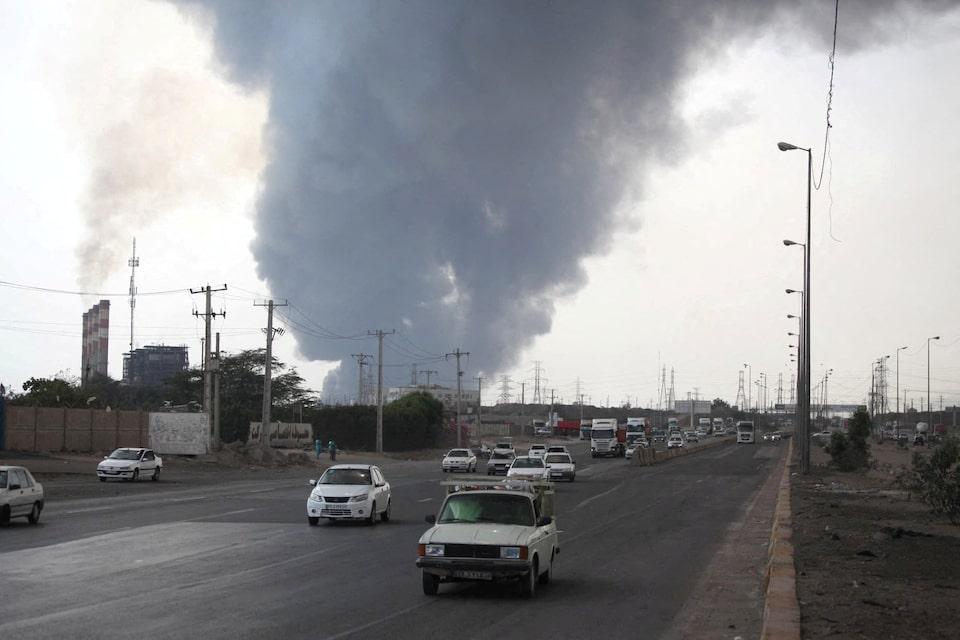
Blast rocks part of Bandar Abbas port in southern Iran Poorly stored chemicals likely cause, says one official Government says too early to be sure More than 700 injured in blast DUBAI, April 26 (Reuters) - (This April 26 story has been refiled to correct the spelling of Hormuz in paragraph 9) A huge blast probably caused by the explosion of chemical materials killed at least 18 people and injured more than 700 on Saturday at Iran's biggest port, Bandar Abbas, Iranian state media reported. Sign up here. The explosion, which hit the Shahid Rajaee section of the port, occurred as Iran began a third round of nuclear talks with the United States in Oman, but there was no indication of a link between the two events. Hossein Zafari, a spokesperson for Iran's crisis management organisation, appeared to blame the explosion on poor storage of chemicals in containers at Shahid Rajaee. "The cause of the explosion was the chemicals inside the containers," he told Iran's ILNA news agency. "Previously, the Director General of Crisis Management had given warnings to this port during their visits and had pointed out the possibility of danger," Zafari said. However, an Iranian government spokesperson said that although chemicals had likely caused the blast, it was not yet possible to determine the exact reason. President Masoud Pezeshkian ordered an investigation of the incident and sent to the site his interior minister, who said efforts were continuing to extinguish the fire and prevent it from spreading to other areas. Iran's official news channels aired footage of a vast black and orange cloud of smoke billowing up above the port in the aftermath of the blast, and an office building with its doors blown off and papers and debris strewn around. Located near the strategic Strait of Hormuz, Shahid Rajaee port is Iran’s biggest container hub, handling a majority of the country’s container goods, according to state media. The blast shattered windows within a radius of several kilometres and was heard in Qeshm, an island 26 kilometres (16 miles) south of the port, Iranian media said. The semi-official Tasnim news agency posted footage of injured men lying on the road being tended to amid scenes of confusion. State TV earlier reported that poor handling of flammable materials was a "contributing factor" to the explosion. A local crisis management official told state TV that the blast took place after several containers stored at the port exploded. As relief workers tried to put out fires, the port's customs officials said trucks were being evacuated from the area and that the container yard where the explosion occurred likely contained "dangerous goods and chemicals". Activities at the port were halted after the blast, officials said. DEADLY INCIDENTS A series of deadly incidents has hit Iranian energy and industrial infrastructure in recent years, with many, like Saturday's blast, blamed on negligence. They have included refinery fires, a gas explosion at a coal mine, and an emergency repair incident at Bandar Abbas that killed one worker in 2023. Iran has blamed some other incidents on its arch-foe Israel, which has carried out attacks on Iranian soil targeting Iran's nuclear programme in recent years and last year bombed the country's air defences. Tehran said Israel was behind a February 2024 attack on Iranian gas pipelines, while in 2020 computers at Shahid Rajaee were hit by a cyberattack. The Washington Post reported that Israel appeared to be behind that incident as retaliation for an earlier Iranian cyberattack. Israel has indicated it is nervous about the outcome of U.S.-Iran talks, demanding a full dismantlement of Iran's nuclear programme. Tehran says the programme is used solely for peaceful purposes, while international observers say it is getting closer to being able to build a bomb. There was no immediate comment from Israel's military or Prime Minister Benjamin Netanyahu's office when asked for comment on whether Israel was in any way involved in Saturday's explosion. Oil facilities were not affected by the blast on Saturday, Iranian authorities said. The National Iranian Petroleum Refining and Distribution Company said in a statement it had "no connection to refineries, fuel tanks, distribution complexes and oil pipelines." https://www.reuters.com/world/middle-east/least-47-injured-after-explosion-port-irans-bandar-abbas-2025-04-26/
2025-04-26 10:04
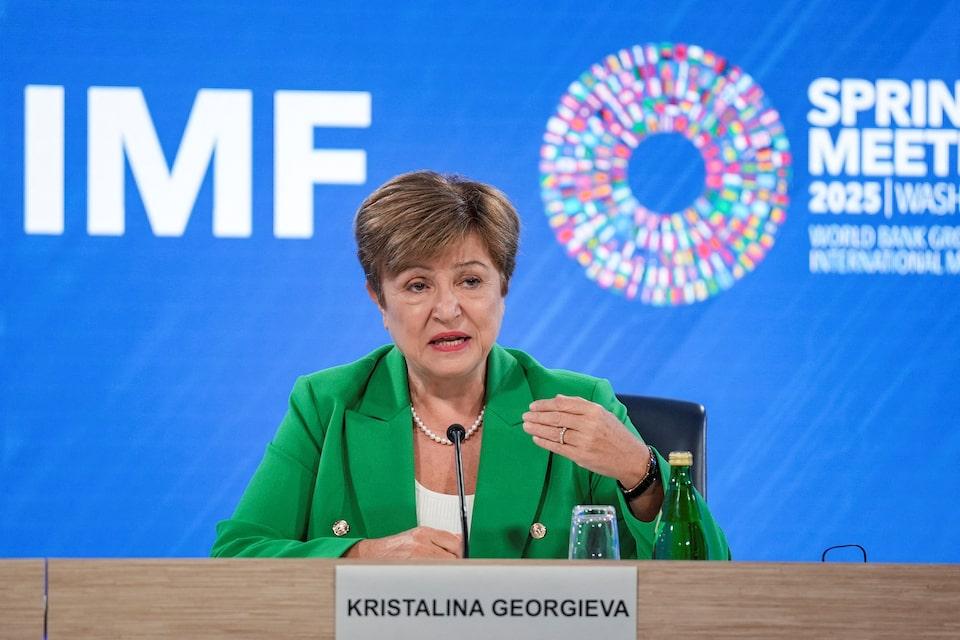
Trump eases pressure on Fed after market backlash U.S. signals it will stay in IMF, World Bank Policymakers have no alternative to dollar system WASHINGTON, April 26 (Reuters) - Global policymakers gathering in Washington this week breathed a collective sigh of relief that the U.S.-centric economic order that prevailed for the past 80 years was not collapsing just yet despite Donald Trump's inward-looking approach. The Spring Meetings of the International Monetary Fund and the World Bank were dominated by trade talks, which also brought some de-escalatory statements from Washington about its relations with China. Sign up here. But some deeper questions hovered over central bankers and finance ministers after Trump's attacks on international institutions and the Federal Reserve: can we still count on the U.S. dollar as the world's safe haven and on the two lenders that have supported the international economic system since the end of World War Two? Conversations with dozens of policymakers from all over the world revealed generalised relief at Trump’s scaling back his threats to fire Fed Chair Jerome Powell, the guardian of the dollar’s international status whom he had previously described as a "major loser". And many also saw a silver lining in U.S. Treasury Secretary Scott Bessent’s call to reshape the IMF and World Bank according to Trump's priorities because it implied that the United States was not about to pull out of the two lenders that it helped create at the Bretton Woods conference of 1944. "This week was one of cautious relief," Austria's central bank governor Robert Holzmann said. "There was a turn (in the U.S. administration's stance) but I fret this may not be the last. I keep my reservations." A politicization of the Fed and, to a lesser extent, the hollowing out of the IMF and World Bank are almost too much to fathom for most officials. Deprived of a lender of last resort, some $25 trillion of bonds and loans issued abroad would be called into question. NO ALTERNATIVE At the heart of policymakers' concerns is that there is no ready alternative to the United States as the world's financial hegemon - a situation that economists know as the Kindleberger Trap after renowned historian Charles Kindleberger. To be sure, the euro, a distant-second reserve currency, is gaining popularity in light of the European Union's newly found status as an island of relative stability. But policymakers who spoke to Reuters were adamant that the European single currency was not ready yet to dethrone the dollar and could at best hope to add a little to its 20% share of the world's reserves. Of the 20 countries that share the euro only Germany has the credit rating and the size that investors demand from a safe haven. Some other members are highly indebted and prone to bouts of political and financial turmoil - most recently in France last year - which raise lingering questions about the bloc's long-term viability. And the euro zone's geographical proximity to Russia - particularly the three Baltic countries that were once part of the Soviet Union - cast an even more sinister shadow. With Japan now too small and China's heavily managed currency in an even worse position, this left no alternative to the dollar system underpinned by the Fed and the two Bretton Woods institutions. In fact, the IMF and the World Bank could scarcely survive if their largest shareholder, the United States, pulled out, officials said. "The U.S. is absolutely crucial for multilateral institutions," Polish Finance Minister Andrzej Domanski told Reuters. "We're happy they remain." Still, few expected to go back to the old status quo and thorny issues were likely to await, such as widespread dependence on U.S. firms for a number of key services from credit cards to satellites. But some observers argued that the market turmoil of the past few weeks, which saw U.S. bonds, shares and the currency sell off sharply, might have been a shot in the arm as it forced a change of tack by the administration. "When President Trump talked about firing Jay Powell, the fact that markets reacted so vigorously to that ended up being a disciplining reality just reminding the administration that, if you cross that line, it could have some very severe implications," said Nathan Sheets, global chief economist at Citi. https://www.reuters.com/business/finance/world-breathes-sigh-relief-trump-spares-fed-imf-2025-04-26/
2025-04-26 07:23
DAR ES SALAAM, April 26 (Reuters) - Tanzania has lifted a ban on imports of agricultural produce from Malawi and South Africa, it said late on Friday, days after imposing it in retaliation for similar measures imposed by the two southern African nations. Tanzania Plant Health and Pesticides Authority (TPHPA)'s director general, Joseph Ndunguru, said that Tanzania was lifting the ban effective immediately to allow for "a diplomatic ministerial discussion." Sign up here. The two countries had reached out separately seeking to resolve the trade dispute through dialogue, he said. On Wednesday Tanzania's ministry of agriculture banned imports of all agricultural produce from Malawi and South Africa and also banned exports to Malawi of Tanzanian fertilizer, which Malawi relies on. The ban on fertilizer exports to Malawi has now also been lifted. The three countries all belong to a regional economic bloc, the Southern African Development Community (SADC). South Africa's Minister for International Relations and Cooperation Ronald Lamola welcomed Tanzania's move to lift the ban, saying it underscored the strong relations between both nations. "This outcome demonstrates that the diplomatic route remains the most effective path to resolving challenges... cooperation and mutual understanding can unlock shared opportunities," he was quoted as saying in a statement. Malawi had recently banned imports of Tanzanian agricultural commodities like maize flour, rice, ginger, and bananas, among other products, while South Africa has also stopped imports of bananas shipped by Tanzania. https://www.reuters.com/world/africa/tanzania-lifts-ban-agriculture-imports-south-africa-malawi-2025-04-26/

2025-04-26 07:03
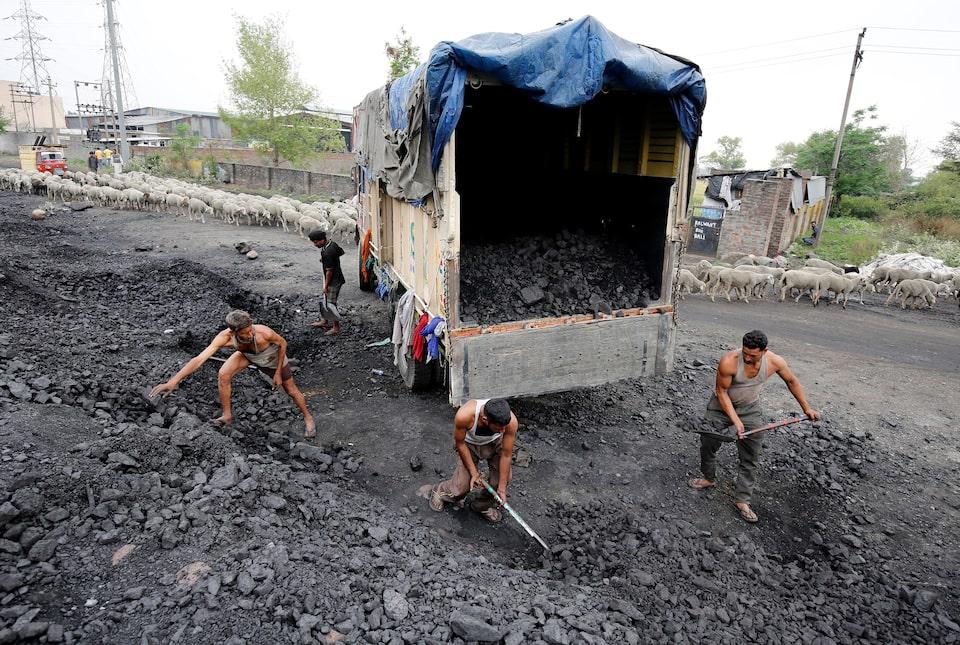
MUMBAI, April 26 (Reuters) - India is encouraging companies to acquire iron ore, coking coal, and other key raw material assets overseas, Steel Secretary Sandeep Poundrik said on Saturday, as the country ramps up its steelmaking capacity to meet rising demand. "We are encouraging our companies to acquire assets abroad, right from iron ore to coking coal to even limestone and dolomite," Poundrik said at an industry event in Mumbai. "Raw material securitisation is the most important aspect of steelmaking." Sign up here. India, the world's second-largest producer of crude steel, aims to boost its overall steelmaking capacity to 300 million tons by 2030, up from about 200 million tons currently. To support this expansion, coking coal imports are projected to rise to 160 million tons by 2030 from around 58 million tons now, Poundrik had projected on Friday. Despite an uptick in steel output, India's coking coal imports dipped 0.7% in the fiscal year ended in March due to lower shipments from Australia and the United States, said commodities consultancy BigMint. India relies on imports to meet 85% of its coking coal needs, with Australia supplying more than half of those shipments. In a bid to diversify supply, India has also been exploring partnerships with Mongolia. However, logistical challenges remain in sourcing material from the landlocked country, Poundrik noted. India's state-run miner NMDC (NMDC.NS) , opens new tab is exploring coking coal assets, in Indonesia and Australia, Chairman Amitava Mukherjee said on Thursday. https://www.reuters.com/world/india/india-urging-firms-acquire-overseas-iron-ore-coking-coal-assets-official-says-2025-04-26/
2025-04-26 06:39
BELGRADE, April 26 (Reuters) - Serbian oil company Naftna Industrija Srbije (NIIS.BEL) , opens new tab, which is majority-owned by Russia's Gazprom Neft (SIBN.MM) , opens new tab and Gazprom (GAZP.MM) , opens new tab, secured a third sanctions waiver from the United States, President Aleksandar Vucic said on Saturday. NIS operates a single oil refinery in Serbia with annual capacity of 4.8 million tons. It covers most of the Balkan country's needs and the introduction of sanctions would cut its crude supply. Sign up here. "Serbia has managed to secure a new sanctions waiver, this time for two months, until June 27," Vucic wrote on Instagram. The U.S. Treasury's Office of Foreign Assets Control (OFAC) initially placed sanctions on Russia's oil sector on January 10, and gave Gazprom Neft 45 days to exit ownership of NIS. Serbia's government and NIS have so far secured two one-month waivers from OFAC to try to find a solution with the Russian companies, with the second one set to expire on April 28. This is the first two-month sanctions reprieve so far. "Thank you to our American partners and their understanding for Serbia's position," Vucic said. On February 26, Gazprom Neft transferred stakes of around 5.15% in NIS to Gazprom in an attempt to ward off sanctions. Gazprom Neft owns 44.85% of NIS, while Gazprom has 11.3%. The Serbian government holds a 29.87% stake, with small shareholders accounting for the rest. NIS imports about 80% of its needs through Croatia's pipeline operator Janaf. The remainder is covered by its own crude oil production in Serbia. https://www.reuters.com/business/energy/serbias-nis-oil-firm-gets-new-sanctions-waiver-us-2025-04-26/

2025-04-26 00:34
WASHINGTON, April 25 (Reuters) - U.S. Treasury Secretary Scott Bessent was encouraged by "productive" early trade talks with Japan and South Korea this week, the Treasury said in a statement on Friday. In a readout issued a day after the bilateral meeting in Washington with Japanese Finance Minister Katsunobu Kato, the Treasury said Bessent "welcomed the strong start the two countries have made to bilateral trade discussions." Sign up here. The Treasury also said that tariff negotiations on Thursday with South Korea were aimed at finding a new equilibrium that encourages more trade between the two allies rather than restricting it. During a meeting on Thursday between Bessent, U.S. Trade Representative Jamieson Greer, South Korean Finance Minister Choi Sang-mok and South Korean Trade Minister Ahn Duk-geun, the officials agreed to "further productive discussions, including on currency policy," the Treasury said in a separate statement. "Secretary Bessent was encouraged by their discussions' focus on an expanded equilibrium which encourages rather than restricts trade," the Treasury said, adding that he welcomed South Korea's "fast and positive engagement" with the U.S. on tariffs. https://www.reuters.com/world/asia-pacific/us-treasurys-bessent-encouraged-by-productive-japan-south-korea-trade-talks-2025-04-26/