2025-04-25 12:04
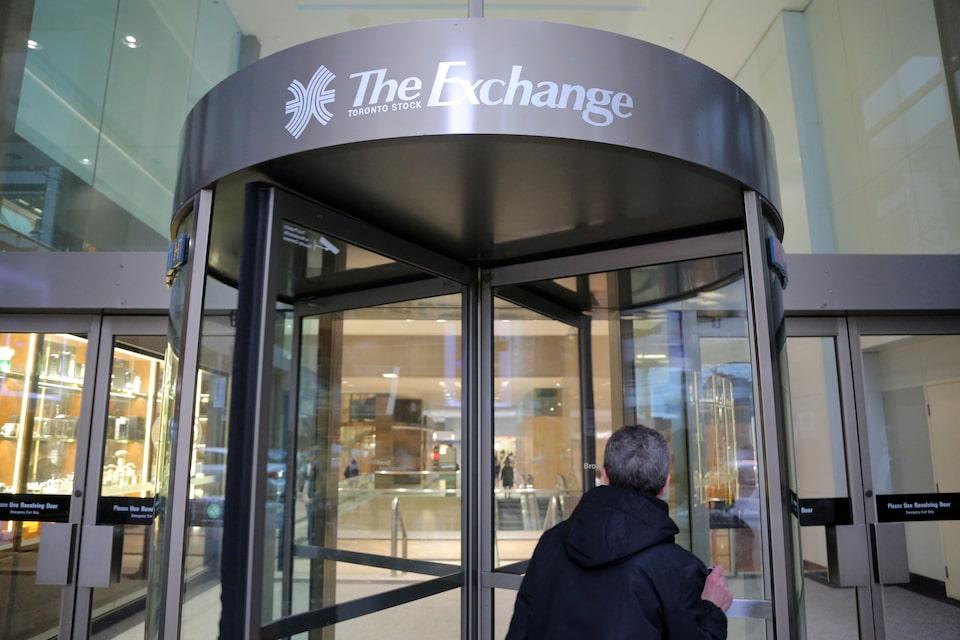
TSX ends down 0.1% at 24,710.51 For the week, the index adds 2.1% Industrials decline 1.1% Materials group loses 0.7% as gold falls April 25 (Reuters) - Canada's main stock index edged lower on Friday but still posted a weekly gain, as investors pinned their hopes on easing trade tensions and weighed bets to take advantage of potential moves after next week's Canadian general election. The Toronto Stock Exchange's S&P/TSX Composite Index (.GSPTSE) , opens new tab ended down 17.02 points, or 0.1%, at 24,710.51, after posting a three-week high on Thursday. Sign up here. For the week, the index was up 2.1%, its third straight weekly advance. Wall Street also ended higher for the week as investors parsed a spate of earnings and Beijing exempted some U.S. imports from its 125% tariffs. "The TSX has been walking on a tight rope - balancing domestic political uncertainty against potential spillover from global economic shifts," said Victor Kuntzevitsky, a portfolio manager at Stonehaven, Wellington-Altus Private Counsel. Canada stands to elect a government that will push policies to boost business more than in recent years but its trade-dependent economy could be in line for an increased level of deficit spending, analysts and investors said before Monday's vote. Prime Minister Mark Carney's ruling Liberal Party remains ahead in the latest polls but the gap with the main opposition Conservative Party, led by Pierre Poilievre, is tightening. The materials sector, which includes metal mining shares, has been the strongest performing sector on the TSX this year, advancing more than 20%, as safe-haven demand propelled the price of gold to a record high. "We have been lightening up on the materials space and using that to buy technology-heavy indices elsewhere," Kuntzevitsky said, adding that he could raise his energy share holdings if a potential election win for the Liberals, who are seen more receptive to climate policies than the Conservatives, leads to those stocks becoming cheaper. The industrials sector fell 1.1% on Friday, with shares of professional services firm WSP Global Inc (WSP.TO) , opens new tab down 4.3%. Declines for gold and copper prices weighed on the materials sector, which ended 0.7% lower. https://www.reuters.com/markets/europe/tsx-futures-dip-commodities-fall-trade-worries-linger-2025-04-25/
2025-04-25 11:59
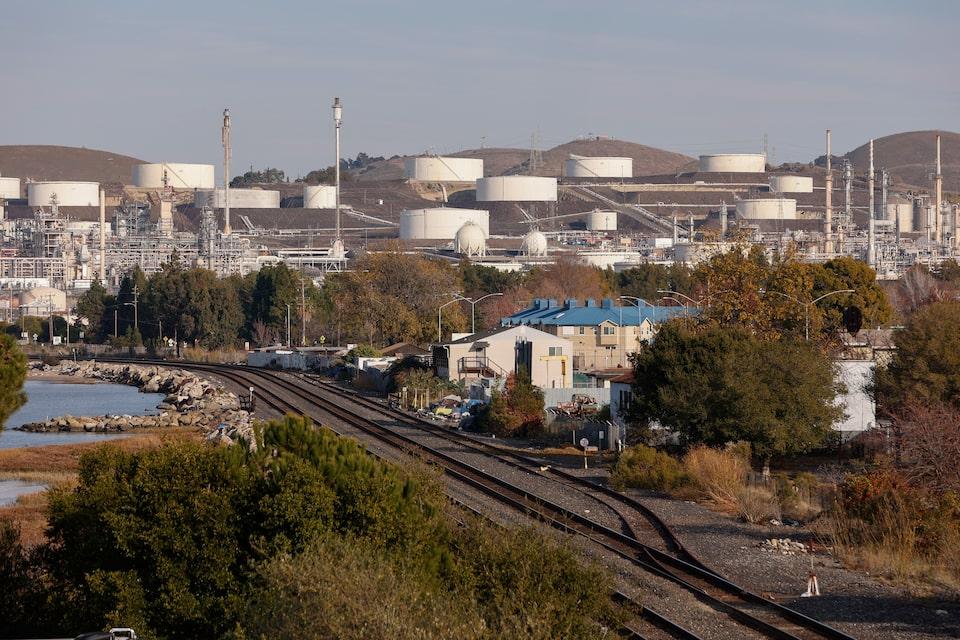
April 25 (Reuters) - Phillips 66 (PSX.N) , opens new tab reported a bigger-than-expected loss for the first quarter on Friday, hurt by lower refining margins amid widespread maintenance and turnaround activities across the U.S. refining sector. U.S. refineries typically undergo seasonal maintenance and turnaround activities in preparation for the summer driving season, when fuel demand significantly increases. Sign up here. However, this scheduled downtime temporarily reduces refinery utilization and the ability to capture revenue from margins, often impacting quarterly performance. Shares of the company fell nearly 2% before the bell. "Our results reflect not only a challenging macro environment, but also the impact from one of our largest-ever spring turnaround programs," said CEO Mark Lashier. "With the bulk of our turnarounds behind us, we are well positioned to capture stronger margins as the year unfolds." The company's refining unit posted a net loss of $937 million for the first quarter, compared with a year-ago profit of $216 million. Phillips 66 said its realized refining margins fell 38% to $6.81 per barrel during the January-March quarter, with turnaround costs rising more than two-fold to $270 million. Its crude capacity utilization stood at 80% compared with 92% last year. Phillips 66's results echo those of rival Valero Energy(VLO.N) , opens new tab, which on Thursday reported a quarterly loss due to lower refining margins. The results come amid a heated boardroom battle between Phillips and Elliott Investment Management, an activist investor that is pushing for changes in the refiner's organization structure, operations and board. The U.S. energy sector is also preparing for a potential fallout from President Donald Trump's sweeping tariffs and the rapidly intensifying trade war with China — factors that could weigh on demand for refined products like gasoline, diesel, and jet fuel. Houston, Texas-based Phillips 66 posted an adjusted loss of 90 cents per share for the three months ended March 31, compared with analysts' average loss estimate of 72 cents per share, according to data compiled by LSEG. https://www.reuters.com/markets/commodities/us-refiner-phillips-66-posts-bigger-than-expected-quarterly-loss-2025-04-25/
2025-04-25 11:51
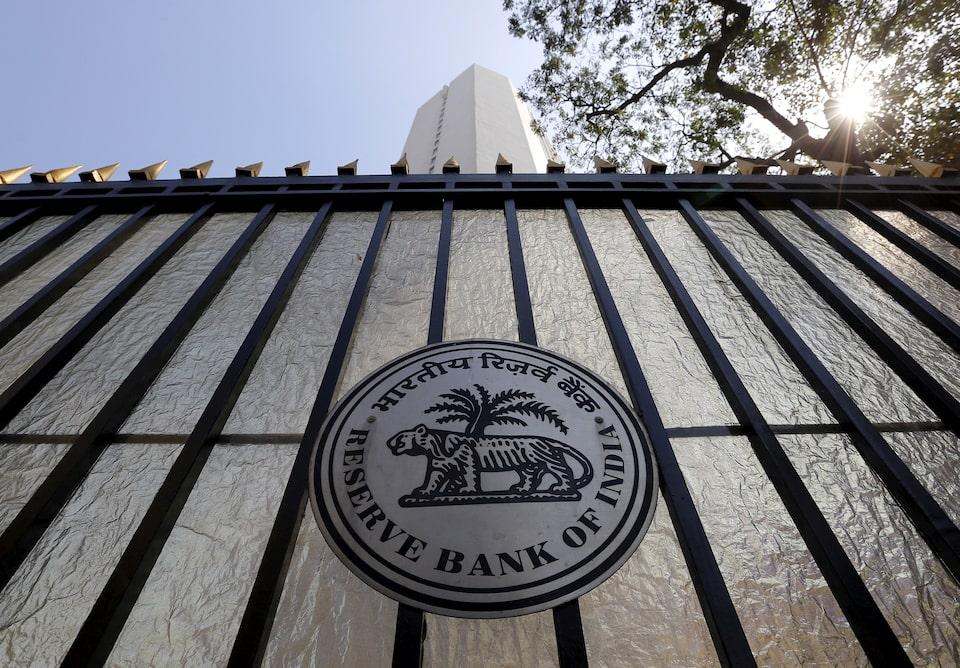
MUMBAI, April 25 (Reuters) - India's foreign exchange reserves (INFXR=ECI) , opens new tab rose for a seventh consecutive week and stood at a six-month high of $686.15 billion as of April 18, according to data released by the central bank on Friday. The reserves rose by $8.3 billion in the reported week, after increasing by a cumulative $39.2 billion in the prior six weeks. Sign up here. India's FX reserves are now about $19 billion away from the record high of $704.89 billion hit in late September. Changes in foreign currency assets are caused by the central bank's intervention in the forex market as well as the appreciation or depreciation of foreign assets held in the reserves. For the week to which the reserves data pertains, the rupee had gained about 0.8%, its best weekly rise since March 17, as foreign portfolio inflows into Indian equities picked up. Gains in the local unit also came as the dollar remained on the defensive amid concerns about how tariffs would affect the U.S. The rupee closed at 85.45 per dollar, ending down 0.1% on the week, amid rising geopolitical concerns between India and Pakistan following a militant attack in the state of Jammu & Kashmir. INR/ Forex reserves include India's Reserve tranche position at the International Monetary Fund. https://www.reuters.com/world/india/indias-forex-reserves-jump-six-month-high-6862-billion-2025-04-25/
2025-04-25 11:44
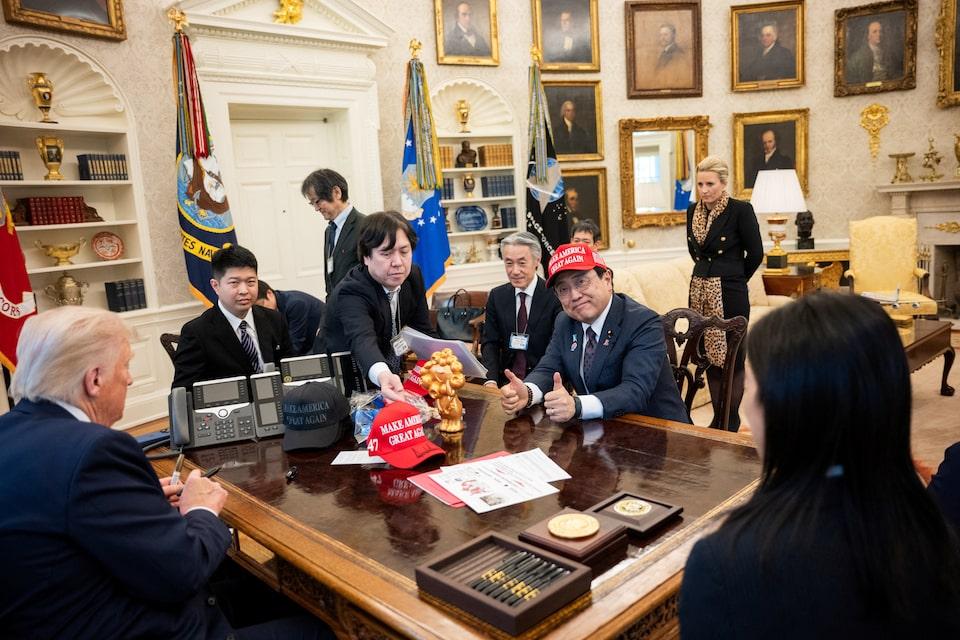
U.S. ally Japan seen as front runner to clinch deal Second round of talks scheduled for next week Rice imports and auto tariffs among thorny items Japanese lawmakers wary of blowback as election looms TOKYO/WASHINGTON, April 25 (Reuters) - When Tokyo's top trade negotiator met U.S. President Donald Trump for tariff talks at the White House earlier this month, he presented him with a gold-coloured piggy bank. One detail, seemingly unnoticed by those in the room, is that the gift was made in China, the focal point for Trump's sweeping trade war that has engulfed Japan and dozens of other countries, roiled financial markets and stoked recession fears. Sign up here. As Trump seeks to leverage his tariff threats to strike scores of bilateral deals in a matter of months, the well-travelled present was an unintended reminder of the complexity of the global supply chains he is seeking to redraw. Negotiating a speedy deal with Japan, a close U.S. ally that counts rival China as its biggest trading partner, has been billed as a "test case" for Trump's chances of success. There are already signs, however, that negotiations with Tokyo may prove tortuous, especially as its embattled ruling party worries about signing up to a bad deal ahead of a dicey election. "Trump needs to get some concessions from Japan so that he can show he is a 'tough president'," said Daisuke Kawai, an economic security specialist at The University of Tokyo. "He needs to create a kind of example as soon as possible." While some analysts expect Japanese Prime Minister Shigeru Ishiba and Trump to announce an agreement when they meet at the G7 summit in Canada in June, others say it will be risky for the Japanese government to cede ground on thornier issues before upper house elections expected in July. Polls show the ruling coalition is poised to lose its majority in that ballot, a result that could force Ishiba's ouster after he suffered the same fate in elections for the more-powerful lower house last year. Trump has hit Japan with 24% tariffs on its exports to the U.S., although, like most of his levies, they have been paused until early July to allow room for negotiations. A 10% universal rate remains in place, as does a 25% duty on cars, a mainstay of Japan's export-heavy economy. Japan's trade negotiator Ryosei Akazawa is set to depart for Washington for a second round of negotiations next week. A spokesperson for the U.S. trade representative declined to comment on negotiations. The White House and Japan's foreign ministry did not immediately respond to a request for comment. Asked about the gift to Trump - modelled on the otherworldly mascot Japan chose for the World Expo it is hosting in the city of Osaka - Akazawa said on Friday it had no meaning other than to encourage Trump to visit the event. He declined to comment on the item's origins, adding only that "Trump loves gold". The item is listed on the Expo's website as being 'Made in China' and Reuters confirmed this with the producer, Osaka-based Heso Production. THE PRICE OF RICE? While Tokyo is still sizing up what Washington will prioritise in the negotiations, it anticipates demands to lower barriers to U.S. agricultural and automotive imports, a government official close to Ishiba said. One of Trump's big gripes, Tokyo's tariffs on foreign rice, should be relatively easy to adjust as Japan faces a shortage of the staple and has seen prices rocket in recent months. However, bureaucrats hoping to score a bargaining chip in the negotiations are facing resistance from influential ruling party lawmakers wary of alienating voters in their farming constituencies ahead of the elections, the officials said. Trump's seeming unwillingness to offer exceptions for the 25% tariffs he has slapped on global auto imports, which make up nearly a third of all Japan's exports to the U.S., its biggest market, has also made Tokyo hesitant to offer concessions in other areas like rice, the officials said. A group of lawmakers from Japan's ruling Liberal Democratic Party issued a statement on Friday saying they would not accept any negotiation strategy that "sacrifices" agricultural products to gain exemptions on auto tariffs or protect other industries. On the plus side, Japan's initial concern that Trump may try to insert negotiations on foreign exchange rates into the talks has faded, while the U.S. President told reporters on Thursday that military matters were also likely to be treated separately. Trump had previously indicated he wanted to discuss Japan and South Korea's payments towards the cost of hosting U.S. troops in the trade discussions. Yet the anxious mood in Tokyo stands somewhat in contrast to the optimism Trump struck after his initial meeting with Akazawa, which he hailed as 'big progress'. The U.S. and Japan are working to reach an interim agreement, but many of the biggest issues are being put off, Reuters reported earlier this week. While Trump will face bigger battles ahead, especially as he hunkers down in a trade war with the world's No.2 economy China, getting a quick win in Japan is far from certain, analysts say. "A 'quick' deal means excessive compromise by one of the parties," said Joseph Kraft, a financial and political analyst at Rorschach Advisory in Tokyo. "I think Japan's strategy is to wait for the U.S. to show their hand ... They are likely to prioritise content over time. I speculate Trump will prioritize time over content." https://www.reuters.com/markets/commodities/japan-is-test-case-trumps-tariff-deals-talks-may-be-tortuous-2025-04-25/
2025-04-25 11:42
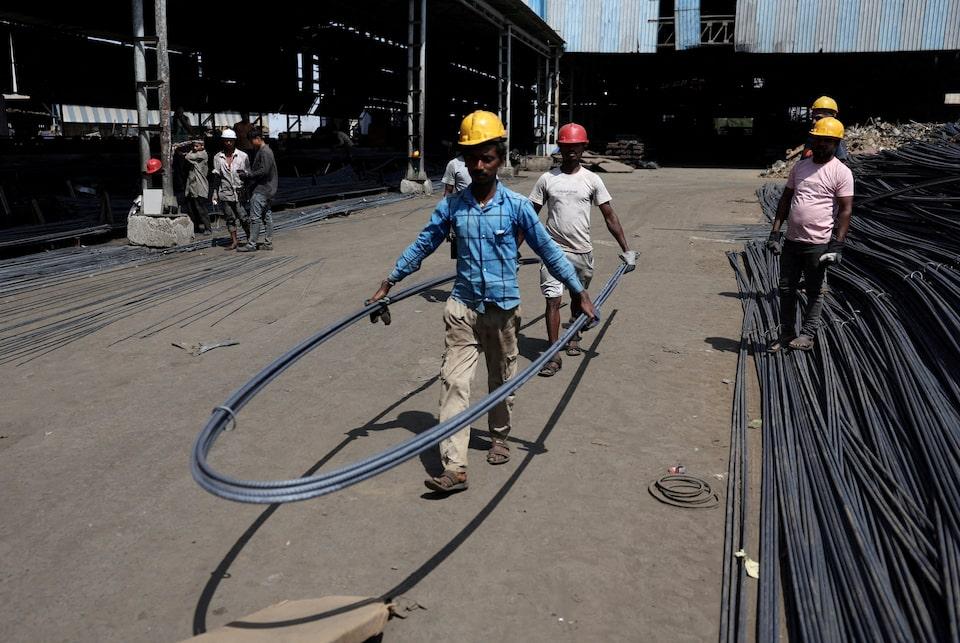
MUMBAI, April 25 (Reuters) - India is chalking up a host of incentives to spur production of green steel and drive local steelmakers' decarbonisation efforts, the federal steel secretary said on Friday, as the country aims to reduce its greenhouse gas emissions. India, the world's biggest steel producer after China, has been working on a green steel policy in a bid to decarbonise procurement and production of the key construction material, as it charts its path to target net zero emissions by 2070. Sign up here. "We are trying to do a lot of things to incentivise green steel... (including) working on a mission... where we will try to support the industry for decarbonisation," Sandeep Poundrik said at an industry event. "Hopefully it will soon be approved by the government." Firms would be incentivised to produce more green steel and for the use of renewable power, Poundrik added. Separately, the government is also working on mandating a certain percentage of green steel for use in state-funded projects, the official said. Last year, India defined green steel as steel, the per tonne production of which, emits less than 2.2 tonnes of polluting carbon dioxide gas. https://www.reuters.com/sustainability/climate-energy/india-plans-incentives-steelmakers-drive-decarbonisation-secretary-says-2025-04-25/
2025-04-25 11:34
SLB joins rivals Halliburton and Baker Hughes in flagging caution Latin America revenue dips 10%, driven by a sharp decline in drilling in Mexico North America revenue rises 8% April 25 (Reuters) - Top oilfield services provider SLB (SLB.N) , opens new tab missed estimates for first-quarter profit on Friday, as weaker Latin American demand dragged on its international business, and the company warned of a potential industry-wide shift due to economic uncertainty, volatile oil prices and rising tariff risks. Shares of the company fell nearly 2% in premarket trading following results. Sign up here. SLB's report rounds out the first-quarter earnings from U.S. oilfield service providers, with rivals Halliburton (HAL.N) , opens new tab and Baker Hughes (BKR.O) , opens new tab earlier this week flagging concerns about weakening market conditions and tariff uncertainties. Halliburton warned of a second-quarter earnings hit due to tariffs and reduced North American oilfield activity, while Baker Hughes projected deeper spending cuts by global producers amid fading demand expectations and falling crude prices. U.S. benchmark WTI crude is currently trading around $62 per barrel — below the break-even point for many oil and gas producers. Any pullback in capital expenditures poses a direct challenge for oilfield service companies as they rely heavily on sustained investment in exploration and production. The first quarter was "subdued," SLB CEO Olivier Le Peuch said in a statement, citing a sharper-than-expected slowdown in Mexico, a slow start to the year in Saudi Arabia and offshore Africa, and steep decline in Russia. Latin America revenue fell 10% to $1.50 billion, with total international revenue declining 5% to $6.73 billion. In contrast, North America posted an 8% year-on-year revenue increase, partly supported by strong growth in data centre infrastructure and higher intervention activity, though gains were partly offset by weaker U.S. land drilling. The company, formerly known as Schlumberger, said earnings, excluding charges and credits, were 72 cents per share for the three months ended March 31, missing analysts' average estimate of 74 cents, according to data compiled by LSEG. https://www.reuters.com/business/energy/oilfield-services-provider-slb-misses-profit-estimates-international-weakness-2025-04-25/