2025-04-25 06:06
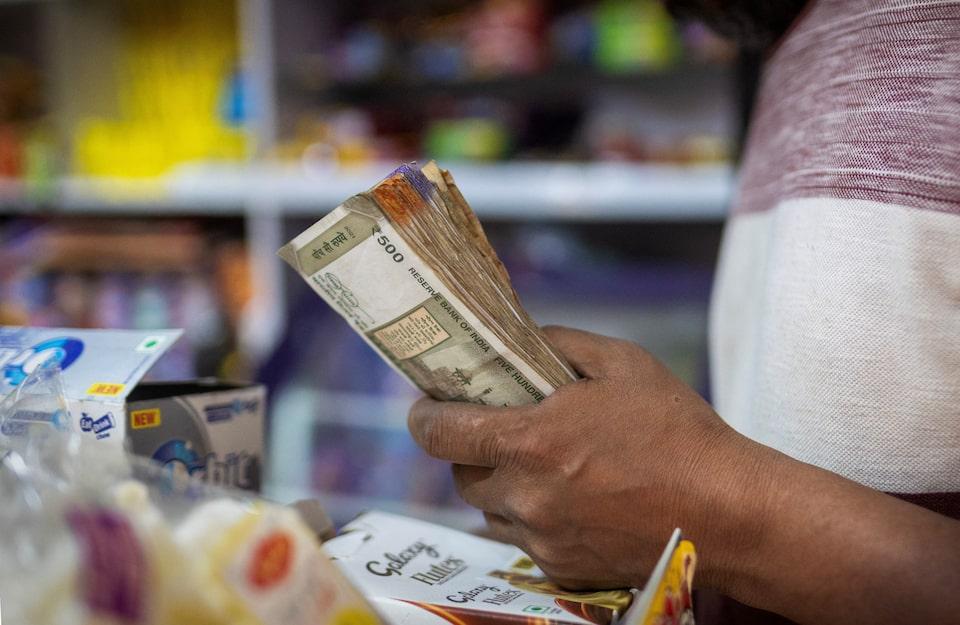
MUMBAI, April 25 (Reuters) - The Indian rupee yet again failed to move past the psychological 85 mark on Friday after a sell-off in local equities and bonds amid investors weighing the potential for increased geopolitical uncertainty following a deadly militant attack. The rupee , having peaked at 85.10 during the session, dropped to 85.6550 versus the U.S. dollar. Sign up here. This is the third time in recent days that the Indian currency has been driven back from the 85 level. India's Nifty 50 Index (.NSEI) , opens new tab dropped over 1%, significantly underperforming other Asian equity indices, which followed their U.S. peers higher. The 84.90-85 level was always a tough barrier to break, and with the current drawdown in equities, it's understandable why USD/INR has seen a move higher, a currency trader at a bank said. He pointed out that Indian equities had largely ignored the Kashmir attack until now. That has changed and does not bode well for the rupee in the near term, he added. Indian bonds declined alongside equities, pushing the yield on the 10-year up by 4 basis points. INDIA-PAKISTAN STAND OFF India has said there were Pakistani elements in Tuesday's attack, when militants shot 26 men in a meadow in the Pahalgam area. Islamabad has denied any involvement. The nuclear-armed nations have unleashed a raft of measures against each other, with India keeping a critical river water-sharing treaty in abeyance and Pakistan closing its airspace to Indian airlines, among other steps. India's army chief will review security arrangements on Friday and visit the site of a deadly attack on tourists. https://www.reuters.com/world/india/rupee-drops-attempt-move-past-85usd-blocked-by-kashmir-attack-jitters-2025-04-25/
2025-04-25 06:03
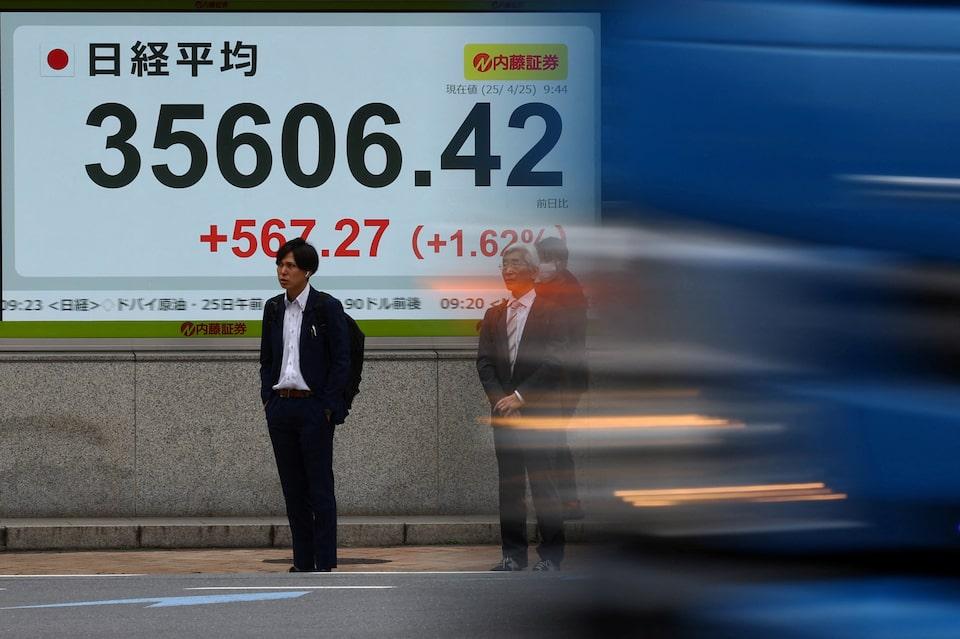
Dollar edges up against euro and yen Alphabet rises on better-than-expected profit Nasdaq ends up more than 1% NEW YORK, April 25 (Reuters) - Most stock indexes climbed on Friday, with Wall Street buoyed by technology-related shares, while the dollar had its first weekly rise in over a month as investors searched for signs that the U.S.-China trade war may be easing. Shares of Google parent Alphabet (GOOGL.O) , opens new tab rose 1.7% after it beat profit expectations and reaffirmed AI spending targets, while the S&P 500 technology (.SPLRCT) , opens new tab, consumer discretionary (.SPLRCD) , opens new tab and communication services (.SPLRCL) , opens new tab sectors gained more than 1% each. Sign up here. But investors have been listening closely to corporate calls this earnings season, particularly for lowered or pulled projections, amid uncertainty surrounding U.S. President Donald Trump's tariff offensive. Trump said in an interview published on Friday that tariff negotiations were under way with China, but Beijing denied any talks were taking place, the latest in a series of conflicting signals over progress to de-escalate a trade war threatening to sap global growth. Trump told Time magazine that talks were taking place and that Chinese President Xi Jinping had called him. Tit-for-tat tariffs that began with Trump's announcement of hefty import levies on April 2 had threatened to stall trade between the world's two biggest economies and sparked fears of a slowdown in global growth. "This week you've seen kind of relief that maybe some of the worst case of the Trump tariff actions won't come true," said Chip Rewey, CIO of Rewey Asset Management, a registered investment adviser based in New Jersey. "While we've recovered from some of the lows, we haven't pushed back to highs. And I think somewhere in that range is where we'll stay for a while." The three major U.S. stock indexes registered sharp gains for the week, while European shares notched their second straight weekly gain. The rebound in stocks will be tested next week when another wave of corporate results, led by Apple (AAPL.O) , opens new tab and Microsoft (MSFT.O) , opens new tab, are released. The Dow Jones Industrial Average (.DJI) , opens new tab rose 20.10 points, or 0.05%, to 40,113.50, the S&P 500 (.SPX) , opens new tab rose 40.44 points, or 0.74%, to 5,525.21 and the Nasdaq Composite (.IXIC) , opens new tab rose 216.90 points, or 1.26%, to 17,382.94. MSCI's gauge of stocks across the globe (.MIWD00000PUS) , opens new tab rose 4.88 points, or 0.60%, to 824.74. The pan-European STOXX 600 (.STOXX) , opens new tab index ended up 0.35%. In Japan, the Nikkei (.N225) , opens new tab was up 1.8% on Friday and has regained all its losses since Trump's announcement of the highest U.S. tariffs in 100 years - levies he largely suspended, except for China and a baseline tariff of 10%. After taking a beating in recent weeks due to tariff news and a flight from U.S. assets, the dollar recovered slightly against the euro and yen. The dollar rose 0.07% against a basket of currencies and was set for a modest weekly gain, its first since mid-March. The dollar was up 0.67% against the yen at 143.555 , while the euro fell 0.11% to $1.1377. Gold prices, which have soared this year as investors sought safe-haven assets, decoupled from the dollar and were down 1.7% at $3,292.99 an ounce on Friday. The yield on benchmark U.S. 10-year notes fell 3.7 basis points to 4.268%, from 4.305% late on Thursday. U.S. Treasury yields declined following recent hopes of an easing in the U.S.-China trade war and as investors weighed the possibility that the Federal Reserve could pivot toward lower interest rates as economic activity slows. Market fears lingered that Trump's erratic policymaking may push foreign investors to ditch Treasuries, a key concern in recent weeks, but analysts said there was still no clear evidence of that. Oil prices edged higher but posted a weekly decline. Brent crude futures settled 32 cents higher at $66.87 a barrel, taking losses to 1.6% over the week. U.S. West Texas Intermediate crude gained 23 cents to $63.02 a barrel, marking a weekly decline of 2.6%. https://www.reuters.com/markets/global-markets-wrapup-1-2025-04-25/
2025-04-25 06:03
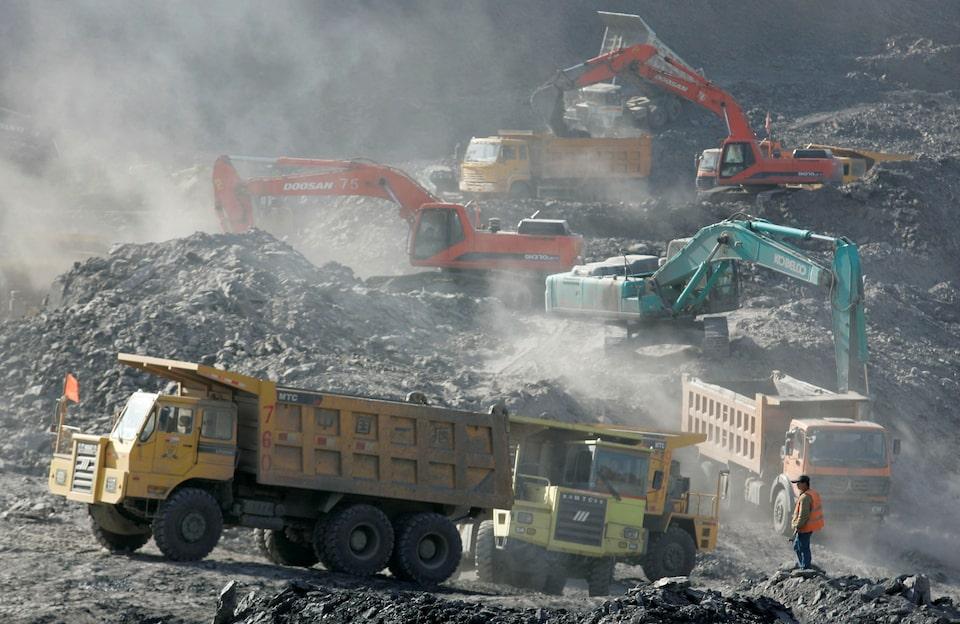
Chinese production accounts for 60% of global output New smelters are being offset by closures of old capacity New smelters are powered by cleaner fuel LONDON, April 24 (Reuters) - China's aluminum production juggernaut is finally running out of road as the country's output approaches the government's capacity limit. Massive investment in primary metal smelting capacity has lifted Chinese production to 43 million in 2024, or 60% of globlal output, from just four million metric tons in 2004. Sign up here. Its growing dominance of the global aluminium supply chain has met increasing resistance from Western countries, initially in the form of trade complaints and anti-dumping duties and more recently in the form of U.S. tariffs. None of which has stemmed China's exports of semi-fabricated aluminium products, which jumped by 19% to hit a record 6.2 million tons last year. But things are about to change. PM Beijing's aluminium "Action Plan" for 2025-2027 confirms the capacity cap remains in place and sets out a strategy for what happens next. TOUCHING THE CEILING China's primary aluminium production grew by 2.6% year-on-year in the first quarter of 2025, according to the International Aluminium Institute. Annualised production averaged 44 million tons over January-March, just a million tons short of the 45-million ton cap, which was set in 2017. It is technically possible for the country's production to exceed the cap, according to consultancy AZ Global. Smelter capacity is rated by designed amperage for the electrolysis production process but "one of the first jobs of any plant manager is to push output to above the rate," it says. Nudging the amperage higher allows a smelter to produce over its nameplate capacity. But AZ China estimates that capacity utilisation in China is already very high at 98.2%, leaving little room for further collective amperage creep. It is also clear that China's production growth is starting to slow from the average 4.0% annual rate seen over the last five years. GOING GREEN Chinese operators are still building new smelters, but the new capacity must be offset by closures of older capacity. Indeed, Beijing's policies for the sector are focused on eliminating less efficient capacity and ensuring newer smelters are powered by renewable energy resources. Aluminium producers are migrating from coal-rich provinces to new energy hubs, such as Yunnan with its abundant hydro power and Inner Mongolia, which has massive wind and solar potential. The aim is to produce more low-carbon metal and the action plan calls for renewable energy to account for 30% of national smelter power demand by 2027. To offset slow to no growth in primary production, Beijing is seeking to stimulate production from scrap with a recycling target of over 15 million tons per year in 2027. REDUCED EXPORTS Another offset has already kicked in. The government removed tax rebate subsidies of 13% on exports of aluminium products in December in a move clearly intended to keep more metal in the domestic market. Exports have since slowed sharply with outbound volumes down by 11% year-on-year in January and February. Analysts at Macquarie Bank forecast exports to fall by 8% over 2025 with any sharper collapse unlikely since the world outside of China is heavily dependent on its products to the tune of around 15% of total demand. Some Western buyers will in all likelihood at least partly accept the higher cost. But the chances are that Chinese aluminium exports may have peaked. REPRIEVE FOR WESTERN PRODUCERS? The combination of slowing Chinese domestic production growth and reduced export flows opens a window of opportunity for the rest of the world's primary aluminium producers. The United States has nearly a million tons of idled smelting capacity. U.S. President Donald Trump's 25% import tariffs on aluminium are intended to stimulate restarts. Europe too has around half of its primary smelting capacity out of action after the power price surge that followed Russia's invasion of Ukraine in 2022. The structural changes being implemented by the world's largest producer may offer such plants a reprieve, although restarting idled capacity is also a question of both aluminium and power prices. There is, however, renewed interest in building greenfield smelters in the West after years of low investment. U.S. producer Century Aluminum (CENX.O) , opens new tab has received $500 million , opens new tab in government funds for a project to launch the first new smelter in the United States in 45 years. Rio Tinto (RIO.L) , opens new tab is studying low-carbon smelter projects in both Finland , opens new tab and India , opens new tab. BUT CHINESE DOMINANCE WILL REMAIN However, Chinese producers are also going overseas due to the lack of domestic expansion potential. Indeed, Beijing's aluminium action plan calls for deeper cooperation with resource-rich nations such as Guinea, where China's Chinalco is part of a project to convert the country's bauxite resources into alumina. In Indonesia, Shandong Nanshan Aluminium (600219.SS) , opens new tab is already producing alumina and plans to expand its refining capacity and to add a 260,000-ton-per year smelter. China may have stopped building domestic capacity but evidently has no intention of loosening its grip on a metal that the United States and the European Union both classify as a critical raw material. The opinions expressed here are those of the author, a columnist for Reuters. https://www.reuters.com/markets/commodities/china-nears-peak-aluminium-production-what-next-andy-home-2025-04-24/
2025-04-25 05:24
Dollar set for first weekly rise since mid-March China grants some U.S. tariff exemptions U.S. negotiations with allies Japan, South Korea making progress Sterling ignores strong UK retail sales NEW YORK, April 25 (Reuters) - The dollar headed for its first weekly gain since mid-March on Friday after China granted some tariff exemptions for U.S. imports, raising hopes that the trade war between the world's two largest economies may be closer to abating. The U.S. currency has been whipsawed this week by conflicting signs for a thaw in the fraught relations between Washington and Beijing. Sign up here. On Tuesday, U.S. President Donald Trump suggested a de-escalation of their tit-for-tat tariff battle, saying direct talks were already underway. By Friday, a number of businesses that had been notified of the changes said China had granted some exemptions from its 125% tariffs on U.S. imports and was asking companies to identify the goods that could be eligible. Trump, in an interview with Time magazine published on Friday, said his administration was talking with China to strike a tariff deal and that Chinese President Xi Jinping has called him. Beijing, however, continues to dispute the U.S. characterization of the talks. The dollar rose against a basket of currencies , up around 0.07% on the day and set for a modest weekly gain, its first since the middle of March. "I don't think that anything's necessarily much clearer now, but it does feel like there's no more ramping up. It feels like it's coming the other way and if anything, it seems to be heading more towards de-escalation than escalation," said City Index market strategist Fiona Cincotta. However, even with some exemptions in place, there was still not enough clarity over the bigger picture to fully reverse some of the investor flows out of the dollar, which has dropped 4% since Trump first announced his "Liberation Day" tariffs on April 2. "We have seen this pull out of oversold territory. But it's definitely too early to be cracking open the champagne for the dollar recovery, we're not quite there yet," said Cincotta. SAFE HAVENS DROOP The dollar was up 0.67% on the day against the yen at 143.555 and was up 0.09% against the Swiss franc at 0.827 francs. The euro fell 0.11% to $1.1377, while the pound declined 0.1% to $1.3325, even after surprisingly strong UK retail sales figures. Trump had rocked the dollar at the start of the week, sending it spiralling lower against other major currencies with his threats to fire Federal Reserve Chair Jerome Powell for not cutting interest rates quickly enough. It then jumped back on Tuesday when the president said he never had any intention of replacing the central bank boss. Washington has made some progress in early trade talks with Asian allies South Korea and Japan. The Japanese Finance Minister Katsunobu Kato said after meeting U.S. Treasury Secretary Scott Bessent that there were no talks on currency targets. Trump has accused Tokyo of weakening its currency to help its exporters. Japan's chief negotiator Ryosei Akazawa, who is also economy minister, will hold a second round of trade talks with Bessent next week. "Even if reports are correct that there will be some easing of tariff rates, a hit to U.S. growth is still coming that will ensure volatility levels remain higher, equity markets are pressured to the downside and the global backdrop remains unfavourable for any sustained move higher in dollar/yen," said MUFG strategist Derek Halpenny. Bank of Japan Governor Kazuo Ueda on Thursday reiterated the central bank's commitment to raising interest rates if underlying inflation moved towards the 2% target as projected. But he repeated that policymakers needed to scrutinise the fallout from U.S. tariffs. The BOJ is widely expected to leave rates unchanged at its two-day meeting that ends on May 1. https://www.reuters.com/world/middle-east/dollar-drifts-higher-end-volatile-week-trump-backflips-2025-04-25/
2025-04-25 05:15
Exxon seeking $1 billion for its gas stations, sources say Aster Chemicals, operator of Bukom refinery, plans to bid Financial firms also in the running Binding bids due in May SINGAPORE, April 25 (Reuters) - Aster Chemicals and Energy, the new operator of the Bukom refining complex, is planning to bid for Exxon Mobil's (XOM.N) , opens new tab petrol stations in Singapore, five people with knowledge of the matter said, as the refiner seeks retail fuel sales outlets. The sale of the Exxon Mobil retail outlets is entering the formal bidding stage with binding offers due in May, two of the sources said. The network of 58 petrol kiosks is valued at roughly $1 billion, they said, although none of the initial bids have exceeded that level. Sign up here. The sale has attracted the interest of private equity firms and asset managers, the same two sources said, although it was not clear which financial firms plan to bid. The sale will mark Exxon's exit from Singapore's retail fuel sector as the government plans to reduce land transport emissions by switching to electric vehicles. In 2023, Exxon sold its gas stations in Thailand to Bangchak Petroleum (BCP.BK) , opens new tab for $603 million. U.K. bank Barclays (BARC.L) , opens new tab is advising Exxon Mobil on the deal, the two sources said. All the people who spoke on the matter declined to be named as it is not public. An Exxon spokesperson said the company does not comment on market speculation. Barclays and Aster Chemicals also declined to comment. Aster, the joint venture between Indonesia's Chandra Group (TPIA.JK) , opens new tab and global commodities trader Glencore (GLEN.L) , opens new tab, recently acquired Shell's (SHEL.L) , opens new tab refining and petrochemical assets in Singapore in a deal that excluded the energy major's petrol stations. "We continuously evaluate market opportunities where they align with our strategic priorities," Aster's spokesperson said in an emailed response. https://www.reuters.com/business/energy/aster-chemicals-bid-exxon-mobils-singapore-fuel-stations-sources-say-2025-04-25/
2025-04-25 05:09
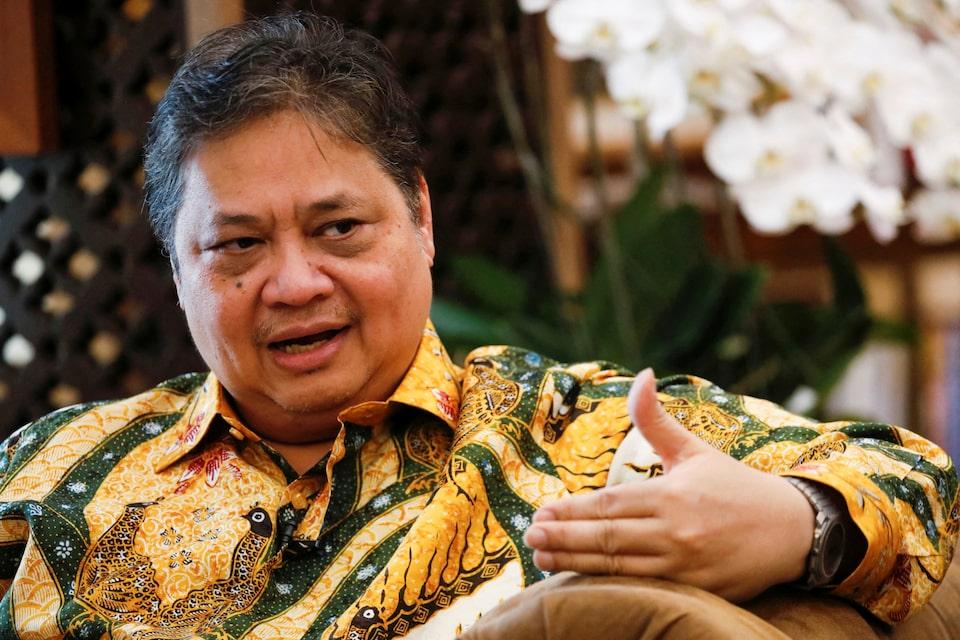
Indonesia wants "fair and square" relationship with U.S. Higher U.S. imports by Indonesia will not negatively impact other nations Technical discussions with U.S. to take place within next 2 weeks JAKARTA, April 25 (Reuters) - Indonesia is prioritising its national interests in its ongoing negotiations over U.S. tariffs, its senior economic minister and top negotiator said on Friday, as it wants a "fair and square" trade relationship with the United States. Airlangga Hartarto, the head of delegation, and finance minister Sri Mulyani Indrawati have been in the United States since last week negotiating the proposed 32% tariffs the U.S. wants to impose on Indonesia. These tariffs have been put on hold for 90 days. Sign up here. "In the negotiation process, Indonesia prioritises national interests while encouraging the strengthening of bilateral relations with U.S," he said at an online press conference. Last year, Indonesia reported a $14.3 billion trade surplus with the U.S. The minister refrained from sharing specific details about the negotiations but said that the discussions included energy supply, U.S. market access for Indonesian goods, deregulation in Indonesia, and critical mineral and technology sharing for agriculture, healthcare and renewable sectors. The two countries also discussed Indonesia's national payment system and QR code standards, which the U.S. has stated is a barrier for its payments companies. Airlangga indicated that Indonesia is open to foreign operators such as U.S. firms Visa (V.N) , opens new tab and Mastercard (MA.N) , opens new tab. A two-week timeline has been set for discussing technical details. Indonesia has proposed increasing its imports from the U.S. by up to $19 billion by switching to U.S. suppliers for goods such as wheat, soybean, liquefied petroleum gas and crude. Jakarta has also offered to reduce non-tariff barriers and proposed some tax cuts for U.S. goods. Such a proposal would not be a "zero sum game" for other trade partners, Airlangga said, promising Indonesia would look to buy other products from countries affected. Indonesia hopes its swift decision to negotiate, instead of retaliate, will be rewarded by President Donald Trump. Its delegation has been told that while Trump remained the final decision maker, he could favour "first movers", Sri Mulyani said. Sri Mulyani said she "compared notes" with other countries hit by hefty U.S. tariffs about their negotiations, while on the sidelines of the IMF and World Bank spring meetings this week. She added that Washington has asked members of the Association of Southeast Asian Nations (ASEAN) about their response as a bloc to U.S. trade policy. The Indonesian delegation has met with top U.S. officials and business people in sectors such as semiconductors, as well as executives from companies like Google (GOOGL.O) , opens new tab, Amazon (AMZN.O) , opens new tab, Microsoft (MSFT.O) , opens new tab and Boeing (BA.N) , opens new tab. On Thursday, Sri Mulyani warned that U.S. tariffs and their impact on global economic growth could hurt Indonesia's economic expansion. However, she expects a steady 5% growth this year, only slightly below the government's 5.2% target. https://www.reuters.com/markets/asia/indonesia-is-putting-forward-national-interest-us-tariffs-negotiation-minister-2025-04-25/