2026-01-15 23:41
NEW YORK, Jan 15 (Reuters) - Privately held Texas homebuilder Megatel Homes LLC said on Thursday it will start issuing a crypto payments and rewards token. The announcement came after the Securities and Exchange Commission sent Dallas-based Megatel a "no-action" letter late Thursday, effectively allowing the company to go ahead. Sign up here. The "MegPrime" token is Megatel's first foray into digital assets, said Megatel Chief Executive Officer Zach Ipour. Traditional companies are increasingly integrating blockchain technology into mainstream consumer programs. President Donald Trump's crypto-friendly SEC has also made companies more comfortable venturing into the sector. The MegPrime tokens, which the company will start issuing in coming weeks, will be marketed solely as a means of making payments and earning rewards – and not as investments, the company said. Consumers will be able to spend the token with regular merchants via a digital wallet and payment card. In return, they can earn rebates, paid in additional MegPrime tokens, discounted gift cards and points that can be redeemed for housing-related benefits, the company said. The token is an extension of the company's 2019 program that gave renters an amount equal to their past year's rent for use as equity for a home purchase, Ipour said. "Since we have a multi-billion dollar operation building homes and we are involved in financing the homes, we believe we can perfect this model and take it to the next level, merging real estate activity with the benefit of digital currencies," Ipour told Reuters in a phone interview. Token holders have no rights associated with security ownership, such as voting rights or the right to receive profit distributions. https://www.reuters.com/technology/texas-homebuilder-launch-crypto-rewards-after-sec-green-light-2026-01-15/

2026-01-15 23:03
KYIV, Jan 15 (Reuters) - Russian forces destroyed a large energy facility in Ukraine's second-biggest city Kharkiv, the mayor said on Thursday, the latest target of a winter air campaign by Moscow that has plunged millions of Ukrainians into darkness and cold. President Volodymyr Zelenskiy, a day after criticising recovery efforts in the capital Kyiv, proceeded with a drive to tackle the damage inflicted by Russian strikes, chairing a meeting aimed at securing quick decisions from regional leaders. Sign up here. He said there had been new strikes on Kyiv into the evening. PM MOVES TO DEAL WITH OUTAGES Prime Minister Yulia Svyrydenko introduced measures to deal with power and heating outages, reducing overnight curfews and allowing businesses and government institutions to import more power. School holidays in Kyiv were extended until February 1. Russia has attacked the power grid and other energy facilities while pressing a battlefield offensive that has left Kyiv on the back foot as it faces U.S. pressure to secure peace. Kharkiv Mayor Ihor Terekhov, writing on the Telegram messaging app, did not specify what sort of facility had been hit, but said emergency crews were working around the clock. Kharkiv, 25 km (15 miles) from the Russian border, has been regularly targeted by drones, missiles and glide bombs throughout the war, which enters its fifth year next month. Regional Governor Oleh Syniehubov said officials were assessing the extent of damage from Thursday's attack. Foreign Minister Andrii Sybiha said the foreign and energy ministries had organised an appeal for funds to help tackle Ukraine's energy problems, similar to periodic meetings on arms supplies. Norway, he said, had made an initial grant of $200 million. Power outages and cuts to heating and water in cities have worsened over the past week as Ukraine struggles with a cold snap that has overwhelmed the already hobbled energy system. Kyiv Mayor Vitali Klitschko said on Thursday that around 300 apartment buildings remained without heat after a January 9 attack knocked out heating to half the city's high-rises. Russia has also stepped up attacks on ports in Ukraine's southern Odesa region. A missile strike on Thursday injured one person and damaged shipping containers in the city of Chornomorsk, said Deputy Prime Minister Oleksiy Kuleba. https://www.reuters.com/world/europe/russia-destroys-large-energy-facility-kharkiv-mayor-says-2026-01-15/

2026-01-15 22:35
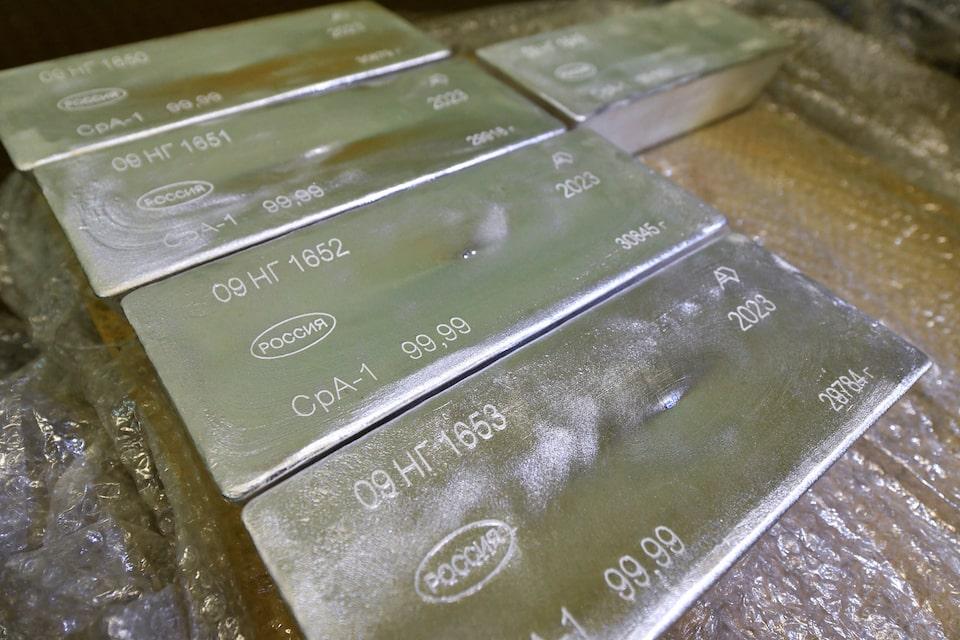
Jan 15 (Reuters) - Individual investors have been snapping up silver at such a pace it has turned into the most crowded commodity trade in the market, according to a report published on Thursday by Vanda Research. Vanda calculated that in the last 30 days alone, individual investors have snapped up $921.8 million of exchange-traded funds underpinned by silver such as the iShares Silver Trust (SLV.P) , opens new tab. The iShares ETF recorded $69.2 million in retail inflows on Wednesday, marking the largest day of retail buying second only to 2021, when retail investors last drove prices skyward. Sign up here. The ETF is up 31.3% so far this year and has soared 210.9% in the last 12 months. Silver has set a series of new highs. On Thursday, silver prices traded at $91.90 an ounce late in the afternoon, up from $72.62 on the first trading year, but below the record of more than $93 intraday Wednesday and Thursday, according to data from LSEG. Meanwhile, the MSCI ACWI Select Silver Miners Investable Index, which tracks stock prices of mining companies with shares particularly exposed to changes in the price of the metal, has soared some 225% in the last 12 months. That 2021 bull market in silver came as part of a broader retail speculative boom in meme stocks like GameStop (GME.N) , opens new tab and AMC Entertainment (AMC.N) , opens new tab. But this time, Vanda says, there are more concrete reasons underpinning the rally. "This isn't just a meme-stock spike; we are witnessing a structural accumulation that has now surpassed the heights of the 2021 'Silver Spike'," Vanda noted. That means it is time to treat silver as "a core macro trading asset" and not just a speculative bet, it added, pointing to the fact that retail investors are big players in the ProShares UltraShort Silver ETF (ZSL.P) , opens new tab, an inverse leveraged fund that returns double any decline in the daily price of silver. Others remain more wary. "We waited 45 years for silver to break above $50 an ounce and now we've seen it zoom past $80 in less than three months," said Kathy Kriskey, head of alternatives ETF strategy at Invesco. https://www.reuters.com/business/finance/retail-investors-steer-record-amount-cash-into-silver-creating-crowded-trade-2026-01-15/
2026-01-15 22:16
Shale producers Devon and Coterra Energy in talks to combine, sources say Deal talks at early stage; no guarantee of an agreement Should deal complete, would be one of the largest shale mergers of recent years NEW YORK, Jan 15 (Reuters) - Devon Energy (DVN.N) , opens new tab and Coterra Energy (CTRA.N) , opens new tab are exploring a potential merger, in a deal that could create one of the largest independent U.S. shale producers, three people familiar with the matter said. A possible combination, which would rank among the largest between U.S. energy producers in recent years, comes as U.S. crude prices are pressured by a near-term global oil glut and the prospect of more supplies entering the market in the coming years from Venezuela. Sign up here. The two companies are in early-stage talks for a combination, said the sources, who cautioned a transaction was not guaranteed and spoke on condition of anonymity to discuss confidential deliberations. Devon shares finished 4.2% lower, giving it a market capitalization of roughly $24 billion, while Coterra's stock gained 1.5% to value the Houston-based company at nearly $20 billion. Devon and Coterra did not respond to requests for comment. ECONOMIES OF SCALE WOULD CONTROL COSTS While energy dealmaking was subdued in 2025, versus prior record-breaking years, arguments for consolidation among U.S. oil and natural gas producers remain valid. Benefits include economies of scale, which would help control costs within a depressed price environment for crude, as well as securing additional resources at a time when many shale basins are maturing and new prime development land is at a premium. Both companies have operations across multiple shale formations, with both present in the Delaware portion of the Permian basin in Texas and New Mexico and Oklahoma's Anadarko basin. Devon also has assets in South Texas' Eagle Ford play, as well as North Dakota's Williston basin. Coterra has a significant presence in Appalachia, having been formed in 2021 through a merger of Cimarex Energy and Marcellus-focused Cabot Oil & Gas. Coterra is facing pressure from investment firm Kimmeridge Energy Management, which on November 4 went public with demands for governance and strategy changes. One of the best-known activist investors in oil and gas, Kimmeridge also owns a position in Devon, according to regulatory filings. "We would be supportive of a transaction that allowed the combined company to focus on their premier Delaware assets," Kimmeridge Managing Partner Mark Viviano said. "We see material operational synergies from the enhanced scale and offsetting acreage positions.” https://www.reuters.com/world/us-shale-producers-devon-energy-coterra-energy-merger-talks-sources-say-2026-01-15/

2026-01-15 22:03
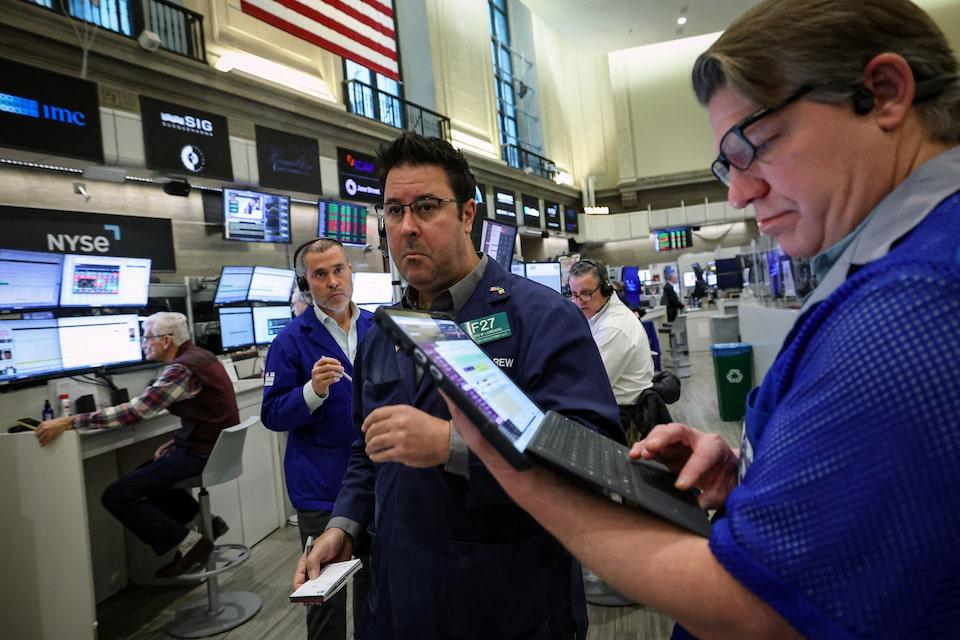
ORLANDO, Florida, Jan 15 (Reuters) - Solid U.S. bank earnings and a rebound in tech lifted U.S. stocks on Thursday, with global risk appetite also fueled by - and oil prices clobbered by - a more moderate tone from U.S. President Donald Trump on tensions with Iran. More of that below. In my column today I look at Japan's return to economic normality after years of zero interest rates and deflation. But the brave new world of inflation and rising bond yields brings uncertainty and volatility. Sign up here. If you have more time to read, here are a few articles I recommend to help you make sense of what happened in markets today. Today's Key Market Moves Today's Talking Points * Oil on the slide Oil is on a wild ride, buffeted by geopolitical tensions in large part sparked by the Trump administration's military foray into Venezuela, and events in Iran. On Wednesday, Brent crude was at a three-and-a-half-month high, up almost 10% year-to-date. On Thursday, it posted its biggest fall since June after Trump said the crackdown on protesters in Iran was easing. If the threat of U.S.-Iran conflict cools, oversupply returns as the main market driver. But as this year has clearly shown, Trump's foreign policy agenda is, if nothing else, unpredictable. * Fed bets fade, curves flatten Fed rate cut bets are fading. The next fully priced cut is drifting to July from June, and 50 bps of easing this year is no longer fully baked into the 2026 curve. Stronger-than-forecast economic data and sticky inflation are behind the moves. Among the ripple effects on markets is a flattening of the yield curve. Most parts of the U.S. curve are now at their flattest in a month, with the 2s/30s curve narrowing 20 bps from its four-year peak just last week. * Dollar and the odd yuan out The U.S. dollar continues to grind higher, as Fed rate cut expectations whittle away. The greenback on Wednesday hit an 18-month high against the yen, and on Thursday a six-week high against a basket of major currencies. The big exception is against China's yuan. The dollar is now firmly below 7.00 yuan at its weakest since mid-2023. With China racking up a record $1.2 trillion trade surplus last year, Beijing can point to dollar/yuan and reasonably argue it is not keeping its currency artificially weak. Japan's long-awaited return to normalcy brings uncertainty, volatility Japan's economy is returning to something resembling normality for the first time in decades. That's likely to mean more volatility ahead for the yen and other Japanese assets, as investors try to make sense of this new reality. While Japanese equities are rising to levels never seen before, that is less remarkable because many other countries' stock markets are also hitting new all-time peaks. The more intriguing market moves in Japan are happening in government bonds (JGBs) and the yen. Bond yields across the JGB curve are at multi-decade or record highs, marking a stark disconnect from other major debt markets like the U.S., where Treasury yields have been fairly stable in recent months. The yen, which was the worst-performing major currency against the dollar last year, has weakened even more to kick off 2026. On Wednesday, it fell to an 18-month low around 160 per dollar, territory that has previously prompted waves of yen-buying intervention from the Ministry of Finance. There appears to be a disconnect here. Central bank interest rate hikes and rising bond yields should support the currency, right? That logic doesn't always hold, however, especially when Japan's unique debt dynamics and inflation history are taken into consideration. WORLD'S MOST CAUTIOUS RATE-HIKING CYCLE Japan has amassed the world's largest public debt pile of more than 230% of GDP, thanks to decades of "quantitative easing" bond-buying, borrowing, fiscal largesse, and near-zero interest rates to try to pull the economy out of a prolonged deflationary funk. It appears to have won that battle. Annual inflation is running at around 3%, exceeding the Bank of Japan's 2% target every month for nearly five straight years. And wage growth has been robust in recent years, even if it is now slowing. The Bank of Japan (BOJ) is finally increasing borrowing costs, albeit cautiously. It lifted its policy rate last month to a 30-year high of 0.75% from 0.5%. This is the slowest policy tightening cycle in modern history, with rates increasing just 85 basis points over two years, but it still is confirmation that deflation-haunted Japan may no longer be such an outlier. As independent economics commentator Matthew Klein observes: "Far from indicating trouble, Japanese bond prices are implying that Japan has converged, in at least one important way, with the rest of the rich world." ELEVATED FX VOLATILITY That may be true, but for many Japanese businesses, consumers, and investors, the highest interest rates in 30 years represent a step into the unknown. With this comes uncertainty, and therefore a likely increase in expected volatility. This helps explain why the recent rise in JGB yields has triggered such an adverse reaction in the yen. Investors appear to fear that historically high borrowing costs could precipitate a fiscal crisis that will only tighten the squeeze on JGBs and the yen. Yen volatility has already been creeping up in the last few years. Since late 2022, implied three-month dollar/yen volatility has been consistently and often significantly higher than comparable measures in euro/dollar and sterling/dollar. It wasn't always thus. For long spells over the past quarter century, yen "vol" was in line with, or lower than, its euro and sterling counterparts. But times have changed, and there are plenty of reasons to expect yen "vol" to stay elevated. Although "real" inflation-adjusted Japanese rates and yields are still negative, nominal rates are rising, and they could climb further on the back of Prime Minister Sanae Takaichi's plans to prime the pumps. The gap with borrowing costs in the U.S. and other developed markets is narrowing, which may spur a yen rebound, especially if it is backed by intervention from Tokyo. Japanese authorities have conducted four bouts of yen-buying in recent years: twice in 2022 and another two times in 2024. Traders are on high alert for a fifth. For the first time in decades, Japan has got inflation, wage growth, and rising borrowing costs. It's a new "normal" that will take some getting used to. What could move markets tomorrow? Want to receive Trading Day in your inbox every weekday morning? Sign up for my newsletter here. Opinions expressed are those of the author. They do not reflect the views of Reuters News, which, under the Trust Principles , opens new tab, is committed to integrity, independence, and freedom from bias. https://www.reuters.com/world/china/global-markets-trading-day-graphic-2026-01-15/
2026-01-15 21:42
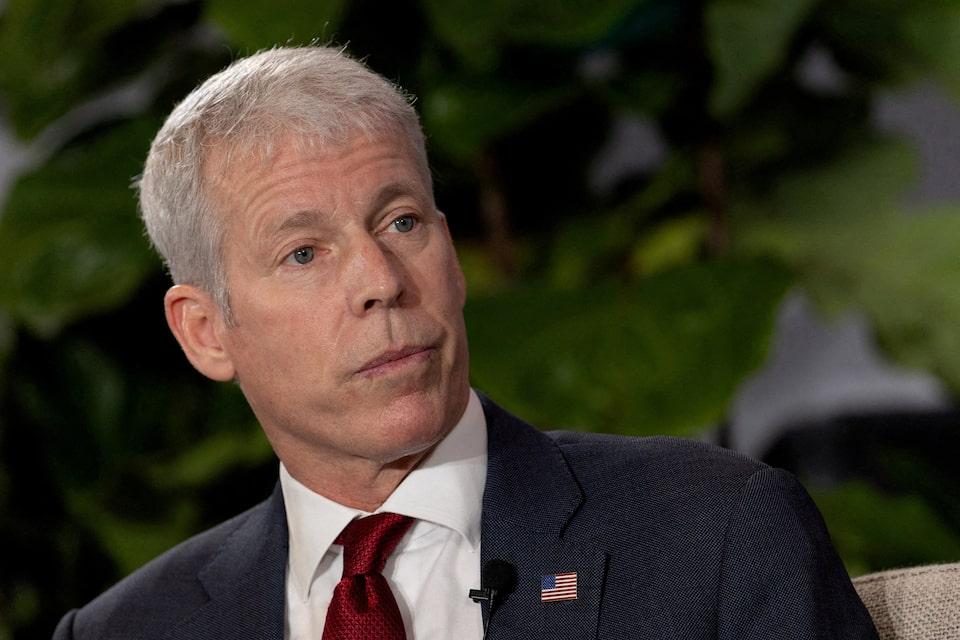
WASHINGTON, Jan 15 (Reuters) - U.S. Energy Secretary Chris Wright said on Thursday the U.S. is getting a 30% higher price for Venezuelan crude oil than Venezuela got before U.S. special forces captured President Nicolas Maduro this month. "We're getting about a 30% higher realized price when we sell the same barrel of oil than they sold the same barrel of oil three weeks ago," Wright said at a U.S. Energy Association event. Wright did not detail the prices of the oil sales before and after the capture of Maduro. Sign up here. The U.S. has completed the first sales of Venezuelan oil that are part of a $2 billion deal reached this month between Caracas and Washington, a U.S. official told Reuters on Wednesday. The first sales were valued at $500 million, with additional sales expected in the coming days and weeks, the official said. President Donald Trump's administration has said it will sell up to 50 million barrels of the country's stranded oil and will keep selling produced Venezuelan oil indefinitely. In December, oil buyers in Asia demanded deep discounts on Venezuelan crude due to a flood of sanctioned oil from Russia and Iran on offer and to the heightened risk of loading in the South American country, traders said. Due to quality issues with the oil and U.S. sanctions, state oil company PDVSA had been forced to slash prices, with the discount to Brent benchmark crude about double year-ago levels. With Russian and Iranian supplies also sold at deep discounts, buyers in China were barely biting at offers of Venezuela's flagship Merey heavy crude at $14 per barrel below Brent, a trader involved in sales to Chinese independent refiners said in December. This week, Venezuelan heavy crude Merey-16 oil was offered for U.S. Gulf Coast delivery at a discount of around $6 to Brent crude futures, a trader said on Wednesday, while Western Canadian Select at Houston settled at a roughly $12.50 discount to Brent on Tuesday. https://www.reuters.com/business/energy/us-energy-chief-says-us-getting-30-higher-price-venezuelan-oil-than-venezuela-2026-01-15/