2025-04-24 21:10
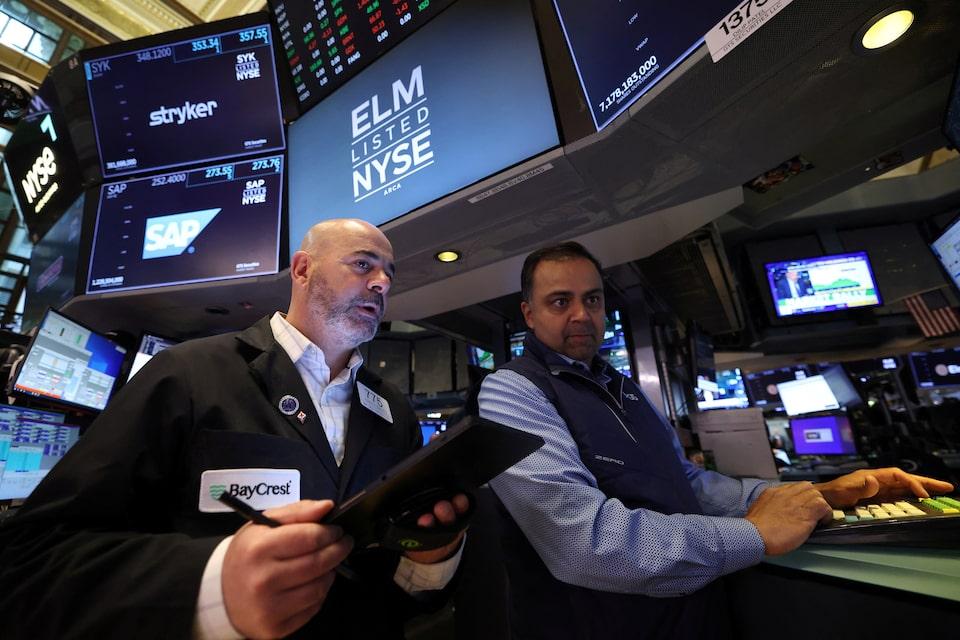
NEW YORK, April 24 (Reuters) - TRADING DAY Making sense of the forces driving global markets. Sign up here. By Alden Bentley, Americas Finance and Markets Breaking News Editor. Jamie is away so I'll provide a round-up of today's main market moves below. I'd love to hear from you, so please reach out to me with comments at [email protected] , opens new tab. If you have more time to read today, here are a few articles I recommend to help you make sense of what happened in the markets. Today's Key Market Moves Stocks rally for third day, earnings optimism trumps tariffs confusion While Thursday marked Wall Street's third rally in a row, given three topsy-turvy weeks of tariff headlines, and the ugly selloff four sessions ago, it is premature to declare "confidence is back!" The S&P 500 is up six-plus percent since Tuesday, but is still down about 10% from its record close on February 19 and down more than 3% since U.S. President Donald Trump's ill-received April 2 "Liberation Day" tariff news conference. But some okay earnings reports have stabilized the mood of investors, if not of business which has yet to feel the full brunt of whatever tariff regime is left on the books. ServiceNow's shares jumped 14.8% on profit that was better than expected due to resilient demand for AI-powered software. The release of Alphabet earnings after the market close could provide more information on how AI investments are paying off. Beijing said the U.S. should remove all "unilateral tariff measures" against China "if it truly wanted" to solve the trade issue. It also said there have been no economic and trade negotiations between the two countries, which Trump refuted. So the confusion continues. The White House on Wednesday signaled it was open to reducing sweeping tariffs on China, floating a reduction in the rate to 50% to 60% from the 145% Trump decreed in the initial walk back of aggressive levies on most other trading partners. About 73.9% of the 157 companies in the S&P 500 that have reported first-quarter earnings to date have exceeded analyst expectations even amid tariff uncertainty, according to LSEG data. Even so, businesses across multiple industries are saying they're increasing prices and uncertain about the outlook because of Trump's trade policies. The dollar pulled back following an interlude of trade optimism on Wednesday, but not all the way to its lows during the worst of the backlash against U.S. assets. Treasuries held up amid hopes that any tariff war won't be as bad as it could have been, so yields fell but remained in range established during the bond and dollar rout. Market concerns around a meaningful retreat of foreign buyers were partly assuaged this week, as Treasury auction allocation data on Wednesday showed solid foreign demand for a 10-year auction earlier this month, when the bond market was selling off amid tariff-induced volatility. What could move markets tomorrow? Opinions expressed are those of the author. They do not reflect the views of Reuters News, which, under the Trust Principles , opens new tab, is committed to integrity, independence, and freedom from bias. Trading Day is also sent by email every weekday morning. Think your friend or colleague should know about us? Forward this newsletter to them. They can also sign up here. https://www.reuters.com/markets/global-markets-trading-day-2025-04-24/
2025-04-24 21:08
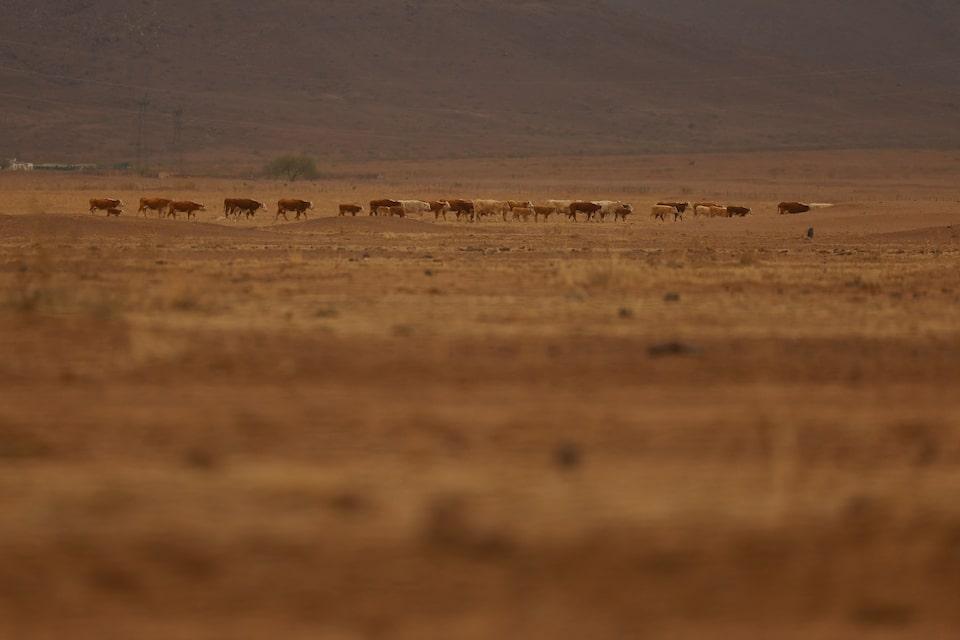
Drought affects over 64% of Mexico, hardest hit in northern states Mexico-U.S. negotiations tense over 1944 water treaty compliance Chihuahua farmers face relocation due to water scarcity JULIMES, Mexico, April 24 (Reuters) - Dead animals lie scattered across the planes of this cattle ranching town in northern Mexico, victims of a long-term drought that is forcing farmers here to consider uprooting their lives to look elsewhere for land and water. More than 64% of Mexico's territory is experiencing some level of drought, according to government data. Northern states are the hardest hit, particularly Chihuahua, with most of its territory engulfed by the most extreme levels of drought. Sign up here. The struggles of farmers come as Mexico and the U.S. are in tense negotiations over Mexican delays in delivering the quantities of water laid out in a 1944 treaty. President Donald Trump has threatened tariffs and sanctions if Mexico does not increase water deliveries which U.S. officials say have devastated Texan farmers. The Mexican government says drought has ravaged its ability to comply. In the agricultural town of Julimes in Chihuahua, farmers are wondering how much longer they can survive. "I don't think we'll be able to hold out much longer," said cattle farmer Leopoldo Ochoa, 62, as he rode with his granddaughter on horseback behind his herd. Farmers in northern Chihuahua have already had to move their herds out of the mountainous areas where they typically graze due to a lack of water and grass. Ochoa lives in Valle de Zaragoza, which is dependent on the strained La Boquilla Dam. "If there is no more water, we will have to leave this ranch and look elsewhere. Imagine leaving here at my age, where I have lived all my life," said Manuel Araiza, 60. "It is sad, but it is the reality that all of this is coming to an end," he added. As diplomats negotiate water deliveries from Mexico to the U.S., farmers in Chihuahua consider their own futures. "My children tell me this is no longer profitable and that I should sell the animals," said cattle rancher Estreberto Saenz Monje, 57. "The truth is, we've never seen anything like this before." (This story has been refiled to correct the dateline to April 24) https://www.reuters.com/sustainability/land-use-biodiversity/northern-mexico-farmers-fight-drought-amid-water-dispute-with-us-2025-04-24/
2025-04-24 21:04
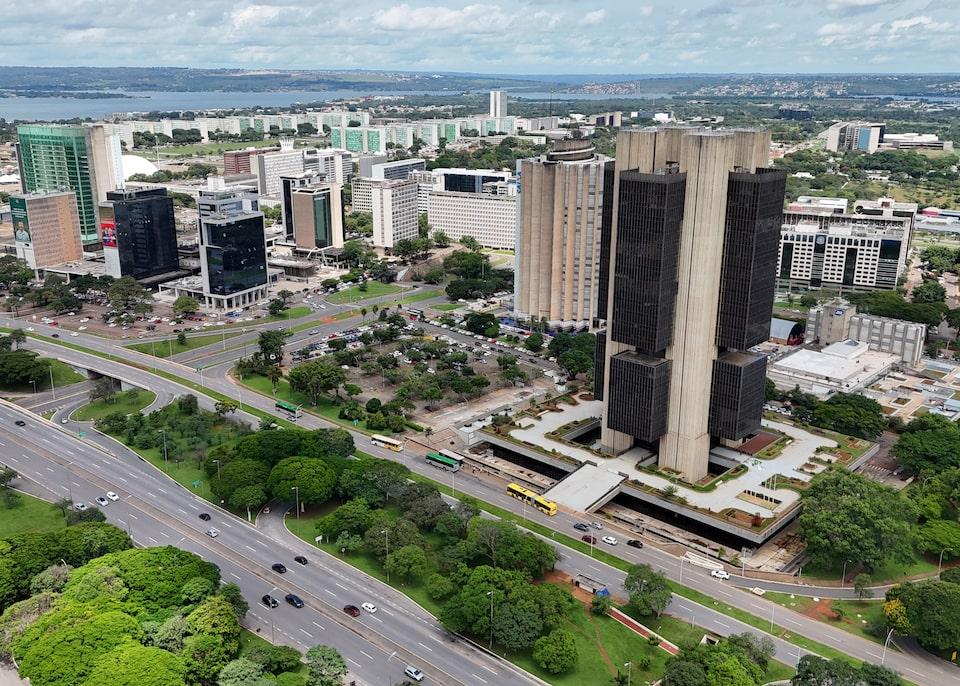
April 24 (Reuters) - Brazil's central bank has left the size of its upcoming interest rate hike in May open and remains unable to gauge it, citing a still-uncertain economic outlook and inconclusive signs of cooling activity in Latin America's largest economy. The message was conveyed on Thursday by two central bank directors during events hosted by Brazilian institutions on the sidelines of the IMF and World Bank Spring Meetings in Washington. Sign up here. Brazilian policymakers raised interest rates by 100 basis points for the third consecutive time in March, bringing the benchmark Selic rate to 14.25%, fully adhering to a forward guidance they had issued in December. The bank signaled a further, albeit smaller, hike for May, but stopped short of specifying its size, unlike previous instances when it explicitly indicated that 100 basis-point increases were appropriate. Speaking at an event hosted by brokerage XP, the bank's economic policy director Diogo Guillen said that policymakers must be "extra cautious" and "more flexible" in the face of heightened uncertainty, as the current environment clouds interest rate guidance. Also speaking at a sideline event in Washington, on Wednesday, monetary policy director Nilton David said he was skeptical about providing forward guidance due to the uncertainty in between meetings, which could have an impact on domestic inflation. Paulo Picchetti, the bank's director of international affairs, emphasized at an event hosted by lender Itau later in the day that policymakers have left the outcome of May's monetary policy meeting open and there is little more he can say about future decisions given the current environment. "There are very important elements that will impact our decision about which you don't have a clear picture yet," he said. Picchetti also acknowledged that two key variables of the current tightening cycle remain unclear - its total size and duration. "Both are open now. They will be analyzed and communicated through time in the best manner for us to believe that they can shift expectations towards the (inflation) target we have a mandate to achieve," he said. Picchetti stressed that domestic economic indicators can be interpreted in various ways and that "none of them, I believe, presents a clear trend for us to base decisions." According to Guillen, there is no concrete evidence of an economic slowdown in the country, noting that signals vary significantly across different sectors. He said the central bank's previous language referring to "incipient signs" of moderation remains an appropriate way to describe the current situation. Guillen defended the effectiveness of the bank's monetary policy and said its reaction function remains stable, with decisions based on the same factors whether in tightening or easing cycles. "It's a world of high uncertainty," said Guillen. "When you have less uncertainty, you can provide more visibility and have a better commitment. When you have higher uncertainty, you commit less and incorporate more the data," he added. Guillen said that in the central bank's latest analysis ahead of its policy decision, the only point of consensus among all members of the rate-setting board was their discomfort with inflation expectations. He noted that while expectations remain unanchored, they are now more stable than last year, when they were drifting further from the official 3% target. Guillen also pointed to persistently high and sticky services inflation, saying it feeds into the bank's models and implies a more positive output gap. https://www.reuters.com/world/americas/brazil-central-bank-keeps-may-rate-hike-open-amid-uncertainty-unclear-activity-2025-04-24/
2025-04-24 20:53
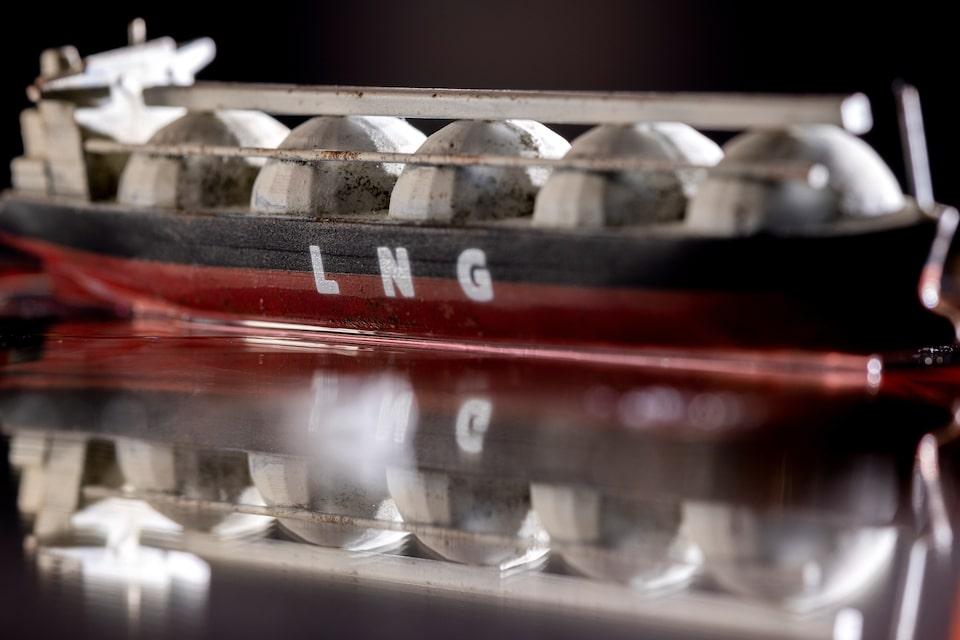
WASHINGTON, April 24 (Reuters) - President Donald Trump's energy security council plans to host a summit in Alaska in early June, when it hopes Japanese and South Korean officials will announce commitments to the Alaska LNG project, a source familiar with the matter said on Thursday. Trump has touted the $44 billion Alaska liquefied natural gas project, which would deliver gas from the state's North Slope fields via an 800-mile (1,300 km) pipeline for domestic use and send it to customers in Asia as LNG, bypassing the Panama Canal. Sign up here. While the project has been talked about for years, progress has been limited by cost and the amount of work needed. Trump, who has pushed allies to buy U.S. energy while simultaneously threatening trade tariffs, has asked Japanese Prime Minister Shigeru Ishiba to support the Alaskan plan. Last month, Taiwanese state energy company CPC Corp signed a non-binding agreement with the state-run Alaska Gasline Development Corp, to buy LNG and invest in the project, a move Taiwan's President Lai Ching-te said would ensure the island's energy security. The summit being planned by Trump's National Energy Dominance Council, which wants to maximize production of oil and gas, would take place around June 2. It was first reported by The New York Times. The White House and the Interior Department did not immediately respond to a request for comment. Separately, officials from Thailand, which could also be a consumer of the LNG from Alaska, and South Korea are expected to visit the state to talk about the project sometime in the next two weeks, said the source who spoke on the condition of anonymity. It would be the first visit to Alaska by officials from Thailand to talk about the project in Trump's second administration. https://www.reuters.com/business/energy/us-plans-alaska-lng-summit-urges-japan-south-korea-support-project-source-says-2025-04-24/
2025-04-24 20:43
WASHINGTON, April 24 (Reuters) - Four Republican states have asked the U.S. Department of Agriculture to let them ban soda, energy drinks and other food items from the Supplemental Nutrition Assistance Program, also known as food stamps, according to an agency spokesperson. President Donald Trump's administration has said it will hastily approve such waivers submitted by states as part of its agenda to "Make America Healthy Again," a slogan popularized by health secretary Robert F. Kennedy, Jr. and his supporters. Sign up here. More than 41 million Americans receive benefits from the SNAP program, the nation's largest food assistance program. Iowa, Nebraska, Arkansas and Indiana have submitted waivers to the agency, a spokesperson said on Thursday. The agency did not make copies of the waivers available. Arkansas wants to exclude soda, fruit and vegetable drinks with less than 50% natural juice, "unhealthy drinks" and candy, according to a copy of the waiver on the website of Governor Sarah Huckabee Sanders. Indiana hopes to exclude candy and soda, according to an April 15 press release from Governor Mike Braun. Nebraska would exclude soda and energy drinks, according to an April 7 letter sent to Agriculture Secretary Brooke Rollins by Governor Jim Pillen. Reuters could not immediately verify the content of Iowa's waiver. Iowa lawmakers have been considering a bill that would limit SNAP purchases to whole foods like eggs, milk and vegetables. Soda and candy lobby groups have criticized the waivers. Some anti-hunger groups and lawmakers have said restricting certain items from SNAP is stigmatizing to benefit recipients. https://www.reuters.com/world/us/four-states-have-asked-usda-let-them-ban-soda-candy-food-assistance-program-2025-04-24/
2025-04-24 20:24
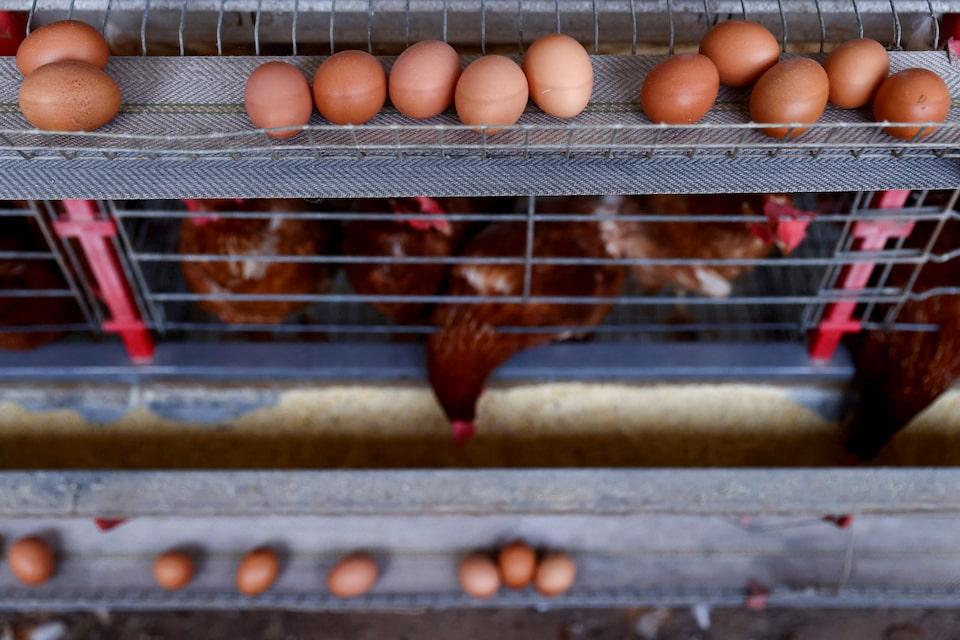
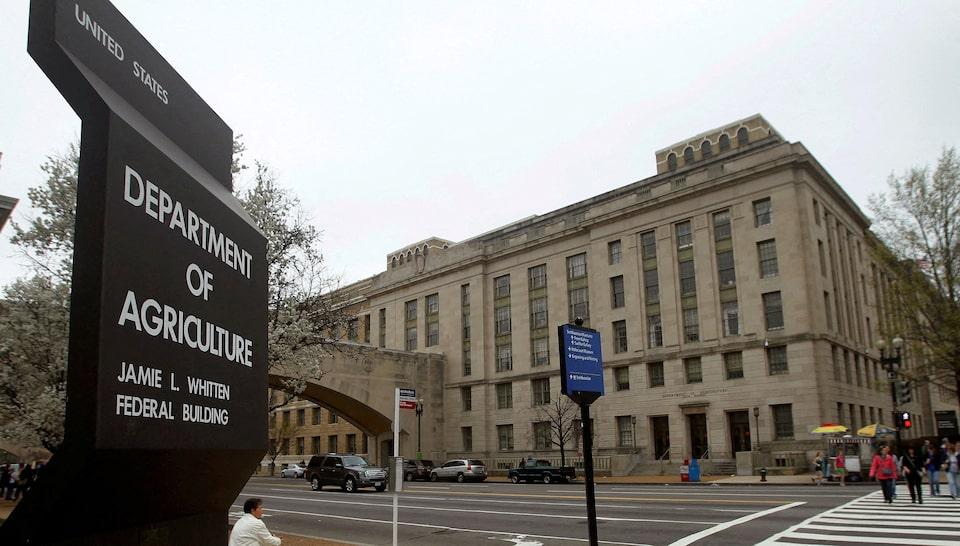
CHICAGO, April 24 (Reuters) - The U.S. Department of Agriculture is withdrawing a proposal aimed at reducing Salmonella risks in poultry products for U.S. consumers, the agency said on Thursday, increasing concerns about oversight of the food supply under President Donald Trump. The withdrawal represents the administration's latest missed opportunity to protect public health, food safety experts said. It was applauded by the poultry industry, which said the measure would have imposed a financial burden on producers without doing much to reduce contamination risk. Sign up here. The USDA last month eliminated two committees that advised it on food safety, while the U.S. Food and Drug Administration recently suspended a quality control program for testing milk and other dairy products. Salmonellae are bacteria that live in animal and human intestines and are shed through feces. People usually become infected by consuming contaminated water or food, and symptoms include diarrhea and fever. The proposal, which the Biden administration announced last summer, would have set final standards to determine whether raw poultry products are contaminated with certain Salmonella. It also sought to require poultry facilities to use certain procedures to monitor and document their processes for preventing contamination. The proposal took three years to develop and included input from one of the two suspended food safety committees, the USDA said last year. It represented a critical shift from reacting to outbreaks toward preventing them, said Darin Detwiler, an associate teaching professor at Northeastern University and food safety adviser. "The proposal would have, for the first time, set enforceable limits on contamination," he said. "This proposal was a long-overdue step toward aligning poultry safety regulations with modern science and consumer expectations." The USDA said in an emailed statement that the proposal would have been burdensome for U.S. businesses and consumers and that it did not offer an effective approach to address Salmonella in poultry. Consumer advocacy group Consumer Reports said the withdrawal will weaken the agency's ability to respond to outbreaks of foodborne illness. The CDC estimates Salmonella causes about 1.35 million infections in the United States annually, though only 1 in 30 infections is diagnosed. Resistance to antibiotics is increasing in Salmonella, which can limit treatment options for people with severe infections, according to the CDC. https://www.reuters.com/business/healthcare-pharmaceuticals/us-farm-agency-withdraws-proposal-aimed-lowering-salmonella-risks-poultry-2025-04-24/