2025-04-24 16:16
IMF cuts Asian growth to 3.9% in 2025, 4.0% in 2026 Greater exposure to US makes Asian economies vulnerable Asia faces sharper policy trade-offs to cope with US tariff hit IMF warns market volatility may tighten financial conditions IMF sees scope for more inter-regional trade in Asia WASHINGTON, April 24 (Reuters) - Many Asian central banks have room to ease monetary policy to cushion the blow to their economies from U.S. tariffs, a senior International Monetary Fund official said on Thursday, after the fund cut its GDP estimates for the export-driven region. In its latest reference forecasts, the IMF said it expected Asia's economic growth to slow to around 3.9% and 4.0% in 2025 and 2026, respectively, down from 4.6% in 2024 and well below earlier expectations. Sign up here. Trade policy uncertainty has increased materially since January, which has further worsened the near-term economic outlook for the region, Krishna Srinivasan, director of the IMF's Asia and Pacific Department, said in a press conference during the IMF and World Bank spring meetings in Washington. Srinivasan said regional policymakers faced sharp trade-offs in dealing with the economic uncertainty, which was triggered by U.S. President Donald Trump's April 2 announcement of hefty import tariffs on most countries. But the IMF official noted that low price pressures provided Asian economies with some room for maneuver on interest rates. "In a region where inflation is mostly at or below target, there is scope for monetary policy easing to cushion the external shocks in many countries," Srinivasan said. Asian countries were hit with some of the highest U.S. tariffs, including Cambodia at 49%, Vietnam at 46% and Thailand at 37%. While Trump later paused the tariffs, he raised duties on China, the world's second-largest economy even further. Beijing has imposed its own tariffs on the U.S. in response. Srinivasan said Asia was particularly vulnerable to trade policy shocks because many of its economies were open to trade and a key link in the global supply chain. "The combination of greater exposure to the U.S. market and significant global policy uncertainty presents a vulnerability for the region," he said. Aside from the hit to trade from tariffs, Asia faces the risk of heightened uncertainty feeding into market volatility, which in turn leads to tightening financial conditions, Srinivasan said. "That could be a big downside risk for Asia going forward," Srinivasan said. "So even though we have revised our forecast down, the downside risks are still pretty significant for the region." As demand in big markets like China and the U.S. slows, the IMF sees greater potential for intra-regional trade to cushion the blow, he said. Asian economies, including China, must also prop up domestic demand by promoting consumption and investment, Srinivasan added. While exchange rate flexibility would be a key buffer against shocks, he said currency intervention may come into play in case of heightened financial market volatility. https://www.reuters.com/business/asian-central-banks-have-space-ease-rates-mitigate-us-tariff-hit-imf-says-2025-04-24/
2025-04-24 15:46
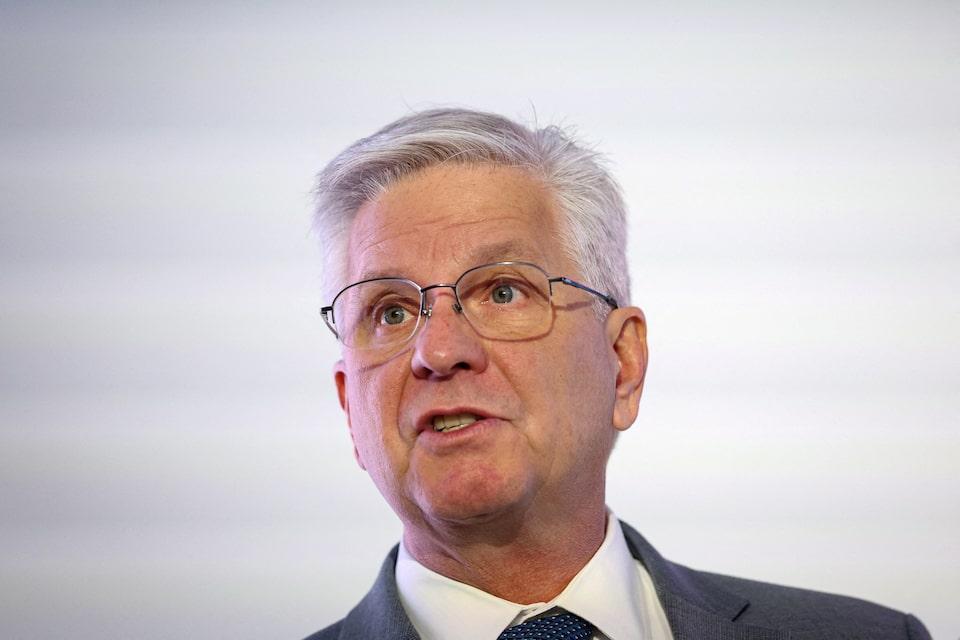
Fed officials still argue for policy patience amid uncertainty Fed's Waller still expect tariffs to have one-time inflation impact Fed's Hammack doesn't take June Fed move off the table if data support it NEW YORK, April 24 (Reuters) - Federal Reserve officials speaking in television interviews on Thursday indicated they see no urgency for a change in monetary policy as they seek more information to determine how the Trump administration’s trade tariffs are affecting the economy. Fed Governor Christopher Waller said in a Bloomberg interview that given the cadence of the administration’s shifts on import taxes, it wouldn’t be until some time this summer that some sense of how this is playing out will start to emerge, which suggests no imminent change in monetary policy. That sense of patience on policy was shared by Cleveland Fed President Beth Hammack, who spoke on CNBC. Sign up here. “I don't think you're going to see enough happen in the real data in the next couple of months, until you get past July,” Waller said. “When you get to the second half of the year, I think we'll start having better ideas what's going to happen with the tariff world that the administration is considering.” Waller reiterated his view that he believes the tariffs, which many economists, as well as central bankers, reckon will push up inflation while pushing down employment and growth, will have a one-time effect on price pressures. If it plays out like that and inflation does not prove enduring that suggests Fed policy may not need to react. “The economics tells me that the tariffs are a one-time price level effect that’s going to pass through,” Waller said. Some of the inflation impact of higher import prices would be offset by weakening consumer demand, falling employment and negative hits to household wealth, he said, so when it comes to the rising inflation, “it may not be as high as people think.” Waller said that navigating a one-time price jump without reacting would be challenging for the central bank given the pandemic experience of believing the inflation surge then was temporary, only to find out it wasn’t. “It’s going to take some courage to stare down these tariff increases in prices with the belief that they are transitory,” Waller said. But, “the question is, what are the things that will cause this inflation to persist through the initial tariff increases? And I just have a hard time seeing exactly what that would be.” Waller did note that if the economy weakened quickly that would change his monetary policy calculations. “If I saw enough movement in the unemployment rate to make me think that things were going bad, or growth prospects started tanking, or consumer spending started really going down, then I'd be ready to go” with changes in interest rates, Waller said. “I wouldn't be sitting here waiting to determine whether the inflation is transitory or not.” A LITTLE PATIENCE Over recent weeks a wide range of Fed officials have signaled that now is a time to be patient on the monetary policy front while taking in data to determine how the tariffs will influence economic momentum. Adding to the challenges is the president’s erratic implementation of the import tax, with some key levies paused after financial markets convulsed in reaction to their announcement. Financial markets broadly expect the Fed to cut what is now a 4.25% to 4.5% federal funds target rate range as the year progresses and Fed forecasts from the March Federal Open Market Committee meeting also penciled in easings. Tariffs have made the calculus harder because higher inflation and a weaker economy argue for different policy responses and the Fed choosing which side of its inflation and job mandates matters more at the moment. In her CNBC interview, Hammack called for patience on monetary policy amid high levels of uncertainty. But she did not rule out monetary policy changes by June if the data suggested action was needed. “We'll be watching the data carefully and I enter every meeting with an open mind about whether it's a time that we should be continuing to be patient, or a time that we should take action,” Hammack said. “If we have clear and convincing data by June, then I think you'll see the committee move, if we know which way is the right way to move at that point in time,” she said. Hammack was asked if she could see the Fed easing at the May 6-7 Federal Open Market Committee meeting and appeared to lean strongly against that. "I think it's too soon" to change interest rate policy next month, Hammack said. The bank president also said she does not have a base case for the economy right now but is thinking of the outlook in terms of scenarios. https://www.reuters.com/sustainability/boards-policy-regulation/fed-officials-argue-patience-while-gauging-tariff-impact-2025-04-24/
2025-04-24 14:14
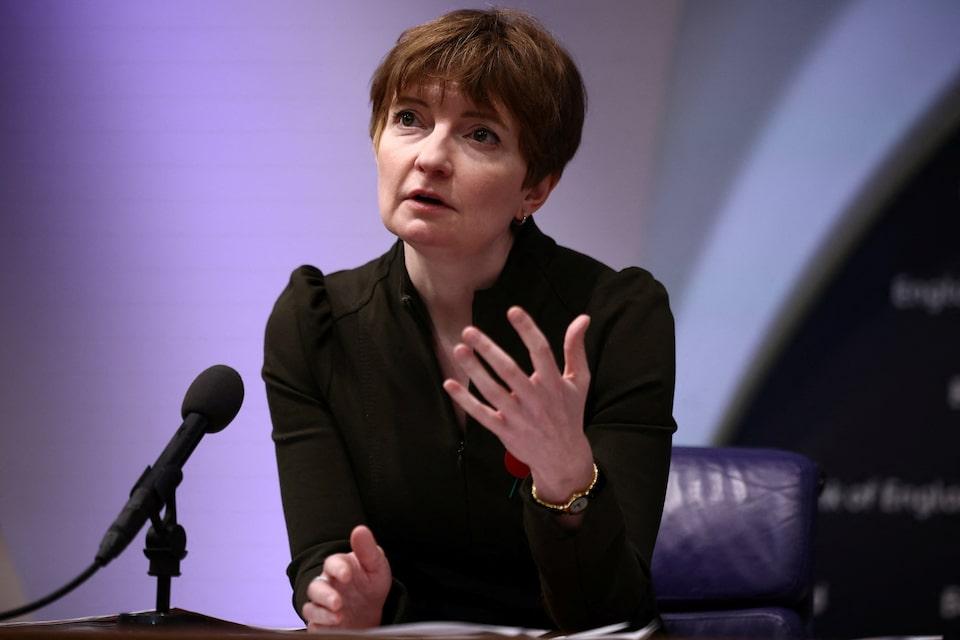
WASHINGTON, April 24 (Reuters) - The Bank of England is midway through its work in responding to a major review of its forecasting and communication processes, Deputy Governor Clare Lombardelli said on Thursday. The review , opens new tab, published a year ago and authored by former U.S. Federal Reserve Chair Ben Bernanke, recommended sweeping changes to the BoE's communications and analytical capabilities. Sign up here. "We are midway through this process," Lombardelli told a panel in Washington hosted by the Peterson Institute for International Economics, a U.S. think tank, on the sidelines of the International Monetary Fund's spring meetings. The BoE has already started to introduce economic scenarios as a way of showing how policy would operate an increasingly uncertain world. Lombardelli said the BoE was keen not to cloud the picture by "creating lightning rods of focus for particular examples", and avoid the risk that offering scenarios might in itself add to uncertainty. How best to communicate uncertainty was now at the forefront of the BoE's thinking, she said, adding that other disciplines such as healthcare during the COVID-19 pandemic offered lessons for the central bank. https://www.reuters.com/markets/europe/bank-england-is-midway-through-bernanke-review-response-lombardelli-says-2025-04-24/
2025-04-24 13:57
ROME, April 24 (Reuters) - Cryptocurrency firm Tether said on Thursday it had further raised its stake in Italian Serie A soccer club Juventus (JUVE.MI) , opens new tab to over 10%. The world's fourth-largest cryptocurrency company first invested in February in Italy's most popular soccer club, which is controlled by the Agnelli family through their investment company Exor (EXOR.AS) , opens new tab. Sign up here. The new shareholding represents 6.18% of voting rights in the club, the statement said. "The investment reflects Tether's long-term commitment to Juventus' future and its confidence in the club's intrinsic value and growth potential," it added. https://www.reuters.com/business/retail-consumer/cryptocurrency-firm-tether-raises-juventus-stake-over-10-2025-04-24/

2025-04-24 12:55
April 24 (Reuters) - Railroad operator Union Pacific (UNP.N) , opens new tab missed Wall Street estimates for first-quarter profit and revenue on Thursday, hurt by weak automotive shipments and lower fuel surcharge, sending shares down 3.5% in premarket trading. The Omaha, Nebraska-based company said its volumes were pressured by economic uncertainty and weaker coal demand. Sign up here. Union Pacific has struggled with lower demand for coal shipments as customers turn to cheaper stockpiles of natural gas for energy. Although, that trend is expected to change after U.S. President Donald Trump signed executive orders last month aiming to boost coal production. The company also joined its East Coast peer, Norfolk Southern (NSC.N) , opens new tab, in reaffirming its annual target. Union Pacific said its operating ratio, a key profitabilty metric, came at 60.7%, flat compared with a year ago. Quarterly revenue from its intermodal shipment, which involves transporting goods via two or more means of transportation, rose 10% to $1.19 billion. On an adjusted basis, Union Pacific earned $2.70 per share in the first quarter, compared with the average analyst estimate of $2.75, according to data compiled by LSEG. Revenue for the quarter ended March 31 marginally fell to $6.03 billion, compared with estimates of $6.08 billion. https://www.reuters.com/business/autos-transportation/railroad-operator-union-pacific-misses-quarterly-estimates-2025-04-24/
2025-04-24 12:46
April 24 (Reuters) - Freeport-McMoRan (FCX.N) , opens new tab said on Thursday the proposed tariffs could increase costs of goods the copper miner purchases in the United States by about 5%. Trump's sweeping tariffs on most U.S. imports and a rapidly intensifying trade war with China have sparked uncertainty across the mining industry and left companies scrambling to look for alternative supply chains. Sign up here. "FCX is monitoring potential indirect impacts of U.S. trade policy on economic growth and the potential for impacts on demand for copper," the company said. "Efforts are under way to evaluate alternative sourcing options to mitigate potential impacts." Freeport-McMoRan said it produced 868 million recoverable pounds of copper in the first quarter, lower than the 1.09 billion recoverable pounds it reported a year earlier. The company's unit cash costs for copper rose to $2.07 per pound from $1.51 last year. The Phoenix, Arizona-based company's net income attributable to common shareholders fell to $352 million, or 24 cents per share, for the three months ended March 31, from $473 million, or 32 cents per share, a year earlier. https://www.reuters.com/business/freeport-mcmoran-flags-higher-costs-due-tariffs-posts-lower-quarterly-profit-2025-04-24/