2025-04-24 06:48
PARIS, April 24 (Reuters) - French mining group Eramet (ERMT.PA) , opens new tab maintained its full-year output targets on Thursday despite reduced manganese and nickel volumes that contributed to flat first-quarter sales. The company, which reported adjusted quarterly sales of 742 million euros ($842 million), said that sales volumes for its manganese mine in Gabon fell 15% year on year, curbed by a worker strike and logistical problems at Owendo port. Sign up here. In Indonesia, nickel ore sales from its Weda Bay mine were down 11%, with Eramet citing destocking by local processing plants. Broader market uncertainty linked to trade and geopolitical tensions also contributed to what Chairwoman and CEO Christel Bories called a "more difficult than expected" first quarter. The group nonetheless maintained 2025 production forecasts that would see marketed volumes in Gabon and Indonesia rebound after a drop last year. In Argentina, the group said it made its first lithium sales during the first quarter after starting production of the battery mineral in December. However, it now expected full-year output to be at the low end of its target range of 10,000-13,000 metric tons due to a technical delay affecting equipment used in the concentration process, the company said. Geopolitical uncertainty, fuelled by U.S. President Donald Trump's tariff offensive, has further clouded the outlook for metal markets that have been wrestling with sluggish Chinese growth. Reporting 2024 results in February, Eramet had said it would trim spending and boost productivity gains this year due to persistent weakness in its markets. Eramet has said it has limited direct exposure to U.S. tariffs but could be affected by a reshuffling in trade from China. Among the biggest global miners, BHP Group (BHP.AX) , opens new tab has warned an escalating trade war could harm the world economy. ($1 = 0.8811 euros) https://www.reuters.com/markets/asia/mining-group-eramet-keeps-2025-output-targets-despite-q1-setbacks-2025-04-24/

2025-04-24 06:46
Gold bulls could conquer $3,500 level - analyst Bullion fell over 3% in the previous session Bessent says China tariffs are not sustainable April 24 (Reuters) - Gold prices rebounded on Thursday as investors bought bullion following a sharp decline in the previous session, while the focus remains on U.S.-China trade tensions. Spot gold was up 1.6% at $3,338.79 an ounce, as of 1140 GMT. Bullion fell as much as 3% on Wednesday in its worst daily performance since late November. Sign up here. U.S. gold futures gained 1.7% to $3,349.80. "Gold's pullback earlier has cleared some of the froth from its latest surge. That, in turn, attracted some buy-the-dip action amid still-persistent global trade war fears," said Han Tan, chief market analyst at Exinity Group. "Given the still-evident tailwinds for this precious metal, gold bugs could ultimately conquer the $3,500 level with conviction." Non-yielding bullion, traditionally seen as a hedge against global instability, has risen over 27% so far this year. The International Monetary Fund made sharp reductions to its outlook for both U.S. and global growth this year, with President Donald Trump's tariff policy the main reason behind the downgrade. "If the economic outlook deteriorates further, then there's no reason why gold could not receive another strong bid," said Ole Hansen, head of commodity strategy at Saxo Bank. However, U.S. Treasury Secretary Scott Bessent said U.S. economic growth will surpass the IMF's revised estimate of 1.8%, down from 2.7% in January, if Trump administration's policies are implemented. He also said that the excessively high tariffs between the U.S. and China are unsustainable, and must be reduced before trade negotiations can proceed. Stocks drifted on Thursday and a rebound in the dollar lost traction as investors tried to sift through the noise from the Trump administration. Spot silver fell 0.3% to $33.44 an ounce, platinum was steady at $972.15 and palladium was down 0.2% at $942.28. https://www.reuters.com/markets/commodities/gold-rebounds-dip-buying-despite-us-china-trade-deal-hopes-2025-04-24/

2025-04-24 06:43
BEIJING, April 24 (Reuters) - China has been flexing its control over the mining and refining of minerals by adding metals essential for clean energy, chipmaking and defence to its export control list, disrupting global supply and sending prices soaring. Through its export licensing system, Beijing gets a direct say over who gets what, and how much. Sign up here. Below is a description of how the system works and how easy it is to get an export license. WHAT IS THE CONTROL LIST AND WHAT MINERALS ARE ON IT? Since 2023, China has restricted the export of at least 16 minerals and related products. Earlier this month, it added seven rare earths to that list as part of its retaliation against hefty U.S. tariffs. China's export control law justifies including items to safeguard its national interest, security and work towards non-proliferation. Export controls aren't unusual and the United States has a similar program. WHAT IS THE PROCESS TO GET A LICENSE? Exporters are required to furnish six sets of documents, including profiles of end-users. That requirement in particular has led some importers to stop buying from China as they consider the information commercially sensitive. Once submitted, a decision can involve a minimum of five officials spread across up to three agencies, including sometimes the State Council, China's cabinet. Customers also need to shoulder some of the administrative burden. Importers and end-users need to sign declarations which, among other things, commit them not to transfer the product to a third party without China's permission. Earlier this month, South Korean companies were reportedly warned by China not to sell equipment containing Chinese rare earths to U.S. defence companies. China's Ministry of Commerce did not respond to Reuters' request for comment. HOW LONG DOES IT TAKE TO GET A LICENSE? The Ministry of Commerce says forty-five working days, although it reserves the right to take longer if the state council or military has to be consulted. It does not say when that is required. The Commerce Ministry's official working hours are from 8:30 am to 5:00 pm Beijing time, including a two-and-a-half-hour lunch break. However, industry sources tell Reuters it takes two to three months, or longer, to get a license. One rare earth trader said it would be "especially hard" to get licenses for U.S. clients during the trade war. https://www.reuters.com/world/china/china-is-restricting-mineral-exports-how-does-its-export-control-system-work-2025-04-24/
2025-04-24 06:14
April 24 (Reuters) - Japanese investors were net buyers of overseas bonds in the week through April 19, as U.S. bond markets recovered somewhat after a heavy selloff earlier this month. Japanese investors had been net sellers of overseas bonds for six consecutive weeks, joining a broad pullback from dollar assets, driven by concerns over U.S. trade tariff announcements and President Donald Trump's economic policies. Sign up here. Japanese investors bought a net 223.7 billion yen ($1.57 billion) worth of long-term foreign bonds during the week, logging their first weekly net purchase since the end of February, data from Japan's Ministry of Finance showed. U.S. Treasury yields have climbed this month, as bonds sold off, with hedge funds unwinding leveraged basis trades and overseas investors selling U.S. debt in apparent retaliation for tariffs and amid growing doubts about the safe-haven status of U.S. assets. Japanese investors are the largest holders of U.S. Treasuries with approximately $1.13 trillion in holdings. Meanwhile, overseas investors have been purchasing Japanese assets, driven by safe-haven demand and expectations that the Bank of Japan is likely to delay its interest rate hike in order to support the economy. They pumped 11.95 trillion yen into Japanese bonds and 3.7 trillion yen into equity markets in the past three weeks, the data showed. A Reuters survey of economists showed the BOJ is likely to hold its key interest rate through June, with only a slight majority now expecting a 25-basis-point hike next quarter, down from over two-thirds in last month's poll. At the same time, Japanese investors bought foreign equities worth about 610.4 billion yen in the week ended April 19, extending net purchases into a fifth successive week. ($1 = 142.7900 yen) https://www.reuters.com/business/japanese-investors-turned-net-buyers-overseas-bonds-last-week-2025-04-24/

2025-04-24 06:03
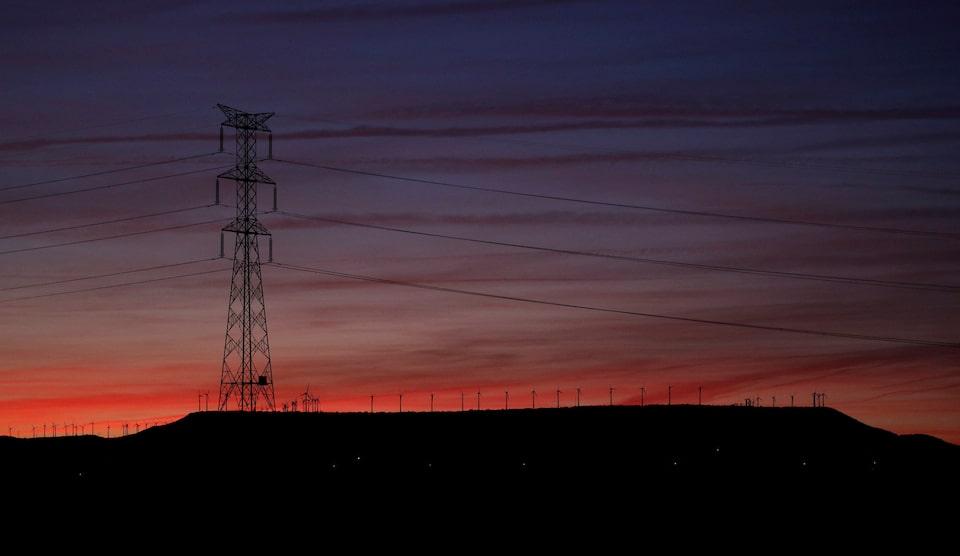
LITTLETON, Colorado, April 24 (Reuters) - Europe's households and businesses are starting to get a reprieve from high energy bills as regional power costs fall sharply from their 2025 peaks. Wholesale spot power prices across most of continental Europe have more than halved since hitting two-year highs in early 2025, thanks to a sharp retreat in regional natural gas costs which are down by a third since January. Sign up here. Expanding output from regional clean power sources - particularly solar farms - has also helped push power costs lower, and should provide some cushioning to Europe's utilities and energy consumers following an expensive start to the year. GASSED OFF European utilities were forced to boost gas-fired power production during January to March of 2025 to the highest levels in three years due to sharply lower output from wind farms. Cumulative output from wind farms was down 15% during the first quarter of 2025 from the same months in 2024, data from Ember shows, because wind speeds were below normal at turbine level. As wind power traditionally accounts for around 15% of total electricity supplies in Europe, regional utilities had to compensate for that drop in clean supplies with higher output from natural gas plants. Total gas-fired electricity supply during the January to March period was 332 terawatt hours (TWh), which was 7% more than during the same months in 2024 and the highest since 2022. The higher gas generation total helped push natural gas' share of Europe's electricity generation mix to nearly 26% for the opening quarter of 2025, from less than 24% in 2024. In turn, that higher gas dependence during the peak winter heating season for Europe helped push up regional natural gas prices, which rallied by around 20% to two-year highs during the opening eight weeks of 2025. As gas accounted for the largest source of power for European utilities during that period, power suppliers were forced to pay up for the gas they needed, and pass on some of the costs to consumers in the form of higher energy bills. These higher power bills placed fresh strain on European businesses and households, which were already dealing with weak economic growth and renewed tariff turbulence from the new administration of U.S. President Donald Trump at the time. BRIGHTER OUTLOOK With winter now over, European utility gas-fired power production is set to contract sharply. Over the past three years, gas-fired electricity output in Europe dropped by 25% between March and June, as demand for heating halted and output from solar farms peaked. A similar reduction in gas generation in 2025 could help drive regional gas prices lower still, and help reduce costs for power producers across the region. A key caveat is that utilities and storage operators need to replenish stockpiles ahead of next winter, which should sustain some gas purchases even as gas-fired generation drops to the lowest levels of the year. However, the total volume of gas purchases is likely to be notably less than the volumes seen during the opening quarter of the year. That in turn should limit upside momentum to gas prices over the coming months, and help regional power costs continue to trend lower. LOW POINTS So far in April, wholesale peak power prices in Germany - Europe's largest economy and power consumer - have averaged around 72 euros per megawatt hour, according to data from LSEG. That compares to a peak of around 144 euros in February, and so means that the latest power costs are half of what they were just two months ago. Power costs in the Netherlands and Poland are down by a similar degree, while in Spain power costs are more than 80% below their February peak. Power costs in Italy - frequently the highest in Europe - are down a third from their 2025 peak. Some additional power price weakness is likely to emerge over the coming month or so, as regional solar power output climbs to its annual peak and floods regional power grids with surplus electricity. In 2024, the month of May marked the low point for wholesale power prices in France, the Netherlands, Germany and Poland, and prices will likely approach their bottom around that time again this year. And if power costs were to retreat all the way to the lows of last May, then prices in Germany may drop by another 20% or so before bottoming. However, current power prices are already below their 2024 average, which suggests that further downside room may be more limited - especially if power firms incur additional costs this year from gas stock rebuilding and ongoing grid upgrades. Regardless of how much lower they fall, however, the fact that power costs are already sharply below their early-2025 peaks should provide energy consumers of all sizes with some price relief compared to the high bill prices seen this winter. The opinions expressed here are those of the author, a market analyst for Reuters. https://www.reuters.com/business/energy/europes-power-costs-plunge-gas-led-heating-season-ends-maguire-2025-04-24/
2025-04-24 05:54
April 24 (Reuters) - Canadian miner Teck Resources (TECKb.TO) , opens new tab on Thursday reported first-quarter results that beat expectations due to higher commodity prices and copper sales volumes. The company reported adjusted earnings per share from continuing operations of C$0.60, above expectations of C$0.32, according to data compiled by LSEG. Sign up here. "Our profitability improved significantly ... primarily as a result of higher base metal prices, increased copper and zinc in concentrate sales volumes, and the positive impact of a weaker Canadian dollar on our business," Teck said in a statement. Teck's first-quarter copper sales volumes rose to 106,200 tonnes, an increase of 11% year-on-year. Revenue rose to C$2.29 billion ($1.65 billion) from C$1.62 billion last year, beating expectations. Teck also maintained its forecast for 2025. In February, the company had said that U.S. President Donald Trump's tariffs on Canadian imports will not have any material impact on its business. ($1 = 1.3867 Canadian dollars) https://www.reuters.com/markets/commodities/teck-first-quarter-earnings-beat-expectations-2025-04-24/