2025-04-23 19:30
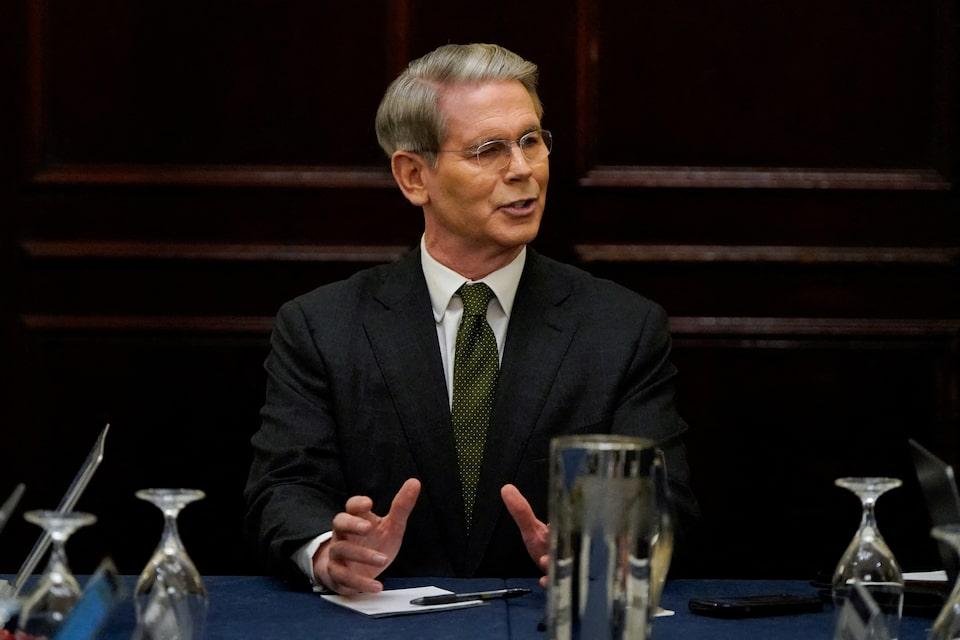
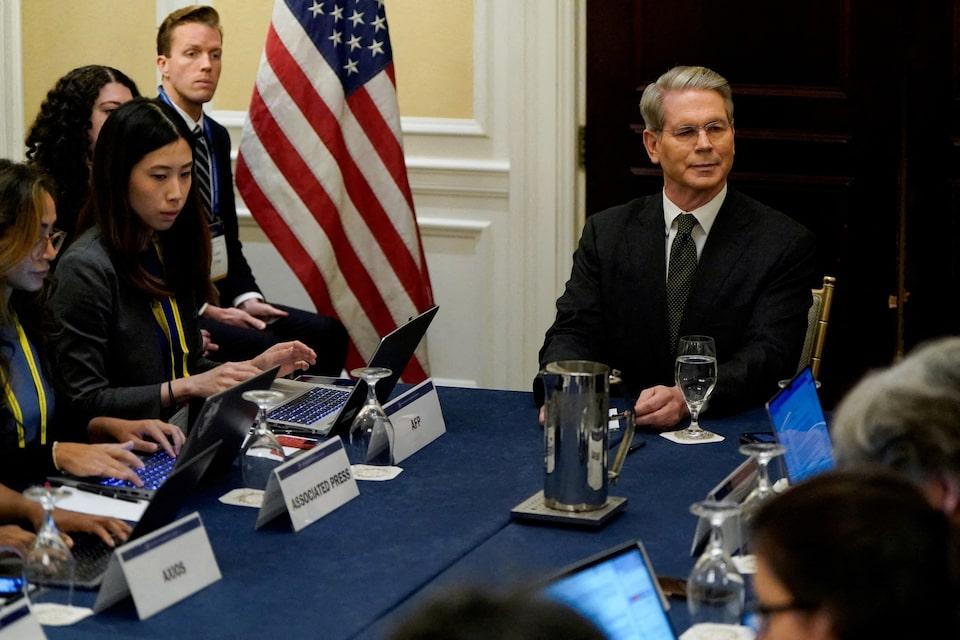
Bessent sees mutual tariff reduction before talks Negotiations with multiple countries aim to restore tariff certainty Bessent confident in U.S. growth despite IMF downgrade No specific currency targets in U.S.-Japan trade talks WASHINGTON, April 23 (Reuters) - U.S. Treasury Secretary Scott Bessent said on Wednesday that he believes that excessively high tariffs between the U.S. and China will have to come down before trade negotiations can proceed but said President Donald Trump would not unilaterally cut tariffs on Chinese imports. Bessent told reporters on the sidelines of International Monetary Fund and World Bank annual meetings that de-escalation was necessary for the world's two largest economies to rebalance their trading relationship. Sign up here. Asked whether that meant a reduction in the 145% U.S. tariffs on Chinese goods and China's 125% tariffs on U.S. goods, Bessent said: "I think that has to be, because again, neither side believes that these are sustainable levels. As I said yesterday, this is the equivalent of an embargo and a break between the two countries in trade does not suit anyone's interest." Bessent said there were no plans for Trump to move first in lowering tariffs to de-escalate a bitter U.S.-China trade war, echoing comments from White House spokesperson Karoline Leavitt that there would be "no unilateral reduction in tariffs against China." "I would not be surprised if they went down in a mutual way," Bessent added. Bessent said that the Trump administration was working to restore tariff certainty through negotiations with dozens of countries, and he did not think that it would involve an "extended process," because countries will want to avoid the higher reciprocal tariffs that were announced on April 2. Bessent also clarified previous remarks about a two- to three-year timeline for a U.S.-China deal, saying that this referred to the full rebalancing process, not the negotiations for a deal, which should happen much faster. He said earlier that it was time for China to rebalance its economy toward consumption, and called for a joint rebalancing, with the U.S. shifting towards manufacturing. He said the third quarter of this year is a "reasonable estimate" for achieving clarity on the ultimate level of Trump's tariffs, and said he was not concerned about the IMF's steep U.S. growth downgrade by nearly a full percentage point to 1.8% for 2025, a cut due largely to Trump's tariffs, retaliation and the uncertainty that they are causing. Bessent has set a goal for pushing U.S. growth and argued that Trump's economic policies would propel growth up to 3% through more energy production. "I'm not concerned about the IMF projections. And again, I think the third quarter would probably be a reasonable estimate that we will have clarity on tariffs," Bessent said. "We will have the tax bill done, and I would think that the deregulation, as I mentioned, was always going to be the slowest component, but that should start kicking in in the third and fourth quarters." NEGOTIATIONS ELSEWHERE Bessent said talks with other countries were continuing, and that a deal with India was "very close." The talks with India were easier because the South Asian country's trade barriers were mostly high tariffs, with "no currency manipulation" and fewer complex non-tariff trade barriers, he added. India and China are among the roughly 15 largest U.S. trading relationships that the Trump administration is prioritizing for negotiations aimed at reducing the U.S. trade deficit. "I don't think that the economy will rise and fall off of the Bahamas and Costa Rica negotiations," Bessent said. Regarding talks with the EU, Bessent said that digital services taxes in countries such as France and Italy aimed at U.S. technology platforms were a problem that the Trump administration wants to incorporate into negotiations. Talks with Japan would include multiple factors including "tariffs, non-tariff trade barriers, currency manipulation and government subsidy of labor and fixed capital investment," Bessent said, but they would not include specific targets for the dollar-yen exchange rate. https://www.reuters.com/business/finance/us-china-tariffs-need-fall-trade-talks-start-bessent-says-2025-04-23/
2025-04-23 19:20
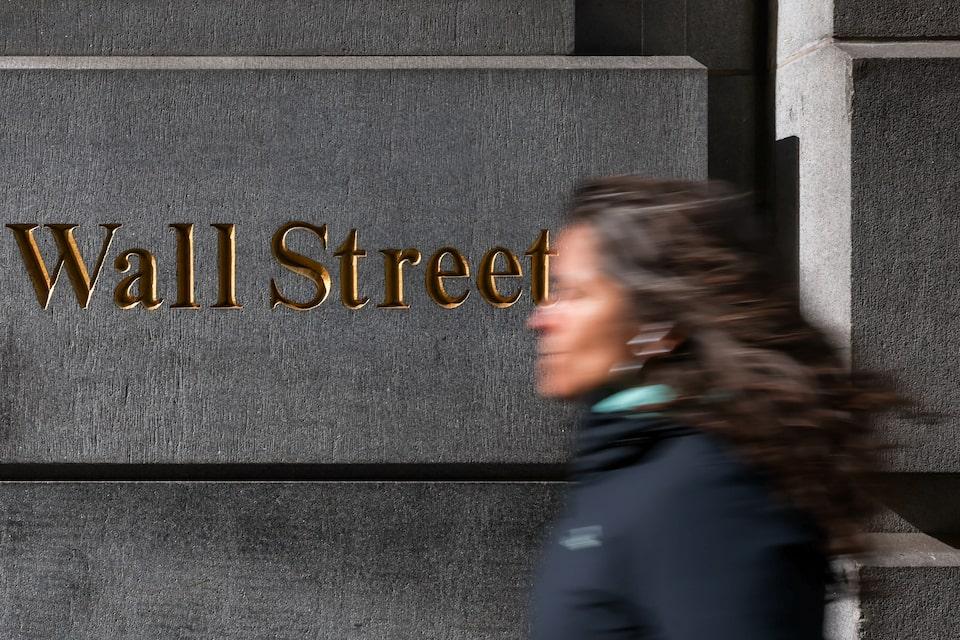
April 23 (Reuters) - The benchmark S&P 500 US stock Index rallied to a two-week high on Wednesday on hopes for a de-escalation in the U.S.-China trade war and as President Donald Trump scaled back his threats to fire Federal Reserve Chair Jerome Powell. The prospect of negotiations between Washington and Beijing, currently locked in an escalating tit-for-tat tariff war, helped lift sentiment after a Wall Street Journal report cited a senior White House official as saying that U.S. tariffs on China were likely to come down to between roughly 50% and 60%. Sign up here. The three main indexes were already in recovery mode after Trump said late on Tuesday he had "no intention" of firing Powell, walking back last week's market rattling comment that the Fed chair's termination could not come "fast enough" that had drawn heavy criticism. At point they were all up more than 3%. In late afternoon trade the Dow Jones Industrial Average (.DJI) , opens new tab was up about 1%, the S&P 500 (.SPX) , opens new tab up 1.7% and the Nasdaq Composite (.IXIC) , opens new tab 2.7%. COMMENTS: RUSSELL PRICE, CHIEF ECONOMIST, AMERIPRISE, TROY, MICHIGAN "With those worst-case scenarios, for the most part, seeming to be taken off the table, markets have, or stocks, I should say, have reason to rise somewhat off of their bottoms, or their lows. "We have to kind of step back and realize that we're only three months into this situation, maybe we could even say we're less than a month into it, given if we use April 2nd as our starting point. If things were to resolve relatively soon, and the picture stabilized, I think that the native repercussions as far as long-term perceptions of the United States on the global, not just the economic front, but on many fronts, would improve slowly. But if this carries over into, say, the second half of the year, and there's still a lot of uncertainty remaining, then I think the longer this remains out there, the more entrenched those data perceptions could become." JIM BAIRD, CHIEF INVESTMENT OFFICER, PLANTE MORAN FINANCIAL ADVISORS, SOUTHFIELD, MICHIGAN "A softening of the stance on tariffs and trade policy with China and maybe a signal of willingness to try to find a deal, to walk back from the peak tensions, is exactly what the market wants to hear." "When you see this type of positive surge over a couple of days, based on the potential of a ratcheting down in the rhetoric and maybe a move towards some sort of a plan to find a solution with China, I think it tells you that investors think there is a chance that a recession could still be avoided." "It's still a market that's characterized by the degree of policy uncertainty that we're seeing. It's been the tariff and trade story for a while. More recently, it's been questions about the ability of the Fed to maintain its independence... I think it's about all of the political and policy uncertainty and what it could mean for the economy in the near term." CHUCK CARLSON, CHIEF EXECUTIVE OFFICER, HORIZON INVESTMENT SERVICES, HAMMOND, INDIANA "It seems like (the reasons for the stock market snapback are) multifold. One, some of the comments that have come out of the White House here in the last 24 hours are more positive relative to tariffs, especially China. Two, the comment that (Trump) is not going to fire Powell, even though he probably can't, took some of that uncertainty off the table. Three, you've had some earnings announcements that have been pretty decent. And then finally, you've got short sellers out there really thinking about their positions, especially on the back of yesterday and then strength beginning today. And so I think structurally, you've got a lot of continued short covering that's going on that's driving things higher." AMELIE DERAMBURE, SENIOR MULTI-ASSET PORTFOLIO MANAGER, AMUNDI, PARIS "Markets are really hoping that the worst will not happen and are really giving a chance to negotiations and less tariffs being implemented. That's an important element which is lifting U.S. equities, but also as a consequence, global equities, including European ones." PETER CARDILLO, CHIEF MARKET ECONOMIST AT SPARTAN CAPITAL SECURITIES, NEW YORK "There seems to be some light at the end of the tunnel here in terms of the trade war. Investors are beginning to feel more confident that perhaps the worst of the trade rhetoric is over, that we've probably hit a temporary short-term bottom and stocks are likely to move a little bit higher in the coming days." PETER ANDERSEN, FOUNDER OF ANDERSEN CAPITAL MANAGEMENT, BOSTON "Whether or not they are permanent statements or transient statements, we still do not have enough evidence to take a stand one way or the other. Certainly the market doesn't agree with me because the market responds instantaneously to any good or bad news as we're seeing today." "In my view, unless the President or the administration comes out with consistent statements and, by consistent, I mean by more than a 24-hour news cycle, this is a temporary rally." "However, it is showing signs, these types of rallies based on news like this certainly act as a guidepost for what the investors are hoping to have as a resolution. We see that anytime there is a hint of not firing the Fed or easing on the tariffs or close to a tariff agreement, we see a very strong rally for the day, but not necessarily over the longer term." https://www.reuters.com/business/finance/wall-street-indexes-rally-worries-about-tariff-war-powell-tenure-subside-2025-04-23/
2025-04-23 18:55
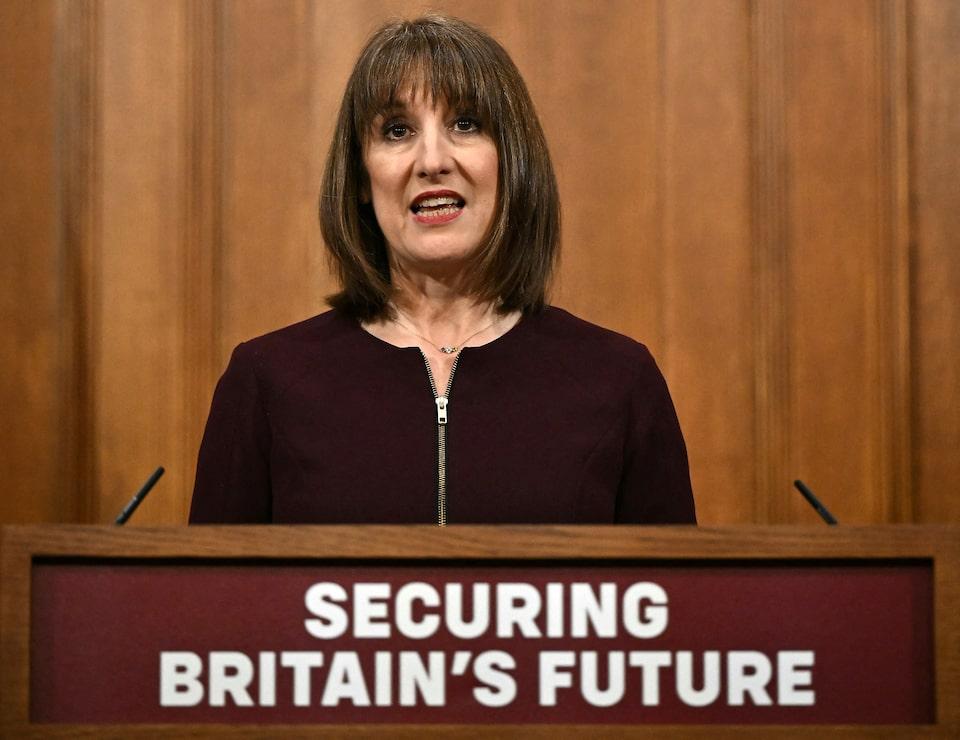
UK firm on maintaining food standards in US trade talks Reeves aims to make progress on US import tariffs in Washington UK also seeks to lower trade barriers with European Union WASHINGTON, April 23 (Reuters) - Britain's government is not in a rush to secure a trade deal with U.S. President Donald Trump's administration, finance minister Rachel Reeves said on Wednesday, and she ruled out making concessions on food standards in the talks. "We're not going to rush a deal. We want to get the right deal that's in our national interest and those talks are ongoing," Reeves told reporters in Washington. Sign up here. "It's clear that the U.S. as well wants a deal. And so those discussions continue." Reeves, like many of her global peers, hopes to make progress towards reducing Trump's import tariffs while attending the International Monetary Fund and World Bank spring meetings in the U.S. capital this week. The Wall Street Journal reported on Tuesday that the U.S. wanted Britain to reduce its levies and other non-tariff barriers on a variety of goods including a relaxation of rules on U.S. agricultural imports, such as beef. "We're not going to be relaxing our food standards. We've been clear with the U.S. about that and they respect that and understand that," Reeves said. "So that is not something that's on the table in these discussions." As well as seeking an agreement with the U.S., Britain wants to lower its post-Brexit barriers to trade with the European Union, a plan which could be made more complicated if London agreed to Washington's demands on food standards. The WSJ also said the U.S. wanted Britain to cut its automotive import tariff to 2.5% from 10%, citing people with knowledge of a draft U.S. document. Reeves declined to comment on details of tariff discussions but pushed back against suggestions the UK was under pressure to give ground on non-tariff barriers in key sectors including automobiles as well as rules for social media firms. "We are not going to be changing our standards based on asks from foreign governments. So discussions, decisions around food standards, around digital services, around auto standards, are decisions for the UK government to make," she said. Reeves is due to meet U.S. Treasury Secretary Scott Bessent this week and she said she hoped to make progress towards a trade deal that builds on U.S.-UK defence and security ties. "I think that there is a deal to be done both on tariffs and also a wider deal beyond the immediate issue of tariffs around technology, a technology partnership building on the national security and defence partnership," she said. Asked about official data published on Wednesday showing higher-than-expected UK government borrowing, Reeves said she was prepared to take tough action in a two-year spending review in June. "The numbers today just reinforce to me the importance that this government is placing on controlling the public finances," she said. "I've absolutely no doubt we can make big improvements in the productivity of our public services, and that is what the spending review will be driving forward." https://www.reuters.com/world/uk/uk-wont-rush-reach-trade-deal-with-us-finance-minister-reeves-says-2025-04-23/
2025-04-23 18:44
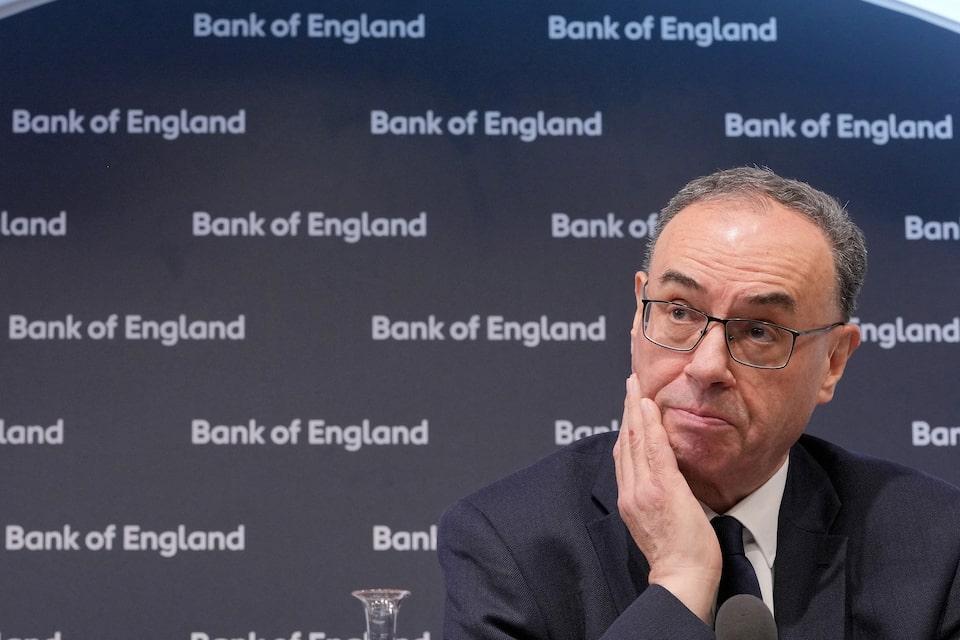
WASHINGTON, April 23 (Reuters) - The Bank of England is taking very seriously the risk to economic growth from the upheaval in global trade, Governor Andrew Bailey said on Wednesday, two weeks before the BoE's next interest rate decision and its latest economic forecasts. Bailey, speaking on the sidelines of the International Monetary Fund's spring meetings that have been dominated by U.S. President Donald Trump's trade tariffs, said Britain stood to be hit by the global disruption as an open economy. Sign up here. Bailey pointed to the IMF's sharp downgrade of its forecasts for economic growth in 2025 - both globally and in the UK - which were published on Tuesday. "We do have to take very seriously the risk to growth," Bailey told an event organised by the Institute of International Finance when asked how much the BoE had to consider the effects of U.S. President Donald Trump's tariff and trade policy. "We're currently working through that because we've got an interest rate decision coming in two weeks' time," Bailey said. Investors on Wednesday assigned a 100% probability to the BoE cutting rates by a quarter of a percentage point on May 8 after the next scheduled Monetary Policy Committee meeting. Asked about global banking rules, Bailey stressed the importance of the United States backing the so-called Basel bank capital regulations. The U.S. banking industry is seeking a further relaxation of rules on the sector after it secured a watering down of the regulation under the administration of Joe Biden. The BoE in January delayed implementing the Basel rules by a year to January 2027 to get clarity on what the United States will do and the European Union is considering its next moves. "It's important to give the U.S. time to decide how it's going to reframe its Basel implementation, because we want to go ahead together," he said. "I think it's important that we maintain the playing field." https://www.reuters.com/world/uk/boes-bailey-says-risk-growth-trade-disruption-must-be-taken-seriously-2025-04-23/
2025-04-23 18:26
US has no currency targets in mind, Bessent says Bessent says US expects Japan to honor G7 agreement Treasury chief expected to meet Japanese counterpart this week WASHINGTON, April 23 (Reuters) - The U.S. does not have specific currency targets in mind as part of bilateral trade talks with Japan, Treasury Secretary Scott Bessent said on Wednesday, ahead of an expected meeting with Japanese Finance Minister Katsunobu Kato this week. The dollar-yen exchange rate is likely to be among the key topics discussed at that meeting. Sign up here. Bessent said the U.S. was looking at multiple factors including "tariffs, non-tariff trade barriers, currency manipulation and government subsidy of labor and fixed capital investment" in its negotiations with Japan. "We'd expect the Japanese to honor the G7 agreement," he told reporters on the sidelines of the International Monetary Fund and World Bank spring meetings in Washington. "No currency targets," Bessent said when asked whether the U.S. will discuss any currency targets with Japan as part of the bilateral trade negotiations. Japan last week kicked off bilateral trade talks with the U.S. to seek concessions on tariffs, including on automobiles, a mainstay of the Asian nation's export-heavy economy. The two countries have agreed to have their finance chiefs take up the thorny currency rates issue. That move has raised speculation as to what Bessent and Kato could discuss in their first face-to-face talks, which are expected to be held on the sidelines of the IMF and World Bank meetings. U.S. President Donald Trump's focus on addressing a huge trade deficit and his past remarks criticizing Japan for intentionally maintaining a weak yen have led to market expectations that Tokyo will face pressure to strengthen the yen's value against the dollar and give U.S. manufacturers a competitive advantage. Those expectations have fueled the yen's recent rise to seven-month highs against the dollar. But sources have told Reuters that Japan sees little scope for direct action such as currency intervention or an immediate interest rate hike by its central bank. Trump has hit Japan with 24% tariffs on its exports to the U.S. although, like most of his levies, they have been paused until early July. A 10% universal rate remains in place, as does a 25% duty on cars, which analysts say will deal a heavy blow to Japan's economy. https://www.reuters.com/business/us-rules-out-setting-currency-targets-trade-talks-with-japan-2025-04-23/
2025-04-23 17:55
MEXICO CITY, April 23 (Reuters) - Mexican lender Banorte (GFNORTEO.MX) , opens new tab will again consider a potential purchase of Banamex, Citi's (C.N) , opens new tab one-time retail unit in the country which it split off last year, Banorte's CEO told analysts on Wednesday. "There are a lot of moving pieces," CEO Marcos Ramirez said. "So we will watch closely what's going on and propose." Sign up here. Banorte had previously bowed out of the competition for Banamex in 2022, though Citi was ultimately unable to find a buyer for the unit. Citi was close to selling it to mining conglomerate Grupo Mexico for $7 billion, though tensions between the group and then-President Andres Manuel Lopez Obrador led to the deal falling apart. Instead Citi is set to list Banamex, which could be a possible dual listing in Mexico City and New York. "Our duty is to see whatever is on the market and analyze it, and then our board will decide, and then (shareholders), the owners of the company," Ramirez said. Banorte will have a shareholders meeting later on Wednesday. The firm will also propose a dividend of 9.99 pesos ($0.5090) per share as well as re-establishing a 32-billion-peso share buyback fund over the next 12 months. ($1 = 19.6258 Mexican pesos) https://www.reuters.com/business/finance/mexicos-banorte-once-again-weighs-banamex-purchase-2025-04-23/