2026-01-15 19:20
Jan 15 (Reuters) - A federal judge on Thursday cleared Norwegian offshore wind developer Equinor (EQNR.OL) , opens new tab to resume work on its New York Empire Wind project, which President Donald Trump's administration halted along with four other projects last month. The ruling by U.S. District Judge Carl Nichols in Washington is the second legal setback for Trump's offshore wind pause this week, after a judge in the same court on Monday ruled Danish energy company Orsted (ORSTED.CO) , opens new tab could restart work on a project off the coast of Rhode Island. Sign up here. The victories give Equinor and Orsted what could be a temporary reprieve to continue work on their multi-billion-dollar projects, while their underlying lawsuits proceed. A federal judge in Virginia on Friday will consider a request by another project, Dominion's Coastal Virginia Offshore Wind, to block Trump's offshore wind pause. Trump has spent the last year seeking to block expansion of offshore wind in federal waters. He has repeatedly said he considers the technology expensive, unreliable and ugly. The Interior Department, which ordered the pause, did not immediately respond to a request for comment on the ruling. Government attorneys argued in court that the December 22 halt was justified by new, classified information regarding offshore wind's impact on national security. The Defense Department raised the new concerns, which relate to radar interference, to Interior officials in November. But Nichols, who was appointed by Trump during his first term, said the government's national security concerns did not outweigh the "irreparable harm" Empire Wind would suffer if it could not resume construction. The order "threatens Empire Wind's entire existence," Nichols said, by limiting its access to rare vessels it needs to finish the project. Equinor has spent $4 billion on the project, which is 60% complete and is expected to produce enough power for 500,000 New York homes. "Empire Wind will now focus on safely restarting construction activities that were halted during the suspension period," Equinor said in a statement. "In addition, the project will continue to engage with the U.S. government to ensure the safe, secure and responsible execution of its operations." Nichols said he would consider the merits of the underlying lawsuit on an "expedited basis." https://www.reuters.com/legal/litigation/us-judge-grants-equinor-bid-restart-new-york-offshore-wind-project-2026-01-15/

2026-01-15 16:22
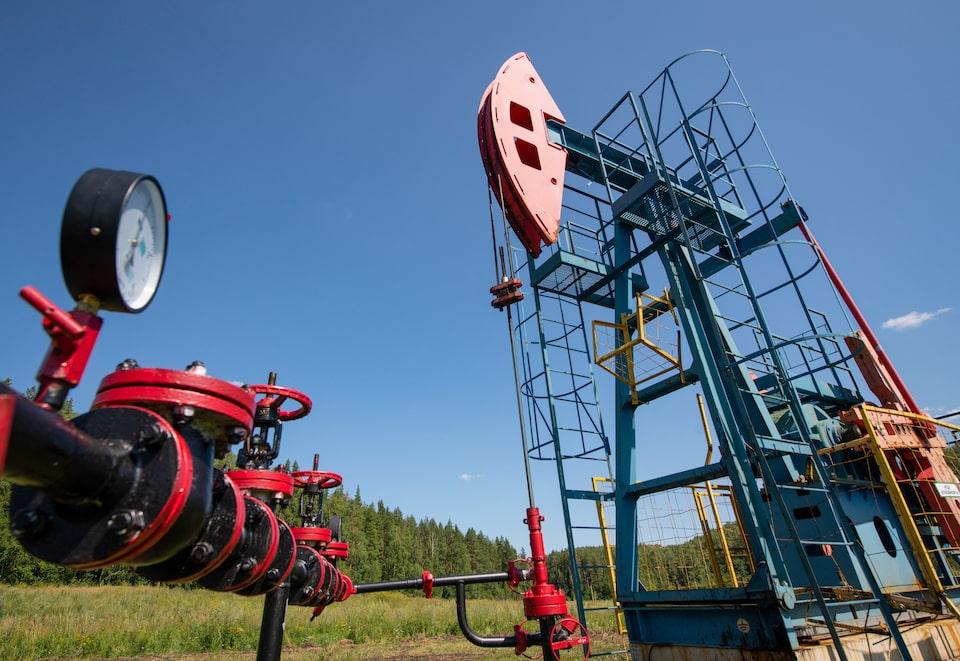
Drop driven by 18% fall in oil prices and rouble appreciation Oil and gas revenues make up around 25% of federal budget, critical amid heavy defense spending Last-year revenues were below revised forecast of 8.65 trillion roubles MOSCOW, Jan 14 (Reuters) - Russia's federal budget revenues from oil and gas dropped by 24% in 2025 to the lowest level since 2020, according to Finance Ministry data, as oil prices fell while the rouble appreciated. Oil and gas revenue is the leading source of cash for the Kremlin, making up a quarter of federal budget proceeds that have been drained by heavy defence and security spending since Russia began its military campaign in Ukraine in February 2022. Sign up here. The ministry reported that oil and gas revenues fell last year to 8.48 trillion roubles ($108.03 billion), compared to 11.13 trillion roubles in 2024. Oil prices fell more than 18% in 2025 - their steepest yearly drop since 2020 - amid growing oversupply concerns. The proceeds were also lower than the 8.65 trillion roubles expected by the finance ministry in its downwardly revised estimates from an initial forecast of 10.94 trillion roubles for 2025. Proceeds from oil and gas sales were last at such levels in 2020, when, amid the COVID-19 pandemic and the collapse of the oil market, they fell to 5.24 trillion roubles. Ukraine and its Western backers have repeatedly said they want to curb Russian oil revenue to force the world's second-largest oil exporter to end the war in Ukraine. In December 2025, oil and gas revenue fell to 447.8 billion roubles from 790.2 billion roubles in the same month in 2024 and 530.9 billion roubles in November 2025. ($1 = 78.4955 roubles) https://www.reuters.com/business/energy/russias-oil-gas-budget-revenue-falls-24-lowest-since-2020-2026-01-15/
2026-01-15 15:38
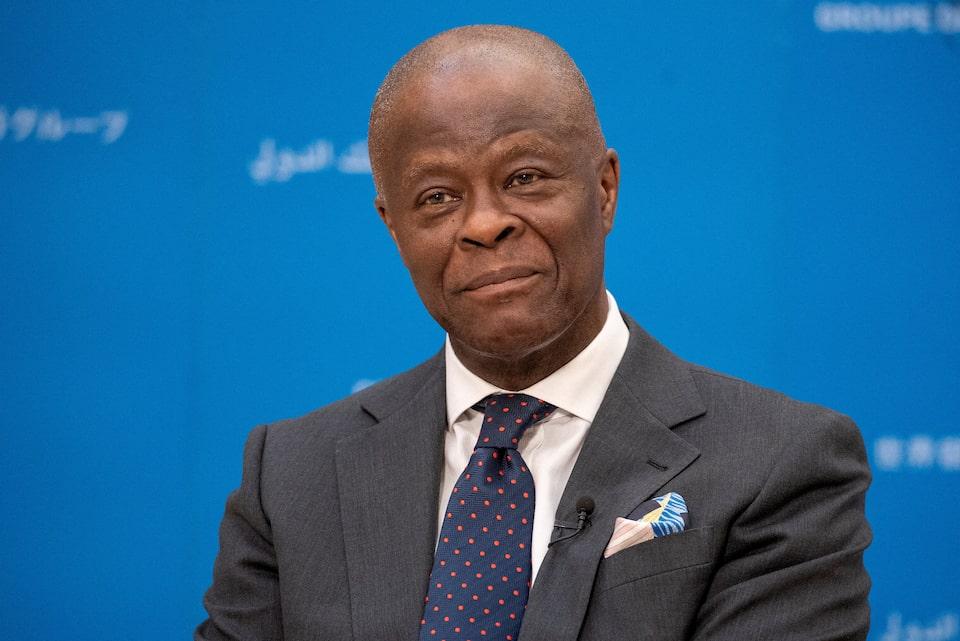
Edun emphasizes need for sustained, inclusive, job-rich growth Growth forecast at 4.68% for 2026, inflation to average 16.5% Reforms this year to focus on digital revenue collection and pro-poor tax measures ABUJA, Jan 15 (Reuters) - Nigeria has entered a phase of economic consolidation after two years of reforms that helped steady inflation, stabilise the currency and lift investor confidence, Finance Minister Wale Edun said on Thursday. Since taking office in 2023, President Bola Tinubu has rolled out Nigeria's most ambitious economic overhaul in decades by ending costly fuel and energy subsidies, twice devaluing the naira currency and changing the tax system to boost public finances. Sign up here. The measures unleashed Nigeria's worst cost-of-living crisis in a generation but set the stage for improving macroeconomic indicators the government says are now taking hold. The country's major workers' union has said that Tinubu’s reform‑driven policies hit its members hard, with inflation eroding incomes and pushing millions of people into financial hardship. Speaking at the launch of a national economic outlook report for the new year, Edun said Nigeria had reached a turning point after a turbulent transition marked by subsidy removal and exchange-rate unification. Inflation had eased to 14.45% in November from 33.18% a year earlier, while the naira firmed below 1,500 per dollar, Edun said, adding that growth averaged 3.78% in the first nine months of 2025 and external reserves rose to $45.5 billion. The stock market also jumped nearly 60% year‑on‑year. "Nigeria cannot afford to pause or retreat. The task now is to turn stability into sustained, inclusive and job-rich growth," Edun said. He forecast 4.68% growth in 2026, with inflation averaging 16.5% and the naira stabilising at around 1,400 per dollar, and sought to calm concerns over Nigeria's 152 trillion naira public debt, saying the jump reflected greater transparency and exchange-rate adjustments rather than new borrowing. He said 30 trillion naira reflected unrecorded central bank "Ways and Means" support and 49 trillion naira came from forex revaluation. Even so, he said Nigeria's debt-to-GDP ratio sits at 36.1%, below regional and global averages. Reforms this year will target digitalising revenue collection, stricter treasury controls and pro-poor tax measures to cushion low-income households. https://www.reuters.com/world/africa/nigeria-enters-consolidation-phase-after-two-years-reforms-says-finance-chief-2026-01-15/
2026-01-15 14:55
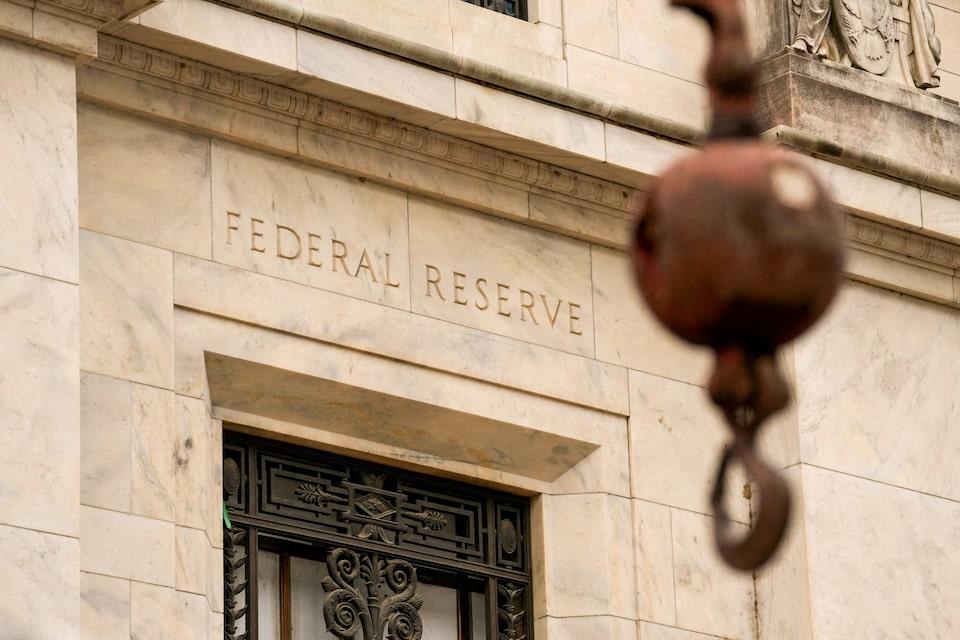
LONDON, Jan 15 (Reuters) - A major erosion of the Federal Reserve's independence would be negative for the U.S. credit rating, Fitch's top sovereign analyst said on Thursday, with any sign that the dollar's top global currency crown could slip the most critical issue. The independence of the Fed has been thrown squarely into the spotlight this week after U.S. prosecutors launched an investigation into the central bank's head Jerome Powell over cost overruns to refurbishment work at its headquarters. Sign up here. "A situation where you had complete politicization of a central bank would be credit negative," Fitch's head of sovereign ratings James Longsdon said, explaining that it was a principle that stood for all countries, not just the U.S. "What matters for the (U.S.) rating is strong conviction in the strength of the dollar as a reserve currency, and therefore in the financial flexibility of the U.S." "So anything that happens that were to materially weaken that would be negative for the rating," Longsdon told Reuters in an interview, adding there were no signs of it happening currently. https://www.reuters.com/business/erosion-fed-independence-would-be-credit-negative-us-rating-fitch-says-2026-01-15/
2026-01-15 14:32
LONDON, Jan 15 (Reuters) - A new British leader would not have scope to significantly lift government borrowing if Keir Starmer is replaced as prime minister later this year, Societe Generale's UK economist told Reuters, describing the bank's base case scenario. For international investors a UK leadership change is "not really on the radar," Sam Cartwright told Reuters, but he expects any new prime minister to appoint a markets-friendly finance minister. Sign up here. SocGen is among the first of the big banks to tell clients Starmer's departure is likely. Online prediction market platform Polymarket gives a 29% chance of Starmer being replaced by end-June - after mid-term elections - and a 53% chance by year-end. Starmer, facing low opinion poll numbers and speculation about a possible leadership challenge, said earlier this month he would still be in power in year's time. His Labour Party trails the populist Reform UK in polls after winning a landslide victory in the 2024 national election. "The Labour Party is almost certain to suffer heavy losses in the May 2026 local elections, at which point we believe a leadership challenge is likely," Cartwright said. "Nonetheless, with government borrowing at 4.5% of GDP, the UK still facing the highest bond yields in the G7, and lingering market jitters over UK debt following the Liz Truss debacle, gilt markets, not the fiscal rules, remain the real constraint on increased borrowing," he said. Former Prime Minister Truss left office in 2022 when bond prices slid in reaction to her budget plans. Britain's 10-year government bond yield is trading at around 4.36%, near its lowest levels since late 2024. However, it remains the highest in the G7 group of industrialized economies . "Therefore, any prospective new leader would have limited scope to loosen the purse strings beyond current plans," Cartwright added. Starmer and finance minister Rachel Reeves have u-turned on welfare reforms in the past year in the face of pressure from Labour politicians. Analysts say some possible alternatives to Starmer within the Labour Party would wish to increase government spending, maybe through borrowing. Since November's budget and a focus on the United States and geopolitical events elsewhere in the world, British political risk has dropped down investors' watchlist. Big investors broadly welcomed British finance minister Rachel Reeves' tax-raising November budget that gave her more leeway to meet her fiscal targets. https://www.reuters.com/world/uk/socgens-base-case-starmer-go-uk-borrowing-remain-constrained-2026-01-15/

2026-01-15 12:52
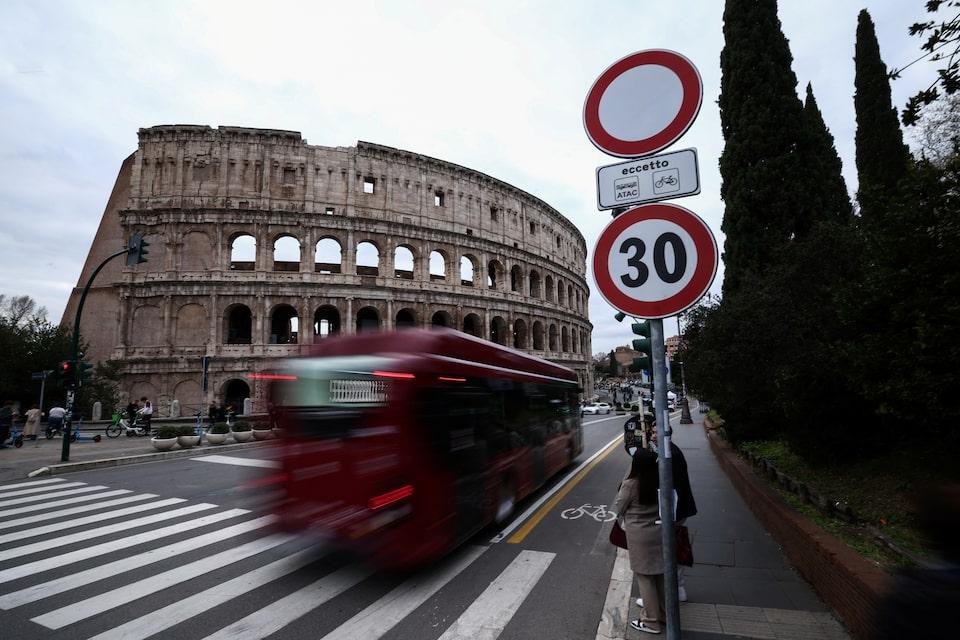
Rome's new speed limit aims to reduce accidents and pollution Mixed reactions from residents and drivers on new speed limit ROME, Jan 15 (Reuters) - Rome has become the latest European capital to sharply reduce speed limits, forcing Italians notorious for breakneck driving to slow down in an effort to reduce accidents and pollution. The Eternal City's new limit of 30 kph (19 mph) throughout the historic centre took effect on Thursday, almost halving the previous 50 kph limit in streets overwhelmed by residents, tourists and cars. Sign up here. "These roads reflect a city built for cars that no longer exists," Rome's transport chief Eugenio Patane told daily Corriere della Sera. "Lower speeds save lives," he added, citing data suggesting that speeding plays a role in 7.5% of the city's road accidents. In a statement, Patane said the new limit would be enforced gradually over the next 30 days, to allow drivers to get used to it. Rome is following the example of European capitals such as London, Brussels, Paris and Helsinki which have embraced slower, safer streets, in some cases overriding strong opposition from motorists. "Some people drive extremely fast. I ride a scooter and often risk being hit... it's better to go slowly," said Rome resident Barbara Barattolo. Others were skeptical. Cristiano, a taxi driver who preferred not to share his surname, criticised the new speed restrictions: "I think it's too low. In some places it might be fine, but in others it's absolutely ridiculous." SPEED LIMITS REDUCED ACCIDENTS IN BOLOGNA Bologna in northern Italy saw road accidents fall by 13% and fatalities decline by around 50% in the year after it became the country's first major city to impose a 30 kph speed limit in January 2024. Rome's Mayor Roberto Gualtieri has installed more speed cameras and urged residents to rely less on private cars since his election in 2021, amid growing concerns over safety and emissions. Italy's Supreme Court ruled in November that people living near a congested Roman ring road were entitled to 10,000 euros ($11,655) each in compensation for being exposed to excessive noise and pollution. The lower speed limit is expected to reduce noise levels by around 2 decibels in Rome's city centre, local authorities said. ($1 = 0.8580 euros) https://www.reuters.com/world/rome-sets-30-kph-city-centre-speed-limit-following-other-european-capitals-2026-01-14/