2025-04-23 11:32
April 23 (Reuters) - BMW-backed (BMWG.DE) , opens new tab rare earths and metals recycler Cyclic Materials said on Wednesday it will build its first commercial plant in Arizona as part of a push to boost U.S. critical minerals supply. The Toronto-based company said it would invest its own funds into the $20 million project, with plans to have it online by 2026. Sign up here. The facility is slated to process 25,000 metric tons per year of scrap from electric vehicle motors, wind turbines, MRI machines, data center electronic scrap and other sources. The company will then break that material down into roughly 750 metric tons per year of magnets, as well as copper, steel and aluminum, Cyclic said. Cyclic already has offtake agreements for some of the recycled materials with Glencore (GLEN.L) , opens new tab, Solvay (SOLB.BR) , opens new tab and others. The Arizona facility is expected to employ 30 workers. The company picked the state due to its existing manufacturing sector, access to a large amount of scrap for recycling, and a labor pool familiar with metals processing, said CEO Ahmad Ghahreman. "If you want to bring more manufacturing into the U.S., then the raw materials - the critical minerals - are a key part of that industry," said Ghahreman. The privately held company last year closed its Series B financing round, raising more than $50 million from BMW and others. Cyclic does not plan to enter public markets, Ghahreman added. "For the time being we are 100% focused on growing organically. We will see what happens in the future," said Ghahreman. Cyclic is one of a handful aiming to capture a bigger share of the rare earths supply chain as Western governments back domestic players in an attempt to break China's hold on the market. https://www.reuters.com/markets/commodities/cyclic-materials-build-20-million-recycling-plant-arizona-2025-04-23/

2025-04-23 11:03
EU fines Apple and Meta for DMA violations Ribera dismisses US pressure to soften enforcement Google may face EU order to sell adtech business BRUSSELS, April 23 (Reuters) - Alphabet's (GOOGL.O) , opens new tab Google and Elon Musk's X may be the next to face fines from European regulators, as they stay tough on Big Tech despite concerns of retaliatory U.S. tariffs, according to three sources with direct knowledge of the matter. EU antitrust regulators on Wednesday imposed the first penalties under landmark EU legislation aimed at curbing the power of Big Tech, doling out total fines of 700 million euros ($797 million) to Apple (AAPL.O) , opens new tab and Meta (META.O) , opens new tab for violating the Digital Markets Act (DMA) and orders to stop anti-competitive practices. Sign up here. U.S. President Donald Trump has taken issue with the new rules, believing they amount to a tariff on U.S. companies. But EU antitrust chief Teresa Ribera dismissed fears that she may cave to U.S. pressure and soften enforcement of the rules. "Apple and Meta have fallen short of compliance with the DMA by implementing measures that reinforce the dependence of business users and consumers on their platforms," Ribera said in a statement on Wednesday. "All companies operating in the EU must follow our laws and respect European values," she said. The DMA sets out a list of dos and don'ts for tech giants to make it easier for people to move between competing online services like social media platforms, internet browsers and app stores and for smaller rivals to compete. Imposing the fines shows that the European Commission has "bite" despite Trump's threat to slap tariffs on EU countries that fine U.S. companies, said one senior Commission official, speaking on condition of anonymity. FOCUS ON COMPLIANCE OVER SANCTIONS Still, the size of the fines is modest compared to the eye-popping penalties handed out by Ribera's predecessor Margrethe Vestager in previous years. Commission sources say this is due to the short period of the breaches, a focus on compliance rather than sanctions and the Trump effect. That leaves a question mark over whether Europe's future approach to regulating Big Tech could yet be impacted by political factors, the sources say.# The litmus test for Ribera will be whether she goes ahead in the coming months with an order forcing Google , opens new tab to sell part of its lucrative adtech business to address concerns that it may be favouring its own advertising services in a case dating from 2021, according to EU lawmakers and consumer organisations worried about weakening EU competition enforcement. It would be the first time that the EU watchdog issues such an order in an antitrust case, underlining its deep concerns about Google's market power, according to Commission sources. Even Microsoft in its two decade-long antitrust battle with the Commission was spared such a drastic step. Ribera will be encouraged by a U.S. court judgment earlier this month which found that Google illegally dominates two markets for online advertising technology, the Commission sources say. That ruling could pave the way for U.S. antitrust prosecutors to seek a breakup of its ad products. The U.S. investigation into Google and the Department of Justice's push for a breakup of Google's ad business may provide cover for Ribera to act, said Zach Meyers, director of research at the Centre on Regulation in Europe (CERRE). 'NO LEEWAY IN ENFORCEMENT' "It would be difficult for the EU to justify withdrawing its own investigation given this, unless U.S. authorities imposed a set of remedies on Google which the Commission felt addressed its own concerns," he said. European Parliament lawmaker Andreas Schwab, who led the negotiations on the DMA at the assembly, urged Ribera to stay firm and not delay her decisions on Google and X. "There can be no leeway in enforcement as this may also impact the importance of competition policy in general," he said. Low fines should not be seen as weakening EU competition policy, Meyers added, noting that having companies make changes to their businesses practices is more important. "The real test for the DMA is not whether or not the Commission is willing to levy large fines, but whether we see significant changes to levels of competition," he said. The Commission's probe into social media platform X has already drawn owner Elon Musk's ire. Last year, it charged X with breaching the Digital Services Act. It is expected to issue a decision including a likely fine in the coming months. ($1 = 0.8783 euros) https://www.reuters.com/sustainability/boards-policy-regulation/google-x-next-targets-europe-stays-tough-tech-regulation-2025-04-23/
2025-04-23 10:28
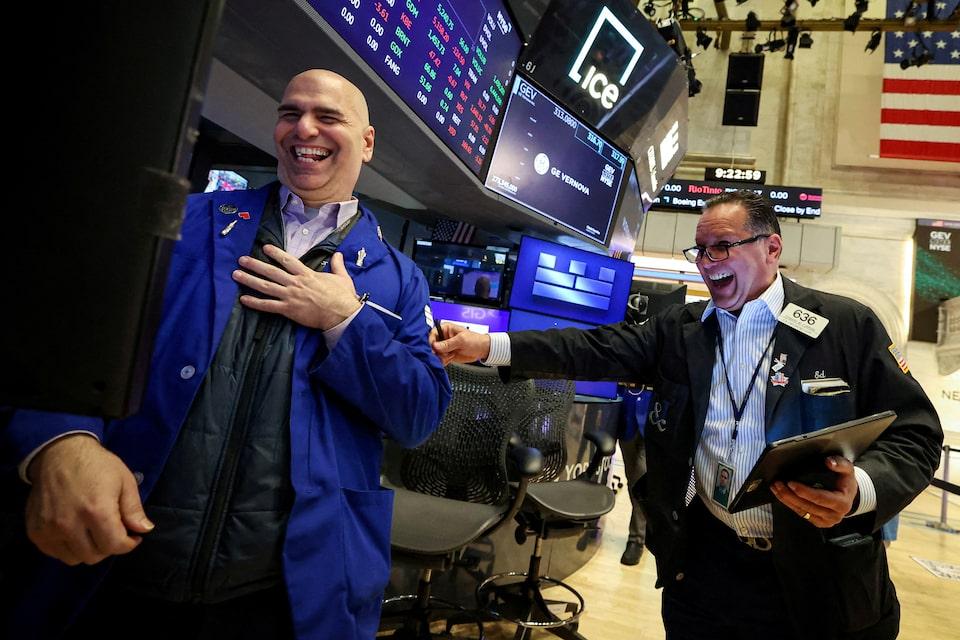
April 23 (Reuters) - What matters in U.S. and global markets today. A look at the day ahead in U.S. and global markets by Dhara Ranasinghe, Editor, Financial Markets EMEA. The world's financial markets have got used to the fact that a lot can change in less than 24 hours. And waking up on Wednesday provides yet another example of that. Sign up here. U.S. President Donald Trump has backed away from his threats to fire Jerome Powell after days of criticising the Federal Reserve chief for not cutting interest rates. U.S. Treasury Secretary Scott Bessent, meanwhile, said he believes there will be a de-escalation in U.S.-China trade tensions. The net-net effect, the sell-America trade is abating (for now). The beaten-up dollar is higher against major rivals, Treasury yields are lower and U.S. stock futures point to a decisively strong open on Wall Street. Mike Dolan is enjoying some well-deserved time-off this week, but the Reuters markets team is here to provide you with all the information you need to start your day. Today's Market Minute * Trump has backed off from threats to fire Fed Chair Powell after days of intensifying criticisms of the central bank chief for not cutting rates. * Tesla CEO Elon Musk says he'll cut back significantly the time he devotes to the Trump administration from next month and spend more time running his many companies. * U.S. Treasury Secretary Bessent believes there will be a de-escalation in U.S.-China trade tensions, but negotiations with Beijing have not yet started and would be a "slog," according to a person who heard his closed-door presentation to investors at a JP Morgan conference. * Hyundai Steel's $6 billion US investment is drawing investor ire and testing Seoul's tariff strategy. * Worldwide economic output will slow in the months ahead as President Trump's steep tariffs on virtually all trading partners begin to bite, the International Monetary Fund reckons, as global finance chiefs swarmed Washington seeking deals with Trump's team to lower the levies. A brighter day? On the one hand, the rally in world markets and selloff in safe-havens is a natural correction of the past weeks of heavy selling, especially of U.S. assets. On the other, it is the right response to signs of an easing in worries, whether that's global trade tensions or central bank (read "Federal Reserve") independence. U.S. stock futures are trading up more than 1%, world stocks are up around 0.5%. while gold is down 2% and other safe havens such as Japan's yen and the Swiss franc are softer too. The key questions of course are: will it last? And could the positive undertones coming through across world markets be harbinger of better times after the relentless selling of the last few weeks? Easy now, some of you might say - and with good reason. Even if markets find more stable footing, a high degree of uncertainty is likely to remain in place for some time and the damage inflicted by tariffs is already taking a toll. Just take a look at the flash purchasing managers index data coming out of Europe this morning. Euro zone business growth has stalled this month, the PMI survey showed, with activity in the bloc's dominant services industry contracting and the prolonged downturn in manufacturing continuing. And with tariffs on goods coming into the world's No. 1 economy now at their highest in a century, the IMF said on Tuesday it projects global growth in 2025 will slow to 2.8% - its slowest since the COVID-19 pandemic - from 3.3% in 2024. Others note that the perception of U.S. assets has changed given U.S. tariff policy and lingering concerns about central bank independence, meaning volatility will likely stay - although the VIX index coming off peaks seen earlier in April is a reassuring sign. A U.S. sale of five-year government bonds will likely be watched closely after Tuesday's two-year bond sale was, by most accounts, not amazing. Tesla, meanwhile is in focus, with its shares up nearly 8% in the premarket. Chart of the day: The automaker reported profitability for its core auto business topped rock-bottom expectations in the first quarter, while missing on other metrics such as revenue and net profit, and CEO Elon Musk says he will cut back on time devoted to the government from next month and spend more time running his many companies. Also keep an on eye on Washington, where the second day of IMF/World Bank meetings will likely be dominated by the backdrop of trade tensions. Top Swiss officials for instance will this week test whether big commitments to the U.S. can help secure relief from import tariffs, after pharma giant Roche followed rival Novartis in announcing major investments in the United States. U.S., Ukrainian and European officials meanwhile gather in London on Wednesday to discuss ending Russia's war in Ukraine but chances of any breakthrough look slim after most foreign ministers pulled out despite U.S. pressure for a deal. Today's events to watch * It's day two of the IMF/World Bank meetings in Washington with finance ministers around the world queuing up to speak to their U.S. counterpart, Treasury Secretary Bessent. * A squadron of central bankers speak in Washington including Bank of England Governor Andrew Bailey and ECB chief economist Philip Lane * U.S. Treasury auctions five-year bonds * Global flash PMIs April are released * UK finance minister Rachel Reeves speaks to media in Washington https://www.reuters.com/markets/us/global-markets-view-usa-2025-04-23/
2025-04-23 10:26
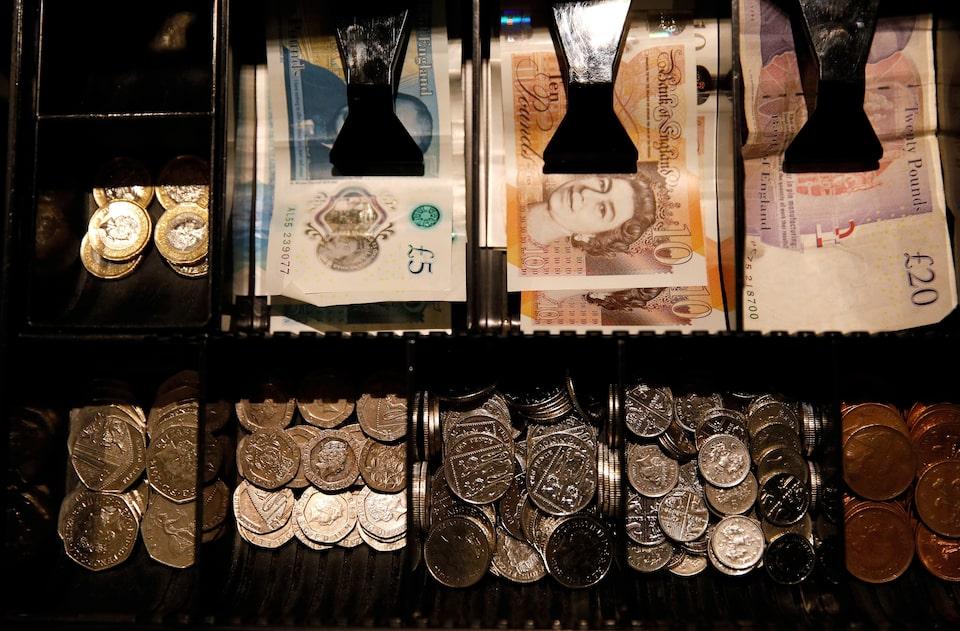
April 23 (Reuters) - Sterling recovered from early losses against the dollar on Wednesday, brushing off data showing UK business activity weakened by the most in more than two years due to global trade tensions. The pound was flat on the dollar at $1.3337, and was also little changed against the euro at 85.71 pence to the common currency. . Sign up here. Sterling early in the day dropped as much as 0.7% against the dollar, which strengthened after U.S. President Donald Trump backed away from threats to fire Federal Reserve Chair Jerome Powell and expressed optimism over a trade deal with China. But market sentiment towards U.S. assets remains fragile and the knee-jerk response was shortlived. The bounce back came despite a survey on Wednesday showing that British private sector activity buckled in April under the strain of an escalating global trade war that threatens to tip the economy into a new downturn. Export orders fell at the fastest pace since the early months of the COVID-19 pandemic in 2020, while costs faced by businesses grew at the fastest rate in more than two years as higher employment taxes and an increased minimum wage kicked in. "The market may be reluctant to take kind of a strong view at this point in terms of how that's likely to impact the UK economy and pound," said Lee Hardman, senior currency analyst at MUFG. "But certainly if you look at the (PMI) figures today ...it does show that business confidence did drop more sharply than expected in April, so that certainly increases the risk of the UK economy slowing down more in the second quarter." Britain also posted a much bigger budget deficit for 2024/25 than expected, according to data on Wednesday. https://www.reuters.com/markets/europe/sterling-shrugs-off-weaker-uk-business-activity-2025-04-23/
2025-04-23 10:25
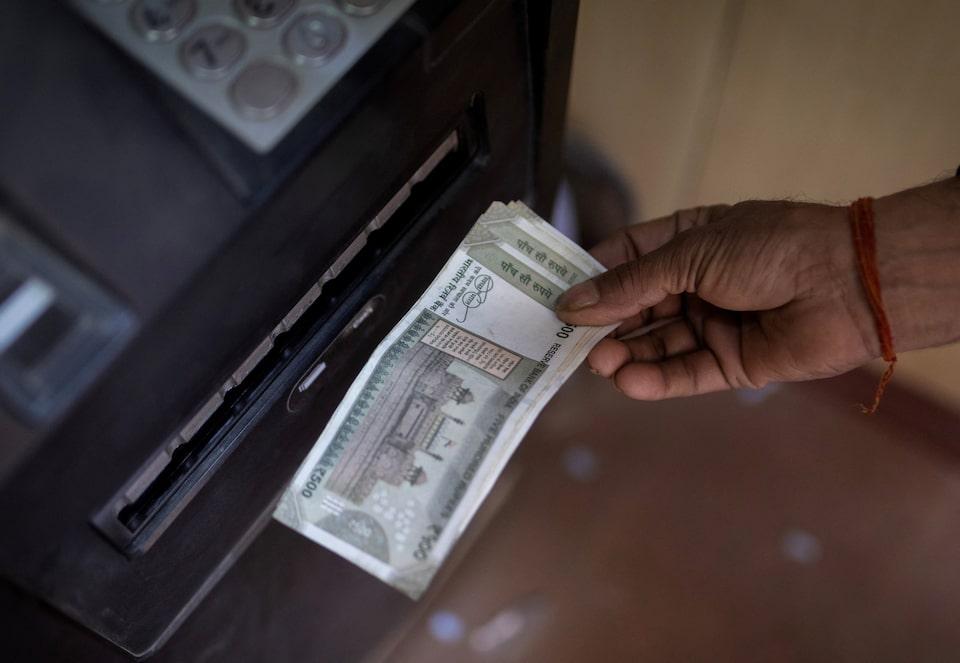
MUMBAI, April 23 (Reuters) - The Indian rupee logged its steepest fall in two weeks, pressured by a recovery in the U.S. dollar index and as traders unwound long positions on the local unit after it failed to climb above a key level. The rupee ended 0.3% down at 85.42, against 85.1875 at previous close. Sign up here. The Indian currency struggled to rise above 85 per dollar this week, which led "rupee bulls" to close their long-term positions on the rupee, two traders said. Some traders also cited the attack in India's Jammu & Kashmir territory as a factor underpinning the dollar/rupee. Most Asian currencies declined following the dollar index's 1.5% surge on Tuesday after U.S. President Donald Trump assured markets he had no plans to dismiss Federal Reserve Chair Jerome Powell. The dollar was also buoyed by U.S. Treasury Secretary Scott Bessent, who expressed optimism about a de-escalation in U.S.-China trade tensions. Dollar demand was supported by short-covering and bargain-hunting activities, said Dilip Parmar, a foreign exchange analyst at HDFC Securities. The dollar/rupee pair faces resistance at 85.92 and support at 85.03, he said. The dollar had been on a significant downtrend before Tuesday's rally, driven by concerns over the impact of Trump's trade policies on the U.S. economy and assets. "We could witness a period where the dollar is tossed around by headlines of Fed independence risk and market-friendly news on U.S. tariff policy," ING Bank said in a note. The balance of risks remains skewed to the downside for the dollar in the near term, it said. https://www.reuters.com/world/india/rupee-logs-worst-day-2-weeks-dollar-strength-position-unwinding-2025-04-23/
2025-04-23 09:42
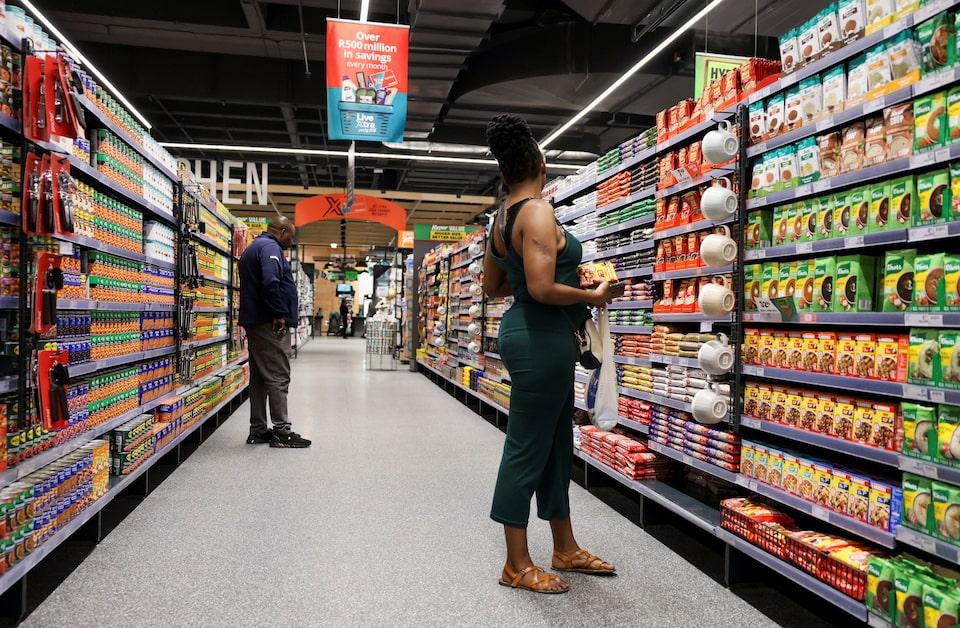
JOHANNESBURG, April 23 (Reuters) - South Africa's annual inflation rate fell for the first time in five months in March to its lowest level since June 2020, due to a drop in fuel costs and softer price rises for tuition. Headline consumer inflation eased to 2.7% year-on-year from 3.2% in February (ZACPIY=ECI) , opens new tab, below the 2.9% expected by economists polled by Reuters, and outside the South African Reserve Bank's (SARB) 3% to 6% target range. Sign up here. A breakdown by Statistics South Africa showed the fuel index was down 8.8% last month. Education fees, which are surveyed once a year in March, increased 4.5%, slower than the previous year's 6.4% rise. Some analysts thought the latest inflation numbers gave the central bank scope to cut interest rates at its next monetary policy meeting in May. "There is ample room for the (central bank) to cut rates further to support the economy, to soften the hit from the global trade war," Elize Kruger, a South Africa-based independent economist, said. The SARB left its key lending rate unchanged at its last meeting in March after three consecutive cuts, citing risks from U.S. President Donald Trump's tariffs and the country's disputed national budget. It stuck to that cautious tone in a biannual review of its monetary policy last week. Elna Moolman at Standard Bank saw signs of weakness in the residential rental market in Wednesday's release, which she said was helping keep inflationary pressures benign. However, the SARB's concerns around global tariffs and a weaker local currency meant further rate cuts may not necessarily happen soon, she said. https://www.reuters.com/world/africa/south-africa-consumer-inflation-falls-27-yy-march-2025-04-23/