2025-04-23 06:08
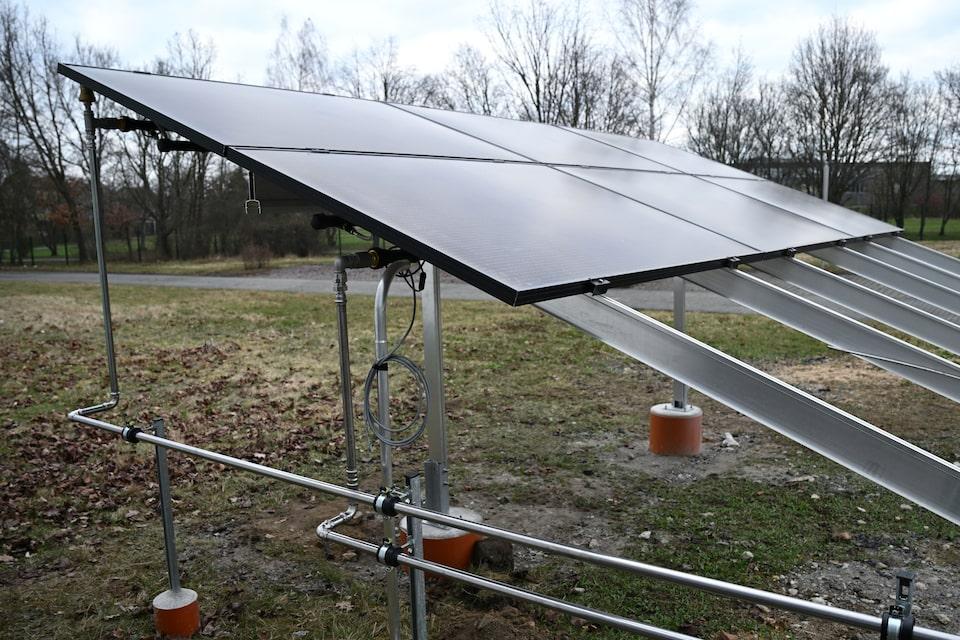
LITTLETON, Colorado, April 23 (Reuters) - Solar electricity production in Europe during the first quarter of 2025 was up by over 30% from the same months in 2024, setting the stage for full-year record performance from the region's solar farms. Total solar electricity generation over the January to March period was nearly 68 terawatt hours (TWh), data from Ember shows, which was 32% more than the same period a year ago. Sign up here. Solar assets accounted for 8.2% of Europe's utility-supplied electricity in March, up from 6% in the same month a year ago, which indicates that solar power is rapidly emerging as a key electricity source for regional utilities even in winter. As Europe's peak solar production period occurs during the northern hemisphere summer, total solar output and electricity share will grow further in the coming months, ensuring continued strong momentum for regional energy transition efforts. CLEAN DRIVE The rise in European solar production is part of a broader push to reduce dependence on fossil fuels and increase electricity production from clean energy sources, which accounted for a record 61.3% of Europe's electricity in 2024. During the first quarter of 2025, Europe's clean share of production dropped to 57% due to low wind speeds at turbine level, which triggered a 15% drop in wind power output from the same quarter in 2024. As wind farms are Europe's third-largest source of clean power (after nuclear plants and hydro dams) utilities were forced to boost output from gas and coal plants so far this year to balance system needs. Going forward, however, clean power's share of the overall generation mix looks set to recover as output from fossil fuel plants drops off due to reduced power demand for heating, and as solar farms reach their peak production period. WIDE SPREAD Up until around 2010, Germany and Spain accounted for over 80% of all of Europe's solar generation capacity. But due to steep cost drops and increases in solar system efficiency levels, several other countries have rapidly increased their solar capacity over the past decade or so. As a result, Europe's solar farms are now spread throughout the continent, with multiple countries posting double-digit growth rates in recent years. During the first quarter of 2025, several countries posted larger solar output gains than the regional average, including Turkey (+54%), the Netherlands (+63%), Poland (+44) and Switzerland (+43%) compared to the first quarter of 2024. What's more, Germany, Greece, the Netherlands and Spain all also registered solar electricity shares of more than 10% during the opening quarter of the year, which underscores the growing clout of the solar sector within Europe's generation mix. Those share levels will likely more than double during the coming months as solar radiation levels peak and daylight hours lengthen over the summer. Greece, Germany, the Netherlands, Portugal and Spain will all likely generate over 25% of their total electricity from solar during June, July and August, which should help boost the average for Europe as a whole to around 14% during those months. Italy, Bulgaria, Croatia and Turkey will also likely register double digit solar electricity supply shares this summer, ensuring that nearly every major regional economy registers record deployment of solar for electricity in 2025. The opinions expressed here are those of the author, a market analyst for Reuters. https://www.reuters.com/business/energy/europe-track-smash-solar-power-output-record-2025-maguire-2025-04-23/
2025-04-23 05:41
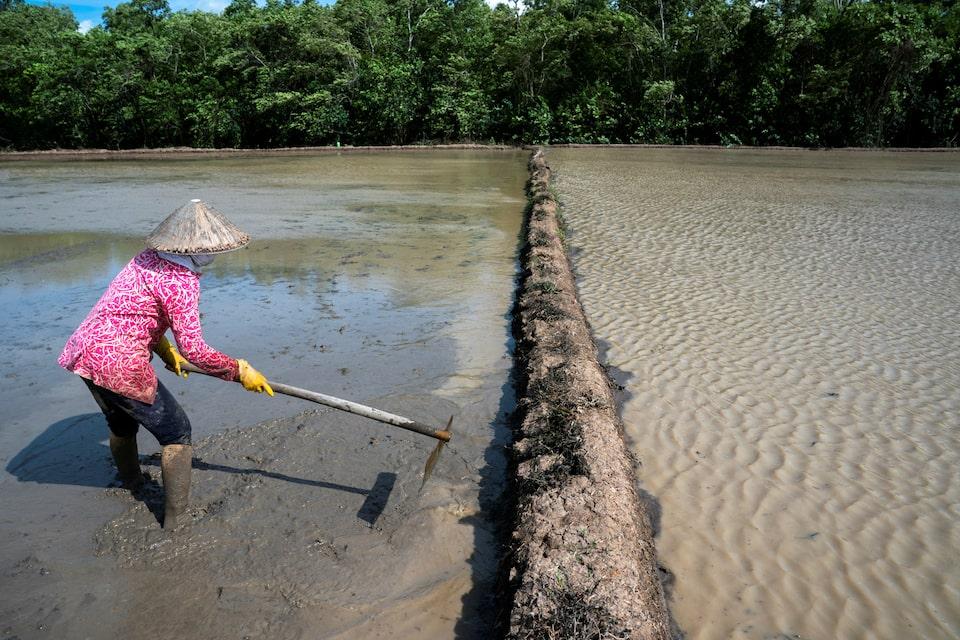
Phnom Penh has secured China nod for controversial Mekong canal Mekong River authority says feasibility needs to be assessed China commits less than Cambodia had announced Beijing links support to project's feasibility, sustainability April 23 (Reuters) - Cambodia should share a feasibility study on the impact of a planned China-backed canal that would divert water from the rice-growing floodplains of Vietnam's Mekong Delta, said the body overseeing the transnational river. After months of uncertainty, Phnom Penh last week signed a deal with China to develop the Funan Techo Canal when President Xi Jinping visited Cambodia as part of a tour of Southeast Asia. Sign up here. It was Beijing's first explicit public commitment to the project, giving state-controlled construction giant China Communications Construction Company (CCCC) a 49% stake through a subsidiary, but also linking Chinese support to the "sustainability" of the project. The Secretariat of the intergovernmental Mekong River Commission (MRC) that coordinates the sustainable development of Southeast Asia's longest river said it had so far received from Cambodia only "basic information" on the project. "We hope that further details, including the feasibility study report and other relevant reports, will be provided," the Commission said in a statement to Reuters this week. That would be needed "to ensure that any potential implications for the broader Mekong Basin are fully considered," it added. The canal has already created concern among environmentalists who say it could further harm the delicate ecology of the Mekong Delta, which is Vietnam's major rice growing region and is already facing problems of drought and salination as result of infrastructure projects upstream. Vietnam is also a leading exporter of rice. On Friday, the Cambodian government said the canal would have minimal environmental impact and "aligns with the 1995 Mekong Agreement" which governs cooperation among riverine countries in Southeast Asia. The Mekong River, fed by a series of tributaries, flows some 4,900 kilometres (3,045 miles) from its source in the Tibetan plateau through China, Myanmar, Laos, Cambodia and Vietnam to the sea. "Whether the Funan Techo Canal violates the 1995 Mekong Agreement depends on several factors, including its connection to the Mekong mainstream," the Commission said, offering additional guidance to Phnom Penh and other member states "to ensure compliance". Cambodia, Laos, Thailand and Vietnam are members of the MRC while China and Myanmar are dialogue partners. The Cambodian government did not respond to questions about whether it intended to share the requested documents. Vietnam's foreign ministry did not reply to a request for comment after the deal with China was signed, but the country has repeatedly asked Cambodia to share more information about the canal to assess its impact. CHINA WEIGHS IN Xi made no reference to the canal in his public statements in Phnom Penh but a joint communique issued at the end of his visit said China supported Cambodia in building the canal "in accordance with the principles of feasibility and sustainability". The deal signed by CCCC on Friday was for a 151.6 km (94.2 miles) canal costing $1.16 billion. However, the Cambodian government says on the canal's official website , opens new tab that the waterway would stretch 180 km and cost $1.7 billion at completion in 2028. The higher cost reflects a short section to be built by Cambodian firms as well as bridges and water conservation resources, the government told Reuters without clarifying who would pay for the bridges and water conservation. Cambodia's deputy prime minister said in May 2024 that China would cover the entire cost of the project, which was put at $1.7 billion. The canal is designed to link the Mekong Basin to the Gulf of Thailand in Cambodia's southern Kep province. Much of the Mekong's nutrient-rich sediment no longer reaches rice farms in the Delta because of multiple hydroelectric dams built by China upriver, a Reuters analysis showed in 2022. The project agreed with China is also different from the original plan as it is focusing on boosting irrigation rather than solely pursuing navigation purposes, said Brian Eyler, an expert on the Mekong region at U.S.-based think tank Stimson Center. The water diverted from the Mekong Delta "will be much more than previously described," said Eyler. https://www.reuters.com/sustainability/climate-energy/cambodia-canals-impact-mekong-questioned-after-china-signs-deal-2025-04-23/
2025-04-23 05:39
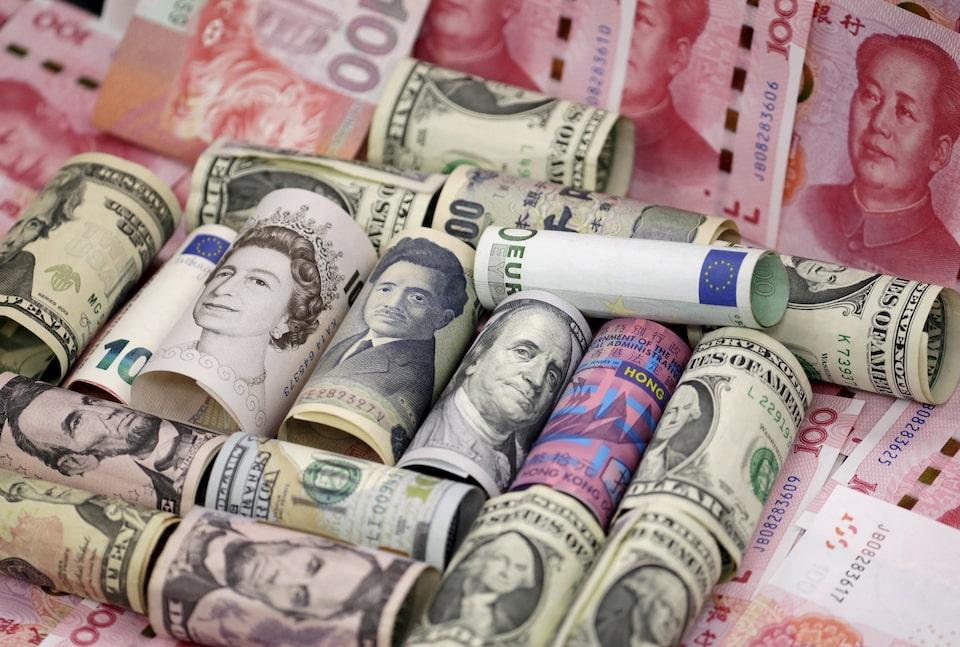
Dollar rises against most currencies on China trade reports Trump backs away from threat to fire Fed's Powell Optimism around trade deals soothe investor worries April 23 (Reuters) - The U.S. dollar staged a rebound against its major peers on Wednesday on hopes of de-escalating trade tensions and as President Donald Trump backed away from threats to fire the head of the Federal Reserve, offering relief to investors. The Trump administration would look at lowering tariffs on imported Chinese goods pending talks with Beijing, a source familiar with the matter said on Wednesday, adding that any action would not be made unilaterally. Hopes that the trade war would abate boosted the greenback against the euro and the Swiss franc. Sign up here. U.S. Treasury Secretary Scott Bessent separately suggested that there could be a de-escalation in U.S.-China trade tensions and any trade deal with China could substantially cut tariffs. Investors hastened back to the dollar, which has been hovering near three-year lows in recent weeks and whose safe-haven status had been questioned in view of Trump's trade policies and their potential impact on the U.S. economy. "People are, just generally speaking, very relieved that there's the potential for discussions between the two countries, and we're seeing that play out in a big way," said Helen Given, director of trading at Monex USA. The U.S. dollar index rose rapidly at the start of the trading day in Asian hours, but steadied afterward as market sentiment remained fragile. It was last up 0.297% at 99.86. Markets this week have also been grappling with the notion that the Fed's independence could be under threat after repeated verbal attacks by Trump on Chair Jerome Powell for not cutting rates since the president took office in January. Trump appeared to back down in remarks late on Tuesday. "I have no intention of firing him," Trump told reporters in the Oval Office. "I would like to see him be a little more active in terms of his idea to lower interest rates." Lee Hardman, senior currency analyst at MUFG, said the "outright denial" from Trump was an encouraging signal for the markets. The euro eased 0.86% to $1.132, pulling back from the $1.15 levels earlier this week which marked a high of roughly 3-1/2-years. Surveys on Wednesday showed euro zone business growth stalling and Germany's private sector contracting this month, hurt by service-sector woes and trade-related uncertainty. 'MARKETS DON'T TRUST' TRUMP The dollar climbed 1.27% against the yen to 143.435. Against the Swiss franc , the dollar was last 1.32% stronger at 0.8298. Despite its attempted rebound, the dollar is not far off its multiyear lows against the euro and the Swiss franc and seven-month low versus the Japanese yen. "We think this is going to be a theme going forward. We will see continued shocks that place downside pressure on the dollar, repeated walk-backs to see the dollar bounce. But again, the dollar will not return to previous highs," said Nicholas Rees, head of macro research at Monex Europe. "Markets don't trust Donald Trump." After setting a baseline import tax of 10% and much higher on dozens of countries at the start of the month, Trump abruptly put the steeper levies on hold for 90 days for countries to negotiate less stringent rates. White House press secretary Karoline Leavitt said on Tuesday that 18 countries have offered proposals so far, with Trump's trade negotiating team set to meet with 34 this week to discuss tariffs. In cryptocurrencies, bitcoin rose over 2% to $93,705, breaking above $90,000 for the first time since March. https://www.reuters.com/world/africa/dollar-surges-trump-backs-down-threat-fire-feds-powell-2025-04-23/
2025-04-23 05:21
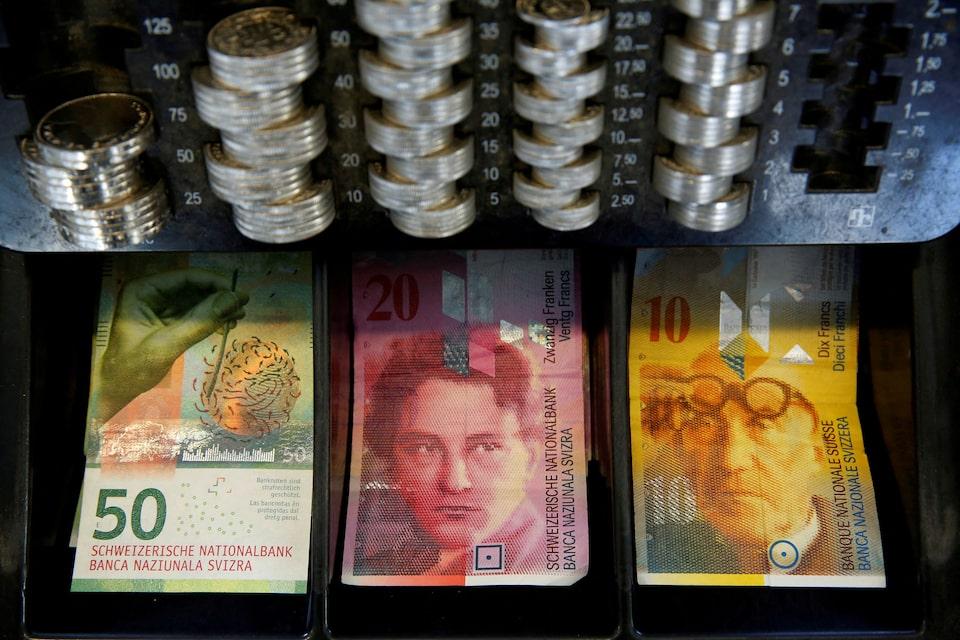
Swiss franc up 9% vs USD in April, set for best month since 2008 Spotlight on SNB to act to tame franc surge Intervention probably SNB's best tool, analysts say SNB has said it could return to negative rates ZURICH, April 23 (Reuters) - The Swiss franc's rapid appreciation on U.S. policy uncertainty could force the Swiss National Bank to intervene soon, as Swiss industry hopes the safe haven currency's surge can be tamed before it deals another blow to a tariff-threatened sector. The franc has surged roughly 9% against the dollar so far this month, and is set for the biggest monthly gain since the 2008 financial crisis. Last week it hit its strongest level since January 2015 when the SNB scrapped its minimum exchange rate . Sign up here. That has pulled the franc, also known as the Swissie, up 2.6% against the euro in April, taking it close to its strongest level in more than 10 years . But the rush into the franc, spurred by concerns about U.S. President Donald Trump's trade policy gyrations, puts the SNB's 0-2% inflation target at risk by depressing the cost of imports at a time when inflation is already near zero. It also hurts Swiss exporters potentially facing 31% U.S. tariffs by making their goods dearer abroad. "The rise of the Swiss franc is the final ingredient for a poisonous cocktail for Swiss industry," said Jean-Philippe Kohl, vice director of industry association Swissmem. "Companies are already struggling with weak demand abroad, the threat of massive American tariffs on Switzerland, and uncertainty caused by President Trump's trade policy." Swissmem refrained from demanding SNB action, but would welcome any moves by the central bank to mitigate the franc's rise, Kohl said. Interventions, rather than rate cuts, are probably the SNB's best tool, with its key rate already at 0.25% and expected to dip further, analysts say. "If everybody is fearful and insecurity is high, nobody really cares about the interest rate in Switzerland," said Thomas Stucki, former head of asset management at the SNB and Chief Investment Officer at St Galler Kantonalbank. Selling francs to weaken the currency would be a shift for the SNB, which bought only 1.2 billion francs of forex last year and sold foreign currencies worth nearly 133 billion francs in 2023 as it sought to shore up the Swissie to cool inflation. Interventions carry their own risks, such as Washington branding Switzerland a currency manipulator. This occurred in 2020 during Trump's first administration. ING's global head of markets Chris Turner said one factor in the background driving Swissie strength, on top of safe-haven flows, was markets questioning "whether the SNB will be as able to undertake large scale FX buying as they have in the past." PAIN THRESHOLD? The SNB said this month it does not engage in currency manipulation and only intervenes to foster price stability. It has also said it could return to negative rates. But negative rates were unpopular with banks, savers and pension funds when the SNB imposed them from late 2014 to 2022, making interventions look easier to manage. UBS economist Maxime Botteron did not rule out that limited sales of francs by the SNB were already underway, but he did not expect systematic interventions. "Interventions are more flexible than interest rate cuts – the SNB can go into the market, sell some francs to ease the appreciation, and then stop," he said. The SNB declined to comment on the franc's value or how it would react. It's the currency's rally against the euro that policymakers are likely watching most since the bulk of Swiss trade is with eurozone members, giving euro-denominated imports more influence over inflation. In 2023, 57% of Swiss imports were invoiced in euros, compared with 13% in dollars. The central bank has said it does not look at particular currency pairs, but a basket of currencies when deciding policy, and would act to meet its inflation target. Swiss Re's Head of Macro Strategy Patrick Saner said intervention was likely, especially with the real effective exchange rate of the franc reaching post-2015 highs. "The speed and magnitude of the recent Swiss franc rally, particularly since April 2, significantly raises the odds that the SNB is close to seeing this as a "threshold moment" for intervention," he said. "While political optics matter.... intervention remains likely if price stability is at risk." https://www.reuters.com/world/europe/swiss-francs-surge-tariff-turmoil-pressures-snb-act-2025-04-23/
2025-04-23 04:38
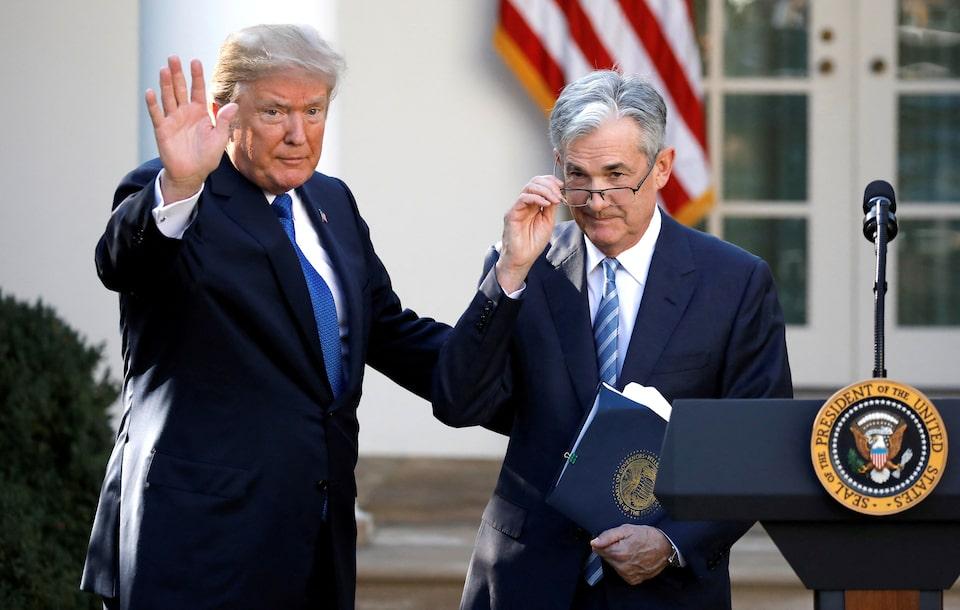
A look at the day ahead in European and global markets from Kevin Buckland Listening to President Trump on Tuesday, it's as if all the vitriol towards Fed boss Jay Powell - the threats, the name calling - was some crazy misunderstanding. Trump now says he had "no intention of firing him" and was just gently angling for a rate cut or two. Sign up here. In the same news conference, Trump said the exorbitant levies on Chinese goods following a rapid tit-for-tat trade war escalation - so high that the actual numbers became irrelevant - will soon be "substantially" lower. Market reaction was immediate, as investors rushed back into the dollar after days of heavy selling - dubbed the "sell America" trade - that pushed the currency to multi-year lows against the likes of the euro and Swiss franc. There was a scramble back into Wall Street stocks as well, which lifted share markets around Asia and looks set to buoy Europe, too. With just a week to go until Trump completes the symbolic 100th day of his second term in the Oval Office, you might think market players had got used to his relentless string of sudden pivots and abrupt about-faces. Instead, there's a lot of head-scratching and multiple pet theories about just what is happening behind closed doors. Many analysts conjecture that, with the dollar in free fall, Treasury Secretary Scott Bessent stepped in again to be the voice of reason, explaining just how disruptive for markets any interference with an independent central bank would be. He is also thought to have done so during the Treasury market meltdown at the start of the month that forced a reprieve from "Liberation Day" tariffs. Whatever the case, many analysts insist that some concrete trade agreements need to be reached before any real stability returns to the markets. The Trump administration lined up old ally Japan for the first round of negotiations, which could set a precedent for other trading partners to follow. A source told Reuters the two sides are moving closer to an interim agreement but the thornier issues are being put off. Bessent backed up Trump's statement that a de-escalation is likely with China but described future negotiations with Beijing as "a slog" - and the two sides haven't yet agreed to even start talking. For today, at least, the winds of change appear to be blowing in a favourable direction for markets. And it would be remiss not to mention another shift in the Trump administration that investors are cheering: Tesla, X and SpaceX boss Elon Musk told analysts he will be significantly cutting back on his chainsaw-wielding work at DOGE to concentrate on running his own companies. Tesla shares spiked 5.5% after-hours, although that's only a small dent in the nearly 50% drop in the stock from its December peak. Key developments that could influence markets on Wednesday: -Flash PMIs from UK, Germany, France -Euro zone trade balance -Fed Governor Waller, St Louis Fed President Musalem, Cleveland Fed President Hammack and Chicago Fed President Goolsbee speak -IMF/World Bank meetings continue in Washington --BoE chief economist Pill speaks at Leeds University Business School Trying to keep up with the latest tariff news? Our new daily news digest offers a rundown of the top market-moving headlines impacting global trade. Sign up for Tariff Watch here. https://www.reuters.com/markets/europe/global-markets-view-europe-2025-04-23/
2025-04-23 03:01
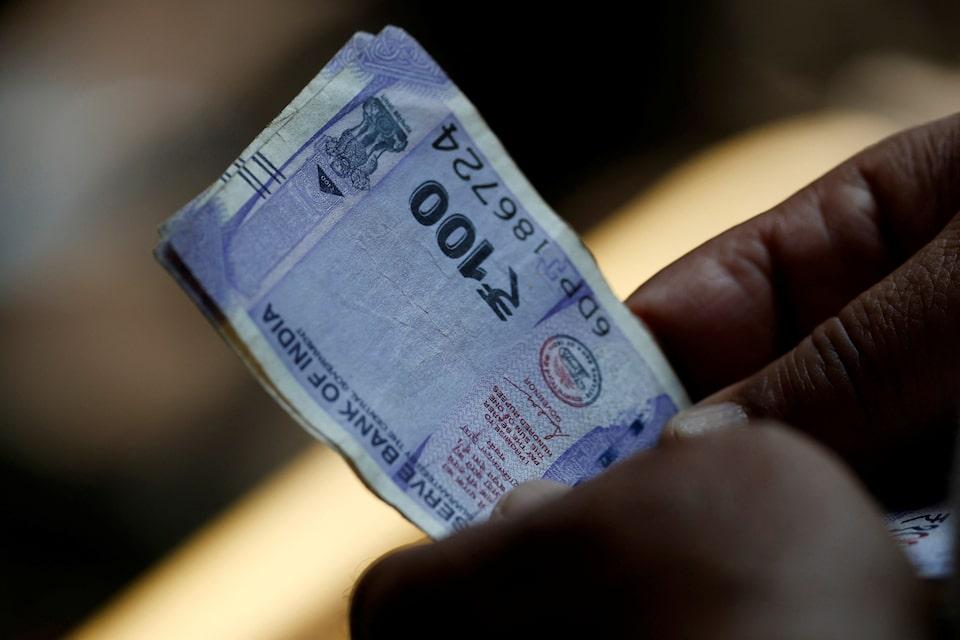
MUMBAI, April 23 (Reuters) - The rupee is likely to open weaker on Wednesday, pressured by the dollar index rallying after U.S. President Trump walked back his threat to oust the Federal Reserve Chair and on hopes that U.S.-China trade tensions may ease. The 1-month non-deliverable forward indicated that the rupee will open at 85.24-85.26 to the U.S. dollar compared with 85.1875 in the previous session. Sign up here. The rupee has been knocking on the door of 85 in the last two sessions but has not been successful in breaking through. While the near-term trajectory for the rupee is upward, the currency has to move beyond the 84.90–85.00 zone to fuel a large advance, a currency trader at a bank said. He added that flows remain favourable, with foreign equity buying and more exporters stepping in to hedge. DOLLAR REVIVAL The dollar index () surged 1.5% on Tuesday, recovering from a more than three-year low, after Trump assured markets he has no plans to dismiss Federal Reserve Chair Jerome Powell. "I have no intention of firing him," Trump told reporters in the Oval Office on Tuesday. "I would like to see him be a little more active in terms of his idea to lower interest rates," he added. Despite the reassurance, analysts remained cautious. "It remains to be seen if Trump will flip again in his next set of comments or social media tweets," MUFG Bank said in a note. Further support for the dollar came from U.S. Treasury Secretary Scott Bessent, who said he believes there will be a de-escalation in U.S.-China trade tensions. U.S. equities rallied on Tuesday and futures indicated more upside for the U.S. Treasuries rose alongside equities. KEY INDICATORS: ** One-month non-deliverable rupee forward at 85.42; onshore one-month forward premium at 17.50 paisa ** Dollar index at 99.12 ** Brent crude futures up 0.5% at $67.8 per barrel ** Ten-year U.S. note yield at 4.35% ** As per NSDL data, foreign investors bought a net $205.4 million worth of Indian shares on Apr. 21 ** NSDL data shows foreign investors sold a net $7.9 million worth of Indian bonds on Apr. 21 https://www.reuters.com/world/china/rupee-dip-dollar-rally-stoked-by-trumps-fed-comments-us-china-optimism-2025-04-23/