2026-01-15 12:42
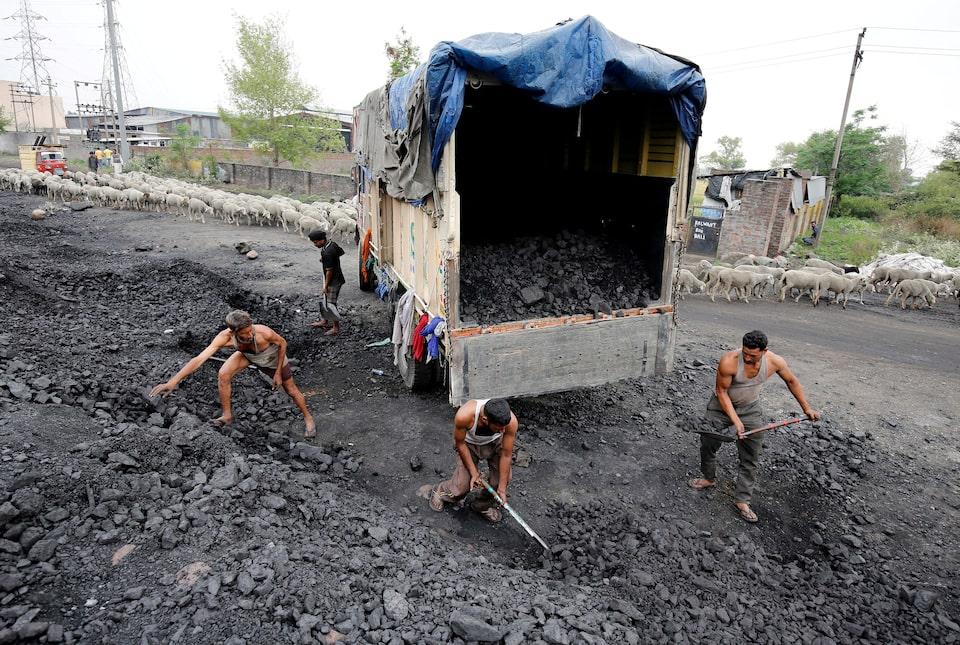
BENGALURU/NEW DELHI, Jan 15 (Reuters) - Coal India (COAL.NS) , opens new tab is scouting partnership opportunities in rare-earth mining across Australia, Russia, Argentina, Chile and several African countries, a top executive of its coking coal-focussed unit said on Thursday, as New Delhi looks to reduce reliance on China-dominated supply chains. The move comes after top producer China expanded export curbs on rare-earth minerals late last year, threatening operations in sectors from autos to electronics that depend on the critical materials. Sign up here. "In our country and in foreign countries also, we are going to invest; we are going to explore; we are also collaborating with other companies for rare earth metals. It is in the starting stage," Bharat Coking Coal Ltd (BARC.NS) , opens new tab Chairman and Managing Director Manoj Kumar Agarwal told Reuters in an interview. Coal India is pursuing both overseas and local opportunities in this regard, and domestically aims to collaborate with state-run IREL, Khanij Bidesh India Ltd and Hindustan Copper (HCPR.NS) , opens new tab, Agarwal said. The partnerships will be funded using proceeds from BCCL's $119 million initial public offering, which closed Tuesday after being oversubscribed nearly 147 times. The company, whose offering comprised only existing shares with no new issuance, is set to list Monday. BCCL also plans to acquire coking coal mines in Australia and Russia within the next two to three years, Agarwal added. The company aims to raise its coking coal production capacity to 56 million tonnes per annum by fiscal 2030, up from 40.5 MTPA at the end of fiscal 2025, he added. Investors are betting BCCL will benefit from India's infrastructure push, which requires steel as a pivotal industrial raw material. Coking coal is a key steel-making ingredient. https://www.reuters.com/business/energy/coal-india-eyes-rare-earth-pacts-australia-russia-africa-unit-exec-says-2026-01-15/
2026-01-15 12:29
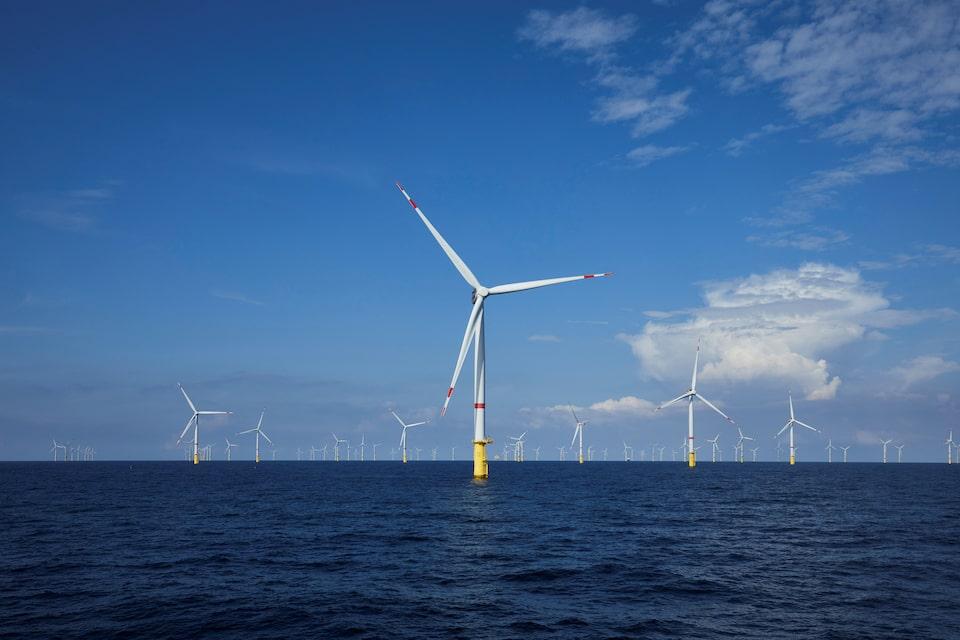
FRANKFURT, Jan 15 (Reuters) - German utility EnBW (EBKG.DE) , opens new tab on Thursday said it was taking a 1.2 billion euro ($1.4 billion) impairment charge after scrapping two wind projects in Britain, a direct consequence of losing out in a landmark UK offshore tender. The two offshore wind projects -- Mona and Morgan -- with a potential total capacity of 3 gigawatts did not qualify for government support via so called contracts for difference in this week's record auction. Sign up here. The two projects are being jointly developed with JERA Nex bp, a 50-50 joint venture between British oil major BP (BP.L) , opens new tab and Japan's JERA. EnBW said the decision to pull the plug on the projects was also based on other factors "including a significant increase in costs across the supply chain, lower electricity market prices and higher interest rates". EnBW, which is mostly owned by the German state of Baden-Wuerttemberg and related municipalities, also referred to unspecified project implementation risks, adding the charges were non-operational and would therefore not affect cash flows. ($1 = 0.8598 euros) https://www.reuters.com/sustainability/climate-energy/enbw-pulls-plug-two-uk-offshore-wind-farms-takes-14-billion-impairment-2026-01-15/
2026-01-15 12:18
Jan 15 (Reuters) - U.S. power producer Talen Energy (TLN.O) , opens new tab said on Thursday it would buy about 2.6 gigawatts of natural gas-fired generation capacity from private equity firm Energy Capital Partners for $3.45 billion. The deal underscores a broader push by U.S. power producers to scale up gas-fired generation as data center demand and electrification drive rising power consumption, particularly in PJM, the country's largest grid operator. Sign up here. Talen's deal with Energy Capital includes the Waterford Energy Center and Darby Generating Station in Ohio, and the Lawrenceburg Power Plant in Indiana. The power producer said the deal comprises about $2.55 billion in cash and roughly $900 million in stock. https://www.reuters.com/business/energy/talen-energy-buy-26-gw-gas-plants-ecp-345-billion-2026-01-15/

2026-01-15 12:09
MUMBAI, Jan 15 (Reuters) - Foreign companies have often complained about tax uncertainty in India and prolonged litigation related to alleged duty evasion on imports or levies payable on big M&A transactions. Here are some of the most high-profile tax cases in India. Sign up here. TIGER GLOBAL India's top court on January 15 ruled that Tiger Global is subject to taxes on its $1.6 billion sale of a stake in Indian e-commerce firm Flipkart to Walmart (WMT.O) , opens new tab in 2018. It will serve as a landmark ruling on companies' use of international tax treaties, and how India taxes cross-border deals. Tiger Global had claimed tax exemption under India–Mauritius tax treaty, but the Supreme Court ruled the transaction was designed as an "impermissible tax avoidance arrangement". KIA South Korea's Kia has been accused of dodging $155 million in taxes by misclassifying car component imports, but the company is contesting the charge privately with officials. At the heart of the dispute lie Kia's imports of parts of a car in separate shipments to assemble the vehicles in India, paying a lower tax applicable, circumventing the higher tax outgo when parts come together as a CKD, or a completely knocked down unit, of a car. VOLKSWAGEN In a case similar to the Kia one, Volkswagen has sued Indian authorities in a Mumbai court after being slapped with a $1.4 billion tax notice for importing parts related to its 14 models, including some Audi ones, instead of classifying them as CKD. The German automaker's court challenge states that India's "impossibly enormous" tax demand will hit its investment in the country, and foreign investor sentiment. VODAFONE In one of the most controversial cases, Vodafone (VOD.L) , opens new tab was slapped with a $2 billion tax demand when it purchased Indian assets of Hutchison Whampoa in an $11 billion deal in 2007. The dispute caused years-long litigation including a ruling in the company's favour by India's top court, followed by a change of law which reimposed the demand and international arbitration between the sides. Vodafone won the arbitration case in 2020. CAIRN ENERGY Britain's Cairn Energy faced a more than $1.4 billion tax demand over the transfer of shares during an internal reorganisation in 2007. In 2011, Cairn Energy sold its majority stake in Cairn India to Vedanta Ltd, reducing its share in the Indian company to about 10%. The Indian administration and Cairn India settled the years-long dispute in 2021 by offering to refund the tax amount. PERNOD RICARD French liquor giant Pernod Ricard (PERP.PA) , opens new tab has been accused by Indian authorities of undervaluing certain imports for more than a decade to avoid full payment of duties. India is demanding roughly $250 million in back taxes but the maker of Chivas Regal and Absolut vodka has contested the findings. The dispute is pending. In 2022, Pernod warned Prime Minister Narendra Modi's administration that its long-running tax disputes with authorities on valuing liquor imports have inhibited new investment and its current business. BYD Chinese automaker BYD has been accused by Indian authorities of underpaying $8.37 million on parts for cars it assembles and sells in India. BYD later deposited the demand but the probe is still ongoing and could lead to additional tax charges and penalties, Reuters has reported. https://www.reuters.com/world/asia-pacific/indias-biggest-tax-tussles-involving-foreign-companies-2026-01-15/

2026-01-15 11:59
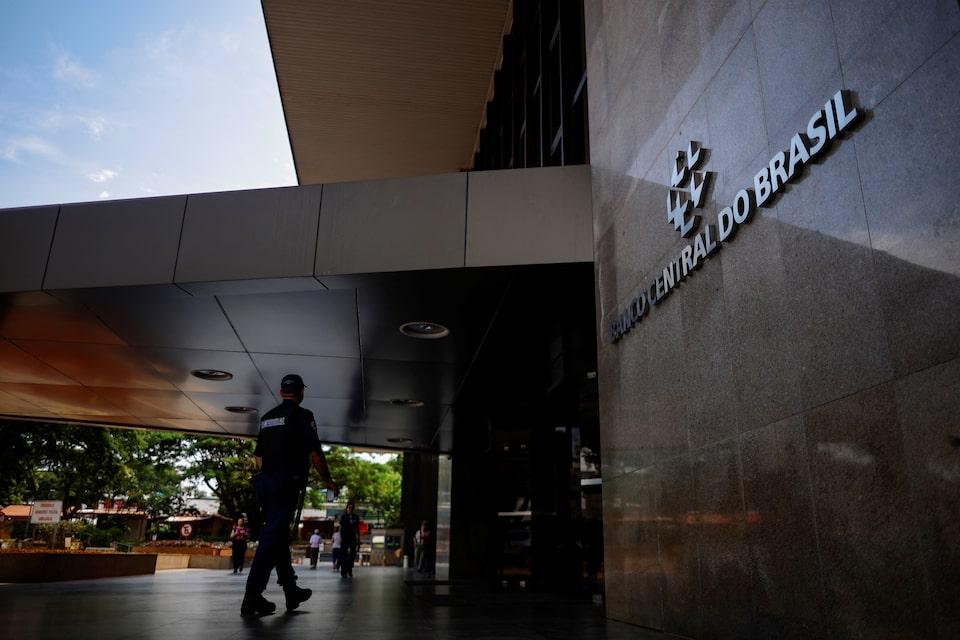
BRASILIA/SAO PAULO, Jan 15 (Reuters) - Brazil's central bank ordered on Thursday the liquidation of brokerage REAG, currently known as CBSF, according to a document signed by Governor Gabriel Galipolo, in the latest fallout from the collapse of mid-sized lender Banco Master. The move "was prompted by serious violations of the rules governing the activities of institutions that are part of the national financial system", the central bank said in a statement. Sign up here. Brazil's federal police on Wednesday added REAG founder Joao Carlos Mansur to its list of targets in an investigation into alleged fraud at Banco Master, which was placed into liquidation in November. REAG was allegedly involved in fraudulent fund transfers identified by the central bank in connection with Master's collapse. The company last year had also been targeted by search warrants in a separate police crackdown on multibillion-dollar money laundering and fraud schemes linked to organized crime in the fuel sector. According to the central bank, REAG/CBSF represents less than 0.001% of the total adjusted assets of Brazil's financial system. https://www.reuters.com/business/finance/brazil-central-bank-liquidates-reag-serious-rule-violations-2026-01-15/
2026-01-15 11:58
HAMBURG, Jan 15 (Reuters) - Germany's second-largest sugar refiner, Nordzucker, warned on Thursday it would swing to an annual operating loss on depressed EU sugar prices that are hitting producers across the market. "Nordzucker expects an operating loss in the high double-digit million range for the current financial year, which is significantly worse than expected," the unlisted company said in a statement. It reported a 100 million euro ($116 million) operating profit in its previous financial year. Sign up here. EU sugar prices are around four-year lows and world prices are near five-year lows, with Reuters reporting on Wednesday that European producers are asking farmers to cut sugar beet plantings. Germany's largest sugar producer Suedzucker on Tuesday also said low sugar prices would pressure earnings, while France's Tereos reported a plunge in first-half profits in November. High harvest yields in Brazil, India and the EU, plus uncertainties about import tariffs and exchange rate fluctuations, are increasing price pressures in the EU sugar market, while declining sugar consumption is also reducing overall sugar sales, Nordzucker said. "The significantly lower price level combined with large quantities available has been shaping the market for months," chief operating officer Alexander Godow said in a statement. "Due to these developments, no substantial price recovery is to be expected for the time being." The company is expanding its cost-cutting and efficiency programme. Nordzucker said the 2025/2026 beet processing campaign this autumn and winter saw good harvest conditions. The sugar beet processing campaign in Finland and Lithuania ended in December. German sugar factories will complete their campaign in the second half of January, followed by the sugar factories in Sweden, Slovakia, Denmark and Poland, it said. ($1 = 0.8596 euros) https://www.reuters.com/sustainability/climate-energy/germanys-nordzucker-expects-losses-sugar-market-remains-depressed-2026-01-15/