2025-04-22 18:45
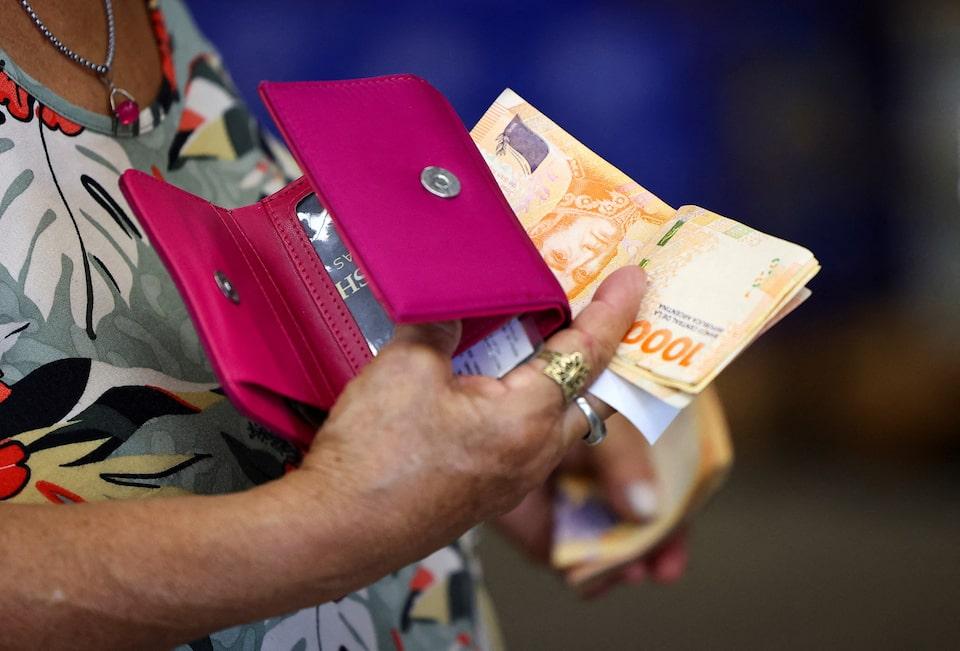
BUENOS AIRES, April 22 (Reuters) - Argentina's peso is gaining ground despite being unleashed from years-long currency controls designed to stop it falling, helping to banish fears that Argentina's recurring nightmare - inflation - will return. The South American country this month abruptly eased most of the controls in place since 2019 that had pegged the peso and severely restricted access to currency markets for individuals and companies, distorting trade and investment flows. Sign up here. That triggered a plunge of over 10% in the currency last week, sparking concerns that inflation, which had been slowing under the tough austerity of libertarian president Javier Milei, would speed up again. However, the government's doubling-down on plans for a fiscal surplus, pledges not to intervene in the FX market until the peso strengthens, an inflow of dollars from grain exports, as well as tight local monetary conditions have since buoyed the exchange rate. The peso has recovered to near its level before the controls were lifted, defying market expectations and tempering fears that a weakening would stoke inflation, which has dropped to 56%, year-on-year, from near 300% early in 2024. Peso futures - traders' bets on where the currency is headed - have strengthened sharply after the initial falls, even if they still suggest the peso will weaken over the year as a whole. "We now don't expect an immediate impact on prices," said economist Fausto Spotorno from local consultancy OJF, adding that increased competition and a lack of pesos in the market should offset any inflation imported through a weaker currency. "The market is also saying it doesn't have any money." Reuters consulted six analysts, who estimated that April inflation would be between 3% and 5%, higher than in recent months but below previous forecasts above 5%. Milei has made inflation-busting a priority and has brought the monthly rate down from a peak of around 25% shortly after he took office in late 2023. However, 2% has proved a tough level to break, and in March inflation even rose to 3.7%. The government also needs to build up depleted foreign currency reserves as part of a newly sealed $20 billion loan deal with the International Monetary Fund (IMF). Agustín Etchebarne, from the Libertad y Progreso Foundation in Buenos Aires, said that the government's tight money supply policy and its focus on a fiscal surplus would help bring inflation down in the months ahead. "With the very significant (economic) adjustment, a very strong fiscal surplus, and fewer and fewer pesos, inflation will drop in two or three months, and next year inflation will be very low in Argentina," he said. https://www.reuters.com/world/americas/argentinas-surprise-peso-strength-tempers-fears-inflation-comeback-2025-04-22/
2025-04-22 17:27
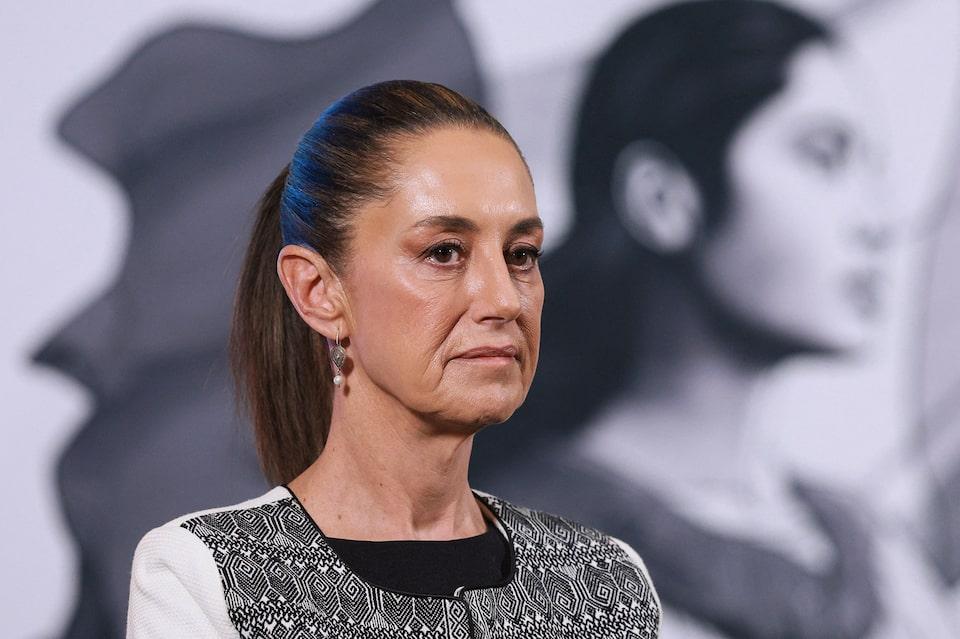
MEXICO CITY, April 22 (Reuters) - Mexican President Claudia Sheinbaum on Tuesday pushed back against the International Monetary Fund's new forecast of a contraction in GDP this year, saying public spending would help shield Latin America's no. 2 economy from market headwinds. Earlier on Tuesday, the fund's updated World Economic Outlook forecast a 0.3% contraction in economic growth for 2025, down from the fund's January forecast of a 1.4% expansion, as U.S. tariffs bite into exports. Sign up here. GDP, or gross domestic product, is the total monetary value of all goods and services produced within a country. The IMF's downward revision accounted for most of the organization's estimate for a slowdown in Latin America and the Caribbean's GDP growth this year. "We do not know what it is based on. We do not agree ... We have our economic models, which the finance ministry has, that do not coincide with this projection," Sheinbaum said during her regular morning press conference. The IMF said its downgrade for Mexico reflected "weaker-than-expected activity in late 2024 and early 2025 as well as the impact of tariffs imposed by the United States, the associated uncertainty and geopolitical tensions, and a tightening of financing conditions." Sheinbaum on Tuesday said that public investment would prevent the economy from contracting and touted her government's "Plan Mexico," an effort to boost domestic industry amid tariffs imposed by U.S. President Donald Trump on some imports from Mexico. "(International financial organizations) do not believe governments can do anything to change a situation that comes from the market itself, and we do not share this vision ... we have a plan to strengthen the Mexican economy," Sheinbaum said. Earlier this month, a draft budget from the Mexican finance ministry showed that the government sees the economy growing between 1.5% and 2.3% this year. That estimate, which the government called conservative at the time, was greater than forecasts from Mexico's central bank and private sector analysts. Mexico's economy, shaken in recent months by cooling investor confidence, the U.S. tariff threats, and a prolonged drought, is on the verge of falling into a technical recession after it contracted in the fourth quarter of 2024 and in January. A preliminary estimate published earlier on Tuesday by Mexico's statistics agency showed the economy likely contracted 0.2% in March from the same month a year earlier, following a preliminary estimate that it shrank 0.7% in February. https://www.reuters.com/world/americas/mexicos-president-says-she-disagrees-with-imfs-negative-growth-forecast-2025-04-22/
2025-04-22 17:26
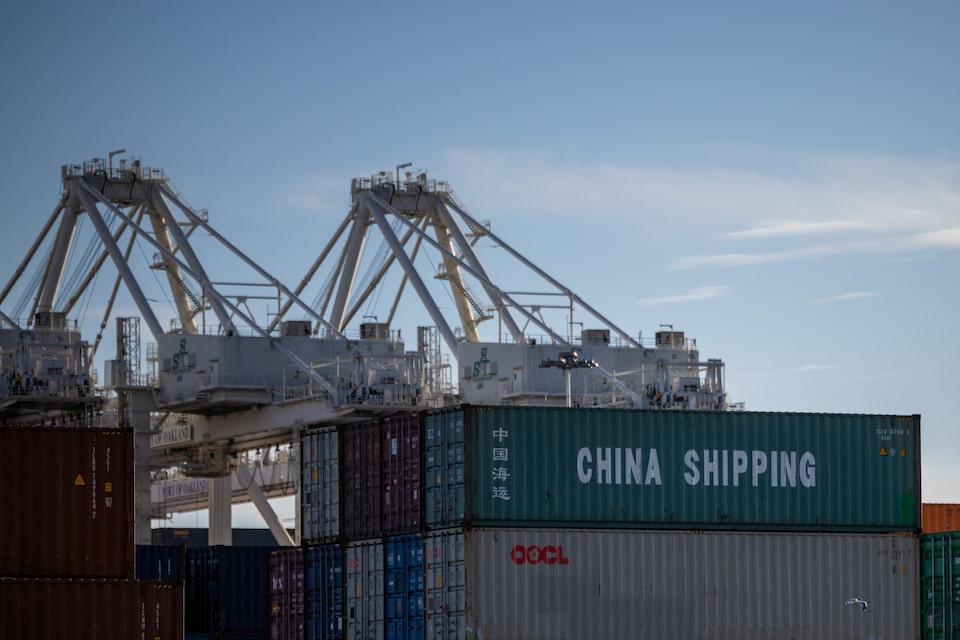
NEW YORK, April 22 (Reuters) - U.S. Treasury Secretary Scott Bessent on Tuesday said that the tariff standoff with China is unsustainable and that he expects the situation to de-escalate, a source familiar said. Bloomberg first reported this. Sign up here. He also added that negotiations haven’t started but that a deal is possible, the source added. Bessent said this at a closed door event hosted by JPMorgan Chase (JPM.N) , opens new tab in Washington. https://www.reuters.com/business/finance/us-treasury-secretary-says-situation-with-china-is-unsustainable-source-says-2025-04-22/
2025-04-22 14:45
April 22 (Reuters) - Wall Street brokerages on Tuesday began coverage of Nvidia-backed CoreWeave (CRWV.O) , opens new tab with broadly bullish views, although the stock has failed to gain traction with investors following a lackluster initial public offering and market debut. Among the thirteen major brokerages covering CoreWeave's shares, Needham and Stifel set the highest price target at $55, while Melius Research had the lowest at $40. The stock, which was priced at $40 in its IPO, was last up 6% to $37.58. Sign up here. After the expiration of the industry-required quiet period, the brokerages started coverage of the stock, citing the company's strong foothold in the booming AI infrastructure market for their bullish stance. "CoreWeave exhibits a track record of being first to deploy next-gen GPUs, making it difficult for other hyperscalers to claim industry leadership," J.P.Morgan said. Livingston, New Jersey-based CoreWeave offers access to data centers and Nvidia (NVDA.O) , opens new tab chips, which are highly coveted in the competitive AI development landscape. However, the brokerages also expressed caution about the company's over-reliance on some of its customers and a tough market backdrop. "Volatile macro (and equities) backdrop may limit investors' willingness," said Morgan Stanley, as it started coverage with an "equal-weight" rating. Last year, CoreWeave - whose 32 data centers house over 250,000 GPUs, mainly supplied by Nvidia - generated 77% of its revenue from just its top two clients, one of which was Microsoft (MSFT.O) , opens new tab. Citigroup, which started coverage of the stock with a "neutral" rating, said the significant reliance on Microsoft posed a risk as the tech firm has signaled a slowdown in AI spending. Ahead of its IPO, CoreWeave signed a blockbuster $11.9 billion, five-year deal with OpenAI, Reuters reported last month, forging an alliance with the industry's top startup. "Close relationship with Microsoft and OpenAI could cut both ways ... and the customer concentration here does pose a risk," Barclays said. "We expect the stock to provide a wild, lumpy, volatile ride, requiring a risk tolerance that may not exist for most investors," J.P.Morgan said, warning that the firm's debt-fueled, capital-intensive business could pose risks. The IPO was underwritten by a syndicate of 18 banks, led by Morgan Stanley, J.P.Morgan and Goldman Sachs and was seen as a pivotal gauge of investor enthusiasm for new listings and AI-related stocks, especially in light of China's DeepSeek launch. Amid Trump's tariffs, the recovery of Wall Street IPOs has been rocky, with LNG exporter Venture Global (VG.N) , opens new tab nosediving since its January debut. Following are the ratings and price targets for CoreWeave from some of the major brokerages: https://www.reuters.com/markets/us/nvidia-backed-coreweave-gets-largely-bullish-coverage-brokerages-2025-04-22/

2025-04-22 14:27
IMF cuts UK 2025 growth forecast to 1.1% from 1.6% UK still set to outpace France, Italy, Germany this year Energy, water bills and wage hikes driving UK inflation IMF sees UK inflation at 3.1% this year, 2.2% in 2026 WASHINGTON, April 22 (Reuters) - Britain's economic growth forecast for 2025 received the sharpest downgrade of any major European economy from the International Monetary Fund on Tuesday as the UK braces for the global fallout from U.S. President Donald Trump's trade tariffs. The Fund also said British inflation would be higher this year than it had thought in January, and higher than in any other Group of Seven country - showing the economic risks facing finance minister Rachel Reeves and Bank of England Governor Andrew Bailey, who will attend IMF spring meetings this week. Sign up here. Britain remains on course to grow more strongly than France, Italy or Germany in 2025, the IMF said. But the pace of the increase was revised down to 1.1% from January's projection of 1.6% - more sharply than for any of the others. As well as the impact of Trump's tariffs and the steep increase in borrowing costs in financial markets in recent weeks, the IMF linked the downgrade to weak momentum in the economy at the end of 2024 and the hit to demand from inflation. The IMF trimmed its forecast for UK growth in 2026 to 1.4% from a previous 1.5%. IMF chief economist Pierre-Olivier Gourinchas told reporters that the Fund expected three more interest rate cuts by the BoE this year after a quarter-point cut in February. The higher U.S. import tariffs were likely to reduce pressure on inflation in Britain, as in most economies, Gourinchas said. BoE rate-setter Megan Greene had earlier said she expected the diversion of exports away from the U.S. would push down inflation in Britain. Despite the weaker outlook, the Fund bumped up its forecast for British inflation this year by 0.7 percentage points from its January forecast, to 3.1%. On average, the IMF's inflation forecast for advanced economies rose 0.4 percentage points, while that for the United States, where Trump's tariffs will hit prices directly, jumped 1.0 points. The IMF said the increase in its forecast for UK inflation "primarily reflects one-off regulated price changes". Energy and water bills for households in Britain rose this month, alongside a hike in social security contributions paid by employers and a nearly 7% rise in the minimum wage, which could also increase inflation pressure. The IMF said it expected British inflation to slow to 2.2% in 2026, close to the BoE's 2% target. In her response, Reeves highlighted how the IMF still saw stronger economic growth in the UK in 2025 than in Europe's other big countries. "The report also clearly shows that the world has changed, which is why I will be in Washington this week defending British interests and making the case for free and fair trade," Reeves said in a statement. She is due to meet U.S. Treasury Secretary Scott Bessent to push Britain's case for a trade agreement with Washington that could lower or eliminate the tariffs imposed by Trump on UK exports. The IMF's new forecast of 1.1% growth in Britain's economy this year is stronger than the 1.0% expansion seen by the government's budget watchdog and the BoE's forecast of 0.75%. https://www.reuters.com/sustainability/sustainable-finance-reporting/imf-chops-uk-growth-forecast-trump-tariffs-hit-global-economy-2025-04-22/
2025-04-22 14:24
Major Russian banks set up netting system for China trade Aim is to cut risk of secondary sanctions System has lower commissions, is set to expand Xi due to visit Russia in May, meet Putin MOSCOW, April 22 (Reuters) - Major Russian banks have set up a netting payments system dubbed "The China Track" for transactions with China, aiming to reduce their visibility to Western regulators and mitigate the risk of secondary sanctions, banking sources told Reuters. Russia's trade with China hit a record $245 billion last year despite payment problems and commissions running as high as 12%, as Chinese banks had grown too cautious to do business with Russia and jeopardise their ties with the United States. Sign up here. The issue had become so important that Russian President Vladimir Putin and China's President Xi Jinping discussed it during Putin's visit to China in May 2024, which was aimed at cementing the two countries' 'no limits' partnership. Xi is set to take part in Russia's Victory Day parade on May 9, but his visit is now taking place amid China's trade war with the United States, making the booming trade with Russia and other non-Western nations more important. "I do not rule out that the Chinese partners will no longer be afraid of secondary sanctions," said Alexander Shokhin, the head of the powerful RSPP business lobby group, who takes part in trade negotiations with China. The new system has been set up by major sanctioned banks and involves a web of intermediaries registered in countries that Russia considers friendly. The system has been in place for some time and has not yet suffered any major setbacks. Each bank runs several verified payments agents, some of whom handle payments for exports, and some for imports. All payments are then netted centrally at the bank with all the counterparties involved receiving their money. The banks settle trade in both directions, said market sources, who spoke on condition of anonymity due to the sensitivity of the issue. SECURE FROM BEING BLOCKED The banks provide guarantees for payments' settlement as well as financial instruments insuring against a possible default of a payment agent or a counterparty. The system does not use the SWIFT messaging system or accounts in Western banks. "We had to structure financial flows through friendly jurisdictions to secure these payments from being blocked," one market source said, stressing that netting has become the cheapest way for settling trade with China. The sources declined to name the banks, saying they do not want to draw additional attention to their operations because of sanctions but stressed that all the banks involved rank among Russia's top 20. China propped up Russia economically in 2022 when the country was faced with unprecedented Western sanctions over its military action in Ukraine, providing consumer goods which replaced those offered by Western companies. China also continued to import oil and other natural resources from Russia despite Western pressure. However, even despite the goodwill, consumer goods trade nearly halted last year due to the secondary sanctions risk. Some bankers say that the netting system allows payments to be made directly to any Chinese bank without delay, provided that the goods are not under sanctions and the counterparty is registered in one of the selected 11 provinces of China. Speaking in parliament in April, Russia's central bank Governor Elvira Nabiullina acknowledged that Western sanctions complicated cross-border payments for Russian companies, but said that alternative payments channels are being developed. NO SPREAD ON TOP The netting scheme is mainly designed for large corporations. The sources said it has some disadvantages, including the requirement to authorise every single payment and problems with value-added tax (VAT) refunds. "The scheme allows direct work with 11 Chinese provinces, which produce most of the goods that are being exported to Russia. The cost is calculated based on the official exchange rate, with no spread on top," one banker said. The minimum cost of the "China Track" service, including commissions and exchange rate differences, is about 1% for imports and 0.5% for exports, compared with 2-4% outside the system and up to 12% at the height of the problem last year. "Today 100% of all the money is being transferred without a glitch, we have not had a single case where the money comes back. The money is normally delivered within two days," said another banker involved in the system's operations. The banker added that currently there is only one clearing session a week each Thursday, but the plan is to hold two sessions from the end of April, possibly extending the number of trading sessions further as demand remains strong. https://www.reuters.com/business/finance/china-track-bank-netting-system-shields-russia-china-trade-western-eyes-2025-04-22/