2025-04-22 10:55
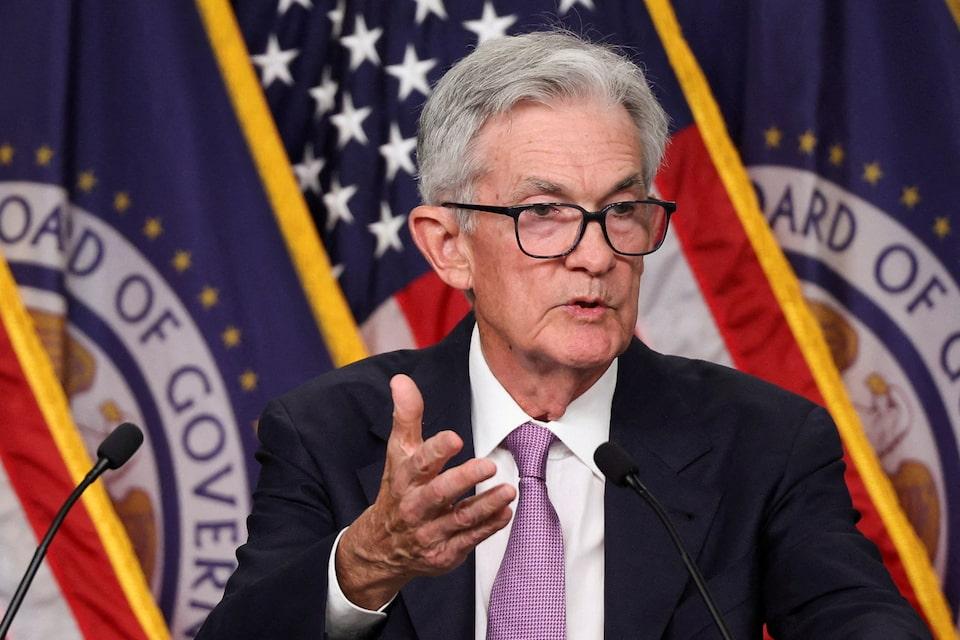
April 22 (Reuters) - Morning Bid U.S. What matters in U.S. and global markets today Sign up here. By Amanda Cooper, EMEA Markets Breaking News Editor It's no secret that U.S. President Donald Trump is not a fan of Federal Reserve Chair Jerome Powell, despite having appointed him to lead the U.S. central bank in 2018 during his first term in office. But in the face of a cratering stock market, the destruction of investor confidence in U.S. assets and the increasing likelihood of recession - all unleashed by the chaotic rollout of his tariff policies - Trump is demanding the Federal Reserve cut interest rates and for heads to roll, specifically, Powell's. Mike Dolan is enjoying some well-deserved time off this week, but the Reuters markets team is here to provide you with all the information you need to start your day. Today's Market Minute * Trump has kept up his verbal assault on Federal Reserve Chair Jerome Powell over the Fed's refusal for now to cut rates further, making investors increasingly fearful he could try to fire the U.S. central bank chief over the matter. * Swiss pharmaceutical maker Roche says it will invest $50 billion in the United States over the next five years, creating more than 12,000 new jobs. * Trump sat down with major retailers including Walmart, Home Depot, Lowe's and Target on Monday to discuss his tariff policies that could raise the prices of the goods on their shelves. * Vietnam's trade ministry has issued a directive to crack down on illegal transhipment of goods to the United States and other trading partners as it tries to avoid steep U.S. tariffs, according to a document reviewed by Reuters. * Retail investors in China are stepping in to "buy the dip" to defend their domestic stock market as their country's trade war with the United States heats up. 'Major loser' reporting for duty Trump has opened fire on the Fed chief on his Truth Social platform, saying Powell's "termination cannot come soon enough" and calling him a "major loser". Powell's stance is that rates should not fall until it is clear Trump's tariff plans won't fuel a surge in inflation. The Polymarket online betting platform for political events shows its users are placing a 21% chance on Trump removing Powell from his post this year, before the Fed chair's term expires in May 2026. Nervousness over Trump's war of words has spread to Main Street as well. Google Trends shows searches among U.S.-based users for "Jerome Powell" have spiked to their highest in at least five years, along with "apply for UK visa". It's not clear if Trump has the authority to remove Powell before his term is up next year. Even if he were successful in doing so, the way the Fed is structured means the remaining board members and regional bank presidents still set monetary policy. Trump's initial social media post last week criticising Powell barely caused a ripple across markets, which were very much in recovery mode, attempting to find some kind of stability after the two-week roller coaster of early April. But his post on Monday, in which he warned the economy would slow unless Powell cut rates, hit a market with very little in the way of liquidity - given much of the world was off for the Easter break - stripping more than 2% off the S&P and the Nasdaq, hitting Treasury prices and the dollar. "With these costs trending so nicely downward, just what I predicted they would do, there can almost be no inflation, but there can be a SLOWING of the economy unless Mr. Too Late, a major loser, lowers interest rates, NOW," Trump's post said. U.S. consumer inflation eased in March, thanks to declines in the price of gasoline and used vehicles. But tariffs are likely to raise the cost of most imported goods and could fuel a resurgence in price pressures. A recent measure of where consumers believe inflation will be in a year's time shot to the highest since 1981. Even if the legality of removing Powell is unclear and Trump's verbal attacks amount to little more than that, it raises the question of the independence of the world's most powerful central bank, striking another blow to confidence. And if there is one thing sorely lacking right now, it's confidence -- confidence in U.S. markets. Treasuries have been so badly battered this month that the premium investors demand to hold U.S. 10-year debt rather than German bonds has increased by 48 basis points so far in April to nearly 200 basis points, heading for its biggest monthly rise since June 2003, according to LSEG data. Meanwhile, the S&P 500 has given up all its edge over the rest of the world. So far this year, the benchmark U.S. index has fallen 13%, while the MSCI All-World Ex-US index has risen 4.2%. There are worse performers out there. Tokyo's Nikkei has fallen 14%, but this is partly a function of Japanese monetary policy and the performance of the yen. The S&P has just recorded its worst performance over the first four months of the year against the rest of the world, as measured by the MSCI index, since 1993. There's a clear "major loser" right now and it's on Wall Street. Chart of the day Roche, the Swiss drugmaker, is the latest European company to announce plans to expand its presence, or set up shop, in the United States to mitigate the impact of Trump's tariffs. The company says it will invest $50 billion in the U.S. over the next five years, which it says will create over 12,000 jobs. Once the new and expanded manufacturing facilities are online, Roche says it will export more medicines from the U.S. than it imports. Pharmaceutical exports are big business both for the European Union and the United States. Medicines and other pharmaceutical products accounted for almost a quarter of all EU exports to the U.S. in 2024. Today's events to watch * Tesla first-quarter earnings after the market close * Baker Hughes first-quarter earnings after the bell * Federal Reserve Bank of Philadelphia President Patrick Harker, Richmond Fed President Thomas Barkin and Fed Board Governor Adriana Kugler speak at separate events. * Richmond Fed Composite index for April * Two-year Treasury note auction https://www.reuters.com/markets/us/global-markets-view-usa-2025-04-22/
2025-04-22 10:34
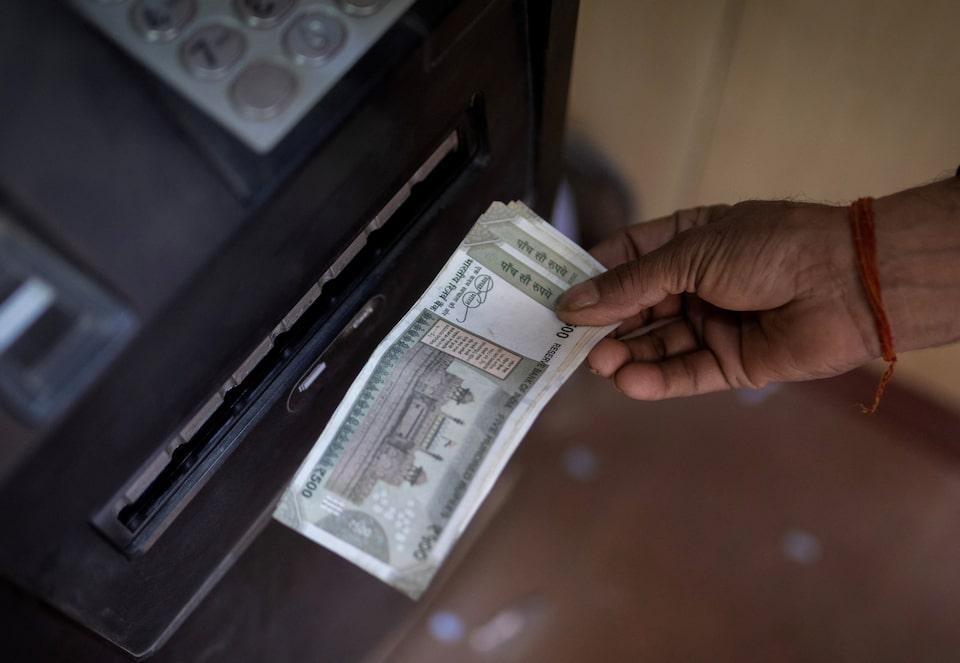
MUMBAI, April 22 (Reuters) - The Indian rupee ended weaker on Tuesday, in line with regional peers that fell tracking the Chinese yuan, but potential portfolio inflows into local shares helped the currency avoid further losses. The rupee closed at 85.1875 against the U.S. dollar, compared with its close of 85.1275 in the previous session. Sign up here. Asian currencies were down between 0.1% and 0.3%, with the Chinese yuan declining to a weekly low as traders remained wary about the economic risks from an escalating trade war between the world's two biggest economies. Dollar sales from foreign banks, likely on behalf of custodial clients, and two local private banks supported the rupee, a trader at a state-run bank said. India's benchmark equity indexes, the BSE Sensex (.BSESN) , opens new tab and Nifty 50 (.NSEI) , opens new tab, rose for the sixth session in a row, diverging from most regional indexes. The dollar index stayed pinned near a three-year low as U.S. President Donald Trump's repeated criticism of the Federal Reserve chairman further dented investor sentiment towards the U.S. economy. "The reaction to Trump's comments on the Fed indicates how sensitive markets are to the topic of Fed independence, and we believe this adds a new layer of bearish bias on the dollar," ING Bank said in a note. ING expects volatility in currency markets to stay elevated as markets digest the host of policy changes under the Trump administration. The rupee's 1-month realised volatility has risen to an over two-year peak of 4.8%. With few data releases in India and the U.S. this week, focus will stay on trade policy-related developments and remarks from Fed policymakers, three of whom are scheduled to speak later in the day. https://www.reuters.com/world/india/weakness-yuan-asian-peers-weighs-rupee-2025-04-22/
2025-04-22 10:03
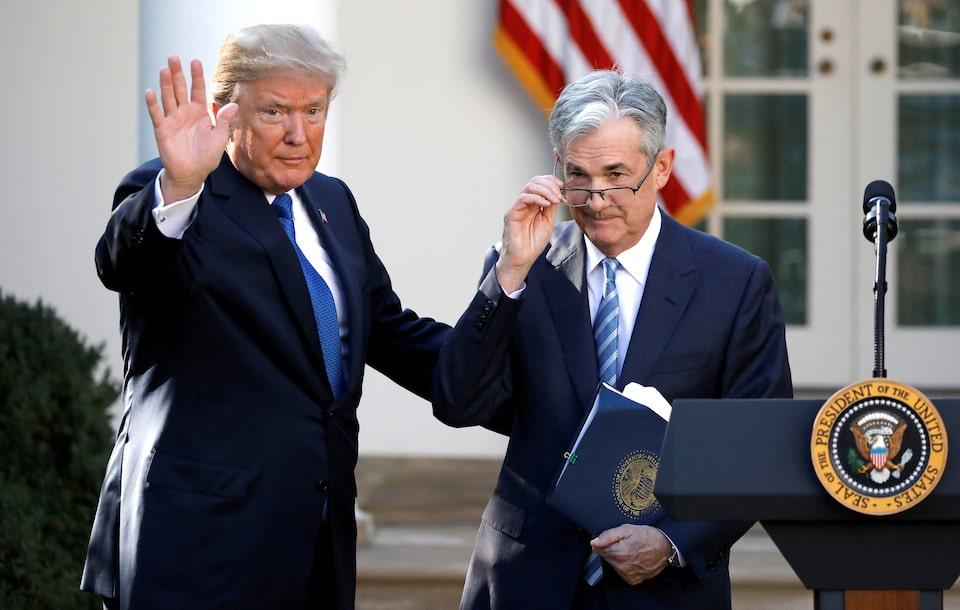
Powell's removal would undermine the Fed’s independence, spur inflation Move could hurt dollar’s role as reserve currency Longer-dated Treasury yields up on Monday, dollar hits 3-yr low, stocks sold off NEW YORK, April 22 (Reuters) - Investors are fearful of a deep hit to asset prices if U.S. President Donald Trump attempts to fire Federal Reserve Chair Jerome Powell, undermining confidence in the central bank's ability to fight inflation and act independently. That could hurt the already bruised dollar, under-pressure equities and send bond yields higher, market participants said. Sign up here. The Fed's credibility as the world's most powerful central bank relies on its historic independence. Trump has criticized the Fed for not cutting interest rates quickly enough and if any subsequent chair were to be less inclined to raise rates when needed or to push for faster rate cuts, it could spur inflation. "Were Powell to be removed, markets would almost certainly interpret it as an inflationary signal, potentially driving long-term interest rates higher and undermining the U.S. dollar's role as the world’s reserve currency," said Elliot Dornbusch, chief investment officer at CV Advisors. Following Powell's ousting, there would be "violent reactions in markets," according to Jamie Cox, managing partner at Harris Financial Group. "Monetary policy is not a political tool," he added. Some of the impact has already been seen in asset prices, with the dollar sliding to a three-year low on Monday, stocks selling off with the S&P 500 (.SPX) , opens new tab now roughly 16% below its February peak and benchmark U.S. Treasury yields up. Longer-dated U.S. Treasury yields rose on Monday. Removing Powell could exacerbate upward pressure on the so-called term premium - a measure of the compensation investors demand for the risk of holding long-dated bonds. Market inflation expectations, as measured by 10-year Treasury Inflation-Protected Securities and 10-year Treasuries, remained relatively stable on Monday. Trump said in a social media post on Thursday that the Fed chair's termination "cannot come fast enough," although his term ends in May 2026. White House economic adviser Kevin Hassett on Friday said Trump and his team were continuing to study if they could fire Powell, while Trump on Monday said the economy could slow down unless rates were lowered immediately. The White House declined further comment on Monday. LONGSHOT BEING PRICED IN Investors said that they were starting to take the possibility seriously of an attempt to fire Powell, despite the barriers to do so. It is unclear if Trump would be legally allowed to remove Powell, who is appointed by the president but confirmed by the Senate. Currently, however, an effort by Trump to oust members of other independent agencies is before the Supreme Court. Some said that they were starting to expect more longshot scenarios coming to fruition after the Trump administration's tariff policies were announced far harsher than expected, causing significant volatility in asset prices. Since the April 2 tariffs announcement, the S&P 500 (.SPX) , opens new tab has fallen 9%. "Previously I thought the odds were very much against Trump trying to remove Powell, but my confidence has faded," Christopher Hodge, chief U.S. economist at Natixis, said in a note following the president's comment. Such a move would likely hit asset prices widely, strategists said. Andrew Graham, managing partner of Jackson Square Capital, estimates that the S&P 500 index would fall below 4,835 - a roughly 6% fall from its Monday close. Jack Ablin, chief investment officer at Cresset Capital in Chicago, said if the president installs his own person at the Fed and the central bank lowers rates against a backdrop of rising inflation "we’d see a continuation of what we’re experiencing now." "Unfortunately, both stocks and the dollar are overvalued, which gives them room to fall more in this environment," said Ablin, who thinks that the S&P 500 is 10% to 15% overvalued. Through Friday, the S&P 500 was trading at 19.2 times forward 12-month earnings estimates, compared with its long-term average of 15.8, according to LSEG Datastream. Brian Jacobsen, chief economist at Annex Wealth Management, said firing the head of the Fed would not "build confidence in the U.S. dollar.” Nate Garrison, chief investment officer, World Investment Advisors, praised Powell's track record at the Fed as being consistent and a steady hand. "Just the threat of removing him sends a bit of a shudder up people's spines,” said Garrison. REPLACEMENT TO POWELL Trump's outspoken criticism of Powell has a long history. In 2019, the president called the Fed chair "an enemy." But last year, following his election, he said he would not try to replace Powell. Powell himself has said he has no plans to vacate the job before his term ends in May of next year, while also arguing that the central bank would wait for more data on the economy's direction before changing interest rates, as tariffs could push inflation higher. Trump could replace Powell with former Fed Governor Kevin Warsh, the Wall Street Journal reported last week. Warsh for his part, however, has advised that the Fed chair should conclude his term, the report added. Warsh did not immediately respond to a Reuters request for comments. Capital Economics said if a well-qualified candidate is lined up, such as Warsh, then the initial market reaction "might not be disastrous" although it would likely be "the first step in dismantling the Fed's independence" as if it led to the remaining Fed board members being fired, that would "trigger a more severe market backlash." Some market participants consider an easier route for Trump would be to create a so-called shadow Fed chair, or someone investors would look to for guidance as opposed to Powell. However, that could also be viewed negatively by the market. "If it looks like we might have looser financial policy because we have a new Fed chair coming in, that would be a disaster," said Tom Bruce, macro investment strategist, Tanglewood Total Wealth Management. https://www.reuters.com/markets/wealth/investors-fear-trumps-attacks-powell-will-pile-pain-2025-04-22/
2025-04-22 09:50
(Reuters) - Sterling hit a fresh 7-month high against the dollar on Tuesday as the greenback weakened amid concerns over the Federal Reserve's independence after recent verbal attacks made by U.S. President Donald Trump against the Fed chair. White House economic adviser Kevin Hassett said on Friday that Trump and his team would study the matter when asked if firing Fed Chair Jerome Powell was an option. Sign up here. The dollar marked a fresh low against the yen and hovered around multi-year lows versus the euro and the Swiss franc. The pound dropped against the euro but remained far from the 5-month low it reached a couple of weeks ago, as the single currency benefited from the U.S. administration's selloff in U.S. assets following recent policy announcements. Sterling was up 0.01% at $1.3380 after hitting$1.3423, its highest since September 26. "The UK's inflation data and deteriorating labour market outlook have added to the pound's challenges," said George Vessey, lead forex and macro strategist at Convera. Sterling showed little immediate response to two recent economic data reports last week, but analysts see potential headwinds from a dovish shift in the Bank of England policy. British inflation slowed to its weakest in three months in March and the labour market weakened before this month's tax hike on employers. Markets fully priced in a Bank of England 25 basis points (bps) rate cut next month and 87 bps by year-end. IRPR Britain is more likely to see lower than higher inflation as a result of Trump's tariffs, BoE policymaker Megan Greene said on Tuesday. The euro dropped 0.13% to 85.94 pence . It hit 87.38 pence on April 11, its highest since November 2023. Several market participants argued that further upside in sterling remained likely as the UK economy is less vulnerable to the U.S. tariff shock. British Prime Minister Keir Starmer spoke with Trump, discussing trade between the two nations among other subjects, including the situation in Ukraine and Iran, a Downing Street spokesperson said on Friday. https://www.reuters.com/world/uk/sterling-hits-7-month-high-dollar-drops-concerns-over-feds-independence-2025-04-22/
2025-04-22 09:15
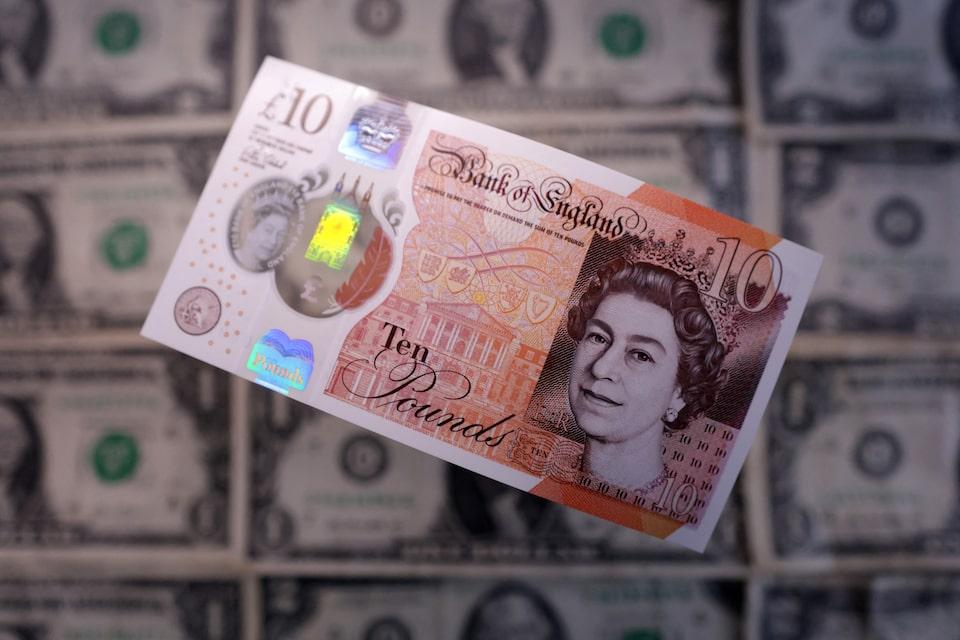
April 22 (Reuters) - Britain is more likely to see lower rather than higher inflation as a result of U.S. President Donald Trump's tariffs, Bank of England policymaker Megan Greene said on Tuesday. Greene, who has sounded more worried about the persistence of inflation pressure than some of her other colleagues on the Monetary Policy Committee, said Britain's decision not to levy reciprocal tariffs meant it was likely to become a destination for cheaper goods from Asia and the European Union. Sign up here. "The tariffs actually represent more of a disinflationary risk than an inflationary risk," Greene told Bloomberg TV. However, she said she remained concerned about domestic inflation pressures in Britain due to a lack of supply capacity, which informed the "cautious" approach to rate cuts she has taken so far. The BoE's next interest rate announcement comes on May 8. Financial markets on Tuesday priced in a 100% chance of a rate cut, with recession fears rising sharply in the wake of Trump's imposition of tariffs. Asked about investors' worries over the independence of the U.S. Federal Reserve after Trump criticised its chair Jerome Powell, Greene said: "Credibility is the currency of central banks and I think independence is quite an important piece of that." https://www.reuters.com/markets/europe/boes-greene-says-us-tariffs-likely-put-downward-pressure-uk-inflation-2025-04-22/
2025-04-22 07:45
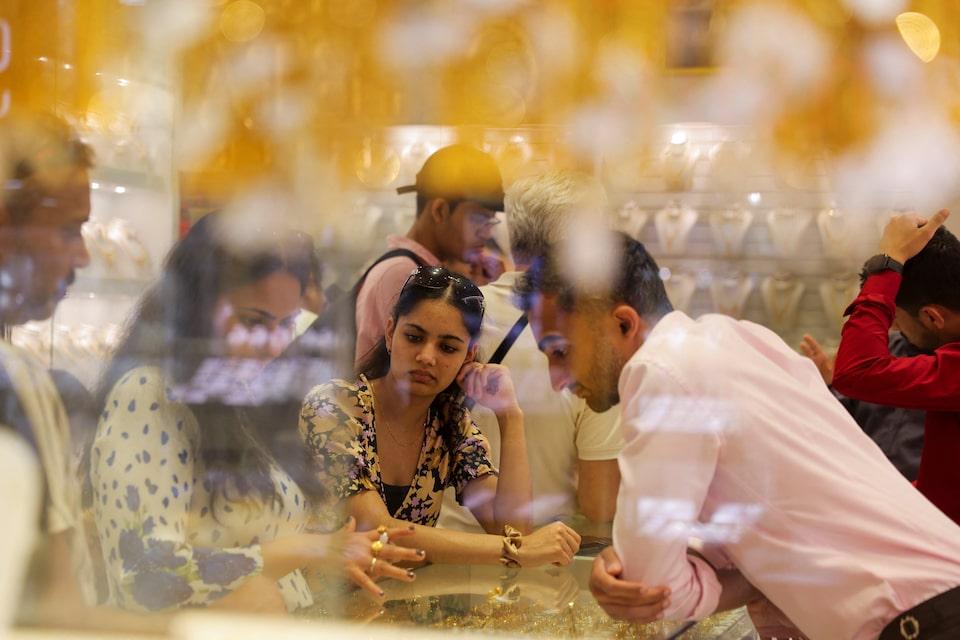
'City of Gold' long a magnet for gold buyers Traditional buyers seek 22-karat gold for weddings, ceremonies Record prices hitting demand, retailers say UAE gold jewellery sales fell by around 13% last year DUBAI, April 22 (Reuters) - In the bustling Gold Souk in Dubai, dubbed the "City of Gold", 22-karat gold jewellery is a traditional favourite for weddings, religious celebrations, and as a family investment. Yet with bullion prices hitting record highs above $3,400 an ounce, there are signs of change, as buyers look to diamonds and lighter gold jewellery, instead. Sign up here. While U.S. tariffs and other factors have added fire to already hot demand for gold as an investment, the impact is different for gold jewellery, according to Andrew Naylor, head of Middle East and Public Policy at the World Gold Council (WGC). "In markets like Dubai, this creates a two-fold effect: on one hand, you see stronger interest in gold as a safe-haven asset, on the other, high prices dampen jewellery demand." At Dubai’s Gold Souk, retailers told Reuters they are seeing this trend, as current prices prompt shoppers to look for alternatives. "There are no potential customers nowadays because of the gold prices," said Fahad Khan, a sales representative at retailer Damas Jewellery. "It’s a little bit tough to afford gold, so I think it’s better to go with diamonds," said Lalita Dave, 52, as she browsed around the Gold Souk. Dubai has been a magnet for gold buyers for at least 80 years, starting with Iranian and Indian traders, both cultures sharing a tradition of 22-karat jewellery for adornment and investment. Yet as gold prices rose 27% last year, demand for gold jewellery in the UAE fell by around 13%, outpacing an 11% drop globally, according to the WGC. Jewellery demand could face further pressure across key regions in 2025 if gold prices remain elevated or volatile, the WGC said in its gold demand trends report published in February. Price swings, more than price levels, are increasingly shaping consumer behaviour, particularly in India, it noted. Shifts in Indian purchasing patterns often ripple through Gulf markets such as the UAE, where buyers are a key driver of sales. Goldman Sachs recently raised its end-2025 gold forecast to $3,700 per ounce and said prices could climb as high as $4,500. "Higher gold prices are likely to dampen demand for jewellery, in a classic example of how the best cure for high prices is high prices,” said Russ Mould, investment director at AJ Bell. One sign of economising has been the rise of lab-grown diamonds. India exported $171 million worth of lab-grown diamonds to the UAE in 2024, up almost 57% from $109 million two years earlier, data from the Gem and Jewellery Export Promotion Council showed. India's exports of cut and polished diamonds to the UAE in the April–November 2024 were up 3.7%. UAE ranked third in global diamond imports in 2023, trade data shows, its primary trade partners including India, South Africa, and Belgium. While the UAE accounted for just 1.5% of the global diamond jewellery market by revenue in 2023, it is projected to grow by 5.9% annually to reach nearly $2 billion by 2030, according to Grand View Research. That outpaces the global growth forecast of 4.5% and makes the UAE the fastest growing market in the Middle East and Africa. One impact from recent trade tensions with the U.S. has been accelerated talk about finding alternative markets and production hubs, two executives at major Indian diamond exporters told Reuters. If tensions persist, potentially spanning years, one of the sources speaking to Reuters on condition of anonymity said his company's contingency plans included shifting some Indian production overseas, including to the UAE. Shamlal Ahamed, managing director of international operations at retailer Malabar Gold & Diamonds, told Reuters the rise in lab-grown diamond jewellery sales in the UAE appeared to be driven more by design preferences than pricing and he remained bullish on gold jewellery demand. "While price-conscious buyers may wait for a dip, our experience shows that such declines are often short-lived, with buyers quickly adapting to new price levels." https://www.reuters.com/markets/commodities/dubais-gold-souk-bullions-record-run-brings-little-joy-jewellers-2025-04-22/