2025-04-21 21:54
WASHINGTON, April 21 (Reuters) - The Food and Drug Administration is suspending a quality control program for testing of fluid milk and other dairy products due to reduced capacity in its food safety and nutrition division, according to an internal email seen by Reuters. The suspension is another disruption to the nation's food safety programs after the termination and departure of 20,000 employees of the Department of Health and Human Services, which includes the FDA, as part of President Donald Trump's effort to shrink the federal workforce. Sign up here. The FDA this month also suspended existing and developing programs that ensured accurate testing for bird flu in milk and cheese and pathogens like the parasite Cyclospora in other food products. Effective Monday, the agency suspended its proficiency testing program for Grade "A" raw milk and finished products, according to the email sent in the morning from the FDA's Division of Dairy Safety and addressed to "Network Laboratories." Grade "A" milk, or fluid milk, meets the highest sanitary standards. The testing program was suspended because FDA's Moffett Center Proficiency Testing Laboratory, part of its division overseeing food safety, "is no longer able to provide laboratory support for proficiency testing and data analysis," the email said. HHS did not immediately respond to a request for comment. The Trump administration has proposed cutting $40 billion from the agency. The FDA's proficiency testing programs ensure consistency and accuracy across the nation's network of food safety laboratories. Laboratories also rely on those quality control tests to meet standards for accreditation. "The FDA is actively evaluating alternative approaches for the upcoming fiscal year and will keep all participating laboratories informed as new information becomes available," the email said. https://www.reuters.com/business/healthcare-pharmaceuticals/us-fda-suspends-milk-quality-tests-amid-workforce-cuts-2025-04-21/
2025-04-21 21:50
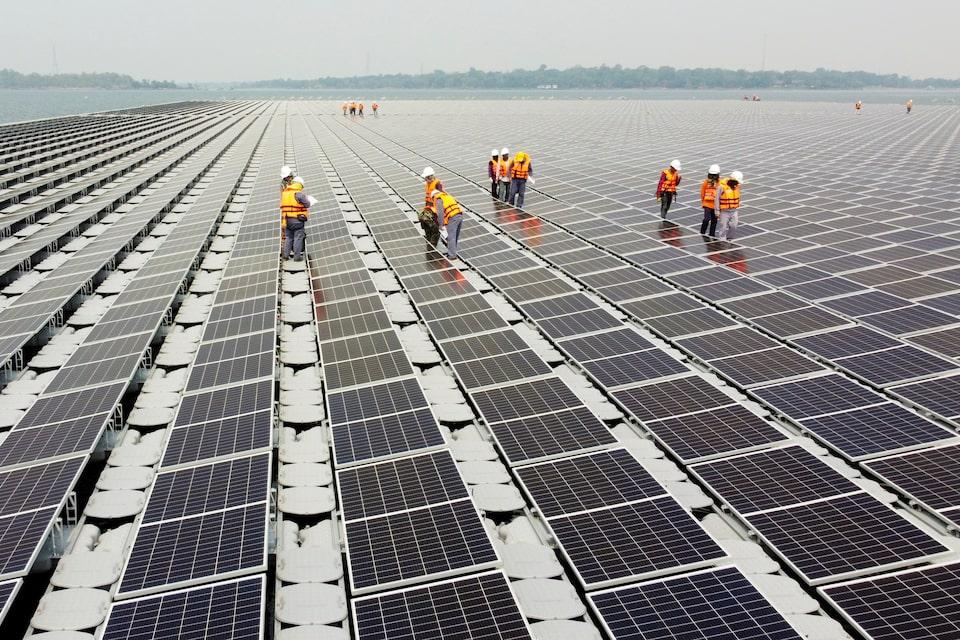
Tariffs target major Chinese firms like Jinko Solar and Trina Solar Tariffs go as high as 3,500% International Trade Commission to vote on industry harm in June April 21 (Reuters) - U.S. trade officials finalized steep tariff levels on most solar cells from Southeast Asia, a key step toward wrapping up a year-old trade case in which American manufacturers accused Chinese companies of flooding the market with unfairly cheap goods. The case was brought last year by Korea's Hanwha Qcells (000880.KS) , opens new tab, Arizona-based First Solar Inc (FSLR.O) , opens new tab and several smaller producers seeking to protect billions of dollars in investments in U.S. solar manufacturing. Sign up here. The petitioner group, the American Alliance for Solar Manufacturing Trade Committee, accused big Chinese solar panel makers with factories in Malaysia, Cambodia, Thailand and Vietnam of shipping panels priced below their cost of production and of receiving unfair subsidies that make American goods uncompetitive. The tariffs unveiled on Monday vary widely depending on the company and country, but were broadly higher than the preliminary duties announced late last year. Combined dumping and countervailing duties on Jinko Solar products from Malaysia were among the lowest at 41.56%. Rival Trina Solar's products from its operations in Thailand face tariffs of 375.19%. Neither Jinko nor Trina were immediately available for comment. Products from Cambodia would face duties of more than 3,500% because its producers elected not to cooperate with the U.S. probe. "These are very strong results," Tim Brightbill, an attorney for the U.S. manufacturing group, said on a call with reporters. "We are confident that they will address the unfair trade practices of the Chinese-owned companies in these four countries, which have been injuring the U.S. solar manufacturing industry for far too long." The threat of tariffs on countries that supplied more than $10 billion of solar products to the United States last year, accounting for the vast majority of domestic supplies, has caused a dramatic shift in the global solar trade. Imports from the four targeted countries this year are a fraction of what they were a year ago, while shipments of panels from nations like Laos and Indonesia are on the rise. Critics of the effort, including the Solar Energy Industries Association (SEIA) trade group, have said tariffs would harm U.S. solar producers because they would raise prices on the imported cells that are assembled into panels by American factories. Those facilities have been on the rise since a new subsidy for clean energy manufacturing was created in 2022. SEIA officials were not immediately available for comment. In order for the tariffs to be finalized, the International Trade Commission must vote in June on whether the industry was materially harmed by the dumped and subsidized imports. https://www.reuters.com/sustainability/climate-energy/us-commerce-dept-finalizes-tariff-rates-solar-goods-southeast-asia-2025-04-21/
2025-04-21 21:15
HOUSTON, April 21 (Reuters) - A U.S. federal judge on Monday confirmed a $3.7 billion offer by Contrarian Funds' affiliate Red Tree Investments as the starting bid in an auction of shares in the parent of Venezuela-owned refiner Citgo Petroleum to pay creditors and bondholders, according to a court filing. The offer, which had been recommended by a court officer overseeing the auction, unleashed a battle among 16 creditors seeking to cash proceeds from the auction, with some supporting the bid because it includes a payment agreement with holders of a bond issued by Citgo's ultimate parent, Caracas-headquartered PDVSA, and others saying it was too low. Sign up here. A consortium led by miner Gold Reserve (GRZ.V) , opens new tab, which had submitted a $7.1 billion rival bid, other creditors and lawyers representing Venezuela in the eight-year-long case in Delaware filed objections to Red Tree's bid, which were overruled by U.S. District Judge Leonard Stark. "Red Tree's bid constitutes the best balance of the evaluation criteria, which may be fairly summarized as price and certainty of closing," Stark said in his decision, adding that the offer should encourage competition. The judge asked court officer Robert Pincus to propose a period for topping off Red Tree's offer, which is expected to lead to the selection of a winning bid in the auction, whose final hearing is scheduled for July. Pincus was instructed by the judge to place "greater emphasis on price and lesser emphasis on certainty" in his final bid recommendation. In a previous bidding round last year, most creditors rejected a $7.3 billion offer by an affiliate of hedge fund Elliott Investment Management due to conditions included. Choosing Red Tree's bid as stalking horse this time is expected to encourage competing proposals to pay up to $3 billion to the holders of PDVSA's 2020 bonds, which were collateralized with Citgo equity. Citgo has been valued at between $11 billion and $13 billion, with final offers in the auction expected to remain below $8 billion. The more that is paid to the bondholders, the less that will be left to distribute to other creditors, which include foreign oil producers, mining companies and industrial conglomerates whose Venezuelan assets were expropriated. https://www.reuters.com/business/energy/us-judge-confirms-red-trees-offer-starting-bid-citgo-parents-shares-auction-2025-04-21/
2025-04-21 21:13
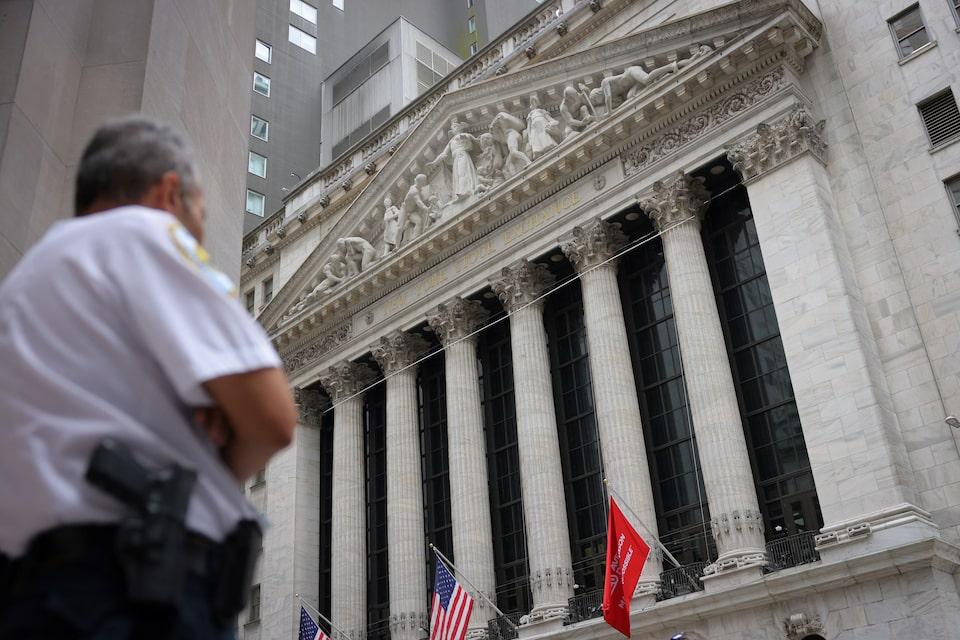
ORLANDO, Florida, April 21 (Reuters) - TRADING DAY Making sense of the forces driving global markets Sign up here. By Jamie McGeever, Markets Columnist America's 'emerging market tendencies' If there's an upside for U.S. markets to President Donald Trump's verbal tirade against Federal Reserve Chair Jerome Powell, it's not immediately obvious - Wall Street, the dollar and long-dated Treasuries all tanked on Monday, and investors are bracing for further volatility. Gold, the yen and key European currencies all rose sharply. But with the credibility of U.S. policymaking and governance at the root of the market turbulence, Treasuries and the dollar are longer part of that club of core 'safe haven' assets. More on that below, but first, a round-up of Monday's main market moves. I'd love to hear from you, so please reach out to me with comments at [email protected] , opens new tab. You can also follow me at @ReutersJamie , opens new tab and @reutersjamie.bsky.social , opens new tab. If you have more time to read today, here are a few articles I recommend to help you make sense of what happened in markets. Today's Key Market Moves Trump pummels Powell The U.S. President is known more for doubling down than backing down, so in that sense his renewed attacks on Fed Chair Powell should come as no surprise. But they are still no less astonishing for that. In a pointed post on his Truth Social platform, Trump said the U.S. economy is headed for a slowdown "unless Mr. Too Late, a major loser, lowers interest rates NOW." It is the latest in a series of criticisms that investors see as blatant attempts at political interference with the monetary policy setting process, and direct attacks on the central bank's independence. Investors are understandably spooked. Economist Phil Suttle says the twin selloff in Treasuries and the dollar suggest U.S. markets are "giving off distinct emerging market tendencies," while Callie Cox at Ritholtz Wealth Management notes that U.S. markets are on the cusp of a cross-asset drop not seen for 35 years. Cox calculates that the last time the S&P 500 was down 8.5%, the dollar was lower, and the 10-year Treasury yield rose in the same calendar month was August 1990. The S&P 500's bounce off its lows late on Monday means the index is currently down 8.1% this month, so we're not quite there yet. But it's close, and in the current climate, few would bet against it. The clearest winner in this turbulence is gold. Since hitting a post-'Liberation Day' low of $2,955 an ounce on April 7, bullion has risen 15% through $3,400/oz. What appeared to be extremely bullish forecasts of $3,500/oz earlier this year no longer seem so outlandish. Beyond Trump's spat with Powell, investors are also trying to navigate a global trade war. Trump's recent 90-day pause in many U.S. tariffs offered welcome relief, but trade could come back to haunt markets this week as hundreds of global finance leaders descend on Washington for the semi-annual gatherings of the International Monetary Fund and World Bank Group. Dollar would be biggest casualty if Trump fires Fed Chair If U.S. President Donald Trump wants a weaker dollar, threatening to fire Federal Reserve Chair Jerome Powell is a sure-fire way of getting it. But rarely in markets, economics and policymaking has the phrase "be careful what you wish for" ever been more apt. Trump's frustration with Powell for not lowering interest rates goes back to his first term in the White House, but his latest verbal attacks mark an escalation that could quickly turn a dollar slump into a potentially catastrophic rout. That's not hyperbole. The dollar is down 9% this year and has lost almost 6% of its value this month alone, a slide that accelerated when Trump's "Liberation Day" tariffs threw markets into a downward spiral of uncertainty and confusion. The dollar's decline this year has wiped out all of last year's gains, which is quite a feat considering the tsunami of capital inflows as investors around the world plowed trillions into Wall Street on the back of the "U.S. exceptionalism" story. Measured against a basket of major currencies, the dollar is on track for its steepest monthly decline since the Global Financial Crisis of 2007-09, and its eighth biggest since the era of free-floating exchange rates was introduced more than 50 years ago. Excluding the GFC, the last time the dollar fell this much in a calendar month was in 1985, just before five countries agreed to weaken what was legitimately an overvalued dollar via the famed "Plaza Accord" in September of that year. The scale of dollar selling underway now is historic, and worryingly for policymakers, it appears to be rooted in concern about the direction and credibility of U.S. policymaking. There's almost nothing that could undermine credibility in a country's economic policymaking – and its currency – more than forcibly removing the head of the central bank: Even in the United States and even the dollar. Or perhaps, especially in the U.S. and especially the dollar, because of the outsized role both play in the global financial system. Former Boston Fed President Eric Rosengren put in plainly on Monday when he wrote on the social media platform X: "Unless the goal is to make the US trade like a third-world country, threatening Federal Reserve independence only makes the US less attractive to foreign investors." POLYMARKET ODDS Of course, the doomsday scenario may be avoided. Trump could back down or soften his stance, Powell might decide to voluntarily step down to limit the damage, or markets could take the view that his replacement may not be so bad after all. But right now, there's little to suggest any of those scenarios will play out. In the near term, Powell's exit would probably prompt an immediate, dovish repricing of the Fed's rate outlook. Traders currently expect the Fed to cut interest rates by 100 basis points this year to 3.25-3.50%, but that's with Powell attempting to balance growth concerns with any rising price pressures. A Fed more in tune with Trump's thinking would tilt that balance in the direction of more easing. But that's only part of the story because continued dollar weakness wouldn't be welcomed by other countries, whose currencies would be rising in value against the greenback. Moreover, shattered faith in the dollar would risk unleashing tremors that could rip through global markets in unexpected ways. Official intervention would surely come at some point. But would it succeed? "Fending off a speculative attack (on the dollar) would be challenging," warns economist Phil Suttle, even for the Fed, as U.S. rates would probably be falling in such a fevered "risk off" environment. Redrawing the world's economic architecture is one of Trump's economic goals. Political interference in the central bank, unmooring inflation expectations and torpedoing the world's faith in the dollar would certainly do that, but it's a high price to pay. Online prediction market Polymarket is currently attaching a 19% chance to Powell getting fired by the end of this year, up from around 15%, where it has hovered for most of this year, but down from as high as 23% last week. Unless Trump has a sudden change of heart, this probability - and pressure on the dollar - is likely to rise. What could move markets tomorrow? Opinions expressed are those of the author. They do not reflect the views of Reuters News, which, under the Trust Principles , opens new tab, is committed to integrity, independence, and freedom from bias. Trading Day is also sent by email every weekday morning. Think your friend or colleague should know about us? Forward this newsletter to them. They can also sign up here. https://www.reuters.com/markets/global-markets-trading-day-graphics-2025-04-21/
2025-04-21 21:08
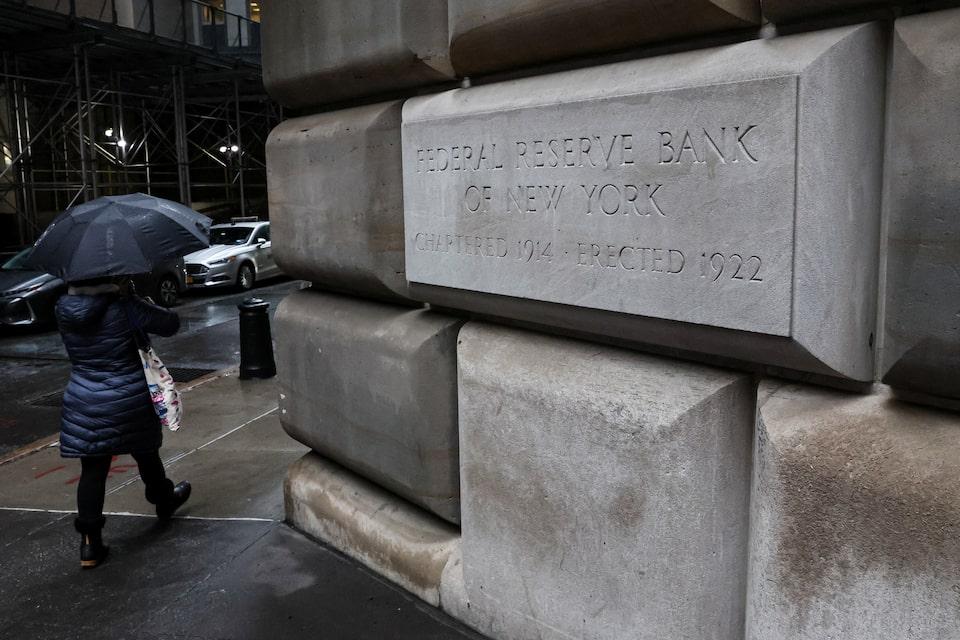
April 21 (Reuters) - Anna Nordstrom was tapped Monday as the permanent head of the Federal Reserve Bank of New York's Markets Group, a role she takes on immediately, the bank said in a press release on Monday. Nordstrom , opens new tab, who has been with the New York Fed since 2008, had been serving as interim leader of the Markets Group since December after then Markets chief Michelle Neal announced her resignation, which took effect in March. Sign up here. Before assuming her role in the Markets Group, Nordstrom held a number of roles in the bank's work on financial markets. She had been since 2023 the Head of the Domestic and International Markets function under the Markets group. Nordstrom also led for 15 years the New York Fed's International Markets function. She has also held other international roles, including at the European Central Bank, the International Monetary Fund, as well as the Central Bank of Sweden. In a statement, New York Fed President John Williams said Nordstrom "is a dedicated public servant who applies her keen understanding of financial markets and operations, and her decades of engagement with central banks and market participants around the world to help drive our success." The bank's Markets Group oversees a critical range of central bank operations, interfacing directly with financial markets and overseeing the implementation of monetary policy. The direct management of the monetary policy work, including directing changes in short-term rates and as well dealing with issues around the central bank's massive $6.8 trillion balance sheet, is done by Roberto Perli, manager of the Fed's System Open Market Account. Nordstrom comes to her role as the Fed is facing a wide range of challenges. It's being pressured by President Donald Trump to cut interest rates even as inflation is above the 2% target, while the president's trade agenda is widely expected to push up price pressures and unemployment while depressing growth. At the same time, financial market have been undergoing substantial volatility due to political developments, and many have worried whether the trouble will require the Fed to intervene in markets to stabilize trading. So far, top central bankers like Chairman Jerome Powell see orderly trading despite price declines, lowering odds of imminent emergency action. https://www.reuters.com/business/finance/ny-fed-appoints-anna-nordstrom-markets-group-chief-2025-04-21/
2025-04-21 21:00
April 21 (Reuters) - Canada's commodity-heavy main stock index closed down on Monday, led by a decline in energy shares, as tensions over U.S. President Donald Trump's criticism of Federal Reserve Chair Jerome Powell spilled into the Toronto Stock Exchange. The benchmark S&P/TSX Composite Index (.GSPTSE) , opens new tab closed down 0.7% at 24,008.86 points, snapping its five-session winning streak. Sign up here. Uranium shares were particularly hard-hit, with shares of leading uranium mining companies falling between 5% and 10%. Energy Fuels Inc , a uranium and rare earths-focused miner, fell 10% over tariff worries and curbs by China on rare earths exports. Denison Mines (DML.TO) , opens new tab, a Saskatchewan-based miner, closed 7% lower and Nexgen Energy (NXE.TO) , opens new tab, another uranium miner, fell 6%. "There is definitely overhang on the (uranium) sector and a lot of it has to do with getting some clarity with respect to how tariffs were going to impact the uranium market in the United States," said John Ciampaglia, chief executive officer of Sprott Asset Management. Monday's gainers were gold miners, which continued their green streak as spot gold price broke above the $3,400/oz mark. "The TSX continues to outperform the S&P 500 this year, but it is not immune to what is going on south of the border," said Angelo Kourkafas, investment strategist at Edward Jones Investments. The Canadian market tracked a decline in Wall Street's main indexes, as the Trump administration's statement about considering options to fire Powell, a day after Trump's criticism, fueled concerns about the central bank's autonomy. Canadian government 10-year bond yields rose 5.1 basis points to 3.188%, also tracking its U.S. counterpart. In Canada, nine of the 11 major sectors traded in the red. The healthcare sector (.GSPTTHC) , opens new tab led losses with a 4% fall. Pharmaceutical firm Bausch Health (BHC.TO) , opens new tab fell 8%. The heavy-weight energy stocks (.SPTTEN) , opens new tab dropped more than 1% as oil prices fell after nuclear talks between the U.S. and Iran showed progress. Canadian retail sales data later this week will offer insights into consumer spending patterns amid the trade war. This is also the final week of campaigning before Canada's election on April 28, with Prime Minister Mark Carney pledging a new economic order that is less reliant on the U.S. https://www.reuters.com/world/china/tsx-futures-fall-us-china-trade-war-heats-up-2025-04-21/