2025-04-21 20:31
ORLANDO, Florida, April 21 (Reuters) - If U.S. President Donald Trump wants a weaker dollar, threatening to fire Federal Reserve Chair Jerome Powell is a sure-fire way of getting it. But rarely in markets, economics and policymaking has the phrase "be careful what you wish for" ever been more apt. Trump's frustration with Powell for not lowering interest rates goes back to his first term in the White House, but his latest verbal attacks mark an escalation that could quickly turn a dollar slump into a potentially catastrophic rout. Sign up here. That's not hyperbole. The dollar is down 9% this year and has lost almost 6% of its value this month alone, a slide that accelerated when Trump's "Liberation Day" tariffs threw markets into a downward spiral of uncertainty and confusion. The dollar's decline this year has wiped out all of last year's gains, which is quite a feat considering the tsunami of capital inflows as investors around the world plowed trillions into Wall Street on the back of the "U.S. exceptionalism" story. Measured against a basket of major currencies, the dollar is on track for its steepest monthly decline since the Global Financial Crisis of 2007-09, and its eighth biggest since the era of free-floating exchange rates was introduced more than 50 years ago. Excluding the GFC, the last time the dollar fell this much in a calendar month was in 1985, just before five countries agreed to weaken what was legitimately an overvalued dollar via the famed "Plaza Accord" in September of that year. The scale of dollar selling underway now is historic, and worryingly for policymakers, it appears to be rooted in concern about the direction and credibility of U.S. policymaking. There's almost nothing that could undermine credibility in a country's economic policymaking – and its currency – more than forcibly removing the head of the central bank: Even in the United States and even the dollar. Or perhaps, especially in the U.S. and especially the dollar, because of the outsized role both play in the global financial system. Former Boston Fed President Eric Rosengren put in plainly on Monday when he wrote on the social media platform X: "Unless the goal is to make the US trade like a third-world country, threatening federal reserve independence only makes the US less attractive to foreign investors." POLYMARKET ODDS Of course, the doomsday scenario may be avoided. Trump could back down or soften his stance, Powell might decide to voluntarily step down to limit the damage, or markets could take the view that his replacement may not be so bad after all. But right now, there's little to suggest any of those scenarios will play out. In the near term, Powell's exit would probably prompt an immediate, dovish repricing of the Fed's rate outlook. Traders currently expect the Fed to cut interest rates by 100 basis points this year to 3.25-3.50%, but that's with Powell attempting to balance growth concerns with any rising price pressures. A Fed more in tune with Trump's thinking would tilt that balance in the direction of more easing. But that's only part of the story because continued dollar weakness wouldn't be welcomed by other countries, whose currencies would be rising in value against the greenback. Moreover, shattered faith in the dollar would risk unleashing tremors that could rip through global markets in unexpected ways. Official intervention would surely come at some point. But would it succeed? "Fending off a speculative attack (on the dollar) would be challenging," warns economist Phil Suttle, even for the Fed, as U.S. rates would probably be falling in such a fevered "risk off" environment. Redrawing the world's economic architecture is one of Trump's economic goals. Political interference in the central bank, unmooring inflation expectations and torpedoing the world's faith in the dollar would certainly do that, but it's a high price to pay. Online prediction market Polymarket is currently attaching a 19% chance to Powell getting fired by the end of this year, up from around 15%, where it has hovered for most of this year, but down from as high as 23% last week. Unless Trump has a sudden change of heart, this probability - and pressure on the dollar - is likely to rise. (The opinions expressed here are those of the author, a columnist for Reuters.) https://www.reuters.com/markets/currencies/dollar-would-be-biggest-casualty-if-trump-fires-fed-chair-mcgeever-2025-04-21/
2025-04-21 20:28
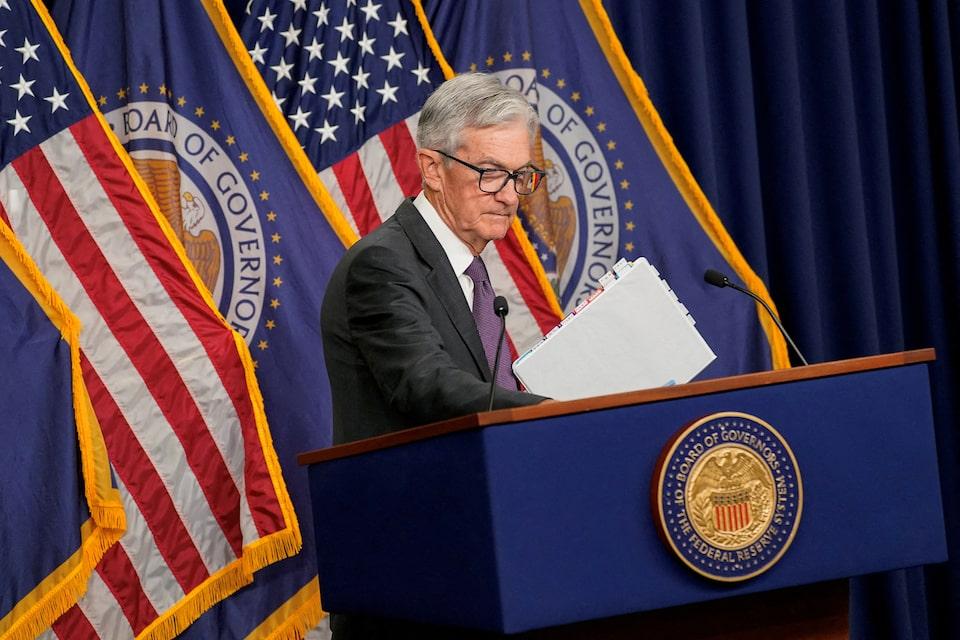
April 21 (Reuters) - Wall Street stocks skidded on Monday after U.S. President Donald Trump doubled down on attacks against Federal Reserve Chair Jerome Powell, amplifying concerns about the central bank's autonomy and rattling markets. Trump repeated his criticism of Powell, saying in a Truth Social post that the economy could slow down unless interest rates are lowered immediately. That followed comments by White House economic adviser Kevin Hassett on Friday that Trump and his team would study if firing Powell was an option. Sign up here. Trump's continued criticism of the Fed chair has heightened worries about the central bank's ability to independently formulate monetary policy in the world's largest economy, undermining investor confidence in U.S. assets already diminished by Trump's tariffs. MARKETS: The S&P 500 (.SPX) , opens new tab closed down 2.36%, after steadying along with the other indexes from losses steeper than 3%, in markets thinned by the absence of numerous overseas markets that remained closed for Easter. The Nasdaq Composite (.IXIC) , opens new tab fell 2.55% and the Dow Jones Industrial index fell 2.48%. The U.S. dollar index was down 0.41% and selling of the 10-year Treasury note pushed its yield up 8.2 basis points to 4.4087%. COMMENTS: CHRISTIAN SALOMONE, CHIEF INVESTMENT OFFICER, BALLAST ROCK PRIVATE WEALTH, CHARLESTON, SOUTH CAROLINA “The market is saying that it doesn’t necessarily need lower interest rates, but that it does need stability and certainty regarding economic and political policies. What we have now, with on again/off again tariffs, is extremely counterproductive. The market also is coming to the realization that negotiating with 90 countries in 90 days is just rhetoric; typically it takes 18 months or more to hammer out this kind of multidimensional trade deal. For now, the market is waiting beside the phone to see if there’s any progress made on trade deals and tariffs; if there is, it could snap back. If not, if the signals are that talks aren’t bearing fruit, well, that’s not going to be good.” RAFIA HASAN, CHIEF INVESTMENT OFFICER, PERIGON WEALTH MANAGEMENT LLC, CHICAGO “As long as we’re in the midst of this 90-day pause on tariffs, and there continues to be this uncertainty, this kind of selloff is just what we have to expect. Tariffs is ultimately what will affect earnings, and the market, although to what extent no one knows. And now there is this new element added to it, the president’s criticism about Jerome Powell not cutting rates. It’s not so much about that criticism as the assault on another institution that is unnerving investors.” STUART KATZ, CHIEF INVESTMENT OFFICER, ROBERTSON STEPHENS, SAN FRANCISCO “President Trump’s threat to fire Fed Chair Powell adds a new vector of uncertainty to the mix. It’s certainly unhelpful, since it’s hard to calculate a credit spread or earnings multiple to a stream of income when there are tariff threats, threats to remove a Fed chair and as a result, threats to economic growth. Companies, consumers and investors can all adapt to uncertainty, but not when the rules of the playing field are dynamically changing at such a fast pace. We don’t need to return to the world that existed prior to January 2025, just have some stability with policies. Right now, the market is feeling its way through the dark and doesn’t know quite how to behave or react to any news.” NATE GARRISON, CHIEF INVESTMENT OFFICER, WORLD INVESTMENT ADVISORS, WASHINGTON, IOWA “The theme of the market for the last several weeks has been uncertainty. As uncertainty increases, the market goes in the other direction and for investors, it’s just easier to take some chips off the table. Then, over the weekend, we got no good news, in the form of profess on tariffs, but we heard more about Trump wanting to fire Powell. He has been such a steady hand at the Fed with a consistent approach to managing policy and reacting to the economy that has provided a lot of comfort, so just the threat of removing him sends a bit of a shudder up peoples’ spines.” BRIAN NICK, MANAGING DIRECTOR & HEAD OF PORTFOLIO STRATEGY, NEWEDGE WEALTH, STANFORD, CT “It’s not good when you have inflation, interest rates and the dollar all lower on the same day, over the same week and the same month. That kind of pattern tends to occur in emerging markets; it doesn’t happen in the United States. It’s a sign that people don’t want to hold your currency any more and that even your bonds aren’t appealing. “This is the first day we’ve had a selloff this big without major tariff news. But I’m actually oddly encouraged by some of what we’re hearing the president say about Powell now. He seems to be pivoting from wanting to fire him, which would be remarkably disruptive, to preparing to blame him for whatever the fallout is from all these policies. Also, while if the president fires Jerome Powell it would be incredibly disruptive and would lead to a further steepening of the yield curve because investors would conclude that a politicized Fed can no longer be trusted to manage inflation, I think Powell could still stay on as a member of the FOMC. Then, too, the FOMC is not a dictatorship: removing Powell wouldn’t change the fact that other members might still vote along the same lines. Someone may have pointed out here to the president that a firing might cause more problems than it solves.” KRISTIAN KERR, HEAD OF MACRO STRATEGY, LPL FINANCIAL, Charlotte, NORTH CAROLINA (by email) "The decline can be attributed to a mix of the absence of positive tariff updates over the weekend, Trump's continued comments on Fed independence, and the U.S. being one of the few major markets open on Monday. With trading volume generally light, the lack of liquidity is probably amplifying the sell-off." DUSTIN REID, CHIEF STRATEGIST, FIXED INCOME, MACKENZIE INVESTMENTS, TORONTO “The market is feeling extremely fragile right now, with the uncertainty surrounding tariffs as a backdrop. So that’s why you can see the market selling off on news about Fed independence and Powell – and not just the stock market, but across assets, in the bond and the foreign exchange markets as well. Broadly, global investors are moving away from being overweight US assets. We’re definitely looking at making more structural changes to our portfolio than we normally would on these developments, but so far we haven’t done anything more than increase our risk hedges over the last weeks or months.” ADAM SARHAN, CHIEF EXECUTIVE, 50 PARK INVESTMENTS, NEW YORK "The latest headline du jour is Trump is unhappy with Powell's performance, and it is creating more uncertainty... in a weak environment. "If this is a strong bull market and we're going up every single day, it's a different environment. "If you step back and look at the market, you've been in a downtrend since the end of February. So, you had a big move down, and then over the last 2-1/2 (to) three weeks you moved sideways... The inability to rally illustrates how weak the market is right now. The fact that we're down so much today after a long weekend tells me, ok, investors went into the weekend, they looked at the situation, ad they see more uncertainty, not less uncertainty. "Clearly investors are spooked, and fear is taking over." ERIC KUBY, CHIEF INVESTMENT OFFICER, NORTH STAR INVESTMENT MANAGEMENT CORP, CHICAGO "It's really two major stories pushing the market lower. One is the lack of any trade deals over the weekend. I think that we all go home at night hoping that we wake up in the morning with some announcement of some relief on these tariffs and the trade deals as there are all these negotiations with various important nations. And every day that there are no deals struck to provide any relief, it creates continued anxiety that there aren't going to be any reasonable deals struck and that these policies as currently stated end up being what we have, which is going to be ... destructive for the economy." "The second issue is Trump's vocal desires that he is expressing to replace Jerome Powell because he won't lower interest rates, combined with Jerome Powell's (comments) last week that they are in no hurry to lower interest rates while they're waiting to see what sort of inflationary impact the tariffs have. So there's this terrible stalemate there and concern that there will be some sort of action taken to replace Powell, which would create a real panic in the dollar." JACK ABLIN, CHIEF INVESTMENT OFFICER, CRESSET CAPITAL, CHICAGO “The only new news today that could have triggered this kind of selloff is the fact that investors are worried about Fed independence. If the president puts his own person in, and lowers rates against a backdrop of rising inflation – we’d see a continuation of what we’re experiencing now. Unfortunately, both stocks and the dollar are overvalued, which gives them room to fall more in this environment. The S&P 500, based on my calculations, is still 10 to 15% overdone, above fair market value.” JAMIE COX MANAGING PARTNER, HARRIS FINANCIAL GROUP, RICHMOND VIRGINIA "Markets are showing disapproval of a lack of progress on trade negotiations. In the absence of any firm commitments from any countries, markets take the fire first, ask questions later (approach.)“ https://www.reuters.com/business/finance/us-stocks-extend-slide-trump-harangues-powell-sp-500-down-3-2025-04-21/
2025-04-21 20:06
The LNG terminal to be connected to an existing pipeline Morocco looks to gas to diversify energy sources away from coal Morocco to add 15 GW of capacity by 2030, totalling an investment of $13 bln RABAT, April 21 (Reuters) - Morocco plans to issue, within a few days, an expression of interest for a liquefied natural gas terminal near the eastern Mediterranean city of Nador, Energy Minister Leila Benali said on Monday. "This week, we will be launching a call for the expression of interest to develop the first phase of the natural gas terminal in Nador," Benali told members of parliament. Sign up here. Morocco looks to natural gas to diversify energy sources away from coal, as it also pushes ahead with its renewable energy plan aiming to reach 52% of total installed capacity before 2030, from 45% currently. The new infrastructure will be linked to an existing pipeline that Morocco uses to import 0.5 billion cubic meters (bcm) of gas from Spanish terminals, she said. The terminal will be linked to industrial zones near the northwestern Atlantic cities of Kenitra and Mohammedia, she said, without offering further details. The new infrastructure will be a floating storage and regasification unit (FSRU) located in the currently under-construction deepwater Nador West Med port, Reuters had reported in May, citing an official from the ministry. The ministry was not immediately available to answer a Reuters request for comment. Morocco's natural gas needs are expected to increase to 8 bcm in 2027 from 1 bcm currently, according to ministry estimates. Separately, Morocco's electricity utility (ONEE) adopted, the same day, a 2025-2030 plan to increase its electricity installed capacity by 15 gigawatts (GW), including 13 GW from renewable sources, Benali said. This will be achieved for a total investment of 120 billion dirhams ($13 bln), she said. Currently, renewable energy capacity stands at 5.5 GW. https://www.reuters.com/sustainability/boards-policy-regulation/morocco-begin-tendering-process-lng-terminal-minister-2025-04-21/

2025-04-21 18:44
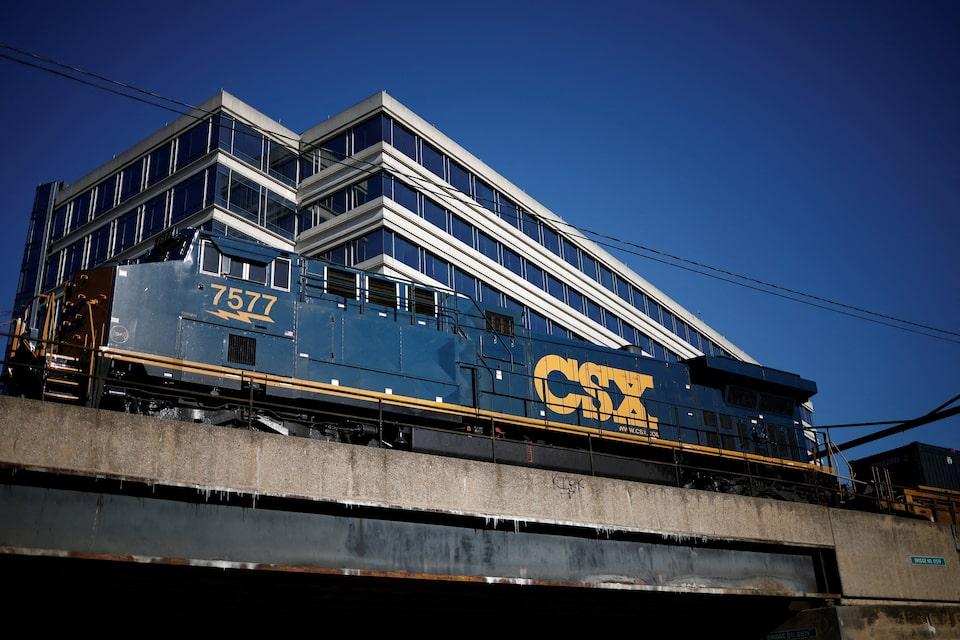
Lower court found CSX missed the statute of limitations Ships use Norfolk terminal to offload cargo onto trains WASHINGTON, April 21 (Reuters) - The U.S. Supreme Court declined on Monday to hear freight rail giant CSX's bid to revive its antitrust lawsuit accusing rival Norfolk Southern of illegally restricting access to a key East Coast terminal in Virginia, costing CSX hundreds of millions of dollars in lost profits. The justices turned away CSX's appeal of a lower court's ruling last year that the Jacksonville, Florida-based company sued too late, missing a four-year window to bring claims for U.S. antitrust law violations. CSX had argued the statute of limitations should not be applied in its lawsuit. Sign up here. CSX sued Norfolk Southern in 2018 in federal court in Virginia, accusing the rival shipper of conspiring with Norfolk & Portsmouth Belt Line Railroad to set an excessive fee for services at Virginia's Norfolk International Terminals, one of the most important East Coast terminals. Large international container ships use the Norfolk terminal to offload cargo onto trains and trucks for inland destinations. CSX in a statement on Monday expressed disappointment in the Supreme Court's decision not to take up the appeal but said the company is committed to ongoing efforts at a U.S. regulatory agency to secure what it called competitive rail access at the Norfolk terminal. Norfolk Southern in a statement said the Supreme Court has now put an end to what the company called a "lengthy, frivolous and meritless action." Norfolk Southern said it has worked for many years to ensure "commercially fair" access and use of the Norfolk terminal. Norfolk & Portsmouth Belt Line, which was also a defendant, is a small railroad that is majority-owned by Norfolk Southern and provides track and "switching" services at the terminal. CSX does not own tracks at the dock, and so it must pay for access. In the suit, it said that Norfolk Southern and Norfolk & Portsmouth Belt Line in 2009 set an artificially high track rate - $210 per rail car - that remains in place today. Norfolk Southern's advantage has allowed it to charge artificially higher prices to ocean carriers that rely on the Norfolk terminal, according to the CSX lawsuit. CSX said it has been barred from entering into profitable contracts with ocean shippers. CSX said Norfolk Southern's practice of allegedly overcharging for access to the terminal was continuing each day the fee remains in place, and so the four-year statute of limitations should not have been a bar to filing a lawsuit. The Richmond, Virginia-based 4th U.S. Circuit Court of Appeals in 2024 upheld a judge's dismissal of CSX's lawsuit. The 4th Circuit said Norfolk Southern's rail charges "didn't inflict new harm causing new injury to CSX within the limitations period." In its appeal to the Supreme Court, CSX said that the 4th Circuit ruling served to create an immunity shield that lets Norfolk Southern sidestep competition at the Norfolk terminal. In its filing to the Supreme Court, Norfolk Southern said CSX "sat on its hands" for nine years before filing a lawsuit. Norfolk Southern said the 4th Circuit correctly ruled that the 2009 date when the rate was set "was outside the statute of limitations, and that simply maintaining that rate was inaction that did not retrigger the statute of limitations on a daily basis." https://www.reuters.com/legal/us-supreme-court-rebuffs-csx-bid-revive-antitrust-suit-against-norfolk-southern-2025-04-21/
2025-04-21 18:13
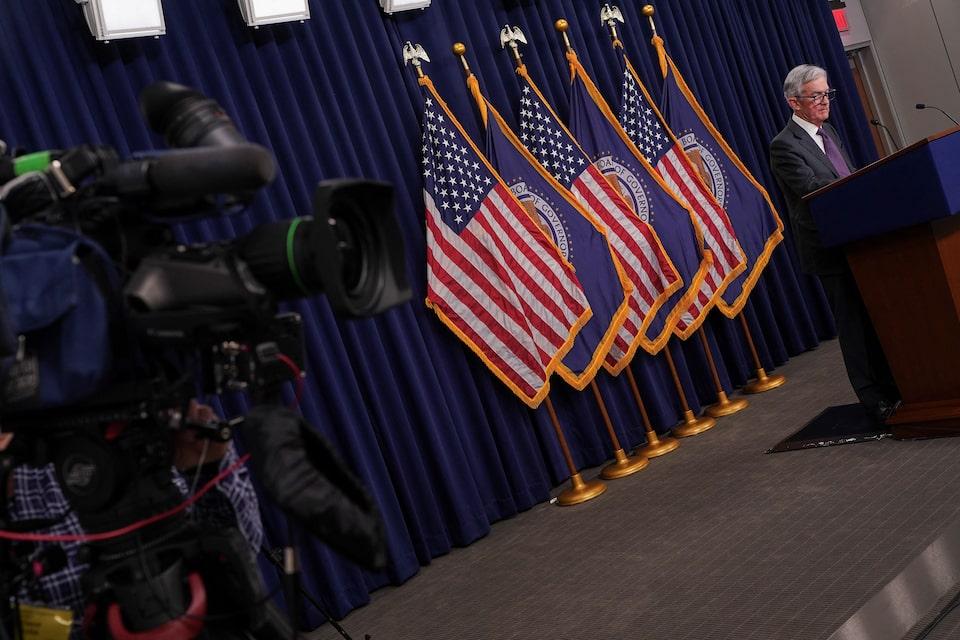
Trump says rates need to drop immediately Fed is waiting on rate decisions to be sure tariffs don't drive inflation higher Conference Board indicators point to slowing; stocks down, yields higher April 21 (Reuters) - The U.S. economy could slow unless interest rates are lowered immediately, President Donald Trump said on Monday, repeating his criticism of Federal Reserve Chair Jerome Powell, who says rates should not be lowered until it is clearer Trump's tariff plans won't lead to a persistent surge in inflation. "With these costs trending so nicely downward, just what I predicted they would do, there can almost be no inflation, but there can be a SLOWING of the economy unless Mr. Too Late, a major loser, lowers interest rates, NOW," Trump said in a post on Truth Social. Sign up here. The comments, and the administration's seemingly intensifying pressure on a Fed chair Trump has stated he would like to see gone, sent stock markets lower and bond yields higher as investors and analysts mulled the fallout should Trump ignite a fight over the Fed's monetary policy independence and try to remove Powell before the end of his term a little over a year from now. It's not clear Trump has the authority to do so, and even if successful the Fed's governance structure would give the remaining board members and regional bank presidents say over interest rate decisions - potentially forcing the White House into a deeper assault on the Fed's seven-member Board of Governors. Trump's repeated threats to fire Powell come as he tries to goad the Fed into quickly cutting interest rates to mitigate a widely expected economic slowdown and possible harm to the labor market due to his tariff and other policies, while Fed policymakers urge caution on concerns inflation, which remains above their 2% target, could be pushed higher by the import taxes. The Fed next meets on May 6-7 and is widely expected to hold the benchmark interest rate steady in the current 4.25% to 4.50% range. WEAKER OUTLOOK The growth outlook and overall sentiment have both been falling as Trump ratcheted up efforts to impose import taxes on goods from major U.S. trading partners and many core products, with top economists raising the estimated odds of a recession this year. The Conference Board's index of Leading Economic Indicators fell by 0.7% in March, and while still above recession levels "pointed to slowing economic activity ahead," said Justyna Zabinska-La Monica, senior manager, business cycle indicators, at The Conference Board, with consumer sentiment and manufacturing weakening and stock prices in decline. While inflation is expected to decline in upcoming readings, there is broad agreement as well that the import tariffs Trump plans to impose will drive it back to perhaps 4% or higher through the rest of the year. Fed officials say that while that price shock may prove temporary, allowing them to cut rates eventually, they worry it could lead to more persistent inflation that would require them to keep credit conditions tighter. Chicago Fed President Austan Goolsbee said in comments to CNBC on Monday that the central bank needed more time to see the net impact of Trump's policies. "The impact of tariffs on the macroeconomy could potentially be modest," Goolsbee said. "We don't know what the impact on the supply chain is going to be so I think we want to be a little more of a steady hand and try to figure out the through line before we're jumping to action." U.S. stocks, which opened lower Monday on investor worries about Trump's escalating attacks on Powell, slid further after the president's social media post, with the benchmark S&P 500 Index down 2% on the day. The rise in Treasury yields is a particularly sensitive point for the administration as it means higher mortgage, car loan and other financing rates for consumers, and more expensive credit conditions for companies. Long-term yields are set by market trading that can be influenced by but are ultimately independent of Fed decisions about where to fix the short-term benchmark it controls directly. https://www.reuters.com/business/trump-warns-economic-slowdown-unless-fed-cuts-rates-2025-04-21/
2025-04-21 18:05
WASHINGTON, April 21 (Reuters) - The U.S. Federal Trade Commission on Monday sued Uber Technologies (UBER.N) , opens new tab, accusing it of signing up some Uber One subscribers without their knowledge and making deceptive claims about the service. The service costs $9.99 a month and offers discounts on fees associated with Uber's ride-hailing and food-delivery apps. Sign up here. Uber falsely claimed that users would save about $25 a month through the service and deceived them about how easy it was to cancel, the FTC said in the lawsuit filed in San Francisco. "Americans are tired of getting signed up for unwanted subscriptions that seem impossible to cancel," FTC Chairman Andrew Ferguson said. "The Trump-Vance FTC is fighting back on behalf of the American people." Uber spokesperson Noah Edwardsen said the company does not sign up or charge customers without their consent. "We are disappointed that the FTC chose to move forward with this action, but are confident that the courts will agree with what we already know: Uber One's sign-up and cancellation processes are clear, simple, and follow the letter and spirit of the law," he said. Uber has tangled with the FTC several times in the past. In 2017 the ride-hailing company settled the FTC's allegations it had made deceptive privacy and data security claims. The following year it agreed to pay $20 million to settle the FTC's claims it exaggerated prospective earnings in seeking to recruit drivers. The company fended off criminal charges in 2022 in a settlement where it admitted that its employees had failed to notify the FTC about a 2016 data breach that affected 57 million passengers and drivers. https://www.reuters.com/sustainability/us-ftc-sues-uber-accusing-it-deceptive-practices-court-filing-2025-04-21/