2025-04-21 17:13
April 21 (Reuters) - United States Antimony Corp (UAMY.A) , opens new tab said on Monday it has restarted operations at its Madero smelter plant in Mexico, over a year after the critical mineral miner stopped activities in Latin America. WHY IT'S IMPORTANT In December last year, China banned exports to the U.S. of the critical minerals gallium, germanium and antimony, amid an escalating trade and tech war between the world's two biggest economies. Sign up here. China produced almost half of the global supply of antimony in 2023 and prices of the mineral have soared in the wake of its heavy export restrictions, disrupting global supply chains. U.S. President Donald Trump has also been pushing to boost domestic production of critical minerals such as antimony, to offset China's near total control of the sector. The mineral is widely used in ammunition, infrared missiles, nuclear weapons and night-vision goggles, as well as in batteries and photovoltaic equipment. CONTEXT Last year in March, United States Antimony had said it would discontinue all operational activities in Latin America and sell its subsidiary in Mexico. The decision was made following a review of the financial performance of those assets, the unit's negative cash flow and low antimony prices. WHAT'S NEXT The company said it has begun processing the first antimony ore acquired from international sources at the Madero smelter. The second and third shipments are also expected to arrive at the facility from next week onwards. U.S. Antimony said it aims to produce roughly 200 tons of antimony per month from the Madero smelter prior to the end of 2025. https://www.reuters.com/markets/commodities/us-antimony-restarts-mexico-smelter-plant-after-over-year-2025-04-21/

2025-04-21 16:54
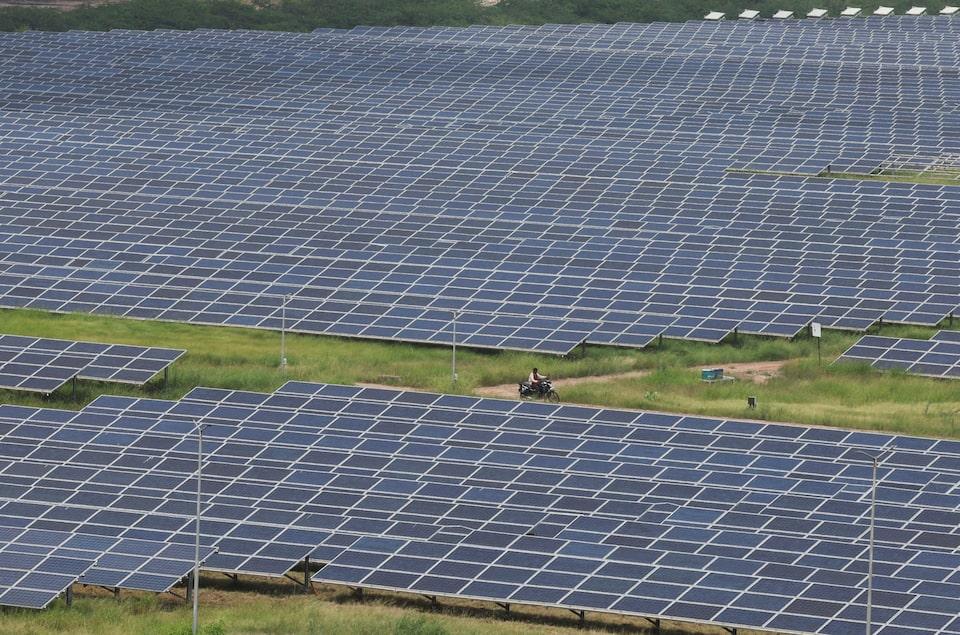
April 21 (Reuters) - India's Ministry of New & Renewable Energy (MNRE) has granted a nine-month extension for the commissioning of certain solar projects by two government agencies, pushing the deadline to the end of December 2025 due to multiple challenges, a document seen by Reuters showed. In a letter to the Solar Energy Corporation of India (SECI) and the Indian Renewable Energy Development Agency (INAR.NS) , opens new tab (IREDA), the MNRE cited limited availability of domestically made photovoltaic solar modules, transmission infrastructure issues, and tender-related delays as reasons for the extension. Sign up here. The SECI and IREDA had requested the extension for projects tendered under the federal government's Central Public Sector Undertaking (CPSU) Scheme Phase-II. The scheme aims to set up 12 gigawatts of solar projects by state-run entities, using domestically manufactured solar PV cells and modules, with financial support from the Indian government. The extension underscores the struggles faced by India's renewable energy sector as the country targets at least 500 GW of non-fossil power capacity by 2030, up from 172 GW currently. The sector is grappling with several obstacles, including weak demand for tenders, land acquisition challenges, delays in power purchase agreements and project cancellations. The country also fell short of its earlier goal of adding 175 GW of renewable energy capacity by 2022, with fossil fuels still accounting for more than two-thirds of total power generated last year. https://www.reuters.com/world/india/india-allows-extension-commissioning-certain-solar-power-projects-until-december-2025-04-21/
2025-04-21 12:38
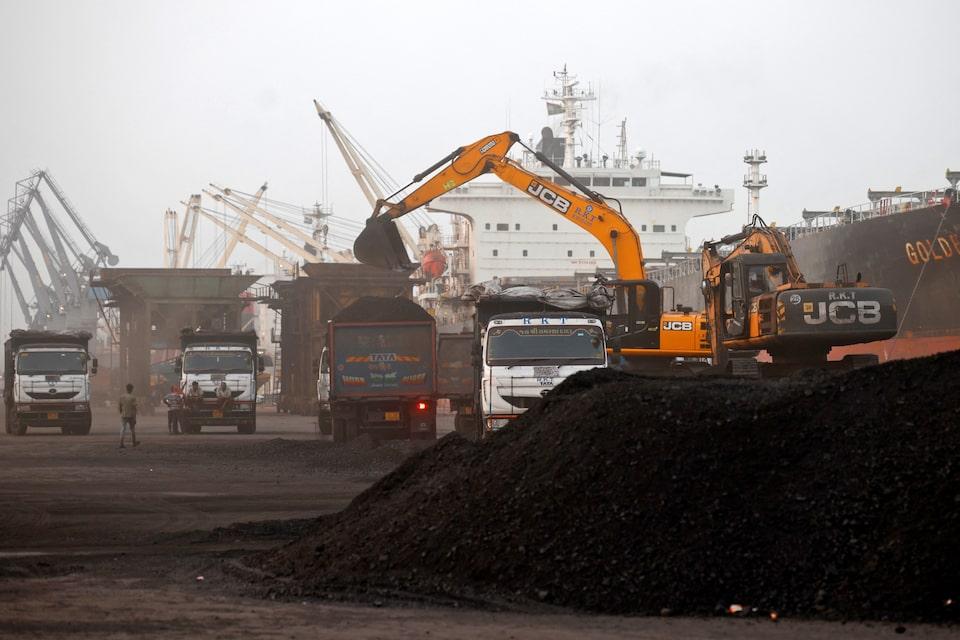
April 21 (Reuters) - Coal India (COAL.NS) , opens new tab, the country's top coal producer, will build a 1,600 megawatt coal-powered plant through a joint venture in the eastern state of Jharkhand at an investment of 165 billion rupees ($1.94 billion) to meet increasing power demand. The state-run company on Monday signed a non-binding memorandum of understanding with state-run power generator Damodar Valley Corporation for setting up the plant, which will have two 800 MW units and will be an expansion of an existing 500 MW plant. Sign up here. The state-run company is also building two thermal power plants at its coal pit-heads in the central Indian state of Madhya Pradesh with 660 MW capacity, and a 1,600 MW plant in the eastern state of Odisha, both due for completion by 2030. India aims to ramp up its thermal power capacity to meet growing domestic electricity demand even as it aims to increase non-fossil power capacity amid weak demand for tenders and project cancellations. Private companies such as Tata Power (TTPW.NS) , opens new tab, JSW Energy (JSWE.NS) , opens new tab, and the Adani Group are also eyeing coal power capacity additions. ($1 = 85.1350 Indian rupees) https://www.reuters.com/markets/commodities/coal-india-set-up-power-plant-joint-venture-2025-04-21/
2025-04-21 12:07
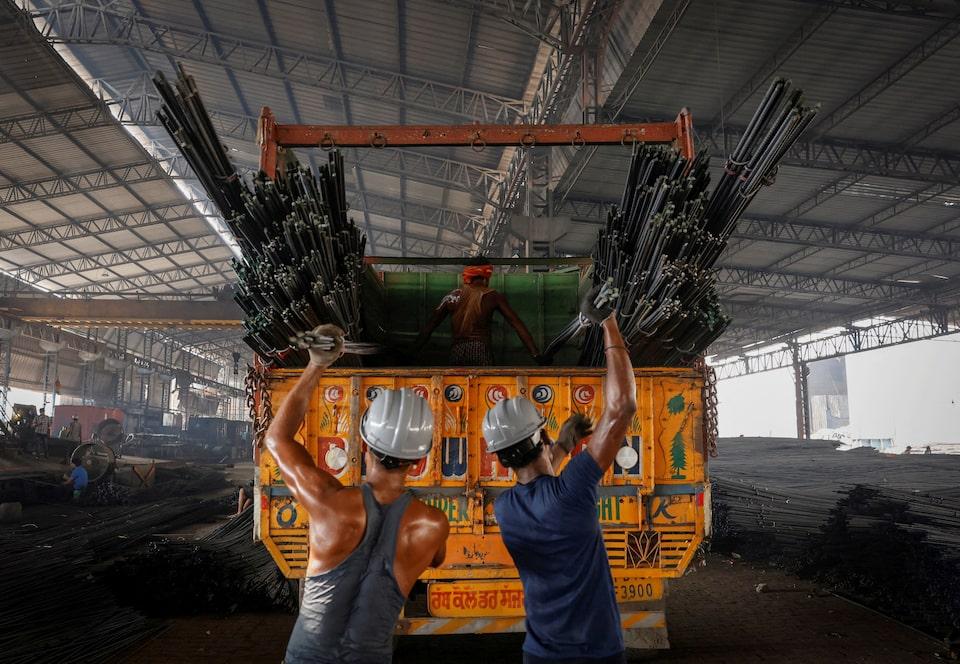
NEW DELHI, April 21 (Reuters) - India's infrastructure output (ININFR=ECI) , opens new tab grew 3.8% year-on-year in March on strong steel and cement production, government data showed on Monday. Infrastructure output, which tracks activity across eight sectors and makes up 40% of the country's industrial production, grew at a revised 3.4% in February, compared to the initial estimate of 2.9%. Sign up here. Cement output rose 11.6% in March, compared to a revised 10.8% increase in February, while steel production climbed 7.1% against a revised 6.9% advance a month earlier. Fertilizer production grew 8.8% compared with 10.2% in the prior month, while coal production gained 1.6% year-on-year compared to a 1.7% rise in February. Electricity generation was up 6.2% in March, against a revised 3.6% increase in the prior month, while refined oil products grew 0.2%, compared with 0.8% growth the month before. Meanwhile, crude oil output dropped 1.9% year-on-year in March, against a much steeper 5.2% drop in February, while natural gas production declined 12.7%, compared with a 6% drop in February. Infrastructure output rose 4.4% in the fiscal year 2024-25. https://www.reuters.com/world/india/indias-infrastructure-output-rises-38-on-year-march-2025-04-21/
2025-04-21 11:18
ERG formed task force to explore Kazakhstan's rare earth deposits Rare earth, other critical minerals a focus of US attention Kazakhstan to increase rare earth, rare metals output by 40% by 2028 Goldman Sachs may advise on the deal ERG says no negotiations on company's sale MOSCOW, April 21 (Reuters) - U.S. businessman James Cameron has offered to buy mining giant Eurasian Resources Group for $5 billion, a letter he sent to its board showed, as the company prepares to participate in a major expansion of Kazakhstan's rare earths output. However, ERG said in a statement on Monday that there were no negotiations on the company's sale. Sign up here. ERG, a Luxembourg-based producer of copper, cobalt, aluminium, and iron ore that is 40%-owned by the Kazakh government, said last year it had formed a task force to explore deposits of rare earth and rare metals in Kazakhstan. Those minerals have gained particular attention in recent months as U.S. President Donald Trump's administration seeks alternatives to China to supply its domestic industry as a trade war between the countries escalates. According to a source close to the company, talks between ERG and Cameron have been going on since the end of last year. Cameron shares a name with the Academy Award-winning film director, but the two are not related. But ERG's statement said, "In response to a number of media speculations in the course of the last few weeks, including publications about a Mr James Cameron's proposal to buy Eurasian Resources Group (ERG), Mr Shukhrat Ibragimov, Chairman of the ERG Board of Directors and its Chief Executive Officer, stated there are no negotiations on the sale of ERG. He said the company's management is fully committed to further consistent, sustainable development of the Group." The Kazakh government, and Cameron, once a board chairman of former FTSE 250 mining firm Petropavlovsk, did not comment. According to Cameron's letter to the ERG board, a copy of which was obtained by Reuters, Goldman Sachs is in preliminary talks to advise on the deal. "The financing will come from a combination of my own funds, as well as equity contributions from other investors in the United States, and possibly Australia and the Middle East," the letter said. Another source close to the transaction told Reuters the investor's interest in ERG is partly linked to Kazakhstan's potential in critical minerals exploration and mining. Kazakhstan aims to lift rare and rare earth metals output by 40% by 2028, with ERG seen taking a major role in the initiative. This month, Kazakhstan's government announced that its geologists had discovered a large rare earth deposit with estimated resources exceeding 20 million metric tons. Kazakhstan's Prime Minister Olzhas Bektenov said last year that data concerning the country's deposits of rare and rare earth metals, a state secret since Soviet times, is being gradually declassified. If confirmed, this discovery could position Kazakhstan among the top three holders of rare earth reserves globally, following China and Brazil. ERG once produced one-fifth of the world's gallium, a rare metal used in microchips and included on the U.S. list of critical materials. However, it ceased production after China increased its output of the metal in 2012. Beijing in December banned gallium exports to the U.S. after a crackdown by Washington on China's chip sector. In 2013, ERG was taken private in a $4.5 billion buyout by its three founders, who each owned approximately 20% of the company, along with the government. Last month, one of ERG's founders and its board chairman, Kazakh-Israeli businessman Alexander Mashkevich, passed away, leaving only one of the original founders, Patokh Chodiev, among the current shareholders. https://www.reuters.com/business/finance/us-investor-cameron-offers-5-billion-kazakh-mining-giant-erg-letter-shows-2025-04-21/
2025-04-21 11:08
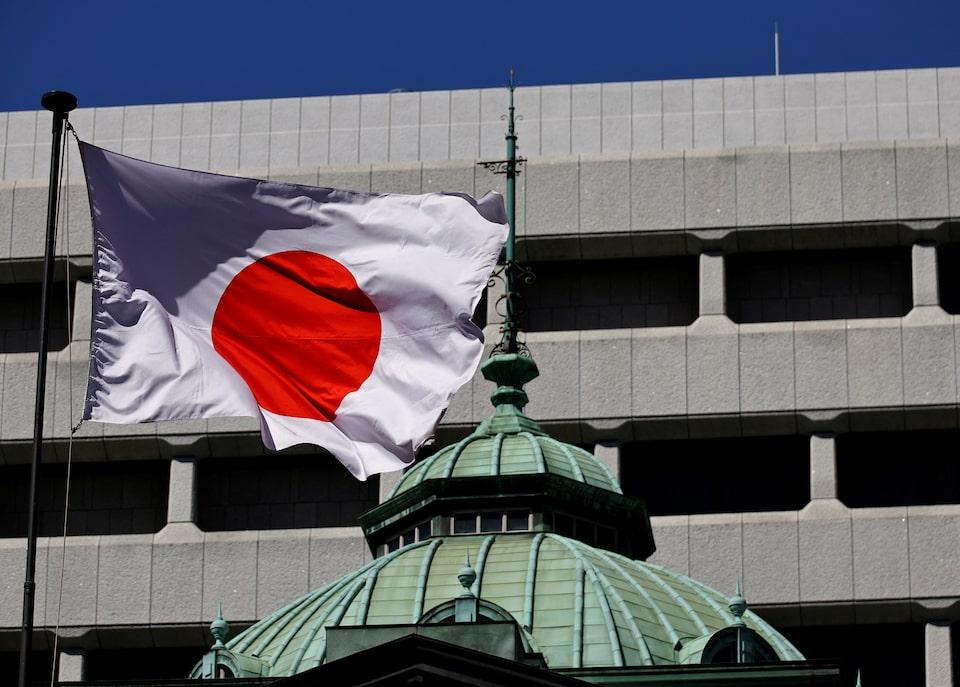
BOJ to maintain forecast of rising wages, inflation, sources say Board to cut growth forecast, warn of U.S. tariff risks BOJ widely seen keeping rates steady at April 30-May 1 meeting Curve ball could come in Japan-US finance leaders' talks TOKYO, April 21 (Reuters) - The Bank of Japan is expected to signal next week that risks from higher U.S. tariffs will not derail a cycle of rising wages and inflation seen as crucial to keep raising interest rates, said four sources familiar with its thinking. The assessment, to be included in its quarterly outlook report due on May 1, will underscore the BOJ's desire to keep alive market expectations of further interest rate hikes - even though the timing of its next move could be months away. Sign up here. "It's hard to predict the exact damage to the economy from (President Donald) Trump's tariffs at this stage," said one of the sources. "On the other hand, it's clear intensifying job shortages will pressure Japanese companies to keep hiking pay," the source said. "Risks have heightened, but probably not enough yet to overhaul the BOJ's baseline scenario of a moderate economic recovery," another source said. "Unlike during the COVID-19 pandemic, it's not as if demand has suddenly evaporated." The language is subject to change as there is no consensus within the BOJ on details of the report, which will not be finalised until closer to the April 30-May 1 meeting. Such a hawkish message may help Japan fend off criticism from Trump that Tokyo is keeping the yen artificially weak to give its exports a competitive trade advantage, some analysts say. At the two-day policy meeting ending on May 1, the BOJ will cut its economic growth forecasts and warn of escalating risks from Trump's sweeping tariffs that are set to dent global demand, the sources said. The central bank may also push back the expected timing for sustainably meeting its 2% inflation target, which was seen around the latter half of fiscal 2025 in current projections made in January, they said. But the BOJ will roughly maintain its view that a tight job market will prod firms to keep raising wages, the sources said. CURVE BALL With markets still volatile, the central bank is widely expected to keep short-term rates steady at 0.5% at the April 30-May 1 meeting. Still, many BOJ policymakers are wary of concluding that further rate hikes are completely off the table, given a lack of hard data on the hit from tariffs to the economy and uncertainty over the outcome of bilateral trade negotiations, they said. Given the unpredictable nature of Trump's comments and the outcome of bilateral trade talks, the BOJ's new estimates will be based on shaky assumptions that could change rapidly in the coming months, the sources say. "For the BOJ, the best approach now would be to sit tight, keep a low profile and wait for more clarity on developments," a third source said. "Coming up with a baseline forecast itself is so difficult this time," a fourth source said. A curve ball for the BOJ could come from this week's expected meeting in Washington between Japanese Finance Minister Katsunobu Kato and U.S. Treasury Secretary Scott Bessent, where currency rates are likely to be among key topics of debate. Trump - who unexpectedly joined the first round of bilateral trade talks last week and touted "big progress" - has indicated he wants the negotiations to include his accusations that Tokyo intentionally weakens its currency to give its exporters an unfair advantage. Bessent has also said he was looking forward to discussions with Japan on tariff, non-tariff barriers and exchange rates. Some analysts say the BOJ's ultra-low interest rates, and the slow pace at which it is pushing up borrowing costs, could come under attack by the U.S. for keeping the yen weak. Along with finance minister Kato, BOJ Governor Kazuo Ueda will be in Washington this week from Japan to attend the G20 finance leaders' gathering and the annual spring International Monetary Fund meetings. https://www.reuters.com/business/boj-likely-keep-rate-hike-signal-intact-despite-trump-tariff-risks-sources-say-2025-04-21/