2026-01-15 11:51
Jan 15 - What matters in U.S. and global markets today By Mike Dolan , opens new tab, Editor-At-Large, Finance and Markets Sign up here. Wall Street retreated on Wednesday, driven by declines in the "Magnificent 7" megacaps, as investors rotated from expensive technology stocks into value names, but blockbuster results on Thursday from world-leading chipmaker TSMC may calm the horses. Oil and precious metal prices also reversed course this morning, falling on tenuous signs that U.S. President Donald Trump might back down from his threats to take action in Iran. Oil dropped early on Thursday, gold slipped from its record high, and silver retreated from its fresh peak of $93.57 earlier in the session. I’ll get into all that and more below, but first, check out my latest column on whether the dollar’s big unwind is already running out of steam. And listen to the latest episode of the Morning Bid daily podcast. Subscribe to hear Reuters journalists discuss the biggest news in markets and finance seven days a week. Today's Market Minute * Speaking with Reuters in the Oval Office, U.S. President Donald Trump said Iran's clerical government may collapse, blamed Ukraine President Zelenskiy for the stalemate in Russia talks and dismissed Republican criticism of a probe of Fed Chair Powell. * Taiwanese chipmaker TSMC posted a forecast-smashing 35% jump in fourth-quarter profit to a record high as it signalled strong annual growth and further U.S. investment. * Simultaneous geopolitical flare‑ups have jostled oil prices, creating a treacherous environment for investors even as a large supply glut still looms over the market, notes ROI energy columnist Ron Bousso. * Nicolas Maduro’s ousting may mark the beginning of a broader U.S. attempt to realign Latin America geoeconomically, limiting Russia and China’s influence in the Western Hemisphere, argues Martin Vladimirov of the Center for the Study of Democracy. * While the U.S. CPI inflation report on Tuesday showed a slightly softer-than-expected annual increase in core prices, there's little reason for consumers or policymakers to cheer, writes ROI markets columnist Jamie McGeever. HEAD-SPINNING ROTATION Major U.S. equity indexes fell on Wednesday, as investors sought to rotate from frothy growth names into value. This was driven largely by declines in the “Mag Seven,” which were hit in part by Trump's announcement of a 25% tariff on some chip imports. Bank shares also dropped, as the industry has had a disappointing start to the earnings season this week. Ultimately, the main trend we’re seeing is a new year sector rotation. Even though high-flying tech dialed back yesterday, U.S. small caps continued to push ahead. What seems clear is that investors want to remain invested and have just become a bit choosier as to where they’re putting their money. The selloff extended into Asia trading on Thursday, with Japan’s Nikkei easing 0.9% after reaching an all-time high on Wednesday, as investors reduced exposure to chip and artificial intelligence-related stocks. Yet the promise of AI remains strong, as chipmaking juggernaut TSMC posted blockbuster results on Thursday, including a 35% rise in fourth-quarter profit to a record high. Invoking what it called the “AI mega trend”, the chipmaker said it expects a nearly 30% rise in revenue in 2026. This comes as it looks set to boost investment in the U.S. in return for an apparent reduction in tariff rates to 15% from 20%. The other major moves this morning were the declines in oil and gold prices after President Trump said he had been informed that Tehran’s killing of demonstrators was subsiding and that no plans were in place for executions. The dollar index steadied against major peers on Thursday, as Trump stated in a Reuters interview that he had no plans to fire Fed Chair Jerome Powell, days after his administration announced a criminal probe into the Fed Chair that drew broad condemnation. The recent slew of fairly healthy U.S. economic data has solidified expectations that the Fed will hold rates steady this month, though markets still expect two cuts this year, likely after Powell’s term ends in May. Whether today's apparent lull in safe-haven demand will have any staying power is an open question. Trump appears to be in wait-and-see mode concerning Iran, having still not ruled out the possibility of military action, his administration’s probe into Powell remains live, and global geopolitics are still fractious as the Trump administration refuses to backdown from its claim that it will acquire Greenland. Meanwhile, the Japanese yen also stabilized after falling to its weakest point against the U.S. dollar since July 2024 overnight. It recovered some of that ground amid warnings of possible bond-buying intervention by Japanese authorities. Japanese bond yields have also eased after reaching record peaks on speculation - which has now been confirmed - that Prime Minister Sanae Takaichi, who has supported massive fiscal stimulus, will call snap elections. Chart of the day Oil prices have been volatile in recent months amid spikes in geopolitical risk. They reached a three-month high of over $66 a barrel on Wednesday in light of U.S. President Donald Trump’s threats of intervention in Iran’s harsh crackdown on recent demonstrations. However, they dropped sharply on Thursday morning following President Trump's comments about the killings subsiding in Iran. Despite all of the geopolitical tensions, prices have remained rangebound in recent months thanks to rising global supply. The U.S. Energy Information Administration expects rises in global inventories of an average of 2.8 million barrels per day in 2026. Today's events to watch * U.S. initial jobless claims (8:30 AM EDT), November import/export prices (8:30 AM EDT), Treasury TIC data (4:00 PM EDT) * Philadelphia Federal Reserve January business survey (8:30 AM EDT), New York Federal Reserve January business survey (8:30 AM EDT) * U.S. corporate earnings: Goldman Sachs, Morgan Stanley, and BlackRock * Federal Reserve Board Governor Michael Barr, Richmond Federal Reserve President Tom Barkin, and Kansas Federal Reserve President Jeffrey Schmid all speak Want to receive the Morning Bid in your inbox every weekday morning? Sign up for the newsletter here. You can find ROI on the Reuters website , opens new tab, and you can follow us on LinkedIn , opens new tab and X. , opens new tab Opinions expressed are those of the author. They do not reflect the views of Reuters News, which, under the Trust Principles , opens new tab, is committed to integrity, independence, and freedom from bias. https://www.reuters.com/business/finance/global-markets-view-usa-2026-01-15/

2026-01-15 11:49
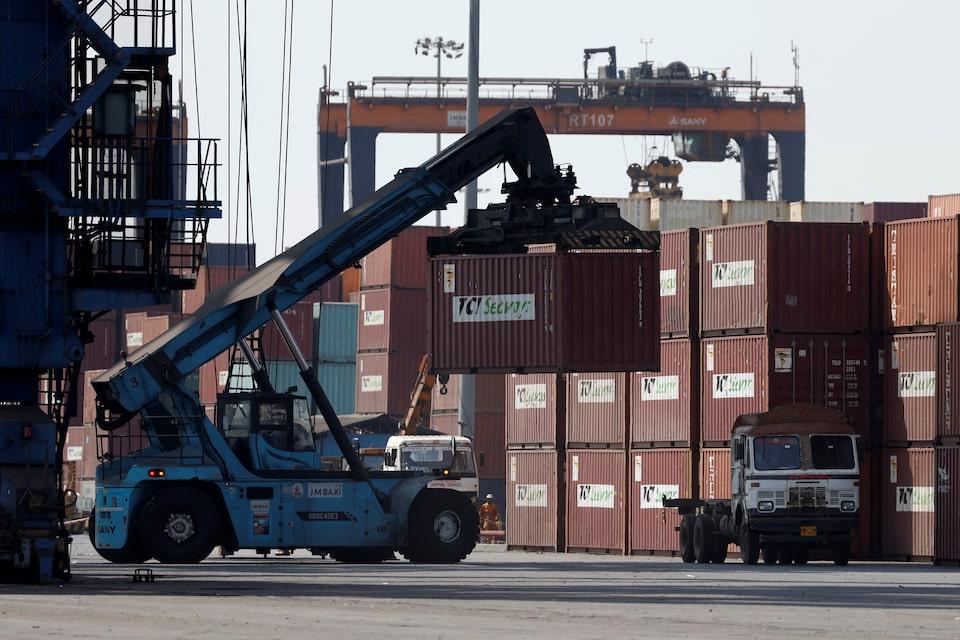
India, EU close to finalising long-pending trade pact this month Deal would be India's largest, amid stalled US trade talks Sensitive agriculture items kept out; carbon levy a key concern NEW DELHI, Jan 15 (Reuters) - India expects talks on a long-sought trade deal with the European Union to conclude this month, Trade Secretary Rajesh Agrawal said on Thursday, in what would be New Delhi's largest agreement as it seeks new markets amid U.S. tariff pressures. The deal, under discussion for years, is seen as a chance for both sides to deepen economic ties and cut reliance on China and Russia. Bilateral trade between India and the EU totalled 120 billion euros ($140 billion) in 2024, making the bloc India's biggest trading partner. Sign up here. Agrawal said the two sides were "very close" to finalising the pact and were exploring whether it could be wrapped up before leaders meet in New Delhi this month. He said talks on a U.S. trade pact were continuing and a deal would be reached when both sides were ready. Negotiations collapsed last year after a breakdown in communication between the two governments. The president of the European Council, Antonio Costa, and European Commission President Ursula von der Leyen will visit India on January 25–27 and co-chair an India–EU summit on January 27, India's foreign ministry said. If concluded, the deal would open India's vast and heavily protected consumer market of more than 1.4 billion people to European goods and could reshape global trade flows as protectionism rises and a U.S.-India pact remains stalled. Both sides have been pushing to close a broad agreement after von der Leyen and Indian Prime Minister Narendra Modi agreed to fast-track negotiations in an effort to close a deal in 2025. Talks, relaunched in 2022, gained momentum after U.S. President Donald Trump imposed tariff hikes on trading partners including India. Brussels has recently signed deals with Mexico and Indonesia and stepped up talks with India, while New Delhi has reached agreements with Britain, Oman and New Zealand. AGRICULTURE OFF THE TABLE Some sensitive agricultural items have been excluded from negotiations, an Indian trade ministry official said. India will not open its agriculture or dairy sectors in any trade pact, officials have said, citing the need to protect millions of subsistence farmers. The EU is pushing for steep tariff cuts on cars, medical devices, wine, spirits and meat, along with stronger intellectual property rules. India is seeking duty-free access for labour-intensive goods and quicker recognition of its autos and electronics sectors. Beyond goods, the agreement is expected to expand services trade, investment and cooperation in digital trade, intellectual property and green technologies, as well as spur European investment in Indian manufacturing, renewable energy and infrastructure. Challenges remain over regulatory alignment and the protection of sensitive sectors. The EU's carbon border levy, which requires importers to account for emissions in steel, cement and other carbon‑intensive products, has started to hit some Indian exports and is a key concern for New Delhi, exporters said. https://www.reuters.com/world/india/trade-deal-with-eu-close-says-india-trade-secretary-2026-01-15/
2026-01-15 11:46
Trump believes no plan for large-scale executions in Iran Oil price slides on Trump remarks Iranian state media: no death sentence against 26-year-old man Turkey does not condone possibility of violence against Iran Trump still does not rule out US military action DUBAI/WASHINGTON, Jan 15 (Reuters) - U.S. President Donald Trump said he had been told that killings in Iran’s crackdown on protests were easing and that he believed there was no current plan for large-scale executions, adopting a wait‑and‑see posture after earlier threatening intervention. After Iran's foreign minister said Iran had "no plan" to hang people, Iranian state media on Thursday reported that a 26-year-old man arrested during protests in the city of Karaj would not be given the death sentence. Sign up here. Rights organisation Hengaw, which reported earlier this week that Erfan Soltani was due to be executed on Wednesday, said a previously communicated order for his execution had been postponed, citing his relatives. In a social media post on Thursday, Trump responded to a news report that an Iranian protester was no longer being sentenced to death, writing: "This is good news. Hopefully, it will continue!" Iranian state media said that while Soltani was being charged with colluding against "internal security and propaganda activities against the regime", the death penalty does not apply to such charges. Trump's comments on Wednesday led oil prices to retreat from multi-month highs and gold eased from a record peak on Thursday. Trump has repeatedly threatened to intervene on behalf of protesters in Iran, where the clerical establishment has cracked down hard on nationwide unrest since December 28. PROTESTS APPEAR TO ABATE People inside the country, reached by Reuters on Wednesday and Thursday, said the protests appear to have abated since Monday. Information flows have been hampered by an internet blackout for a week. Tensions had escalated on Wednesday, with Iran saying it had warned neighbours it would hit American bases in the region in the event of U.S. strikes, and a U.S. official saying the United States was withdrawing some personnel from bases in the region. Trump, speaking at the White House, said he has been told that killings in the crackdown were subsiding. Asked who told him that the killings had stopped, Trump described them as "very important sources on the other side." The president did not rule out potential U.S. military action, saying "we are going to watch what the process is" before noting that his administration had received a "very good statement" from Iran. In separate comments to Reuters, Trump expressed uncertainty over whether Reza Pahlavi, the son of the late shah of Iran and a prominent figure in Iran's fractured opposition, would be able to muster support within Iran to eventually take over. Trump told Reuters it is possible the government in Tehran could fall due to the protests but that in truth "any regime can fail." Turkey, one of several states in the region where the U.S. has forces, expressed opposition to the use of violence against Iran, with Foreign Minister Hakan Fidan saying at a press conference in Istanbul that the priority is to avoid destabilisation. Saudi Foreign Minister Prince Faisal bin Farhan held a phone call with Iranian Foreign Minister Abbas Araghchi on Thursday and discussed ways to support security and stability in the region, Saudi state media reported. Qatar said on Wednesday drawdowns from its Al Udeid air base, the biggest U.S. base in the Middle East, were "being undertaken in response to the current regional tensions". Iran launched missiles at Al Udeid last year in response to U.S. airstrikes on its nuclear installations during the 12-day war between Tehran and Israel. G7 CONDEMNS REPRESSION The U.S.-based HRANA rights group says it has so far verified the deaths of 2,435 protesters and 153 government-affiliated individuals in the unrest that started with protests over soaring prices before turning into one of the biggest challenges to the clerical establishment since the 1979 Islamic Revolution. The death toll has dwarfed that of previous bouts of unrest crushed by the Iranian authorities, such as the 2022 "Woman, Life, Freedom" protests and unrest sparked by a disputed election in 2009. Iran and its Western foes have both described the unrest as the most violent since the 1979 Islamic Revolution. Iranian authorities said the demonstrations turned from legitimate protest at economic grievances into unrest fomented by its foreign enemies, accusing people it described as terrorists of attacking the security forces and public property. The Group of Seven countries condemned what they described as the Iranian authorities' brutal repression of the Iranian people, saying they were prepared to impose additional restrictive measures on Iran if it continues to crack down. https://www.reuters.com/world/china/trump-sees-iranian-crackdown-easing-tehran-denies-man-be-executed-2026-01-15/

2026-01-15 11:13
High production costs and trade uncertainty squeeze farm margins Farm bankruptcies rise, with Chapter 12 filings up nearly 36% Farm families also hit by job losses at rural schools, hospitals CHICAGO, Jan 15 (Reuters) - Across the U.S. farm belt, these have become depressing times. Farmers are facing another season of low prices, high costs and difficult decisions about how — or whether — to keep operating. Banks are cutting off some growers just as they urgently need cash. Thousands of workers are losing jobs as meatpacking plants close and farm equipment makers scale back. Strain inside the U.S. farm economy is mushrooming across rural America, from unsold tractors sitting on dealer lots to agribusiness companies reporting shrinking earnings, as abundant grain supplies weigh on markets. Sign up here. Crop prices have been weak and production costs high for three years now. This year is shaping up to be equally grim, according to interviews with producers, farm economists and industry trade groups. And this week's final government crop data showed higher output than expected while corn inventories reached a December record: another red flag signaling low crop prices and farm profitability. Any turnaround now rests on a fragile chain of events, they said, including a resolution of President Donald Trump’s trade wars, renewed buying from China and more favorable domestic biofuels policies. U.S. farmers would also benefit from unfavorable weather in rival grain-producing countries. "You talk to farmers and they say, 'I don't know what I'm going to do'," said Sherman Newlin, an Illinois row-crop farmer and market analyst with Risk Management Commodities. "I know banks that are turning away farmers, and farmers saying they can't pay back last year's operating note. It's pretty depressing out here." U.S. farmers produced massive corn and soybean harvests this past fall, adding to a global glut of grain. Soybean farmers also missed out on billions of dollars in lost sales to China, by far the world's top soy buyer. Chinese animal feed producers turned instead to South American suppliers to avoid tariffs imposed by Beijing on U.S. imports in retaliation for Trump's tariffs on China. Farmers have welcomed Trump's most recent $12 billion aid package, but producers and economists said these funds will fall short of reversing the damage from low crop prices and lost export opportunities. As financial pressure builds, farm groups are lobbying for clearer long-term direction on biofuels and for trade policies that help them expand exports. The message from rural America is increasingly blunt, said economists: If policymakers want farmers to keep planting into low prices and high costs, they need to offer more than temporary relief. Production costs, especially fertilizer, are expected to remain elevated for yet another year of painfully high input bills. Access to credit is tightening, making it harder for farmers to secure short-term loans needed to buy supplies and plant their spring crop. “The inputs are going to be astronomically high,” said American Soybean Association president Scott Metzger. "It's going to cost more to plant crops this year." UNPROFITABLE CROP That squeeze is expected to persist, particularly for row-crop farmers. The U.S. Department of Agriculture forecasts that total production costs for corn will rise about 3% in 2026 from 2025, while soybean costs are projected to increase 3.1%. At the same time, average farm prices for corn harvested this past fall and marketed this year were estimated at $4.10 a bushel and soybeans at $10.20 a bushel - both down from 2023 levels, according to the latest USDA data. Based on the USDA's preliminary 2026 yield outlook, and the agency's latest cost-of-production estimates, farmers would need corn prices of $5.03 a bushel and soybean prices of $12.80 a bushel simply to break even, according to a Reuters analysis of USDA figures. "It's very similar to last year, in that there really isn't a crop you can point to and go, 'There's a profit opportunity'," said Iowa State University agricultural economist Chad Hart. "Everything is underwater right now." Lenders are growing more cautious. CoBank, one of the largest U.S. agricultural lenders, said credit quality in its loan portfolio deteriorated in the third quarter and was wary of weak commodity prices and elevated input costs. It recorded $129 million in provisions , opens new tab for credit losses through the first nine months of 2025, up sharply from $6 million a year earlier. As some customers could not pay their bills, the bank wrote off those debts and stockpiled emergency funds for loans it expected could fail next. FINANCIAL PAIN The extent of the financial strain is not yet known, partly because a 43-day government shutdown last year delayed federal data needed to assess farm income, debt and balance sheets, economists told Reuters. For some operators, particularly row-crop farmers, time has already run out. U.S. court records showed 293 farmers or farm operations filed for Chapter 12 bankruptcy in the first nine months of 2025, nearly 36% more than the total number of such filings in all of 2024. Bankruptcies are typically a lagging indicator of financial stress, and the cases represent a tiny portion of U.S. producers. But Chapter 12, which was designed to help farmers restructure debt and stay in business, is now leading to more farm liquidations, said Joe Peiffer, an Iowa-based farm bankruptcy attorney. With crop prices low and production costs high, there's no way for some of these producers to stay solvent, he said. Meanwhile, tractor sales last year were down nearly 10% from a year earlier, while combine sales plunged more than 35%, according to the Association of Equipment Manufacturers , opens new tab. Many farmers are instead pushing older machinery to last longer. Terry Griffin, an agricultural economics professor at Kansas State University, analyzed U.S. Fire Administration data and found that as farm incomes fell in recent years, the number of combine fires in Kansas surged. "It's like if you have an old car and don't have the money to keep it up, you stop changing the oil or keeping it clean," Griffin said. "You need money to maintain your equipment." RURAL JOB LOSS Deere & Co. has laid off more than 2,000 employees across eight U.S. factories since 2023. Rival equipment makers AGCO and CNH Industrial have also reduced payrolls. AGCO said in mid-2024 that it planned to cut about 6% of its workforce, which at the end of 2024 stood at 24,000. CNH announced hundreds of layoffs across Minnesota, North Dakota and Wisconsin last year, citing weak demand and higher material costs tied in part to Trump's tariff policies. Rural America could also lose more jobs at schools, hospitals and local government agencies that many rural families rely on to pay bills and buffer bad years on the farm, said University of Illinois Urbana-Champaign economist Jonathan Coppess. Steep Medicaid reductions and cuts in health insurance could increase the number of uninsured patients and strain rural hospitals, while some states run by Democrats could struggle with Trump's freeze in child care subsidies and family assistance funds. “This is more than layoffs at Deere plants, which will impact specific communities,” Coppess said. “There’s a much bigger hammer coming down on rural America.” https://www.reuters.com/world/us/us-farm-economy-shows-widening-cracks-costs-rise-jobs-vanish-2026-01-15/

2026-01-15 11:12
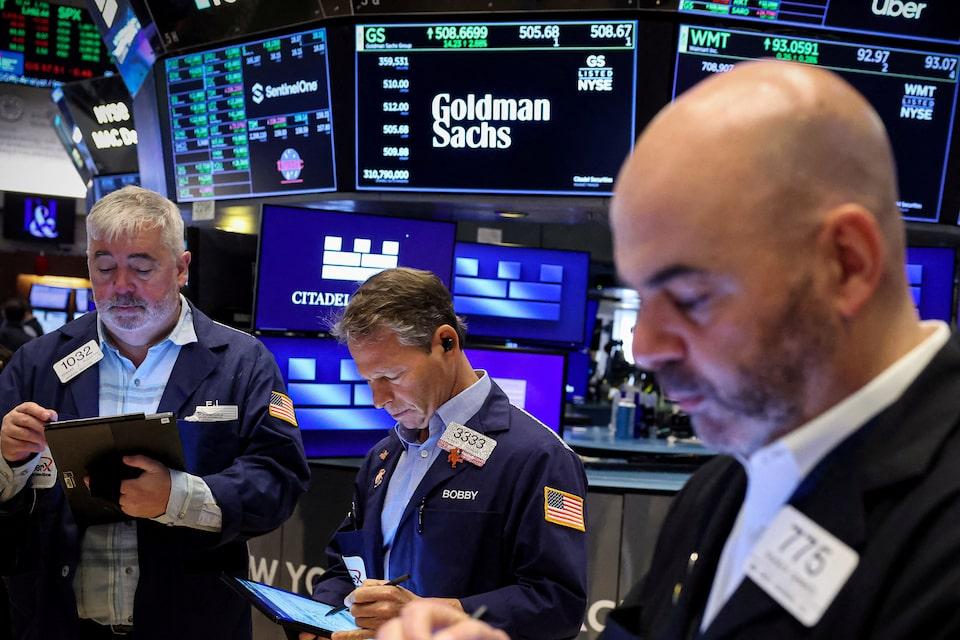
Small cap, industrials, healthcare shares show recent strength Broadening S&P 500 earnings growth expected in 2026 Tech sector's dominance challenged by valuation concerns and AI uncertainty NEW YORK, Jan 15 (Reuters) - After years of watching technology stocks drive the U.S. bull market, investors are betting the rally will broaden to industrial, healthcare and small-cap companies, with a chance they can catch up and assert market leadership. Stocks such as Nvidia (NVDA.O) , opens new tab, Alphabet (GOOGL.O) , opens new tab and Broadcom (AVGO.O) , opens new tab have buoyed the market's enduring rally, in which the S&P 500 (.SPX) , opens new tab has risen over 90% since the bull market began more than three years ago. Sign up here. But investors have become wary of expensive tech valuations amid uncertainty over the AI theme that propelled market gains, concerns that helped other stocks make inroads. Shares of industrial, healthcare and small-cap companies have outperformed the S&P 500 since the end of October, while the tech sector has declined. That rotation was on display on Wednesday as the S&P 500 tech sector (.SPLRCT) , opens new tab fell more steeply than broader market indexes. "There is a lot of hope that this is going to be the year where we are going to see some true broadening of leadership," said Angelo Kourkafas, senior global investment strategist at Edward Jones. "The conditions are likely in place for that broadening to happen, especially when you sprinkle in and consider elevated valuations, there are some pockets of value that can be found looking beyond technology." Fourth-quarter earnings reports in coming weeks will factor into the broadening trend's durability. A wide swath of sectors is expected to show solid profits in 2026. "Strategists have been predicting better earnings for a long time, but I really think it has legs this year," said Nanette Abuhoff Jacobson, global investment strategist at Hartford Funds. "We're starting to see the AI benefits filtering through to such a broad collection of sectors." 'AVERAGE' S&P 500 STOCK NOT SO AVERAGE Tech and tech-related stocks led much of the bull run that began in October 2022, just before the launch of chatbot ChatGPT that sparked enthusiasm for AI-linked shares. Late last year, the trend began to turn. One factor has been concerns AI investments would not yield sufficient returns to justify elevated valuations, investors said. "With some questions being raised on tech, investors are looking at, what are other areas that I could invest in," said Keith Lerner, chief investment officer at Truist Advisory Services. In another sign of broadening, the equal-weight version of the S&P 500 (.SPXEW) , opens new tab, which is a gauge for the average stock in the index, has gained over 5% since the end of October. That tops a 1% rise for the standard S&P 500, which is more heavily influenced by heavyweight stocks. EARNINGS GROWTH FOR ALL SECTORS More expansive profit growth stands to support wider stock gains. Each of the 11 S&P 500 sectors is expected to show earnings up at least 7% this year, according to LSEG IBES. Megacaps have been responsible for a huge chunk of earnings growth, but their advantage over smaller companies is shrinking. The "Magnificent Seven," which includes Nvidia, Alphabet and Apple (AAPL.O) , opens new tab, are expected to grow earnings by 23.5% in 2026, against a 13% rise for the rest of the S&P 500, according to Tajinder Dhillon, head of earnings research at LSEG. "If, in fact, that gap in earnings growth narrows between the Mag 7 and everyone else, I think we'll get a broadening," said Michael Arone, chief investment strategist at State Street Investment Management. "If it doesn't, then it's likely the Mag 7 will continue to be leadership." In a report this week titled "The Broadening Is Underway," Morgan Stanley equity strategist Michael Wilson said the median S&P 500 stock trades at a price-to-earnings ratio of 19 times, against a P/E of 22 for the cap-weighted index. Improving valuations on top of strong earnings for the median or average stock could be a "wildcard" for 2026, Wilson said in the report. TECH'S DOMINANT MARKET PRESENCE To be sure, tech's massive presence - the sector accounts for one-third of the S&P 500's weight - means it likely will remain a force in U.S. stocks, while the market may struggle if tech falters. Over the past decade, the S&P 500 has never gained at least 10% on an annualized basis when the tech sector has lagged the aggregate performance of the other 10 S&P 500 sectors during those periods, according to Citi Wealth. Meanwhile, tech is generating outsized profits. The sector is expected to increase earnings by over 30% in 2026, against 15.5% for the S&P 500 overall. After last year recommending clients overweight in "growth" stocks, which include tech and other AI-exposed names, Jack Janasiewicz, portfolio manager at Natixis Investment Managers, said he has been suggesting to investors that they balance more with "value" stocks, which include financials and industrials. "I still think tech works. You don't want to be chasing it, but you also don't want to be underweight," Janasiewicz said, adding: "There is certainly a wider range of outcomes that you could see." https://www.reuters.com/business/us-stocks-leadership-showing-signs-broadening-beyond-tech-2026-01-15/
2026-01-15 10:05
Jan 15 (Reuters) - Sterling slightly pared its fall against the dollar on Thursday after UK economic data showed the economy grew more strongly than expected in November, but failed to affect the policy rate outlook. Traders priced in around 40 basis points (bps) of Bank of England rate cuts by September. Sign up here. UK gross domestic product recorded the fastest growth since June, boosted by a return to full production at Jaguar Land Rover after a cyberattack which hit the carmaker and its suppliers. “Despite the upside surprise, it is important to note that the data are by no means strong,” said Kallum Pickering, chief economist at Peel Hunt. “Economic activity in the UK is, at best, lukewarm, lumpy and remains constrained mostly by a lack of confidence in the policy decisions of the Labour government.” The pound was down 0.05% at $1.3443 , while it was falling by around 0.10% before data. The dollar rose as markets set aside concerns about the Federal Reserve's independence and shifted their focus to economic data. “The big picture remains that the UK economy has lost momentum since the summer,” said Andrew Wishart economist at Berenberg. “We suspect that this soft patch will persist into 2026 amid ongoing job losses and fiscal consolidation,” he added, arguing that this backdrop could bring down inflation and enable the BoE to cut rates by more than the market currently prices in. Analysts said investors were turning to economic data as the boost from easing UK fiscal and political risks that has supported sterling since Finance Minister Rachel Reeves unveiled the November budget has faded. The next round of UK CPI inflation data is not scheduled until January 21 The euro rose 0.15% to 86.54 pence . Wednesday’s release of China’s full-year 2025 trade data underscored a sensitive issue for the UK: the potential dumping of Chinese goods originally intended for the U.S. market. Chinese goods exports to the UK rose 7.8% year-on-year in 2025 and 8.4% to the EU. https://www.reuters.com/world/uk/sterling-edges-down-versus-dollar-after-uk-data-2026-01-15/