2025-04-21 11:07
JAKARTA, April 21 (Reuters) - South Korea's LG Energy Solution has formally withdrawn from a 142 trillion rupiah ($8.45 billion) project to develop electric vehicle battery making in Indonesia, the company said on Monday. LGES and the Indonesian government signed a deal on the so-called Indonesia Grand Package project in late 2020, which includes investments across the EV battery supply chain in the Southeast Asian country. Sign up here. "Taking into account various factors, including market conditions and investment environment, we have agreed to formally withdraw from the Indonesia GP (Grand Package) project," LGES said in a statement. "However, we will continue to explore various avenues of collaboration with the Indonesian government, centering on the Indonesia battery joint venture, HLI Green Power," it added. HLI Green Power, a joint venture led by LGES and Hyundai Motor Group, last year inaugurated Indonesia's first battery cell production plant with an annual capacity of 10 gigawatt hours. It has plans to expand the capacity in the second phase of investment. Indonesia will continue to seek foreign investors to partner with local companies to develop the battery industry, leveraging the country's rich nickel reserves, said energy ministry official Tri Winarno. "Even though LG has exited, Indonesia remains convinced our nickel is more competitive than other countries," he told reporters. Indonesian state-controlled miner Aneka Tambang, which had planned to form a JV with LGES to mine nickel, said it remained committed to work with other companies to supply nickel for battery production. State firm Indonesia Battery Corporation, which had also planned to partner with LGES, did not respond to requests for comment. ($1 = 16,810 rupiah) https://www.reuters.com/business/energy/south-koreas-lg-energy-solution-pulls-out-indonesia-ev-battery-investment-2025-04-21/

2025-04-21 10:34
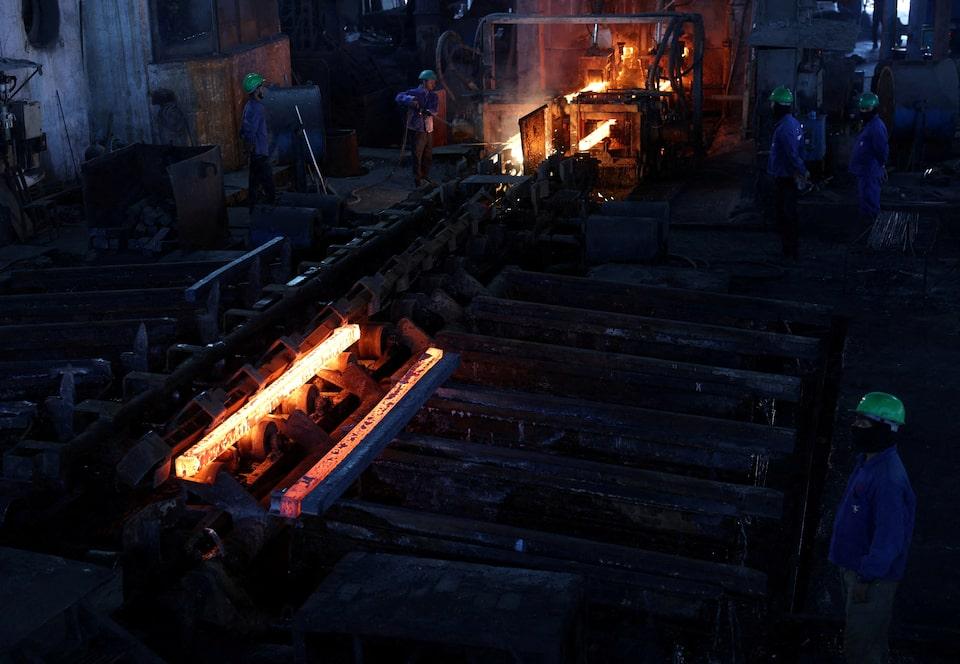
NEW DELHI, April 21 (Reuters) - India is set to impose a temporary tariff, known locally as safeguard duty, of 12% on steel imports, said a government source with direct knowledge of the matter, to try and curb a surge in cheap imports from China and elsewhere. The government would enact the tax as soon as possible, the source, who did not wish to be named, told Reuters on Monday. Sign up here. India, the world's second-biggest crude steel producer, was also a net importer of finished steel for the second consecutive year in the 2024/25 fiscal year, with shipments reaching a nine-year high of 9.5 million metric tons, according to provisional government data. Last month, the Directorate General of Trade Remedies (DGTR), which comes under the federal trade ministry, recommended a tariff of 12% on some steel products for 200 days, as part of efforts to stem cheap imports. The recommendation followed an investigation from December last year over whether unbridled imports have harmed India's domestic steel industry. "There is clarity that the duty would be 12% and a decision is expected at the earliest," the source said of the previously unreported plan to go ahead with the DGTR's recommendation. The Ministry of Finance, which takes the final decision, did not immediately respond to a Reuters email seeking comment. India's finished steel imports from China, South Korea and Japan hit a record high in the first 10 months of the financial year that ended in March. Imports from China, South Korea and Japan accounted for 78% of India's overall finished steel imports. The influx of cheap steel has forced India's smaller mills to scale down operations and consider job cuts. India joins a growing list of countries contemplating action to stem imports. Its leading steelmakers' body, which counts JSW Steel (JSTL.NS) , opens new tab and Tata Steel (TISC.NS) , opens new tab among members, alongside the Steel Authority of India (SAIL.NS) , opens new tab and ArcelorMittal Nippon Steel India have raised concerns over imports and called for curbs. https://www.reuters.com/world/china/india-put-12-temporary-tariff-steel-curb-cheap-china-imports-source-says-2025-04-21/
2025-04-21 10:19
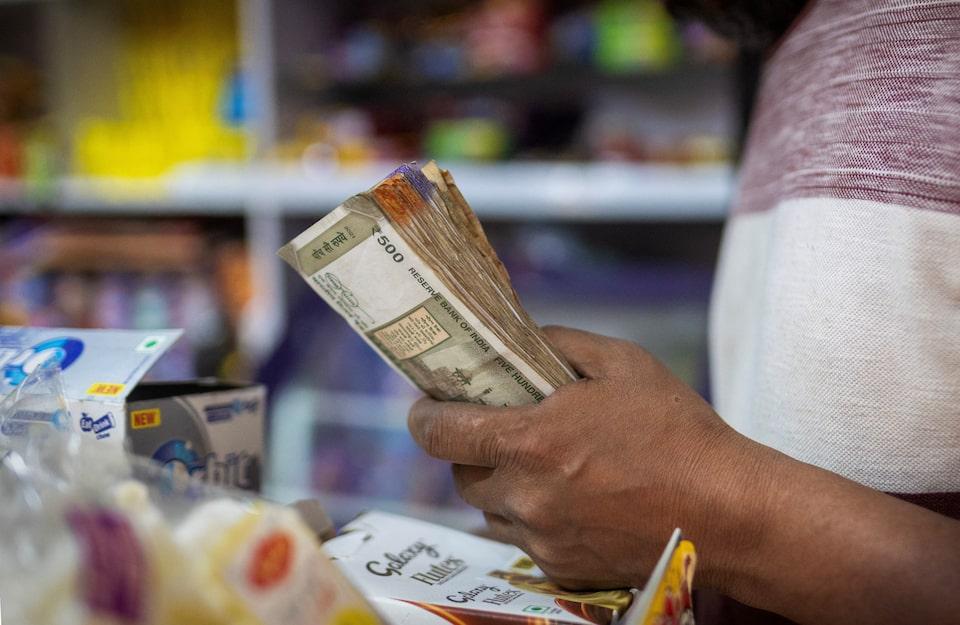
MUMBAI, April 21 (Reuters) - The Indian rupee extended its winning streak on Monday as the dollar remained on the defensive, with investor confidence in U.S. assets dented by President Donald Trump’s criticism of the Federal Reserve chief. The rupee closed at 85.1275 against the U.S. dollar, up 0.3% on the day. The local unit touched an over two-week high of 85.0450 against the dollar earlier in the day, before paring gains. Sign up here. Asian currencies rallied as well, with the Thai baht and Malaysian ringgit leading gains with a near 1% rise each. The dollar index dropped 0.8% to an over 3-year low of 97.9. Criticism of the Federal Reserve by President Donald Trump has further dented investor confidence in U.S. assets, already weighed down by anxiety over the impact of U.S. trade tariffs. "The most important thing to watch out for markets may be how the disagreement between President Trump and Fed Chair Powell could play out further, and as such also further raising concerns around US exceptionalism," MUFG Bank said in a note. While a weaker dollar alongside offers from foreign banks helped the rupee on Monday, bids from importers and state-run banks hurdled the currency's gains, traders said. Dollar bids from state-run banks also prompted traders to speculate that the Reserve Bank of India may be absorbing dollar inflows to replenish its foreign exchange reserves. India's FX reserves have rose to a near 5-month high of $677.8 billion as of the week ended April 11. Benchmark Indian equity indexes, the BSE Sensex (.BSESN) , opens new tab and Nifty 50 (.NSEI) , opens new tab rose over 1% each on the day. Meanwhile, dollar-rupee forward premiums fell with the 1-year implied yield down 5 basis points at an over one-month low of 2.08%. The rupee's rally alongside a rise in U.S. bond yields weighed on the forward premiums, traders said. https://www.reuters.com/world/india/sliding-dollar-helps-rupee-extend-winning-streak-forward-premiums-fall-2025-04-21/
2025-04-21 10:10
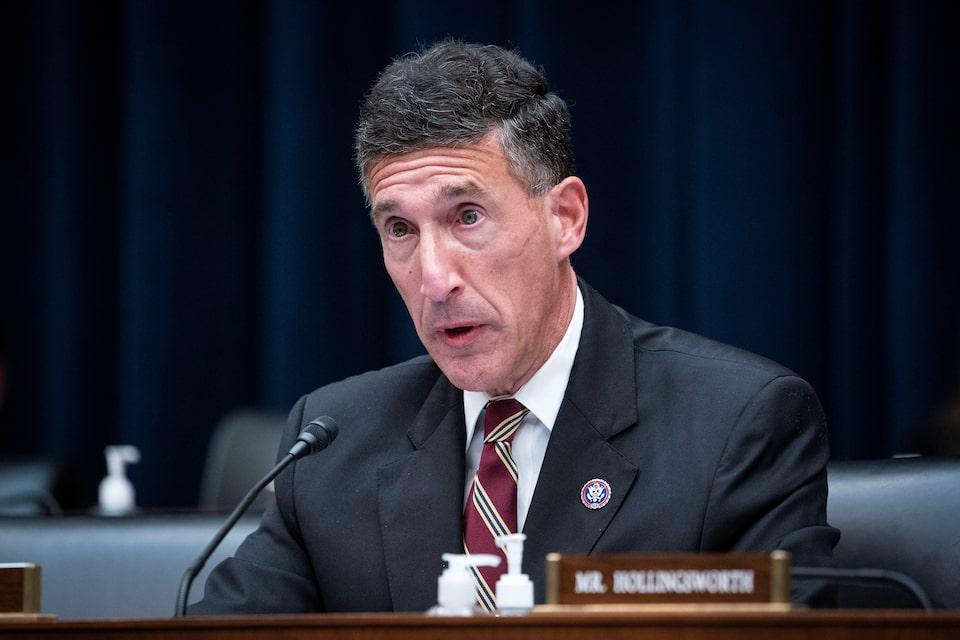
Republicans face dilemma with clean energy investments in their districts Ford and SK Innovation invest $6.5 billion in Tennessee district GM credits tax incentives for creating thousands of jobs in three states WASHINGTON, April 21 (Reuters) - Republican lawmakers working to extend U.S. President Donald Trump's tax cuts legislation are facing a clean-energy conundrum back home, as major clean energy investments in their districts are at odds with Trump's skepticism of the industry. Eleven of the 26 Republicans on the House of Representatives' tax-writing Ways & Means committee, who are now crafting the extension of the 2017 tax cut legislation, represent areas that have seen hundreds of millions to billions of dollars in green energy investments in the last few years. Sign up here. Clean energy investments boomed after former President Joe Biden's Inflation Reduction Act passed a then-Democratic-controlled Congress in 2022, authorizing hundreds of billions of dollars of clean energy tax credits for businesses, most of which were not capped. Since then, businesses unveiled more than $165 billion of clean energy manufacturing investments nationwide, according to data tracked by pro-clean energy research firm, Atlas Public Policy, and Utah State University. The House Republicans are trying to cut at least $1.5 trillion in spending from the federal budget over the next decade, to partly offset a tax cut extension that's expected to cost more than $4.5 trillion over that time. More than 75% of the clean-energy investments -- almost $125 billion -- were targeted at Republican-held congressional districts, the data shows. Trump long derided electric vehicles as a "hoax," before he closely allied himself with Tesla (TSLA.O) , opens new tab and saying that he bought one of the cars at a White House event last month. But in his district east of Memphis, Tennessee, Representative David Kustoff touts investments by automaker Ford (F.N) , opens new tab to build a new manufacturing hub for electric F-series pickups that were boosted by the legislation. Ford, and its South Korean partner, SK Innovation, contributed the bulk of the more than $6.5 billion in investments in the district in last four years, the most of any House Republican tax writer, according to the data. "It's so important for people in west Tennessee, economically, for us to be successful," Kustoff told the Jackson Rotary Club last week about the broader tax writing process. The White House in a document this month tried to convince House fiscal hawks working to advance the chamber's budget that new revenue to offset potential new costs in the tax bill will be generated by repealing the green energy tax credits "to the fullest extent possible," according to two people familiar with the pledge. Behind the scenes, Ford is working with lawmakers to maintain the tax credits, according to a person familiar with the talks. BALANCE OF DISTRICT VERSUS PARTY LINE Two other automakers, Honda (7267.T) , opens new tab and General Motors (GM.N) , opens new tab, each invested billions of dollars in electric vehicle battery plants for the next two districts with most clean energy investments on the committee. Representative Mike Carey cheered the estimated 2,000 jobs that Honda would create in his district southeast of Columbus, Ohio, and Representative Rudy Yakym said in a statement he was "thrilled about this historic investment" from GM in 2023 that included 1,700 manufacturing jobs for his district in South Bend, Indiana. A new rare earth magnet production facility for components of GM vehicles, drones and other electronics, was recently built in Representative Beth Van Duyne's district, a tax writer from Fort Worth, Texas. The company, MP Materials, advanced its goal to become "America’s first fully-integrated rare earth magnet manufacturing facility" by investing $700 million in the facility and said in a 2024 press release they received an almost $60 million energy project tax credit, funded by the 2022 Biden-era law. Kustoff, Carey, Yakym and Van Duyne's offices declined to comment about their tax priorities. A GM spokesperson said the advanced manufacturing production tax credits "advance U.S. leadership in critical technologies" and led the automaker to announce thousands of jobs in three states. Nationwide, 16 of the top 20 House districts with recent clean energy manufacturing investments are represented by Republican lawmakers, according to the data. Many of them advocated to the tax committee last month to avoid "disruptive changes to our nation’s energy tax structure." "This is a tough assignment for tax committee members that have renewable projects in their districts," Ryan Bernstein, who helps lead the energy practice at McGuireWoods Consulting, "You probably won't see a lot of the dialogue in public, which will create a black box for a while on what is going to be included or not." "When companies make decisions relying upon actions from federal or state government, it's really important that the government honor those commitments," said Josh Brown, president of the Tennessee Chamber of Commerce, who mentioned Ford's large investment in the rural west of his state, "Any possibility that this investment could be pulled back or curtailed based on congressional action is very concerning." https://www.reuters.com/sustainability/climate-energy/republican-lawmakers-face-clean-energy-conundrum-they-work-tax-bill-2025-04-21/
2025-04-21 10:09
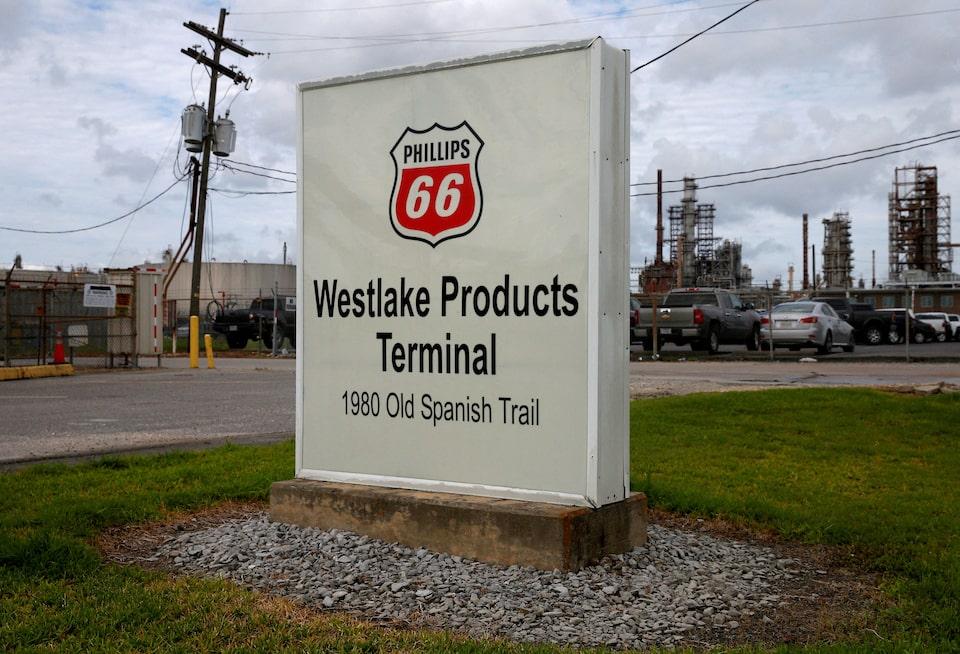
April 21 (Reuters) - Phillips 66 (PSX.N) , opens new tab is arguing that Elliott Investment Management should back down from its push to break up the energy company because the activist investor is conflicted from a separate effort to acquire one of Phillips 66's rivals, according to a letter seen by Reuters. The salvo from Phillips 66, which is expected to be revealed in a letter later on Monday, is the latest in a bitter spat between the firm and Elliott that is due to come to a head at Phillips 66's shareholder meeting next month. Sign up here. In arguing against Elliott's break-up thesis in the letter, Phillips 66 said the investment firm has a conflict of interest over the best strategy for the company due to its separate efforts to buy Citgo Petroleum. The parent company of Citgo is being sold via a court-supervised auction. Last year, Amber Energy, backed by Elliott, was initially deemed the winner of the process, before creditor challenges forced the court to backtrack and launch a new sale effort. The chief executive of Amber Energy, Gregory Goff, said on April 9 he had bought a position in Phillips 66 and backed Elliott's campaign. "This conflict is concerning because Amber Energy's executives are actively helping support Elliott's case to undermine Phillips 66's strategy," said Monday's letter from Phillips 66. Phillips 66 is one of the largest U.S. refiners, while Citgo is the seventh largest. Elliott has put forward four director nominees for the May 21 meeting, as part of a campaign that has also included calling on Phillips 66 to sell or spin off its midstream business and consider divesting other assets that would allow it to focus on its refining business and boost its share price. Elliott has said it has an investment worth more than $2.5 billion in Phillips 66. It is the second time the investment firm has pushed for change at Phillips 66, after a first effort ended in early 2024 with the addition of a new company board member blessed by Elliott. https://www.reuters.com/sustainability/sustainable-finance-reporting/phillips-66-fires-back-elliott-over-citgo-conflict-interest-amid-board-fight-2025-04-21/
2025-04-21 10:08
Layoffs halt black lung protection programs for miners NIOSH and MSHA programs suspended amid Trump administration cuts Miners face increased risk as safety regulations enforcement weakens OAK HILL, West Virginia, April 21 (Reuters) - Josh Cochran worked deep in the coal mines of West Virginia since he was 22 years old, pulling a six-figure salary that allowed him to buy a home with his wife Stephanie and hunt and fish in his spare time. That ended two years ago when, at the age of 43, he was diagnosed with advanced black lung disease. He’s now waiting for a lung transplant, breathes with the help of an oxygen tank, and needs help from his wife to do basic tasks around the house. Sign up here. His saving grace, he says, is that he can still earn a living. A federal program run by the Mine Safety and Health Administration and the National Institute for Occupational Safety and Health called Part 90 meant he was relocated from underground when he got his diagnosis to a desk job dispatching coal trucks to the same company, retaining his pay. "Part 90 - that's only the thing you got," he told Reuters while signing a stack of documents needed for the transplant, a simple task that left him winded. "You can come out from underground, make what you made, and then they can't just get rid of you." That program, which relocates coal miners diagnosed with black lung to safer jobs at the same pay - along with a handful of others intended to protect the nation’s coal miners from the resurgence of black lung - is grinding to a halt due to mass layoffs and office closures imposed by President Donald Trump and billionaire Elon Musk's Department of Government Efficiency, according to Reuters reporting. Reuters interviews with more than a dozen people involved in medical programs serving the coal industry, and a review of internal documents from NIOSH, show that at least three such federal programs have stopped their work in recent weeks. A decades-old program operated by NIOSH to detect lung disease in coal miners, for example, has been suspended. Related programs to provide x-rays and lung tests at mine sites have also shut down and it is now unclear who will enforce safety regulations like new limits on silica dust exposure after nearly half of the offices of MSHA are under review to have their leases terminated. The details about the black lung programs halted by the government's mass layoffs and funding cuts have not previously been reported. "It’s going to be devastating to miners," said Anita Wolfe, a 40-year NIOSH veteran who remains in touch with the agency. "Nobody is going to be monitoring the mines." The cuts come as Trump voices support for the domestic coal industry, a group that historically has supported the president. At a White House ceremony flanked by coal workers in hard hats earlier this month, Trump signed executive orders meant to boost the industry, including by prolonging the life of aging coal-fired power plants. "For too long, coal has been a dirty word that most are afraid to speak about," said Jeff Crowe, who Trump identified as a West Virginia miner. Crowe is the superintendent of American Consolidated Natural Resources, successor to Murray Energy. "We're going to put the miners back to work," Trump said during the ceremony. "They are great people, with great families, and come from areas of the country that we love and we really respect." Andrew Nixon, a spokesperson for the Department of Health and Human Services, which oversees NIOSH, said that streamlining government will better position HHS to carry out its Congressionally mandated work protecting Americans. Courtney Parella, a spokesperson for the Department of Labor said MSHA inspectors "continue to carry out their core mission to protect the health and safety of America’s miners." Black lung has been on the rise over the last two decades, and has increasingly been reported by young workers in their 30s and 40s despite declining coal production. NIOSH estimates that 20% of coal miners in Central Appalachia now suffer from some form of black lung disease, the highest rate that has been detected in 25 years, as workers in the aging mines blast through rock to reach diminishing coal seams. Around 43,000 people are employed by the coal industry, according to the Bureau of Labor Statistics. MORE MINING, MORE RISK Around 875 of NIOSH’s roughly 1,000-strong workforce across the country were terminated amid sweeping job cuts announced by HHS this month, according to three sources who worked for NIOSH. That’s put the department’s flagship black lung program, the Coal Workers’ Health Surveillance Program, on hold, according to an internal NIOSH email dated April 4. "We will continue to process everything we currently have for as long as we can. We have no further information about the future of CWHSP at this time," the email says. The CWHSP's regular black lung screenings, which deploy mobile trailers to coal mines to test coal miners on site have ended too, because there’s no money to fuel the vehicles or epidemiologists to review the on-site x-rays or lung tests, according to sources familiar with the program. For many miners, this program is the sole provider of medical checkups, according to NIOSH veteran Wolfe. The loss of staff at NIOSH has also crippled black lung-afflicted miners' ability to get relocated with pay as part of the Part 90 program. Miners can only become eligible for the Part 90 benefit by submitting lung x-rays to NIOSH that show black lung. But all NIOSH epidemiologists in West Virginia required to review the x-rays were laid off, according to Scott Laney, who lost his job as an epidemiologist. Laney told Reuters he and his fellow laid-off team have been working in an informal "war room" in his living room to try to draw attention to the issue among Washington lawmakers. "I want to make sure that if there are more men who are going into the mines as a result of an executive order, or whatever the mechanism, they should be protected when they do their work," he said. Sam Petsonk, a West Virginia attorney who represents black lung patients, said relocating sick miners is crucial because the risks of continuing to work in dust-heavy areas while ill are so severe. "It gets to the point that days and months matter for this program," he said. SILICA THREAT Last year, MSHA finalized a new regulation that would cut by half the permissible exposure limit to crystalline silica for miners and other workers – an attempt to combat the rising rates of black lung , opens new tab. Enforcing that rule, which comes into force in August after being pushed back from April by the Trump administration, may prove difficult given the staff cuts and planned office closures at MSHA, said Chris Williamson, a former Assistant Secretary of Labor for Mine Safety and Health under the Biden administration. He told Reuters that before he left MSHA in January, there were 20 mine inspector positions unfilled. A pipeline of 90 people that had already secured MSHA inspector job offers, meanwhile, had their offers rescinded after Trump took office, and around 120 other people took buyouts. Mine inspectors are meant to uphold safety standards that reduce injuries, deaths and illnesses at the mines. That loss of staff and resources raises the likelihood that black lung could become even more pervasive among Appalachian coal miners – particularly if mining activity increases, said Drew Harris, a black lung specialist in southern Virginia. "As someone who sees hundreds of miners with this devastating disease it's hard for me to swallow cutting back on the resources meant to prevent it," he said. Kevin Weikle, a 35-year-old miner in West Virginia who was diagnosed with advanced black lung disease during a screening in 2023, said the cuts make no sense at a time the administration wants to see coal output rise and will set back safety standards by decades. "Don't get me wrong, I mean, I'm Republican," Weikle said. "But I think there are smarter ways to produce more coal and not gut safety." https://www.reuters.com/business/world-at-work/trump-eyes-coal-revival-his-job-cuts-hobble-black-lung-protections-miners-2025-04-21/