2025-04-21 09:59
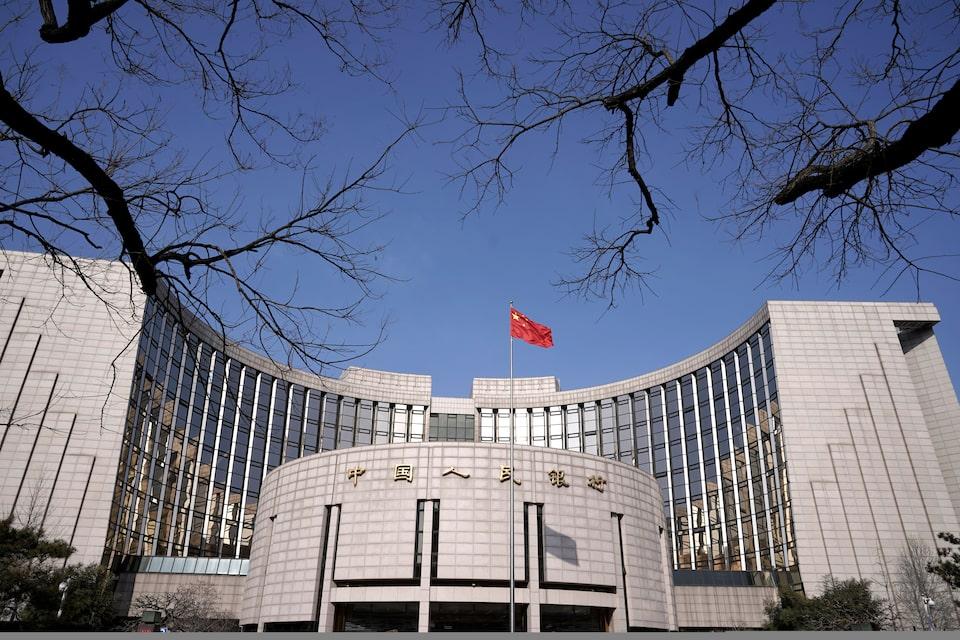
SHANGHAI, April 21 (Reuters) - China's central bank said on Monday it was encouraging state-owned enterprises to prioritise yuan usage in payment and settlement in their overseas expansion, in what is seen as an official attempt to accelerate yuan internationalisation amid intensifying global trade tensions. The comments come as U.S. President Donald Trump has launched so-called "reciprocal" tariffs, which have shaken up global trade and roiled financial markets. Sign up here. Although Trump announced a 90-day pause on planned tariff hikes for most countries, he raised duties on Chinese goods to 145%, prompting Beijing to retaliate with counter-measures. The People's Bank of China (PBOC) said it encouraged commercial banks in Shanghai to expand cross-border credit expansion to lower companies' yuan financing costs and promote yuan-dominated imports and exports, according to a notice published on its website. The PBOC said "it will strengthen the construction of Cross-Border Interbank Payment System (CIPS) ... study and push forward with the application of blockchain technology, and provide safe and efficient settlement and clearing services for global trades, shipping, investment and financing denominated in yuan," the notice said. The central bank said it would also support the Shanghai Gold Exchange to cooperate with other overseas exchanges and expand the application of yuan benchmark prices in global mainstream markets. The PBOC jointly issued the notice with National Financial Regulatory Administration, State Administration of Foreign Exchange and Shanghai municipal government. https://www.reuters.com/world/china/china-central-bank-urges-state-owned-businesses-prioritise-yuan-overseas-2025-04-21/
2025-04-21 09:41
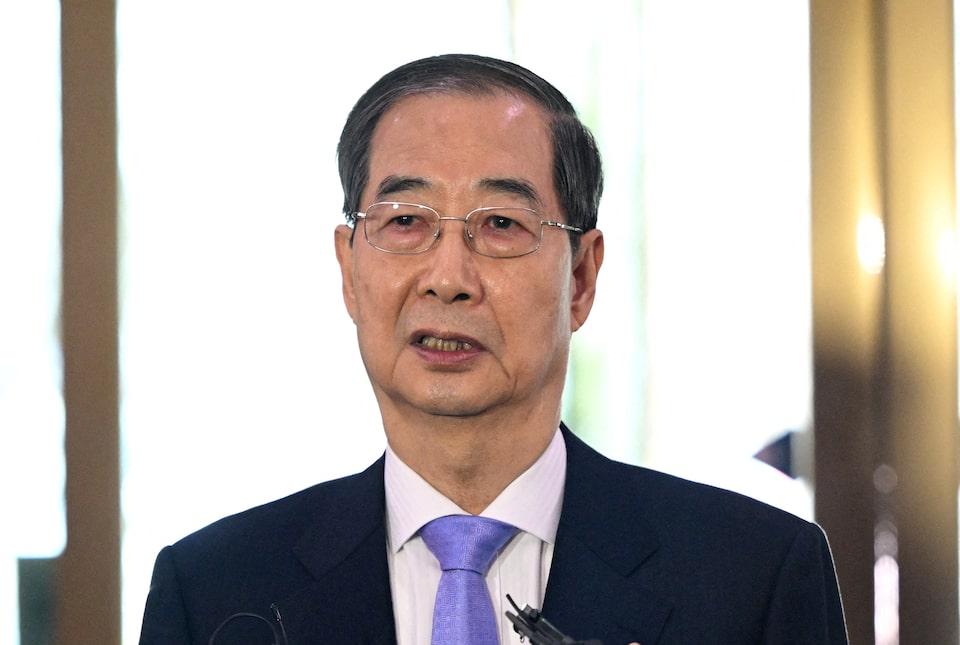
South Korea, top U.S. officials to meet on Thursday Minister says to ask for steel, auto tariff exemption-Yonhap Presidential frontrunner adviser warns against excessive concessions SEOUL, April 21 (Reuters) - South Korea's acting President Han Duck-soo said on Monday he expected trade talks with the United States this week in Washington to be the start of meaningful cooperation, but added that negotiations may not be easy. Han said that South Korea's ministers of finance and industry are meeting U.S. Treasury Secretary Scott Bessent and USTR representative Jamieson Greer on April 24 at 8 a.m. (0000 GMT). Sign up here. Seoul will make an "all-out effort" to find a mutually beneficial solution by "calmly and seriously" consulting with the U.S. under the principle of prioritising national interest, Han said. "The consultation process with the U.S. may not be easy and (I am) aware that many expectations and concerns coexist as consultations with the U.S. kick off," Han said at a meeting with South Korean government officials to discuss the economy. Han said the discussions would focus on trade balances, shipbuilding and liquefied natural gas. However, Trump has previously said defence cost-sharing would be part of "one-stop shopping" negotiations with Seoul. Industry Minister Ahn Duk-geun, who will attend the talks with U.S. counterparts, told lawmakers on Monday that he will relay a request to exempt South Korea from steel and auto tariffs, Yonhap news agency reported citing lawmakers from parliament's trade committee. Kim Hyun-chong, a foreign policy adviser to the country's presidential frontrunner Lee Jae-myung, cautioned the conservative-led interim administration on Monday against hastily negotiating and making significant concessions to the United States, warning that it would jeopardise national interests. Kim, who heads the liberal party's task force on trade and security, said the interim government should not be in charge of the negotiations, asserting that no deal is better than a bad deal. Kim served as South Korea's trade minister in 2018 when the country renegotiated a free trade deal with the United States during Trump's first term. The presidential election will be held on June 3, after the impeachment of former President Yoon Suk Yeol for his December martial law declaration. https://www.reuters.com/world/asia-pacific/south-koreas-acting-president-says-tariff-talks-with-us-may-not-be-easy-2025-04-21/
2025-04-21 08:14
All but two expect rates to be on hold at 5.75% on April 23 BENGALURU, April 21 (Reuters) - Bank Indonesia will hold interest rates steady on Wednesday to support the under-pressure rupiah, despite growing concerns of slowing economic growth driven by U.S.-led trade policies, a Reuters poll of economists found. With the rupiah down more than 4% this year, and hovering near a record low, the central bank will probably remain cautious about rushing into a cut. Sign up here. The currency had initially come under pressure from the impact of President Prabowo Subianto's fiscal plans, but more recently also by a 32% tariff imposed on all Indonesian goods imported by the United States, currently paused for 90 days. Southeast Asia's largest economy has grown steadily at around 5% for years, but U.S. tariffs could slow it by 0.3% to 0.5%, Finance Minister Sri Mulyani Indrawati said recently. Indonesia is currently negotiating a trade deal with Washington. All but two of the 26 economists in the April 14–21 Reuters poll predicted the central bank would keep its benchmark seven-day reverse repurchase rate (IDCBRR=ECI) , opens new tab at 5.75% on Wednesday. The overnight deposit and lending facility rates are also expected to remain at 5.00% and 6.50%, respectively. "With USD/IDR surging visibly after the Eid holiday, we doubt Bank Indonesia will be able to resume rate cuts in April," said Brian Tan, senior regional economist at Barclays. "That said, the need to support economic growth is likely rising due to the slowdown in government spending and recent developments on the U.S. tariff front." TIMING Economists forecast that the central bank will probably lower its key policy rate by 25 basis points to 5.50% this quarter, and to 5.25% in the third quarter, where it is expected to remain until the end of 2025. "We still expect Bank Indonesia's next move to be a 25 basis point interest rate cut but the timing of the cut has become increasingly uncertain," said Jeemin Bang, associate economist at Moody's Analytics. The poll also forecast inflation to average 2.1% this year, rising to 2.7% next year, while economic growth was expected to average 4.8% in 2025 and 4.9% in 2026, slightly lower than the previous poll and official projections. (Other stories from the April Reuters global economic poll) https://www.reuters.com/markets/asia/bank-indonesia-hold-rates-april-23-fx-concerns-outweigh-growth-risks-2025-04-21/
2025-04-21 08:06
Climate, debt and Ukraine take back seat at IMF-World Bank meetings Policymakers to gauge damage from Trump's tariff barrage US Treasury's Bessent to hold bilateral trade talks this week Questions remain over US commitment to multilateral institutions WASHINGTON, April 21 (Reuters) - Hundreds of global finance leaders will descend on Washington this week, each with a singular mission: Who can I talk with to cut a trade deal? The semi-annual gatherings of the International Monetary Fund and World Bank Group are bustling affairs with high-level multilateral policy talks, but also one-on-one meetings between finance ministers eager to broker deals on things like project financing, foreign investment back home and, for poorer economies, debt relief. Sign up here. This year, rather than policy coordination on climate change, inflation and financial support for Ukraine's struggle against Russia's invasion, one issue will dominate: tariffs. More specifically, how to get out from under - or at least minimize - the pain from U.S. President Donald Trump's unprecedented barrage of steep import taxes since his return to the White House in January. And the focus may be largely on one man, new U.S. Treasury Secretary Scott Bessent, who is Trump's lead negotiator for tariff deals and whose support for the IMF and World Bank remains a question mark. "Trade wars will dominate the week, as will the bilateral negotiations that nearly every country is trying to pursue in some way, shape or form," said Josh Lipsky, senior director of the Atlantic Council's GeoEconomics Center. "So this becomes a Spring Meetings unlike any others, dominated by one single issue." 'NOTABLE MARKDOWNS' Trump's tariffs are already darkening the IMF's economic forecasts, due to be released on Tuesday, which will put more pressure on developing country debt burdens. IMF Managing Director Kristalina Georgieva said last week that the World Economic Outlook's growth projections will include "notable markdowns but not recession," largely due to "off the charts" uncertainty and market volatility caused by the tariff turmoil. Although Georgieva said the world's real economy continues to function well, she warned that increasingly negative perceptions about the trade turmoil and concerns about recession could slow economic activity. Lipsky said a potential new challenge for policymakers is whether the dollar will still be a safe haven asset, after Trump's tariffs sparked a sell-off in U.S. Treasury debt. The IMF and World Bank meetings, along with a sideline gathering of Group of 20 finance leaders have proved crucial forums for coordinating forceful policy actions in times of crisis, such as the COVID-19 pandemic and the 2008-2009 global financial crisis. This time, with trade ministers in tow, delegations will be aiming to shore up their own economies first, policy experts say. "The focus of these meetings in the past couple of years, which has been heavily on multilateral development bank reform and to some extent on strengthening the sovereign debt architecture, will fall by the wayside," said Nancy Lee, a former U.S. Treasury official who is a senior policy fellow at the Center for Global Development in Washington. BESSENT TARIFF TALKS Japan, pressured by Trump's 25% tariffs on autos and steel and reciprocal tariffs on everything else that could hit 24%, is particularly keen to sew up a U.S. tariff deal quickly. With talks more advanced than those of other countries and participation by Trump, Japanese Finance Minister Katsunobu Kato is expected to meet with Bessent to resume the negotiations on the sidelines of the IMF and World Bank gathering. South Korean Finance Minister Choi Sang-mok also accepted an invitation from Bessent to meet this week to discuss trade, Seoul's finance ministry said as the export-dependent U.S. ally seeks to delay implementation of 25% tariffs and cooperate with the U.S. on areas of mutual interest such as energy and shipbuilding. But many participants in the meetings have questions over the Trump administration's support for the IMF and the World Bank. Project 2025, the hard-right Republican policy manifesto that has influenced many of Trump's decisions to reshape government, has called for the U.S. to withdraw , opens new tab from the institutions. "I really see a key role for Secretary Bessent in these meetings to answer some very basic questions," Lee said. "First and foremost, does the U.S. view support for MDBs (multilateral development banks) as in its interest?" Lee said. U.S. FINANCIAL SUPPORT World Bank President Ajay Banga said last week that he has had constructive discussions with the Trump administration, but he did not know whether it would fund the $4 billion U.S. contribution to the bank's fund for the world's poorest countries pledged last year by former president Joe Biden's administration. Banga also is expected to expand this week on the bank's energy financing pivot from primarily renewables to include nuclear and more gas projects and a shift towards more climate adaptation projects -- a mix more in line with Trump's priorities. Bessent did back the IMF's new, $20 billion loan program for Argentina, traveling to Buenos Aires last week in a show of support for the country's economic reforms and saying the U.S. wanted more such alternatives to "rapacious" bilateral loan deals with China. Three former career Treasury officials who later represented the U.S. on the IMF executive board called the Fund "a great financial deal for America." Meg Lundsager, Elizabeth Shortino and Mark Sobel said in an opinion piece , opens new tab published in The Hill newspaper that the IMF offers the U.S., the dominant shareholder, substantial economic influence at virtually zero cost. "If the U.S. steps back from the IMF, China wins," they wrote. "Our influence allows us to shape the IMF to achieve American priorities." https://www.reuters.com/sustainability/climate-energy/tariff-deal-talks-dominate-imf-world-bank-meetings-this-week-2025-04-21/
2025-04-21 07:46
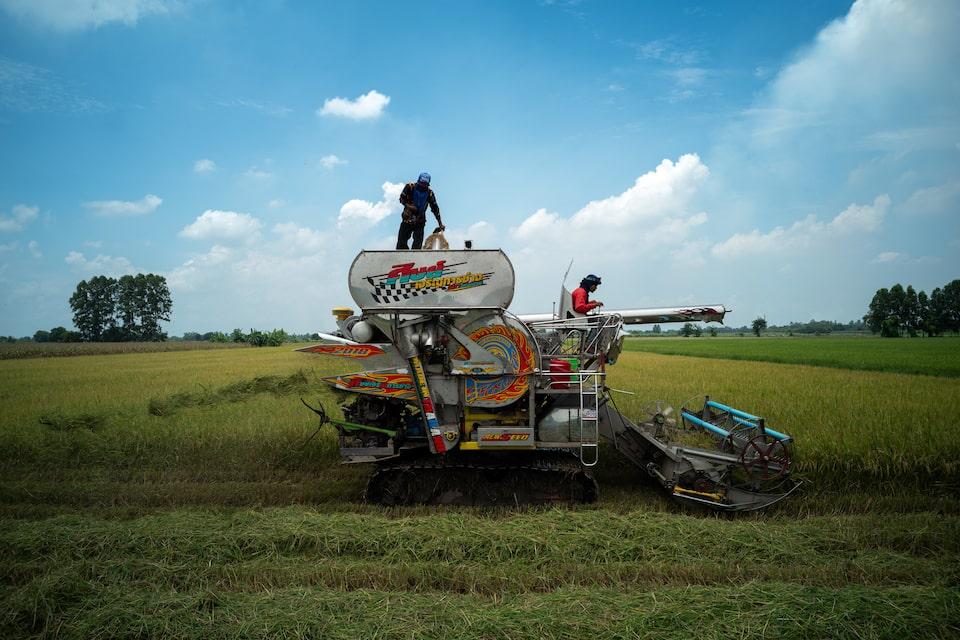
BANGKOK, April 21 (Reuters) - Thailand's rice exports fell 30% annually in the first quarter of this year to 2.1 million metric tons, an industry association said on Monday. The decline was due to countries delaying buying decisions and India resuming rice exports, Chookiat Ophaswongse, honorary president of the Thai Rice Exporters Association, told reporters. Sign up here. Full-year exports could fall below the forecast of 7.5 million tons, he said, but exporters were seeing more U.S. orders after a 90-day pause on the imposition of steep new tariffs. Exports in the second quarter would be similar to the first three months of the year, he said. The tariff of 36% imposed on Southeast Asia's second-largest economy is among the higher rates imposed by U.S. President Donald Trump's administration. A delegation led by Finance Minister Pichai Chunhavajira will meet U.S. officials in Washington this week to seek lower tariffs. Thailand is the world's second-largest rice exporter, but could lose that title if tariffs were higher than 10%, Chookiat said. Last year, Thailand shipped 9.94 million tons of rice worth 225.65 billion baht, with the U.S. being its third-largest market by volume. https://www.reuters.com/markets/asia/thai-first-quarter-rice-exports-fall-30-annually-2025-04-21/
2025-04-21 07:39
MANILA, April 21 (Reuters) - The Philippines' overall balance of payments position hit a deficit of $2 billion in March from a surplus of $3.1 billion in February, the central bank said on Monday. Cumulative BOP level for the first three months of the year was at a $3 billion deficit. The Philippine central bank has forecast a $2.1 billion BOP surplus for 2025. Sign up here. https://www.reuters.com/world/asia-pacific/philippines-posts-2-billion-balance-payment-deficit-march-2025-04-21/