2025-04-21 06:50
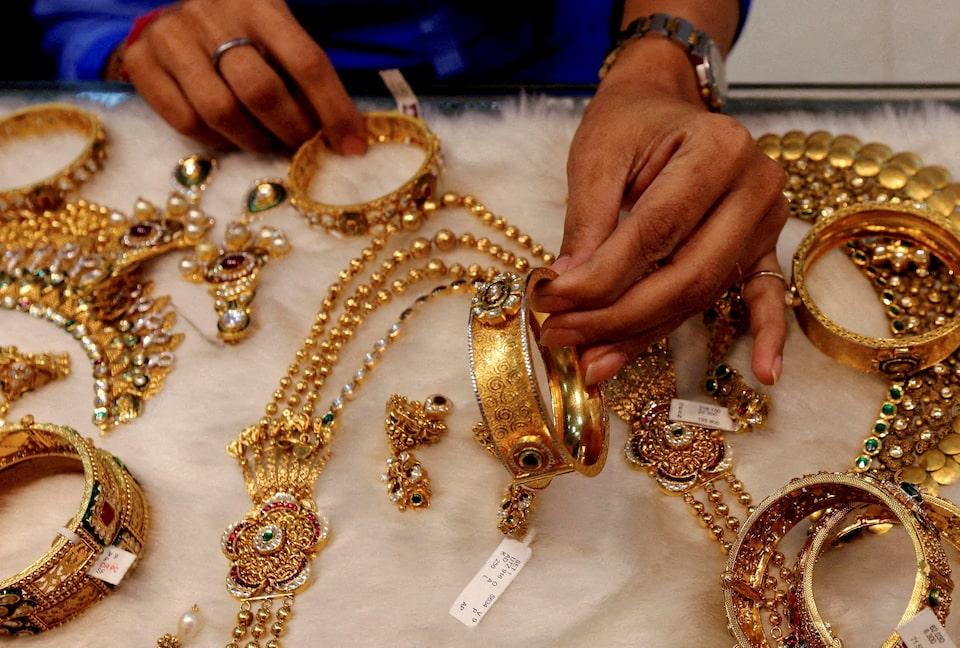
Spot gold gains over $700 since the start of 2025 Dollar slides as Trump poses potential threat to Fed independence China warns countries against striking trade deals with US Palladium slips 3% April 21 (Reuters) - Gold surged above $3,400 to a record high on Monday, as the dollar weakened and uncertainty over the economic impact of U.S.-China trade tensions spurred demand for safe-haven bullion. Spot gold rose 2.7% to $3,417.62 an ounce at 1:46 p.m. ET (1746 GMT). Prices hit a record high of $3,430.18 earlier in the session. Sign up here. U.S. gold futures settled 2.9% higher at $3,425.30. The dollar tumbled to its lowest level in three years as investor confidence in the U.S. economy took another hit over President Donald Trump's comments about Federal Reserve chairman Jerome Powell. A weaker dollar makes bullion more appealing for other currency holders. On the trade war front, China accused Washington of abusing tariffs and warned countries against striking a broader economic deal with the U.S. at its expense. "As tariff tensions continue to move at a fevered pitch, we continue to see gold prices move to the upside as a safe haven response," said David Meger, director of metals trading at High Ridge Futures. "There'll be pullbacks and profit-taking at times, but we still believe in the underlying trend to be on sideways to higher trajectory." Gold, which is considered a hedge against economic uncertainties and known to be a highly liquid asset, has hit multiple record highs and gained more than $700 since the start of 2025. It surpassed $3,300 last Wednesday and its strong momentum pushed it up by another $100 in just a few days. "These much bigger daily price moves in gold are one early clue this very mature bull market run is close to climaxing and that a near-term market top may be close at hand, from a time perspective, more so than a price perspective," said Jim Wyckoff, senior analyst at Kitco Metals. Among other metals, spot silver was steady at $32.60 an ounce, platinum was down 0.6% at $961.61 and palladium slipped 3% to $934.25. https://www.reuters.com/markets/commodities/gold-soars-record-high-trade-war-concerns-weaker-dollar-2025-04-21/
2025-04-21 06:46
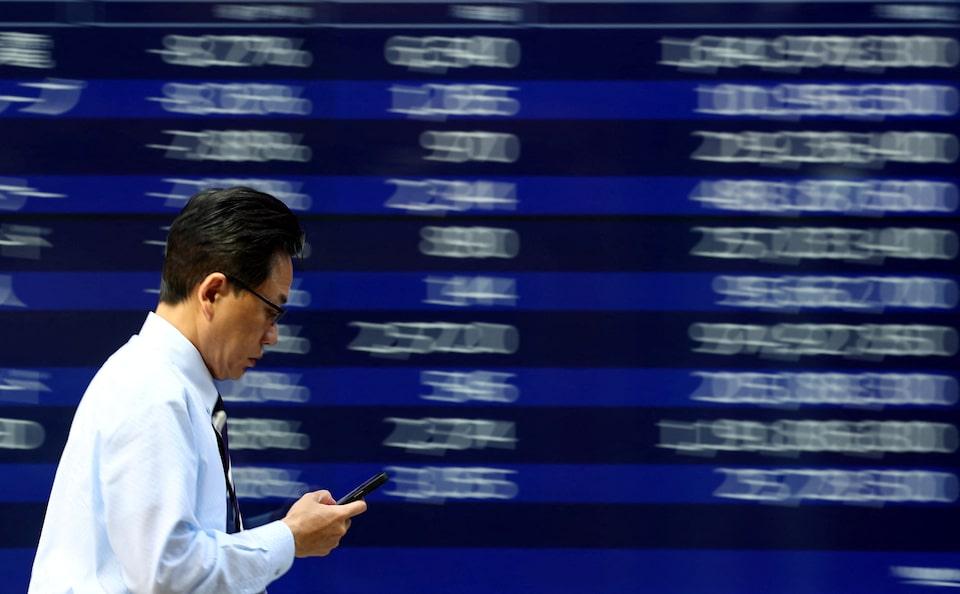
US stocks ends sharply lower amid Trump's tirade against Powell US dollar index falls to 3-year low Safe-haven gold and Swiss franc surge European markets closed for Easter Monday NEW YORK, April 21 (Reuters) - Major U.S. stock indexes dropped and the dollar index slid to a three-year low on Monday as U.S. President Donald Trump's continued attacks on the Federal Reserve chair and the bank's monetary policy rattled investors. Investors flocked to safe-haven assets including gold, which hit another record high, and the Swiss franc. Sign up here. Trump on Monday repeated his criticism of Fed Chair Jerome Powell and said the U.S. economy could slow down unless interest rates were lowered immediately. White House economic adviser Kevin Hassett said on Friday, when many markets were closed, that Trump and his team would study the matter, when asked if firing Powell was an option. Trump had launched a scathing attack against Powell on Thursday. His comments about Powell fueled worries about the Fed's independence in setting a monetary policy path and about the outlook for U.S. assets. Most markets were closed on Friday and some, including most of Europe, remained on holiday for Easter Monday, leading to thinner-than-usual liquidity. Powell is "a steady hand, he's a known entity, he's stability in a world of uncertainty. He brings that calmness to the market, something people can rely on that hasn't changed stability while all this chaos is going on," said Robert Pavlik, senior portfolio manager at Dakota Wealth in Fairfield, Connecticut. Trump's tariffs have roiled financial markets in recent weeks and remain a big concern for investors. The Sino-U.S. trade rift deepened after Beijing warned other countries against striking deals with the United States at China's expense, adding fuel to the spiraling trade war between the world's two largest economies. The Dow Jones Industrial Average (.DJI) , opens new tab fell 971.82 points, or 2.48%, to 38,170.41, the S&P 500 (.SPX) , opens new tab fell 124.50 points, or 2.36%, to 5,158.20 and the Nasdaq Composite (.IXIC) , opens new tab fell 415.55 points, or 2.55%, to 15,870.90. The S&P 500 closed 16% below its February 19 record closing high. If the bellwether index closes 20% below that all-time high, that will confirm the index has entered a bear market. MSCI's gauge of stocks across the globe (.MIWD00000PUS) , opens new tab fell 10.31 points, or 1.30%, to 783.11. The Fed, after a series of rate cuts late last year, has left its benchmark policy rate on hold in the range of 4.25% to 4.50% since December. Chicago Fed President Austan Goolsbee said on Sunday that he hopes the United States is not moving to an environment where the ability of the central bank to set monetary policy independent of political pressure is questioned. "The fact that we're down so much today after a long weekend tells me, OK, investors went into the weekend, they looked at the situation, and they see more uncertainty, not less uncertainty," said Adam Sarhan, chief executive at 50 Park Investments in New York. "We're seeing more weakness now in the dollar and gold is at all-time highs, so clearly investors are spooked and fear is taking over." Spot gold rose 2.7% to $3,417.62 an ounce. Prices hit a record high of $3,430.18 earlier in the session. Against a basket of currencies, the dollar slid as low as 97.923 , its lowest since March 2022. The currency also fell to a decade-low against the Swiss franc , while the euro broke above $1.15. The euro was last up 0.99% at $1.1504. Against the Japanese yen , the dollar weakened 0.87% to 140.93. Against the Swiss franc , the dollar weakened 0.88% to 0.809. Longer-dated U.S. Treasury yields rose as investors assessed the Trump administration's escalating attacks on the Fed chair. The yield on benchmark U.S. 10-year notes rose 8.8 basis points to 4.415%, from 4.327% late on Thursday. First-quarter results from U.S. companies continue to roll in, with reports from top names like Google's parent Alphabet (GOOGL.O) , opens new tab due this week. Companies and investors are grappling with a tariff landscape that is likely to keep shifting as the Trump administration negotiates with countries. Oil prices fell more than 2% on signs of progress in talks between the U.S. and Iran. Investors are still concerned about the impact of Trump's tariffs on demand for fuel. Brent crude futures were down $1.70, or 2.5%, at $66.26 a barrel, while U.S. West Texas Intermediate crude fell $1.60, or 2.5%, to $63.08 a barrel. https://www.reuters.com/markets/global-markets-wrapup-1-2025-04-21/
2025-04-21 06:31
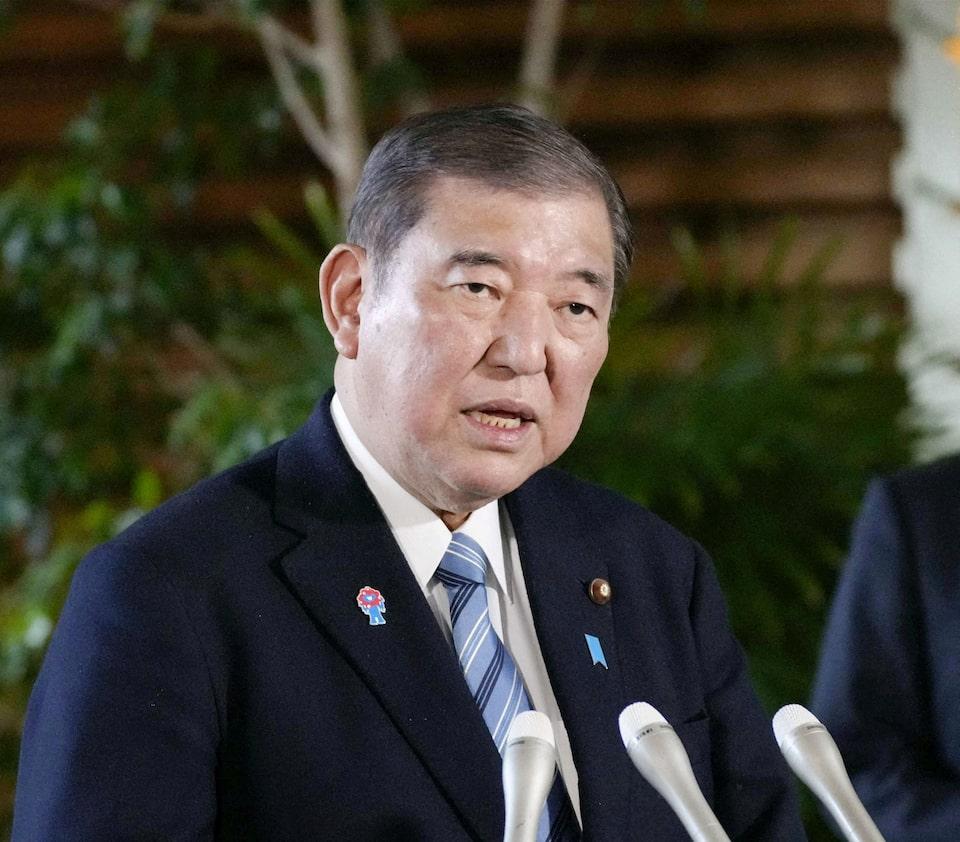
Japan has no plan to terminate 2019 trade deal with US Ishiba says has 'grave concern' on US auto tariff approach Japan, US finance heads expected to meet in Washington this week Yen rises on speculation US may pressure Japan to prop up yen TOKYO, April 21 (Reuters) - Japanese Prime Minister Shigeru Ishiba said on Monday Tokyo has no plan to terminate a trade deal struck with the U.S. in 2019, but will keep voicing "grave concern" over inconsistency between the deal and President Donald Trump's latest automobile tariffs. During Trump's first term as president, the U.S. and Japan signed a bilateral trade deal in 2019 that cut tariffs on U.S. farm goods, Japanese machine tools and other products while staving off the threat of higher U.S. car duties. Sign up here. Although the agreement did not cover automobile trade, then Japanese Prime Minister Shinzo Abe said he had received assurances from Trump that the U.S. would not impose "Section 232" national security tariffs on Japanese car imports. "Between President Trump and I, myself, this has been firmly confirmed that no further, additional tariffs will imposed," Abe had told a news conference after signing the deal. Japan, however, was not exempted from Trump's latest 25% tariff slapped on all automobile imports in the United States. "Japan has grave concern over the consistency" with regards to the latest U.S. automobile tariffs and the 2019 bilateral trade deal, Ishiba told parliament. "We will continue to convey our stance (to the U.S.) from this standpoint," Ishiba said, although he said Japan has no plan to terminate the 2019 agreement altogether. Japan's top trade negotiator, Ryosei Akazawa, visited Washington last week to kick off bilateral trade talks with the U.S., which will likely include discussions on non-tariff barriers and the thorny topic of exchange rates. Finance Minister Katsunobu Kato plans to visit Washington later this week, where he is expected to meet U.S. Treasury Secretary Scott Bessent for discussions on currency rates. The dollar hit a seven-month low of 140.615 yen on Monday on simmering market speculation that Japan could face U.S. pressure to prop up the yen, and help Washington reduce the huge U.S. trade deficit. Trump has hit Japan with 24% tariffs on its exports to the U.S. although, like most of his levies, they have been paused until early July. A 10% universal rate remains in place, as does a 25% duty on cars, a mainstay of Japan's export-heavy economy. https://www.reuters.com/business/japan-voice-concern-over-us-trade-deal-inconsistency-pm-ishiba-says-2025-04-21/
2025-04-21 06:27
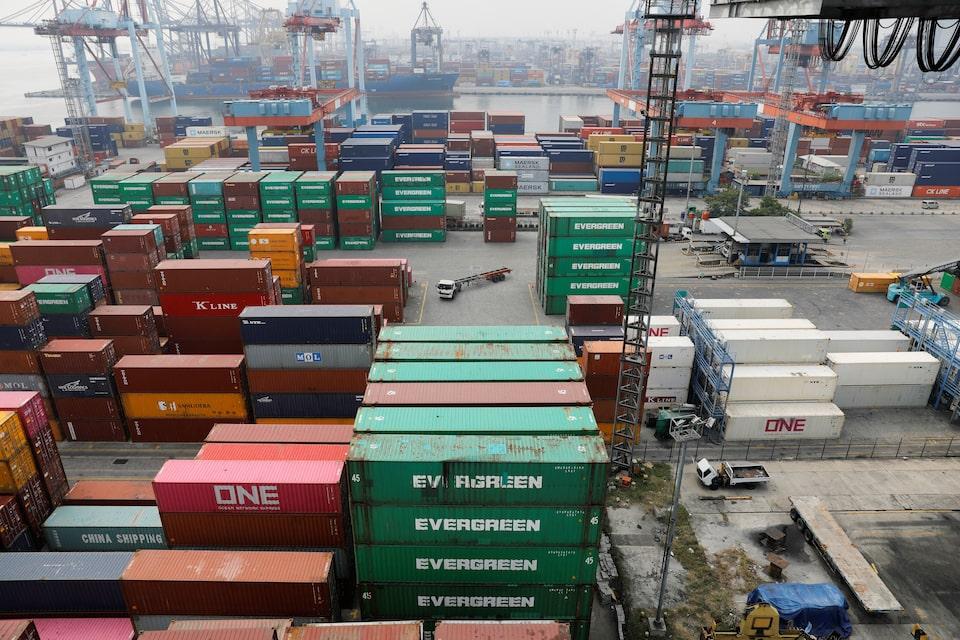
March surplus of $4.33 bln is bigger than $2.64 bln poll f'cast Exports +3.16% y/y, vs -3.40% in poll Imports +5.34% y/y, vs +6.60% in poll JAKARTA, April 21 (Reuters) - Indonesia reported on Monday a $4.33 billion trade surplus in March, more than expected and the widest in four months as shipments beat estimates on strong palm oil and nickel exports as well as a rush to beat the start date for U.S. tariffs. A Reuters poll of analysts had expected a surplus of $2.64 billion in March. The March surplus was the largest since November 2024, according to LSEG data. Sign up here. Exports from the resource-rich country have rebounded from lows reached after the end of a commodity boom in 2022, but shipments could soon be affected by a dimming global growth outlook due to the trade war sparked by U.S. tariffs. Among the countries that U.S. President Donald Trump targeted for tariffs above 10%, Indonesia was hit with a 32% levy, which has been paused for 90 days. Several Indonesian ministers have been in Washington since last week to try to negotiate a deal to avoid the tariffs, presenting a proposal that includes buying more American products to reduce the trade gap with the U.S. Exports rose 3.16% on an annual basis in March to $23.25 billion, official data showed on Monday, compared with a 3.40% fall expected by economists polled by Reuters. Shipments of palm oil surged nearly 41% last month from the same month in 2024 to $2.19 billion, while nickel metals exports rose 12% to $2.38 billion. They helped offset a drop in coal exports. Total imports were worth $18.92 billion, the statistics bureau said, up 5.34% on a yearly basis, compared with the poll's prediction of a 6.6% rise. Hosianna Situmorang, an economist with Bank Danamon, called March's surplus solid, bolstered by rising U.S.-bound exports. "Exporters accelerated shipments ahead of Trump's reciprocal tariffs, causing heavy port congestion at Tanjung Priok, while freight bookings at Chinese ports plunged by 640–800K containers, signaling early spillover from trade tensions," she said, referring to Jakarta's main port. Exports of electronics, footwear and knitted apparel to the U.S. grew more than 15% each on a yearly basis in the first quarter, the data showed. The three were Indonesia's biggest export products to the U.S. The trade surplus with the U.S. also was the biggest contributor to Indonesia's overall surplus in January-March 2025, standing at $4.32 billion, up from $3.61 billion in the same period in 2024. Indonesia's overall trade surplus in the first quarter reached $10.92 billion. https://www.reuters.com/world/asia-pacific/indonesias-exports-up-32-yy-march-2025-04-21/
2025-04-21 06:08
GIRESUN, April 21 (Reuters) - Turkey's daily natural gas production at its flagship Sakarya field in the Black Sea has reached around 9.5 million cubic metres, Energy Minister Alparslan Bayraktar said, as the country ramps up its energy ambitions both at home and abroad. Bayraktar told reporters in the northern province of Giresun that Turkey aims to finalise an agreement next month allowing state energy firm TPAO and a foreign partner to explore a Black Sea block off the coast of neighbouring Bulgaria. Sign up here. "We are about to conclude an agreement in the Bulgarian economic zone. Most likely next month, TPAO and a foreign company will sign a deal for a block in Bulgarian waters," he said. The new Sakarya field accounted for about 6.6% of Turkey's 53 bcm gas consumption last year, Reuters calculations show. Turkey, which imports over 90% of its energy needs, is pushing to cut its import bill and boost supply security by developing domestic resources and expanding international partnerships in oil and gas exploration. Bayraktar said Turkey was interested in two new offshore fields in the Caspian Sea region, including Azerbaijan, and in new fields in both northern and southern Iraq. In Somalia, where Turkey recently signed an oil and gas exploration deal, seismic data collection is expected to conclude by the end of May, with a decision on drilling likely by year-end. Turkey has also added three onshore blocks to its offshore licences in the Horn of Africa nation, Bayraktar said. "Somalia's offshore seismic survey will be completed around the end of May. By the end of the year, we will make our decision on drilling," he said. TPAO has also signed agreements with Pakistani companies to jointly bid for exploration licences offshore Pakistan, and Ankara is seeking to establish partnerships to develop oil and gas fields in Turkmenistan, from which it recently started importing natural gas. https://www.reuters.com/business/energy/turkey-eyes-regional-energy-expansion-black-sea-gas-output-rises-2025-04-21/

2025-04-21 05:18
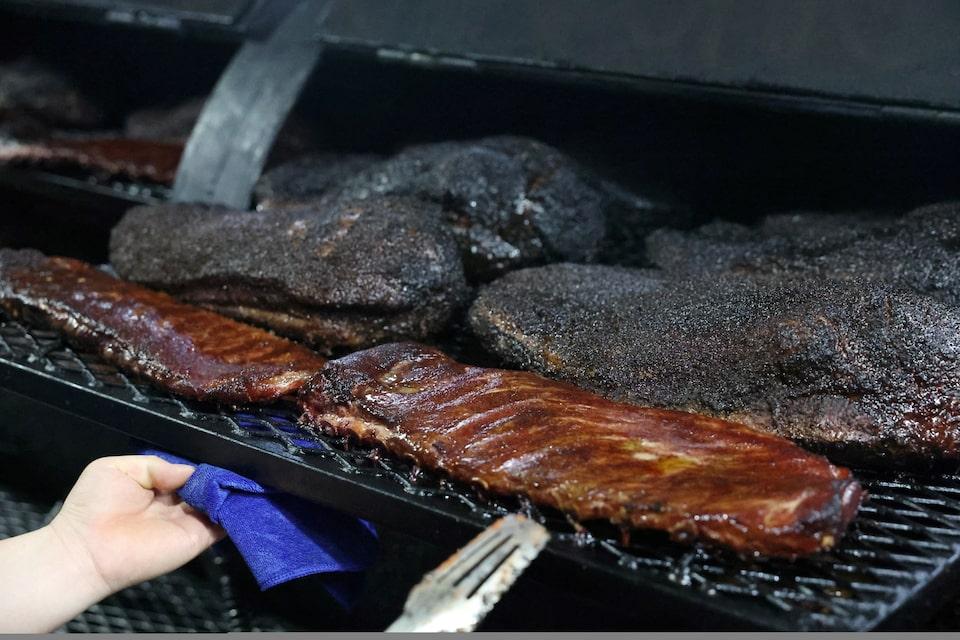
At risk: US beef exports to China worth $125 million a month Home Plate BBQ switching to Australian beef Australian beef 'just as good', restaurant operator says BEIJING, April 21 (Reuters) - At Home Plate BBQ, an American-style restaurant in Beijing, staff are reprinting menus. The U.S.-China trade war means American beef - once the star ingredient - will soon be off the table. Home Plate's beef, previously sourced entirely from the U.S., is increasingly Australian. The restaurant uses about 7 to 8 tonnes of brisket each month, and when the U.S. beef in the freezers is used up in a few weeks, the southern-style BBQ restaurant will only serve meat from Australia. Sign up here. U.S. beef is one of thousands of casualties in the trade war between the world's largest trading partners. Even before the battle began, American beef was expensive. Beijing's 125% retaliatory tariffs, on top of the existing 22%, made it unaffordable. "It's essentially just made it very hard for us to continue using U.S. beef," said Home Plate's operations director, Charles de Pellette. While the $125 million a month in U.S. beef exports to China is a sliver of the mammoth goods trade, beef's disappearance from menus in Beijing is a glimpse of the fate to come for thousands of goods on both sides of the Pacific. "Once we deplete our stocks, we'll be switching fully over to Australian M5 ... We still think that it's the same taste and quality and flavour, but we've had to switch just due to market pressures and the tariffs," de Pellette said. The pork ribs, too, are a-changing. They'll now come from Canada, he said. The experience of the restaurant chain, which has three branches in China and was co-founded by a Texan, is being repeated across Beijing restaurants, according to a beef supplier based in the capital who spoke on condition of anonymity because of the sensitivity of discussing tariffs. "They have to switch to Australian beef - even the American steak restaurants," the beef supplier said. De Pellette declined to disclose how much Home Plate is paying for Australian beef. U.S. beef was getting expensive before the trade war began in part because of shortages caused by years of dry weather that shrank herds to their smallest since the 1950s. Those higher prices were hard to swallow in China where a weak economy has made consumers especially price conscious. U.S. brisket prices rose by nearly 50% between last May and March before skyrocketing further after the tariffs - leaving supplies depleted or costs almost double what they were a year earlier. Australia is looking to fill the gap, including with brisket that's 40% cheaper. And at Home Plate they've had success. Come May, diners will be tucking into Australian beef ribs, brisket, and sausages smoked long and slow in the traditions of Texas and the American South. "We've tested it for a few months and we found that actually it's just as good and our customers are pretty happy with it," said de Pellette. https://www.reuters.com/markets/commodities/us-beef-off-menu-trade-war-hits-beijings-american-style-restaurants-2025-04-21/