2025-04-21 01:46
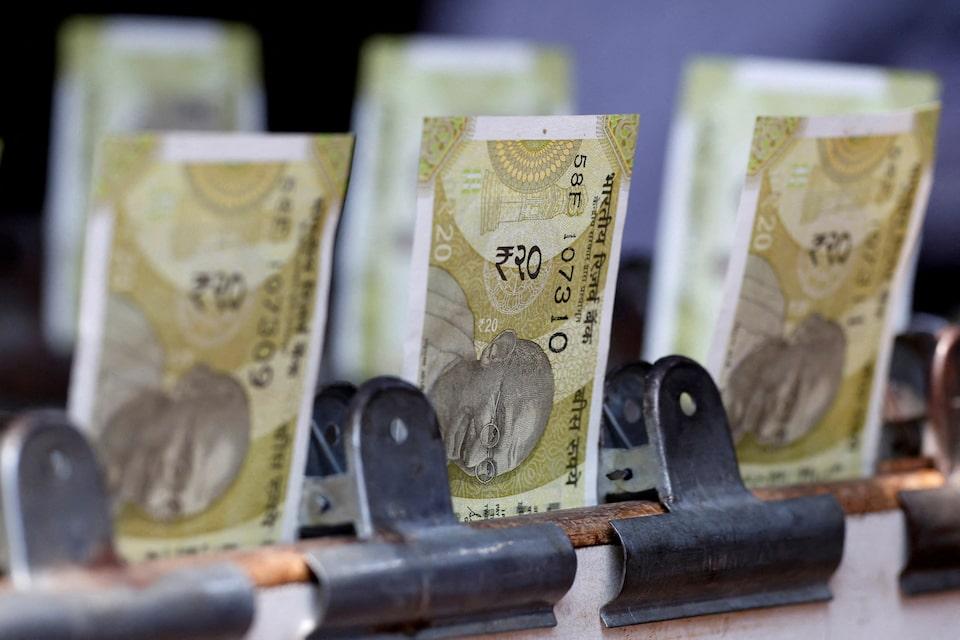
MUMBAI, April 21 (Reuters) - The Indian rupee is likely to trade with a positive bias this week, bolstered by a pickup in portfolio inflows and a weaker dollar while government bonds are expected to take direction from the central bank's latest policy meeting minutes. The rupee closed at 85.3675 on Thursday, up nearly 0.8% on the week. Indian financial markets were closed on Good Friday. Sign up here. Bullish bets on the rupee have picked up as the dollar remained under pressure from U.S. tariff related concerns, a Reuters poll showed. Traders said increased foreign buying of Indian stocks has also supported the currency. Foreign investors net bought over $1.5 billion of Indian stocks last week, per provisional exchange data. Early signs of de-escalation in the U.S.-China trade war could also help Asian currencies this week. In the near-term, the dollar-rupee pair is expected to trade between 85 and 85.80 with "upticks to be sold," said Anil Bhansali, head of treasury at Finrex Treasury Advisors. With data calendars relatively light in U.S. this week, investors will keep an eye on remarks from Federal Reserve policymakers and signs of progress in individual countries' trade talks with the White House. Meanwhile, the benchmark 10-year bond yield ended at 6.3709% on Thursday, its lowest level since December 2021, and fell 7 basis points for the week. The 10-year bond yield has now dropped for five consecutive weeks, posting an aggregate decline of 33 bps. Markets expect the yield to hover between 6.30% and 6.40%, with central bank's debt purchase and minutes of the monetary policy meeting acting as major triggers. The RBI had lowered its key policy rate by 25 basis points for a second time earlier this month, coupled with a change in stance to "accommodative". The central bank governor had also said the RBI is looking to maintain surplus liquidity at around 1% of deposits in the banking system. Economists expect the central bank to cut interest rates more than previously thought, as slowing growth and lower inflation give it room to act. Retail inflation in March fell to its lowest level since August 2019. Latest data, together with prediction of above-normal monsoons indicate back-to-back rate cuts in the June and August policy meetings are now more likely, ICICI Securities Primary Dealership said. "Moreover, risk clearly is that soft inflation (that averages between 3.5 to 4%) creates scope for additional easing beyond August meeting," it added. KEY EVENTS: India ** India April HSBC Flash manufacturing, services and composite PMI - April 23, Wednesday (10:30 a.m. IST) ** Minutes of Reserve Bank of India's February monetary policy meeting - April 23, Wednesday (5:00 p.m. IST) U.S. ** April S&P Global Flash manufacturing, services and composite PMI - April 23, Wednesday (7:15 p.m. IST) ** March new home sales - April 23, Wednesday (7:30 p.m. IST) ** March durable goods - April 24, Thursday (6:00 p.m. IST) ** Initial weekly jobless claims for week to April 14 - April 24, Thursday (6:00 p.m. IST) ** March existing home sales - April 24, Thursday (7:30 p.m. IST) ** April U Mich sentiment - April 25, Friday (7:30 p.m. IST) ($1 = 85.4290 Indian rupees) https://www.reuters.com/world/india/indian-rupee-may-nudge-higher-bond-yields-eye-central-bank-policy-minutes-2025-04-21/
2025-04-21 01:11
Mizuho urges BOJ to speed bond tapering amid possible rate hike pause BOJ's shrinking debt market presence raises private banks' role in JGB purchases Global uncertainties make U.S. Treasuries appealing, Koshimizu suggests TOKYO, April 21 (Reuters) - The Bank of Japan should pick up the pace of tapering government bond purchases as the possibility of a pause in interest rate hikes will give the central bank more wiggle room to adjust the tapering plan, Mizuho Financial Group's (8411.T) , opens new tab markets chief told Reuters. Kenya Koshimizu, co-head of the global markets division at Japan's third-largest lender, made the call ahead of the BOJ conducting a review of its existing bond tapering plan in June. Sign up here. Voices of major market participants like Mizuho will form a basis for the upcoming review, with the BOJ's shrinking debt market presence heightening the importance of private-sector banks on hopes they will return as major buyers of Japanese government bonds (JGBs). "The pace of tapering was very moderate last year," as there were fears that it could cause abrupt spikes in bond yields when combined with interest rate hikes, Koshimizu said in an interview on Friday. But as heightened uncertainties over U.S. policies and the global economy make it difficult for the central bank to keep raising rates for the time being, "the BOJ is likely to have more flexibility in adjusting the taper plan," he said. U.S. President Donald Trump's tariff plans have jolted financial markets and stoked fears of a global recession, making it less clear whether the BOJ can keep raising rates. Under a quantitative tightening (QT) programme laid out last year, the BOJ has been slowing bond purchases by around 400 billion yen per quarter to halve monthly purchases to 3 trillion yen by March 2026. Koshimizu declined to comment on what would be the appropriate pace of reduction, but added: "It doesn't have to be as moderate as last year." "We should now focus on restoring the function of the country's bond markets," particularly at a time of global market turbulence caused by the biggest shift in U.S. policies in decades, he said. The BOJ owns about roughly half of outstanding JGBs, straining the market's liquidity and price-discovery function. When asked the conditions under which Mizuho would start buying JGBs in full force, Koshimizu said it would "depend on circumstances." He suggested the possibility of buying U.S. Treasuries after having reduced the risk exposure in recent years. "The global economic uncertainties boost the appeal of highly liquid products," he said. In the long term, Koshimizu said he is confident about Japan's prospects, as the exit from deflation has led Japanese firms to shift their focus from cost-cutting to boosting growth. https://www.reuters.com/business/finance/mizuho-executive-calls-speedier-boj-bond-tapering-rate-hike-pace-may-hit-snag-2025-04-21/

2025-04-21 00:45
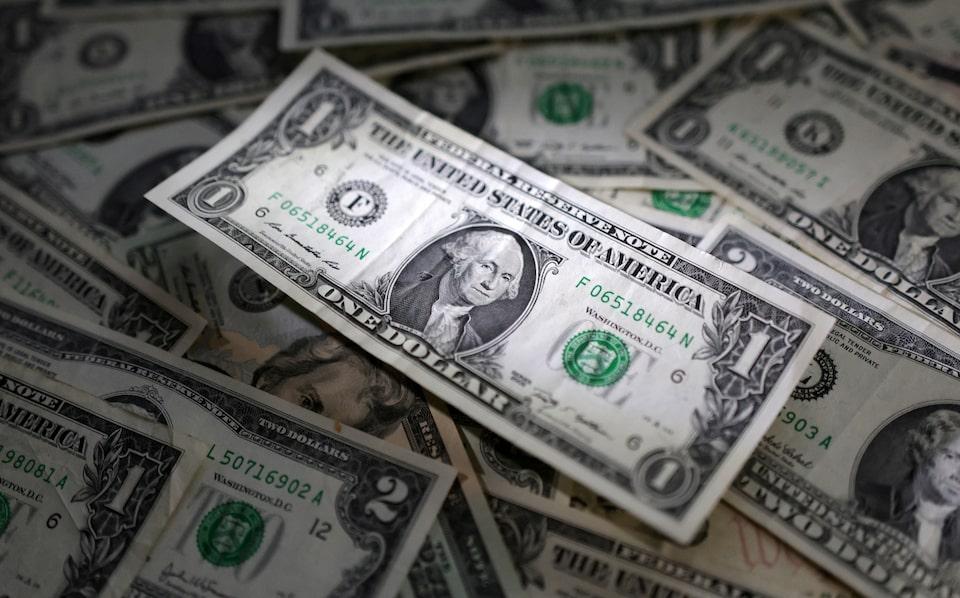
Dollar falls sharply across the board Swiss franc hits decade high, euro rises above $1.15 European markets closed for Easter Monday NEW YORK, April 21 (Reuters) - The dollar tumbled on Monday to its lowest level in three years as investor confidence in the U.S. economy took another hit over President Donald Trump's attacks on the Federal Reserve chairman, potentially putting the central bank's independence under threat. Trump ramped up his criticism of Fed Chair Jerome Powell on Monday via social media, calling him a "major loser" and demanding that he lower interest rates immediately. Sign up here. Against a basket of currencies, the dollar slid as low as 97.923 on Monday, its lowest since March 2022. The currency also fell to a decade-low against the Swiss franc , while the euro broke above $1.15. White House economic adviser Kevin Hassett said on Friday that the president and his team were continuing to study whether they could fire Powell, just a day after Trump said Powell's termination "cannot come fast enough" as he called for the Fed to cut interest rates. Trading was thin with most European markets and those in Australia and Hong Kong closed for Easter Monday. Most markets globally were closed on Friday for a holiday. U.S. stocks suffered steep losses on Monday after Trump's social media post about Powell, with all three major indexes down more than 2%, and steep losses in the "Magnificent Seven" group of megacap growth stocks weighing heaviest on the tech-heavy Nasdaq. "Powell does not report directly to Trump, so (Trump) cannot actually fire him. He can only be removed from office under certain procedures, which one would think have a higher barrier," said Vishnu Varathan, head of macro research for Asia ex-Japan at Mizuho. "But can the president move the cogs and wheels to undermine the perceived independence of the Fed? Sure, he could." Against the Swiss franc , the dollar sank more than 1.5% to a 10-year trough of 0.8063, while the euro peaked at $1.1535, its highest since November 2021. The dollar also hit a seven-month low against the yen , and was last at 140.66. CFTC data showed net-long positions on the Japanese yen hit a record high for the week ended April 15. "If the central bank’s dual mandate -- preserving price stability and fostering full employment -- is diluted with a new set of objectives defined by the White House, policymakers could find themselves unable to tighten policy dramatically in the face of a sudden increase in prices," said Karl Schamotta, chief market strategist at Corpay in Toronto, in a research note. Sterling rose to its highest since September at $1.34, while the Australian dollar scaled a four-month high of $0.6430. The New Zealand dollar reclaimed the $0.6000 level for the first time in more than five months. "It's really a buffet for any dollar bear... from the heightened uncertainty around the self-harm from tariffs to the loss of faith even prior to the Powell news," Varathan said. Trump's sweeping tariffs and uncertainty over his trade policies have sent global markets into a tailspin and darkened the outlook for the world's largest economy, in turn weakening the dollar as investors pull money out of U.S. assets. Elsewhere, the onshore yuan rose to a two-week high before paring some of those gains. Its offshore counterpart was last at 7.2931 per dollar. China on Monday kept its benchmark lending rates steady for the sixth successive month, matching expectations. But markets are betting on more stimulus being rolled out soon in the face of the escalating China-U.S. trade war. https://www.reuters.com/world/middle-east/dollar-weakens-concerns-about-feds-independence-under-trump-2025-04-21/
2025-04-21 00:32
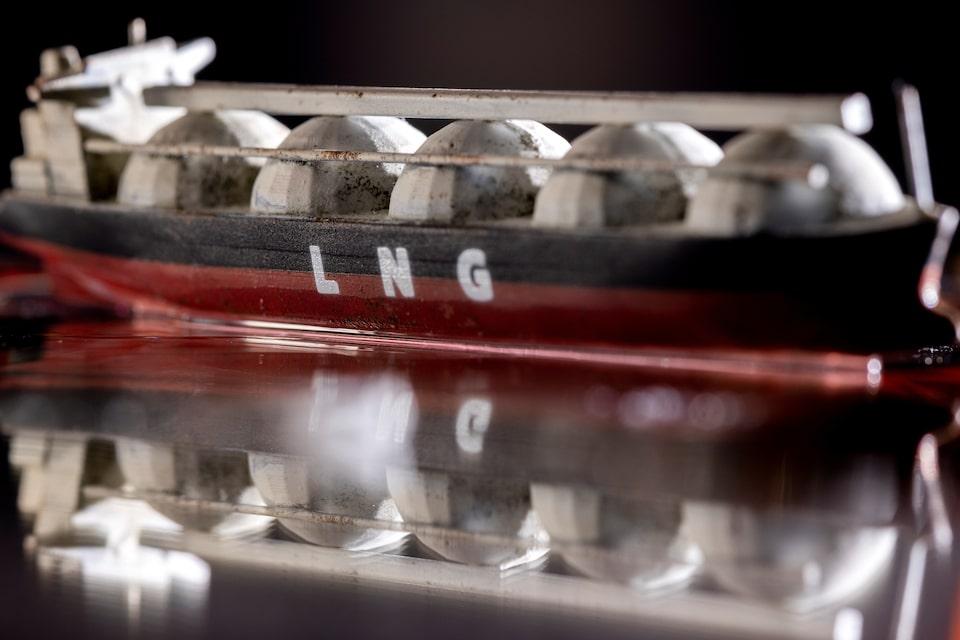
SINGAPORE, April 21 (Reuters) - Asian governments are looking to buy more U.S. oil and gas as they scramble to lower their trade surplus with Washington in hopes of easing their tariff burdens under President Donald Trump's sweeping new import duties. Many Asian countries run large trade surpluses with the United States and are also major energy importers. Sign up here. Trump's tariffs, which have been partially paused, have rattled economies and markets. Below are some of the measures that Asian countries plan to bolster purchases of U.S. oil and gas. INDONESIA Indonesia will propose increasing its imports of crude oil and liquefied petroleum gas (LPG) from the United States by around $10 billion as part of its tariff negotiations, energy minister Bahlil Lahadalia told local media on Tuesday. read more Bahlil said the energy ministry recommended increasing the LPG import quota for the U.S. as well as importing more U.S. crude to help reach the target. PAKISTAN Pakistan is considering importing crude oil from the United States for the first time to offset a trade imbalance that triggered higher U.S. tariffs, according to a government source directly involved with the proposal and a refinery executive. The refinery executive told Reuters that the idea is to buy U.S. crude equivalent to Pakistan's current imports of oil and refined products, or about $1 billion of oil. INDIA India is weighing a proposal to scrap import tax on U.S. liquefied natural gas (LNG) to boost purchases and help cut the trade surplus with Washington, a key irritant for President Donald Trump, four government and industry sources said. It also plans to end taxes on U.S. ethane and liquefied petroleum gas (LPG) imports. The country's largest LNG importer GAIL India Ltd (GAIL.NS) , opens new tab has issued a tender to buy an up to 26% stake in a LNG project in the United States combined with a 15-year gas import deal. THAILAND Thailand said on Wednesday it plans to import more , opens new tab U.S. LNG and ethane over the next five years. In addition to an existing plan to import 1 million metric tons per year of LNG worth $500 million next year as part of a 15-year plan starting in 2026 totalling 15 million tons, Thailand plans another contract for more than 1 million tons of U.S. LNG over the next five years. Thailand also plans to import 400,000 tons of U.S. ethane worth $100 million over the next four years, its finance minister said. ALASKA LNG Trump wants Japan, South Korea, and Taiwan to join the $44 billion natural gas export project in Alaska, part of Washington’s broader push on trade and tariffs. The project aims at transporting gas south from Alaska's remote north via a $44 billion, 1,300-km (800-mile) pipeline, to be shipped as LNG to Japan, South Korea and Taiwan, bypassing the Panama Canal. An Alaskan delegation visited Japan in late March to brief policymakers and meet possible backers of the project. Japanese trading house Mitsubishi Corp (8058.T) , opens new tab may consider investing in the Alaska LNG project, though any decision will require careful review, Chief Executive Katsuya Nakanishi has said. South Korean industry ministry officials are considering travelling soon to Alaska as part of working-level negotiations between the United States and South Korea for the project. Last month, Taiwanese state energy firm CPC Corp signed an agreement with Alaska Gasline Development Corp to buy LNG and invest in the project, a move Taiwan's President Lai Ching-te said would ensure the island's energy security. https://www.reuters.com/business/energy/asian-countries-look-buy-more-us-energy-offset-trade-imbalance-2025-04-17/
2025-04-20 23:01
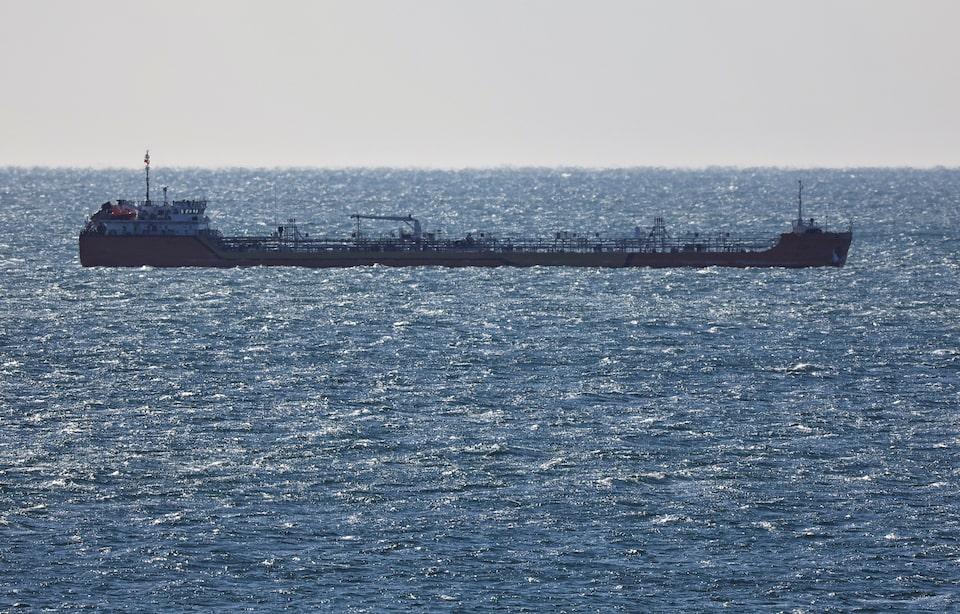
April 21 (Reuters) - Russia's economy ministry has cut its forecast for the average price of Brent crude in 2025 by nearly 17% from what it saw the price would be this year in its September calculations, according to documents obtained by Reuters. The ministry envisages in its baseline scenario of economic forecasts for 2025 that the average price for Brent will be at $68 per barrel, down from the $81.7 per barrel it assumed in its September forecasts, Interfax reported. Sign up here. The ministry sees the price for Urals, Russia's main blend, at $56 per barrel - against the $69.7 per barrel Russia has based its 2025 budget on - and below the $60 'cut off' price, which determines how much money is sent to the budget reserve National Wealth Fund (NWF). "In the baseline scenario, at some point in time, we assume that the export price falls below the cutoff price, but then it goes up. We do not deplete the NWF in this setup," the Interfax news agency cited a representative of the ministry as saying. The price of Urals crude oil is crucial for the country's budget as oil and gas revenues make up a third of all budget revenues. "From a budgetary perspective, these are tough conditions, but normal," the representative added. Russia's rainy day NWF has become the main source of financing Russia's now persistent budget deficit. The fund's liquid assets have dropped by about two thirds to just $39 billion from $112.7 billion before the Ukraine conflict. The new estimates for the price of Urals and the exchange rate of the national currency mean a 21.5% decrease in the rouble price of Russian oil to 5,281 roubles per barrel, compared to a previous forecast. The Russian central bank warned earlier in April that oil prices could be lower than forecast for several years as a result of lower global demand. Urals prices fell to their lowest levels since 2023 in early April to trade at around $53 per barrel and traded below $60 last week. Russia's oil and gas revenues fell by 10% year-on-year in the first quarter, while the average rouble price for Urals since the start of April was by 31% below the plan, forcing the state to start selling foreign currency for the first time this year. The ministry also said it does not see big recession risks because of U.S. President Donald Trump's trade wars and sees global economic growth this year at slightly more than 2%. "The world is still wider than the United States, so some flows will be redirected," Interfax cited the ministry's representative as saying. The ministry kept its gross domestic product growth forecast for Russia at 2.5% and increased its inflation forecast to 7.6% from 4.5% earlier. It also said it sees the rouble slightly stronger than what it had assumed earlier, at an average of 94.3 roubles per dollar this year, against an earlier forecast of 96.5 roubles. https://www.reuters.com/business/energy/russias-economy-ministry-cuts-2025-brent-price-forecast-by-nearly-17-interfax-2025-04-20/
2025-04-20 18:03
WASHINGTON, April 20 (Reuters) - At least two people, including a child, died in Oklahoma after their vehicle was stranded in flood waters, police said on Sunday, as severe weather and flooding hit parts of the U.S. South and Midwest during the Easter holiday weekend. "This was a historical weather event that impacted roads and caused dozens of high-water incidents," police in Moore, Oklahoma, about 11 miles south of Oklahoma City, said in a statement. Sign up here. "One of (the vehicles) left the roadway and was swept under the bridge. At the time of the incident all but two occupants were rescued. It is with great sadness that we report that two individuals, an adult female and a 12-year-old male, were later located deceased," they said. Police in Moore urged people to stay at home and said late on Saturday they responded to over a dozen calls from residents whose vehicles were trapped in high water. Flood warnings, which suggest that a flood is occurring or is imminent, were in place across Oklahoma. The National Weather Service said on Sunday severe thunderstorms were expected from east Texas into far southeast Iowa and Illinois while a strong tornado and damaging wind potential will exist from central Arkansas into central Missouri. A tornado watch was issued for parts of Arkansas, Kansas, Louisiana, Missouri, and Oklahoma, the National Weather Service added. Earlier this month, a deadly spring storm spawned tornadoes and drenching thunderstorms in a swath of the U.S. stretching from Texas to Ohio, with over a dozen people killed in states of the U.S. South and Midwest. https://www.reuters.com/world/us/two-dead-oklahoma-severe-weather-hits-us-south-midwest-2025-04-20/