2026-01-15 09:45
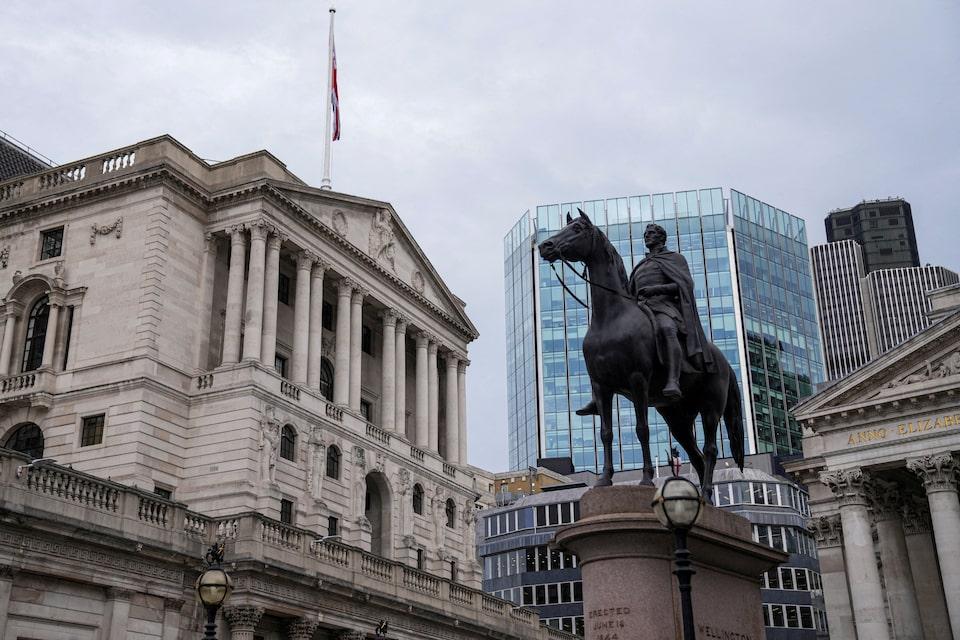
LONDON, Jan 15 (Reuters) - British lenders expect to see demand for mortgages fall in early 2026 after dropping at the end of last year, according to a Bank of England survey published on Thursday. The BoE's quarterly Credit Conditions Survey also showed lenders expected demand for unsecured consumer lending to be flat after rising in late 2025. Sign up here. Demand for corporate lending in the three months to the end of February was expected to be unchanged too, the survey showed. The survey of lenders took place between November 10 and December 3. https://www.reuters.com/world/uk/british-lenders-expect-lower-mortgage-demand-early-2026-boe-says-2026-01-15/
2026-01-15 07:33
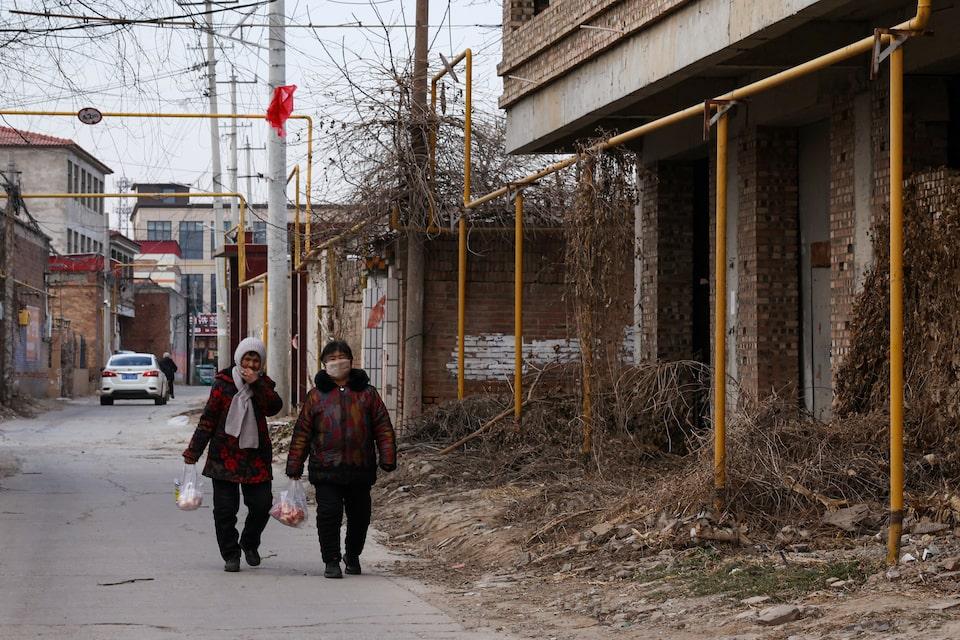
Rising gas prices strain rural Chinese households Subsidy cuts impact heating affordability in Hebei Coal-to-gas switch improves air quality but raises costs BAODING, China, Jan 15 (Reuters) - As the dry, freezing winter air envelops his home, 72-year-old farmer He Wenxiang sits on a bed wearing several layers of clothing including a black fur-collared jacket and a cap. He takes a thermometer off the wall that reads about 14 degrees Celsius (57 degrees Fahrenheit). Despite outside temperatures of minus 1 C (30 F), He runs his gas boiler only occasionally to warm up the radiator in his bedroom. "Life isn't easy," he said. "If any colder you couldn't take it." Sign up here. He is one of several people in his village outside the city of Baoding, in China's Hebei province south of Beijing, choosing to barely heat their homes because of rising natural gas prices after cash-strapped governments scaled back subsidies designed to drive a transition to clean energy. In another village nearby, a woman who only gave her surname Song stands in the sun in an alleyway selling used electronics. She said her family pays 8,000 yuan ($1,148) to heat their home for a winter. That is more than one-third of the average annual rural salary in Hebei of 22,022 yuan, according to 2024 figures. Her family has resorted to only turning on the heat when her children are home. The combination of impoverished local governments, energy market reforms and a stalling economy weighing on farming income growth is forcing many in rural China to make hard choices about necessities such as heating. CLEANER BUT COSTLIER Since 2017, Beijing has steered a transition away from traditional coal heating to natural gas and other cleaner heating methods to curb some of the world's worst air pollution. But as demand outpaced available gas supply and infrastructure costs climbed, natural gas prices, already more expensive than coal, soared. Market-based reforms for gas pricing in 2023 by the government, meant to boost profits for regional gas distributors, have added to the price increases. Local governments initially paid subsidies to consumers but He said they were cancelled a year or two ago, though Hebei province has not formally announced cuts to the payments. The province, whose economy runs on agriculture and heavy industry, has faced increased budget strains recently with public expenditures in 2024 reaching the highest in 10 years at 139.5% of revenues. The communications office for Hebei province did not immediately respond to a fax sent by Reuters requesting a comment. Still, the government does seem aware of the unhappiness with heating affordability. State-run news agency Xinhua released a video commentary on January 4 on the trade-offs of the coal-to-gas transition in rural heating, saying "people's real sense of gain" should be how a policy is measured. Other media have also reported on heating affordability in Hebei, including an article on the Substack service from a Beijing-based former reporter for Xinhua named Zichen Wang and a story by the independently run newspaper the Economic Observer from early January. It does not currently appear on the company's website. BLUE SKIES AT A PRICE The coal-to-gas switching programme has improved the air quality in Hebei province, which practically surrounds Beijing, and so-called "airpocalypse" days have become rarer. Cutbacks in coal burning at residential and industrial sites, and emissions reductions by heavy industry have reduced pollution from particulate matter of less than 2.5 microns (PM2.5) – which can lodge in the lungs and enter the bloodstream - by about 30% in and around Beijing from 2020-2025, analysts from the Centre for Research on Energy and Clean Air said. But those benefits may not be readily apparent to Li, a 70-year-old woman who only gave her surname. She and her husband spend half their yearly 8,000 yuan salary to heat their brick home in a village near Baoding, usually only warming the bedroom. They turn up the heat to no more than 13 C, though the World Health Organization says a safe indoor temperature for adults is at least 18 C (64 F), or several degrees higher for older adults and children. Standing outside smoking with a friend, He Wenxiang said he could previously keep the heat on for an entire winter for just 500 yuan with coal. "I support environmental protection, but at this price, I can't afford to burn gas," He said. ($1 = 6.9708 Chinese yuan renminbi) https://www.reuters.com/sustainability/climate-energy/villagers-shiver-chinas-north-government-gas-subsidies-shrink-2026-01-15/
2026-01-15 07:31
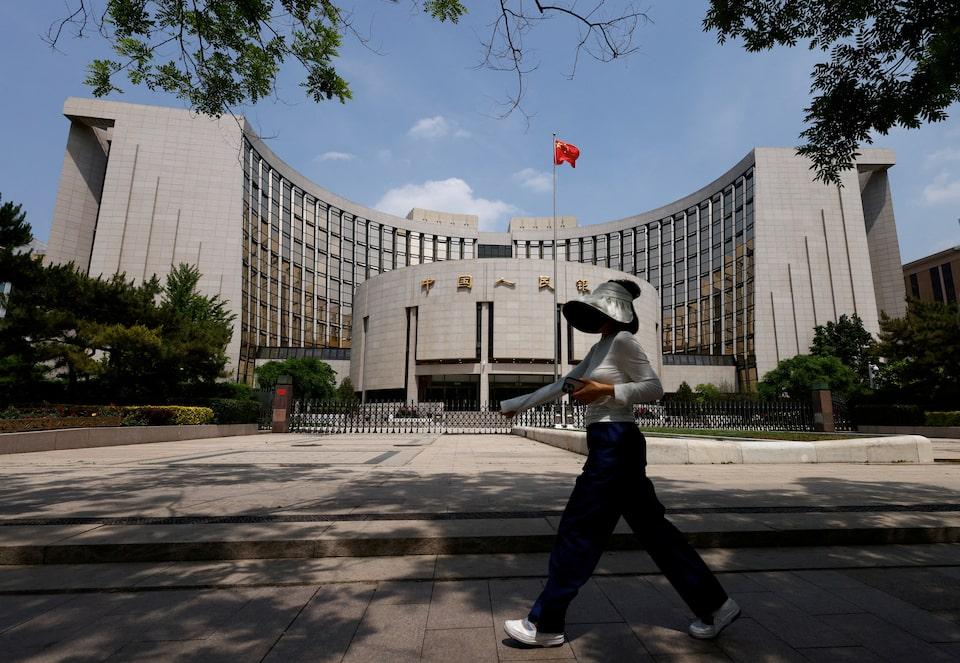
PBOC cuts rates on structural policy tools by 25 bps Move seen as signaling possible benchmark rate reductions PBOC has some room for rate, reserve ratio cuts, deputy gov says BEIJING, Jan 15 (Reuters) - China's central bank announced on Thursday cuts to sector-specific interest rates to provide an early boost to the economy, and signalled it has room this year for further reductions in banks' cash reserve requirements and for broader rate cuts. The People's Bank of China (PBOC) said it would lower interest rates on its structural monetary policy tools by 25 basis points on January 19 - a move that tends to have a limited impact on growth compared with cuts to benchmark policy rates. Sign up here. Structural monetary policy tools are central bank instruments designed to target specific sectors or areas of the economy, such as small firms, tech innovation and green development. Outstanding loans made via structural tools totalled 5.9 trillion yuan ($846.84 billion) at the end of March 2025, central bank data showed. No updates have been released since. Analysts at Standard Chartered Bank estimate that structural tools account for about 13% of the PBOC’s balance sheet. "The move is aimed at boosting support to major strategic areas and weak links in the economy," the central bank said in a statement. China's economic growth is expected to decelerate in 2026 compared to 2025 and maintain the same pace in 2027, according to a Reuters poll. The forecast underscores the pressure on policymakers to address structural vulnerabilities and deploy additional measures to sustain long-term growth. "In recent years, China has a practice of frontloading stimulus at the start of a year. After the rate cut on structural tools, it probably won’t take very long to see a full policy rate cut," said Tianchen Xu, senior economist at the Economist Intelligence Unit. Zou Lan, deputy PBOC governor, told a news conference that there is room for the central bank to cut interest rates and reserve requirement ratios this year. China's yuan , eased right after the PBOC announcement, but quickly pared some of these losses. The central bank said it would expand its re-lending programme for tech innovation by 400 billion yuan ($57.37 billion) to 1.2 trillion yuan, providing cheap loans to small and midsize tech companies. Additionally, the lending quota for agricultural and small enterprises will be raised by 500 billion yuan, while a separate 1 trillion yuan relending facility will be established to support small and medium-sized private firms. ($1 = 6.9671 Chinese yuan renminbi) https://www.reuters.com/world/asia-pacific/china-central-bank-cut-policy-tool-rates-by-25-bps-2026-01-15/
2026-01-15 07:24
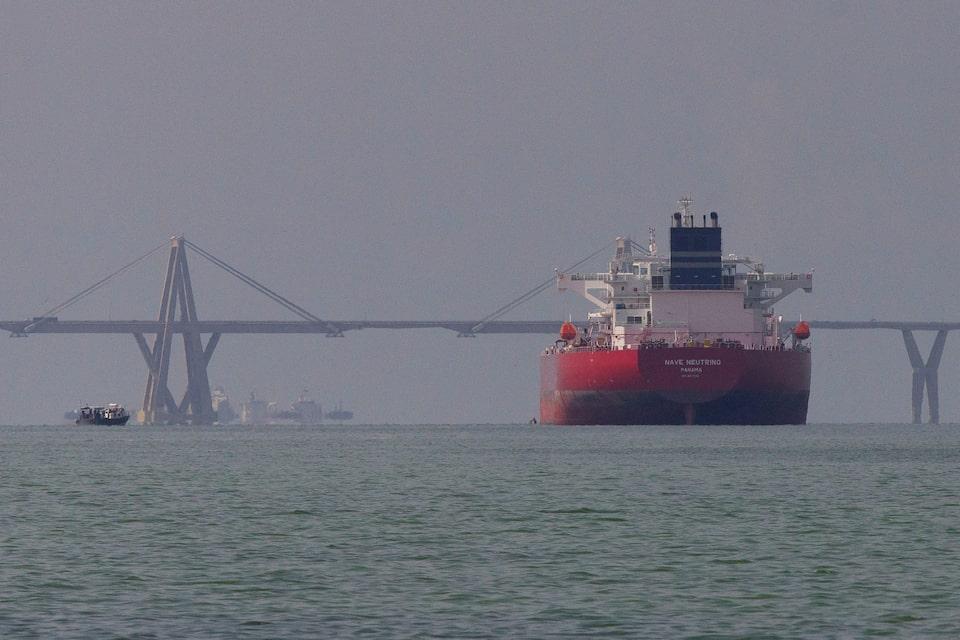
SOFIA, Jan 15 (Reuters) - The ousting of Nicolas Maduro in Venezuela may mark the beginning of a broader U.S. attempt to realign Latin America geoeconomically, limiting the ability of Russia and China to use the Western Hemisphere as a pressure point in global commodity markets. Central America could become the next domino to fall. The region is an attractive route for facilitating both licit and illicit commerce, given its proximity to major shipping lanes and checkpoints. This includes the Panama Canal, which handles about 40% of U.S. container traffic and approximately 5% of world trade, as well as the Caribbean Sea transit routes and west coast ports in Mexico, Guatemala, and Costa Rica that are used for shipments to Asia. Sign up here. Russia already exploits this geography through a growing "shadow fleet," aging vessels with opaque ownership structures that operate outside the Western insurance system. They help move crude oil and refined products subject to Western sanctions across the Caribbean corridor, through the Panama Canal and into the Gulf of Mexico, blunting U.S. and European efforts to curb Moscow's war financing in Ukraine. The region is a critical node in the Kremlin’s global financial network, as some of the largest Russian companies use the offshore financial hubs in the Caribbean extensively to conduct global business. The Center for the Study of Democracy , opens new tab estimates that offshore shell companies there control close to $70 billion in Russian assets. Yet, China remains the structural economic power in Latin America. Its Belt and Road investments, technology transfer, and financing dwarf Russia’s and increasingly the U.S.'s outlays. China has expanded its engagement through tariff reductions and sectoral agreements in the region, positioning itself as a key provider of technology, industrial inputs, transportation equipment, and consumer goods. Moscow and Beijing have used strategic investments, political ties and long-term contracts to establish their foothold in the Americas. Chinese development loans in Latin America rose to more than $120 billion by the end of 2023, according to Inter-American Dialogue. True, U.S. foreign direct investment (FDI) stocks in Latin America, worth around $1.4 trillion at the end of 2023, still dwarf the roughly $610 billion in combined Russian and Chinese capital in the region. Yet, the strategic bilateral agreements Latin American countries have signed with Moscow and Beijing have significantly limited opportunities for U.S. and European companies to enter the markets likely to define the trajectory of the Western Hemisphere’s future economic development. The Trump administration's strategy for cementing its dominance in the region - the so-called "Donroe Doctrine" - is seeking to change that. SHIFTING REGIONAL OIL DYNAMICS Venezuela has long supported regimes stretching from Cuba to Nicaragua , opens new tab through its control of the world's largest proven oil reserves - with additional support from Moscow. For example, Venezuela and Russia cover more than 60% of Cuba’s oil consumption at a very low cost. This dependence has turned energy supply into a geopolitical lever. Cuba’s economy already faces chronic energy shortages, so if the U.S. blocks Venezuelan and Russian supplies, the country could be at risk of economic chaos. For commodities markets more broadly, the immediate impact of increased U.S. involvement in the region would likely be indirect. Stricter scrutiny of Caribbean shipping, insurance and reflagging - or changing a vessel's country of registration – is apt to raise costs for traders and restrict the flow of sanctioned crude. In this scenario, there will likely be increased reliance on U.S. Gulf Coast refineries to replace the lost supply from Russia and Venezuela. If the U.S. Southern Command also suppresses the shadow fleet along the Atlantic coast of South America, this would further push back Russia, which recently became the biggest supplier of petroleum products to Brazil. This may enable U.S. refiners to reclaim their traditional role as the swing supplier to the region. On top of this, the reintegration of Venezuela into the global oil market under U.S. control would directly cut into the market shares of oil exporters such as Mexico, Ecuador and Colombia. They have all benefited from the crumbling Venezuelan oil industry, increasing their sales regionally over the past decade. BROADER GEOECONOMIC REALIGNMENT Beyond oil, the U.S. move to reclaim its economic sphere of influence in the Western Hemisphere may open the door for more American investment in strategic sectors such as nuclear energy, port and road infrastructure, as well as the development of the region's vast critical raw materials and fertilizer supplies. All of these sectors are currently dominated by Chinese and Russian companies in Bolivia, Brazil, Argentina, Venezuela, Peru and Chile, among others. Yet the U.S. approach is not without risk. Coercive U.S. action could unsettle regional trade and investment, strain relations with key Latin American governments and, in some cases, accelerate the shift toward China rather than reversing it. With the U.S. intervention in Venezuela, the Trump administration could begin to roll back the region's growing geoeconomic alignment with Russia and China, but only if coercion is matched with credible economic incentives for countries to shift course, meaning this month's events have implications far beyond the oil market. (The views expressed here are those of Martin Vladimirov, Director of the Geoeconomics Program of the Center for the Study of Democracy (CSD)) Enjoying this column? Check out Reuters Open Interest (ROI), , opens new tab your essential new source for global financial commentary. ROI delivers thought-provoking, data-driven analysis of everything from swap rates to soybeans. Markets are moving faster than ever. ROI , opens new tab can help you keep up. Follow ROI on LinkedIn, , opens new tab and X. , opens new tab https://www.reuters.com/markets/commodities/venezuela-marks-opening-move-latam-geoeconomic-reset-2026-01-15/
2026-01-15 07:22
UK GDP +0.3% in November vs Reuters poll +0.1% Strongest monthly growth for economy since June Return to full production at carmaker JLR boosts GDP Services sector also stronger than expected in November Firms reported uncertainty ahead of November 26 budget LONDON, Jan 15 (Reuters) - Britain's economy grew more strongly than expected in November, boosted by the return to full production at Jaguar Land Rover after a cyberattack which hit the carmaker and its suppliers. Gross domestic product expanded by 0.3% on the month - the fastest growth since June - after a drop of 0.1% in October, official data showed on Thursday. Sign up here. Economists said the figures also suggested that nervousness about finance minister Rachel Reeves' annual budget statement on November 26 had not affected output as much as feared. Before the data, economists polled by Reuters had forecast that GDP would expand by 0.1% on a month-on-month basis, in large part because of the boost from the recovery of production at JLR. Sterling briefly jumped in value against the U.S. dollar after the data and short-dated British government bond yields rose. Investors continued to almost fully price in two quarter point interest rate cuts by the BoE this year. AUTO OUTPUT UP, SERVICES TOO Just under half of November's growth was accounted for by a 1.1% rise in industrial output, which in turn was driven by a 25.5% rise in car production - the biggest monthly increase in since July 2020 when COVID restrictions eased. But output in Britain's dominant services sector also grew by more than expected in November, rising by 0.3% from October when it fell by 0.3%. Previous surveys of Britain's economy had shown some signs of stumbling ahead of the budget as speculation about possible tax increases weighed on the economy. The Office for National Statistics said firms across the economy reported they and their customers had been awaiting the outcome of the budget in November as they had been in October, including in the construction sector where production fell sharply for a second month in a row. Stuart Morrison, research manager at the British Chambers of Commerce, said companies were not showing a lot of relief after they were spared a repeat of the big tax increases included in Reeves' first budget in 2024. "Firms are telling us they're still cautious about investing and recruiting, meaning growth will stay limited for the foreseeable," Morrison said. The Bank of England expects Britain's economy to have flat-lined in the October-to-December period of 2025 although it thinks underlying growth is running at about 0.2% a quarter. In the three months to November, the economy grew by just 0.1%, the ONS said, though that was markedly faster than the 0.2% decline forecast in the Reuters poll, partly due to an upward revision to September data. Sanjay Raja, chief UK economist at Deutsche Bank, said the economy could outpace forecasts in early 2026 due to the stronger-than-expected data and the end of budget-related uncertainty. Reeves and Prime Minister Keir Starmer have promised to speed up Britain's economy but there has been no step change so far, 18 months after their Labour Party won a national election. A survey published on Wednesday showed businesses turned the most pessimistic in three years at the end of 2025 and their mood worsened after Reeves' budget. In the housing market there were more optimistic signals, according to a report released by the Royal Institution of Chartered Surveyors earlier on Thursday which showed sales expectations reached their highest since the end of 2024 in December. Yael Selfin, chief economist at KPMG UK, said lower inflation could help boost discretionary spending by consumers this year. "Despite the relatively muted consumer sentiment so far and consumer-facing services output declining in November, there are some tentative signs of a pick-up in household spending," Selfin said. The International Monetary Fund has forecast that Britain's economy will grow by 1.3% in 2026, the same as last year. Although that would be the third-fastest among the Group of Seven nations after the United States and Canada, it would be less than half its typical pace in the roughly 15 years before the global financial crisis of 2007-09. https://www.reuters.com/world/uk/uk-economy-grew-by-better-than-expected-03-november-2026-01-15/

2026-01-15 07:21
SEOUL, Jan 15 (Reuters) - U.S. Treasury Secretary Scott Bessent's recent comments on the Korean won underscore the importance of foreign exchange stability for bilateral economic cooperation between Seoul and Washington, a senior South Korean official said on Thursday. Deputy Finance Minister Choi Ji-young said currency stability was an important factor because volatility could hinder progress on a $350 billion U.S. investment pledged by the Asian country. Sign up here. Bessent said on Wednesday he had discussed the recent depreciation of the won with South Korean Finance Minister Koo Yun-cheol, adding that the currency was not in line with the country's economic fundamentals. "The U.S. Treasury Department's rare comments on South Korea's foreign exchange market and its assessment that recent weakness in the won was undesirable reflect the fact that the won's stable trend is an important factor for the implementation of strategic investments," Choi told a briefing. Finance authorities of the two countries will communicate and cooperate closely on the stability of the foreign exchange market, Choi said, noting their earlier agreement to delay investments in the case of market instability. Seoul and Washington finalised in November a trade deal lowering U.S. tariffs on imports from the Asian ally, in return for a $350 billion investment package in strategic U.S. sectors, after months of negotiations over the foreign exchange implications of the investment package. South Korea could seek an "adjustment in the amount and timing of the funding, and the United States will, in good faith, give due consideration to such request," if investments are expected to cause disorderly movements in the foreign exchange market, according to the deal. The Bank of Korea on Thursday signaled an end to its current easing cycle amid concerns about a weak won, after Koo vowed on Wednesday to take steps to rein in increasing volatility in the foreign exchange market. Authorities are considering introducing new macro-prudential policies to ease discrepancies between recent foreign exchange conditions and macroeconomic fundamentals, Choi said. South Korea's ruling Democratic Party introduced a bill in November to establish a special fund to finance the $350 billion investment package. The bill has not been passed yet. https://www.reuters.com/world/asia-pacific/bessents-comments-show-importance-fx-stability-us-south-korea-cooperation-seoul-2026-01-15/