2025-04-18 00:33
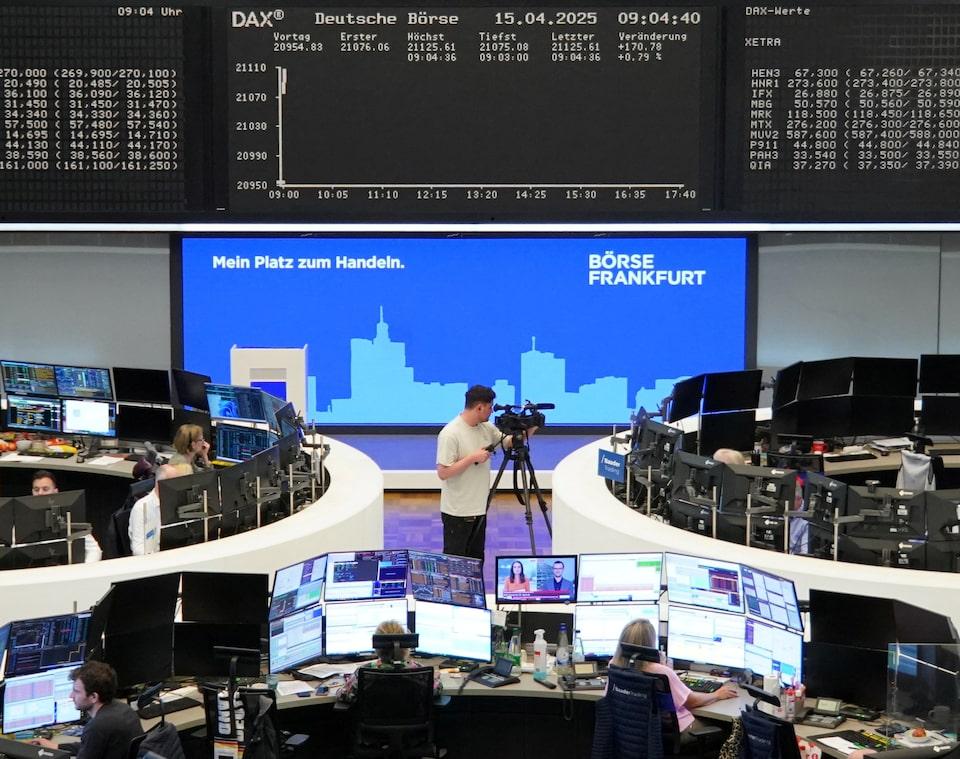
Bond yields fall after ECB rate cut, dovish comments ECB says trade tensions point to exceptional uncertainty Traders ramp up ECB rate cut bets LONDON, April 17 (Reuters) - Traders saw the all-clear on Thursday from the European Central Bank to bet on even steeper interest rate cuts ahead, confident the central bank will ease policy further if trade tensions dent a fragile economy. The ECB cut rates by 25 basis points (bps) for a seventh time this cycle to 2.25%, to bolster an already struggling euro zone economy facing a large hit from U.S. tariffs that have whipsawed markets since President Donald Trump's April 2 reciprocal tariffs. Sign up here. The euro weakened and government bond yields across the bloc fell sharply as traders reacted to the dovish ECB message. It stressed a deteriorating growth outlook due to trade tensions that have sparked "exceptional uncertainty" and removed a reference to rates being "restrictive" from its policy statement. The latter would normally be seen hinting at slower cuts, but came as a relief as ECB chief Christine Lagarde explained, assessing the bank's policy stance against an unobservable neutral rate would be "meaningless" during an economic shock. The decision was unanimous, while a few weeks ago several governors would have argued for a pause, Lagarde said, a sign of how seriously policymakers take the risks to the economy. All of that "suggests the ECB is willing to do what is needed," said Barclays's head of euro rates strategy Rohan Khanna. Traders now see around a 75% chance of a June rate cut, up from roughly 60% before the ECB's decision, according to LSEG data, while pricing from ICAP showed a roughly 90% chance of a June move. By year-end they see around 65 bps of rate cuts, up from nearly 55 before the decision, according to LSEG, meaning they now reckon three rate cuts rather than two are more likely by then. Contrast that with less than a full chance of another move this year and the pricing in of a chance of a 2026 hike after the March meeting, as investors bet on Germany's historic fiscal overhaul boosting economic growth and inflation. German two-year bonds yields, sensitive to monetary policy expectations, dropped as much as 7 bps and Italian equivalents fell to their lowest since 2022 . Bond yields move inversely with prices. WHAT INFLATION? While the impact of tariffs on inflation looks less clear than on growth, hefty market moves since Trump's latest tariff announcement point to further disinflation. The euro, which neared parity against the dollar in February, has surged over 9% to around $1.135 since the start of March , which will contain import costs. It trades at an all-time high on a trade-weighted basis . Oil meanwhile has slumped nearly 10% this month and China, the biggest source of EU imports, is taking the biggest hit from tariffs. Markets have parked aside any concerns around inflation , with a key gauge of long-term expectations the ECB also tracks showing inflation right at the ECB's 2% target. That's down from 2.2% in March. Some economists stress the risk that inflation will fall below the ECB's target. Citi, for example, said ahead of the ECB meeting that it sees price growth at 1.6% next year and 1.8% in 2027. That's a potential headache for the ECB which struggled for years with below target inflation before the COVID-19 pandemic. A wide range of estimates on the ECB rate outlook speaks to the scale of uncertainty, which could keep euro zone markets volatile. Indeed, some ECB policymakers see a high chance of a further interest rate cut in June but others are far from deciding before seeing more economic indicators, sources told Reuters. In markets, some analysts reckon pricing had gone far enough. Steve Ryder, portfolio manager at Aviva Investors, said markets expectations now reflected the downside risk to ECB rates, so the firm was now neutral on European bonds, while Nordea expects the ECB to cut rates just once more to 2%. Barclays, however expects the ECB to cut rates to 1.25% by October, delivering more cuts than markets anticipate. And Frederik Ducrozet, head of macroeconomic research at Pictet Wealth Management, said while a recession was not his baseline scenario, if one did materialise it would require a bigger response. "Now you can imagine the ECB cutting 100 bps this year but hiking next year," he added. https://www.reuters.com/markets/markets-see-door-wide-open-more-ecb-rate-cuts-tariff-hit-2025-04-17/
2025-04-18 00:16
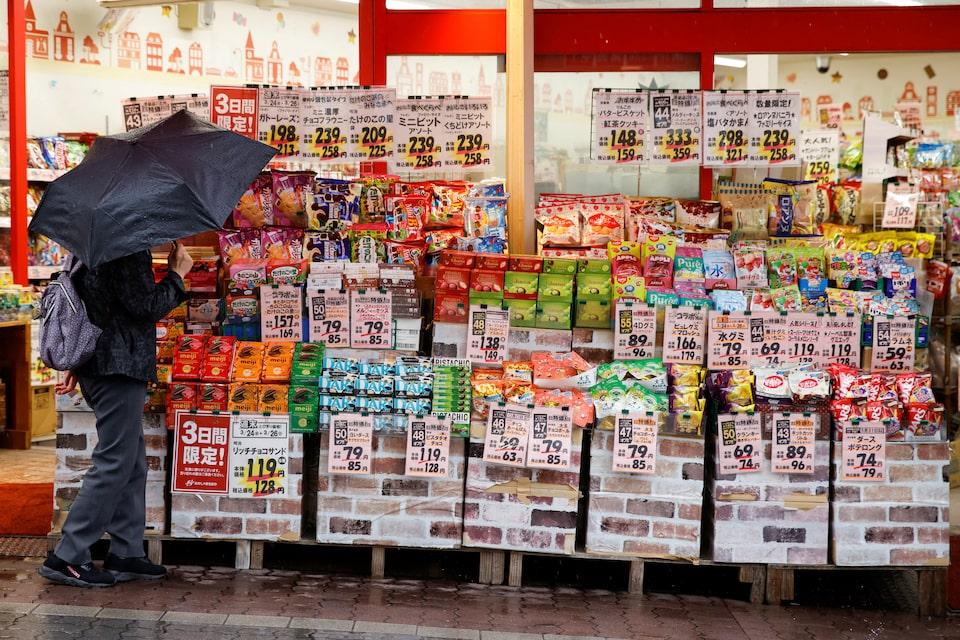
March core CPI rises 3.2% yr/yr, matches forecast Index excluding fresh food, fuel up 2.9% yr/yr in March Core inflation exceeded BOJ target for 36 consecutive months BOJ chief Ueda says pressure from rising food costs to dissipate Data comes ahead of BOJ's policy meeting April 30-May 1 TOKYO, April 18 (Reuters) - Japan's core inflation accelerated in March due to persistent rises in food costs, data showed on Friday, complicating the central bank's task of weighing mounting price pressures against risks to the economy from higher U.S. tariffs. The data comes ahead of the Bank of Japan's policy meeting on April 30-May 1, when the bank is set to keep interest rates steady at 0.5% and cut its growth estimates as U.S. President Donald Trump's steep tariffs cloud the economic outlook. Sign up here. The core consumer price index (CPI), which includes oil products but excludes fresh food prices, rose 3.2% in March from a year earlier, government data showed, matching a median market forecast and accelerating from a 3% gain in February. Core inflation has now exceeded the BOJ's 2% target every month for three years in a row, in a sign of mounting price pressure as companies continue to pass on rising raw material and labour costs. Inflation measured by an index that strips away the effects of both fresh food and fuel costs - closely watched by the BOJ as a broader price trend indicator - also accelerated to 2.9% in March from 2.6% in February. Households faced price hikes for a wide range of goods including gasoline, hotel bills and chocolates. Rice prices spiked 92.5% in March from year-ago levels. Services prices rose 1.4% year-on-year in March, much smaller than a 5.6% jump in goods prices in a sign the recent rise in inflation was driven mostly by high raw material costs. "Food prices will stay elevated for the time being due to global bad weather and higher imported food costs," said Takeshi Minami, chief economist at Norinchukin Research Institute. "But Trump's tariffs could hurt domestic and overseas economies, which the BOJ must scrutinise. We see an increasing chance the BOJ's next interest rate hike will be delayed to July or later," he said. The hit to consumption from rising living costs will add to headaches for policymakers struggling to quantify the potential damage from higher U.S. tariffs that threaten to derail a modest recovery in Japan's export-reliant economy. TARIFF CONUNDRUM BOJ Governor Kazuo Ueda told parliament on Friday that recent rises in consumer inflation were driven by higher food prices, though such cost-push pressure will likely dissipate. "We will continue to raise interest rates if underlying inflation continues to accelerate to 2% as we project," Ueda said. "But we will scrutinise without any pre-conception whether our forecasts will indeed materialise" given uncertainty on how Trump's tariffs could affect the economy. Oxford Economics cut its forecasts for Japan's gross domestic product (GDP) by 0.2 percentage points to 0.8% in 2025 and by 0.4 points to 0.2% in 2026 owing to the global trade disruption. The forecasts are based on the assumption that the effective U.S. tariff rate on Japanese goods will stay at 16%, up from 2% at the end of 2024. "We believe the BOJ is likely to become far more cautious regarding policy rate hikes due to the weaker growth prospects and high trade policy uncertainty," said Norihiro Yamaguchi, lead economist at Oxford Economics, who expects the central bank to keep rates steady in 2025 and 2026. Stubbornly high food prices and rising wages have kept consumer inflation above the BOJ's 2% target and underpinned market expectations the central bank will continue increasing interest rates from the current 0.5%. But Trump's tariff plans have jolted financial markets and stoked fears of a global recession, making it less clear whether the BOJ can keep raising rates. The yen's recent rebound may also ease inflationary pressure by moderating rises in import costs, some analysts say. Although Washington announced a 90-day postponement on plans for sweeping tariffs on goods imported into the U.S., it has maintained 25% duties on aluminium, steel and automobiles and a blanket 10% levy on imported goods. https://www.reuters.com/world/japan/japans-core-inflation-accelerates-complicates-bojs-rate-path-2025-04-17/
2025-04-17 23:02
Puerto Rico's grid struggles since 2017 hurricanes Luma Energy aims to restore 90% power in 48 hours Outage caused by protection system failure and vegetation on lines April 17 (Reuters) - Nearly half of the homes and businesses in Puerto Rico that receive electricity from the commonwealth's main utility were still without power on Thursday, a day after a widespread blackout struck the island, Luma Energy said in a statement. Hospitals, airports and prisons were among the structures still out. Sign up here. Puerto Rico's electrical system has continued to falter since two powerful hurricanes devastated Puerto Rico in 2017, decimating the grid and killing nearly 3,000 people, according to official estimates. On New Year's Eve last year an underground power line was the most recent failure that led to island-wide blackouts. As of 6 p.m. EST on Thursday, 844,973 Luma customers, or 57.6% of its total, had power restored. "We continue on track with our initial projection of restoring service to at least 90% of customers in the next 48 hours, conditions permitting and generation is available," the company said in a statement. It also added that some customers who have had service restored may experience temporary system outages throughout the day, and possibly tomorrow. This time, a power line is also believed to have triggered outages. Following overnight aerial patrols with helicopters, Luma said a preliminary analysis suggested a number of factors had caused the power outage. It cited a protection system failure as the trigger, followed by the presence of vegetation on a transmission line between Cambalache and Manatí in the north of the island. "As part of our response efforts, we are investigating the cause of this incident, including what role and effect the long-recognized impact of the fragility of the system had on this island-wide outage," Luma said. Luma, which started operating the Puerto Rico power grid in 2021, is a joint venture between units of Canadian energy firm ATCO (ACOx.TO) , opens new tab and U.S. construction and engineering firm Quanta Services (PWR.N) , opens new tab. https://www.reuters.com/business/energy/puerto-rico-power-restored-415-customers-after-island-wide-blackout-2025-04-17/

2025-04-17 22:34
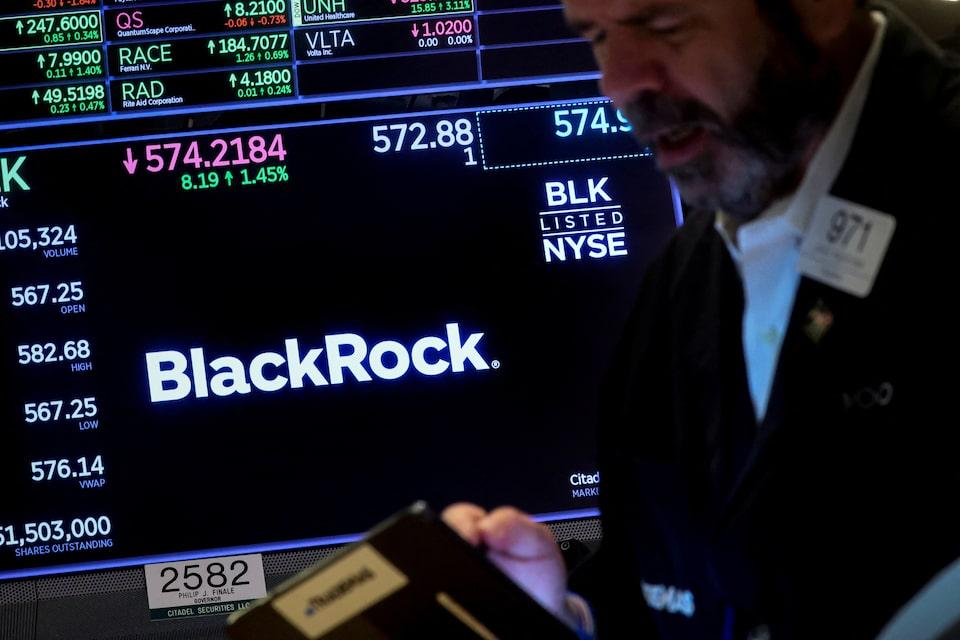
FERC says BlackRock can continue to own up to 20% of utility shares BlackRock faced concerns over its market power, work with climate groups Power industry trade groups supported FERC approach April 17 (Reuters) - U.S. energy regulators gave BlackRock (BLK.N) , opens new tab renewed permission to own major stakes in public utility companies on Thursday, a win for the world's top asset manager over politically-charged concerns that it wields too much influence. The decision by the U.S. Federal Energy Regulatory Commission included a concurring opinion by Mark Christie, its Republican chairman. He wrote that while he holds concerns about BlackRock's market power, public utilities need access to capital. Sign up here. "It is a fact of economic life that public utilities regulated by the Commission must seek investment capital from wherever it is available, and much of it is now either owned or managed by huge asset managers," he wrote. Technically the decision by the body known as FERC extends for three more years BlackRock's permission to own up to 20% of the voting securities of any one U.S.-traded utility, higher than the traditional 10% baseline threshold. In addition, no single BlackRock fund can own more than 10% of a utility's voting securities. BlackRock has some $11.5 trillion under management. In a statement, BlackRock thanked FERC for the decision. "At a time when energy affordability and reliability are especially important, we look forward to continuing to provide billions of dollars in capital for the American energy sector on behalf of our clients," BlackRock said. The decision seemed in line with the wishes of utility trade groups and spares New York-based BlackRock from having to rejig utility index fund investments. But the application had drawn objections across the political spectrum. Republican state politicians and the conservative-leaning nonprofit Consumers' Research had said BlackRock's past participation in investor climate groups could violate its commitment to serve only as a passive investor. Will Hild, the nonprofit's executive director, called FERC's decision disappointing. "If the FERC members are going to flat out refuse to enforce the law, or even the conditions of their own agreements with asset managers like BlackRock, then President (Donald) Trump should remove the commissioners unwilling to follow their own policies," he said via email. More liberal consumer groups, including nonprofit Public Citizen, also questioned the waiver. They argued, among other things, that BlackRock has become more of an active investor through deals like its $12.5 billion purchase of Global Infrastructure Partners. Tyson Slocum, director of Public Citizen's energy program, said FERC's decision was based on politics and investment needs. "What's clear is that the Commission continues to have concerns, but that BlackRock is too big to mess with," Slocum said in a telephone interview. Major utility and power trade groups did not immediately comment on Thursday. In a related policy review , opens new tab last year, groups including the Edison Electric Institute and the Electric Power Supply Association said FERC did not need to change its ownership rules for big asset managers. "These policies have benefited the consuming public by removing unnecessary obstacles to investment," they wrote. https://www.reuters.com/business/finance/blackrock-wins-renewed-permission-own-big-utility-stakes-2025-04-17/
2025-04-17 21:30
NAPERVILLE, Illinois, April 17 (Reuters) - U.S. exporters have racked up robust corn volumes following last year’s bountiful harvest. They have been less successful with soybeans and wheat in the current 2024-25 season as they continue battling growing global competition. Sign up here. But almost none of the primary U.S. grain or oilseed offerings have made a solid start to 2025-26, as export sales for the upcoming marketing year are largely near multi-year lows. Truthfully, this is not yet a huge problem since the typical buying periods for next season’s supplies are mostly still in the future. But with the rising uncertainty surrounding the United States and its trading partners, these numbers will be key to watch in the coming months as the geopolitical dust begins to settle. The 2025-26 U.S. marketing years are set to begin on June 1 for wheat, August 1 for cotton, September 1 for corn, soybeans and sorghum, and October 1 for soybean products. SOYBEANS U.S. exporters sold about 182,000 metric tons of soybeans for 2025-26 in the week ended April 10, their biggest weekly volume to date. However, total new-crop sales stand around 460,000 tons, an 18-year low for the date. None of those are explicitly to China. Last year, top customer China began buying new-crop U.S. beans in July, its latest start since 2005. This year could be similar or worse with Brazil’s massive export lineup and slight delay to its season, meaning those beans could encroach on the typical U.S. season that starts in September. New-crop U.S. soybean sales typically begin trickling in around now, with the bigger ones arriving in June or July depending on how concerned buyers are about supplies. CORN U.S. corn exports in 2024-25 are projected to be the second-best on record. However, sales for 2025-26 stand just below 2 million tons, the second-lowest for the date since 2012, last year being the lowest. But that’s not necessarily a red flag. A year ago, sales for 2024-25 were at 14-year lows before landing massive volumes in both August and October, with a strong, steady stream ever since. In a typical year, new-crop U.S. corn sales start accelerating in July. WHEAT As of April 10, just 1.45 million tons of U.S. wheat had been sold for export in 2025-26. That is the date’s third-lowest volume since 2012, behind 2023 and 2018. Strong sales last June helped support 2024-25 exports, which are now predicted to reach four-year highs, but the clock is ticking for 2025-26. New-crop sales typically begin in February and increasingly rise through May. COTTON Some 1.1 million running bales of U.S. cotton were on the books for 2025-26 as of April 10, a nine-year low for the date. That checks out since 2024-25 exports are set for nine-year lows. However, the U.S. Department of Agriculture in February forecast 2025-26 U.S. cotton exports to jump 18% on the year to a four-year high. Normally, new-crop cotton export sales begin growing steadily from March through July. China normally accounts for roughly 30% of annual U.S. cotton exports, which poses a potential problem for U.S. exporters given recent trade relations. SOYBEAN MEAL Expanding soybean-processing capacity has lifted U.S. soybean meal exports to record levels in 2024-25. But importers aren’t feeling pressure yet to load up for next year. Just 131,000 tons have been sold so far for 2025-26, the date’s second-smallest volume since 2009. New-crop soymeal sales usually begin rolling in slowly right about now with a notable uptick come late July or August. SOYBEAN OIL Soybean oil bucks the trend. U.S. exporters as of April 10 had sold 11,800 tons of the vegoil for export in 2025-26, a record high for the date. However, that volume accounts for roughly 1% of annual soyoil exports. Bigger new-crop volumes usually arrive at various points between May and September. High prices for competing global vegoils have lifted 2024-25 U.S. soyoil export sales to 14-year highs for the date, and USDA will likely project another strong U.S. program in 2025-26. SORGHUM China is the primary buyer of U.S. grain sorghum, so like soybeans, the outlook here might not be so great. USDA already sees 2024-25 U.S. sorghum exports at six-year lows, and the volumes could be just as slim in 2025-26. As of April 10, U.S. sorghum sales for 2024-25 were the second-lightest since 2013, and there were virtually no 2025-26 bookings yet. July-August is the normal time frame for new-crop sales to begin. Karen Braun is a market analyst for Reuters. Views expressed above are her own. https://www.reuters.com/markets/commodities/by-numbers-mixed-outlook-key-us-ag-exports-2025-26-braun-2025-04-17/

2025-04-17 21:09
CAIRO, April 17 (Reuters) - Syria's flag carrier Syrian Air will resume direct flights to Dubai and Sharjah in the United Arab Emirates starting on Sunday, the airline said in a Facebook post. All flights between Syria and the UAE had been suspended in January after Islamist-led rebels toppled former leader Bashar al-Assad in December 2024. Sign up here. The announcement comes days after the UAE's civil aviation authority announced the resumption of air flights between the Gulf country and Syria. No UAE-based airlines have announced plans to fly to Syria so far. The resumption of flights between the two countries followed Syrian President Ahmed al-Sharaa’s first visit to the UAE as leader, where he met UAE's president Sheikh Mohammed bin Zayed Al Nahyan. The visit came as Syria's new Islamist rulers seek to reassure foreign partners they will create an inclusive political system. https://www.reuters.com/world/middle-east/syrian-airlines-says-it-is-resuming-its-direct-flights-uae-sunday-2025-04-17/