2025-04-17 18:02
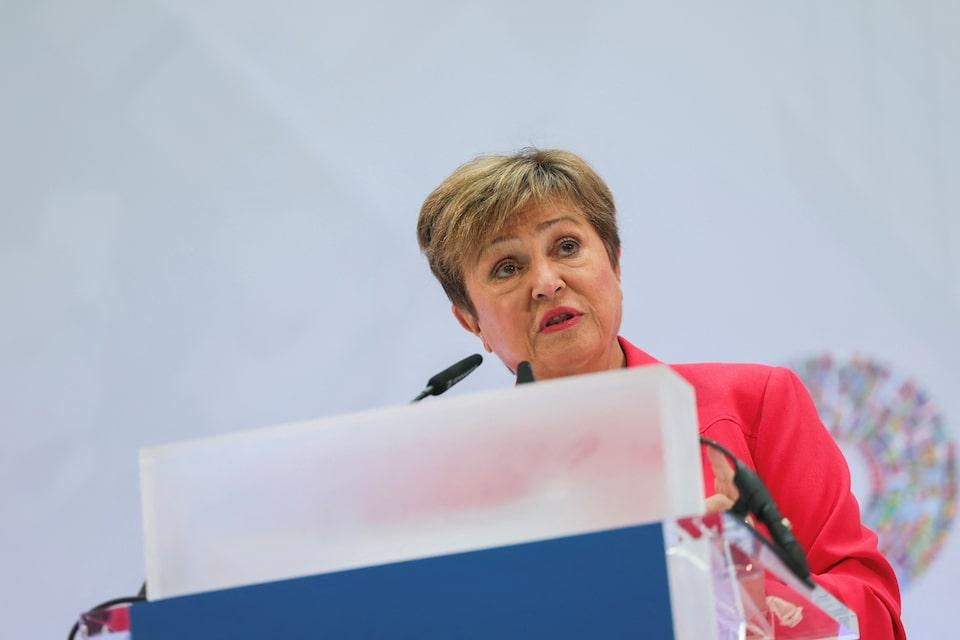
IMF expects 'significant' consequences from trade reboot Reuters poll: economists see chances of US recession over the coming year surging to 45% IMF warns: 'perceptions matter' WASHINGTON, April 17 (Reuters) - Rising trade tensions and sweeping shifts in the global trading system will trigger downward revisions of the International Monetary Fund's economic forecasts but no global recession is expected, IMF Managing Director Kristalina Georgieva said on Thursday. Georgieva said countries' economies were being tested by a reboot of the global trading system - sparked in recent months by U.S. tariffs and retaliation by China and the European Union - that had unleashed "off the charts" uncertainty in trade policy and extreme volatility in financial markets. Sign up here. "Disruptions entail costs ... our new growth projections will include notable markdowns but not recession," she said in an address ahead of the spring meetings of the IMF and World Bank in Washington next week. Trump's tariffs and the turmoil in financial markets are expected to dominate the spring meetings, which bring together central bankers and finance ministers from around the world. Elevated uncertainty also raised the risk of financial market stress, Georgieva said, noting that recent movements in U.S. Treasury yield curves should be taken as a warning. "Everyone suffers if financial conditions worsen," she said. Georgieva said the world's real economy is functioning well, with a strong labor market and a solid financial system, but warned that increasingly negative perceptions and concerns about recession could also affect economic activity. "One thing I learned through crisis periods is perceptions matter as much as reality," she said. "If perceptions change negatively that can be quite detrimental to the performance of the economy." U.S. President Donald Trump has upended the global trading system with a tsunami of new tariffs, including a 10% U.S. duty on goods from all countries and higher rates for some, although those have been paused for 90 days to allow negotiations. China, the EU and other countries have announced retaliatory measures. The IMF in January forecast global growth of 3.3% in 2025 and 3.3% in 2026. It will release an updated World Economic Outlook on Tuesday. Georgieva gave no details about the expected revisions, but warned that prolonged uncertainty would be costly and said the consequences of the trade reboot would be "significant." She said the IMF did not expect a big swing in either direction on inflation generally, since tariffs could push up consumer and producer prices, or could cause people to hold back spending, which could actually drive inflation lower. But updated IMF forecasts would show higher inflation for some countries, she said. Economists polled by Reuters expect the aggressive U.S. tariff policy to trigger a significant slowdown in the U.S. economy this year and next, with the probability of a recession over the coming year surging to 45%, the highest since December 2023, from 25% last month. BUBBLING TENSIONS Georgieva said trade tensions had been bubbling for some time, given a buildup of tariffs and non-tariff barriers by China, the U.S. and others, but they were now boiling over. Both the U.S. and China had grievances, but it was important for the world's two largest economies to reduce uncertainty and agree on a fairer, rules-based trading system, she said, warning of spillover effects for smaller countries. She urged countries to respond wisely to the "sudden and sweeping shifts" in U.S. effective tariff rates. Josh Lipsky, senior director of the Atlantic Council's GeoEconomics Center, said the IMF, whose largest shareholder is the United States, was noting both the impact of tariffs on inflation and the global economy, while being clear about the underlying imbalances that had led to this moment. "The IMF is engaging in data diplomacy in the midst of a raging global trade war. It's a delicate balancing act," he said. The Trump administration has pulled out of other international institutions, including the World Health Organization, raising concerns that it could also seek to exit financial institutions such as the IMF and World Bank. Rising tariffs hit growth upfront, Georgieva said, noting that past evidence showed that higher tariff rates were paid by importers through lower profits and consumers through higher costs. In big economies, they could also create incentives for new inward investment, creating new jobs, but this took time. "Protectionism erodes productivity over the long run, especially in smaller economies," she said, warning that moves to shield industry from competition also undercut entrepreneurship and hurt innovation. Georgieva urged countries to continue economic and financial reforms while maintaining agile and credible monetary policy, as well as strong financial market regulation and supervision. Emerging market economies should preserve their exchange rate flexibility, and donor countries should better protect aid flows to vulnerable low-income countries, she added. Georgieva also called for cooperation in an increasingly multi-polar world, and urged the largest economies to reach a trade settlement that preserved openness and restarted a global trend toward lower tariff rates and reduced non-tariff barriers. "We need a more resilient world economy, not a drift to division," she said. "All countries, large and small alike, can and should play their part to strengthen the global economy in an era of more frequent and severe shocks." https://www.reuters.com/markets/imf-expects-notable-markdowns-growth-forecasts-no-global-recession-2025-04-17/
2025-04-17 17:49
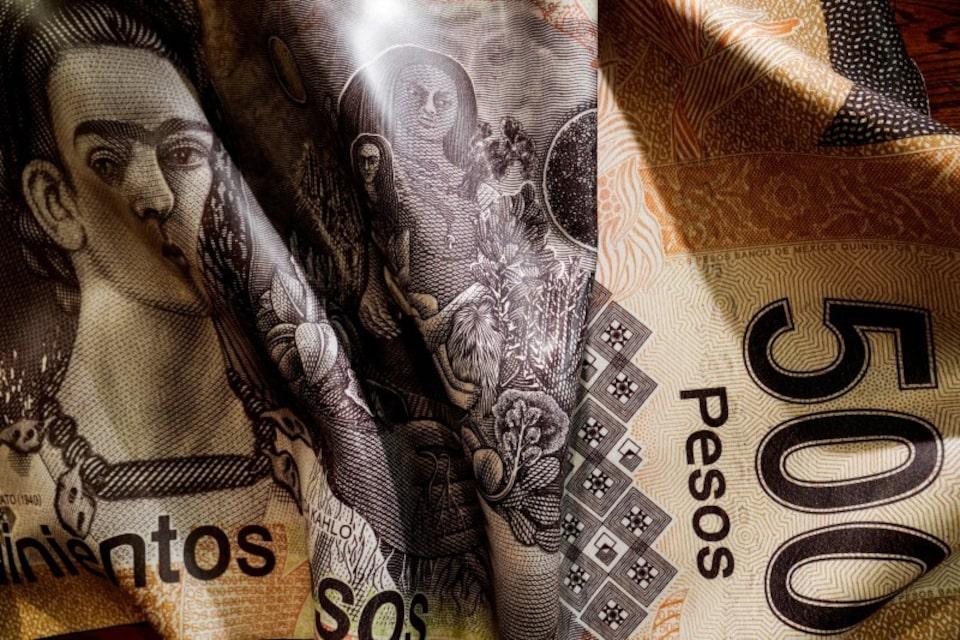
MEXICO CITY, April 17 (Reuters) - The Mexican peso strengthened nearly 1% in international trading on Thursday after U.S. President Donald Trump and his Mexican counterpart, Claudia Sheinbaum, held a phone call they both dubbed "very productive." The currency was trading at 19.74 per U.S. dollar before mid-day, reaching its strongest point since mid-October. Sign up here. Domestic trading in Mexico is closed on Thursday and will be closed on Friday for the Easter holidays. https://www.reuters.com/markets/currencies/mexicos-peso-strengthens-six-month-high-trump-sheinbaum-call-2025-04-17/
2025-04-17 17:33
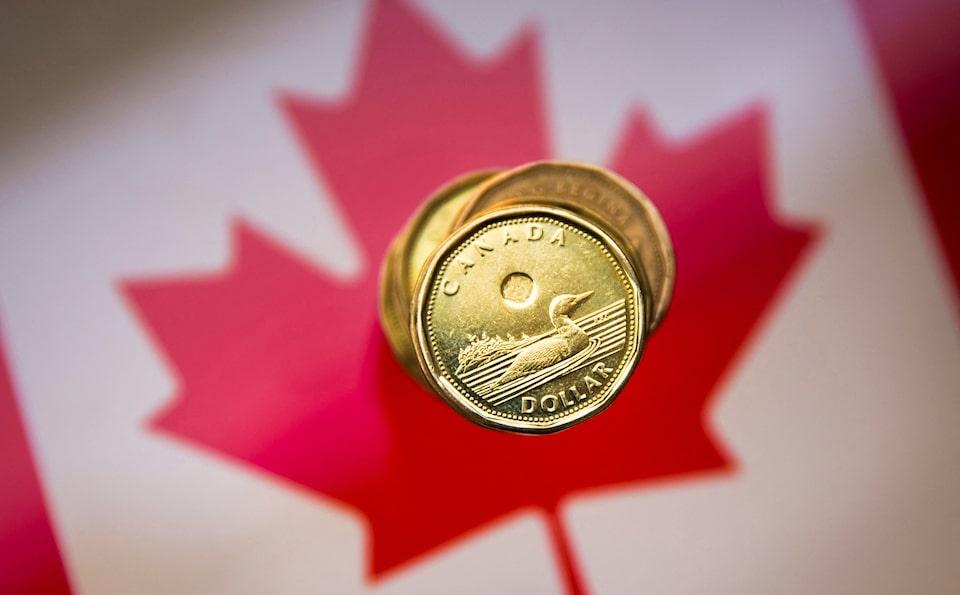
Loonie heads for a weekly gain of 0.1% Price of oil increases 3.5% Canadians buy record amount of U.S. shares in February Bond yields trade mixed across steeper curve TORONTO, April 17 (Reuters) - The Canadian dollar moved closer on Thursday to a recent five-month high against its U.S. counterpart as oil prices rose and one day after the Bank of Canada paused its interest rate cutting campaign. The loonie was trading 0.1% higher at 1.3845 per U.S. dollar, or 72.23 U.S. cents, after touching on Monday its strongest level since November 6 at 1.3827. For the week, the loonie was up 0.1%, which would be its seventh straight week of gains, the longest such stretch since May 2021. Sign up here. The currency has benefited from recent broad-based declines for the U.S. dollar, said Marc Chandler, chief market strategist at Bannockburn Global Forex. Concerns over the economic impact of tariffs and investors shifting investments outside the United States led to the greenback hitting a three-year low last week against a basket of major currencies. "The 200-day moving average comes in right above 1.40 so I think that’s the top of the range (for USD-CAD)," Chandler said. "I think we might have to test that but I think the next big move is probably still lower." The price of oil , one of Canada's major exports, increased 3.5% to $64.63 a barrel after the U.S. imposed new sanctions to curb Iranian oil exports, elevating supply concerns. The held its benchmark rate at 2.75% on Wednesday, its first pause after seven consecutive cuts, and said the uncertainty around U.S. tariffs made it impossible to issue regular economic forecasts. Despite tensions between Canada and the United States, Canadians bought a record amount of American shares in February, as U.S. stock markets hit an all-time high. Canadian bond yields were mixed across a steeper curve, with the market set for an early close ahead of the Good Friday holiday. The 10-year was up 3.9 basis points at 3.118%, extending its rebound from an eight-day low at 3.073% that it touched during Wednesday's session. https://www.reuters.com/markets/currencies/canadian-dollar-heads-seventh-straight-weekly-gain-oil-prices-jump-2025-04-17/
2025-04-17 17:21
Reuters poll graphic on U.S. one-year recession probability: Reuters poll graphic on U.S. economic growth and inflation: BENGALURU, April 17 (Reuters) - An aggressive U.S. tariff policy will trigger a significant slowdown in the U.S. economy this year and next, with the median probability of recession in the next 12 months approaching 50%, according to economists polled by Reuters. A sudden 90-day pause in reciprocal tariffs on trading partners imposed by President Donald Trump hasn't done much to improve the U.S. outlook given a trade war with its biggest trading partner, China, is escalating and damaging business sentiment. Sign up here. Most forecasters, like U.S. consumers in recent months, have significantly raised their inflation expectations. They have also slashed their growth outlook. Median inflation forecasts in the April 14-17 Reuters poll have surged since last month, potentially restricting the Federal Reserve from delivering more than two interest rate cuts between now and year-end. The probability of a U.S. recession over the coming year has surged to 45%, the highest since December 2023, from 25% last month. "Sentiment is incredibly weak right now and that points to households being very nervous about spending... Prices, jobs and wealth are all moving against the consumer and that is a pretty toxic combination for consumer spending growth going forward," said James Knightley, chief international economist at ING. "That's the real issue for U.S. growth that raises the recession risk... The lack of clarity on the trading environment faced by U.S. companies makes them naturally more wary about putting money to work in the U.S. economy." All 45 economists who answered an additional question said tariffs had negatively impacted business sentiment, with almost half saying they were very negative. The economy, which started the year on a solid footing of strong growth, consumer spending and hiring, is expected to grow just 1.4% in 2025, a sharp downgrade from 2.2% predicted last month. An overwhelming majority of common contributors, 46 of 50, have lowered their 2025 growth outlook by around 80 basis points on average just in the past month. Economists as a group have not downgraded their forecasts by that much in such a short span of time since July 2022. Next year, the economy is forecast to expand 1.5%, well down from 2.0% expected in a March poll. "Damage has likely already been done by uncertainty about tariffs, and that uncertainty stands to reduce growth, increase inflation and amplify tail risks on an ongoing basis," said James Egelhof, chief U.S. economist at BNP Paribas. Similar worries have also dented confidence in U.S. assets with many strategists in separate Reuters surveys recently saying they were concerned about the safe-haven status of U.S. Treasuries and the dollar. INFLATION EXPECTATIONS SURGE Economists have raised their outlook for all inflation measures surveyed - consumer prices, core CPI, personal consumption expenditure and core PCE - and all were expected to remain well above the Fed's 2% target until at least 2027. Most regular contributors have revised their CPI forecasts for this year from the March survey by nearly 60 basis points on average, the biggest monthly change since March 2023. U.S. Federal Reserve Chair Jerome Powell on Wednesday warned Trump's tariff policies risked pushing inflation and employment further from the central bank's goals and said the Fed was "well positioned to wait for greater clarity". A more than 60% majority of economists, 62 of 101, predicted the Fed would hold its federal funds rate at 4.25%-4.50% until at least July. There was no clear consensus on where the rate would be by end-2025 but about two-thirds of economists predicted it at 3.75%-4.00% or higher. Just over a third, 35, are expecting three or more reductions this year, in line with what interest rate futures are pricing. Kevin Khang, a senior economist at Vanguard said "it's the ubiquitous presence of tariffs that makes the likelihood of upward price pressure an extremely likely scenario. And that's why we think price stability will be marginally more prioritised over full employment." Unemployment rate forecast changes in the poll were modest compared with the large downgrades to growth and upgrades to inflation. The jobless rate, currently 4.2%, was expected to average 4.4% and 4.6% this year and next, respectively. (Other stories from the Reuters global economic poll) https://www.reuters.com/markets/us/tariffs-trigger-sharp-us-economic-slowdown-chance-recession-jumps-45-2025-04-17/

2025-04-17 17:17
NEW DELHI, April 17 (Reuters) - The Himalayan nation of Bhutan is exploring ways to mine and leverage green cryptocurrencies using hydropower to boost its economy and create jobs to reduce brain drain, the chief executive of its sovereign wealth fund said. Green cryptocurrencies are digital currencies mined using clean energy resources such as wind, hydro or solar power instead of fossil fuel. Sign up here. Sandwiched between Asian giants India and China, Bhutan has earned millions of dollars in recent years by investing in some of the world's most popular cryptocurrencies and used some of its profit to pay government salaries for two years, two senior officials in Thimphu, the capital said. "We are a nation that runs 100% on hydropower, and every digital coin we mine in Bhutan using hydropower offsets that coin which gets mined using fossil fuels," said Ujjwal Deep Dahal, the CEO of the fund, Druk Holding and Investments Ltd. "So a coin mined in Bhutan will contribute to the green economy," he told Reuters on Tuesday. Dahal said the fund, which controls Bhutan's only power generation utility, began adding cryptocurrencies to its portfolio in 2019, seeing virtual currencies as a tactical investment and a gamechanger for the country. Bhutan is famed for its Gross National Happiness (GNH) index, an economic gauge that incorporates factors ignored by the usual measures of gross domestic product, such as recreation, emotional well-being and sustainability. It uses hydropower to operate energy-guzzling supercomputers to create digital assets that can be added to the blockchain. Officials are exploring whether large conglomerates could buy Bhutan's "green" coins to meet their targets on environmental, social and governance (ESG) norms. "Bitcoin has not just given more value to hydropower energy, it has also increased access to liquidity in foreign currency," said Dahal, who added that training Bhutan's young people in blockchain and AI techniques would fuel jobs. The nation of about 800,000 is battling an exodus of young, educated people. The government estimates that more than a tenth of its young people sought greener pastures between 2022 and 2023, taking unemployment in that age group to 16.5% in 2024. Analysts said Bhutan's ambitious plan to become the capital of green digital currency depends on expanding its hydropower generation to a potential of 33 gigawatts versus existing capacity of about 3.5 gigawatts. "We have plans to generate 15 gigawatts in the next 10 to 15 years," Dahal added. https://www.reuters.com/sustainability/bhutan-turns-green-cryptocurrency-fuel-economy-2025-04-17/

2025-04-17 16:35
OTTAWA, April 17 (Reuters) - Although tensions between Canada and the United States are high, Canadians bought a record amount of American shares in February, as U.S. stock markets hit an all-time high, official data indicated on Thursday. Statistics Canada said Canadians snapped up C$29.8 billion in U.S. shares, focused on large capitalization technology and financial firms. Canadians had sold C$15.6 billion in January. Sign up here. The previous record high for Canadian investment in U.S. shares was C$23.7 billion in December 2023. U.S. share prices reached an all-time high in mid-February before retreating by the end of the month. Trump took power in late January and almost immediately threatened to slap tariffs on Canadian imports and mused about annexing the country and turning it into the 51st state. https://www.reuters.com/markets/canadians-bought-record-amount-us-shares-february-2025-04-17/