2025-04-17 11:50
ISTANBUL, April 17 (Reuters) - Turkey's central bank hiked its key interest rate by 350 basis points to 46% on Thursday, in a surprise move that reversed an easing cycle and slightly boosted the lira, following market volatility in the wake of last month's arrest of Istanbul's mayor. The bank also lifted its overnight lending rate again, to 49% from 46%, after having already raised it last month in an unscheduled decision following the arrest. Sign up here. In addition, the overnight borrowing rate was lifted to 44.5% from 41%, underlining the hawkish reversal in monetary policy. "Monthly core goods inflation is expected to rise slightly in April due to recent developments in financial markets," the central bank's policy committee said in releasing the decision. Leading indicators suggest domestic demand is above projections, "suggesting a lower disinflationary impact," it said. "Inflation expectations and pricing behaviour continue to pose risks to the disinflation process," the bank said, adding it would tighten further "in case a significant and persistent deterioration in inflation is foreseen." The central bank had begun easing in December, when the rate was 50%, after an aggressive tightening effort since mid-2023 to bring down years of soaring prices and a series of currency crashes. In a Reuters poll, ten of 13 respondents forecast the bank would maintain its one-week repo rate (TRINT=ECI) , opens new tab while three predicted a hike of up to 350 basis points. Most respondents expected the overnight lending rate would be held at 46%. The lira strengthened slightly right after the decision and traded at 38.10 to the U.S. dollar, while the benchmark stock index BIST 100 (.XU100) , opens new tab and banking index (.XBANK) , opens new tab pared back some of its gains during the day. Last month, the currency briefly hit a record low of 42 and stocks and bonds plunged after the detention of Istanbul Mayor Ekrem Imamoglu, pushing economic authorities to take several measures to ease the market fallout. Economists expect the roughly 3% weakening of the lira to lift April and May inflation readings. Annual inflation had slowed to 38.1% in March, and was 2.46% month-on-month, lower than forecast. Imamoglu - President Erdogan's chief rival - is now jailed pending trial in legal moves that sparked the biggest protests in more than a decade and broad criticism of a politicised judiciary and eroding rule of law, claims the government denies. The lira steadied near 38 to the dollar and Turkish assets recovered somewhat after the central bank sold some $50 billion since Imamoglu's arrest to stabilise the situation, and it bought some 120 billion lira ($3.15 billion) worth of bonds. The central bank also raised its overnight lending rate by two percentage points to 46% and paused funding through one-week repo auctions, effectively tightening funding conditions by 400 basis points. On Thursday the bank said it will closely monitor liquidity conditions and added: "In response to the recent developments in financial markets, additional measures to support the monetary transmission mechanism were quickly put in place." The rate decision came amid global market turmoil caused by what has become an all-out trade war between the United States and China, with both sides ratcheting up their import tariffs. ($1 = 38.1429 liras) https://www.reuters.com/business/finance/turkish-cenbank-surprises-with-rate-hike-46-after-market-turmoil-2025-04-17/
2025-04-17 11:48
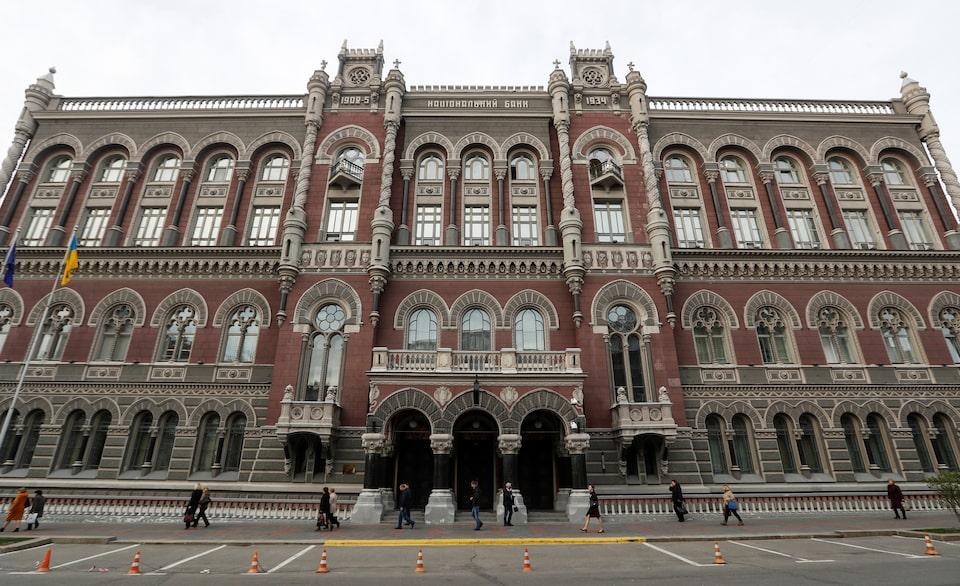
KYIV, April 17 (Reuters) - Ukraine's central bank kept its key interest rate unchanged at 15.5% on Thursday and said it expected consumer price inflation to start declining this summer. It warned, however, that global trade disputes as well as wartime challenges would limit Ukraine's economic recovery this year. In a statement, it downgraded its forecast for 2025 gross domestic product growth to 3.1% from 3.6% previously. Sign up here. The central bank said it expected annual inflation to stand at 8.7% at the end of 2025, as it announced it was holding the rate. "This decision will help maintain forex market sustainability, keep inflation expectations under control and gradually reduce inflation to the 5% target over the policy horizon," the bank's governor, Andriy Pyshnyi, told reporters at a briefing. Economic growth remained "restrained" in the first quarter, in part due to heavy damage inflicted on Ukrainian natural gas infrastructure by Russian bombing, which in turn increased the need for gas imports, it said. It added that there had been some improvements on the labour market, but that Ukrainian businesses continued to struggle with a shortage of qualified workers due to the war. Millions of Ukrainians remain abroad after fleeing Russia's 2022 full-scale invasion. Ukraine's wartime authorities continue to mobilise military-age civilian men into the armed forces. Moscow's forces control nearly a fifth of the country. "An escalation of global trade confrontations has not yet impacted the Ukrainian economy, but it will slow its recovery later on," the central bank said. It said that volleys of high trade tariffs being introduced since Donald Trump returned to the White House this year would probably lead to a decline in external demand for some of Ukraine's exported goods. But it said that Ukrainian agricultural exports would remain in demand even as the global economy cools. https://www.reuters.com/markets/rates-bonds/ukraines-c-bank-holds-key-rate-155-sees-slower-2025-economic-growth-2025-04-17/
2025-04-17 11:41
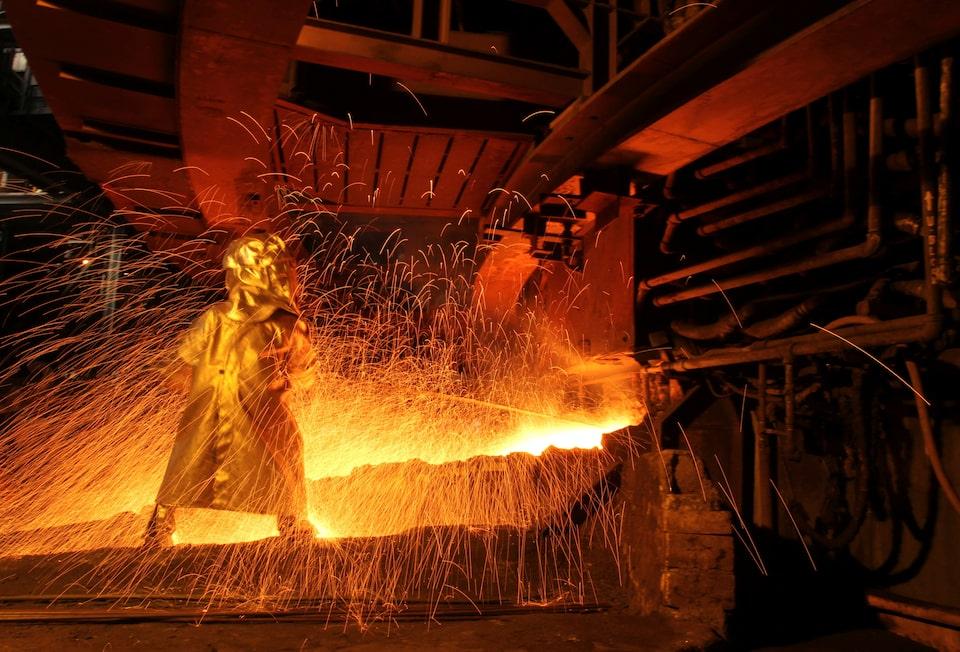
JAKARTA, April 17 (Reuters) - Indonesia's nickel smelters association has requested the government delay its new mineral royalty fees until nickel prices on the London Metal Exchange have risen to $17,000 per metric ton, its chairman said on Thursday. The 3-month nickel contract on the LME is currently trading around $15,600. Sign up here. Later this month, Indonesia will start imposing higher royalty fees of 14% to 19% on nickel ore output depending on price levels, up from a single tariff of 10%, according to a copy of the regulation. The semi-refined product nickel pig iron will be charged with a 5% to 7% royalty, while nickel matte will have a 3.5% to 5.5% royalty, the regulation said. That compared with the current 5% single tariff on nickel pig iron and 2% on nickel matte. "We support the government's royalty plan, but we need to pick a more appropriate timing," Alexander Barus, chairman of smelters group Indonesia Nickel Industry Forum (FINI), told Reuters after a meeting with mining ministry officials. He said the group had asked the Energy and Mineral Resources Ministry to consider waiting until nickel prices on the LME has reached at least $17,000 per ton, a level that would allow companies' margin to cover the costs from the royalty hike. Researchers at BMI said earlier this month that they had downgraded their nickel price outlook this year from an annual average of $17,000 to $15,000 per ton due to oversupply conditions while U.S. President Trump's trade policy added exacerbated risks. "The issue is, prices of our output, such as stainless steel, nickel pig iron and ferronickel, are also dropping now. It will be onerous with the royalties," Barus added. Nickel miners are already struggling with higher costs, including for fuel, Indonesia Nickel Miner Association (APNI) has said, after the government removed subsidies for biodiesel earlier this year. APNI has also called for a delay on the new fees' implementation. A senior official overseeing mining at the Energy and Mineral Resources Ministry did not immediately respond to a Reuters request seeking comment. Royalties on other products such as copper ore, copper concentrate, refined tin will also be raised, among others. The government previously said the new royalty policy was intended to improve industry governance. It comes as the government's budget deficit is widening due to a drop in tax revenue and bigger spending for President Prabowo Subianto's flagship programmes. https://www.reuters.com/markets/commodities/indonesian-nickel-smelter-group-asks-royalty-hike-delay-until-prices-rise-2025-04-17/
2025-04-17 11:41
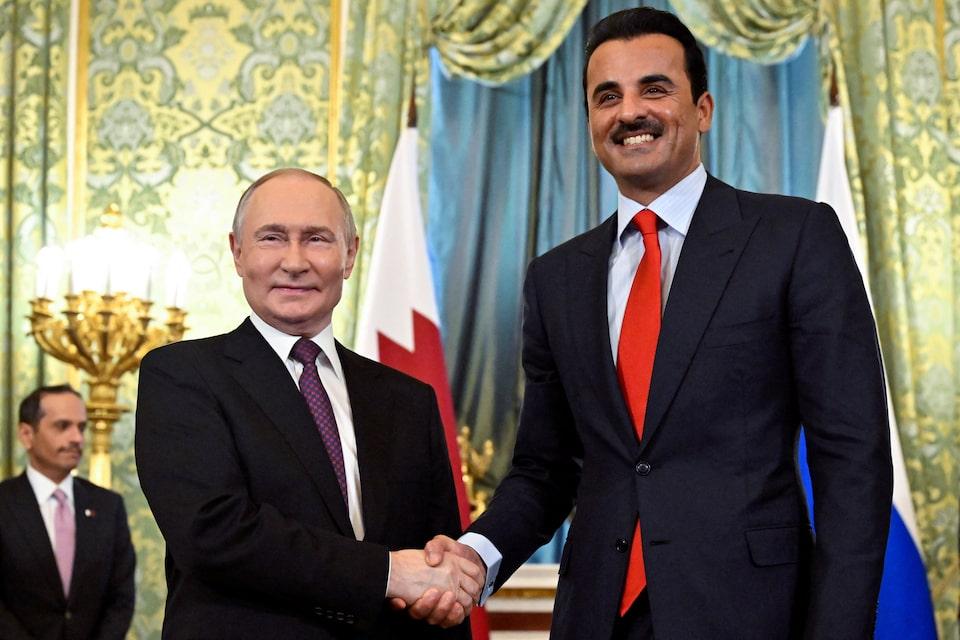
Emir tells Putin that new Syrian leader wants good ties Russia keen to preserve military bases in Syria Gaza, Ukraine also on the agenda MOSCOW, April 17 (Reuters) - Qatar's Emir Sheikh Tamim bin Hamad Al-Thani told Russian President Vladimir Putin on Thursday that Syria's new leader was keen to build ties with Moscow. The assurance from Sheikh Tamim comes as Putin attempts to retain Russia's use of two military bases in Syria and avoid a serious blow to its strategic influence in the region, after the fall of its ally Bashar al-Assad in December. Assad was toppled by rebels led by Ahmed al-Sharaa, who has replaced him as president. Sign up here. "As for Syria, a few days ago President al-Sharaa was in Qatar, and we spoke with him about the historical and strategic relationship between Syria and Russia. He is keen on building a relationship between the two countries based on mutual respect," the emir told Putin at their meeting in the Kremlin. Putin said the development of the situation in Syria, which has been rocked by sectarian violence in recent weeks, was of serious importance. "We would like to do everything to ensure that Syria, firstly, remains a sovereign, independent and territorially integral state, and we would like to discuss with you the possibility of providing assistance to the Syrian people, including humanitarian assistance," he told the emir. "There are many problems there: political, security, and purely economic." The two men also discussed the situation in Gaza, where Qatar played a key role in brokering a January deal between Israel and Hamas for a three-phase ceasefire. Israel restarted its offensive in the enclave in March, and talks to try to restore the ceasefire have so far failed to achieve a breakthrough. "We reached an agreement regarding Gaza a few months back but Israel has not adhered to the agreement," Sheikh Tamim said. "Qatar, in its role as a mediator, will strive to bridge differing perspectives in an effort to reach an agreement to end the suffering of the Palestinian people." Putin told the emir: "We know that Qatar is making very serious efforts to resolve the Israeli-Palestinian conflict. Unfortunately, the initiatives put forward, including by you, have not been implemented - peaceful people continue to die in Palestine, which is an absolute tragedy of today." Both sides have said the two leaders will also talk about efforts to end the war in Ukraine. Qatar has made a series of attempts to mediate between Russia and Ukraine, and has helped arrange the return of children from both countries who were separated from their parents during the war. U.S. President Donald Trump has repeatedly said he wants to end the "bloodbath", but has yet to achieve a breakthrough. Moscow has said it is not easy to agree a settlement. https://www.reuters.com/world/qatari-emir-arrives-moscow-meet-putin-2025-04-17/
2025-04-17 11:29
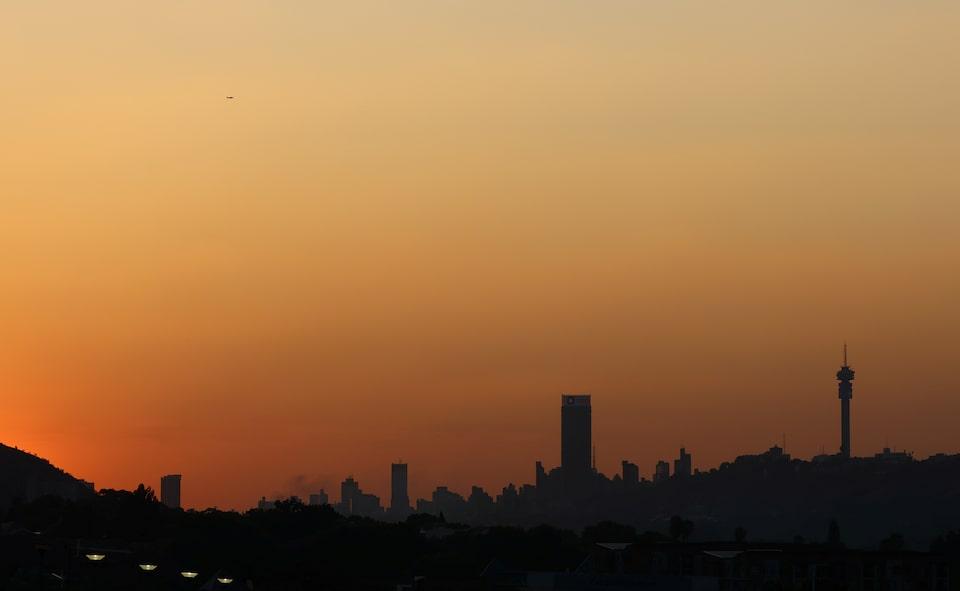
Recent market jitters have sent rand to near-record lows South Africa bonds see $2.8 bln foreign investor inflows from December to March S&P ratings decision due on May 16, outlook positive JOHANNESBURG, April 17 - Investors have flocked to South Africa's domestic bond markets, betting the country can stay the course on reforms despite political fractures, but tariff threats and the prospect of a global growth slowdown are casting a long shadow. Africa's most industrialized nation depends on foreign investor support to manage its debt load and to keep borrowing costs in check as it faces persistent structural challenges, including unreliable electricity and governance issues that have weighed on its assets in the past. Sign up here. "We view recent developments in the U.S. trade policies as a material risk to the growth and inflation outlook," said Thierry Larose, portfolio manager at Vontobel Asset Management, which holds domestic government bonds. "We see the weaker U.S. dollar as the only meaningful tailwind for local assets." Investor interest in domestic bonds has held up well so far. Treasury data shows non-resident holdings of local-currency bonds rose January through March to 25%, the highest since October. Data from the Institute of International Finance shows the nation drew $2.8 billion in fixed income inflows between December and March compared to outflows in Asia and a more mixed picture in emerging Europe and Latin America. Performance was more patchy. Domestic currency bonds though have underperformed, losing 0.3% since January versus a 2.9% gain in the JPMorgan GBI-EM benchmark. Meanwhile, South Africa's hard-currency bonds have outperformed Sub-Saharan African peers this year, losing 1.5% compared to a 3.3% drop across the broader Africa index. DOUBLE WHAMMY It's been far from a smooth ride for investors. Markets initially turned from gloom over political uncertainty to optimism after last May's election, which forced the African National Congress into coalition with rival parties widely seen as business-friendly. But tensions within the alliance spilled into public view in February, as the ANC and the Democratic Alliance clashed over tax and foreign policy, fuelling doubts about the coalition’s staying power. At the same time, U.S. President Donald Trump threatened sweeping new tariffs on nations around the world with his policy decisions broadly expected to stymie growth. For South Africa, this is a worry. "South Africa has always had greater economic integration with the rest of the world and foreign ownership is pretty meaningful, so that has contributed to a relatively high beta to the global economic cycle," said Andrew Matheny, managing director, economics research at Goldman Sachs International. The latest turmoil sent the rand tumbling to near-record low, before recovering to trade flat on the year. Grant Webster, co-head of emerging markets sovereign and FX at Ninety One, which is bullish on both domestic and international South Africa bonds said "structurally weak growth, high debt, and the increase in domestic political noise in addition to extreme global economic and geopolitical uncertainty" dampened his outlook on the country. JPMorgan has kept a neutral position on both the currency and local bonds, saying the latter was back at fair value and the near-term risk of a large selloff had fallen, though flagged that external recession risks were the biggest factor to watch. And domestic politics might still throw a spanner in the works. A collapse of the government could affect investor confidence and policymaking, especially if the ANC must then rely on smaller parties to govern, Fitch Ratings said. But likely new coalition partners — such as ActionSA and Build One South Africa — support the fiscal framework. Downside risks from politics are already captured in its projections, said Thomas Garreau, Director at Fitch. TARIFFS LOOM South African policymakers are trying to reassure markets, The U.S. makes up just 8% of exports — and a large chunk of the shipments are in precious and base metals, already exempt from the Trump tariffs. National Treasury said the direct impact of the levies would have been limited. "Even under a full AGOA exclusion scenario, the GDP impact would be marginal — around 0.07%," the National Treasury told Reuters, referring to the African Growth and Opportunity Act, a U.S. flagship trade programme for the continent. "However, certain sectors such as agriculture, construction, and retail would face disproportionate harm." In the meantime, domestic reforms continue. Revenue collections exceeded estimates for 2024/25, helping narrow the main budget deficit, Treasury said, adding it was busy engaging with ratings agencies and investors. Meanwhile investors will be closely watching a review by ratings agency S&P Global Ratings, scheduled for May 16. S&P currently holds a positive outlook — signaling potential for an upgrade if fiscal and reform progress holds - its first such move in two decades. "Recent political developments have not fundamentally changed our outlook for South Africa," said Lucie Villa, Senior Vice President at Moody’s Ratings. However, she warned there "are increasing downside risks due to the direct and indirect impacts of U.S. tariffs and political disagreements within the coalition on fiscal and economic policy." https://www.reuters.com/world/africa/south-africa-investors-face-global-growth-storm-clouds-after-choppy-politics-2025-04-17/
2025-04-17 11:23
Trump administration issues stop-work order on Equinor's offshore wind project Empire Wind project approved by Biden administration in 2023 Equinor exploring legal options against stop-work order NYSERDA says regulatory uncertainty scares investors OSLO, April 17 (Reuters) - Norway's Equinor will halt offshore construction of its Empire Wind I project in New York State, following a stop-work order from U.S. Interior Secretary Doug Burgum, the company said on Thursday. The sudden order marks a major blow for the company and the nascent U.S. offshore wind industry, which previously enjoyed substantial support as part of former President Joe Biden's plan to decarbonise the power grid and combat climate change. Sign up here. Equinor said in a statement it had taken immediate steps to suspend relevant marine activities, and was considering its legal remedies, including appealing the order. Norway's majority state-owned energy company, which also produces oil and gas in the United States, said it was engaging with the U.S. administration to understand why it was ordered to stop work. It won a federal lease for the project's site off the Atlantic coast under the previous administration of President Donald Trump in 2017. Trump, however, ordered on his first day back in office in January a review of offshore wind permitting and leasing, though the fully-permitted projects had been seen as safe. The decision to halt construction of Equinor's project sent shockwaves through the offshore wind industry. The New York State Energy Research and Development Authority (NYSERDA) said the U.S. administration's decision to stop Equinor's project was fueled by "a shortsighted, political agenda." "The irrefutable harm created by this action will send a chilling signal to any party investing in the U.S. market, all of whom rely on regulatory certainty," NYSERDA's head Doreen M. Harris said in a statement. Germany's RWE (RWEG.DE) , opens new tab had already cut investment in its U.S. offshore wind projects, including the approved Community Offshore Wind project in the New York Bight. "In view of the current regulatory and political environment, we had reduced the scope of our further development activities to a minimum," RWE said in an email to Reuters. BIDEN APPROVAL Empire Wind I's 810-megawatt capacity could generate enough electricity to power 500,000 homes a year and was expected to begin operating in 2027. Equinor said it had already spent $2 billion on the project, which was approved by the Biden administration in 2023 and started construction last year, employing about 1,500 workers. Empire Wind's book value was estimated at around $2.5 billion, including an onshore terminal, while the project has drawn around $1.5 billion under its term loan as of the end of March, it added in the statement. The Norwegian company is also a significant investor in U.S. oil and gas production, with its U.S. output accounting for 341,000 barrels of oil equivalent per day in 2024. Equinor said it had invested more than $60 billion in the United States to date, including in oil, gas and renewables. SIF Holding (SIFG.AS) , opens new tab, the Dutch builder of huge steel foundations for offshore wind turbines, said it would also take a significant hit from the decision to halt construction of the project. SIF shares closed down 7.6% in Amsterdam. Danish Vestas (VWS.CO) , opens new tab, which won an order in September from Equinor to supply 54 V236-15.0 MW turbines for the Empire Wind 1 project, declined to comment. It was expected to start delivering the turbines in 2026. https://www.reuters.com/business/energy/equinor-halts-offshore-construction-empire-wind-project-us-2025-04-17/